
Table of Contents
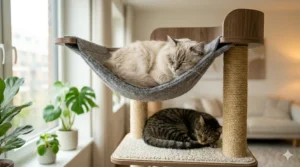
Ever caught your feline friend perched atop your bookshelf, surveying their kingdom with that signature look of supreme satisfaction? That’s not just adorable quirk—it’s hardwired instinct. Cats are vertical creatures living in what we perceive as a horizontal world, and understanding this fundamental need changes everything about how we create enriching environments for our indoor companions.
Height provides cats with visual advantage and adequate warning time when someone approaches, making tall cat tree ownership less about luxury and more about fulfilling a biological imperative that’s been shaping feline behavior for thousands of years. When your cat claims the highest spot in your home, they’re not being difficult—they’re expressing a deeply rooted survival strategy that reduces stress and promotes overall wellbeing.
In 2026, the cat furniture market has evolved dramatically beyond those beige carpeted monstrosities gathering dust in pet store corners. Modern floor to ceiling cat tree designs now seamlessly blend function with form, offering everything from minimalist Scandinavian aesthetics to architectural statement pieces that double as conversation starters. Whether you’re working with a studio apartment or a sprawling house, there’s an extra tall cat tower engineered specifically for your space and your cat’s personality.
The real question isn’t whether your cat needs vertical space—providing vertical space is one of the most effective ways to reduce stress, especially in multi-cat homes where ground-level territory creates conflict. The question is which tall cat tree will transform your cat from stressed to blessed, turning your living room into the ultimate feline paradise.
Quick Comparison Table
| Cat Tree Model | Height | Weight Capacity | Key Features | Price Range | Best For |
|---|---|---|---|---|---|
| Yaheetech 63-Inch | 63″ | 70 lbs total | 7 scratching posts, hammock, condo, multi-level | $50-$109 | Budget-conscious multi-cat homes |
| Feandrea 81.1-Inch | 81.1″ | 15.4 lbs per level | 13 scratching posts, 2 caves, basket, hammock | $130-$180 | Families with multiple cats |
| COZIWOW Floor-to-Ceiling | 98-114″ (adjustable) | 44 lbs per platform | 7 platforms, FSC-certified wood, drill-free install | $150-$220 | Maximum height seekers |
| Globlazer C81 Max | 81″ | 15 lbs per level | Hammock, perches, enclosed condo, anti-tip | $166.99 | Large adult cats |
| Heybly 71-Inch Heavy Duty | 71″ | 20+ lbs | Extra-large 27.6″×19.7″ base, 12 sisal posts, dual hammocks | $140-$190 | Maine Coons & big breeds |
| KinoTail 80.3-Inch Wall Mount | 80.3″ | 44 lbs (large cats) | Wall-mounted, space-saving, 180° rotating platforms | $130-$170 | Small apartments |
| Kicari 60-Inch Solid Wood | 60″ | 15 lbs | Natural solid wood, modern design, capsule nest | $150-$200 | Style-conscious owners |
💬 Just one click – help others make better buying decisions too! 😊
Top 7 Tall Cat Trees: Expert Analysis
1. Yaheetech 63-Inch Multi-Level Cat Tree – Best Budget Option
If you’ve been scrolling through endless cat tree listings wondering why they all cost more than your monthly grocery budget, the Yaheetech 63-Inch Multi-Level Cat Tree is your answer to affordable excellence. Don’t let the sub-$110 price tag fool you—this tower punches way above its weight class.
Specifications:
- Height: 63 inches
- Base dimensions: 31″ x 19″
- Weight capacity: 70 lbs total
- Seven sisal-covered scratching posts
- CARB P2-compliant particleboard construction
Standing just over five feet tall, this cat tree offers a surprisingly robust multi-level playground featuring a spacious top perch with dangling ball toy, a cozy condo hideaway, a hammock perfectly positioned for afternoon sun-napping, and seven strategically distributed scratching posts. The extended platforms provide generous lounging space, while the included anti-toppling kit ensures stability even during your cat’s 3 AM zoomies.
Customer feedback consistently praises its easy assembly and remarkable sturdiness for the price point. One reviewer noted their Maine Coon mix and 14-pound tabby comfortably share the top perch simultaneously—impressive considering many budget trees wobble under half that weight. The anti-toppling strip attached to the middle board provides stability, addressing the primary concern with taller budget-friendly designs.
✅ Pros:
- Exceptional value under $110
- Accommodates multiple cats comfortably
- Anti-toppling hardware included
❌ Cons:
- Scratching ramp may wear faster than premium alternatives
- Assembly requires patience with alignment
Price: $50-$109 (regularly on sale)
Target user: Budget-conscious families, first-time cat tree buyers, multi-cat households
2. Feandrea 81.1-Inch Large Cat Tower – Premium Multi-Cat Paradise
For households where “too much cat furniture” isn’t in the vocabulary, the Feandrea 81.1-Inch Large Cat Tower represents the gold standard in vertical territory maximization. This isn’t just a cat tree—it’s a feline high-rise apartment complex.
Specifications:
- Height: 81.1 inches (5 levels)
- 13 full sisal-wrapped scratching posts
- 2 padded perches, 2 cozy caves
- Fluffy basket, hammock, 2 pompom toys
- Maximum 15.4 lbs per cat (up to 6 cats)
The engineering behind this tower deserves recognition. Short 12″-16″ distances between levels create easy navigation for kittens and senior cats while maintaining impressive overall height. The plush-covered design feels premium to the touch, and those 13 scratching posts mean you’ll find appropriately positioned claw-sharpening real estate on every single level. No more cats fighting over that one favorite scratching spot.
What sets the Feandrea apart is its attention to multi-cat dynamics. With scratching areas on each level, cats can scratch to their hearts’ content and let your sofa go. The dual caves offer privacy options with different entry configurations—one features a two-door design for easy visibility, while the other provides a single-door sanctuary perfect for anxious cats or those who need timeout from household chaos.
✅ Pros:
- Accommodates up to 6 cats simultaneously
- Scratching posts on every level prevent territorial disputes
- Removable, machine-washable pompoms and basket
❌ Cons:
- Requires significant floor space (large footprint)
- Higher price point than budget alternatives
Price: $130-$180
Target user: Multi-cat households, families with large breeds, quality-conscious buyers
3. COZIWOW Floor-to-Ceiling Cat Tree – Maximum Height Champion
When horizontal space is precious but ceiling clearance isn’t, the COZIWOW Floor-to-Ceiling Cat Tree unlocks dimensions most cat owners never consider utilizing. This tension-mounted marvel adjusts from 98 to 114 inches, quite literally turning your entire room height into climbable territory.
Specifications:
- Adjustable height: 98-114 inches
- 7 non-slip platforms (5 small, 2 large)
- Weight capacity: 44 lbs per platform
- 0.47″ thick FSC-certified wood construction
- Drill-free tension installation
The brilliance of this design lies in its customizability. Those seven platforms aren’t fixed in place—you determine the spacing based on your cat’s jumping ability, age, and physical condition. Elderly cats benefit from closer-spaced platforms creating gentle stairs, while athletic young cats can handle wider gaps that encourage more dynamic climbing. You can even wrap separately purchased sisal rope around the poles to create custom scratching zones exactly where your cat prefers them.
Installation surprises first-timers with its simplicity. With adjustable height and drill-free installation, it fits any ceiling without wall damage, making it perfect for renters who face strict lease agreements. The tension mechanism remains secure through daily use, though periodic tightening may be needed in high-activity households. One customer reported successfully installing it solo in under 40 minutes, even with unusually high apartment ceilings.
✅ Pros:
- Maximizes vertical space without sacrificing floor area
- Renter-friendly drill-free installation
- Completely customizable platform arrangement
❌ Cons:
- Minimal built-in scratching surfaces (requires add-ons)
- Installation requires trial-and-error for perfect tension
Price: $150-$220
Target user: Apartment dwellers, renters, high-energy climbing enthusiasts
4. Globlazer 81-Inch C81 Max Tall Cat Tower – Heavy-Duty Engineering Excellence
The Globlazer C81 Max approaches cat tree design with serious engineering credentials, and it shows in every reinforced joint and strategically placed support. This isn’t furniture that merely tolerates cats—it’s built to withstand decades of feline acrobatics.
Specifications:
- Height: 81 inches across 5 levels
- P2 grade particleboard with reinforced battens
- Anti-toppling strip included
- Multiple perches, enclosed condo, hammock
- Weight capacity: 15 lbs per level
What immediately stands out is the structural integrity. The base features robust battens that distribute weight efficiently, while the anti-toppling hardware integrates seamlessly rather than feeling like an afterthought bolt-on. Crafted from P2 grade particleboard and reinforced with robust battens at the base, it’s a symbol of durability and security. Translation: your 20-pound Maine Coon can launch themselves from floor to summit without creating earthquake-like tremors.
The enclosed condo deserves special mention for its spacious interior design. Unlike cramped hideaways that only accommodate svelte cats, this condo comfortably fits chunky felines who’ve discovered the joy of second dinners. The placement midway up the structure creates natural traffic flow, preventing bottlenecks when multiple cats decide they all need to be on the top perch simultaneously.
✅ Pros:
- Exceptional stability prevents wobbling
- Sustainably sourced materials (recycled content)
- Universal screw system simplifies assembly
❌ Cons:
- Limited color options (primarily gray tones)
- Heavier weight makes relocation challenging
Price: $166.99
Target user: Large cat owners, quality-focused buyers, permanent installations
5. Heybly 71-Inch Cat Tower – Designed for Giants
If your cat’s veterinarian casually mentions “wow, that’s a big boy” at every checkup, the Heybly 71-Inch Cat Tower was designed specifically for your situation. This tower addresses the unique challenges of housing Maine Coons, Ragdolls, and other gentle giants who regularly outgrow standard cat furniture.
Specifications:
- Height: 70.87 inches
- Extra-large base: 27.56″ x 19.69″
- 12 sisal-wrapped scratching posts
- Dual metal-framed hammocks (18.9″ x 14.9″)
- Maximum weight: 48.5 lbs total
The engineering philosophy here centers on “bigger is better.” That expansive base isn’t just for show—the spacious 27.6″×19.7″ base provides a lower center of gravity, ensuring superior stability and added safety. The result? Even the most enthusiastic jumpers land without tipping concerns. The 19.7″ x 15.7″ top perch offers enough real estate for your large cat to sprawl fully extended, not perch precariously on edges designed for daintier breeds.
Those dual hammocks solve a persistent problem in multi-large-cat homes: competition for hanging spots. The metal-frame construction supports more weight than standard fabric hammocks, and customer reviews confirm both hammocks can be simultaneously occupied without sagging or stress. One owner reported their two 15-pound cats regularly nap side-by-side in a single hammock—testament to quality construction exceeding specifications.
✅ Pros:
- Specifically engineered for 15-25 lb cats
- Twelve scratching posts prevent furniture damage
- Metal-reinforced hammocks support heavy weights
❌ Cons:
- Sisal rope may require replacement after 12-18 months of heavy use
- Limited space between levels may not suit extremely tall cats
Price: $140-$190
Target user: Maine Coon owners, large breed families, heavy-duty requirements
6. KinoTail 80.3-Inch Wall Mounted Cat Tree – Space-Saving Innovation
Studio apartment dwellers and minimalist design enthusiasts, meet your match. The KinoTail 80.3-Inch Wall Mounted Cat Tree proves you don’t need sprawling square footage to provide impressive climbing height—you just need to think vertically and creatively.
Specifications:
- Height: 80.3 inches wall-mounted
- 5-tier system (3 wall platforms, 2 rotating steps)
- Top perch: 15.7″ x 11″ (large cat-friendly)
- 180° rotating platform design
- Weight capacity: 44 lbs for large adult cats
The genius of this system lies in its modular flexibility. Those three wall-mounted platforms and two rotating steps can be installed in countless configurations—flat wall arrangements, corner installations, stairway integration, or window-adjacent setups. Whether installed on a flat wall, around a corner, near stair turns or by a window, you can create a custom climbing path for your cats. Your cat’s climbing route becomes entirely customizable to your space constraints and their preferences.
Installation requires more careful planning than freestanding alternatives (you’ll need to locate wall studs and drill accurately), but the payoff is extraordinary. The wall-mounted design eliminates wobble entirely—no amount of enthusiastic jumping creates instability when everything’s secured directly to structural framing. The top perch dimensions accommodate Maine Coons and Ragdolls comfortably, addressing a common criticism of space-saving designs that sacrifice large-cat usability.
✅ Pros:
- Zero floor space consumption
- Completely wobble-proof when properly installed
- Modular design adapts to unconventional spaces
❌ Cons:
- Permanent installation (not renter-friendly without permission)
- Requires accurate drilling and stud-finding
Price: $130-$170
Target user: Small apartments, renters with drilling permission, modern aesthetic preferences
7. Kicari 60-Inch Modern Solid Wood Cat Tree – Aesthetic Excellence
For those who view cat furniture as an extension of interior design rather than a necessary eyesore, the Kicari 60-Inch Modern Solid Wood Cat Tree elevates feline comfort into legitimate home decor. This isn’t camouflaged minimalism—it’s deliberately beautiful.
Specifications:
- Height: 60 inches
- Natural solid rubber wood construction
- Acrylic cat capsule with panoramic views
- Flower-shaped plush cat bed (removable, washable)
- Weight capacity: 15 lbs per cat
The material choice immediately distinguishes this tower. Real solid wood—not particle board masquerading as wood veneer—brings warmth and authenticity to the design. Crafted from waterproof-treated solid rubber wood, this cat tree tower for indoor cats is strong and durable. The 1.2-inch thick base provides exceptional stability despite the relatively narrow footprint, proving good engineering can deliver both form and function.
That acrylic capsule isn’t just Instagram-worthy—it’s behaviorally brilliant. Cats naturally seek elevated vantage points with good sightlines, and the transparent design satisfies their surveillance instincts while creating an unexpectedly modern aesthetic. The flower-shaped plush bed adds whimsy without compromising functionality, and being fully removable means you can actually wash it rather than eternally spot-cleaning.
✅ Pros:
- Genuine solid wood construction
- Design-forward aesthetic integrates with modern homes
- All fabric components are removable and machine-washable
❌ Cons:
- Lower height than competitors (60″ vs 80″+)
- Higher price point for shorter structure
Price: $150-$200
Target user: Design-conscious owners, smaller cats, modern home aesthetics
✨ Don’t Miss These Exclusive Deals!
🔍 Take your cat’s lifestyle to the next level with these carefully selected products. Click on any highlighted item to check current pricing and availability. These tools will help you create authentic vertical territory your family will love!
Understanding Vertical Territory: Why Height Matters
The concept of vertical territory runs deeper than simple cat psychology—it’s evolutionary biology written into your cat’s DNA. Cats are territorial animals, and territorial behavior doesn’t mean cats defend the whole area but rather that they establish specific safe zones within their environment. Understanding this distinction transforms how we approach creating enriching indoor spaces.
In the wild, elevated positions offer tangible survival advantages. Predators approach from ground level. Prey becomes visible from above. Competitors signal their intentions through body language more easily observed from height. These aren’t learned behaviors—they’re instincts so deeply embedded that removing outdoor access doesn’t eliminate them. Your indoor cat experiences the same biological drives as their wild ancestors; they simply need us to create appropriate outlets.
The Science Behind Climbing Behavior
Research into feline environmental enrichment consistently identifies vertical space as a primary stress reducer. A comprehensive study published in the Journal of Veterinary Behavior found that provision of vertical climbing structures holds high enrichment potential in confinement, reducing behavioral stress scores significantly. The mechanisms explaining this effect are fascinating.
When cats climb high, their cortisol levels (the primary stress hormone) measurably decrease. The act of ascending creates both physical exercise and mental stimulation, while reaching the summit triggers neurochemical reward pathways. Additionally, elevated positions reduce perceived threats from the environment—whether those threats are real (visiting dogs) or imagined (that suspicious houseplant that definitely moved last Tuesday).
Multi-Cat Households: The Vertical Solution
If you’ve ever wondered why your multiple cats periodically engage in dramatic stare-downs over seemingly arbitrary house locations, vertical territory deficit is likely the culprit. Ground-level space operates as a zero-sum game—when Cat A occupies the sunny spot, Cat B loses access. Vertical space breaks this mathematical constraint.
By providing adequate ceiling high cat tree options, you’re essentially multiplying your home’s usable territory. A single floor-to-ceiling structure can support 4-6 cats simultaneously without competition, as each cat naturally gravitates toward different height preferences reflecting their individual personality and social hierarchy. The timid cat appreciates mid-level perches offering escape routes in multiple directions. The confident cat claims the summit. Everyone wins—literally.
Floor to Ceiling Cat Tree Benefits
The floor to ceiling cat tree category deserves dedicated attention because it solves spatial challenges through architectural innovation rather than mere compromise. Let’s examine why these vertical maximizers have become increasingly popular among urban cat owners and design-conscious pet parents alike.
Space Efficiency Revolution
Traditional cat trees operate on horizontal real estate principles—the taller the structure, the larger the base footprint required for stability. Floor-to-ceiling models completely invert this equation. By utilizing tension mounting or wall-attachment systems, these towers deliver impressive climbing height while consuming minimal floor space. A standard 6-foot freestanding tower might require 25-30 square feet of floor area. A ceiling-mounted alternative providing equal or greater height? As little as 4-6 square feet.
The mathematics matter significantly in apartments and condos where every square foot carries rental premium. Reclaiming 20 square feet of floor space can mean the difference between cramped living and comfortable breathing room. Additionally, the space directly beneath wall-mounted systems remains usable for other furniture or activities—you’re not creating dead zones around massive bases.
Installation Considerations
The phrase “drill-free installation” appears frequently in floor to ceiling cat tree marketing, but the reality requires nuance. Tension-mounted systems (like the COZIWOW model) truly install without drilling, using spring-loaded poles creating friction pressure between floor and ceiling. These work beautifully in rentals and require zero permanent modifications.
Wall-mounted systems (like the KinoTail) absolutely require drilling into wall studs or masonry. The installation process demands more skill and planning, but the payoff includes superior stability and weight capacity. Professional installation costs $100-200 if you’re not comfortable with power tools, though most cat owners report successful DIY installations following manufacturer instructions carefully.
Pro tip: Always photograph wall areas before installation if you’re renting. Proper patching and painting typically satisfies even strict landlords’ move-out inspections, and photographic evidence of original condition provides protection against excessive security deposit deductions.
Aesthetic Integration
Modern floor to ceiling cat tree designs have evolved dramatically beyond purely utilitarian function. Manufacturers now offer premium materials (natural wood, powder-coated metal), sophisticated color palettes (not just beige and brown), and modular designs allowing personalized configurations matching your interior design preferences.
The result? Cat furniture that enhances rather than compromises your home’s visual appeal. Several manufacturers even offer custom finishing options, enabling you to match existing furniture or create deliberate design statements. When guests compliment your “modern shelving installation,” revealing it’s actually cat furniture becomes a conversation highlight rather than an awkward admission.
Extra Tall Cat Tower Features to Consider
Shopping for an extra tall cat tower means evaluating dozens of specifications and features, many of which seem interchangeable until you understand their functional implications. Let’s decode the most important elements separating exceptional purchases from disappointing regrets.
Height Categories and Purposes
Cat trees generally fall into three height brackets, each serving distinct behavioral purposes:
Medium Height (40-60 inches): These provide basic vertical enrichment suitable for apartments with standard 8-foot ceilings. They satisfy climbing instincts without overwhelming small spaces. Best for: single cats, kittens, seniors with mobility limitations.
Tall Height (60-80 inches): The sweet spot for most households, offering substantial vertical territory while maintaining manageable assembly and stability. They typically feature 4-6 levels providing diverse activity options. Best for: multi-cat homes, athletic adult cats, families seeking comprehensive solutions.
Extra Tall/Ceiling Height (80-120 inches): Maximum climbing height for cats who treat furniture as jungle gym equipment. These require careful stability engineering but reward with unmatched territorial satisfaction. Best for: high-energy cats, large breeds, vertical space maximizers.
Base Stability Science
The physics of tall cat tree stability involves multiple variables working in concert. Base dimensions matter enormously—general guidelines recommend base width equaling 40-50% of total tree height. An 80-inch tower ideally features a 32-40 inch wide base. Manufacturers exceeding this ratio deserve attention; those cutting corners below 35% warrant skepticism.
Material density plays an equally crucial role. Particle board bases provide adequate stability when sufficiently thick (1 inch minimum) and properly weighted. Solid wood bases deliver superior stability but significantly increase both cost and shipping weight. Many premium manufacturers now incorporate metal reinforcement plates within wooden bases, combining the best attributes of both materials.
Platform Size and Spacing
Platform dimensions directly impact usability, especially for large breeds. Industry-standard platforms measure 12-14 inches diameter—perfectly adequate for 8-12 pound cats, marginally acceptable for 15 pounders, and frustratingly inadequate for 20+ pound giants. Premium manufacturers targeting large cat demographics offer 16-20 inch platforms that transform comfort from “tolerable” to “luxurious.”
Vertical spacing between platforms requires similar consideration. Athletic young cats easily manage 18-24 inch gaps, treating them as stimulating jumping challenges. Senior cats, kittens, and those with mobility issues benefit from 10-14 inch spacing creating gentler staircase-style ascent. Adjustable systems enabling customized spacing accommodate cats at different life stages without requiring complete replacement.
Scratching Post Materials
Not all scratching posts satisfy cats equally. The material, coverage extent, and positioning collectively determine whether your cat enthusiastically uses them or continues auditioning your furniture as alternative scratching surfaces.
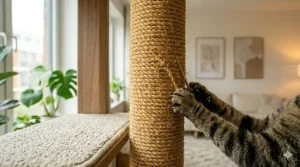
Sisal Rope: The gold standard for cat scratching surfaces. Natural sisal provides satisfying texture, holds up remarkably well under daily use, and can be replaced relatively easily when worn. Quality varies significantly—look for tightly wound rope with minimal gaps. Budget manufacturers sometimes use loosely wrapped sisal that unravels quickly, requiring frustrating early replacement.
Sisal Fabric: Increasingly popular in modern designs, sisal fabric wraps around posts creating smooth yet grip-friendly surfaces. Some cats prefer fabric over rope; others show the opposite preference. Fabric typically costs more but offers cleaner aesthetics and potentially longer lifespan.
Carpet: Traditional but increasingly out of favor. While familiar to cats raised with carpeted furniture, it deteriorates faster than sisal alternatives and doesn’t provide the satisfying shredding experience many cats seek.
Multi-Cat Compatibility Features
Households with multiple cats require specific design elements preventing territorial conflicts and traffic bottlenecks. Look for:
Multiple access routes: Trees with single linear paths (ground to summit with no alternatives) create choke points where dominant cats can block passage. Well-designed structures offer 2-3 different routes to popular resting spots.
Distributed resources: If your tree has three hammocks, they shouldn’t all cluster at the same height level. Vertical distribution across different tiers reduces competition.
Escape routes: Cats appreciate multiple exit options from enclosed condos and high perches. Single-entry condos can become “traps” in tense multi-cat dynamics.
Visibility considerations: Some cats prefer surveying their territory from exposed perches; others seek concealed observation posts. Including both options accommodates different personality types.
Climbing Height: Safety and Training
The allure of ceiling high cat tree installations must be balanced against legitimate safety considerations and practical training approaches. Providing vertical territory isn’t just about buying the tallest structure—it’s about ensuring your cat can navigate it safely and confidently.
Age-Appropriate Height Restrictions
Kittens possess fearlessness inversely proportional to their coordination skills. That combination creates adorable chaos punctuated by occasional “how did I get up here and HOW DO I GET DOWN” panic sessions. For cats under six months, consider limiting initial access to the lower 3-4 feet of tall structures. Many adjustable systems allow you to temporarily remove or block off upper platforms until coordination improves.
Senior cats face the opposite challenge: declining joint flexibility and muscle strength make formerly effortless jumps progressively difficult. Older cats may have difficulty getting to the very top of tall trees, and those with mobility limitations benefit from trees with platforms closer to the ground. Rather than removing access entirely (which can cause depression and behavioral issues), consider adding intermediate stepping stones—small stools or platforms creating gentler ascent paths.
Teaching Safe Descent
The most common tall cat tree injury isn’t falling from great height—it’s awkward landings from moderate height causing soft tissue strains. Cats instinctively understand climbing up; descending efficiently requires learned technique some cats never quite master.
Training safe descent behaviors involves positive reinforcement and environmental setup:
- Place desirable items (treats, toys) on lower platforms, creating motivation to descend rather than anxiously remaining at summit indefinitely.
- Demonstrate descent paths using your hand or a toy as visual guide, slowly moving from upper to lower platforms. Some cats follow movement cues more readily than verbal instructions.
- Ensure adequate platform spacing eliminates the need for dramatic leaps. Gaps exceeding 20 inches encourage risky jumping behavior.
- Position crash pads (thick blankets, foam mats) beneath during initial weeks provides insurance against miscalculation impacts.
Fall Prevention Engineering
Quality manufacturers incorporate specific fall-prevention features into tall designs:
Enclosed perches: Top platforms featuring raised edges or partial walls prevent rolling falls during sleep or stretching.
Anti-slip surfaces: Textured platform coverings (plush fabric, carpet) provide traction preventing sudden slides.
Stable attachment: Wall-mounting brackets and anti-toppling straps ensure the entire structure remains stationary during aggressive climbing or jumping.
Weight distribution: Strategic placement of heavy elements (enclosed condos, large platforms) lower in the structure lowers the center of gravity, improving overall stability.
Emergency Access Planning
Before installing an 8-foot tower, answer this question: “How do I retrieve my cat if they refuse to descend?” Legitimate scenarios requiring intervention include medical emergencies, fire evacuations, or simple stubborn refusals during moving day. Options include:
- Sturdy stepladders stored nearby (6-8 foot models handle most situations)
- Removable platform sections enabling controlled descent assistance
- Treats/favorite toys compelling voluntary descent
- Professional cat behavioral consultants for persistent height-fixation issues
High Perch Benefits: Psychological & Physical
The attraction cats demonstrate toward high perches transcends simple preference—it represents complex interplay between psychological security, social hierarchy, physical health, and instinctual satisfaction. Understanding these interconnected benefits explains why investing in quality tall cat tree structures delivers returns measurable in both behavior improvement and veterinary bill reduction.
Stress Reduction Through Elevation
Elevated positioning triggers measurable physiological changes in cats beyond simple behavioral observations. When cats achieve heights above human eye level, their parasympathetic nervous system activation increases—the bodily state associated with rest, digestion, and healing. This isn’t anthropomorphic projection; it’s documented biology.
Height is currency in a cat’s world, and providing vertical space is one of the most effective ways to reduce stress. The mechanism operates through multiple pathways. Visual surveillance from elevation provides advance warning of approaching threats (whether genuine dangers or simply humans carrying vacuum cleaners). The increased warning time allows cats to assess situations calmly rather than triggering immediate fight-or-flight responses.
Additionally, height creates physical separation from ground-level stressors. In multi-pet households, anxious cats can observe canine activity from safe vantage points, gradually habituating to dog presence without forced proximity. This exposure therapy—controlled, voluntary, self-paced—often succeeds where forced interaction fails miserably.
Territorial Satisfaction
Cats mark vertical surfaces as part of their territorial behavior, using scent deposits to establish ‘safe’ zones within their environment. High perches satisfy this marking instinct in acceptable ways (facial rubbing on platforms) rather than problematic alternatives (urine spraying on walls).
The territorial aspect operates on social hierarchy levels as well. In multi-cat households, access to highest perches often indicates social status without requiring physical confrontation. The dominant cat claims the summit; subordinate cats occupy mid-level positions. This spatial arrangement communicates hierarchy through position rather than aggression, reducing actual fighting incidents significantly.
Physical Exercise Integration
Vertical climbing provides full-body workout benefits difficult to replicate through horizontal activity alone. The muscular engagement required to ascend tall structures differs fundamentally from running across floors:
Hindquarter strength: Jumping between platforms builds powerful rear leg muscles supporting joint health and mobility throughout life.
Core stability: Balancing on narrow perches or during platform-to-platform leaps engages core musculature critical for overall athletic ability.
Grip strength: Grasping scratching posts and platform edges maintains claw health and paw pad conditioning.
Cardiovascular conditioning: Multi-level climbing in play sessions elevates heart rate beneficially, particularly important for indoor cats prone to sedentary obesity.
The caloric expenditure adds up significantly. A 10-pound cat ascending and descending an 80-inch structure burns approximately 3-5 calories per complete cycle. Multiply that by 10-15 daily trips (common in households with engaging vertical territory), and you’ve created 30-75 calories of daily exercise—enough to prevent gradual weight gain that plagues indoor-only cats.
Mental Stimulation Value
Beyond physical benefits, vertical territory provides crucial mental enrichment. The cognitive processing required for route planning—”Which path reaches the top fastest? Which avoids that other cat?”—exercises problem-solving abilities keeping senior cats mentally sharp.
Environmental complexity matters enormously for indoor cat welfare. Simple environments (flat floors, minimal furniture, no vertical variation) create under-stimulated, bored cats prone to destructive behaviors. Complex three-dimensional environments mirror natural settings more closely, satisfying exploratory instincts that would otherwise manifest as problematic outlet-seeking.
Choosing the Perfect Tall Cat Tree: Step-by-Step
With hundreds of models flooding the market and marketing claims becoming progressively more creative, selecting the ideal tall cat tree for your specific situation requires systematic evaluation rather than impulse purchasing. Follow this methodology to avoid expensive mistakes.
Step 1: Assess Your Space Constraints
Before browsing products, measure your available space carefully. You need three measurements:
Floor footprint: Measure the area where the base will sit. Include 6-12 inches of clearance on all sides for stability and cat circulation. A tree requiring 30″ x 24″ base footprint actually needs roughly 42″ x 36″ of dedicated floor space.
Ceiling height: Measure floor-to-ceiling height precisely. Standard ceilings run 96-102 inches; basement apartments sometimes drop to 84-90 inches; lofts occasionally reach 120+ inches. Freestanding trees should leave 12-18 inches of ceiling clearance preventing top-heavy instability. Ceiling-mounted systems need exact measurements for proper tension adjustment.
Pathway clearance: Consider human and cat traffic patterns. Placing a large tree directly beside frequently used doorways creates collision hazards and territorial bottlenecks. Optimal placement provides cat access from multiple directions while avoiding obstructing normal household movement.
Step 2: Evaluate Your Cat Population
Different household compositions require dramatically different features:
Single cat households: Can choose structures based purely on individual cat preferences—lounging versus climbing, seclusion versus observation, etc. Medium to tall height (50-70 inches) typically suffices.
Multi-cat households: Require extra tall cat tower options (70+ inches) with multiple access routes, distributed resting spots, and adequate platform diversity preventing resource competition. Calculate roughly 15-20 inches of vertical space per cat as minimum.
Large breed specialists: Maine Coons, Ragdolls, Norwegian Forest Cats need overbuilt specifications—platforms 18+ inches wide, weight capacities 20+ pounds per level, extra-large bases preventing tip-overs.
Mixed ages: Households with both kittens and seniors benefit from adjustable or multi-level designs accommodating different mobility capabilities simultaneously.
Step 3: Set Realistic Budget Parameters
Quality tall cat trees span enormous price ranges ($50-$500+), and the correlation between cost and quality isn’t always linear. Budget intelligently:
Budget tier ($50-$120): Adequate for temporary solutions, first-time buyers, or households unsure about cat tree adoption. Expect 2-4 year lifespan with moderate use. Examples: Yaheetech, basic Armarkat models.
Mid-range ($120-$220): The sweet spot for most households. Quality construction, decent materials, 4-7 year lifespan. Examples: Feandrea, Globlazer, COZIWOW.
Premium tier ($220-$500+): Exceptional materials, longer warranties, superior stability. Often 7-10+ year lifespan. Examples: Cat Tree King, Armarkat premium lines, custom built options.
Consider cost-per-year rather than absolute price. A $180 tree lasting 6 years ($30/year) delivers better value than a $90 tree requiring replacement after 2 years ($45/year).
Step 4: Prioritize Essential Features
Rank these features by importance to your situation:
Critical (must-have):
- Adequate height for your ceiling clearance
- Appropriate weight capacity for your cats
- Stability features (wide base OR wall-mounting)
- Sufficient platforms/perches for all cats
Important (strongly desired):
- Quality scratching post coverage
- Easy-clean materials
- Aesthetic compatibility with home decor
- Reasonable assembly difficulty
Nice-to-have (bonus features):
- Toys and dangly accessories
- Hammocks or hanging beds
- Unique design elements
- Modular/expandable systems
Step 5: Read Reviews Critically
Online reviews provide valuable real-world feedback, but interpretation skills matter. Look for:
Specific details over vague praise. “Sturdy construction with 1-inch thick base and metal reinforcement plates” beats “it’s really good!” by miles.
Long-term usage reports. Reviews posted 6-12 months after purchase reveal durability issues invisible during first week.
Similar household dynamics. If you own three 15-pound cats, reviews from single-kitten owners provide limited relevance.
Pattern recognition. Single negative reviews might indicate individual defects or unrealistic expectations. Repeated complaints about specific issues (wobbly design, difficult assembly, rapid deterioration) signal genuine problems.
Step 6: Verify Return Policies
Even careful selection sometimes results in poor fit—wrong color in person, unexpected stability issues, cat rejection. Strong return policies provide insurance:
- 30+ day return windows (standard)
- Minimal restocking fees (<15% or none)
- Reasonable return shipping arrangements
- Clear condition requirements
Amazon purchases generally offer hassle-free returns; direct manufacturer purchases vary wildly. Factor return policy generosity into close decision between similar products.
Step 7: Plan Assembly Support
Tall cat trees require 45-90 minutes assembly time depending on complexity. Realistic self-assessment prevents frustration:
DIY-friendly indicators:
- Clear instructions with photos/diagrams
- Pre-drilled, numbered components
- Basic tools included (Allen keys, wrenches)
- Assembly videos available online
Professional assembly consideration:
- Extremely tall (80+ inches) or complex designs
- Wall-mounting requirements
- Physical limitations preventing lifting/holding heavy sections
- Cost: typically $75-$150 through services like TaskRabbit
Maintenance and Care Tips
Purchasing a tall cat tree represents significant investment deserving proactive maintenance extending its functional lifespan from “adequate” to “exceptional.” These strategies prevent premature deterioration while maintaining safety and hygiene standards your cats deserve.
Weekly Maintenance Routines
Surface vacuuming (10 minutes): Use handheld vacuum or upholstery attachment removing accumulated fur, dander, and tracked litter from all platforms, condos, and fabric surfaces. Pay special attention to corners and crevices where debris concentrates.
Visual stability inspection (2 minutes): Systematically check all connection points—platform supports, post joinings, base attachments. Look for loosening screws, wobbling components, or emerging gaps. Catching issues at the “slightly loose” stage prevents eventual “completely unstable” crisis.
Toy inspection (1 minute): If your tree includes dangling toys or pompoms, verify attachment security. Dangling toys on elastic cords create choking hazards when cords fray or toys detach completely.
Monthly Deep Cleaning
Removable fabric washing: Most quality cat trees feature removable, machine-washable fabric components (hammocks, platform covers, enclosed condo cushions). Wash monthly using pet-safe detergent, warm water, gentle cycle. Air dry completely before reinstalling to prevent moisture-related deterioration.
Non-removable surface cleaning: For permanently attached fabric, use enzyme-based pet odor neutralizer sprays designed for upholstery. Avoid harsh chemicals—many cats abandon furniture retaining strong cleaning product smells. Test small inconspicuous areas first ensuring colors don’t run or fabrics don’t stain.
Structural tightening: Systematically tighten all screws and bolts using appropriate tools. Wood materials naturally expand/contract with humidity changes; particle board construction can compress slightly under sustained weight. Regular tightening compensates for these gradual changes.
Quarterly Wear Assessment
Every three months, conduct thorough evaluation identifying components approaching end-of-life:
Scratching post condition: Examine sisal coverage for bald spots, significant fraying, or rope unwinding exposing underlying posts. Minor wear is acceptable; extensive damage (25%+ bare surface) indicates replacement needs.
Platform structural integrity: Check for sagging, cracking, or warping. Particle board platforms absorbing moisture may swell and weaken; solid wood platforms might develop splinters requiring sanding.
Base stability: Even with regular tightening, bases can develop wobble from repeated use. Reassess whether additional anti-toppling hardware or wall-mounting becomes advisable.
Replacement Timelines
Understanding typical component lifespans helps budget for eventual replacements:
Scratching rope/fabric: 12-18 months (heavy use), 24-36 months (moderate use). Quality sisal outlasts cheap alternatives significantly.
Fabric platforms/hammocks: 24-36 months before showing significant wear, fading, or permanent staining requiring replacement for aesthetic reasons.
Structural wood/board: 4-7 years for quality construction. Budget alternatives may need replacement after 2-3 years due to moisture absorption or compression.
Complete tree lifespan: Expect 5-7 years from mid-range products, 7-10+ years from premium options, 2-4 years from budget alternatives.
Common Repair Solutions
Rather than replacing entire structures, targeted repairs extend lifespans economically:
Rewrapping scratching posts: Purchase bulk sisal rope (1/4″ or 3/8″ diameter) and hot glue. Remove old rope, thoroughly glue post surface, wrap tightly with new rope, secure end with additional glue. Cost: $15-30 for materials handling multiple posts.
Reinforcing wobbly connections: Add corner braces, L-brackets, or wooden dowels at connection points showing weakness. Hardware stores sell appropriate brackets for $2-5 each.
Fabric recovery: When platform fabric wears but underlying structure remains sound, replace fabric rather than platforms. Upholstery-grade fabric (durable, pet-friendly) costs $10-20 per yard—enough to recover multiple platforms.
Common Mistakes to Avoid
Learning from others’ expensive errors saves money, frustration, and potential safety issues. These mistakes appear repeatedly in negative reviews and customer service inquiries—avoid joining these unfortunate statistics.
Mistake #1: Prioritizing Height Over Stability
The temptation to purchase the absolute tallest available option proves irresistible for many first-time buyers. Unfortunately, height without proportional base width creates dangerous instability. When shopping for a cat tree, look for one that’s tall and sturdy—the higher the tree, the wider and heavier the base needs to be to prevent toppling over.
Solution: Follow the 40-50% rule: base width should equal at least 40% of total tree height. An 80-inch tower needs a 32+ inch base minimum. Manufacturers cutting corners below this ratio deserve immediate skepticism regardless of attractive pricing.
Mistake #2: Ignoring Assembly Complexity
Product photos showcase finished beauty; assembly instructions reveal frustrating reality. Reviewers frequently report “took 3 hours instead of advertised 45 minutes” and “instructions made no sense.”
Solution: Before purchasing, search YouTube for “[product name] assembly video.” Real customers filming assembly process reveal actual difficulty level, common confusion points, and whether advertised timeframes reflect reality. If no videos exist, approach cautiously—products receiving extensive customer engagement almost always generate assembly videos.
Mistake #3: Underestimating Space Requirements
Floor footprint measurements sound manageable in abstract (“24 x 18 inches—that’s tiny!”) but transform into spatial reality checks post-delivery. Suddenly that “compact” tower dominates your living room corner and obstructs the reading chair you forgot to account for.
Solution: Use painter’s tape marking the complete footprint (base + 6-12 inch clearance) on your floor before ordering. Live with this marked area for 48-72 hours, ensuring it doesn’t create unexpected traffic pattern disruption, furniture rearrangement needs, or visual obstruction issues.
Mistake #4: Selecting Aesthetics Over Functionality
That minimalist Scandinavian design cat tree photograph beautifully, but does it include adequate scratching surfaces? Enough platforms for your three cats? Enclosed spaces for your anxious rescue who needs security?
Solution: List functional requirements before browsing products. Score each candidate against your must-have features. Only after functionality threshold is met should aesthetic preferences drive final selection. A gorgeous tree your cats ignore fails its primary mission regardless of Instagram potential.
Mistake #5: Neglecting Large Cat Specifications
“Suitable for all cat sizes!” claims deceive when platform dimensions measure 12 inches and weight limits max at 12 pounds per level. Your 18-pound Maine Coon deserves purpose-built furniture acknowledging their magnificent bulk.
Solution: For cats 15+ pounds, explicitly seek “large cat,” “Maine Coon,” or “heavy duty” designations. Verify platform dimensions (minimum 16 inches), weight capacities (20+ pounds per level), and base stability (extra-wide, reinforced). Don’t trust vague “all sizes” marketing.
Mistake #6: Skipping Pre-Purchase Measurements
Ceiling-mounted and floor-to-ceiling systems require millimeter-precise measurements. “My ceiling is probably around 8 feet” doesn’t cut it when tension rods require exact adjustment ranges.
Solution: Measure twice, purchase once. Use reliable measuring tape measuring floor-to-ceiling height at multiple locations (floors aren’t always level; ceilings aren’t always consistent). Add measurement details to saved product listings so you remember them during purchase rather than relying on possibly flawed memory.
FAQ
❓ How tall should a cat tree be?
❓ Are tall cat trees safe for kittens?
❓ Do cats really use tall cat trees?
❓ How do I stop my tall cat tree from wobbling?
❓ Can I put a tall cat tree in an apartment?
Conclusion: Investing in Your Cat’s Vertical Paradise
The decision to provide your cat with quality tall cat tree isn’t about spoiling them with unnecessary luxuries—it’s about acknowledging fundamental biological needs that persist regardless of indoor domestication. Every time your cat scales to their favorite high perch, surveys their domain from ceiling-level vantage points, or contentedly stretches against a well-placed scratching post, you’re witnessing instincts satisfied that would otherwise manifest as stress, boredom, or destructive outlet-seeking.
The investment mathematics favor quality purchases decisively. A $180 mid-range tower lasting 6 years costs $30 annually—less than $0.10 daily. Compare that nominal expense against the behavioral benefits, furniture protection, and veterinary cost prevention quality vertical territory provides. Factor in the observable joy cats demonstrate when presented with engaging climbing structures, and the equation becomes overwhelmingly favorable.
Whether you ultimately select the budget-friendly Yaheetech, the feature-rich Feandrea, the space-maximizing COZIWOW floor to ceiling cat tree, or any other model meeting your specific requirements, the critical decision is committing to providing adequate vertical enrichment. Your cat’s wellbeing, your furniture’s integrity, and your household’s harmony all benefit from this singular investment.
The models reviewed here represent thoroughly researched, customer-validated options spanning diverse budgets, space constraints, and aesthetic preferences. Each excels in particular contexts; none universally dominates all scenarios. Match your selection to your unique situation—ceiling height, cat population, breed sizes, space availability, budget parameters—and your cat will demonstrate their appreciation through enthusiastic adoption and sustained use.
Remember that the perfect tall cat tree for your neighbor’s situation may prove entirely inadequate for yours, and vice versa. Resist one-size-fits-all thinking. Evaluate systematically. Measure carefully. Purchase thoughtfully. Your cat’s vertical paradise awaits creation, and the tools for building it now rest in your hands.
Recommended for You
- 7 Best Cat Tree for Large Cats 2026 – Heavy Duty Reviews
- 7 Best Cat Tree Options Your Cat Will Love in 2026
- 7 Best Insulated Cat Houses 2026
Disclaimer: This article contains affiliate links. If you purchase products through these links, we may earn a small commission at no additional cost to you.
✨ Found this helpful? Share it with your friends! 💬🤗
