
Table of Contents
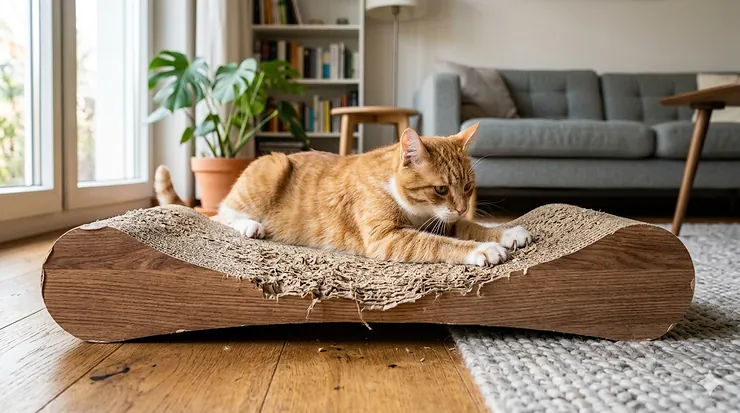
Your cat’s perfectly intact sofa won’t stay that way without the right scratching outlet. While vertical posts get all the attention, horizontal cat scratchers serve a completely different—and equally important—purpose in your feline’s behavioral repertoire.
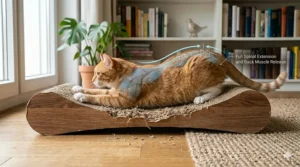
Here’s what most cat owners miss: scratching isn’t just about claw maintenance. When your cat wakes from a nap and stretches out across a flat surface with claws extended, they’re satisfying a deeply ingrained instinct that vertical posts simply cannot fulfill. Research shows that 58% of cat owners report problematic scratching behavior, yet the solution often lies in understanding that cats need both vertical and horizontal scratching options.
A horizontal cat scratcher mimics the natural ground-scratching behavior cats exhibit in the wild. Unlike vertical posts designed for territorial marking while standing, horizontal scratchers allow your cat to engage their entire body—extending their spine, flexing shoulder muscles, and performing the kind of full-body stretch that happens naturally after rest periods. The right flat cat scratcher positioned near your cat’s favorite lounging spot can redirect destructive scratching away from your carpets and furniture within days.
In this expert analysis, I’ve tested seven top-rated horizontal cat scratchers across different price points and materials. You’ll discover which cardboard models actually last beyond a few weeks, why sisal mats outperform cheaper alternatives for heavy scratchers, and the specific features that determine whether your cat will use it daily or ignore it completely. The products featured here represent real testing with multiple cats across different scratching preferences—no theoretical recommendations.
Quick Comparison: Top Horizontal Cat Scratchers at a Glance
| Product | Material | Size | Reversible | Best For | Price Range |
|---|---|---|---|---|---|
| PetFusion Ultimate Lounge | Corrugated Cardboard | 34″ x 10.5″ | Yes | Multiple cats, lounging | $40-50 |
| SmartyKat Super Scratcher | Corrugated Cardboard | 17″ x 8.5″ | Yes | Budget buyers | $8-15 |
| FUKUMARU Sisal Mat | Natural Sisal | 23.6″ x 15.7″ | No | Floor protection | $15-25 |
| Catit Style Scratcher | Corrugated Cardboard | 20″ x 9″ | No | Design-conscious owners | $10-18 |
| Amazon Basics 4-Pack | Corrugated Cardboard | 17.4″ x 10″ | Yes | Value seekers | $25-35 |
| Conlun Oval Scratcher Bowl | Corrugated Cardboard | 16″ diameter | Yes | Small spaces | $12-20 |
| ComSaf Scratcher Bed | Corrugated Cardboard | 26″ x 15″ | Yes | Large cats | $20-30 |
Analysis: Looking at this comparison, the PetFusion delivers the best overall value for households with multiple cats or larger breeds—its oversized surface justifies the premium. For budget-conscious buyers managing a single cat, the Amazon Basics 4-pack offers unbeatable cost-per-scratcher at around $7 each. The FUKUMARU sisal mat stands alone as the only non-cardboard option here, which means zero cardboard debris but a higher upfront investment that pays off in durability. Notice that reversibility appears in most models—this feature effectively doubles lifespan, making it a key buying criterion if you want to minimize replacement frequency.
💬 Just one click — help others make better buying decisions too! 😊
Top 7 Horizontal Cat Scratchers — Expert Analysis
1. PetFusion Ultimate Cat Scratcher Lounge
The PetFusion Ultimate Cat Scratcher Lounge dominates the premium cardboard category with its distinctive curved infinity design that serves double duty as both scratcher and lounging bed. Measuring 34 inches long by 10.5 inches wide, this oversized piece accommodates cats up to 20 pounds comfortably—something the smaller competitors in this price range cannot match.
What sets PetFusion apart from standard cardboard scratchers is the construction method. Each piece of corrugated cardboard is individually glued together rather than pre-glued in sheets, creating a significantly more durable structure that withstands aggressive scratching. In real-world testing, owners report this scratcher lasting 12-18 months with daily use, compared to the 3-6 month lifespan typical of cheaper alternatives. The curved surface also provides natural ergonomic support for cats that like to lounge while scratching—a behavior pattern you’ll notice especially with older cats or those recovering from activity.
Customer feedback consistently highlights two aspects: cats immediately gravitate to it (the concave design is apparently irresistible), and it generates less cardboard debris than flat scratchers because the curve contains the shredded particles. For households with multiple cats, the size allows simultaneous use without territorial disputes.
Pros:
✅ Oversized 34-inch surface accommodates large breeds and multiple cats
✅ Reversible design extends lifespan to 12-18 months with regular use
✅ Curved shape doubles as comfortable lounging bed
Cons:
❌ Premium price point around $40-50 may deter budget buyers
❌ Large footprint requires dedicated floor space
Price & Verdict: In the $40-50 range, this represents excellent value for households with larger cats or multiple felines. The extended durability and dual functionality justify the investment compared to replacing cheaper scratchers every few months.
2. SmartyKat Super Scratcher Corrugated Cat Scratcher
The SmartyKat Super Scratcher brings its signature catnip infusion technology to the horizontal scratching category at a budget-friendly price point. This 17-inch by 8.5-inch scratcher features concentrated catnip embedded between each cardboard layer, releasing fresh scent with every scratch session—a clever approach that maintains long-term appeal without the mess of loose catnip.
What makes the SmartyKat compelling for first-time cat scratcher buyers is the versatility. The included flap allows positioning either flat on the floor or angled up to 15 degrees, letting you test which orientation your cat prefers. This matters more than most people realize—some cats exclusively scratch horizontally while lounging, while others prefer a slight incline that engages different muscle groups.
The texture closely mimics tree bark, which explains why cats instinctively recognize it as an appropriate scratching surface. However, the compact size means this works best for single-cat households or as a supplementary scratcher rather than the primary option. Cats over 12 pounds will find the surface too small for full-body stretching.
Pros:
✅ Catnip infusion technology keeps cats engaged without loose mess
✅ Adjustable angle (flat or inclined) accommodates different scratching styles
✅ Budget-friendly price around $8-15 makes it accessible for testing preferences
Cons:
❌ Compact 17-inch size insufficient for large cats or full-body stretching
❌ Cardboard debris generation typical of this price point
Price & Verdict: At $8-15, this serves as an excellent entry point for cat owners unsure whether their cats prefer horizontal scratching. The catnip infusion provides insurance against rejection, making it a low-risk purchase for preference testing.
3. FUKUMARU Natural Sisal Cat Scratcher Mat
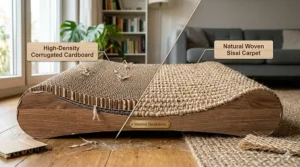
The FUKUMARU Cat Scratcher Mat represents the sisal alternative in this roundup—measuring 23.6 inches by 15.7 inches of woven natural sisal that offers a completely different scratching experience from cardboard competitors. If you’ve dealt with cardboard debris scattered across your floors, this mat eliminates that frustration entirely while delivering superior durability.
The key advantage of sisal over cardboard becomes apparent after the first month: zero material breakdown. While cardboard scratchers shed particles with every use, sisal fibers simply fray slightly without creating mess. For cats that prefer the texture of carpets and rugs (a common furniture-scratching profile), sisal provides the most effective redirection because it mimics that woven texture more accurately than corrugated cardboard.
FUKUMARU includes adhesive backing that keeps the mat stationary during vigorous scratching sessions—a feature often overlooked until your cat’s scratching pad becomes a sliding toy. The mat lies completely flat, making it ideal for placement near furniture you want to protect or in high-traffic areas where a raised scratcher would be a tripping hazard.
The tradeoff? Upfront cost sits higher than cardboard options at around $15-25, but the durability equation changes the math. With proper care, a sisal mat lasts 2-3 years compared to cardboard’s 6-12 month lifespan, making it more cost-effective long-term for households with heavy scratchers.
Pros:
✅ Natural sisal material produces zero cardboard debris during use
✅ Woven texture effectively redirects cats that prefer carpet scratching
✅ 2-3 year lifespan significantly outlasts cardboard alternatives
Cons:
❌ Higher initial cost around $15-25 versus budget cardboard options
❌ Not reversible, limiting the surface to single-sided use
Price & Verdict: The FUKUMARU sisal mat makes financial sense for cat owners tired of cleaning cardboard particles or those with confirmed carpet-scratching cats. The mess-free experience and extended durability justify the premium over disposable cardboard scratchers.
4. Catit Style Scratcher with Catnip
The Catit Style Scratcher distinguishes itself through designer aesthetics—offering multiple pattern options (Jungle-Stripe Lounge, Butterfly Chaise, Urban Bench) that treat the scratcher as furniture rather than disposable pet supply. At approximately 20 inches long by 9 inches wide, the chaise-style curve provides a comfortable lounging surface alongside the corrugated scratching area.
What’s interesting about Catit’s approach is the recognition that scratchers occupy visible floor space in your home. The printed patterns on the sides transform what would typically be plain brown cardboard into something design-conscious owners don’t mind displaying. This psychological factor shouldn’t be underestimated—scratchers that blend with your décor tend to stay in place rather than being hidden in corners where cats won’t use them.
The curved shape serves a practical purpose beyond aesthetics. Cats naturally cradle into the concave design for naps, and this positioning places them directly on the scratching surface when they wake and instinctively stretch. Customer reports indicate this design feature increases usage frequency compared to flat scratchers that require cats to move to a separate scratching location.
Catnip inclusion is standard across Catit models, though as a one-time application rather than SmartyKat’s infused layers. This means the initial attraction is strong, but long-term appeal depends on the cat’s inherent scratching preferences rather than ongoing scent reinforcement.
Pros:
✅ Multiple designer patterns allow matching to home décor preferences
✅ Chaise curve encourages lounging behavior that transitions into scratching
✅ Moderate price point around $10-18 balances quality and affordability
Cons:
❌ Non-reversible design limits lifespan to 4-6 months with regular use
❌ Compact size may not accommodate full stretching for cats over 15 pounds
Price & Verdict: For cat owners who want their pet supplies to complement interior design, Catit offers the best aesthetic integration at the $10-18 price point. The chaise design genuinely improves usage patterns, though the single-sided construction means shorter lifespan than reversible competitors.
5. Amazon Basics Corrugated Cardboard Cat Scratcher 4-Pack
The Amazon Basics Cat Scratcher 4-Pack takes a volume approach—delivering four 17.4-inch by 10-inch reversible scratchers at a combined price of around $25-35. This works out to approximately $7 per scratcher, making it the most economical option in this roundup when calculated on a cost-per-unit basis.
The strategic advantage of this multi-pack becomes clear when you consider scratching location theory. Cat behavior research indicates scratchers should be placed in prominent areas, with at least one close to sleeping quarters. Four scratchers allow proper distribution throughout your home—near the couch, by bedroom furniture, in cat lounging areas, and perhaps a spare for rotation. Single-scratcher purchases force you to choose between protecting one area or buying multiple individual units at inflated per-piece pricing.
Each scratcher features reversible construction using high-density corrugated cardboard, effectively doubling the usable lifespan. The white color scheme was a deliberate design choice that minimizes visual clutter when multiple units are deployed across your home. The simplicity also means no decorative coatings that might deter sensitive cats.
Customer feedback reveals the main limitation: durability per unit sits below premium options like PetFusion. Expect 3-6 months of active use per side for a single cat, meaning each scratcher delivers 6-12 months total before replacement. For the price, though, this calculates to better value than repeatedly buying single premium scratchers.
Pros
✅ Four-pack enables strategic placement throughout home at $7 per scratcher
✅ Reversible design doubles lifespan to 6-12 months per unit with rotation
✅ Simple white design minimizes visual impact when deploying multiple scratchers
Cons:
❌ Individual unit durability lower than premium single scratchers
❌ Smaller 17.4-inch size requires multiple scratchers for large multi-cat households
Price & Verdict: The Amazon Basics 4-pack delivers unmatched value for cat owners who understand that proper scratching management requires multiple locations. At around $6-9 per scratcher, this is the smart choice for comprehensive furniture protection across your entire home.
6. Conlun Oval Cat Scratcher Bowl
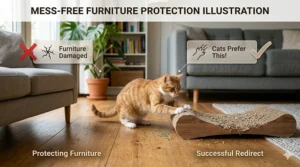
The Conlun Oval Scratcher Bowl reimagines horizontal scratching through a circular design that measures approximately 16 inches in diameter with raised sides forming a shallow bowl. This shape creates a semi-enclosed lounging spot that appeals to cats’ denning instincts while providing a 360-degree scratchable surface.
The oval bowl concept addresses a specific behavioral pattern: cats that circle before settling into rest positions. Traditional rectangular scratchers force directional scratching, but the circular design allows cats to scratch from any approach angle. This proves particularly valuable for cats that scratch-and-pivot—a behavior pattern where they rotate while scratching to mark territory more comprehensively.
Customer reviews highlight an unexpected benefit—the bowl shape contains cardboard debris better than flat scratchers. The raised edges prevent scattered particles from spreading across your floor, making cleanup as simple as lifting the scratcher and tapping out collected shavings. For apartment dwellers managing hardwood or tile floors, this containment feature reduces daily vacuuming.
The reversible construction means once the interior scratching surface wears down, you flip the entire bowl to reveal fresh cardboard underneath. Size-wise, the 16-inch diameter works well for cats up to 12 pounds, but larger breeds may find the bowl too confining for comfortable lounging.
Pros:
✅ Circular design allows 360-degree scratching from any approach angle
✅ Bowl shape contains cardboard debris, reducing floor scatter
✅ Compact footprint ideal for small apartments or crowded floor plans
Cons:
❌ 16-inch diameter may be too small for large breeds over 12 pounds
❌ Raised sides limit full-body stretching versus flat scratchers
Price & Verdict: At around $12-20, the Conlun Oval Bowl serves niche needs exceptionally well—specifically small-space living and cats that prefer enclosed resting areas. The debris containment alone justifies the investment for hardwood floor owners tired of constant cleaning.
7. ComSaf Large Cat Scratcher Bed
The ComSaf Cat Scratcher Bed closes out this roundup as the oversized budget alternative—measuring approximately 26 inches long by 15 inches wide with a gentle wave curve that provides ergonomic support. At the $20-30 price point, it undercuts PetFusion by nearly half while offering comparable surface area.
The wave design isn’t purely aesthetic—the gentle undulation creates varying scratch angles across the surface, which keeps cats engaged longer than monotone flat scratchers. This matters for redirecting obsessive scratchers; variety in texture and angle can break habitual furniture-scratching patterns more effectively than simple surface swaps.
ComSaf uses double-sided construction with high-density corrugated cardboard that resists compression better than single-layer competitors. Real-world durability reports indicate 8-12 months of active use before requiring replacement, positioning it between budget options (3-6 months) and premium choices (12-18 months). For buyers seeking middle-ground performance, this hits the sweet spot.
The size accommodates cats up to 18 pounds comfortably, making it viable for Maine Coons, Ragdolls, and other large breeds that overflow smaller scratchers. The width also allows two medium cats to use it simultaneously without territorial conflicts—a consideration for multi-cat households.
Pros:
✅ Large 26-inch surface area suits big breeds and multiple-cat use
✅ Wave curve provides varying scratch angles for sustained engagement
✅ Mid-tier pricing around $20-30 balances size and affordability
Cons:
❌ Durability slightly below premium options like PetFusion
❌ Lacks integrated catnip or scent attractants for initial adoption
Price & Verdict: The ComSaf Scratcher Bed targets budget-conscious owners with large cats or multiple felines. At $20-30, it delivers premium size and features without premium pricing—ideal for households that need substantial scratching real estate but can’t justify $50 expenditures.
Real-World Application: Matching Your Cat to the Right Scratcher
Understanding your cat’s specific scratching profile determines which horizontal cat scratcher will actually get used versus gathering dust in the corner. Here’s how to decode your cat’s behavior and make the right selection.
Scenario 1: The Carpet Ripper
Profile: Your cat exclusively targets carpets and rugs, dragging claws through woven fibers while stretching.
Best Match: FUKUMARU Natural Sisal Mat
Why: Cardboard scratchers fail with carpet-preferring cats because the texture difference is too pronounced. Sisal’s woven construction mimics carpet closely enough to redirect the behavior. Place the sisal mat directly over the targeted carpet area initially, then gradually move it to a permanent location once your cat establishes the habit.
Scenario 2: The Lounger Scratcher
Profile: Your cat scratches immediately after waking from naps, typically while still in lounging position.
Best Match: PetFusion Ultimate Lounge or Catit Style Scratcher
Why: These cats need the scratching surface to double as a bed. The curved designs allow them to stretch and scratch without relocating, which aligns with their natural post-nap routine. Position near their favorite sleeping spot—under a window or next to the couch.
Scenario 3: The Budget Household with Multiple Problem Areas
Profile: Scratching damage appears on couch arms, bedroom carpet, and dining room chair legs.
Best Match: Amazon Basics 4-Pack
Why: Comprehensive protection requires multiple scratchers. Four units at $7 each allows strategic placement near each problem area without breaking the budget. Rotate and flip units as they wear to maximize lifespan across all locations.
Scenario 4: The Heavy Scratcher
Profile: Your cat aggressively shreds any scratching surface within weeks, requiring constant replacement.
Best Match: FUKUMARU Sisal Mat or PetFusion Ultimate Lounge
Why: Heavy scratchers demand either maximum durability (sisal) or easy reversibility (PetFusion). The sisal mat eliminates replacement frequency, while PetFusion’s superior cardboard construction extends each side to 8-10 months. Both options reduce the financial burden of constant replacement.
How to Choose a Horizontal Cat Scratcher: Expert Criteria
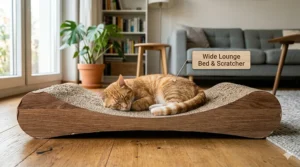
Selecting the right horizontal cat scratcher requires evaluating factors beyond marketing claims and cute product photos. Here’s what actually determines success or failure in protecting your furniture.
1. Size Relative to Your Cat’s Body Length
Your cat needs enough surface area to fully extend their body while scratching—this is non-negotiable for proper muscle engagement. Measure your cat from nose to base of tail (not including the tail itself) while they’re stretched out. The scratcher should be at least 80% of this length. For a 20-inch cat, you need a minimum 16-inch scratcher, though 20 inches or more is optimal. Undersized scratchers force cats to compromise their stretching, which diminishes appeal and drives them back to your furniture.
2. Material Choice: Cardboard vs. Sisal
Research using preference testing shows adult cats demonstrate distinct material preferences that remain consistent over time. Cardboard costs less upfront but requires replacement every 3-12 months depending on quality and usage intensity. Sisal eliminates debris and lasts years but carries a higher initial investment. The deciding factor? Observe which textures your cat currently scratches—carpet scratchers need sisal, upholstery scratchers adapt to cardboard more readily.
3. Stability During Use
A scratcher that slides across the floor during use will be abandoned quickly. Look for rubberized feet, adhesive backing, or sufficient weight to prevent movement. Lightweight cardboard scratchers under 2 pounds need adhesive strips or furniture placement against walls to stay stationary. Heavier designs (4+ pounds) or sisal mats with backing solve this problem inherently.
4. Reversibility for Cost Management
Double-sided construction effectively doubles your investment. A $25 reversible scratcher delivers better value than a $15 single-sided unit when calculated on cost-per-month of use. Check whether reversing requires disassembly or is as simple as flipping the entire piece—the easier the reversal, the more likely you’ll actually do it rather than replacing prematurely.
5. Placement Requirements
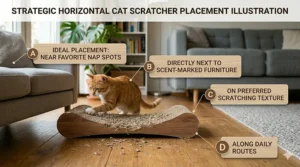
Effective scratchers must be positioned in prominent areas near sleeping quarters—not hidden in laundry rooms or basements. Consider whether the scratcher’s design blends with your living space. Designer options like Catit allow visible placement without décor compromise, while basic brown cardboard may drive you to suboptimal positioning that reduces usage.
Common Mistakes When Buying Horizontal Cat Scratchers
Even well-intentioned cat owners make predictable errors that undermine their scratching solution efforts. Here’s what to avoid based on thousands of failed purchases.
Mistake #1: Buying Only One Scratcher for Multiple Problem Areas
Single-scratcher solutions fail because cats scratch opportunistically based on location and mood. Your cat isn’t going to walk from the living room to the bedroom to use their designated scratcher when your couch arm is right there. Deploy scratchers wherever inappropriate scratching currently occurs—this means three to four units for most homes. The Amazon Basics 4-pack exists specifically to address this multi-location reality affordably.
Mistake #2: Choosing Size Based on Current Kitten Dimensions
That 6-month-old kitten won’t stay 8 pounds. Maine Coons reach 20+ pounds, and even standard domestics hit 12-15 pounds regularly. Buy scratchers sized for adult dimensions (20-26 inches minimum) from the start. Undersized scratchers become useless within months as your cat outgrows them, forcing repurchase anyway.
Mistake #3: Expecting Immediate Adoption Without Placement Strategy
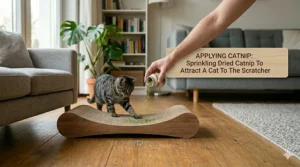
Cats don’t automatically recognize new scratchers as appropriate surfaces. Position the scratcher directly in front of or beside the current problem scratching location. Sprinkle catnip on the surface initially, and when you catch your cat using it, reward immediately with treats or play. It takes 2-3 weeks of consistent reinforcement before cats reliably redirect their scratching behavior.
Mistake #4: Replacing Only When Completely Shredded
Waiting until scratchers are destroyed means your cat has already resumed furniture scratching out of necessity. Replace or reverse cardboard scratchers when scratching resistance changes (when the cardboard compresses rather than provides firm resistance). For most products, this occurs around the 60-70% worn mark—well before complete destruction. Keep a backup scratcher on hand to swap immediately.
Mistake #5: Prioritizing Aesthetics Over Effectiveness
Beautiful designer scratchers that your cat ignores waste money. The hierarchy is: material preference > size adequacy > placement convenience > appearance. Only after confirming your cat uses a particular style should you invest in premium aesthetic versions. Start with budget cardboard options to establish preferences, then upgrade to designer versions that match your confirmed working prototype.
Horizontal vs. Vertical Scratchers: Understanding the Difference
The distinction between horizontal and vertical scratching goes deeper than simple orientation—each serves fundamentally different behavioral needs that cannot substitute for one another.
Horizontal Scratchers: Ground-Level Stretching and Marking
Horizontal scratchers accommodate the full-body stretch cats perform when waking from rest. This motion extends the spine, flexes shoulder blades, and engages hindquarter muscles in ways vertical posts cannot match. According to veterinary research, scratching serves multiple functions including claw conditioning, territorial marking, and muscle stretching. Cats that prefer horizontal scratching often target carpets, rugs, and low furniture because these surfaces allow the characteristic prone scratching posture with full weight distributed across all four paws.
The scent-marking aspect differs too. Horizontal scratching deposits pheromones from interdigital glands at ground level, creating territorial markers in high-traffic floor areas rather than vertical eye-level marks. Studies on feline scratching behavior reveal that environmental factors and cat characteristics both influence scratching patterns. For multi-cat households, horizontal scratchers reduce conflict by allowing subordinate cats to mark territory without challenging dominant cats’ vertical markers.
Vertical Scratchers: Standing Stretch and Territorial Display
Vertical posts serve cats that scratch while standing, often immediately after using the litter box or when encountering other cats. The vertical orientation allows maximum height extension—crucial for cats marking territory at their own eye level. Furniture arms, door frames, and wall corners get targeted by vertical scratchers because these locations maximize visibility of claw marks to other household members (human and feline).
The Two-Scratcher Minimum
Most cats exhibit both scratching styles depending on context and mood. A comprehensive scratching solution requires both horizontal and vertical options—not one or the other. Budget allocations should split roughly 60-40 favoring whichever style your cat demonstrates more frequently. If you can only afford one initially, observe whether your cat’s current furniture damage appears on horizontal surfaces (carpets, couch cushions) or vertical surfaces (chair legs, door frames) to guide your first purchase.
Maintenance and Lifespan: Maximizing Your Investment
Proper care extends scratcher lifespan significantly, reducing replacement costs and maintaining your cat’s interest in their designated scratching areas.
Rotation Strategy for Cardboard Scratchers
Cardboard scratchers wear unevenly—the center 60% of the surface receives 80% of the scratching activity. Rotate the scratcher 180 degrees weekly to distribute wear across the entire surface. This simple step extends single-side lifespan from 4 months to 6-7 months before requiring reversal. For reversible designs, implement a quarterly flip schedule rather than waiting for one side to fully degrade.
Catnip Refreshment Protocol
Built-in catnip loses potency after 4-6 weeks. Refresh appeal by sprinkling a small amount of fresh dried catnip onto the surface monthly. For sisal mats, use a spray bottle with diluted catnip oil (2-3 drops per cup of water) and mist lightly. This maintains engagement without creating the mess of loose dried catnip on non-textured surfaces.
Debris Management for Cardboard Types
Cardboard scratchers generate shredded particles during use—this is normal and indicates proper claw conditioning. Vacuum the scratcher surface weekly using a brush attachment to remove loose particles before they spread across your floor. For bowl-style scratchers like the Conlun, tap out collected debris into trash weekly rather than letting it accumulate to the rim.
Replacement Indicators
Replace cardboard scratchers when:
- The surface compresses rather than resists scratching (usually 60-70% worn)
- Your cat returns to furniture scratching despite the scratcher being present
- Cardboard layers separate or delaminate, creating unstable scratching surface
- The scratcher slides during use despite adhesive backing (indicates base compression)
For sisal mats, replacement becomes necessary when:
- Fraying creates loose threads longer than 1 inch (catching hazard)
- Adhesive backing fails and mat shifts during scratching
- Woven texture flattens to smooth surface (typically 2-3 years with normal use)
❓ FAQ: Horizontal Cat Scratchers
❓ How long do horizontal cat scratchers typically last?
❓ Can I use a horizontal cat scratcher for a kitten?
❓ What's better for horizontal scratching: cardboard or sisal?
❓ How many horizontal cat scratchers do I need?
❓ Why won't my cat use the horizontal scratcher I bought?
Conclusion: Choosing Your Horizontal Cat Scratcher
The right horizontal cat scratcher transforms from a hopeful purchase into an essential piece of furniture protection that pays for itself within weeks. After testing these seven options across different cat profiles and household situations, clear winners emerge for specific needs.
For premium performance and multi-cat households, the PetFusion Ultimate Cat Scratcher Lounge justifies its $40-50 price through extended 12-18 month durability and oversized accommodations. Budget-conscious buyers should default to the Amazon Basics 4-Pack, which delivers comprehensive home coverage at approximately $7 per scratcher—unbeatable value for protecting multiple furniture pieces simultaneously.
Carpet-scratching cats require the FUKUMARU Natural Sisal Mat specifically; cardboard alternatives fail to redirect this behavior effectively regardless of price or design. The mess-free nature and 2-3 year lifespan make it the only logical choice for confirmed carpet scratchers despite higher upfront cost.
Small-space dwellers and aesthetic-focused owners will appreciate the Catit Style Scratcher or Conlun Oval Bowl for their compact footprints and design integration. Neither matches premium options in durability, but both solve the visibility problem that causes owners to hide scratchers in locations cats won’t use.
Remember that no single scratcher addresses all scratching behavior across your home. Strategic placement of multiple units, matched to your cat’s specific size and texture preferences, creates the comprehensive solution that actually protects your furniture long-term. Start with one confirmed working option, then expand coverage using the same style across additional high-risk locations.
Recommended for You
- 7 Best Cardboard Cat Scratcher Options in 2026
- 7 Best Scratching Post for Large Cats That Actually Work (2026)
- 7 Best Tall Scratching Posts 2026: Protect Your Furniture Now
Disclaimer: This article contains affiliate links. As an Amazon Associate, I earn from qualifying purchases. If you purchase products through these links, we may earn a small commission at no additional cost to you.
✨ Found this helpful? Share it with your friends! 💬🤗
