Table of Contents
What is hypoallergenic cat shampoo for sensitive skin? It is a feline-specific cleanser that leaves out common irritants such as heavy perfume, dyes and harsh detergents. It adds soothing, barrier-friendly ingredients like colloidal oatmeal. “Hypoallergenic” is not a tightly regulated promise, though, so the label is where your homework starts, not where it ends.
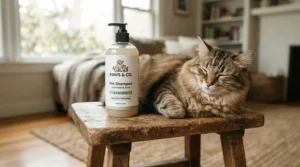
Here’s the thing about cats: they hide discomfort like it’s their job. Then one day you notice the over-grooming, the flaky patches along the spine, the scabby chin, the sudden frantic scratching at 3 a.m. Skin trouble in cats rarely announces itself politely.
It also helps to know what a shampoo can realistically do. According to veterinary guidance on skin allergies in cats, allergic skin disease is managed rather than cured. Fleas, food reactions and mites can mimic it, so your vet has to rule them out. A good hypoallergenic cat shampoo for sensitive skin is a supporting actor, not the lead. It cleans away allergens and flakes, soothes irritated skin, and avoids making things worse.
I haven’t bathed a cat with each of these bottles, and I won’t pretend I have. Everything below rests on label data, ingredient lists and the patterns that show up across published owner and expert reviews. You’ll get seven real products from budget to premium. You’ll also get honest analysis of fragrance-free cat shampoo for itchy skin, soap-free cat shampoo for dry skin, colloidal oatmeal cat shampoo, pH-balanced formulas and vet-recommended ingredients. Let’s get into it. 🐾
Quick Comparison: 7 Hypoallergenic Cat Shampoos at a Glance
| Product | Standout Trait | Scent Status | Best For |
|---|---|---|---|
| Earthbath Oatmeal & Aloe Shampoo (Fragrance Free) | 3% colloidal oatmeal, dilutable | Fragrance-free | Itchy, dry skin |
| Burt’s Bees for Pets Hypoallergenic Cat Shampoo | Gentle, pH-balanced, sulfate- and paraben-free | Listed as unscented | First-time buyers |
| Hepper Colloidal Oatmeal Pet Shampoo | Oatmeal plus soap-free cleansing | Scented (aloe and cucumber) | Flaky skin, scent-tolerant cats |
| Veterinary Formula Clinical Care Hypoallergenic Shampoo | Clinical-care line for itchy, red skin | Verify on label | Value-minded owners |
| TropiClean Gentle Kitten & Cat Shampoo | Oatmeal and aloe, kitten-friendly | Verify on label | Households with kittens |
| Espree Hypoallergenic Cat Shampoo & Conditioner | Tearless 2-in-1 | Verify on label | Long coats, quick baths |
| Virbac Allermyl Dermatological Shampoo | Skin-lipid support, physiological pH | Unscented | Chronic sensitivity, vet-guided care |
Looking at the table, Earthbath is the cleanest match for fragrance-sensitive, itchy cats, while Burt’s Bees is the low-drama entry point. Virbac Allermyl sits in a different league: a dermatology-style formula for cats whose skin trouble is ongoing. If you only need a mild everyday option, the premium tier is probably more than you need.
I built the lineup to cover three buyer types: the budget shopper, the mid-range ingredient reader and the owner already working with a vet. Prices below are ranges as of research time, and they shift constantly, so check current price before you buy.
💬 Just one click — help others make better buying decisions too!😊
Top 7 Hypoallergenic Cat Shampoo for Sensitive Skin: Expert Analysis
1. Earthbath Oatmeal & Aloe Shampoo (Fragrance Free) — best match for itchy, dry skin
If your cat reacts to perfume, this is where I’d start. It’s the rare bottle that is fragrance-free, soap-free and built around colloidal oatmeal.
The manufacturer lists colloidal oatmeal at 3%, plus aloe, glycerin, allantoin and vitamins. It states there is no soap, SLS/SLES, parabens, dyes or perfumes. In practice, “soap-free” means less of the alkaline residue that dries skin out, and the missing scent removes a classic trigger. It’s labeled pH-balanced and concentrated, with a stated dilution of roughly ten parts water to one part shampoo, so a bottle stretches further than the ounce count suggests. It also says it won’t wash off topical flea treatments, which matters if your cat is on a monthly preventive.
Based on the ingredient list, this is the most defensible first choice for dry, itchy, mildly allergic skin. The label asks for at least 90 seconds of contact time, and that waiting period is where colloidal oatmeal earns its keep. It cleanses and soothes, but it isn’t medication.
Reviewers on the brand’s page describe calmer pets and softer, fluffier coats. I couldn’t independently verify rating counts, so read that as directional.
Pros:
- ✅ Fragrance-free with a real oatmeal concentration
- ✅ Soap-free, pH-balanced formula
- ✅ Dilutable, so each wash costs less
Cons:
- ❌ Contains aloe, so rinse thoroughly
- ❌ Not a treatment for infections
Expect a price in the roughly $14–$20 range; check current price. With dilution, the value verdict is strong.
2. Burt’s Bees for Pets Hypoallergenic Cat Shampoo — gentlest low-risk starting point
Sometimes the best choice is the one that asks the fewest things of you. This formula is the “just don’t irritate her” option.
Listings describe it as hypoallergenic, pH-balanced for cats, and free of sulfates, parabens and artificial dyes, with shea butter and honey for conditioning. The sulfate-free base means a gentler lather and, usually, less stripping of natural oils. The pH claim is aimed at keeping the skin barrier intact. The 10-ounce size is small, but cats don’t need many baths.
Based on the label, this suits cats with dry or mildly sensitive skin rather than cats with serious dermatitis. Reviewers consistently report that it soothes dryness without irritation. A common caveat is that it may not be enough for severe skin conditions, which is fair, since that is a vet’s department.
Pros:
- ✅ Sulfate-free, paraben-free, dye-free
- ✅ pH-balanced for cats
- ✅ Approachable, widely stocked brand
Cons:
- ❌ Modest size for multi-cat homes
- ❌ Limited power for severe flare-ups
It typically lands in the $8–$13 range; check current price. For a beginner, it’s an easy yes.
3. Hepper Colloidal Oatmeal Pet Shampoo — oatmeal comfort with a scent trade-off
Hepper pairs colloidal oatmeal with a soap-free, pH-balanced base. Roundups of cat shampoos repeatedly put it near the top for dry, flaky skin.
The ingredient list includes colloidal oatmeal, glycerin and aloe. It also includes fragrance, which is the catch. The cucumber-and-aloe scent lingers, and one reviewer roundup notes it can transfer to beds and furniture. For a scent-sensitive cat, that is a real consideration.
My analytical take: if your cat’s trouble is dryness and dandruff rather than allergic reactivity to scents, Hepper is a good fit. If you’re shopping for fragrance-free cat shampoo for itchy skin, however, the formula is a poor match. One source suggests bathing healthy cats only every four to six weeks or when visibly dirty, which makes the 16-ounce bottle a long-term purchase.
Pros:
- ✅ Colloidal oatmeal with soap-free cleansing
- ✅ pH-balanced and multi-species safe
- ✅ Large bottle lasts for ages
Cons:
- ❌ Contains added fragrance
- ❌ Scent can linger on bedding
Expect the $14–$20 range; check current price. The value is good, as long as scent isn’t an issue.
4. Veterinary Formula Clinical Care Hypoallergenic Shampoo — budget-friendly clinical-care line
The branding says “clinical care,” and the positioning backs it up: sensitive, itchy and red skin.
Review roundups frequently name it best-for-the-money, and one notes it can soothe skin without washing away flea medication. That detail matters because overly aggressive shampoos can strip topical preventives. I couldn’t verify the full ingredient list to my satisfaction, so read the bottle before buying, especially if you need fragrance-free.
What stands out analytically is the audience: owners who want something a step above supermarket brands without paying dermatology prices. It won’t replace a prescribed medicated shampoo, but for mild itch and redness it’s a sensible mid-way option.
Reviewers tend to praise its gentleness and value. I couldn’t verify rating volume independently, so I’ll leave numbers out.
Pros:
- ✅ Positioned for itchy, red, sensitive skin
- ✅ Gentle on flea treatments, per reviews
- ✅ Strong value for the price
Cons:
- ❌ Ingredient transparency varies by listing
- ❌ Not a replacement for prescription care
Expect roughly $10–$16; check current price. Solid value if you confirm the ingredients first.
5. TropiClean Gentle Kitten & Cat Shampoo — oatmeal and aloe, kitten-ready
Households with a kitten and an adult cat will like that one bottle covers both.
The listing describes a hypoallergenic cleanse enriched with oatmeal and aloe for sensitive, allergy-prone skin. Because it’s marketed for kittens too, the formula leans mild. In practice, that translates to a gentler lather and less worry about tear-prone eyes, though you should still keep shampoo away from the face. I couldn’t verify its scent status from listing data, so check the label if you need fragrance-free.
My view: this suits owners who want oatmeal’s soothing effect without paying a premium. It’s more everyday comfort than targeted skin therapy, so don’t expect it to calm a serious flare-up.
Reviewers generally describe it as mild and easy to rinse, and review roundups often highlight it for sensitive skin.
Pros:
- ✅ Suitable for kittens and adult cats
- ✅ Oatmeal and aloe soothing blend
- ✅ Affordable and easy to find
Cons:
- ❌ Scent status needs checking
- ❌ Mild by design, not therapeutic
It generally falls in the $8–$13 range; check current price. A dependable budget pick.
6. Espree Hypoallergenic Cat Shampoo & Conditioner — tearless 2-in-1 for long coats
If you have a long-haired cat and zero patience for a two-step bath, the all-in-one format helps.
The product is described as developed for cats with sensitive, allergy-prone skin, and it’s tearless. The conditioner built in reduces tangles, which cuts bath time and therefore stress. That matters, because the fewer minutes your cat spends wet and annoyed, the better the bath tends to go.
Analytically, 2-in-1 formulas are convenient but can leave more residue if you don’t rinse well, and residue is a known itch trigger for cats who lick it off. One aggregator shows a high score on a small review pool, so treat the enthusiasm as promising rather than conclusive.
Pros:
- ✅ Tearless, hypoallergenic positioning
- ✅ Conditioner reduces tangling
- ✅ Saves a step during bath time
Cons:
- ❌ Needs very thorough rinsing
- ❌ Small review pool limits certainty
Expect about $10–$16; check current price. Good value for fluffy cats.
7. Virbac Allermyl Dermatological Shampoo — premium skin-barrier support
This is the specialist in the lineup. It’s what you consider when ordinary gentle shampoos haven’t been enough.
The product is described as a pH-balanced, unscented formula with omega-6 fatty acids, vitamin E, a skin lipid complex (ceramides and essential fatty acids) and piroctone olamine, an antimicrobial ingredient used for scaly or greasy skin. The label suggests once- or twice-weekly use or as directed by your vet, with several minutes of contact time. That’s more of a protocol than a casual bath, so it belongs in a vet-guided plan.
This is the best fit for cats with persistent skin sensitivity, particularly alongside veterinary treatment. For a cat with a few dry patches, it’s overkill. US availability and retail channels vary, so confirm stock before you plan around it.
Pros:
- ✅ Unscented with physiological pH
- ✅ Skin-lipid and omega-6 support
- ✅ Designed for repeated, directed use
Cons:
- ❌ Highest price tier
- ❌ Availability can vary
Expect roughly $20–$30; check current price. It’s worth it only for ongoing needs.
| Product | Verified Label Claims | Scent | Price Range | Best For |
|---|---|---|---|---|
| Earthbath | Colloidal oatmeal, soap-free, pH-balanced | None | $14–$20 | Itchy, dry skin |
| Burt’s Bees | Hypoallergenic, sulfate-free, pH-balanced | Unscented | $8–$13 | Beginners |
| Hepper | Colloidal oatmeal, soap-free, pH-balanced | Scented | $14–$20 | Flaky skin |
| Veterinary Formula | Clinical-care, hypoallergenic | Verify | $10–$16 | Value seekers |
| TropiClean | Oatmeal and aloe, kitten-safe | Verify | $8–$13 | Kitten homes |
| Espree | Tearless, conditioner built in | Verify | $10–$16 | Long coats |
| Virbac Allermyl | Omega-6, skin lipid complex, pH | Unscented | $20–$30 | Chronic sensitivity |
Looking at the table, Earthbath and Burt’s Bees give the best price-to-reliability balance for ordinary sensitive skin. Hepper is a strong pick only if scent isn’t a trigger. Virbac Allermyl costs more per bottle, but if it keeps a chronically itchy cat comfortable between vet visits, the long-term value case is easy to make.
How to Choose Hypoallergenic Cat Shampoo for Sensitive Skin
Shelves are crowded with confident labels. Here’s a simple six-step filter.
- Start with “for cats.” Feline skin is thinner and sits at a different pH than human skin, so human shampoos are a poor match.
- Read the fragrance line. “Unscented” can still hide masking agents, so look for “fragrance-free” and check the ingredient list.
- Confirm soap-free. Soap can leave a dry, alkaline film, so soap-free is the safer starting assumption.
- Look for a soothing active. Colloidal oatmeal, aloe and glycerin are common, though none is a cure.
- Check pH language. A label that says pH-balanced for cats is better than silence.
- Match the product to the problem. Mild dryness calls for a gentle option, while chronic itch calls for a vet conversation first.
Notice what isn’t on the list: “natural” and “organic.” Those words don’t guarantee safety for a cat who licks what you put on her.
Skin Allergies in Cats: What Shampoo Can (and Can’t) Do
Let’s be blunt. Shampoo can’t fix an allergy. According to veterinary guidance, skin allergies in cats are managed through a combination of approaches. Those may include omega fatty acids, medications and allergen-specific immunotherapy, which is described as effective in roughly 60% of treated cats.
What shampoo can do is rinse pollen, dust and flakes off the coat and give irritated skin a calmer environment. That is useful, but it is supportive. Think of it as mopping the floor while someone fixes the leak.
It also helps to know the usual suspects. Flea allergy, food allergy and environmental atopy can all look alike: itching, over-grooming, scabs near the neck and ears. If your cat is scratching hard enough to injure the skin, or has recurring ear or skin infections, book a vet visit before shopping. A bath won’t solve a secondary infection, and a mismatched product can complicate treatment.
Fragrance-Free Cat Shampoo for Itchy Skin: Why Scent Matters
Cats experience scent differently than we do. A shampoo that smells like cucumber meadows to you can register as an assault to a nose that navigates by smell. For cats with reactive skin, fragrance also ranks among the more common irritants.
That’s why fragrance-free cat shampoo for itchy skin is the cleanest first test. Earthbath and Virbac Allermyl present themselves as scent-free, and Burt’s Bees is listed as unscented. Hepper includes fragrance by design, which is lovely for many cats but a bad bet for a sensitive one.
One more trap: “unscented” and “fragrance-free” aren’t always the same. A product can have masking compounds that neutralize odor without removing it. When in doubt, scan the ingredient list for “fragrance,” “parfum” or botanical oils. If none appear, you’re probably in the clear.
Soap-Free Cat Shampoo for Dry Skin: The Quiet Hero Feature
Real soap is alkaline, and alkaline cleansers tend to strip skin oils and leave residue. Cat skin has little cushion to spare, so a soap-free cat shampoo for dry skin is a smart default.
Several products here promote that trait: Earthbath, Hepper and the ones built on gentler surfactants. The practical benefit also touches flea control. Soap-free formulas are less likely to reduce the effectiveness of spot-on treatments, a point manufacturers of oatmeal shampoos highlight.
Still, soap-free doesn’t mean harmless. Detergent-style surfactants differ in how mild they are, and cats often react to different things than people do. If your cat is dry, flaky and prone to dandruff, pair the shampoo with a realistic bath schedule. Over-bathing strips oils and worsens dryness even with a gentle product, so follow your vet’s recommended frequency if bathing is part of a treatment plan.
Colloidal Oatmeal Cat Shampoo: How It Works
Colloidal oatmeal is oat grain ground so fine it suspends in liquid. Per veterinary references, colloidal oatmeal topical is used as an anti-inflammatory, anti-itch and softening agent for surface skin disorders in cats and dogs, and it comes in shampoo, spray and rinse forms.
That’s why colloidal oatmeal cat shampoo is such a common recommendation for itchy, dry skin. The fine particles cling to skin, hold moisture and calm surface irritation.
Two honest caveats apply. First, the FDA doesn’t review shampoos and similar non-drug products for safety or effectiveness before sale, so quality depends on the maker. Second, the same source reminds us that natural doesn’t automatically mean safe. Concentration also matters. Earthbath lists 3%, while many products only say “contains oatmeal.” If you want the full benefit, choose a bottle that tells you how much colloidal oatmeal it contains, and give it contact time before rinsing.
pH-Balanced Formulas: Why the Number on the Label Matters
Cat skin pH is more neutral than ours. Sources vary, but they generally place it somewhere between about 6 and 7.5, versus roughly 5.5 for human skin. That gap is why human shampoo can leave feline skin dry, itchy and vulnerable.
When a label promises pH-balanced formulas, it signals that the maker considered the skin barrier rather than only cleaning power. Burt’s Bees, Earthbath, Hepper and Virbac Allermyl all make pH claims in some form.
How far should you trust that? Treat it as a good sign, not proof. Few brands publish actual pH values, and no certification stamp guarantees accuracy. Still, a label that says nothing about pH is a weaker choice for a cat whose skin is already reactive. Pair the claim with the other filters: fragrance, soap, and a soothing active.
Vet-Recommended Ingredients: What the Phrase Really Means
“Vet-recommended” is marketing gold and a regulatory gray zone. It can mean a clinic endorses the product, that a vet was consulted on the formula, or only that vets recommend an ingredient. Check which one you’re looking at.
The ingredients that most consistently appear in dermatology-minded formulas are colloidal oatmeal, glycerin, aloe, omega fatty acids and skin-lipid components like ceramides. Allergic skin care is typically multimodal. The 2023 AAHA guidelines on allergic skin disease describe a layered approach with ongoing communication between vet and owner.
So the smartest use of vet-recommended ingredients is as a shopping checklist, not as a substitute for a diagnosis. If your vet suggests a specific shampoo, follow their directions on frequency and contact time, even when the bottle says something different.
Hypoallergenic Shampoo vs. Wipes, Sprays and Medicated Washes
| Option | Best For | Limits |
|---|---|---|
| Hypoallergenic shampoo | Full-coat cleaning, allergen removal | Stressful for some cats |
| Waterless foams and sprays | Anxious cats, light cleanups | Not deep-cleaning |
| Grooming wipes | Spot cleaning, paws, face | Slow for full coats |
| Medicated shampoo | Infections, vet-diagnosed conditions | Needs vet direction |
Waterless products are a fair option for a cat who panics in water, and they allow more frequent touch-ups. Wipes are underrated for paws and faces. Medicated washes belong to your vet, because the wrong one can irritate healthy skin.
In short, a hypoallergenic cat shampoo for sensitive skin is best for periodic, whole-body cleaning. Waterless or wipe options fill the gaps between baths, and medicated products handle diagnosed problems. Using them together often beats leaning on one.
How to Use Hypoallergenic Cat Shampoo for Sensitive Skin Without a Meltdown
Here is a practical routine you won’t find on a product page.
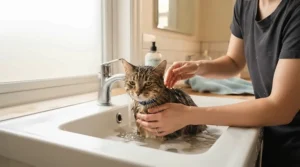
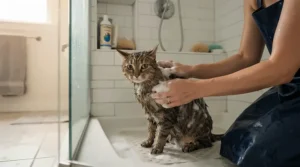
- Prep first. Trim claws if you can, lay a rubber mat in the tub and set out towels. Preparation cuts the chaos.
- Use lukewarm water. Hot water can irritate sensitive skin, and so can a dryer on a high setting.
- Dilute where the label allows. Some concentrates can be diluted, which makes application easier and rinsing faster.
- Avoid the face. Wipe it separately with a damp cloth.
- Respect contact time. If you’re using a colloidal oatmeal cat shampoo, leave it on for the time the label asks. Even 90 seconds helps.
- Rinse until you’re certain, then rinse again. Residue is the number one mistake because cats lick it off.
- Dry gently. Towel first, then low-heat air only if your cat tolerates it.
After the bath, watch your cat’s skin over the next few days. Calmer scratching and less redness are a good sign. A new rash or more itching means it’s time to stop and call your vet.
✨ Don’t Miss These Exclusive Deals!
🔍 Take your hypoallergenic cat shampoo for sensitive skin search to the next level with these carefully selected products. Click on any highlighted item to check current pricing and availability. These picks can help you create calmer, comfier bath days your cat will tolerate!
Real-World Scenarios: Matching Shampoo to Your Cat
Scenario 1: The indoor cat with winter dandruff. Her coat is healthy but flaky, and she isn’t scratching hard. Hepper or Burt’s Bees is a sensible, low-cost choice, with baths spaced out and a humidifier doing quiet work in the background.
Scenario 2: The scent-sensitive rescue. He sneezes near candles and bolts from the laundry aisle. This is a clear case for fragrance-free cat shampoo for itchy skin, so Earthbath is the logical starting point, with a patch of contact time and a long rinse.
Scenario 3: The long-haired cat on a budget. Tangles are the bigger issue than itch. Espree saves a step, and brushing between baths prevents mats, which are far more stressful than the bath itself.
Scenario 4: The cat with recurring skin trouble. Ear infections come and go, and she scratches until her skin is raw. This isn’t a shampoo-only problem. Work with your vet, and if they approve, Virbac Allermyl may fit into the plan.
A good rule of thumb: the more severe the symptoms, the more the answer shifts from the shopping aisle toward your vet’s office.
Common Mistakes When Buying Hypoallergenic Cat Shampoo
Trusting the word “hypoallergenic” alone. It’s a marketing claim, not a guarantee. Read the ingredient list.
Assuming natural means safe. Botanical oils and fragrances can bother cats, especially since cats ingest what’s on their fur.
Skipping the rinse. Residue is a classic cause of post-bath itching.
Bathing too often. Frequent washing strips oils and can worsen dryness. Unless a vet says otherwise, bathe when your cat is dirty or when treatment calls for it.
Treating shampoo as a cure. If the underlying issue is fleas, food or infection, no shampoo will solve it.
Ignoring medication interactions. If your cat uses a topical flea product, check whether the shampoo is compatible. Earthbath states it won’t wash off topical flea treatments, but always confirm for your own products.
FAQ
❓ How often can I use hypoallergenic cat shampoo for sensitive skin?
❓ Can I use a hypoallergenic dog shampoo on my cat?
❓ Is every unscented shampoo a fragrance-free cat shampoo for itchy skin?
❓ Will a colloidal oatmeal cat shampoo cure my cat's allergies?
❓ Are waterless foams a good alternative for cats that hate baths?
Conclusion
Choosing a hypoallergenic cat shampoo for sensitive skin comes down to a short list of questions. Is it made for cats? Is it soap-free? Is the fragrance situation honest? Is there a soothing active like colloidal oatmeal? And does it fit what’s actually bothering your cat?
For most owners, Earthbath Oatmeal & Aloe Shampoo (Fragrance Free) is the best all-around answer to itchy, dry skin. Burt’s Bees for Pets Hypoallergenic Cat Shampoo is the easy, budget-friendly starter. Hepper works when scent isn’t a problem, and Espree suits long coats. TropiClean covers kitten-and-cat households, Veterinary Formula offers value, and Virbac Allermyl serves chronic cases under vet guidance.
Remember the bigger picture, too. Shampoo supports skin health, but it can’t replace a diagnosis. If your cat’s itching is intense, constant or paired with infections, call your vet first and let the bottle play a supporting role.
Ready to put this into action? 🎯
Recommended for You
- Cat Shampoo And Conditioner Sets: 7 Best Budget Buys 2026
- New Cat Owner Essentials: 7 Must-Have Picks For 2026
- Luxury Cat Supplies: 7 Stunning Upgrades Worth It In 2026
Disclaimer: This article contains affiliate links. As an Amazon Associate, I earn from qualifying purchases. If you purchase products through these links, we may earn a small commission at no additional cost to you.
✨ Found this helpful? Share it with your friends! 💬🤗
