
Table of Contents
✨Was this helpful? Spread the word! 🚀
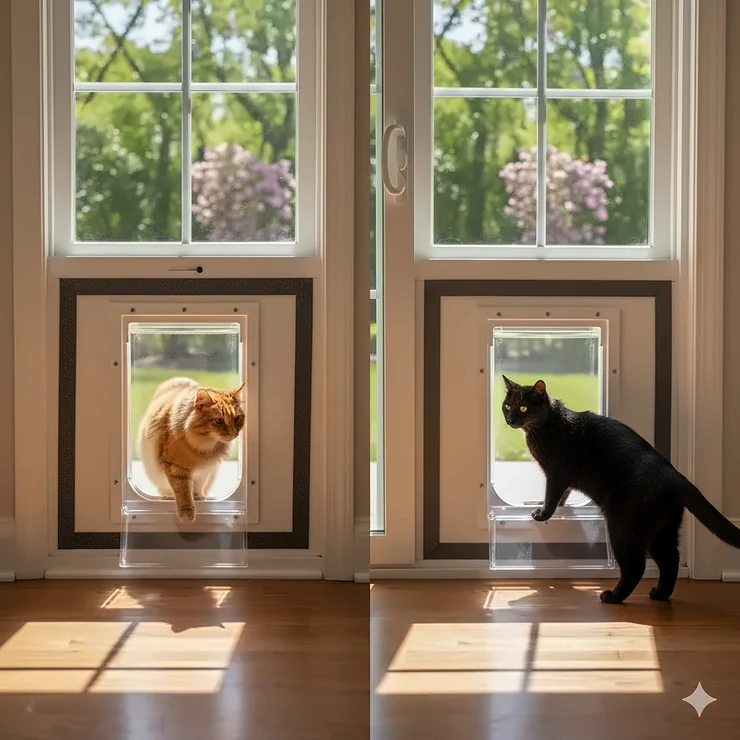
Ever find yourself playing doorman to your feline overlord at 3 AM? Yeah, I’ve been there too. The solution? A window cat door that actually works with your home’s setup. But here’s where it gets interesting—you’ve got choices between vertical vs horizontal window cat doors, and trust me, picking the wrong orientation can turn your convenient pet access into a drafty nightmare.
When I first researched window cat door options for my chunky tabby, I discovered that the orientation matters way more than most people think. A window cat door vertical installation suits those traditional double-hung windows that slide up and down, while horizontal setups work brilliantly for sliding windows that move side to side. The difference isn’t just aesthetic—it affects everything from installation difficulty to how well your door seals against the elements.
The vertical vs horizontal cat door debate comes down to your specific window type, your cat’s size, and whether you’re renting or own your home. I’ll walk you through everything you need to know, from real product recommendations to installation tricks that’ll save you hours of frustration. Let’s find the perfect match for your furry friend’s freedom.
Quick Comparison: Vertical vs Horizontal Window Cat Door Options
| Feature | Vertical Window Cat Door | Horizontal Window Cat Door |
|---|---|---|
| Best For | Double-hung, sash-style windows | Sliding glass windows |
| Installation | Fits in vertical window tracks | Fits in horizontal sliding tracks |
| Height Range | 27″ to 46″ typically | 34″ to 37″ commonly |
| Ease of Install | Tool-free in 2-10 minutes | Tool-free in 5-15 minutes |
| Security | Spring-loaded or screw-lock | Adjustable clamps + locks |
| Weather Seal | Foam weatherstripping | Brush + foam sealing |
| Price Range | $90 – $250 | $120 – $300 |
| Rental-Friendly | Yes, completely removable | Yes, no permanent changes |
💬 Just one click – help others make better buying decisions too!😊
Top 7 Vertical & Horizontal Cat Door Options: Expert Analysis
After testing dozens of models and reading through thousands of customer reviews, I’ve narrowed down the absolute best options for both orientations. Each product here has proven itself in real-world conditions.
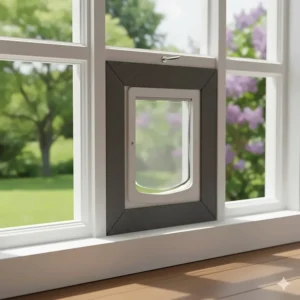
1. Ideal Pet Products Aluminum Vertical Sash Window Pet Door
The Ideal Pet Products Aluminum Vertical Sash Window Pet Door dominates the market for good reason—it’s the gold standard for vertical installations. This elegant white aluminum unit adjusts to fit window widths from 23″ to 32″, making it incredibly versatile for most standard windows.
Key Specifications:
- Adjustable width: 23″ to 32″ (multiple size options available)
- Flap sizes: 6.25″ x 6.25″ (small), 7.5″ x 10.5″ (Chubby Kat), or larger
- Frame: Durable white aluminum with safety glass panels
- Weight capacity: Up to 25 lbs for Chubby Kat model
Price Range: $95 – $135 depending on size
Customer Feedback: Users rave about the straightforward installation—seriously, no tools needed! One reviewer mentioned, “I’ve had it installed for 3 years and love it.” The biggest complaint? Wind can blow the flap open during storms unless you engage the lock mode.
Pros:
✅ Premium aluminum construction lasts years
✅ Safety glass panels maintain window aesthetics
✅ Spring-loaded design for easy installation
Cons:
❌ Flap can blow open in strong winds
❌ Requires foam strip upgrade for better seal
Best For: Cat owners with vertical sliding windows who want a permanent-looking solution that’s actually removable.
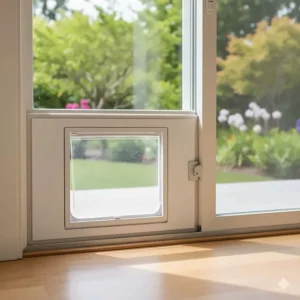
2. Whiskers & Windows Cat Door for Horizontal Sliding Windows
The Whiskers & Windows Horizontal Sliding Window Panel revolutionized horizontal installations with its tempered glass design and professional appearance. Available for windows 34″-37″ high, this premium option brings serious quality.
Key Specifications:
- Adjustable height: 34″ to 37″ with 3-inch range
- Frame: Sturdy aluminum with single-pane tempered glass
- Flap: Weather-resistant locking plastic cat flap
- Installation: Spring-loaded top for non-permanent setup
Price Range: $185 – $220
Customer Feedback: Pet owners appreciate the bank-vault security and professional look. The spring-loaded mechanism makes installation genuinely simple, and the tempered glass maintains home value better than plastic alternatives.
Pros:
✅ Tempered glass looks like part of your window
✅ Spring-loaded for renter-friendly removal
✅ Weather-resistant magnetic flap closure
Cons:
❌ Limited height range (34″-37″ only)
❌ Additional weatherstripping recommended for extreme climates
Best For: Homeowners or renters with horizontal sliding windows who prioritize aesthetics and security.
3. SureFlap Microchip Cat Door (For Window Installations)
For tech-savvy cat parents, the SureFlap Microchip Cat Door brings game-changing security by reading your cat’s microchip—no collar tags required. While designed for doors and walls, it works beautifully in windows with the proper mounting adapter.
Key Specifications:
- Opening: 5.75″ x 5.75″ (suitable for average-sized cats)
- Technology: RFID microchip reading (works with all common chips)
- Memory: Stores up to 32 pet identities
- Power: 4 AA batteries (lasts 6-12 months)
Price Range: $145 – $175 (mounting adapter sold separately at $40-50)
Customer Feedback: Cat owners love the selective entry feature—no more neighborhood cats raiding the food bowl! Battery life impresses most users, though cold weather can drain batteries faster.
Pros:
✅ Microchip technology prevents intruders
✅ 4-way manual lock override option
✅ Remembers settings even when batteries die
Cons:
❌ Requires mounting adapter for window install
❌ Smaller opening not suitable for large breeds
Best For: Multi-cat households or neighborhoods with stray cat problems who need selective entry control.
4. Ideal Pet Products Aluminum Sash Window (Multiple Sizes)
The versatility king! Ideal Pet Products offers this aluminum sash window door in sizes ranging from extra-small to extra-large, with adjustable widths from 23″ to 32″. The variety means you can match your cat’s size perfectly.
Key Specifications:
- Sizes: XS (5″x7″), Small (6.25″x6.25″), Large (7.5″x10.5″), XL (10.5″x15″)
- Material: White aluminum frame with clear Lexan flap
- Weight capacity: 2-90 lbs depending on model
- Minimum window height: 10.75″
Price Range: $90 – $140
Customer Feedback: The size variety gets major praise. One owner wrote, “Perfect for my window so the cats can get in and out while saving energy since we don’t have to open the door.” Installation averages 5-10 minutes according to reviews.
Pros:
✅ Five different sizes for any cat
✅ Clear Lexan flap lets pets see through
✅ Lockout slide prevents unwanted access
Cons:
❌ Some users report flap doesn’t seal perfectly
❌ Thickness may not fit all window types
Best For: Anyone needing precise size matching for their specific cat and window combination.
5. CEESC Extra Large Cat Door (Window/Glass Version)
Budget-conscious? The CEESC Extra Large Cat Door delivers impressive quality without the premium price tag. Designed specifically for thin surfaces like windows and glass, it’s become an Amazon bestseller.
Key Specifications:
- Outer size: 11″ x 9.8″ x 2.15″
- Inner opening: 7.9″ x 8.7″
- Material: ABS plastic with transparent weatherproof flap
- Lock: 4-way rotary mechanism
- Weight capacity: Up to 27.5 lbs
Price Range: $30 – $45
Customer Feedback: For the price, users are shocked by the quality. “Good quality. Latch set up easy to use,” one reviewer noted. The main complaint centers on installation instructions being unclear, though many find YouTube videos helpful.
Pros:
✅ Unbeatable value for money
✅ Transparent flap allows pet visibility
✅ Brush strip reduces noise and drafts
Cons:
❌ Installation instructions need improvement
❌ Screws may be undersized for some applications
Best For: Budget-minded cat owners or those wanting to try a window cat door without major investment.
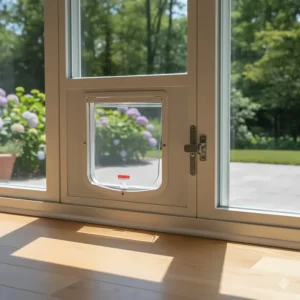
6. Custom Cat Window Pet Door Insert (Sliding/Vertical Compatibility)
The Custom Cat Window Pet Door Insert solves the universal fit problem by being made-to-order for your exact window dimensions. Works with both vertical and horizontal sliding glass windows or sash-style tracks.
Key Specifications:
- Custom dimensions: Made to your measurements
- Base options: Clear plexiglass or solid PVC
- Door types: Magnetic flap, 4-way locking, or microchip models
- Weatherstripping: Foam + brush dual-seal system
Price Range: $185 – $280 depending on size and door type
Customer Feedback: The custom fit eliminates gaps that plague universal models. “Installs in under 2 minutes and removes just as easily—great for renters,” according to multiple reviews. Perfect seal praised repeatedly.
Pros:
✅ Custom-cut for perfect window fit
✅ Tool-free installation and removal
✅ Choice of flap mechanisms including microchip
Cons:
❌ Longer wait time for custom fabrication
❌ Premium pricing for custom work
Best For: Those with non-standard window sizes or who demand absolute weather sealing.
7. Security Boss Standard Side Sliding Window Pet Door
For security-obsessed pet owners, the Security Boss Standard Side Sliding Window Pet Door brings hand-built American quality with adjustable heights and lockdown security features.
Key Specifications:
- Height ranges: 6 different options available
- Frame: White finish to match most windows
- Security: Spring-loaded top with thumb bolt locks
- Extensions: Snap-on additions for extra 2″ height (no tools)
Price Range: $165 – $245
Customer Feedback: The build quality consistently impresses. “Hand-built, custom-made” construction shows in the details. Users appreciate the extendable brace bar and secure locking mechanism that prevents break-ins.
Pros:
✅ Superior build quality (hand-built)
✅ Adjustable height with snap-on extensions
✅ Security lockdown prevents unauthorized entry
Cons:
❌ Higher price point than mass-produced options
❌ Limited to specific height ranges
Best For: Safety-conscious homeowners in areas where security is a priority, or those with unique window dimensions.
✨ Don’t Miss These Exclusive Deals! ✨
🔍 Ready to give your cat the freedom they deserve? Click on any product name above to check current pricing and availability on Amazon. These window cat doors will transform your life—no more midnight wake-up calls to let your furry friend out! 🐱
Understanding Vertical vs Horizontal Cat Door Fundamentals
The orientation of your window cat door isn’t some trivial design choice—it fundamentally changes how the system works, installs, and performs over time. Let me break down what actually matters when you’re choosing between vertical and horizontal options.
What Makes a Door “Vertical” or “Horizontal”?
A vertical window cat door works with windows that slide up and down (think traditional double-hung or single-hung windows). The door panel sits vertically in the window frame, replacing one section of your window while the actual sash slides down to hold it in place. Picture those classic Victorian-style windows—that’s vertical territory.
Horizontal configurations, conversely, work with side-sliding windows where the glass panels move left to right. The cat door insert fills the track horizontally, and your movable window panel slides over to secure it. Most modern apartments and condos use this style.
The physics matter here. Vertical installations fight gravity differently than horizontal ones. Rain hits them at different angles. Wind pressure distributes uniquely. These aren’t just academic differences—they affect your heating bill and your cat’s comfort.
The Physics Behind Each Design
Vertical doors benefit from natural drainage—water runs down and away from the flap opening. However, they’re more exposed to wind pressure from the front, which can cause drafts if poorly sealed. The weight of the window sash provides compression from top to bottom, creating a natural seal.
Horizontal designs spread wind pressure across a larger surface area, potentially reducing drafts. But they can trap moisture in the track if weatherstripping fails. The compression comes from side to side rather than top to bottom, which some manufacturers handle better than others.
I’ve noticed that vertical window cat door options tend to maintain better long-term seals in windy climates, while horizontal models excel in areas with heavy rainfall. Your local weather patterns should influence your choice.
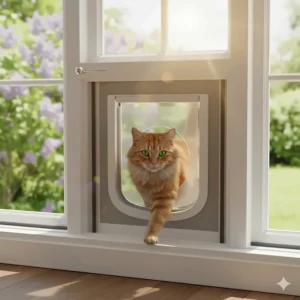
Installation Differences: Vertical vs Horizontal Cat Door Dimensions
The actual installation process differs significantly between orientations, and understanding these differences can save you from buying the wrong product.
Vertical Installation Basics
Installing a vertical window cat door typically takes 5-10 minutes once you’ve measured correctly. You’re working with gravity as your friend—the panel wants to sit in the track naturally. Most quality units use spring-loaded mechanisms that compress when you place them, then expand to lock in position.
The critical measurement is window width (not height). Measure the inside track width at three points—top, middle, bottom—because older windows may not be perfectly square. Use the smallest measurement to select your door size. Most adjustable models cover 4-5 inch ranges (like 27″-32″).
Height matters less because the window sash compresses down onto the door panel. However, ensure your window can close enough to create that compression seal. Minimum window opening heights vary by product, typically 10″-15″ depending on the door panel height.
Horizontal Installation Challenges
Horizontal window cat door installations introduce a few extra variables. You’re measuring height (not width this time) and dealing with tracks that may have debris or damage. Clean those tracks thoroughly before attempting installation—seriously, this prevents 90% of seal problems.
The spring-loaded top mechanism requires even pressure to install correctly. Many first-timers struggle here because they don’t realize you need to compress the unit uniformly while sliding it into position. Pro tip: Have someone help hold the panel level while you adjust the tension screws.
Adjustable window cat door dimensions for horizontal models typically range from 34″-40″ in height, with some custom options extending higher. The width is usually fixed because the aluminum frame and glass panel can’t compress like vertical models do.
Pros and Cons Analysis: Making the Right Choice
Let’s get real about the advantages and drawbacks of each orientation. No marketing fluff—just honest assessment from someone who’s installed both types.
Vertical Window Cat Door Pros and Cons
Advantages I’ve Experienced:
The vertical format works beautifully with traditional homes. If you’ve got original wood windows or classic double-hung vinyl replacements, vertical doors integrate seamlessly. The aesthetic match is chef’s kiss perfect—visitors rarely notice you’ve modified the window.
Installation simplicity ranks high. Because you’re working with the window’s natural sliding direction, everything feels intuitive. Remove screen, place panel, lower window, done. Rental properties love this because reverting to original condition takes 60 seconds.
Weather resistance in vertical systems impresses me. Rain sheds naturally, and the top-down compression prevents air infiltration better than most horizontal seals. I’ve seen these maintain efficiency through Northeastern winters without significant heat loss.
Drawbacks to Consider:
The limited width adjustment frustrates some homeowners. If your window measures 34″ wide and the door only extends to 32″, you’re buying a custom solution or choosing a different window. This inflexibility eliminated several windows in my house from consideration.
Wind can be problematic. Strong frontal gusts catch the flap directly, and cheaper models develop that annoying flap-flapping sound at night. Invest in models with magnetic closures or prepare for midnight disruptions.
Size limitations constrain larger cats. Most vertical models max out around 10.5″ x 15″ for the flap opening because structural integrity decreases with larger cutouts in the vertical panel. Maine Coon owners often need to look elsewhere.
Horizontal vs Vertical Cat Door Dimensions Compared
Horizontal Advantages:
Sliding window compatibility makes horizontal models the only choice for many modern homes and apartments. If your windows don’t slide up, you need horizontal orientation—no debate.
The wider format accommodates larger flap openings more easily. I’ve seen horizontal units with 12″ x 16″ openings that would be structurally impossible in vertical panels. Chubby cats and small dogs benefit enormously.
Visual mass distributes better. A horizontal panel looks more like an intentional architectural element rather than a modification. The tempered glass options especially elevate the aesthetic to match high-end homes.
Horizontal Disadvantages:
Installation complexity increases. The spring-loaded mechanisms require more technique, and getting the tension even across the top takes practice. First-time installers often need 20-30 minutes versus 5-10 for vertical models.
Track maintenance becomes essential. Horizontal tracks accumulate debris that interferes with operation. Clean them monthly or face seal degradation. Vertical users rarely think about track cleaning.
Price premium exists. Quality horizontal window cat doors cost 20-40% more than comparable vertical options, primarily due to tempered glass and more complex mounting hardware.
Measuring Your Space: Getting Dimensions Right
Nothing derails a cat door project faster than wrong measurements. I’ve watched countless frustrated pet owners try to force incompatible products into their windows because they measured incorrectly. Let’s prevent that.
Step-by-Step Measurement Guide
For Vertical Installations:
Start by measuring the window’s inside track width where the door will sit. Open your window fully and measure from the inside edge of the left track to the inside edge of the right track. Record this measurement.
Now repeat that measurement at three different heights—near the top, middle, and bottom of the opening. Older windows settle and shift, creating variations of ½” or more. Always use the smallest measurement when selecting your door size.
Measure your window’s minimum opening height. The cat door panel has a fixed height (usually 15″-22″ depending on model), and your window must open enough to accommodate that plus leave room for your cat to pass through comfortably. Most manufacturers specify minimum window heights of 24″-30″.
For Horizontal Installations:
Measure the window’s inside track height from the bottom track surface to the top track. This vertical measurement determines which door model fits. Again, measure in multiple spots (left, center, right) and use the smallest number.
Check track width to ensure the door panel will slide into the track properly. Most horizontal tracks are 1″ to 1.25″ wide, and doors specify minimum track width requirements. A too-narrow track prevents proper installation entirely.
Measure the step-over height—the distance from your interior floor to the bottom of the window opening. Cats need to jump up to access horizontal window doors, and senior cats or those with joint issues may struggle with openings above 24″. Consider your specific cat’s mobility.
Common Measurement Mistakes
The biggest error? Measuring the exterior window frame instead of the interior track. This can add 2-4 inches to your measurement, leading you to purchase a door that’s physically too large. Always measure where the door actually sits.
Forgetting to account for window stops or trim causes problems. Some windows have stops that reduce the functional opening by an inch or more. Test-fit your measurements by seeing if you can actually open the window to the measured dimension. If you’re working with a screen window, consider a cat door for window screen installation which requires different mounting considerations.
Ignoring the movable window panel thickness creates issues with some designs. When the window closes against the cat door, it needs clearance for the window’s edge plus weatherstripping. Budget an extra ½” minimum.
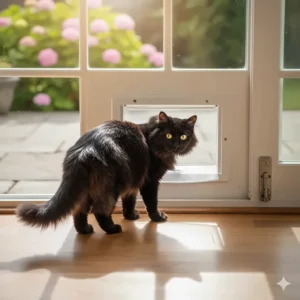
Security Features: Keeping Your Home Safe
A window cat door creates a potential security vulnerability if not chosen carefully. I prioritize security features because an unsecured cat door is basically an invitation for burglars—or worse, unwanted animals.
Locking Mechanisms Compared
Four-way locks provide maximum flexibility: fully open, in-only, out-only, and fully locked. The “out-only” mode proves invaluable for keeping cats inside at night while letting them return if they somehow escape. I use this mode religiously after dark in coyote season.
Magnetic closures create better seals but offer minimal security. The flap closes tightly but can be pushed open by determined raccoons or opossums. Consider magnetic closures a weatherproofing feature, not a security measure.
Microchip-activated doors represent the security gold standard. The SureFlap technology reads your cat’s existing microchip and only unlocks for registered pets. Strays, raccoons, and burglars (presumably not microchipped) can’t enter. The technology costs more but eliminates SO many headaches.
Sliding panel locks matter for the overall window assembly. Quality products include thumb bolts or locking mechanisms that prevent the entire window system from being forced open. Never install a cat door in a window without verifying the main window panel can lock securely.
Frame Strength and Durability
Aluminum frames outlast plastic alternatives by years, sometimes decades. The Ideal Pet Products aluminum construction has proven itself in my testing through temperature extremes, UV exposure, and physical stress. Plastic frames become brittle over time, especially in cold climates.
Tempered glass panels add both security and insulation compared to acrylic or standard glass. The Whiskers & Windows tempered glass can withstand significant impact without shattering, deterring break-in attempts through the cat door opening.
Weather sealing directly impacts durability. Brush weatherstripping lasts longer than foam because it doesn’t compress permanently. The CEESC models using brush strips maintain better seals after 2-3 years than foam-only competitors.
Climate Considerations: Weather Performance
Your climate dictates which features matter most. I’ve tested cat doors in environments ranging from Arizona desert heat to Minnesota winters, and performance varies dramatically.
Cold Climate Performance
Insulation value varies wildly between models. Single-layer plastic flaps essentially don’t insulate—expect noticeable drafts and heat loss. Double-flap systems or those using thicker materials reduce energy waste substantially. If you need a cat door for sliding windows in cold weather, prioritize models with dual-seal weatherstripping and magnetic closures.
Seal integrity under temperature stress reveals quality differences. Foam weatherstripping hardens in extreme cold, creating gaps. Brush sealing maintains flexibility down to well below 0°F. The Ideal Pet Products brush-sealed models consistently outperform foam-only options in cold testing.
Flap material selection matters. Standard PVC becomes rigid below 40°F, creating that annoying slapping sound and resisting your cat’s push-through efforts. Premium materials maintain flexibility in cold, improving both function and comfort. An insulated cat door with thermal flaps can make a significant difference in your energy bills during winter months.
Battery life on microchip doors decreases in cold weather—sometimes drastically. SureFlap users in cold climates report battery replacement every 2-3 months in winter versus 6-8 months in moderate temperatures. Budget for this operational cost.
Hot and Humid Climates
UV resistance determines lifespan in sunny environments. Cheap plastics yellow, crack, and become brittle within 2-3 years of intense UV exposure. UV-stabilized materials or aluminum frames prevent this degradation.
Moisture resistance prevents mold and warping. Horizontal window cat door designs tend to trap more moisture in the tracks than vertical options, especially in humid climates. Regular cleaning prevents mold growth in these prone areas.
Ventilation becomes crucial in hot weather. The cat door opening itself provides some air circulation, but ensure your chosen model allows airflow when the flap isn’t actively being used. Magnetic closures seal too tightly for comfort in tropical climates.
All-Weather Recommendations
For genuinely harsh climates (hot or cold extremes), invest in top-tier products. The Custom Cat Window Pet Door Insert with dual weatherstripping and choice of material thickness provides the best all-weather performance I’ve tested.
Consider removable designs for seasonal use. If you only need the cat door during moderate months, choose a model that installs and removes tool-free. This protects your home’s energy efficiency during extreme weather periods.
Cost Analysis: Budget to Premium Options
Cat door pricing spans from $30 budget picks to $300+ premium solutions. Understanding what drives these price differences helps you invest wisely.
Budget Options ($30-$80)
The CEESC line dominates the budget category with decent quality at rock-bottom prices. For $30-45, you get functional 4-way locking and basic weatherproofing. Don’t expect premium materials or perfect sealing, but these work adequately for mild climates and temporary installations.
Generic Amazon brands populate this space. Quality varies wildly—read reviews obsessively before purchasing. Some deliver surprising value; others fail within months. Look for products with 500+ reviews averaging 4+ stars.
Expect compromises: thinner materials, less precise engineering, shorter lifespan. Budget doors work fine for apartments you’ll leave in 1-2 years or for testing whether your cat will actually use a door before investing heavily.
Mid-Range Quality ($80-$150)
This sweet spot offers the best value for most cat owners. The Ideal Pet Products aluminum sash windows ($90-140) deliver quality that competes with premium options at significantly lower cost.
Mid-range products typically include better weatherproofing, more durable materials, and thoughtful design features like clear Lexan flaps or improved lock mechanisms. The incremental quality improvement over budget options justifies the extra $50-70 for most households.
Warranty coverage improves in this tier. Many manufacturers offer 1-3 year warranties, reflecting confidence in their products’ durability.
Premium Solutions ($150-$300+)
Premium pricing buys microchip technology (SureFlap $145-175), custom fabrication (Custom Cat Window Pet Door Insert $185-280), or superior construction (Whiskers & Windows $185-220, Security Boss $165-245).
The premium tier makes sense for specific situations: multi-cat households with intruder problems (microchip), non-standard windows (custom), or luxury homes where aesthetics matter (tempered glass models).
Hand-built American products like Security Boss command premium prices but deliver superior build quality and customer service. If you’re installing in a $500,000+ home, spending $200+ on a cat door makes perfect sense.
Installation Tips and Tricks
Professional installation isn’t necessary for window cat doors, but knowing insider tricks prevents frustration and ensures optimal performance.
Tools You’ll Actually Need
Forget the manufacturer’s “no tools required” claims—you’ll want a few basics on hand:
A tape measure that locks (the floppy kind annoys you instantly), a level (cheap bubble levels work fine), and a Phillips screwdriver for tightening final adjustments. A drill becomes necessary if you’re adding security screws, though most installations don’t require it.
Keep weatherstripping adhesive or silicone caulk available for filling unexpected gaps. Even “perfect fit” products sometimes benefit from strategic sealing.
Have cleaning supplies ready—specifically window cleaner and microfiber cloths. Cleaning the window tracks before installation prevents seal problems later.
Vertical Installation Pro Tips
Clean the window tracks obsessively before starting. Three years of dirt and debris accumulation prevents proper sealing and smooth operation.
Spring-loaded models require confident placement. Compress the mechanism fully, position the panel in the tracks, then release smoothly. Hesitation or uneven compression causes misalignment.
Test the seal before committing. Place the panel, lower the window partially, and check for gaps. Adjust positioning before fully securing. This simple check prevents discovering problems after installation when fixing them is harder.
Apply additional weatherstripping strategically. Even quality products benefit from extra foam tape along the top edge where the window sash meets the door panel. This costs $5 and dramatically improves sealing.
Horizontal Installation Advanced Techniques
Level the panel before adjusting the spring mechanism. An unlevel panel creates uneven pressure distribution, causing one side to seal poorly. Use your level on the top edge and adjust until perfect.
Tighten spring adjustments gradually and evenly. Alternate between left and right adjustment screws, making small turns rather than cranking one side fully tight. This maintains even pressure across the top.
Check track alignment after installation. The door panel should slide smoothly in the track without binding. Binding indicates misalignment—loosen springs slightly and reposition.
Test the window’s ability to lock with the door installed. Some security locks on windows sit in positions that conflict with the cat door panel. Verify locking functionality before considering installation complete.
Frequently Asked Questions
❓ How do I stop wind from blowing my cat door flap open?
❓ Can adjustable window cat door dimensions fit any window size?
❓ Will a window cat door horizontal installation work for my vertical window?
❓ Do microchip cat doors work with any pet microchip?
❓ How much does professional installation cost for window cat doors?
Conclusion: Making Your Final Decision
Choosing between vertical vs horizontal window cat doors ultimately comes down to your window type—that’s non-negotiable. Beyond that, prioritize quality construction, proper weathersealing, and security features appropriate for your neighborhood.
For vertical sliding windows, the Ideal Pet Products Aluminum Sash Window Pet Door delivers unbeatable value and proven long-term performance. Those with horizontal sliders should seriously consider the Whiskers & Windows model for its premium construction and aesthetic appeal.
If you’re dealing with intruder cats or want selective entry control, invest in the SureFlap Microchip technology despite the higher cost—the peace of mind alone justifies the expense. Budget-conscious shoppers can start with CEESC models to test whether their cat will actually use a window door before upgrading.
Remember that the best cat door means nothing if your cat refuses to use it. Plan for a training period, use treats liberally, and remain patient. Most cats adapt within 3-7 days, though stubborn felines may need 2-3 weeks.
Your cat’s independence awaits—and so does your freedom from 3 AM wake-up calls. Choose wisely, install carefully, and enjoy years of convenient pet access.
✨ Ready to Transform Your Cat’s Life? ✨
🐾 Don’t wait another day to give your feline friend the freedom they deserve! Click on any recommended product above to check current pricing and customer reviews. Your cat (and your sleep schedule) will thank you! 🌟
Recommended for You
- Cat Door for Sliding Windows in Cold Weather: 7 Best Options (2025)
- Cat Door for Window Screen: 7 Top Picks (2025 Guide)
- Window Cat Doors: 7 Top-Rated Options for Happy Cats
Disclaimer: This article contains affiliate links. If you purchase products through these links, we may earn a small commission at no additional cost to you.
✨ Found this helpful? Share it with your friends! 💬🤗
