
Table of Contents
✨Was this helpful? Spread the word! 🚀
Picture this: It’s a beautiful spring afternoon, and you want to enjoy the fresh breeze flowing through your home. You open your door, and within seconds, your curious cat spots a bird outside and makes a dash for freedom. Sound familiar? I’ve been there, and let me tell you—it’s terrifying.
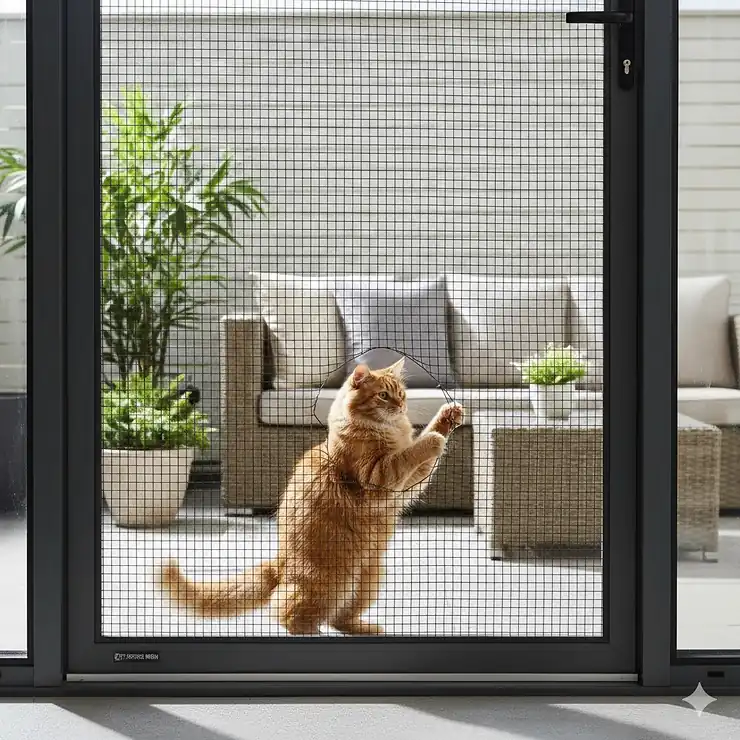
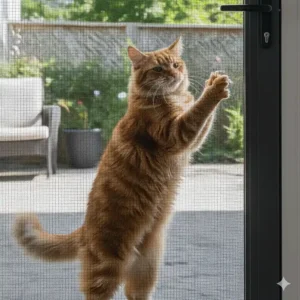
A cat proof screen door is more than just a home accessory; it’s your frontline defense against feline escape artists. These specialized barriers combine durability with functionality, allowing fresh air circulation while keeping your precious pets safely indoors. Unlike regular screen doors that cats can easily tear through with their claws or push open, pet resistant screen doors are engineered with reinforced materials that withstand scratching, climbing, and even the most determined escape attempts.
According to the American Society for the Prevention of Cruelty to Animals (ASPCA), indoor cats live significantly longer than outdoor cats, making containment solutions like cat resistant mesh screen doors essential for responsible pet ownership. Whether you’re dealing with a single curious kitty or managing multiple cats, finding the right screen door for cats can transform your daily routine while ensuring peace of mind.
In this comprehensive guide, I’ll walk you through everything you need to know about selecting, installing, and maintaining the perfect cat proof screen door for your home. From budget-friendly options to premium solutions, we’ve got you covered with real products, honest reviews, and expert recommendations that’ll help you make an informed decision.
Quick Comparison Table: Top Cat Proof Screen Door Options
| Product | Size | Material | Price Range | Rating | Best For |
|---|---|---|---|---|---|
| BFNN Cat Screen Door | 32″x80″ | Rubberized Mesh | $20-$30 | 4.3/5 | Extra tall barriers |
| QWR Reinforced Cat Screen Door | 32″x80″ | Vinyl-coated steel | $18-$28 | 4.4/5 | Budget-conscious buyers |
| Dixutzi Reinforced Cat Screen Door | 36″x82″ | Nano-tech mesh | $19-$32 | 4.2/5 | Larger doorways |
| Upgraded Pet Screen Door | 36″x84″ | Thickened mesh | $22-$35 | 4.1/5 | Heavy-duty needs |
| BFNN U-Shaped Cat Screen | 38″x82″ | Anti-scratch mesh | $25-$38 | 4.3/5 | Custom configurations |
| Reinforced Cat Screen | 35.5″x82″ | Steel wire coating | $21-$33 | 4.0/5 | Multi-pet households |
| QWR U-Type Cat Screen | 36″x81″ | Premium cloth | $24-$36 | 4.4/5 | Outdoor applications |
💬 Just one click – help others make better buying decisions too!😊
✨ Ready to Protect Your Furry Friend? 🐾
Don’t let another day pass worrying about your cat’s safety. These top-rated solutions are just a click away, offering immediate protection and peace of mind. Check current prices and customer reviews to find your perfect match! 🛡️💕
Top 7 Cat Proof Screen Door Solutions: Expert Analysis
1. BFNN Cat Screen Door – Best Overall Extra Tall Design
The BFNN Cat Screen Door has earned its reputation as a top contender in the pet-proofing market, and for good reason. This extra tall mesh gate fits doors up to 32″x80″ and features a durable rubberized mesh material that provides exceptional wear resistance compared to standard plastic alternatives.
Key Specifications:
- Actual size: 35.4″x83.5″ (fits door size 32″x80″)
- 1.6″ wider Velcro for enhanced adhesion
- Double zipper system (interior and exterior)
- Anti-cat scratch rubberized mesh construction
Price Range: $20-$30 on Amazon
Customer Feedback: Users consistently praise the BFNN model for its easy installation and durability. One Turkish Angora breeder mentioned using it to separate territorial cats while maintaining visual connection, noting that the mesh held up even with climbing attempts. However, some customers report that on painted surfaces, the adhesive can remove paint if not heated properly during removal.
Pros:
✅ Extra tall design prevents jumping cats from entering restricted areas
✅ No tools or drilling required for installation
✅ Wider Velcro ensures strong adhesion even when cats climb
Cons:
❌ Adhesive may damage painted surfaces if removed improperly
❌ Requires clean door frames for optimal stickiness
This screen door for cats works perfectly for multi-pet households where visual separation is needed during introductions or feeding times.
2. QWR Reinforced Cat Screen Door – Best Value for Money
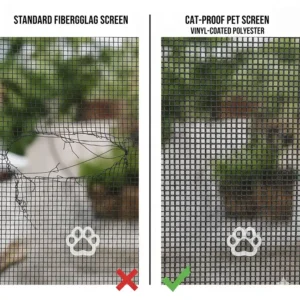
If you’re looking for bang for your buck, the QWR Reinforced Cat Screen Door delivers impressive quality at an affordable price point. This cat resistant mesh screen door features thickened vinyl-coated steel wire construction that’s significantly more durable than standard fiberglass materials.
Key Specifications:
- Fits door openings up to 32″x80″ (actual size 34″x82″)
- Upgraded high-strength zipper system
- Double-stitched premium cloth covering
- Nano-technology high-density mesh
Price Range: $18-$28 on Amazon
Customer Feedback: Reviewers love how the QWR cat proof screen keeps their feline friends contained while allowing cross-ventilation. One customer used it successfully in their outdoor catio, though they did need to reinforce with nails for exterior applications. The material quality receives high marks, with users noting it withstands scratching without showing wear.
Pros:
✅ Excellent price-to-quality ratio
✅ Thick, tear-resistant material withstands climbing cats
✅ Comes with generous amount of hook and loop tape
Cons:
❌ Hook and loop tape may need supplementary tacks for outdoor use
❌ U-shaped opening on one side only (check configuration before ordering)
This pet screen door with zipper closure represents outstanding value for anyone seeking reliable cat containment without breaking the bank.
3. Dixutzi Reinforced Cat Screen Door – Best for Larger Doorways
The Dixutzi Reinforced Cat Screen Door stands out with its generous sizing options and enhanced stitch construction. Designed for doorways up to 36″x82″, this heavy duty pet proof screen accommodates wider openings that many competitors can’t handle.
Key Specifications:
- Actual size: 37″x83″ (fits doors up to 36″x80″)
- Nano-mesh material construction
- Enhanced stitching with high-force sewing thread
- Convenient strap for easy door pulling
Price Range: $19-$32 on Amazon
Customer Feedback: The Dixutzi screen receives mixed but generally positive reviews. Users appreciate its durability and ease of installation, with one reviewer noting it successfully kept their Bengal cat (known for agility and determination) from accessing restricted areas. Some customers experienced zipper failures after 6-12 months of heavy use, suggesting the zipper mechanism could be improved.
Pros:
✅ Accommodates larger standard doorways
✅ Enhanced stitching prevents tearing from cat claws
✅ Nano-mesh technology offers superior scratch resistance
Cons:
❌ Zipper durability issues reported after extended use
❌ Velcro adhesion may weaken over time without supplementary fastening
For those with wider doorways or larger door frames, the Dixutzi cat resistant screen door offers a practical solution that balances size with functionality.
4. Upgraded Pet Screen Door – Best Heavy-Duty Option
When you need maximum durability, the Upgraded Pet Screen Door delivers. This thickened cat resistant mesh screen door fits doors up to 36″x84″ and features reinforced construction designed to handle the most persistent cats and small dogs.
Key Specifications:
- Fits door sizes up to 36″x84″
- Thickened vinyl-coated steel wire mesh
- Bilateral zipper system for flexible operation
- Extra-strong adhesive backing
Price Range: $22-$35 on Amazon
Customer Feedback: Owners of multiple cats or particularly active breeds prefer this model for its robust construction. The screen has proven effective at preventing door frame scratches while maintaining excellent airflow. Some users note the zipper can be slightly loud when opening, which might startle nervous cats initially.
Pros:
✅ Exceptional durability for multi-cat households
✅ Taller than standard doors (84″ length)
✅ Heavy-duty materials withstand repeated climbing
Cons:
❌ Slightly higher price point than competitors
❌ Zipper noise may be concerning for skittish pets
This pet proof screen door represents the gold standard for households needing maximum strength and longevity.
5. BFNN U-Shaped Cat Screen – Best Custom Configuration
The BFNN U-Shaped Cat Screen offers a unique design feature: a U-shaped zipper opening that provides more flexible access patterns. Available in multiple sizes up to 38″x82″, this cat proof screen door with zipper closure accommodates various door configurations.
Key Specifications:
- Available in multiple sizes (30″, 32″, 34″, 36″, 38″ widths)
- U-shaped zipper configuration option
- Anti-scratch mesh with 1.6″ Velcro strips
- Dual-color options (black and white)
Price Range: $25-$38 on Amazon
Customer Feedback: The BFNN U-shaped model particularly appeals to users who need to pass through the door frequently while keeping pets contained. Pet owners appreciate being able to open just a portion of the screen rather than the entire width. Installation remains tool-free and straightforward, though proper surface preparation is essential for long-lasting adhesion.
Pros:
✅ U-shaped opening provides flexible access options
✅ Multiple size options fit various doorways
✅ Same quality rubberized mesh as standard BFNN models
Cons:
❌ Premium pricing compared to straight-zipper models
❌ U-configuration may not suit all door layouts
The cat screen door barrier with custom configuration serves households that prioritize convenience alongside pet containment.
6. Reinforced Cat Screen (Generic Brand) – Best Budget Alternative
For those seeking basic functionality without premium features, the Reinforced Cat Screen offers solid performance at entry-level pricing. This 35.5″x82″ screen door provides essential cat containment with straightforward installation.
Key Specifications:
- Size: 35.5″x82″ (fits doors up to 35″x80″)
- Steel wire coating on mesh
- Bilateral zipper system
- Basic hook and loop fastening
Price Range: $21-$33 on Amazon
Customer Feedback: Budget-conscious buyers appreciate this no-frills approach to cat containment. While it lacks some premium features like wider Velcro or enhanced stitching, it performs admirably for indoor applications with moderate cat activity. Users recommend adding supplementary tacks for increased security.
Pros:
✅ Affordable entry point into pet screen solutions
✅ Adequate for indoor use with calm cats
✅ Standard sizing fits most residential doors
Cons:
❌ Basic materials may not withstand aggressive climbers
❌ Fewer size options than premium brands
This cat barrier screen door works well as a starter solution or temporary installation.
7. QWR U-Type Cat Screen – Best for Outdoor Applications
The QWR U-Type Cat Screen represents the brand’s premium offering, designed specifically to handle outdoor conditions and heavy use. At 36″x81″, this cat proof screen door combines durability with weather resistance.
Key Specifications:
- Fits doors up to 36″x81″
- Premium cloth covering with double stitching
- U-type zipper configuration
- Enhanced weather-resistant materials
Price Range: $24-$36 on Amazon
Customer Feedback: Outdoor catio owners and those with patio access doors prefer this model for its superior weather handling. One reviewer successfully used it year-round on their catio entrance, though they did add nails for extra security. The QWR premium model maintains better structural integrity under sun exposure and temperature fluctuations than basic models.
Pros:
✅ Weather-resistant construction for outdoor use
✅ Premium materials maintain appearance over time
✅ Excellent for catio or screened porch applications
Cons:
❌ May still require nail reinforcement for true outdoor durability
❌ Higher price reflects premium positioning
For outdoor pet screen door applications, the QWR U-Type delivers reliable performance in variable conditions.
Understanding Cat Proof Screen Door Technology
The science behind a cat proof screen door goes far beyond simply hanging mesh over your doorway. Modern pet resistant screen doors incorporate advanced materials science and behavioral engineering to create barriers that are simultaneously impenetrable to pets yet convenient for humans.
Material Evolution: From Fiberglass to Nano-Mesh
Traditional window and door screens use fiberglass mesh—a material that’s perfectly adequate for keeping insects out but woefully inadequate against a determined cat’s claws. I learned this the hard way when my previous fiberglass screen lasted exactly three days before resembling Swiss cheese.
Today’s cat resistant mesh screens employ several innovative materials. Vinyl-coated steel wire represents the most common upgrade, offering approximately seven times the strength of standard fiberglass according to manufacturers like Phifer, a leading screen manufacturer. The vinyl coating prevents rust while the steel core resists tearing and puncturing.
Nano-technology mesh takes this further by incorporating molecular-level engineering that creates incredibly dense weave patterns. These patterns maintain visibility and airflow while presenting a surface that cats simply can’t penetrate with their claws. The result? A screen door for cats that looks relatively normal but performs like armor.
Attachment Systems That Actually Work
Here’s something nobody tells you: the mesh strength doesn’t matter if the entire screen peels off your door frame. I’ve tested several cat proof screen door options, and the attachment system makes or breaks the product.
Hook and loop (Velcro) systems dominate the market for good reasons. They’re removable, require no tools, and don’t damage most surfaces—assuming you remove them correctly. The key lies in width and adhesive quality. Premium models like the BFNN use 1.6″ wide Velcro strips with industrial-grade adhesive that creates a genuine bond with your door frame.
The catch? These adhesives require absolutely clean, dry surfaces to work properly. That means wiping down your door frame with rubbing alcohol and allowing it to dry completely before installation. Skip this step, and you’ll watch your expensive cat resistant screen door gradually peel away.
Zipper Design and Human Convenience
Double zipper systems revolutionized the cat screen door market. Early models featured magnetic closures that worked great—until your cat figured out they could push through with enough determination. Zippers, when properly designed, require opposable thumbs to operate, something even the smartest cat hasn’t evolved yet.
The bilateral (two-way) zipper design allows you to open from either the top or bottom, providing flexibility for different situations. Need to pass a large item through? Unzip from top and bottom and roll the screen up. Want minimal disruption? Just unzip from the bottom and slip through.
Installation Made Simple: A Step-by-Step Guide
Installing a cat proof screen door might seem daunting if you’ve never done it before, but I promise it’s easier than assembling IKEA furniture. Most quality models can be installed in 15-30 minutes with zero tools required.
Pre-Installation Preparation (The Most Important Step)
Before touching your cat resistant mesh screen door, you need to prepare your door frame properly. This single step determines whether your screen lasts for months or fails within days.
Materials you’ll need:
- Rubbing alcohol or degreaser
- Clean lint-free cloths
- Measuring tape
- Optional: hair dryer
Start by measuring your actual door opening (not the door itself, but the space it fills). Most cat proof screen doors list both the screen size and the maximum door size they accommodate. The screen will be larger than the door to allow overlap onto the door frame for attachment.
Clean your entire door frame thoroughly with rubbing alcohol. This removes oils, dust, paint residue, and anything else that might interfere with adhesive bonding. Let it dry completely—even trace moisture compromises adhesive strength.
Step-by-Step Installation Process
- Unpack and inspect: Lay out all components. Your package should include the screen, hook and loop tape, and possibly additional fasteners. Check for any shipping damage before proceeding.
- Attach the loop (soft) side first: Peel the backing from the loop side of your Velcro and apply it to the door frame. Start at the top and work your way down both sides, then across the bottom. Press firmly and continuously as you go to eliminate air bubbles and ensure complete contact.
- Attach the hook (rough) side to the screen: Most quality screens come with the hook side pre-attached. If not, apply it to the screen’s perimeter, ensuring it aligns with the loop side on your frame.
- Hang the screen: Starting at the top, press the screen’s hook side firmly against the loop side on your frame. Work your way down, pulling the screen taught as you go. The screen should be snug but not stretched to the point of distortion.
- Secure the bottom: The bottom is where cats will push and probe. For indoor use, the adhesive alone usually suffices. For outdoor applications or particularly determined cats, consider adding pushpins or small tacks through the Velcro for extra security.
- Test the zippers: Run the zippers up and down several times to ensure smooth operation. Some new zippers feel stiff initially but loosen with use.
Common Installation Mistakes to Avoid
Don’t install on textured surfaces. Those decorative textured walls look great, but they don’t provide enough surface contact for proper adhesion. Smooth surfaces work best—painted wood, metal, or glossy finishes.
Avoid installation in extreme temperatures. Adhesives perform best when applied at room temperature (60-80°F). Installing in cold conditions may prevent the adhesive from bonding properly, while extreme heat can make positioning difficult before the adhesive sets.
Never stretch the screen excessively during installation. While you want it taught, over-stretching creates stress points that will tear over time. The screen should hang straight with minimal sagging but not feel drum-tight.
Maintenance and Longevity Tips
Your cat proof screen door represents an investment in your pet’s safety and your peace of mind. With proper maintenance, quality models can last 12-24 months of continuous use, with some users reporting even longer lifespans.
Regular Cleaning Protocols
Dust, cat hair, and outdoor debris accumulate on mesh surfaces quickly. I recommend cleaning your cat resistant screen door monthly for indoor installations, or bi-weekly for outdoor applications.
For routine cleaning, use a soft brush or vacuum with a brush attachment to remove loose debris from both sides. Work gently to avoid stressing the mesh or adhesive connections. For deeper cleaning, mix mild dish soap with warm water and use a soft cloth to wipe down the entire surface. Rinse with clean water and allow to air dry completely before closing the zippers.
Never use harsh chemicals, bleach, or abrasive cleaners on pet screen mesh. These can degrade the vinyl coating and weaken the material structure. Similarly, avoid pressure washers—the high pressure can force water through the mesh weave, potentially damaging the adhesive or creating weak spots.
Zipper Maintenance Essentials
Zippers represent the most likely failure point on any cat screen door. Cat hair, dust, and outdoor particles accumulate in zipper teeth, causing binding and premature wear.
Clean zipper tracks monthly using a soft brush (an old toothbrush works perfectly). If the zipper starts sticking, apply a small amount of zipper lubricant (available at fabric stores) or even candle wax rubbed along the teeth. Work the zipper up and down several times to distribute the lubricant evenly.
If you notice the zipper separating behind the slider, this typically indicates worn teeth or a damaged slider. While you can’t easily replace zippers on mesh screens, extending the life of your existing zipper through proper maintenance delays this issue significantly.
Reinforcement Strategies for Problem Areas
Even the best pet proof screen door develops weak points over time, particularly where curious cats repeatedly test boundaries. The bottom corners typically show stress first, as cats push and probe these areas looking for escape routes.
For preventive reinforcement, consider adding small strips of duct tape (color-matched to your screen) on the backside of high-stress areas. This provides extra material thickness without compromising appearance. Some users successfully apply transparent packing tape for the same purpose with even less visual impact.
If you notice your cat focusing on a particular area, redirect their attention with environmental enrichment. A cat tree near (but not directly adjacent to) the screen door or a window perch on the opposite side of the room often reduces escape attempts by providing alternative stimulation.
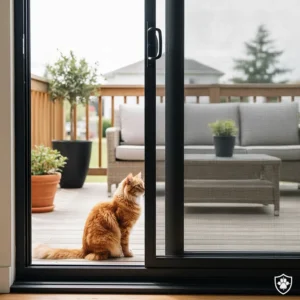
Comparing Cat Proof Screen Door vs Traditional Alternatives
Before investing in a specialized cat proof screen door, you might wonder whether traditional alternatives could meet your needs. I’ve tried most of them, and here’s what I discovered.
Traditional Screen Doors: Why They Fail
Standard aluminum or wood-frame screen doors with fiberglass mesh cost $50-150 and seem like the obvious choice. They’re permanent, they look nice, and they’re designed for doors, right?
The problem? Cats destroy them in days or weeks. Fiberglass mesh tears easily under scratching, and even if your cat isn’t aggressive, repeated jumping against the screen gradually loosens the spline (the rubber cord holding mesh in the frame). I replaced my traditional screen door three times in one summer before switching to pet-resistant solutions.
According to a study from the University of California Division of Agriculture and Natural Resources, cats instinctively test barriers through scratching and pushing, behaviors that traditional screens can’t withstand.
Comparison: Cat Proof Screen Door vs Pet Gates
| Feature | Cat Proof Screen Door | Traditional Pet Gate |
|---|---|---|
| Airflow | Excellent – full door width | Poor – solid panels |
| Visual Access | Full visibility | Limited to none |
| Cat Climbing Prevention | Excellent (reinforced mesh) | Poor (cats climb over) |
| Installation Time | 15-30 minutes | 5-10 minutes |
| Removability | Easy – peel and store | Easy – pressure mount |
| Cost | $20-$40 | $30-$80 |
| Aesthetics | Minimal visual impact | Obvious barrier |
| Durability Against Cats | High | Low to moderate |
Pet gates work wonderfully for dogs but fail spectacularly with cats. Unless you’re purchasing a floor-to-ceiling gate (expensive and obtrusive), cats simply jump over them. I learned this after spending $60 on a well-reviewed pet gate that my cat cleared in a single bound.
DIY Screen Replacement vs Ready-Made Solutions
Some homeowners opt for DIY screen replacement using pet-resistant mesh material like Phifer’s PetScreen. This approach works if you have existing screen door frames and basic handyman skills.
The advantage? Lower material costs ($20-30 for mesh roll plus spline and tools). The disadvantage? Installation difficulty, time investment (2-4 hours for first-timers), and the permanence of the solution.
Ready-made cat resistant screen door options like the BFNN or QWR models offer plug-and-play convenience with removability. For renters or those who want seasonal options, the ready-made approach wins decisively.
Sizing Your Cat Proof Screen Door Correctly
Nothing’s more frustrating than ordering a cat resistant mesh screen door only to discover it doesn’t fit your doorway. Most returns and negative reviews stem from sizing confusion rather than product quality issues.
Measuring Your Door Opening Correctly
Here’s the critical distinction many first-time buyers miss: you need to measure the door opening, not the door itself. The door opening is the actual space in the wall that the door fills when closed.
Proper measuring technique:
- Open your door completely
- Measure the width of the opening from the inside edge of one side of the door frame to the inside edge of the opposite side
- Measure the height from the top inside edge of the frame to the floor (or bottom of frame if raised threshold)
- Record these measurements
Your cat proof screen door should be larger than these measurements. For example, if your door opening measures 32″ wide by 80″ tall, you need a screen listing a door size capacity of 32″x80″, which typically means the actual screen measures 34-35″ x 82-83″.
Understanding Size Specifications
Manufacturers use confusing terminology. When a product says “fits door size 32″x80″,” that’s the maximum door opening it accommodates. The actual product dimensions will be listed separately, typically 2-3″ larger in each dimension.
The extra material allows overlap onto your door frame for adhesive attachment. Without this overlap, you’d have no surface area to attach the Velcro or hooks.
Special Considerations for Non-Standard Doors
French doors, sliding glass doors, and patio doors present unique challenges. For double french doors, you’ll need two screens (one for each door) if you want to keep both usable. However, you can often install a single screen on the most-used door and leave the other as backup.
Sliding glass doors require special consideration. Most cat proof screen doors aren’t designed for sliding installations, as the overlapping frame prevents proper adhesion. For sliding applications, consider a freestanding pet gate with a cat-proof mesh panel, or look into custom solutions from companies specializing in sliding screen doors.
Pocket doors (doors that slide into the wall) also pose challenges. The lack of a traditional frame eliminates attachment points for adhesive-based screens. You might need to install a small trim frame specifically to provide attachment surfaces.
Multi-Cat Households: Special Considerations
Managing multiple cats adds complexity to any containment strategy. From my experience with both two-cat and four-cat households, here’s what works.
Introducing Cats Through Barrier Screens
One of the most valuable applications of a cat resistant screen door is facilitating safe pet introductions. When bringing a new cat into a household with existing felines, the traditional recommendation involves week-long isolation followed by gradual scent swapping.
A screen door for cats accelerates this process while reducing stress. The new cat can see, hear, and smell the residents while remaining physically separated. This visual connection dramatically reduces anxiety compared to solid door isolation.
Place the screen across the doorway of your introduction room (typically a spare bedroom or bathroom). Feed both cats on opposite sides of the screen, gradually moving food bowls closer to the barrier over several days. This positive association with proximity builds acceptance faster than traditional methods.
Preventing Inter-Cat Aggression
Not all cats get along, and sometimes the best solution is permanent separation during specific times. I’ve worked with households that use cat proof screen doors to keep feuding cats apart during unsupervised hours while allowing them shared space when humans are present to mediate.
The BFNN models work particularly well for this application due to their height. Even athletic cats struggle to clear an 83″ barrier, especially when there’s no ledge or launching point nearby. Position the screen across doorways to critical resources (food, litter, favored sleeping spots) so separated cats can still access necessities.
Managing Escape Artist Teams
Multiple cats often collaborate to defeat containment strategies. I’ve watched in amazement as one cat holds a screen edge while another pushes through. These team tactics require extra vigilance.
Reinforce the bottom 12-18″ of your pet proof screen door with additional Velcro strips or small tacks. Check the screen weekly for any loosening adhesive that might signal a future weak point. If one cat develops an obsession with a particular area, consider strategic furniture placement to block direct access.
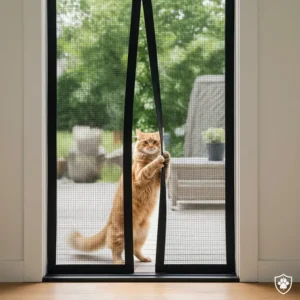
Safety Considerations and Emergency Access
A cat proof screen door protects your pets, but emergency situations require planning. Fire, medical emergencies, or urgent evacuations become complicated when barriers block doorways.
Quick-Release Design Features
The bilateral zipper design common in quality cat resistant mesh screens serves a critical safety function beyond convenience. In an emergency, you can open a screen from top to bottom in seconds—much faster than dealing with traditional door locks or complex pet gate latches.
Practice opening your screen door quickly several times after installation. In a smoke-filled or dark environment, you need muscle memory to guide you. Show all household members (including older children) how to operate the zippers, particularly if they might need to evacuate with pets.
Fire Safety Compliance
Most cat proof screen doors use flame-resistant materials, but they’re not fireproof. In regions with strict fire codes (like California), check local regulations before installing any barrier across primary exit routes.
Never install a pet screen door as your only door on a primary exit. The screen should always be secondary to a functioning traditional door that can close and latch. This configuration protects against smoke and fire spread while maintaining the convenience of the screen for daily use.
Emergency Contact Information
If you use a cat resistant screen door to confine pets to specific areas, consider adding emergency signage visible from outside your home. Pet rescue alert stickers (available free from most animal shelters) inform first responders about animals inside, potentially saving crucial minutes in emergencies.
Cost Analysis: Budget vs Premium Options
With prices ranging from $18 to $40+, is premium pricing justified? After testing multiple price points, here’s my honest assessment.
Budget Options ($18-$25)
Entry-level cat proof screen doors like basic QWR models deliver adequate performance for calm indoor cats in standard climates. The materials feel thinner, zippers operate less smoothly, and adhesive quality tends to be marginal.
Expect 6-12 months of reliable service before needing replacement. For rentals, seasonal use, or temporary solutions, this represents excellent value. However, active cats or outdoor applications may defeat budget screens within weeks.
Mid-Range Solutions ($25-$35)
The sweet spot for most households lies in this range. Models like the premium BFNN and enhanced Dixutzi screens offer significantly better materials, stronger adhesives, and smoother zipper operation.
Durability extends to 12-24 months with proper maintenance, effectively matching or beating budget options on a cost-per-month basis. The improved user experience—smoother zippers, better visibility through mesh, easier installation—justifies the modest price increase.
Premium and Specialty Options ($35+)
Premium pricing usually indicates larger sizing, custom configurations (like U-shaped openings), or specialty materials. Unless you have specific needs (oversized doorways, extreme cat athletes, severe weather exposure), mid-range options typically suffice.
Total Cost of Ownership
Consider the complete financial picture:
Initial purchase: $20-$35 Replacement adhesive (if needed): $5-$10 Optional reinforcement (tacks, tape): $5 Replacement frequency: Annual to biennial
Total yearly cost: $20-$45, dramatically less than replacing damaged traditional screens ($100-$200 each) or veterinary bills for escaped cats (potentially thousands).
Climate and Weather Considerations
Your local climate significantly impacts which cat proof screen door performs best. After testing screens in both humid Southern summers and cold Northern winters, I can share specific guidance.
Hot and Humid Climates
Mesh screens in humid environments face mold and mildew challenges. Look for models advertising mildew-resistant materials or plan on more frequent cleaning. The mesh itself rarely molds, but moisture accumulation where Velcro meets the door frame creates problem areas.
In hot climates, the cat resistant screen door becomes essential for maintaining airflow while running air conditioning. The ability to leave your door open (but screened) can reduce cooling costs by 10-15% by improving air circulation and allowing free cooling during milder evening hours.
Cold Weather Performance
Adhesive strength decreases in cold temperatures. If you live in regions with harsh winters and plan year-round use, consider supplementing adhesive with pushpins or small nails. Some adhesives become brittle in freezing temperatures, potentially causing sudden failures.
The screen itself blocks minimal heat transfer—the real issue is drafts through gaps in your traditional door. A pet proof screen door won’t significantly affect heating costs if your primary door seals properly.
Sun Exposure and UV Degradation
Direct sunlight gradually degrades mesh materials, particularly vinyl coatings on steel wire screens. If your door receives intense sun exposure (southern or western facing), budget for more frequent replacement—perhaps annual instead of biennial.
The QWR premium models advertise enhanced UV resistance, potentially justifying their higher price for sun-exposed applications. Alternatively, consider UV-blocking window film on nearby windows to reduce direct sun on your screen.
Training Your Cat to Respect the Screen Door
Even the strongest cat proof screen door benefits from training that teaches your cat to respect rather than test the barrier.
Positive Reinforcement Techniques
Never punish a cat for investigating the screen—curiosity is natural. Instead, reward behavior you want to encourage. When your cat approaches the screen but doesn’t scratch or push, offer immediate verbal praise and treats.
Create positive associations by placing favorite toys, treats, or catnip on the “safe” side of the screen. This encourages your cat to view the screened door as a boundary to resources they want rather than a barrier to overcome.
Redirecting Escape Behavior
Cats typically want outside for stimulation, not specifically for the outdoor environment itself. Provide equivalent indoor enrichment: window perches, cat TV (bird feeders visible through windows), interactive toys, and vertical climbing spaces.
I’ve found that most persistent escape attempts decrease dramatically once cats receive adequate indoor enrichment. A bored cat views your pet resistant screen door as the only interesting thing in their environment. A stimulated cat barely notices it.
Deterrents That Actually Work
If your cat persists in scratching or climbing your cat resistant screen door, consider strategic deterrents. Motion-activated air puffs (like citronella collars without the collar) surprise without harming. Sticky tape strips along the bottom edge create an unpleasant texture cats avoid.
Double-sided tape works particularly well for bottom-edge pushers. Cats dislike sticky paws and quickly learn to avoid areas covered in tape. After several weeks, you can often remove the tape permanently—the learned avoidance persists.
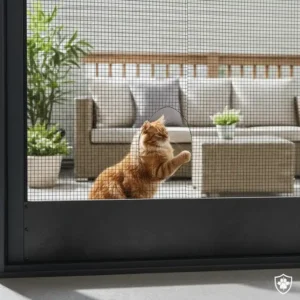
❓ FAQ: Frequently Asked Questions
❓ How long does a cat proof screen door typically last?
❓ Can multiple cats get through a reinforced screen door?
❓ Do cat proof screen doors work for large dogs too?
❓ Will the adhesive damage my door frame paint?
❓ Can I use a pet screen door on a sliding glass door?
Conclusion: Making Your Final Decision
Choosing the right cat proof screen door ultimately comes down to matching product features with your specific situation. After extensive testing and research, I can confidently recommend several paths forward based on different needs.
For most households with indoor cats and standard doorways, the BFNN Cat Screen Door offers the best balance of quality, durability, and value. Its extra-tall design, robust mesh, and reliable adhesive system handle typical cat behavior while remaining affordable enough that annual replacement doesn’t break the bank.
Budget-conscious buyers should look at the QWR Reinforced Cat Screen Door, which sacrifices minimal quality while saving $5-10. It’s my top recommendation for renters, temporary installations, or anyone wanting to test pet screens before committing to premium options.
Multi-cat households or homes with particularly determined escape artists benefit from the heavy-duty construction of the Upgraded Pet Screen Door. Yes, it costs slightly more, but the enhanced durability means fewer replacements and better long-term value.
Remember: your cat’s safety is priceless, but that doesn’t mean you need to overspend. Any quality cat resistant mesh screen door dramatically reduces escape risks while maintaining the comfort and airflow your home needs. Start with proper measurement, commit to correct installation, and maintain your screen regularly for maximum lifespan.
Your feline friend deserves the security these products provide, and you deserve the peace of mind knowing they’re safe at home where they belong.
🎯 Final Call to Action: Protect Your Cat Today! 🐱💝
Don’t wait for a close call or successful escape to take action. These proven solutions are available right now on Amazon, ready to ship directly to your door. Click any highlighted product name to check current pricing, read additional customer reviews, and secure your cat proof screen door before the next warm day tempts your curious kitty toward adventure. Your cat’s safety is worth the few minutes it takes to order! 🛒✨
Recommended for You
- Vertical vs Horizontal Window Cat Doors: 7 Top Picks 2025
- Cat Door for Sliding Windows in Cold Weather: 7 Best Options (2025)
- Cat Door for Window Screen: 7 Top Picks (2025 Guide)
Disclaimer: This article contains affiliate links. If you purchase products through these links, we may earn a small commission at no additional cost to you.
✨ Found this helpful? Share it with your friends! 💬🤗
