
Table of Contents
Understanding Your Feline’s Claws
Have you ever wondered why your cat’s nails seem to need constant attention? As a cat parent, I’ve spent countless hours observing, managing, and sometimes battling with my furry friend’s sharp little weapons. Cat nails are fascinating biological tools that serve multiple purposes beyond just making your furniture look like it survived a tiny tornado.
When it comes to cat nails, knowledge truly is power. Understanding how they grow, why they need maintenance, and how to properly care for them can transform what might seem like a daunting task into a manageable part of your pet care routine. Furthermore, proper nail care is essential for your cat’s overall health and wellbeing.
In this comprehensive guide, we’ll explore everything you need to know about cat nails – from their natural growth patterns to the best trimming techniques and products. Whether you’re a first-time cat owner or a seasoned feline enthusiast looking to improve your nail care routine, this article will provide you with practical, expert advice that you can implement right away.

The Biology of Cat Nails: More Than Just Claws
How Cat Nails Work 🐾
Cat nails are not like human fingernails. Instead, they’re retractable claws that serve multiple purposes in your cat’s daily life. Unlike dogs, cats can extend and retract their claws at will, which helps keep them sharp and ready for action when needed.
The structure of cat nails consists of a hard protein called keratin (the same material as human nails) wrapped around the quick—a sensitive area containing blood vessels and nerves. Additionally, cats have a curved nail bed that allows their claws to retract into a protective sheath when not in use.
✅ Cat nails grow in layers
✅ The outer layer naturally sheds as cats scratch
✅ New, sharper nails grow underneath
Understanding this biological process explains why your cat is constantly scratching. They’re not just sharpening their nails—they’re actually removing the older, outer layer to expose the newer, sharper nail underneath. Consequently, this natural behavior is essential for their nail health and should be accommodated rather than discouraged.
Why Cat Nails Need Regular Maintenance
Without proper maintenance, cat nails can create several problems for both the cat and owner:
- Overgrown nails can curl and grow into the paw pad, causing pain and infection
- Sharp nails can damage furniture, clothing, and human skin
- Neglected nails may lead to mobility issues, especially in older cats
- Poor nail health can indicate other underlying medical conditions
Moreover, cats that don’t receive adequate nail care might develop behavioral issues stemming from discomfort. Therefore, regular nail maintenance is not just about protecting your furniture—it’s a crucial aspect of your cat’s healthcare routine.
The Essential Guide to Trimming Cat Nails
Why Regular Trimming Matters ⚡
Regular trimming of cat nails provides numerous benefits:
- Prevents painful ingrown nails that can lead to infection
- Reduces damage to furniture and household items
- Decreases accidental scratches on family members
- Promotes proper mobility, especially for older cats
- Creates positive handling experiences that strengthen your bond
Additionally, regular trimming sessions give you an opportunity to check your cat’s overall paw health and spot any potential issues early on. Furthermore, cats who become accustomed to regular trimming tend to tolerate the process better over time.
How Often Should You Trim Your Cat’s Nails? 🗓️
The frequency of nail trimming depends on several factors:
✅ Indoor cats typically need trimming every 2-3 weeks
✅ Outdoor cats may need less frequent trimming due to natural wear
✅ Older cats often need more frequent trimming as they become less active
✅ Individual growth rates vary between cats
In general, if you can hear your cat’s nails clicking on hard floors, it’s probably time for a trim. Additionally, visually inspect your cat’s nails weekly to monitor growth and condition.
Step-by-Step Guide to Trimming Cat Nails Safely
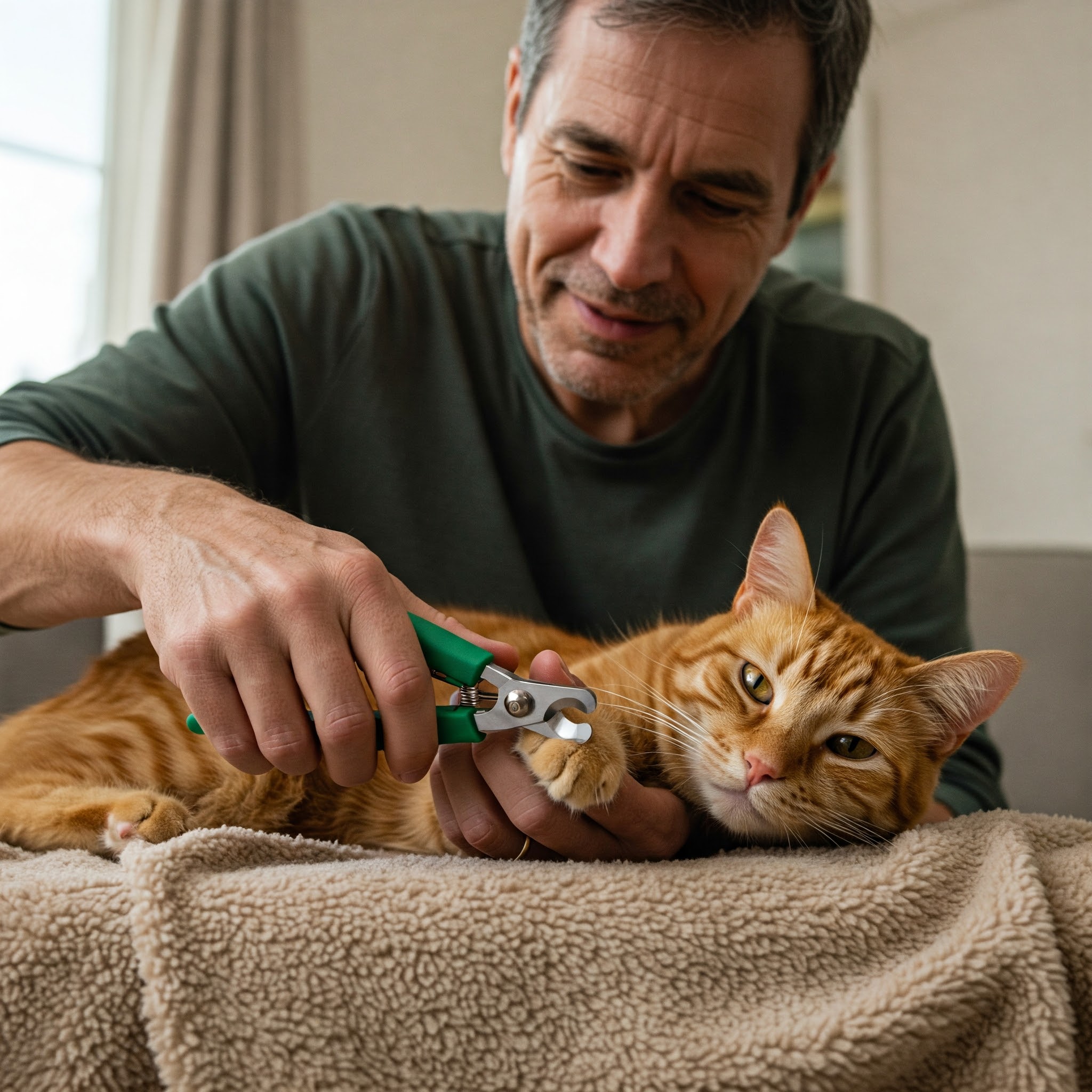
Trimming your cat’s nails doesn’t have to be stressful. Follow these steps for a safe, effective trimming session:
- Choose the right time – Select a moment when your cat is calm and relaxed, perhaps after a meal or during a sleepy afternoon period.
- Gather your supplies – Have your trimmer, styptic powder (in case of bleeding), and treats ready before you begin.
- Position your cat comfortably – Place your cat in your lap or on a stable surface where they feel secure.
- Gently press the paw pad to extend the nail – Apply slight pressure to the toe pad to expose the nail fully.
- Identify the quick – Look for the pink area within the nail that contains blood vessels. Trim only the clear/white portion of the nail.
- Make a clean cut – Using appropriate nail trimmers, cut the nail with a single, confident motion at a 45-degree angle.
- Reward generously – Offer treats and praise throughout the process to create positive associations.
- Take breaks as needed – It’s okay to trim just a few nails in one session if your cat becomes stressed.
Moreover, consistency is key to making this process easier over time. The more regularly you trim your cat’s nails, the more accustomed they’ll become to the routine.
Common Mistakes to Avoid When Trimming Cat Nails ❌
- Cutting too close to the quick – This causes pain and bleeding
- Using dull or inappropriate trimmers – Makes cuts jagged and uncomfortable
- Restraining too forcefully – Creates negative associations with trimming
- Rushing the process – Increases stress for both you and your cat
- Punishing your cat for resisting – Damages trust and makes future attempts harder
Additionally, never attempt to trim a highly agitated cat’s nails. If your cat is extremely resistant, consider seeking help from a professional groomer or veterinarian.
Best Tools for Cat Nail Care 🛠️
Types of Cat Nail Trimmers
Choosing the right trimmer makes all the difference in cat nail care. Here are the main types:
- Scissor-Style Clippers
- Easy to maneuver
- Precise cutting
- Good for beginners
- Allows good visibility of the quick
- Guillotine-Style Trimmers
- Requires less hand strength
- Clean, straight cuts
- Better for medium to large cats
- May be harder to position correctly
- Plier-Style Clippers
- Offers more leverage
- Sturdy construction
- Good for thick nails
- May be bulky for small cats
- Nail Grinders
- Gradually wears down the nail
- No risk of splitting nails
- Less risk of cutting the quick
- Noise may frighten some cats
The best choice depends on your comfort level and your cat’s temperament. Many cat owners find that Safari Professional Nail Trimmers work exceptionally well for their combination of sharpness, safety features, and comfortable grip.
Comparing Top Cat Nail Care Products
| Product | Type | Best For | Special Features | Price Range |
|---|---|---|---|---|
| Zen Clipper Pet Nail Trimmers | Scissor-style | Nervous cats | Patented blade limits cutting depth | $$$$ |
| Safari Professional Nail Trimmers | Scissor-style | All-around use | Non-slip grip, safety stop | $$ |
| Catit Nail Clipper | Scissor-style | Budget option | Safety guard, ergonomic handles | $ |
| Dremel PawControl | Grinder | Long sessions | Multiple speed settings, quiet operation | $$$$ |
| JW Pet Gripsoft Cat Nail Clipper | Guillotine | Large cats | Rubber grip, precision blade | $$ |
Ready to upgrade your cat nail care routine? Check out these top-rated products that make trimming safer and easier for both you and your feline friend. The right tools can transform nail care from a dreaded chore into a manageable part of your pet care routine!

Essential Supplies for Complete Cat Nail Care
Beyond trimmers, a complete cat nail care kit should include:
✅ Styptic powder – To stop bleeding if you accidentally cut the quick
✅ Nail file – To smooth rough edges after trimming
✅ Treats – For positive reinforcement
✅ Good lighting – To clearly see the quick
✅ Towel – For comfortably positioning your cat
For the most comprehensive home care kit, consider the Pet Republique Professional Cat Nail Care Kit, which includes quality trimmers, files, and styptic powder in one convenient package.
Dealing with Challenging Cats: Making Nail Care Easier
Training Your Cat to Accept Nail Trimming 🎓
Training your cat to accept nail trimming requires patience and positive reinforcement:
- Start young if possible – Kittens adapt more easily to handling
- Desensitize gradually – Begin by just touching paws during cuddle time
- Associate trimmers with positivity – Let your cat investigate the trimmers, then offer treats
- Practice the motion – Touch the trimmer to nails without cutting, then reward
- Trim one nail at first, then gradually increase
- Always end on a positive note – Even if you only manage one nail
Additionally, maintaining a calm demeanor yourself is crucial, as cats easily pick up on human anxiety. Moreover, consistency in your approach helps your cat develop predictable expectations about the process.
When to Seek Professional Help
Some situations warrant professional assistance:
- Extremely aggressive responses to trimming attempts
- Thick, overgrown nails that may require special handling
- Dark nails where the quick is difficult to see
- Senior cats with hardened nails or other health issues
- Your own discomfort with the process
Professional groomers and veterinarians have extensive experience handling resistant cats and can trim nails quickly and safely. Furthermore, they can teach you techniques to make home trimming easier in the future.
Natural Nail Maintenance: Beyond Trimming
The Importance of Scratching Posts 🏝️
Scratching is a natural behavior that helps cats maintain their nails. A good scratching post:
- Helps remove the outer sheath of the nail
- Provides exercise for leg muscles
- Allows cats to mark territory
- Offers stress relief and stretching
- Reduces the need for frequent trimming
To encourage use, place scratching posts in prominent locations where your cat spends time. Additionally, different cats prefer different scratching surfaces, so you might need to experiment with various textures.
The SmartCat Ultimate Scratching Post offers excellent height and stability with a fiber texture that most cats find irresistible.
Creating a Cat-Friendly Nail Care Environment
Beyond scratching posts, consider these elements for natural nail maintenance:
✅ Multiple scratching surfaces throughout your home
✅ Different textures (sisal, cardboard, carpet) to appeal to preferences
✅ Horizontal and vertical options for different scratching styles
✅ Cat trees that combine scratching surfaces with perches
✅ Interactive toys that encourage activity and natural nail wear
Additionally, providing catnip or silvervine near new scratching surfaces can help attract your cat’s interest. Furthermore, rewarding your cat when they use appropriate scratching surfaces reinforces good behavior.
For apartments or smaller spaces, the PetFusion Ultimate Cat Scratcher Lounge serves multiple purposes as both furniture and a nail maintenance tool.
Health Concerns Related to Cat Nails
Signs of Nail Problems to Watch For 🚨
Be alert for these indications of potential nail health issues:
- Limping or favoring a paw
- Excessive licking or chewing at nail areas
- Swelling or redness around nail beds
- Misshapen or discolored nails
- Brittle or splitting nails
- Bleeding or discharge from nail area
- Difficulty retracting claws
Early detection of these symptoms can prevent more serious problems from developing. Additionally, regularly inspecting your cat’s nails during grooming sessions helps you notice changes quickly.
When to Consult a Veterinarian
Seek veterinary attention if you notice:
- Broken nails that expose the quick
- Ingrown nails penetrating the paw pad
- Persistent limping after nail-related issues
- Signs of infection like heat, swelling, or discharge
- Sudden changes in nail appearance or texture
- Reluctance to walk or bear weight
Nail problems can sometimes indicate systemic health issues like nutritional deficiencies or fungal infections. Furthermore, prompt veterinary attention can prevent minor issues from becoming major health concerns.

Nail Care for Special Cat Populations
Kitten Nail Care: Starting Young 🐱
Establishing good nail care habits with kittens offers lasting benefits:
- Begin handling paws regularly from the first week home
- Use specialized kitten nail trimmers with smaller blades
- Trim tiny amounts – kitten nails are very small
- Make sessions very brief but frequent
- Use gentle restraint techniques appropriate for small bodies
- Create positive associations with abundant praise and treats
Additionally, kittens’ quick learning capabilities make this an ideal time to establish a lifetime of cooperative nail care. The JW Pet Gripsoft Nail Clipper for Kittens provides the perfect size and precision for tiny kitten nails.
Senior Cat Considerations 👵
Older cats require special attention to nail care:
✅ More frequent trimming as reduced activity leads to less natural wear
✅ Gentler handling for arthritic joints
✅ Better lighting as senior cat nails often thicken and darken
✅ Shorter sessions to accommodate reduced patience
✅ Nail condition monitoring as changes can indicate health issues
Furthermore, senior cats often develop thicker, more brittle nails that may require special trimmers. The Epica Professional Pet Nail Clipper offers the extra strength needed for senior cat nails while maintaining precision.
FAQs About Cat Nails
Does Declawing Hurt Cats? 🤔
Declawing is not simply nail removal but amputation of the last bone of each toe. This procedure:
- Causes significant pain during recovery
- Can lead to lasting behavioral problems
- May result in chronic pain and mobility issues
- Is banned in many countries and jurisdictions
- Has been condemned by most veterinary associations
Instead of declawing, focus on proper nail maintenance, providing appropriate scratching surfaces, and using temporary nail caps if necessary. Additionally, consistent behavior training can address inappropriate scratching.
What Are Nail Caps and Do They Work?
Nail caps are small plastic covers glued to cats’ nails to prevent damage from scratching. They:
- Last 4-6 weeks before naturally shedding with the nail’s outer layer
- Come in various sizes to fit different cats
- Allow normal nail extension and retraction
- Don’t interfere with normal movement
- Provide a humane alternative to declawing
Many cat owners find Soft Paws Nail Caps to be effective and easy to apply after some practice. However, they’re not a replacement for regular nail trimming and should be monitored to ensure proper fit.
How Can I Tell If I’m Cutting Too Close to the Quick?
Identifying the quick can be challenging, especially in cats with dark nails. Tips to avoid cutting too close:
- Look for the pink area visible in light-colored nails
- Shine a flashlight behind dark nails to help identify the quick
- Trim small amounts at a time, examining after each cut
- Watch for a chalky white ring that appears just before the quick
- Stop if your cat shows sudden discomfort
Additionally, trimming after a bath can sometimes make the quick more visible. Moreover, trimming small amounts frequently is safer than infrequent major trims.

Will My Indoor Cat’s Nails Still Need Trimming?
Indoor cats typically need more frequent nail trimming because:
✅ They have fewer rough surfaces to naturally wear down nails
✅ They often exercise less than outdoor cats
✅ They spend more time on soft surfaces like carpet and furniture
✅ Their nails are less likely to break naturally during activity
Regular trimming every 2-3 weeks is typical for most indoor cats. Additionally, providing multiple scratching surfaces throughout your home can help with natural maintenance between trimmings.
Expert Tips for Stress-Free Cat Nail Care
Creating Positive Associations 🧠
The psychological approach to nail trimming can make all the difference:
- Associate handling with rewards from the earliest interactions
- Use high-value treats reserved only for trimming time
- Incorporate play sessions before and after trimming
- Speak in a calm, reassuring voice throughout the process
- Never punish struggles – simply take a break and try again later
Furthermore, establishing a consistent location and routine for nail trimming helps your cat develop clear expectations. Moreover, some cats respond well to calming pheromone products like Feliway Classic Spray applied to their carrier or bedding 15 minutes before trimming sessions.
Advanced Techniques for Difficult Cats
For particularly challenging cases, consider these approaches:
- “Burrito wrapping” your cat in a towel with one paw extended
- Tag-team with a partner – one to hold while the other trims
- Trim during naps when your cat is naturally relaxed
- Use distraction techniques like treats on a lick mat
- Try nail grinding instead of cutting if your cat fears the clipper sound
For extremely difficult cats, the ThunderShirt for Cats applies gentle, constant pressure that has a calming effect on many felines, making handling easier.
Conclusion: Mastering Cat Nail Care for a Happier Feline
Take Action Today for Healthier Cat Nails 🔋
Ready to transform your cat’s nail care experience? The products recommended throughout this guide can make a tremendous difference in both the process and results of your trimming sessions. From professional-grade trimmers to calming aids and scratching posts, investing in quality tools now will save you time, stress, and potentially costly veterinary bills in the future.
Proper cat nail care is one of the most important yet often overlooked aspects of feline health. By implementing the techniques discussed in this guide, you’ll not only protect your furniture and skin but also contribute significantly to your cat’s comfort and wellbeing.
Remember that patience is key—both with your cat and yourself as you develop this skill. Start with small goals, celebrate successes, and gradually build toward complete nail care mastery. Furthermore, the bond formed through positive handling experiences extends beyond nail care to improve your overall relationship with your cat.
By incorporating regular nail checks into your grooming routine, providing appropriate scratching surfaces, and using the right tools for trimming, you can ensure your feline friend maintains healthy, comfortable nails throughout their life.
More FQAs:
❓ How often should I trim my cat’s nails?
❓ What’s the safest way to cut a cat’s nails at home?
❓ Are cat nail caps safe for long-term use?
❓ Why are my cat’s nails splitting after trimming?
❓ Can indoor cats skip nail trimming?
Recommended for You:
- Nail Caps for Cats: 7 Amazing Benefits You Need to Know in 2025
- Applaws Cat Food: 7 Spectacular Benefits Your Feline Will Adore
- Cat Declawing: 7 Critical Facts Every Pet Owner Should Know in 2025
Disclaimer: This article contains affiliate links. If you purchase products through these links, we may earn a small commission at no additional cost to you.
