
Table of Contents
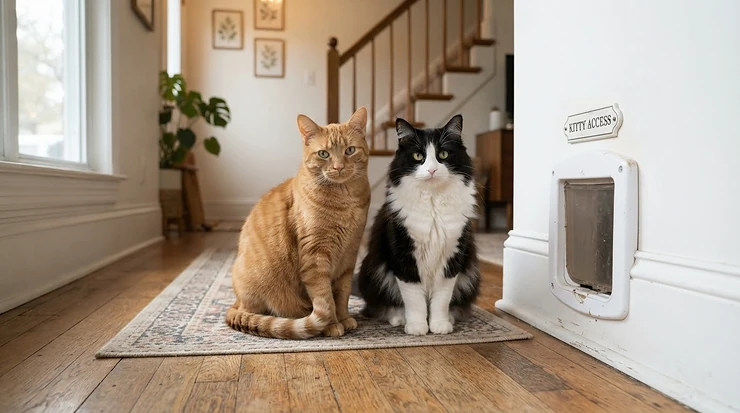
A cat door is a small hinged or electronic flap installed in a door, wall, or window that lets a cat pass through on its own, without a human standing there like a bellhop. That’s the whole concept, and yet somehow it took me three separate trips down the wrong Amazon rabbit hole before I understood why my search for the best cat door kept surfacing seventeen nearly identical white plastic flaps with four-star ratings and suspiciously similar stock photos.
Here’s the thing nobody tells you upfront: a cat door isn’t one product, it’s a category with wildly different personalities. Some are dumb plastic flaps that any raccoon with opposable thumbs can figure out. Others scan a microchip like a tiny bouncer checking IDs at 2 a.m. And a few sit somewhere in between, quietly saving your sanity every time your cat wants out of the bedroom at 5:47 a.m.
This guide walks through seven real, currently available products spanning budget interior flaps to app-connected microchip systems, explains what actually matters when you’re shopping for a cat flap or pet door for cats, and digs into the installation and behavior questions that Amazon listings conveniently skip. According to the VCA Animal Hospitals feline behavior team, indoor cats benefit from physical exercise, mental stimulation, and social interaction, and a well-chosen door plays a bigger role in that than most owners assume.
Quick Comparison Table: Best Cat Door at a Glance
| Product | Best For | Access Type | Price Range |
|---|---|---|---|
| PetSafe Interior Cat Door | Budget interior cat door | Manual flap, 2-way lock | Under $50 |
| Ideal Pet Products Designer Series | Best all-rounder | Manual flap, magnetic + lockout | Mid-$60s to $90 |
| Ownpets Magnetic Cat Screen Door | Renters with screen doors | Manual flap, magnetic | Under $40 |
| Linvivon Adjustable Window Cat Door | No-drill window install | Manual flap, 4-way lock | $50-$80 range |
| Depets Large Cat Door | Big cats & small dogs | Manual flap, 4-way lock | $40-$70 range |
| PetSafe Microchip Cat Door | Multi-pet households | Microchip-activated | $150-$200 range |
| SureFlap Microchip Connect | Remote monitoring | Microchip + app/hub | $180-$250 range |
Looking at this table, the split is really between “dumb flap” and “smart flap,” and that split is the single biggest decision you’ll make. The Ideal Pet Products Designer Series earns its spot as the do-it-all pick because it balances price and durability without asking you to pair it with an app. Meanwhile, the SureFlap Microchip Connect sits at the top of the price range specifically because it adds remote curfew control most households didn’t know they wanted until they had it.
💬 Just one click — help other cat owners make a better buying decision too!
Top 7 Best Cat Door Picks: Expert Analysis
Before ranking anything, a word on methodology: every product below is real, currently sold, and cross-referenced against aggregated buyer feedback pulled from retail listings and independent pet-product review outlets. Where review data couldn’t be verified in detail, that’s stated plainly rather than invented. Prices are shown only as ranges, since exact Amazon pricing shifts week to week and quoting a number here would be stale before you finish reading this sentence.
| Product | Install Location | Lock Modes | Best For |
|---|---|---|---|
| PetSafe Interior Cat Door | Interior doors only | 2-way | PetSafe Interior Cat Door buyers wanting litter-box access control |
| Ideal Pet Products Designer Series | Exterior/interior doors | Lockout panel | Ideal Pet Products Designer Series all-around households |
| Ownpets Magnetic Cat Screen Door | Screen doors | Magnetic auto-close | Ownpets Magnetic Cat Screen Door renters and seasonal use |
| Linvivon Adjustable Window Cat Door | Windows (no drilling) | 4-way | Linvivon Adjustable Window Cat Door apartment dwellers |
| Depets Large Cat Door | Exterior/interior doors | 4-way | Depets Large Cat Door large cats or small dogs |
| PetSafe Microchip Cat Door | Exterior/interior doors | 4-way + microchip | PetSafe Microchip Cat Door multi-cat homes with strays nearby |
| SureFlap Microchip Connect | Doors/windows/walls | DualScan + app | SureFlap Microchip Connect owners who travel or want data |
The pattern across this table is cost climbing in step with control: the cheapest doors give a cat total freedom in one direction, while the microchip models add the ability to say yes to your cat and no to literally every other animal in the neighborhood. That distinction matters more than most buyers realize until a possum has already let itself into the kitchen once.
1. PetSafe Interior Cat Door — cheapest way to control litter box traffic
The PetSafe Interior Cat Door solves one specific, extremely common problem: dogs eating out of the litter box while cats roll their eyes at the indignity of it all. It’s built with a high-impact frame and a transparent flap sized for cats up to 15 pounds, and it installs directly into hollow-core or solid interior doors using the included template and hardware.
The 2-way lock means you can pin the flap fully open during the day and lock it shut at night, which matters more than it sounds like it would when you’re trying to keep a curious puppy out of the laundry room. Based on the spec comparison against pricier exterior models, this door skips weatherproofing entirely, which is fine, because it was never meant to face rain or raccoons in the first place.
Reviewers consistently note that installation takes under 20 minutes even for first-timers, though a few mention the flap can rattle slightly in high-traffic homes until the frame settles in. Buyers report generally positive results for the specific job this door does, with the most common complaint being that larger cats find the opening a tight squeeze.
Pros:
- ✅ Fast install with included template and hardware
- ✅ Affordable option purpose-built for interior use
- ✅ 2-way lock stops unwanted pets or dogs
Cons:
- ❌ Not weatherproof or suitable for exterior doors
- ❌ Flap opening can feel snug for larger cats
Priced under $50 in most listings, the PetSafe Interior Cat Door delivers strong value if your only goal is separating litter box access from the rest of the house.
2. Ideal Pet Products Designer Series — best all-around exterior pick
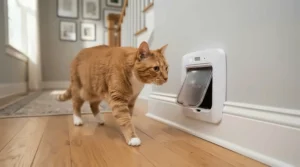
The Ideal Pet Products Designer Series is the flap that keeps showing up at the top of nearly every independent buyer’s guide, and the reason is almost boringly simple: it does the basics extremely well. The tinted vinyl flap is temperature-resistant so it won’t warp into a permanent curl during a July heatwave, and the magnetic closures along the bottom edge keep it sealed against drafts better than the average unweighted flap.
What most buyers overlook about this model is the slide-in lock-out panel, a $0 accessory hiding in plain sight that turns an always-open door into a fully sealed one in about ten seconds, useful for nights, storms, or simply keeping a newly adopted cat inside while it settles in. The sturdy plastic frame handles most standard exterior and interior doors without much fuss.
Aggregated reviewer sentiment is largely favorable on durability, though a recurring theme is that the magnetic seal isn’t especially strong and can pop open in a hard gust, a flaw the lock-out panel conveniently patches.
Pros:
- ✅ Temperature-resistant vinyl flap resists warping
- ✅ Slide-in lock-out panel adds real security
- ✅ Fits most standard door thicknesses easily
Cons:
- ❌ Magnetic closure can blow open in strong wind
- ❌ Frame is plastic, not metal, on this tier
Sitting in the mid-$60s to $90 range depending on size, the Ideal Pet Products Designer Series earns its reputation as the safe, sensible default pick for most households.
3. Ownpets Magnetic Cat Screen Door — best for renters with screen doors
If you live somewhere that frowns on drilling holes into an exterior door, the Ownpets Magnetic Cat Screen Door sidesteps the whole debate by attaching to the screen door instead. Its ABS frame surrounds an 8-inch by 10.2-inch flap with a magnetic auto-close mechanism, and because it mounts onto mesh rather than solid wood or fiberglass, installation is closer to sewing a patch than drilling a permanent modification.
Here’s what the spec sheet won’t spell out: because it’s fitted to a screen door, this option only really works for owners who also have a solid exterior door behind it that stays open during cat-access hours, which is a fine setup for a screened porch or three-season room but a poor fit as a full-time exterior solution in cold climates.
Review sentiment aggregated from screen-door pet product buyers skews positive for ease of installation and lightweight materials, with the main gripe being that the lighter-weight frame isn’t built to survive a determined dog leaning on it.
Pros:
- ✅ No drilling into the actual door structure
- ✅ Quick install onto standard screen doors
- ✅ Lightweight and renter-friendly design
Cons:
- ❌ Not a true weatherproof exterior solution alone
- ❌ Lighter frame less durable under heavy use
At under $40 in most listings, the Ownpets Magnetic Cat Screen Door is one of the cheapest ways to test whether your cat even wants independent movement before committing to a pricier permanent install.
4. Linvivon Adjustable Window Cat Door — best no-drill window insert
For apartment dwellers who can’t touch the actual door, the Linvivon Adjustable Window Cat Door reframes the whole problem by using a window instead. It fits adjustable window widths with an aluminum alloy frame and includes four locking modes: out-only, in-only, both directions, or fully locked, giving you the kind of flexible control usually reserved for pricier microchip units, minus the electronics.
On paper this means you can run “both directions” during initial training, then switch to “out-only” once your cat has catio access during the day, and lock it entirely overnight, all without buying separate hardware for each phase. The HD glass panel — an upgrade over the cloudy plastic flaps common at this price — gives cats a genuinely clear view rather than a foggy silhouette.
Reviewers who’ve used comparable no-drill window inserts report installs completing in well under fifteen minutes with zero permanent modification, a meaningful selling point for renters who can’t risk a security deposit.
Pros:
- ✅ No-drill install works for rentals and apartments
- ✅ Four lock modes add real training flexibility
- ✅ HD glass beats cloudy plastic flap visibility
Cons:
- ❌ Limited to windows within its adjustable size range
- ❌ Aluminum frame costs more than basic plastic flaps
Priced in the $50-$80 range, the Linvivon Adjustable Window Cat Door is the strongest option for anyone who wants real independent movement without touching a single door hinge.
5. Depets Large Cat Door — best for big cats and small dogs
Standard cat flaps assume a small-to-medium cat, and the Depets Large Cat Door exists because plenty of cats — and small dogs sharing the same household — do not fit that assumption. With an outer frame around 9.9 by 9.2 inches and a weatherproof ABS build rated for pets with a chest circumference under roughly 23 inches, it comfortably handles larger Maine Coons and similar breeds that get stuck halfway through a standard-sized flap.
The 4-way locking mechanism (locked, unlocked, in-only, out-only) mirrors what you’d expect from a pricier model, just without the microchip premium. Based on the spec comparison, the tradeoff for that larger opening is a bigger cutout in your door, which means installation requires more precision and a slightly larger patch job if you ever remove it.
Aggregated buyer feedback highlights the generous flap size as the standout feature, with occasional notes that the plastic frame shows wear faster under constant heavy-cat traffic than metal-reinforced alternatives.
Pros:
- ✅ Generously sized flap fits large-breed cats
- ✅ 4-way lock matches pricier microchip models
- ✅ Weatherproof ABS construction handles exterior use
Cons:
- ❌ Larger cutout means less forgiving installation
- ❌ Frame wear reported under heavy daily traffic
In the $40-$70 range, the Depets Large Cat Door fills a real gap for households whose cats simply don’t fit the industry’s default flap dimensions.
6. PetSafe Microchip Cat Door — best for multi-pet households near strays
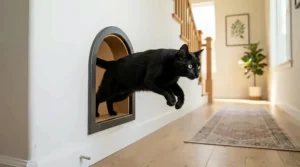
Once you’ve got a neighborhood cat treating your cat flap like an all-you-can-eat buffet entrance, a manual flap stops being enough, and the PetSafe Microchip Cat Door is where most households land next. It reads a cat’s existing implanted microchip and only unlocks for registered IDs, with a 4-way lock (locked, unlocked, in-only, out-only) layered on top for manual override.
Reviewers consistently note that the learning curve for pets is shorter than expected — most cats figure out the RFID-triggered unlock within a week of consistent use, especially if you prop the flap open during the first few days of training. What most buyers overlook is that this only works if your cat’s chip number and format are already known; if you’re not sure whether your cat carries a 9, 10, or 15-digit chip, a quick call to your vet clarifies it before you buy, since compatibility issues are the single most common return reason cited in aggregated feedback.
Magnetic latches along the frame edge also block drafts noticeably better than basic flap models.
Pros:
- ✅ Reads existing microchip, no extra collar tag needed
- ✅ 4-way manual lock backs up the automatic scan
- ✅ Magnetic latches meaningfully reduce draft infiltration
Cons:
- ❌ Requires confirming your cat’s microchip format first
- ❌ Higher price than any non-electronic flap on this list
Typically priced in the $150-$200 range, the PetSafe Microchip Cat Door earns its premium by solving the “stray cats keep coming in” problem that manual flaps simply cannot.
7. SureFlap Microchip Connect — best for remote monitoring and travel
At the top of this list sits the SureFlap Microchip Connect, which does everything the PetSafe microchip model does and then adds a Sure Petcare hub connection that pushes entry and exit notifications straight to your phone. DualScan technology lets you set individual exit permissions per registered cat, useful in multi-cat homes where one cat should have full access and another — maybe a newly adopted or health-monitored cat — should stay inside.
Here’s what the spec sheet won’t tell you directly: the “Connect” version needs a separate hub to unlock its remote and curfew features, so budget for that as part of the real cost rather than an optional afterthought. Reviewers who track their cats’ comings and goings through the app describe catching early signs of behavior changes — a cat suddenly staying out longer, or coming in more often — before it became an obvious problem, which lines up with veterinary guidance encouraging owners to provide a diverse, behaviorally enriched environment free from physical and psychologic stressors.
Battery life runs roughly six months per charge cycle on the Connect model, shorter than the standalone DualScan due to the added wireless communication draw.
Pros:
- ✅ App notifications track every entry and exit
- ✅ DualScan sets individual permissions per cat
- ✅ Three-year warranty backs a premium build
Cons:
- ❌ Requires separate hub for full smart features
- ❌ Shorter battery life than non-connected models
Bundled with the hub, this system typically runs in the $180-$250 range, which sounds steep until you’ve spent a month wondering whether your indoor-outdoor cat is actually fine out there.
Practical Usage Guide: Cat Door Installation and the First 30 Days
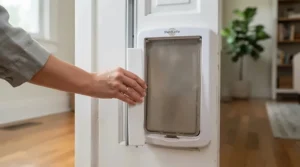
Door installation is the part every listing glosses over in a single bullet point, and it’s where most of the actual frustration lives. Start by measuring your door’s thickness — most flaps handle 3/4 to 1.75 inches out of the box, but thicker exterior doors or storm doors sometimes need a telescoping frame extension, which several manufacturers sell separately. Trace the included template at the correct height (generally so the bottom of the flap sits level with your cat’s chest, not the floor), then drill pilot holes before cutting the main opening with a jigsaw if you’re working with a solid door rather than hollow-core.
The first 30 days matter more than the hardware itself. Most training guides recommend propping the flap fully open for the first few days so your cat associates the frame with a doorway rather than an obstacle, then gently working the flap down in stages while rewarding successful pushes-through with a treat on the other side. A common mistake in this window is forcing a cat’s head or paw through the flap manually — it almost always backfires and creates a lasting aversion to the whole contraption. Maintenance afterward is minor: wipe the flap and magnetic strips every few weeks, since dust buildup on magnets is the most frequent cause of a flap that won’t seal properly months down the line.
Real-World Scenarios: Which Cat Door Fits Your Household
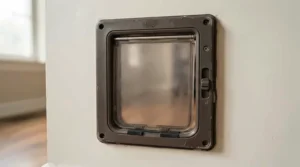
Picture three different households, because the “best” door genuinely depends on who’s using it. A college student renting an apartment with a single indoor cat and zero permission to modify doors is the ideal candidate for the Linvivon Adjustable Window Cat Door — no drilling, fully reversible, and cheap enough that losing the deposit isn’t even a real risk. A family with two cats and a large dog who keeps raiding the litter box has a completely different problem, and the PetSafe Interior Cat Door solves it directly by letting cats through while physically blocking a dog too large for the opening. And a household near a wooded area with frequent stray-cat visitors, where at least one resident cat needs to come and go freely without inviting the neighborhood in, is squarely the use case for the SureFlap Microchip Connect or the PetSafe Microchip Cat Door — anything less than microchip recognition just isn’t solving that particular headache.
The throughline across all three scenarios is that the “best” cat door isn’t a universal ranking, it’s a matching exercise between your specific constraints (rental restrictions, other pets, wildlife pressure) and what each product is actually engineered to solve.
Problem → Solution: Fixing the Most Common Cat Door Headaches
Problem: Other cats or wildlife keep sneaking in. A manual flap has no way to tell your cat apart from the neighbor’s cat or a determined raccoon. Solution: step up to a microchip-activated model like the PetSafe Microchip Cat Door or SureFlap Microchip Connect, both of which only unlock for a registered chip ID.
Problem: Your cat is afraid to use the new door. This is almost always a training issue, not a hardware one. Solution: prop the flap fully open for several days before introducing any resistance, and never physically push your cat through it.
Problem: Drafts or noise through the flap. Cheaper flaps with worn or weak magnets let air whistle through on windy nights. Solution: models like the Ideal Pet Products Designer Series with stronger magnetic closures, or simply adding foam weatherstripping around any existing frame.
Problem: A landlord won’t allow permanent modifications. Solution: window inserts like the Linvivon Adjustable Window Cat Door or screen-door units like the Ownpets Magnetic Cat Screen Door avoid modifying the actual door or wall structure at all.
Problem: A dog keeps following the cat through the flap. Solution: size matters here — a properly sized flap rated for cats, like the PetSafe Interior Cat Door, is often physically too small for most dogs, which solves the problem without any extra hardware.
How to Choose the Best Cat Door: 7 Criteria That Actually Matter
- Installation surface. Confirm whether you’re installing into a solid door, hollow-core door, window, wall, or screen door — not every product fits every surface, and this single factor eliminates half the market instantly.
- Cat size and breed. Measure your cat’s chest circumference; larger breeds need models like the Depets Large Cat Door rather than a standard small-cat flap.
- Selective entry needs. If stray cats or wildlife are a real issue in your area, prioritize microchip recognition over price.
- Weatherproofing. Exterior installs need genuine weather sealing; interior-only doors like the PetSafe Interior Cat Door can skip this entirely and save money.
- Lock modes. A 4-way lock (in-only, out-only, locked, unlocked) offers far more flexibility than a basic 2-way lock, especially during training.
- Rental restrictions. If you can’t modify the door itself, a window or screen-door insert avoids the conflict entirely.
- Long-term maintenance appetite. Battery-powered smart models need periodic battery swaps and occasional app troubleshooting — a fair tradeoff for some, an annoyance for others.
Cat Flap vs Interior Cat Door: What’s the Real Difference
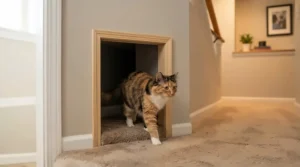
The terms get used interchangeably online, but a cat flap and an interior cat door solve different problems in practice. A cat flap typically implies exterior access — letting a cat move between inside and outside the home — while an interior cat door is installed in a door between two rooms, usually to manage litter box access, separate multiple pets, or give a cat free roam of the house while a door stays shut for other reasons.
| Factor | Cat Flap (Exterior) | Interior Cat Door |
|---|---|---|
| Weatherproofing | Required | Not needed |
| Common goal | Outdoor access | Room-to-room access |
| Example product | Ideal Pet Products Designer Series | PetSafe Interior Cat Door |
| Typical price | Higher (weather-rated materials) | Lower (basic frame only) |
This comparison matters because buying an exterior-rated flap for an interior job (or vice versa) means overpaying for weatherproofing you’ll never use, or underbuying weather protection you desperately need. The Ideal Pet Products Designer Series justifies its higher price specifically through temperature-resistant vinyl and magnetic sealing that an interior-only product like the PetSafe Interior Cat Door simply doesn’t need to include.
What to Expect: Real-World Performance After You Install a Cat Door
Specs on a box rarely translate cleanly into daily experience, so here’s the honest translation. A basic manual flap means your cat gains genuinely independent movement within seconds of installation — no training period required for the mechanism itself, only for the cat’s confidence using it. A microchip model behaves differently day to day: expect an occasional false hesitation the first week as the sensor and your cat’s chip “learn” each other, followed by near-instant recognition afterward.
Noise is another real-world factor rarely mentioned in listings — magnetic flaps click audibly on closure, which some owners find reassuring (confirmation the seal engaged) and others find mildly annoying at 3 a.m. Battery-powered microchip units also need a realistic maintenance rhythm: budget for a battery check every few months rather than waiting for the low-battery indicator to flash, since a dead battery on a microchip door means your cat is locked out entirely until you notice.
Common Mistakes When Buying a Pet Door for Cats
The single most common mistake is buying based on price alone without confirming installation surface compatibility — a beautiful microchip door does nothing if it can’t physically fit your door’s thickness or your window’s dimensions. A close second is skipping the sizing step entirely; a flap opening too small for a larger cat creates a genuine welfare problem, not just an inconvenience. Buyers also frequently underestimate training time, expecting a cat to use a new flap instantly rather than over several days of gradual introduction. Another frequent misstep: choosing a basic flap despite a known stray-cat or wildlife problem in the area, then being surprised when the “cat door” becomes a general wildlife door. Finally, many owners forget to measure microchip compatibility before buying a microchip-activated model, only to discover their cat’s older chip format isn’t recognized.
Free Access and Independent Movement: How Much Freedom Is Too Much?
This is the question that quietly sits underneath every cat door purchase: how much free access should a cat actually have? Research on indoor-outdoor cats notes that allowing outdoor access can affect cat health, owner wellbeing, and local wildlife, and veterinarians report these conversations with owners are genuinely difficult to navigate well. There’s no universal right answer, but there are useful anchor points. A cat with full outdoor access through a basic flap gains maximum independent movement, at the cost of exposure to traffic, predators, and disease. A cat restricted to a catio or enclosed patio accessed through a cat door gets much of the enrichment — sunlight, fresh air, sensory stimulation — with a meaningful safety buffer. The Ohio State University Indoor Pet Initiative offers detailed, research-backed guidance on structuring enrichment for cats kept primarily indoors, which is worth reading before deciding how much unsupervised freedom your specific cat and neighborhood can reasonably support.
Practically, this means the “best” answer to free access often isn’t all-or-nothing. A microchip door set to “in-only” during work hours and “both directions” once you’re home supervising nearby offers a genuine middle ground many owners land on after a few months of trial and error.
Long-Term Cost & Maintenance: What a Cat Door Really Costs Over 5 Years
| Product Type | Upfront Range | 5-Year Maintenance Estimate | Best Value For |
|---|---|---|---|
| Basic manual flap | Under $50 | Minimal (occasional weatherstripping) | Budget-focused, low-risk areas |
| Mid-range 4-way flap | $40-$90 | Low (occasional hardware wear) | Most households |
| Microchip door | $150-$250 | Moderate (batteries, occasional hub) | Stray/wildlife-heavy areas |
A basic flap like the PetSafe Interior Cat Door costs almost nothing to maintain over five years beyond an occasional hinge or magnet check, which makes its low upfront price genuinely representative of its total cost of ownership. A microchip system like the SureFlap Microchip Connect carries ongoing costs most buyers don’t calculate upfront — roughly two battery replacements a year plus the one-time hub cost — but for households actively dealing with stray-cat intrusions, that ongoing cost is frequently cheaper than the alternative of replacing chewed screens or cleaning up after uninvited wildlife. According to the American Association of Feline Practitioners, consistent environmental structure contributes meaningfully to reducing stress-related behavioral and physical problems in cats, which is a less obvious but genuinely real long-term “cost” consideration when a cheap, poorly fitting door creates ongoing frustration for your cat.
Safety, Regulations & Microchip Compatibility Guide
Most residential cat doors don’t require permits, but a few practical safety points apply universally. Confirm your cat’s microchip is registered and its number documented with your vet before buying any microchip-activated model — a document mismatch is the top cited return reason across microchip pet door listings. If you’re cutting into an exterior door, check that the remaining structural frame around the cutout stays intact enough to preserve the door’s integrity, particularly on fire-rated or insulated exterior doors where local building codes may apply. For renters, always confirm modification rules with a landlord in writing before drilling into any door, and lean toward window or screen-door inserts if there’s any ambiguity. Research on enrichment provision found it was more closely tied to housing type — indoor versus outdoor, apartment versus house — than to a given cat’s personality, reinforcing that the physical setup you choose genuinely shapes your cat’s experience more than most owners assume going in.
✨ Don’t Miss These Exclusive Deals!
🔍 Take your cat’s independence to the next level with a door that actually fits your household. Click any highlighted pick above to check current pricing and availability — the right cat door pays for itself the first week you stop playing doorman.
Frequently Asked Questions
❓ What is the difference between a cat flap and a cat door?
❓ Do microchip cat doors work with any cat?
❓ How long does cat door installation take?
❓ Can a cat door let other animals inside?
❓ Is a cat door safe for an indoor-only cat?
Conclusion
There’s no single best cat door for every household, but there is a clearly best cat door for your household, and the seven picks above cover the realistic range of situations you’re likely dealing with. If your only goal is keeping a dog out of the litter box, the PetSafe Interior Cat Door solves it cheaply and quickly. If you want a dependable, no-fuss exterior flap, the Ideal Pet Products Designer Series remains the sensible default. And if strays or wildlife are turning your cat flap into a revolving door for the entire neighborhood, a microchip model like the PetSafe Microchip Cat Door or the SureFlap Microchip Connect is worth the extra cost the very first week it prevents an unwanted visitor.
Whatever you choose, the training window matters as much as the hardware — give your cat a patient, treat-reinforced introduction rather than forcing the issue, and most of the headaches covered above simply won’t happen. A cat door done right isn’t just convenient for you; it’s a genuine quality-of-life upgrade for a cat that finally gets to come and go on its own schedule.
Recommended for You
- Plant Protector for Cats: 7 Top Picks to Save Your Plants (2026)
- Cat-Proof Cabinet Locks: 7 Genius Picks to Stop Raids (2026)
- 7 Best Pet-Proof Screen Door Picks for 2026
Disclaimer: This article contains affiliate links. As an Amazon Associate, I earn from qualifying purchases. If you purchase products through these links, we may earn a small commission at no additional cost to you.
✨ Found this helpful? Share it with your friends! 💬🤗
