
Table of Contents
Picture a Persian after a lazy weekend. The coat looks like a cloud, but under the armpit there’s a knot the size of a grape, and it’s tightening by the hour. Long fur doesn’t forgive neglect. It also doesn’t forgive over-enthusiasm, which is why the right cat conditioner for long-haired cats prone to matting is a precision tool, not a magic potion.
Here’s the plain truth. Cats can spend up to half their waking hours grooming, yet the ASPCA’s cat grooming guidance still treats human help as part of the job, starting with a metal comb to work out tangles gently. Self-grooming has a ceiling. Research summarized by a humane-society veterinary assistant suggests long-haired breeds like Persians struggle to reach the layers of fur closest to the skin. That’s where mats are born.
I researched seven real products, read the review patterns behind them, and compared formulas the way you’d compare ingredients on a sauce. Nothing here is a hands-on test. It’s analysis: specs, aggregated reviewer themes, and what they mean for a cat with a tangle problem. Prices below are approximate ranges at the time of research (October 2026), so check current pricing before you buy.
What Is a Cat Conditioner for Long-Haired Cats Prone to Matting?
Cat conditioner for long-haired cats prone to matting is a feline-formulated coat product, either rinse-out or leave-in, that lubricates hair shafts, reduces static, and helps tangles release under a comb. It doesn’t replace brushing. It makes brushing work better, softens early knots, and keeps dry fur from clinging to itself.
Quick Comparison: 7 Conditioners at a Glance
| Product | Format | Best For | Price Range | Review Signal |
|---|---|---|---|---|
| Hepper Pet Conditioner and Moisturizer | Rinse-out | Everyday bath-day conditioning | Around $10-$20 | Ranked “best overall” in several roundups |
| Warren London Cat Detangler Spray | Leave-in spray | Spot-treating fresh tangles | Under $20 range | Around 4.4 stars on a retailer listing |
| Pet Silk New Zealand Manuka Honey Leave-In Conditioner | Leave-in | Show-coat and Persian-style maintenance | Around $15-$25 | Small but positive review pool |
| Davis Oatmeal Leave-On Conditioner | Leave-on (dilutable) | Dry, itchy skin plus tangle control | Around $10-$15 | Around 4.4 stars across 1,000+ reviews in one roundup |
| Envirogroom De-Mat Pro | Leave-in spray | Brushing aid on dry fur | Around $13-$19 | Mixed on stubborn mats, positive on feel |
| kin+kind Natural Dog & Cat Moisturizer & Conditioner | Rinse-out | Dry, sensitive skin | Around $15-$25 | Named “premium choice” in a roundup |
| Earthbath Oatmeal & Aloe Fragrance Free Conditioner | Rinse-out | Scent-sensitive households | Around $10-$18 | Owners report good results for allergy-prone cats |
Look at the table sideways and a pattern appears. Rinse-out formulas (Hepper, kin+kind, Earthbath) are bath-day tools. Spray and leave-in formulas (Warren London, Pet Silk, Envirogroom) are between-bath tools. Davis sits in the middle, doing double duty as a skin soother and a tangle reducer. If your cat hates baths, the leave-in column is where your money should go first.
Price spread matters less than you’d think. Even the “premium” kin+kind costs only a few dollars more per bottle than the budget picks, and a single salon mat-removal visit can cost far more than any bottle on this list.
💬 Just one click — help others make better buying decisions too!😊
Top 7 Cat Conditioners for Long-Haired Cats Prone to Matting: Expert Analysis
1. Hepper Pet Conditioner and Moisturizer — best all-round bath-day conditioner
If a conditioner could be a reliable friend, Hepper would be the one who shows up with snacks. It’s a rinse-out formula, so it belongs to bath day rather than daily touch-ups.
Roundup reviewers describe a coconut-based, cucumber-and-aloe formula that’s free of sulfates, parabens, alcohol, DEA, and synthetic dyes. In practice, that means a gentler rinse for a cat whose skin is already prone to flaking. Slip-and-glide is the point. A conditioned coat releases tangles under a comb with less tugging, which matters enormously for a cat who tolerates exactly one grooming session before turning into a furry chainsaw.
Here’s the honest wrinkle. A couple of the “best overall” rankings I found come from the brand’s own blog, so I’d treat the enthusiasm with a pinch of salt. Reviewers who like it consistently note that a little goes a long way. One roundup also points out that the product page doesn’t list ingredients clearly, so check the bottle itself if your cat has known sensitivities.
Reviewers’ recurring themes are softness and easy brushing after the bath. A cat who’s bathed every few weeks and brushed through a conditioned coat while it’s still barely damp gets the best of this formula.
Pros:
- ✅ Free of sulfates, parabens, and synthetic dyes
- ✅ Versatile across coat types, per roundup reviewers
- ✅ A small amount covers a whole coat
Cons:
- ❌ Rinse-out only, so no mid-week touch-ups
- ❌ Ingredients aren’t clearly listed on the product page
Price range: around $10-$20, so decent value for a bath-day staple.
2. Warren London Cat Detangler Spray — lightest mist for nervous cats
Spray bottles and cats have a complicated relationship. Warren London seems to understand that. Reviewers repeatedly mention a light mist that didn’t spook their cat, which is half the battle before you’ve touched a single mat.
The directions are refreshingly low-drama: spray onto a clean, damp coat, let it sit about a minute, then gently work the tangle out with a brush or grooming glove. That wait time is the secret. Slip needs a moment to soak into a knot. Impatience is how fur gets pulled.
The retailer listing sits around 4.4 stars from roughly a hundred reviews, a small but encouraging pool. Reviewers describe softer fur and, in one case, mats that loosened within two uses. Treat that as a pattern, not a promise. Tight mats pressed against the skin need more than a spritz.
Who should buy it? Owners of long-haired cats who catch tangles early. It’s a prevention-and-spot-treatment tool, ideal for behind the ears and the “armpits,” where friction creates trouble.
Pros:
- ✅ Light mist that reviewers say doesn’t startle cats
- ✅ Made for matted hair on cats specifically
- ✅ Fast to apply between baths
Cons:
- ❌ Limited review pool compared with bigger brands
- ❌ Won’t rescue tight, skin-level mats
Price range: under $20 range, so strong value for spot-treating.
3. Pet Silk New Zealand Manuka Honey Leave-In Conditioner — show-cat-style silkiness
Show people have long known a secret: bathing a cat before every show stresses the coat, so recovery products matter. A vendor-bought leave-in spray is exactly how one reviewer described discovering Pet Silk.
It’s an 11.6-ounce no-rinse spray: apply after a bath, rub it in, and brush. That convenience is the headline for any cat whose idea of a spa day involves a countdown to escape. The manuka honey angle is marketing flavor; the real value is the detangling slip.
The review pool is small (around ten on one retailer page), but the stories are specific. One Persian owner says it helps with twice-daily combing. A show-cat owner credits it with taking the edge off a stressed coat. The main complaint I saw was the nozzle, which one reviewer said isn’t the best spray. If you’ve ever wrestled a sputtering pump with a cat under one arm, that’s a fair gripe.
My analysis: this one suits maintained coats, not rescue missions. If you’re brushing daily anyway, Pet Silk can make each pass glide.
Pros:
- ✅ No-rinse convenience for cats who hate baths
- ✅ Reviewers report easier combing on long coats
- ✅ Labeled for both dogs and cats
Cons:
- ❌ Nozzle gets a mixed reception from reviewers
- ❌ Small review pool limits confidence
Price range: around $15-$25, so fair value for a long-lasting bottle.
4. Davis Oatmeal Leave-On Conditioner — soothes dry skin while it detangles
The Davis label reads like a tiny chemistry lesson. Colloidal oatmeal soothes. Guar hydroxypropyltrimonium chloride, a conditioning agent, gives hair its slip. Cetearyl and cetyl alcohols add softness. The manufacturer says it leaves coats more manageable and tangle-free while reducing static and repelling dust.
The interesting part is use. Retailers list it as dilutable at roughly 3:1, and the manufacturer’s Q&A says it’s safe for pets to groom themselves after use when used as directed. For a cat who licks everything, that’s a meaningful comfort.
A third-party roundup puts it around 4.4 stars over 1,000+ reviews. The reviewer lesson worth keeping: one former groomer warned that undiluted use can leave a tacky film that clumps and slows drying. That’s moisture balance gone wrong, and it’s why dilution isn’t optional here.
I’d point Davis at cats with dry, itchy skin plus a tangle problem. Seasonal flakiness and mats often go together, because dry fur clings.
Pros:
- ✅ Colloidal oatmeal soothes dry, irritated skin
- ✅ Dilutable, so one bottle lasts
- ✅ Manufacturer says self-grooming after use is fine
Cons:
- ❌ Too much leaves a tacky film
- ❌ Contains an apple fragrance some cats may dislike
Price range: around $10-$15, so excellent value.
5. Envirogroom De-Mat Pro — brushing aid for dry coats
This 16-ounce spray promises to be a “brushing aid on dry fur,” which is its biggest selling point for cats who refuse to be wet. The listing describes it as pH-balanced, non-toxic, and certified wheat- and gluten-free. Its Q&A says a cat will be fine if they lick the sprayed area.
Reviews split along a revealing line. One owner says it doesn’t leave fur greasy and the cat purrs afterward. Another, whose 16-year-old long-haired cat can’t keep up with self-care, says it’s “just a conditioner” that did nothing for existing mats, even though the cat tolerated the spraying.
That’s useful honesty. Envirogroom appears to work as slip for brushing, not as a mat dissolver. If your cat is elderly, arthritic, or overweight, which are all factors that make self-grooming harder, think of it as a daily companion to a comb, not a rescue remedy.
Where it shines is cats with very fine hair, who need less product and gentler handling.
Pros:
- ✅ Works on dry fur as a brushing aid
- ✅ Described as non-greasy by reviewers
- ✅ Large 16-ounce bottle
Cons:
- ❌ At least one reviewer found it ineffective on existing mats
- ❌ Mixed feedback on stubborn tangles
Price range: around $13-$19, so good value for daily use.
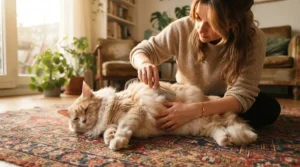
6. kin+kind Natural Dog & Cat Moisturizer & Conditioner — premium pick for sensitive skin
If the other six are practical, kin+kind is the one that looks good on the shelf. Roundups call it an excellent option for cats with dry and sensitive skin, built around natural and organic ingredients.
My take: this is the choice for cats whose problem isn’t tangles alone but the brittle fur that creates them. Dry hair is rough hair, and rough hair grabs onto itself. A moisturizing conditioner softens the cuticle so strands slide instead of snag.
The trade-off, noted by reviewers, is odor control. It isn’t designed for long-lasting deodorizing, so a cat who’s smelly for other reasons will still need a different solution. You’re paying for gentleness and ingredients, not for a perfume.
Rinse-out only means bath-day use, which suits cats who tolerate water and need coat repair more than quick fixes.
Pros:
- ✅ Natural and organic ingredient emphasis
- ✅ Suited to dry, sensitive skin
- ✅ Works for both dogs and cats in a multi-pet home
Cons:
- ❌ Not designed for lasting deodorizing
- ❌ Priciest on this list
Price range: around $15-$25, so worth it for sensitive coats.
7. Earthbath Oatmeal & Aloe Fragrance Free Conditioner — fragrance-free for scent-sensitive homes
Fragrance-free matters more with cats than it does with people. A cat that licks its coat ingests whatever’s on it, and a scent-heavy formula doubles that problem. Earthbath sidesteps it.
Roundup reviewers report that many owners find it helpful for cats with seasonal allergies, and the oatmeal-and-aloe pairing is a classic for soothing irritated skin. Here’s the caveat: I couldn’t verify strong, specific detangling claims from reviewers, so treat this as a coat-comfort conditioner that supports mat prevention rather than a dedicated detangler.
The best candidate is a long-haired cat whose skin is touchy in spring or fall. Calm skin means less scratching and less coat disruption, and that’s how mats get prevented upstream.
It’s another rinse-out, so pair it with a leave-in spray from this list for between-bath tangle control.
Pros:
- ✅ Fragrance-free formula suits sensitive cats
- ✅ Oatmeal and aloe soothe irritated skin
- ✅ Reasonable price per bottle
Cons:
- ❌ Rinse-out only
- ❌ Detangling evidence is thinner than for sprays
Price range: around $10-$18, so solid value.
How to Choose a Cat Conditioner for Long-Haired Cats Prone to Matting
- Match the format to your cat’s tolerance. A cat who accepts baths can use rinse-out formulas. A cat who doesn’t needs a leave-in spray. Choosing against your cat’s temperament wastes the money.
- Insist on cat-labeled or dog-and-cat-labeled products. Human conditioners often contain detergents that can harm cats, and cats ingest residue.
- Check the ingredient list for essential oils. Cats metabolize many botanical compounds poorly, so skip heavy fragrance or oil-based claims.
- Choose by coat problem. Dry, coarse fur needs moisture. Fine, silky fur needs light slip. Heavy undercoat needs a product that works with a comb.
- Look for lick-safe language. Manufacturer statements about grooming after use are a good sign, not a guarantee.
- Read the negative reviews first. They tell you what a product can’t do.
- Start with a small bottle. Cats are individuals, and what works on one coat may be a flop on another.
Detangling Conditioner for Cats: What It Actually Does to the Coat
Let’s demystify the term. A detangling conditioner for cats works by coating each hair shaft with a thin, slippery layer so strands glide past one another instead of locking. That’s the mechanism behind Warren London‘s damp-coat spray, Pet Silk‘s leave-in, and the guar-based formula in Davis.
What it doesn’t do is melt a tight mat. Reviewers who rave about mats “coming untangled easily” are typically describing loose, early tangles that were already close to releasing. Reviewers with older cats and skin-level knots describe far less drama.
The practical lesson? Use detangling products early and often, in small amounts, on small tangles. Think of it as oil in a hinge, not a crowbar. A product that cuts brushing time by a third is a win. One that promises to erase a week-old mat is selling fantasy.
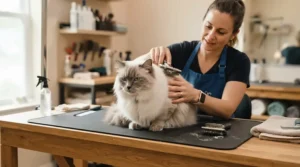
Pair any detangling conditioner for cats with a wide-tooth comb. Work from the tips toward the skin, hold the fur at the base so the skin isn’t pulled, and stop the moment your cat stiffens. Short, positive sessions beat heroic marathons every single time.
Leave-In Conditioner for Cat Mats: Where It Helps (and Where It Doesn’t)
A leave-in conditioner for cat mats earns its place in one specific scenario: the cat who won’t tolerate baths. Skip the tub, spritz, comb, done.
Where it genuinely helps: new tangles, friction zones like the neck and behind the ears, and coats that get brushed regularly but still drift into snarls. Where it falls short: neglected coats and severe mats. One owner of a 16-year-old long-haired cat reported that Envirogroom conditioned the coat but did nothing for existing mats. That’s a coat-conditioning limit, not a defect.
There’s also an over-application trap. One reviewer of a popular dog-labeled detangler spray said a Maine Coon was saturated after four sprays and that loose fur stopped releasing because too much product was applied. Another owner of a Ragdoll said her cat’s stomach was bothered after licking a dog-labeled leave-in. Moral: use less than you think, and choose cat-friendly labeling.
Rule of thumb: mist lightly, massage in with your fingers, wait the manufacturer’s stated time, then comb. If the coat feels sticky or heavy, you’ve overshot. A damp cloth wipe fixes that.
Cat Conditioner for Dry, Coarse Fur
Dry, coarse fur is a mat factory. Brittle strands catch on each other and cling, and static does the rest. If your cat’s coat has lost its silkiness, a conditioner with soothing ingredients is a better first step than a stronger detangler.
This is where kin+kind, Davis, and Earthbath shine. Oatmeal is the common thread, and colloidal oatmeal is known for calming irritated skin. Aloe adds softness. The goal is a coat that glides, not a coat that’s slick.
Coarse fur can also signal something beyond grooming. A dull, rough coat can reflect nutrition or an internal issue, and a cat who suddenly stops grooming deserves a vet check. Skin that flakes, reddens, or itches needs a professional look rather than a bigger bottle of conditioner.
Dietary support matters too. Groomers often point to omega-3 and omega-6 fatty acids for natural oil production. Ask your veterinarian before adding any supplement. Think of conditioner as the exterior treatment and diet as the foundation.
Coat Moisture Balance: Why Too Much Is as Bad as Too Little
Coat moisture balance is the least glamorous idea in grooming and the most important. A coat that’s too dry tangles. A coat that’s overloaded with product tangles too, clumping, trapping loose hair, and holding on to dirt.
Two reviewer lessons make this concrete. One groomer-turned-reviewer reported that undiluted Davis left a tacky film that slowed drying and made fur clump. And one reviewer reported that excess spray made a Maine Coon’s loose undercoat refuse to release. Both are the same mistake in different outfits.
Damp coats matter too. A damp, tangled coat can be more prone to matting, so a thorough, gentle dry after any bath is non-negotiable. Towel, then low-heat air if your cat tolerates it, then comb while the coat is just barely damp.
The sweet spot: coat feels soft and slides under your fingers, no residue, no stickiness. If you can see product, you’ve used too much. Dial back next time.
Features That Actually Matter (And Those That Don’t)
What matters:
- Cat-appropriate labeling. The Merck Veterinary Manual’s guidance on essential oils explains that cats lack an enzyme (glucuronyl transferase) that helps break down phenolic compounds, and that their grooming behavior adds oral exposure on top of skin contact. That’s why I skipped sprays built around lavender or mint for this list; both show up on veterinary cautions.
- Lick-safe statements. A manufacturer note that grooming after use is fine, as with Davis, beats vague “natural” claims.
- Format fit. A product your cat tolerates will get used. A superior formula that triggers a bath standoff won’t.
What doesn’t:
- Exotic scent names. “Tropical Mango Dream” is a mood, not a benefit.
- Honey, shea, and other buzzwords on their own. Look at what the formula does, not what the front label whispers.
- Dramatic before-and-after promises. Tight mats need a groomer.
Keep this filter handy: if a feature doesn’t change slip, skin comfort, or safety, it’s decoration.
Long-Haired Breed Grooming Routines That Keep Mats Away
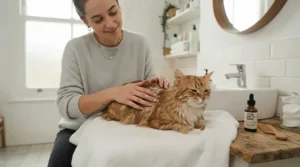
Long-haired breed grooming routines work best when they’re boring. Consistency beats intensity. FirstVet’s grooming guidance recommends short sessions, treats as rewards, a wire slicker brush for most coat types, and a check of skin and coat for lumps, parasites, and sores while you’re at it.
A practical weekly template:
- Daily (5-10 minutes): Run fingers through the coat to feel for knots, then comb from tips toward skin. Prioritize the neck, behind the ears, armpits, belly, and rump.
- Every other day: A light mist of a leave-in such as Warren London or Pet Silk on problem zones before combing.
- Every 4-6 weeks: A cat-safe bath with a rinse-out like Hepper, kin+kind, or Earthbath, then a thorough dry and comb. Bath timing varies by cat and lifestyle; ask your vet if unsure.
- Seasonal: Shedding season means more brushing. Loose undercoat trapped in the top coat is mat fuel.
First-30-day mistakes to dodge: pulling instead of teasing, applying too much product, skipping the skin check, and quitting after one bad session. Add a treat after every session and your cat will learn that combing equals snacks.
Real-World Scenarios: Matching Conditioners to Cats
Scenario 1: The two-year-old Ragdoll in a busy household. Budget is modest, bathing is rare, tangles show up behind the ears. A light leave-in like Warren London, plus daily combing, targets exactly that. Spend under $20 and use it sparingly.
Scenario 2: The sixteen-year-old Maine Coon with arthritis. Self-grooming has slowed, and mats gather at the hips and belly. Here, a gentle dry-coat aid such as Envirogroom can ease brushing, but expectations should stay realistic: it conditions, it doesn’t dissolve. A vet visit and a professional groomer for existing mats are wise, since older cats may need help beyond products.
Scenario 3: The Persian with itchy, flaky seasonal skin. A rinse-out like kin+kind or Earthbath during bath days, plus a diluted Davis between baths, tackles both skin comfort and tangle prevention. Budget runs around $25-$40 total for two bottles.
The pattern: match product to the actual problem. Dry skin gets moisture. Fresh tangles get slip. Severe mats get a professional.
Problem → Solution Guide: Troubleshooting Common Mat Headaches
Problem: “My cat bolts at the spray bottle.” Spray the product on your hands first, then work it into the coat. Light mists like Warren London‘s were described by reviewers as unalarming, so start there.
Problem: “The mat is tight against the skin.” Stop. PetMD’s matting guidance is clear: never cut mats out with household scissors, because skin is easy to nick. Severe or skin-level mats belong with a groomer or vet.
Problem: “Conditioner left the coat greasy or clumpy.” You used too much. Wipe with a damp cloth, comb out, and use half next time. Remember the Davis dilution lesson.
Problem: “My cat licks it off.” Choose a product with lick-safe language and apply to areas your cat can’t easily reach. Watch for drooling or stomach upset and stop use if either appears.
Problem: “Mats keep coming back.” Look upstream. Obesity, arthritis, and dental disease all reduce a cat’s ability to self-groom. A vet check may solve what a bottle can’t.
Cat Conditioner vs Alternatives: What Actually Works
| Method | Strength | Weakness | Best For |
|---|---|---|---|
| Rinse-out conditioner | Deep softening on bath day | Needs a bath | Hepper, kin+kind, Earthbath |
| Leave-in spray | Fast, no tub required | Won’t fix tight mats | Warren London, Pet Silk, Envirogroom, Davis |
| Brushing and combing alone | Free, builds routine | More pulling on dry coats | Cats with light coats, no mats |
| Professional grooming | Safe mat removal | Costs more, scheduling | Severe mats, elderly cats |
The table’s message is simple. Conditioner isn’t a replacement for brushing or grooming; it’s the lubricant that makes both easier. For cats with minimal tangles, combing alone may be enough. For chronic maters, conditioner plus routine plus occasional professional help is the combination that tends to hold up.
DIY kitchen oils are tempting, but cats ingest what they put on their fur, so I’d rather you ask your vet before improvising.
Long-Term Cost & Maintenance
Let’s do the math nobody puts on the label. A bottle in the $10-$20 range, used sparingly, can last for months, especially a dilutable formula like Davis. Spread over a year of weekly use, the cost per session is pennies.
Compare that with the alternative. A professional mat-removal appointment can run far more than a year of conditioner, and sedation, when needed for badly matted cats, adds expense and risk. Prevention is the cheap option.
Maintenance is minimal. Store bottles away from heat, keep nozzles clean, and replace sprays that clog. Rinse your combs and brushes regularly so product doesn’t build up.
Total cost of ownership for a typical long-haired cat: one leave-in spray plus one rinse-out conditioner, replaced a couple of times a year, plus a comb you probably already own. That’s a modest line item for fewer tangles, fewer groomer visits, and a calmer cat.
FAQ
❓ Is leave-in conditioner safe if my cat licks it off?
❓ How often should I use conditioner on a long-haired cat?
❓ Can cat conditioner remove existing mats?
❓ Where can I buy cat conditioner for long-haired cats prone to matting?
❓ Is oatmeal conditioner good for cats with dry skin?
Conclusion
Here’s the whole article in one breath: the best cat conditioner for long-haired cats prone to matting is the one your cat will tolerate, used lightly, alongside a comb you actually pick up.
If baths are your battleground, Warren London and Pet Silk offer leave-in convenience. If dry skin is the culprit, Davis, kin+kind, and Earthbath are the soothing options. If you want a dependable bath-day staple, Hepper is the safe starting point. And if your cat’s coat is brittle and you’re brushing mostly dry, Envirogroom is worth a look, with realistic expectations.
No conditioner replaces consistency. Five minutes of combing beats an hour of damage control. Check the skin while you’re in there, and let a groomer or vet handle what’s beyond a home fix.
🐾 Ready to make grooming day easier?
Click your favorite pick above to check current pricing and availability, and give your long-haired friend the soft, tangle-free coat they deserve!
Recommended for You
- Flea Shampoo For Outdoor Cats: 7 Best Safe Picks In 2026
- Gentle Kitten Shampoo For First Bath: 7 Best Picks (2026)
- Hypoallergenic Cat Shampoo For Sensitive Skin: 7 Best Picks 2026
Disclaimer: This article contains affiliate links. As an Amazon Associate, I earn from qualifying purchases. If you purchase products through these links, we may earn a small commission at no additional cost to you.
✨ Found this helpful? Share it with your friends! 💬🤗
