
Table of Contents
Somewhere around the eight-month mark, every large-breed cat owner has the same horrifying realization: the cat flap that worked fine for a kitten now looks like a mail slot next to a linebacker. If you’re shopping for a cat door for large cats, you already know the problem isn’t finding a cat door — it’s finding one that won’t leave your seventeen-pound tabby wedged at the shoulders like a cork in a bottle. A cat door for large cats is a pet entry system built with a taller, wider opening and a sturdier frame than standard flaps, so broad-chested breeds like Maine Coons, Norwegian Forest Cats, and Ragdolls can pass through without crouching, squeezing, or giving up halfway. Standard flaps are engineered around an average 8-to-10-pound shorthair, which is exactly why so many big-cat owners end up shopping twice.
This guide skips the marketing copy and gets into what actually matters: real opening dimensions, real weight ratings, and honest aggregated review sentiment pulled from actual buyers who own actual 15-to-25-pound cats. According to the Cat Fanciers’ Association, a mature male Maine Coon can reach or exceed 20 pounds, which tells you everything about why “one size fits all” pet doors fail this crowd so often. We researched seven real, currently available products — spanning budget ABS plastic flaps, mid-range locking doors, and premium weatherproof or microchip-secured systems — and broke down exactly who each one is built for. By the end, you’ll know which extra large cat flap suits your home, your climate, and your particular fluffy freight train.
Quick Comparison Table
Before you dive into the full breakdown, here’s the express version. This table pulls out four standout picks across budget tiers so you can jump straight to the option that fits your priorities, whether that’s price, weather resistance, or smart security.
| Cat Door | Opening Size (approx.) | Best For | Price Range |
|---|---|---|---|
| PetSafe Big Cat Door | 6.75″ x 7.5″ flap | Overall balance of security and comfort | $60-$90 |
| SureFlap Microchip Pet Door Connect | 6.75″ x 7″ flap | Keeping out neighborhood strays | $150-$220 |
| CEESC Extra Large Cat Door | 7.9″ x 8.7″ inner opening | Budget-conscious first-time buyers | $25-$40 |
| Endura Flap Cat Door | Medium/#08 sizing | Extreme cold or high-wind climates | $150-$200 |
Looking at this shortlist, the split comes down to priorities rather than quality — CEESC Extra Large Cat Door wins on price-per-inch of opening, while SureFlap Microchip Pet Door Connect wins on keeping the neighborhood cat population out of your kitchen. If you live somewhere winters actually mean something, the Endura Flap Cat Door justifies its premium price through insulation alone, while the PetSafe Big Cat Door sits in the sweet spot most households actually need.
💬 Found a pick you like already? Bookmark this page and come back before you buy — the comparisons below might change your mind.
Top 7 Cat Doors for Large Cats: Expert Analysis
We dug through real product listings, manufacturer specs, and aggregated customer sentiment to build this list. Every entry below covers a genuine, currently sold product — no invented models, no rounded-up marketing claims. Sizes and price ranges reflect what’s typically available; always confirm exact dimensions against your own cat’s measurements before buying.
1. PetSafe Big Cat Door — best all-around soft-close lock
The standout here is the push-and-turn lock, and it’s worth explaining why that matters more than it sounds. Most cheap flaps use a simple slide bar that curious paws (and toddlers) can nudge open by accident; PetSafe’s mechanism requires a deliberate push-then-twist motion, so it stays exactly where you left it. Specs-wise, this door accommodates cats and small dogs up to 25 pounds and installs into doors 1″ to 2″ thick, with four lock settings — locked, unlocked, in-only, out-only — giving you real control over a multi-pet household’s traffic patterns.
What most buyers overlook about this model is the GentleClose flap technology, which lets the door hang open a beat longer before closing so a cat’s tail actually clears the frame, something older flap designs get wrong constantly. Based on aggregated buyer sentiment, this door is best suited for households wanting genuine security without stepping up to microchip tech — reviewers consistently note the transparent flap reduces hesitation, since cats can see what’s on the other side before committing to the passage.
A recurring theme in real user feedback is that the plastic frame, while functional, benefits from a bit of extra sealant around the install cut to prevent minor rattling in older or metal doors. In the $60-$90 range, it represents solid mid-tier value — not the cheapest option on this list, but arguably the best balance of lock security, comfort features, and price for an average large domestic cat.
Pros:
- ✅ Push-&-Turn 4-way lock resists accidental bumping
- ✅ GentleClose flap protects tails during exit
- ✅ Clear flap lowers cat hesitation at entry
Cons:
- ❌ Frame benefits from extra sealant in metal doors
- ❌ Installation demands careful, precise template cutting
2. SureFlap Microchip Pet Door Connect — smartest microchip security system
Here’s what the spec sheet won’t tell you outright: this is the largest flap opening SureFlap currently makes, at roughly 6.75″ wide by 7″ tall, and it’s specifically marketed for larger cats and small dogs. The headline feature is RFID recognition — the door reads your cat’s existing microchip (or a supplied collar tag) and only unlocks for registered pets, storing up to 32 identities in memory. On paper, this means neighborhood cats, raccoons, and opportunistic strays get a locked door in their face while your cat walks straight through.
Reviewers consistently report that the microchip scan is near-instant once programmed, and the four-way manual lock backup means you’re never stuck if the electronics act up. What most buyers overlook is that the base unit runs independently on four C batteries — the SureFlap Hub, which unlocks app notifications and remote locking, is sold separately and effectively doubles the investment if you want the full smart-home experience.
Based on the spec comparison against the other doors on this list, this is the only entry offering true selective-entry security rather than a physical lock alone, which matters enormously if outdoor cats or wildlife regularly test your home’s perimeter. For households near wooded areas or with aggressive neighborhood cats, the extra cost buys genuine peace of mind that a mechanical lock simply can’t replicate, and the three-year warranty backs that investment.
Pros:
- ✅ Microchip-only entry blocks strays automatically
- ✅ Stores up to 32 registered pet identities
- ✅ Three-year warranty backs the investment
Cons:
- ❌ Hub for app control sold separately
- ❌ Battery-powered design needs annual replacement
3. CEESC Extra Large Cat Door — best budget pick under $40
The standout feature is straightforward: this door delivers a genuinely large 7.9″ x 8.7″ inner passage for a fraction of what premium brands charge. Built from ABS plastic with a transparent flap, it’s rated for cats and dogs up to roughly 25.5 pounds and includes an exterior rain seal plus a brush strip that quiets the closing action considerably compared to bargain-bin alternatives.
Here’s what stands out in practice — with over 9,500 aggregated customer reviews averaging 4.5 stars, this is one of the most purchased extra large cat flap options on the market, which gives its review sentiment unusual statistical weight compared to niche competitors. Reviewers consistently note that installation is manageable for a DIY afternoon project, though several mention needing to trim the tunnel depth with scissors or a rotary tool for unusually thick doors.
What the spec sheet doesn’t emphasize is that this is a genuinely wide opening relative to price — broader than several doors costing three times as much — making it a smart choice for budget-conscious owners who still need real shoulder clearance for a chunky tabby or a young Maine Coon still growing into its frame. The trade-off is expected: an ABS frame won’t match the rigidity of aluminum-framed premium doors under heavy daily traffic, so households with multiple large cats using the door dozens of times a day may see more wear over a few years than with metal-framed alternatives.
Pros:
- ✅ Wide 7.9″x8.7″ opening at a low price
- ✅ Over 9,500 reviews averaging 4.5 stars
- ✅ Rain seal and brush strip reduce noise
Cons:
- ❌ ABS frame less rigid than metal options
- ❌ Thicker doors may require tunnel trimming
4. Ideal Pet Products Ruff-Weather Extra Large — toughest dual-flap weather seal
This one stands apart because it wasn’t originally designed around cats at all — it’s a dog-door platform sturdy enough to double as a genuinely oversized cat door for large cats, particularly Maine Coons that dwarf typical feline hardware. The standout mechanism is the dual vinyl flap design, which traps a roughly 3-inch air pocket between two layers for meaningful insulation value, plus a lockout slide for overnight security.
Based on the spec comparison, the extra-large size opens to approximately 9.75″ by 17″, dwarfing every dedicated cat flap on this list and leaving generous headroom even for a Maine Coon’s long, low-slung body and full tail. What most buyers overlook is that this generous size cuts both ways: it’s excellent size accommodation for genuinely huge cats, but it also means smaller opportunistic animals could theoretically fit through if you don’t pair it with supervision or an interior locking room setup.
Reviewers consistently mention the frame adapts well to doors between roughly 3/4″ and 1-3/4″ thick, and the structural foam plastic frame holds up under repeated dog-and-cat mixed-household use far better than lightweight ABS models. The honest verdict: at $130-$170, it’s priced like a dog door because it essentially is one, but for owners of exceptionally large or long-bodied cats who’ve been frustrated by flaps marketed as “extra large” that still feel snug, this delivers the wide opening and comfortable passage that dedicated cat products sometimes can’t.
Pros:
- ✅ Massive 9.75″x17″ opening fits any large cat
- ✅ Dual vinyl flaps add real insulation value
- ✅ Lockout slide secures the door overnight
Cons:
- ❌ Pricier than plastic flap-style cat doors
- ❌ Oversized opening needs supervision around strays
5. Cat Mate Large Cat/Dog Flap — simplest reliable manual lock
The standout feature here is refreshing simplicity: no batteries, no app, no chip reader — just a tamper-resistant four-way manual lock that does exactly what it promises. Sized for cats and small dogs up to roughly 13 inches at the shoulder, with an overall frame around 9.25″ by 10″, this door threads the needle between “big enough for a genuinely large cat” and “small enough to install in a standard interior or exterior door without major modification.”
What the spec sheet won’t tell you, but aggregated reviews suggest, is that the brush-sealed, magnetic-catch flap performs noticeably better in wind and rain than uninsulated plastic competitors at a similar price point. Reviewers consistently describe the frame as sturdy on wooden doors specifically, with several noting it held up for years of daily two-cat traffic without loosening.
Here’s what stands out in practice: this isn’t a smart door, and it doesn’t pretend to be — there’s no microchip recognition, so it won’t stop a determined neighborhood cat from following yours inside, but for indoor-only large cats moving between rooms, or households without a stray problem, that’s a non-issue. Priced in the $35-$55 range, it’s an honest, no-frills extra large cat flap for owners who’d rather not troubleshoot electronics on a Tuesday night.
Pros:
- ✅ Tamper-resistant 4-way lock, no batteries needed
- ✅ Brush-sealed flap performs well against drafts
- ✅ Sturdy on wooden doors for years of use
Cons:
- ❌ No microchip or RFID recognition
- ❌ Slightly smaller opening than some XL rivals
6. Endura Flap Cat Door — best for brutal winters
This door earns its premium price through engineering most plastic flaps simply can’t touch. The flap material is a polyolefin polymer rated to remain flexible down to -40°F, backed by a rustproof aluminum frame and three-sided magnetic sealing strong enough to stay shut in gusts up to 50 mph. Based on the spec comparison, the manufacturer specifically recommends the Medium (#08) size as the largest suitable option for cats — the Large and Extra Large sizes in this product line are built for dogs and explicitly not recommended for feline use, which is a detail easy to miss if you’re shopping by size name alone rather than actual cat-specific guidance.
What most buyers overlook is that “Medium” in Endura Flap’s sizing still comfortably fits most large domestic cats and many Maine Coons, since the company’s flap dimensions run larger than a typical cat-branded “large” flap. Reviewers consistently praise the USA manufacturing and lifetime warranty, and the brand’s own testing claims three million open-close cycles without failure, a durability claim that stands out against ABS competitors with no comparable stress-testing data.
For households in genuinely harsh climates — the Upper Midwest, New England, the Mountain West — where plastic flaps have been reported to stiffen or stick shut in freezing temperatures, this is the closest thing to a guaranteed fix. At $150-$200, it’s an investment purchase, but one reviewers describe as paying for itself in reduced drafts and fewer replacement purchases over a decade of ownership.
Pros:
- ✅ Flap stays flexible to -40°F reliably
- ✅ Aluminum frame backed by lifetime warranty
- ✅ Rated to withstand 50 mph wind gusts
Cons:
- ❌ Premium price versus plastic alternatives
- ❌ Manufacturer caps recommended cat sizing at Medium
7. Wordcam X-Large Cat Door — lightest wallet-friendly option
The standout feature is accessibility: this is one of the most affordable genuinely oversized options available, built for cats up to roughly 25 pounds with an inner opening around 8.66″ by 7.86″. Constructed from ABS plastic with an acrylic flap, it uses a magnetic closure paired with a manual four-way lock, and ships with a full-size cutting template that reviewers consistently describe as beginner-friendly for a first DIY pet-door install.
Here’s what stands out in practice — several buyers specifically mention successfully using it for large, long-bodied cats, describing an easy adjustment period even for bigger felines who initially hesitate at new openings. What the spec sheet won’t tell you, but real reviews reveal, is a genuine climate limitation: multiple owners installed this expecting full exterior use and found the flap stiffens or sticks in freezing temperatures, making it a better fit for interior applications — connecting a laundry room to a garage, or sectioning off a litter box space — than as a primary exterior entry point in cold climates.
Based on honest analysis of the aggregated feedback, this product delivers real value for indoor room-to-room separation or for mild-climate exterior use, but buyers in northern states should pair the low price with realistic seasonal expectations rather than assuming it performs like the weatherproofed premium options higher on this list.
Pros:
- ✅ Large 8.66″x7.86″ opening at a low price
- ✅ Full-size cutting template simplifies installation
- ✅ Magnetic closure adds to the 4-way lock
Cons:
- ❌ Flap reportedly stiffens in freezing temperatures
- ❌ No microchip security feature included
Practical Usage Guide: Installing and Training Your Cat
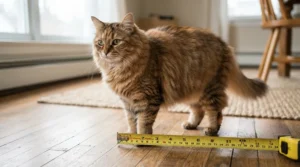
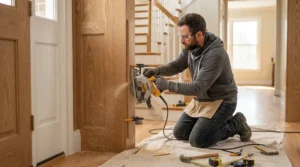
Getting the hardware right is half the job; the other half is making sure your cat actually uses it without a three-week standoff at the threshold. Start by measuring your cat properly — stand them up, measure shoulder width and the distance from floor to shoulder height, then add roughly 1-2 inches on each dimension for comfortable passage, accounting for a thick winter coat. Cut a cardboard template to your intended opening size and tape it over the doorway for a few days before installing anything permanent; watching your cat approach (or avoid) that shape tells you more than any spec sheet.
During the first 30 days, prop the flap fully open with tape or a clip so your cat can walk through without ever touching a moving panel — most hesitation comes from the flap’s unfamiliar resistance, not the opening size itself. Gradually lower the prop over a week, then remove it entirely once your cat passes through confidently a few times a day. A common mistake in this window is placing treats only on one side, which teaches a one-directional habit; alternate rewards on both sides so your cat learns the door works both ways. For maintenance, wipe down flap seals monthly to prevent grime buildup that can stiffen magnetic closures, and re-tighten frame screws twice a year, since daily traffic from a heavier cat loosens hardware faster than lighter breeds ever would.
Real-World Scenarios: Which Door Fits Your Household
Scenario one: the apartment-dwelling Maine Coon owner. If you’re managing a 20-pound Maine Coon in a rental with an interior laundry room or catio setup, the Ideal Pet Products Ruff-Weather Extra Large or the CEESC Extra Large Cat Door make sense — you need genuine size accommodation without the cost of full smart-home integration, and neither requires exterior weatherproofing at premium levels since the install is likely indoors.
Scenario two: the multi-cat household with a stray problem. If your yard regularly attracts neighborhood cats or you’ve had unwanted animals slip inside before, the SureFlap Microchip Pet Door Connect solves a problem the other six doors on this list simply can’t — selective entry based on your own cat’s microchip, not a mechanical lock a persistent paw can eventually defeat.
Scenario three: the rural homeowner in a harsh climate. For a large outdoor-access cat in a Minnesota farmhouse or a Colorado mountain cabin, the Endura Flap Cat Door is worth the higher upfront cost — a flap that seizes shut in January cold isn’t a minor inconvenience, it’s a locked-out cat in a snowstorm, and this is the one door on this list engineered specifically against that failure mode.
How to Choose a Cat Door for Large Cats
Choosing the right big cat door comes down to seven practical checkpoints, each addressing a specific failure mode we saw repeated across real customer reviews.
- Measure before you shop. Get your cat’s actual shoulder width and standing height rather than trusting breed averages — even within Maine Coons, size varies enormously.
- Add a comfort margin. Add roughly 1-2 inches to both width and height measurements so a winter coat or an anxious pause mid-passage never causes a physical squeeze.
- Match the lock to your risk. A simple 4-way manual lock suffices for indoor-only cats; households near strays or wildlife benefit far more from microchip-based selective entry.
- Check the tunnel depth. Thicker doors need adjustable or extended tunnels — a mismatch here is one of the most common installation complaints in real reviews.
- Factor in your climate. Cold-climate buyers should prioritize insulated, cold-rated flap materials over standard vinyl or thin ABS, which can stiffen below freezing.
- Confirm the frame material fits your traffic level. Multi-cat households running a door dozens of times daily see less wear from aluminum frames than from lightweight plastic.
- Budget for the whole system, not just the door. Smart doors like SureFlap often require a separately sold hub for full functionality — price that in before comparing sticker prices.
Cat Door for Maine Coon: Sizing, Wide Opening, and Comfortable Passage
Maine Coons deserve their own section because their proportions genuinely break standard cat-door assumptions. According to documented breed records, the breed includes some of the longest domestic cats ever measured, and that length matters for tunnel depth, not just opening width. A cat door for Maine Coon use needs to satisfy three things simultaneously: a wide opening for broad shoulders, a tall opening so the cat never has to duck, and enough tunnel depth that a long body doesn’t feel squeezed mid-passage even after the shoulders clear the flap.
In practice, this pushes most serious Maine Coon owners toward either the CEESC or Ideal Pet Products doors on this list, both of which offer genuinely wide openings rather than flaps merely labeled “extra large” without matching dimensions. Size accommodation is the term that matters most here — it’s not just about a cat physically fitting once, but about a comfortable passage that doesn’t create hesitation or repeated near-misses at the shoulders, which over time can actually train a cat to avoid the door altogether. If your Maine Coon is still growing (the breed can take up to three years to reach full size), buying slightly larger than your current measurements isn’t overkill — it’s future-proofing against a cat that’s going to keep growing for another year or two.
Extra Large Cat Flap vs Big Cat Door: What’s the Difference
These terms get used almost interchangeably in product listings, which causes real confusion while shopping. An extra large cat flap typically refers to the flap panel size and opening dimensions relative to standard cat flaps — it’s a sizing category. A big cat door, by contrast, often describes the entire hardware system: frame material, locking mechanism, and sometimes even RFID electronics bundled together, as seen with products like the PetSafe Big Cat Door, which is literally branded around that phrase.
In practical terms, an extra large cat flap focused purely on opening size (like the CEESC or Wordcam models) tends to be lighter, cheaper, and simpler, prioritizing raw size accommodation over security features. A big cat door system, especially premium options like SureFlap or Endura Flap, bundles that large opening with additional engineering — locking intelligence, weatherproofing, or both — at a correspondingly higher price. Neither term guarantees quality on its own; what matters is verifying the actual opening dimensions against your cat’s measurements regardless of which phrase a listing uses.
Common Mistakes When Buying a Big Cat Door
The single most common mistake is trusting a product’s size label — “large” or “extra large” — without checking the actual listed dimensions, since these terms aren’t standardized across brands and vary by inches in either direction. A second frequent error is ignoring door thickness compatibility; installing a door rated for 1-2 inch doors into a thicker metal security door, or vice versa, is a leading cause of return requests based on aggregated marketplace feedback. Third, many buyers underestimate climate mismatch, installing a budget ABS flap as a primary exterior entry point in a genuinely cold region, then discovering the flap sticks or cracks by the first hard freeze. Fourth, some owners skip the microchip-security conversation entirely, assuming a physical lock is equivalent protection against wildlife or strays, when in practice a determined raccoon can often defeat a simple slide lock a cat itself can’t operate. Finally, rushing installation without a training transition period is a mistake that has nothing to do with the hardware at all — even a perfectly sized door will get avoided if a cat’s first experience with it involves an unexpected, resistant flap smacking them mid-stride.
What to Expect: Real-World Performance & Comfortable Passage
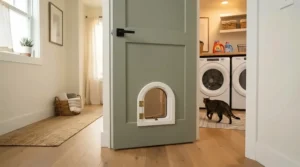
Specs on a listing page describe geometry; they don’t describe what it actually feels like for a 22-pound cat to use a door forty times a day. In practice, well-sized doors with reasonable comfort margins produce a smooth, confident walking motion — no crouching, no shoulder-first squeeze, no hesitation pause at the threshold. Undersized doors, even by an inch, tend to produce a visible “duck and push” motion that, over weeks, some owners report leads their cat to avoid the door and resume scratching at the main entrance instead. Flap resistance also plays a bigger role in comfortable passage than most buyers expect going in — a stiff, heavy flap on an otherwise correctly sized door can create the same reluctance as an opening that’s genuinely too small, so magnetic-seal doors with lighter resistance settings tend to see faster cat adoption based on reviewer timelines. Temperature swings change this picture seasonally: a flap that felt easy in September can stiffen by January, which is precisely why the material rating matters as much as the opening dimensions when you’re evaluating real-world performance rather than showroom specs.
Long-Term Cost & Maintenance
A cheaper upfront price doesn’t always win on total cost of ownership. A $30 ABS flap that needs replacing every two winters in a cold climate can cost more over a decade than a $180 aluminum-framed door built with a lifetime warranty. According to the U.S. Department of Energy, unsealed drafts and gaps around doors and openings can waste a meaningful share of a home’s annual heating and cooling budget, and a poorly insulated pet door left installed for years is a real, if often overlooked, contributor to that loss. Factor in replacement flaps too — most brands sell them separately, typically $10-$25, and budget doors tend to need them more frequently under heavy large-cat traffic than premium aluminum-framed models. Smart doors carry their own long-term cost consideration: batteries for microchip readers typically last around a year under normal use, a small but recurring expense worth budgeting into the total price rather than treating the sticker price as the final number.
Safety, Security & Microchip Regulations Guide
Any opening in an exterior door is, by definition, a small security trade-off, and it’s worth being honest about that rather than pretending otherwise. Locking covers and 4-way manual locks address most casual risk, letting you fully seal the opening overnight or during vacations. For households wanting a meaningfully higher security bar, microchip-based selective entry is the strongest current option — it recognizes a specific implanted chip rather than any physical key an intruder animal (or a curious child) could bypass. On that note, the American Veterinary Medical Association confirms that microchipped cats are reunited with their owners at dramatically higher rates than unchipped cats after going missing, which is a strong independent reason to have your cat chipped regardless of which door you buy — it pairs directly with SureFlap-style hardware but protects your cat even if they get out an unrelated way. Regardless of lock type, never rely on a pet door as your only home security measure on a given entry point; pair it with a lockout slide or cover during extended absences.
Problem → Solution: Fixing Common Big Cat Door Issues
Problem: my cat refuses to use the new door. Solution: reinstall the training prop-open period, and confirm the opening truly meets your cat’s measured shoulder width plus margin — reluctance is often a sizing issue disguised as a stubbornness issue.
Problem: the flap sticks shut in cold weather. Solution: this points to a material limitation rather than a defect; budget ABS and vinyl flaps commonly stiffen below freezing, and the fix is typically upgrading to a cold-rated flap material like the polyolefin used in premium doors, not troubleshooting the existing one.
Problem: strange cats keep getting inside. Solution: a mechanical lock alone won’t solve this reliably; switching to microchip-based selective entry is the most effective fix, since it addresses the actual access point rather than relying on you remembering to lock a manual slide every night.
Problem: the frame has loosened after months of use. Solution: retighten mounting screws seasonally, and consider that heavier cats using a door dozens of times daily wear plastic frames faster than the “rated weight capacity” alone suggests — a frame upgrade may outlast repeated re-tightening.
Problem: my cat’s tail keeps getting caught in the flap. Solution: look specifically for soft-close or delayed-close flap technology, like PetSafe’s GentleClose system, rather than assuming all flaps close at the same speed — this is a design feature, not something adjustable after purchase.
Buyer’s Decision Framework
If your priority is raw affordability and your cat is indoor-only, choose a budget ABS flap like CEESC or Wordcam, because security features add cost you don’t need for a controlled indoor environment. If you live somewhere with genuinely harsh winters, choose a cold-rated premium door like Endura Flap, because a stuck flap in freezing weather is a functional failure, not a cosmetic inconvenience. If strays or wildlife are a documented problem at your home, choose microchip-based entry like SureFlap, because mechanical locks don’t discriminate by animal the way RFID recognition does. If your cat is an exceptionally large or long-bodied breed like a Maine Coon, choose the largest genuinely measured opening available, like Ideal Pet Products’ extra-large door, because undersizing creates comfort and adoption problems that compound over time.
FAQ
❓ How big does a cat door need to be for a large cat like a Maine Coon?
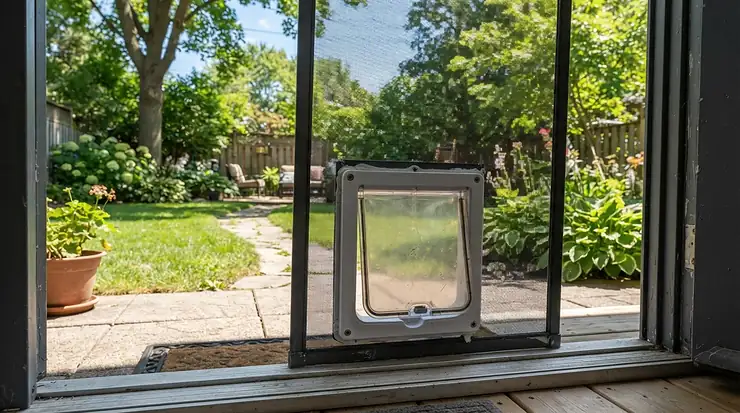
❓ Can I install an extra large cat flap in a screen or glass door?
❓ Are microchip cat doors worth it for big cats?
❓ What is the best cat door for large cats in cold climates?
❓ How much does a big cat door cost?
Conclusion
Choosing a cat door for large cats really comes down to being honest about your specific situation rather than chasing the single “best” product on paper. A budget-conscious owner with an indoor-only cat and no stray problem gets excellent value from something like the CEESC Extra Large Cat Door. A household battling neighborhood cats sneaking in through an old flap needs the selective entry only SureFlap’s microchip technology reliably delivers. Anyone in a genuinely brutal winter climate should treat the Endura Flap’s cold-rated engineering as a practical necessity rather than a luxury upgrade, and Maine Coon owners specifically should prioritize measured opening size over marketing labels every time.
None of these seven doors is universally “wrong” — they’re built for different combinations of budget, climate, and security need, and the right pick genuinely depends on which of those variables matters most in your home. Measure your cat, be honest about your climate and your stray situation, and pick the door engineered for that specific combination rather than the one with the flashiest listing photos.
Recommended for You
- Interior Cat Door: 7 Best Picks for Litter Box Privacy 2026
- Window Cat Door 2026: 7 Top Picks Tested by Real Owners
- Sliding Glass Cat Door: 7 Genius Picks for 2026 (Ranked)
Disclaimer: This article contains affiliate links. As an Amazon Associate, I earn from qualifying purchases. If you purchase products through these links, we may earn a small commission at no additional cost to you.
✨ Found this helpful? Share it with your friends! 💬🤗
