
Table of Contents
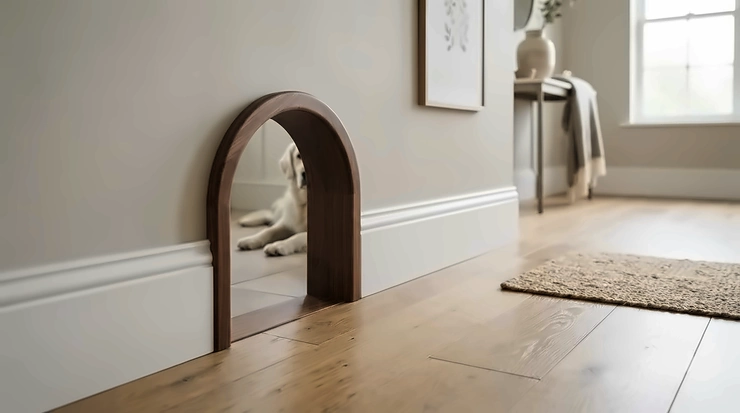
Somewhere around 2 a.m., a paw starts scratching at your bedroom door, followed by a low, insistent yowl that says “let me in, human, I have things to do.” If that sounds familiar, you already understand why an interior cat door has quietly become one of the most searched home upgrades among cat owners in 2026. An interior cat door is a small, purpose-built passage — either a flap, a no-flap cutout, or a hinge-based swing panel — installed into an existing bedroom, bathroom, or closet door so a cat can move freely between rooms while the door itself stays closed for humans, dogs, or toddlers.
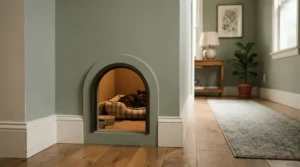
Most homes built in the last few decades use hollow core doors for interior rooms, which changes the installation math compared to a solid wood door — more on that shortly. Whether you’re trying to solve litter box privacy, give a shy cat room access to a quiet bedroom, or just stop replacing scratched-up paint on your bedroom door, the right cat door for interior door use can solve the problem in an afternoon.
This guide breaks down seven real, currently available products across budget, mid-range, and premium tiers, explains what actually matters when you’re shopping (and what’s just marketing noise), and walks through installation, common mistakes, and long-term costs. According to the ASPCA’s guidance on litter box behavior, cats strongly prefer quiet, low-traffic litter box locations with an easy escape route — which is exactly the kind of access an interior cat door is designed to preserve.
Quick Comparison Table: Interior Cat Doors at a Glance
| Product | Type | Max Weight | Price Range | Best For |
|---|---|---|---|---|
| PetSafe Interior 2-Way Locking Cat Door | Flap, 2-way lock | 15 lbs | Under $25 | Tightest budget |
| Fairy Door Interior Pet Door | Flap, lockable | 20 lbs | $25-$35 range | Solid or hollow core flexibility |
| The Kitty Pass Interior Cat Door | No-flap pass-through | 20-21 lbs | $30-$40 range | Litter box privacy |
| Purrfect Portal Meow Manor | No-flap, paw-safe | 20 lbs | $35-$45 range | Hollow core safety |
| PetSafe Cat Corridor | Always-open tunnel | Up to 25 lbs | $30-$45 range | Paintable, multi-pet homes |
| Purrfect Portal Meow Manor XL | No-flap, paw-safe | 30 lbs | In the $50s | Large or multiple cats |
| Kitty Korner SlideLock Hinge Kit | Full swing-panel hinge | Not flap-limited | Under $50 | Lockable open-or-closed control |
Looking at the spread above, there isn’t a single “best” interior cat door — there’s a best one for your specific door, cat, and household chaos level. Budget flap doors like the PetSafe Interior 2-Way Locking Cat Door solve simple single-cat, single-room access at the lowest cost, while no-flap designs like The Kitty Pass Interior Cat Door and Purrfect Portal Meow Manor trade a bit of draft control for zero training time and a wider, safer opening. If you’ve got a large-breed cat or two cats sharing the same door, the Purrfect Portal Meow Manor XL or the hinge-based Kitty Korner SlideLock Hinge Kit earn their higher price by handling weight and traffic that smaller flap doors weren’t built for.
💬 Found a pick you like already? Bookmark this page and keep scrolling — the full breakdown below explains exactly why each one made the list.
Top 7 Interior Cat Doors: Expert Analysis
1. PetSafe Interior 2-Way Locking Cat Door — best true budget pick
For under $25, the PetSafe Interior 2-Way Locking Cat Door is the cheapest legitimate way to give a cat controlled room access without cutting a permanent hole in your door. The flap opening measures 5¾” by 5¾”, with a translucent, magnetic-closure flap that fits doors from ½” to 2″ thick — including standard hollow core doors. That range matters in practice: it means the same unit works whether your door is a thin closet door or a slightly beefier bedroom door, so you’re not guessing before you order.
Based on the spec comparison, the 15-pound weight limit is the real ceiling here — it’s sized for an average adult cat, not a Maine Coon or a mixed-breed dog. Reviewers across retail platforms report a mixed but workable experience, averaging in the high 3-star range, with the most common feedback being that installation is straightforward with the included template, though a few buyers note the flap feels lightweight compared to pricier options. This is the pick for a first-time cat-door buyer who wants to test whether their cat will even use one before spending more.
Pros:
- ✅ Lowest price point in this roundup by a wide margin
- ✅ 2-way lock gives simple open/closed control
- ✅ Fits a wide range of door thicknesses, ½” to 2″
Cons:
- ❌ 15-lb weight cap excludes larger cat breeds
- ❌ Reviewer sentiment is solid but not exceptional (high 3-star average)
At around $15-$25, this is the safest low-risk entry point — check current price before buying, since PetSafe periodically adjusts retail pricing across channels.
2. Fairy Door Interior Pet Door — most flexible for mixed door types
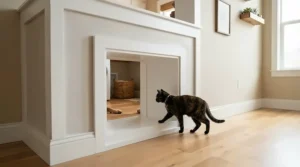
The Fairy Door Interior Pet Door is built to accommodate cats up to 20 lbs and is explicitly designed to install on either solid or hollow core doors, which removes a common point of confusion for shoppers who aren’t sure what kind of door they actually have. It ships with a lockable flap, letting you shut off access entirely when guests arrive or when you need a full night without 3 a.m. visits.
What most buyers overlook about this model is that the “works on solid or hollow core” claim isn’t just marketing — hollow core doors have a honeycomb cardboard core sandwiched between two thin face panels, and a poorly designed cat door can crack that thin veneer during installation if it isn’t engineered for the material. This unit’s mounting hardware is built with that thinner substrate in mind. As a small-business Amazon listing, its review history is thinner than PetSafe’s, so aggregated sentiment should be read as promising but still developing rather than exhaustively proven.
Pros:
- ✅ Rated for cats up to 20 lbs, more than PetSafe’s base model
- ✅ Confirmed compatible with both solid and hollow core doors
- ✅ Lockable flap for full nighttime or guest-visit privacy
Cons:
- ❌ Smaller review sample size than established national brands
- ❌ Locking mechanism specifics aren’t as thoroughly documented as PetSafe’s
Expect to pay in the $25-$35 range, and treat the price as a small premium over PetSafe for the added weight capacity and material flexibility.
3. The Kitty Pass Interior Cat Door — best for hidden litter box access
If litter box privacy is your entire motivation for reading this article, The Kitty Pass Interior Cat Door was built almost exclusively for that use case. It’s a no-flap, pass-through design — essentially a smooth, finished cutout rather than a swinging door — sized for cats up to 20-21 lbs with a 7½” by 6½” opening. Because there’s no flap to push through, there’s no training period; cats typically walk through on the very first try.
Reviewers consistently report genuine satisfaction with both the install process and the smell containment it provides, with aggregated ratings sitting in the high 4-star range across multiple marketplaces — notably positive for a product in this price tier. A common theme in real feedback is how “clean” the finished opening looks, since it ships pre-finished in semi-gloss white and can be painted to match trim. On paper, the trade-off is that a no-flap opening won’t block drafts, sound, or light the way a flapped design does, so it suits closets and bathrooms better than a bedroom door where you want a true sound seal.
Pros:
- ✅ Consistently high real review scores across platforms
- ✅ Zero training needed thanks to open pass-through design
- ✅ Assembled in the USA with a clean, paintable finish
Cons:
- ❌ No flap means no draft, sound, or light barrier
- ❌ Open design offers less containment for very active dogs
Pricing typically lands in the $30-$40 range depending on retailer — always check current price, since this small-business brand sells across several channels with slightly different rates.
4. Purrfect Portal Meow Manor Interior Cat Door — best hollow-core safety engineering
The Purrfect Portal Meow Manor Interior Cat Door targets a very specific, and very real, safety concern: cats catching a paw or claw in the exposed honeycomb cavity of a poorly cut hollow core door. This no-flap unit is engineered so the frame fully seals that cavity, meaning your cat gets a smooth edge-to-edge opening instead of a rough cut into cardboard. It’s rated for cats up to 20 lbs and, like the Kitty Pass, needs no training since there’s no flap to learn.
Here’s what the spec sheet won’t tell you outright, but the design logic makes clear: most cheap DIY cat-flap installs fail not because the flap breaks, but because the cut into a hollow core door exposes crumbling cardboard edges that eventually chip and look bad. Purrfect Portal’s frame is essentially doing double duty as both an access point and a structural cap for that cut edge. Reviewers frequently cite the “no training needed” claim as accurate, with cats using the opening within the first day.
Pros:
- ✅ Frame specifically engineered to seal hollow-core cut edges
- ✅ No-flap design means immediate use, no training period
- ✅ Rated for cats up to 20 lbs with a wide, easy opening
Cons:
- ❌ No flap means airflow, light, and sound pass through freely
- ❌ Priced higher than basic flap-style competitors
Budget $35-$45 for this one — it’s a mid-range price for a design choice that directly protects your door from long-term wear.
5. PetSafe Cat Corridor Interior Tunnel Door — best for multi-pet, decor-matching homes
The PetSafe Cat Corridor Interior Tunnel Door takes a different approach entirely: instead of a flap or a simple cutout, it’s a tunnel-style corridor that stays permanently open, built to work on doors up to 2 inches thick — thicker than most flap-style competitors can handle. Its surface is paintable, so instead of a stark white plastic frame interrupting your trim color, you can blend it into the door.
Reviewers who purchased it describe the build quality as noticeably sturdier than cheaper flap alternatives, with one common refrain being that it “felt a little pricey” at checkout but justified that cost with materials that held up over time. Based on real usage reports, it comfortably passes small dogs as well as cats — one reviewer specifically noted both a 9-lb mixed breed dog and a 22-lb dog fit through — which makes it a strong pick for households managing a dog and a cat sharing the same hallway. The always-open design does mean you lose the ability to lock the corridor shut, so it’s best suited to rooms where you’re managing access rather than fully restricting it.
Pros:
- ✅ Paintable surface blends with door trim and decor
- ✅ Handles doors up to 2″ thick, more than most flap models
- ✅ Reviewers report sturdy materials that hold up over time
Cons:
- ❌ Always-open corridor has no lockable privacy option
- ❌ Higher price point relative to basic flap-style doors
Plan on the $30-$45 range at the time of research, positioning it as a solid mid-range choice for multi-pet households.
6. Purrfect Portal Meow Manor XL — best for large cats and multi-cat households
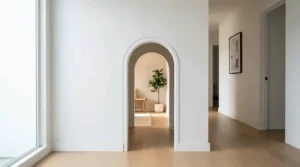
Scaling up the same paw-safe, hollow-core-sealing engineering from its standard sibling, the Purrfect Portal Meow Manor XL offers an 8.7″ by 11.45″ opening rated for cats up to 30 lbs. That’s a meaningful jump, and it’s specifically marketed toward heavier breeds — Maine Coons, Ragdolls, Bengals, and American Bobtails are called out directly as cats the standard-size opening can feel tight for.
What most buyers overlook is that a bigger cat door isn’t just about physical size — it’s about confidence. Larger or older cats can hesitate at narrow openings, especially arthritic seniors, so the wider XL cutout reduces hesitation-related “accidents” near the litter box door. Based on the spec comparison with the standard Meow Manor, you’re paying a premium largely for that extra size and the reinforced frame needed to support a bigger cutout in a hollow core door without compromising structural integrity. It remains a no-flap, no-training design, which keeps the transition smooth even for multi-cat homes where more than one cat needs to use the same opening throughout the day.
Pros:
- ✅ Largest opening in this roundup at 8.7″ x 11.45″
- ✅ Rated for cats up to 30 lbs, ideal for large breeds
- ✅ Same paw-safe hollow-core sealing as the standard model
Cons:
- ❌ Premium pricing compared to standard-size options
- ❌ Larger cutout means less structural door material remains
Expect pricing in the $50s range — a fair value if you genuinely have a large-breed cat, but overkill for an average 9-10 lb housecat.
7. Kitty Korner Cat Door (SlideLock Hinge Kit) — best for full open-or-closed control
The Kitty Korner Cat Door (SlideLock Hinge Kit) skips the flap-and-cutout model entirely. Instead, its patented SlideLock hinge lets you make a single straight cut on the door’s corner and mount a hinge that turns that corner section into its own miniature swinging door — one that locks fully open or fully closed via interlocking hinge knuckles, and slides up and away from the floor so it doesn’t scrape carpet or catch on flooring transitions.
Here’s what the spec sheet won’t tell you: because it locks in either position rather than just swinging freely like a flap, timid or older cats never have to push against resistance to get through — for a hesitant cat, that can be the difference between using the door daily and avoiding it entirely. The manufacturer states pricing stays under $50, and real buyer feedback is largely positive, with the most frequent complaint being that the paper cutting template can be difficult to keep flat and precisely aligned during the marking step, occasionally leading to a slightly uneven cut. It’s compatible with both hollow and solid core doors, and needs only one straight cut rather than a full rectangular cutout.
Pros:
- ✅ Locks fully open or fully closed for true access control
- ✅ Slides up and away from the floor, no scraping or catching
- ✅ Works on both hollow and solid core interior doors
Cons:
- ❌ Paper cutting template can be tricky to align precisely
- ❌ Requires more careful DIY cutting than pre-framed cutout kits
At under $50, it’s priced similarly to the XL portal options but delivers a fundamentally different mechanism — worth it specifically if lockable open-or-closed control matters more to you than a traditional cutout.
How the Top 7 Compare Side-By-Side
| Product | Install Method | Flap or No-Flap | Locking Control | Best For |
|---|---|---|---|---|
| PetSafe Interior 2-Way Locking Cat Door | Cutout + frame | Flap | 2-way | Budget single-cat homes |
| Fairy Door Interior Pet Door | Cutout + frame | Flap | Lockable | Mixed door types |
| The Kitty Pass Interior Cat Door | Cutout + frame | No-flap | None (open) | Litter box smell containment |
| Purrfect Portal Meow Manor | Cutout + frame | No-flap | None (open) | Hollow-core paw safety |
| PetSafe Cat Corridor | Cutout + tunnel frame | No-flap (tunnel) | None (open) | Multi-pet, decor matching |
| Purrfect Portal Meow Manor XL | Cutout + frame | No-flap | None (open) | Large-breed cats |
| Kitty Korner SlideLock Hinge Kit | Single straight cut + hinge | Swing-panel | Locks open or closed | Full access control |
This table makes the core trade-off obvious: no-flap designs like The Kitty Pass Interior Cat Door and both Purrfect Portal models win on ease-of-use and zero training time, but they sacrifice the ability to fully close off the opening. If locking the passage shut — for guests, allergies, or nighttime confinement — matters as much as the passage itself, the PetSafe Interior 2-Way Locking Cat Door, Fairy Door, or the hinge-based Kitty Korner SlideLock Hinge Kit are the only three in this lineup that give you that control.
Interior Cat Door vs Cutting a Permanent Cat Flap
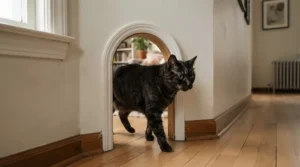
A lot of buyers assume “interior cat door” automatically means hacking a permanent hole into an expensive door, and that assumption alone talks people out of solving a problem that’s actually easy to fix. In reality, most of the products above are reversible, kit-based installations rather than irreversible structural changes.
| Approach | Reversibility | Skill Needed | Typical Cost |
|---|---|---|---|
| Kit-based interior cat door (flap or portal) | High — patch and repaint if removed | Low to moderate DIY | $15-$60 range |
| Custom-cut permanent cat flap | Low — leaves a permanent cutout | Moderate to high DIY or contractor | $50-$150+ installed |
| Replacing the door with a built-in cat-door model | None — new door required | Professional installation | $300-$400+ per door |
A kit-based product from this list is functionally reversible: most use a frame-and-backer-plate system that can be unscrewed, patched with wood filler, and repainted if you move or change your mind. A fully custom-cut flap, on the other hand, is essentially permanent once the hole is cut, and if you get the placement wrong on a hollow core door, JELD-WEN’s overview of hollow-core honeycomb construction explains why that cardboard core doesn’t forgive a sloppy second attempt the way solid wood does. Replacing the whole door with a manufactured pass-through door, as seen at some home improvement retailers, solves the problem permanently but at a materially higher cost than any kit on this list.
How to Install an Interior Cat Door Without Wrecking Your Weekend
Installation anxiety is the single biggest reason people put off buying an interior cat door for months after deciding they want one. In practice, most kits follow the same basic sequence, and knowing it ahead of time turns a two-hour ordeal into a 30-45 minute project.
Start by identifying your door type before you order anything — run a magnet or knock on the door; a hollow-sounding thud usually means hollow core, while a dense thunk usually means solid or solid-core composite. This matters because hollow core doors have a wood “lock block” reinforcement roughly centered around doorknob height, and cutting through solid wood there is harder but sturdier than cutting through the honeycomb cardboard elsewhere on the door. Most cat-door kits recommend positioning the opening below that block, near the bottom third of the door, both for easier cutting and because that’s the natural height for a cat to walk through without jumping.
Use the included paper template every time, and tape all four corners down before tracing — a template that shifts mid-trace is the single most common cause of a crooked cutout, based on the recurring complaint pattern in reviewer feedback across multiple brands in this roundup. Drill pilot holes at the corners before you cut, then work slowly with a jigsaw rather than muscling through with a utility knife, especially on hollow core doors where the thin face veneer can chip if forced. Once the opening is cut, dry-fit both halves of the frame before applying any adhesive or driving final screws, since minor trimming is far easier before the frame is permanently seated.
For ongoing maintenance, wipe the flap or frame with mild soap and water monthly — pet oils and dust build up on flap hinges and can eventually cause sticking. If you chose a locking model, exercise the lock mechanism every few weeks even when you’re not actively using it, since disused sliding locks are the most common point of mechanical failure reported across owner reviews.
Real Households, Real Cat Doors: Three Scenarios
Matching a product to your actual living situation beats matching it to star ratings alone. Here’s how three common household types tend to land on different picks from this list.
The renter in a small apartment with a strict no-permanent-modification lease is usually best served by a kit-based, reversible product like the PetSafe Interior 2-Way Locking Cat Door or Fairy Door Interior Pet Door, since both use a frame-and-screw system that patches cleanly if you move out. The family managing a dog that raids the litter box every time the bathroom door cracks open typically does better with a lockable option like Fairy Door or the Kitty Korner SlideLock Hinge Kit, since a no-flap open portal won’t stop a determined medium-size dog the way a genuinely lockable barrier will. And the multi-cat household with one large-breed cat — say, a 16-lb Maine Coon living alongside two average-size cats — usually gets the most consistent daily use out of the Purrfect Portal Meow Manor XL, since a standard 15-20 lb-rated opening can feel genuinely tight for a cat that size, leading to hesitation and, eventually, litter box avoidance near the door itself.
✨ Not sure which scenario matches your home? Scroll back up to the comparison table and cross-check weight capacity against your cat’s actual size before you buy — it’s the single most common mismatch we see in owner reviews.
Common Problems, Real Solutions
Most interior cat door complaints trace back to a small handful of predictable issues, and each one has a straightforward fix.
If your cat refuses to use a new flap-style door, the near-universal fix is propping the flap fully open with tape or a binder clip for the first three to five days, letting the cat walk through an open gap before gradually lowering it — a no-flap model like The Kitty Pass Interior Cat Door sidesteps this problem entirely by never having a flap to learn.
If a dog keeps slipping through a no-flap portal meant only for the cat, the fix is switching to a genuinely lockable model — the Fairy Door Interior Pet Door or Kitty Korner SlideLock Hinge Kit — rather than trying to retrofit a barrier onto an always-open design.
If the cutout edges on a hollow core door start looking rough or crumbling over time, that’s usually a sign the original installation didn’t fully seal the honeycomb cavity; a frame specifically engineered for that, like Purrfect Portal Meow Manor, solves it going forward, though an existing rough edge can often be cleaned up with wood filler before a new frame goes in.
And if scratching noise at night persists even after installing a door, check whether the flap tension is too stiff — most kits include an adjustable spring or magnet strength, and loosening it slightly usually resolves the issue within a few nights.
Interior Cat Doors for Litter Box Privacy, Bedroom Access, and Multi-Pet Homes
Litter box privacy is arguably the single most common reason people search for a cat door for interior door installation in the first place, and it’s worth understanding why the placement itself matters as much as the product. Cats are naturally private about elimination, and forcing a litter box into a fully open room — rather than behind a door with dedicated room access — measurably increases the odds of house-soiling problems, according to Cornell University’s Feline Health Center guidance on new cat care, which recommends keeping litter boxes and feeding areas separated and undisturbed.
For a bedroom door specifically, the calculus shifts slightly: you’re not just managing litter box access, you’re managing a cat’s overnight movement without letting a hallway draft, hallway light, or a curious dog into the room. A flap-style door with a genuine 2-way or 4-way lock, like the PetSafe Interior 2-Way Locking Cat Door, tends to outperform no-flap portals here specifically because it maintains at least a partial seal against draft and noise while you sleep.
In multi-pet homes, room access becomes a resource-management issue more than a convenience one — giving each cat unimpeded access to its own litter box, food, and rest area reduces the kind of resource competition that leads to territorial stress between cats. A wider, higher-capacity option like the Purrfect Portal Meow Manor XL or the always-open PetSafe Cat Corridor tends to handle multiple cats moving through the same doorway throughout the day more gracefully than a narrow single-flap model sized for one cat.
How to Choose an Interior Cat Door
Cutting through the marketing noise, the decision really comes down to six factors, roughly in order of importance.
- Confirm your door type first. Hollow core versus solid core changes which products are structurally appropriate and how carefully you need to cut.
- Weigh your cat, not your assumptions. A 15-lb weight rating sounds generous until you actually put a fluffy 14-lb cat on a scale and realize there’s almost no margin.
- Decide if you need locking control. If dogs, toddlers, or allergy-sensitive guests need to be kept out at will, rule out always-open no-flap models immediately.
- Measure the door thickness. Most kits list a thickness range (commonly 1.25″-2″), and a door outside that range simply won’t mount securely.
- Think about noise and draft tolerance. Bedrooms generally benefit from flap-style doors; closets and litter box rooms tolerate open portals better.
- Match price to actual need. A large-breed multi-cat household justifies XL pricing; a single average-size cat rarely needs to spend premium money.
Common Mistakes When Buying an Interior Cat Door
The most frequent and costly mistake is ordering based on price alone without checking the weight rating against an actual scale reading — a genuinely oversized or overweight cat squeezing through an undersized opening isn’t just uncomfortable, it can eventually damage the flap hinge or frame from repeated stress. A close second is skipping the door-type check; buying a product not engineered for hollow core installation and then cutting into one anyway risks exposing crumbling honeycomb cardboard edges that no amount of careful cutting fully prevents.
Another common misstep is assuming every “no-flap” product functions like a lockable door — several of the most popular no-flap portals in this category, including two products on this list, offer no locking mechanism at all, which surprises buyers who assumed “cat door” always implies a closable barrier. Finally, many buyers underestimate installation time by assuming a template-and-screws kit is a five-minute job; budgeting a realistic 30-45 minutes, plus drying time for any wood filler touch-ups, avoids the frustration of a rushed, crooked cutout.
Long-Term Cost & Maintenance
An interior cat door is a low, mostly one-time cost compared to most home pet-management solutions, but it’s worth thinking through the full picture rather than just the sticker price.
| Cost Factor | Typical Range | Frequency |
|---|---|---|
| Product purchase | $15-$60 range | One-time |
| Basic hand tools (if not already owned) | $20-$40 range | One-time |
| Touch-up paint or wood filler | Under $10 | Occasional |
| Replacement flap (if applicable) | $10-$20 range | Rare, every few years |
Even at the premium end of this roundup, total cost of ownership rarely clears $70-$80 once you include basic tools, which compares favorably against the $300-$400+ range for a manufactured door with a built-in pass-through, or the recurring frustration cost of a scratched, repainted door from years of a cat clawing at a closed barrier. The maintenance burden is genuinely light: an occasional wipe-down, an occasional lock-mechanism check, and — for flap models — an eventual flap replacement after years of daily use, which most manufacturers sell as a standalone part rather than requiring a full new unit.
Features That Actually Matter (And Those That Don’t)
Weight rating, door-thickness compatibility, and locking mechanism are the three features that actually determine whether a product works in your specific home — everything else is largely aesthetic. A magnetic flap closure versus a spring-hinge closure, for instance, makes only a marginal difference in day-to-day performance; both hold a flap shut against drafts reasonably well, and reviewer complaints rarely single either mechanism out as a dealbreaker.
Paintability, on the other hand, matters more than it might seem if you care about resale value or a cohesive interior — a stark white plastic frame against a dark-stained door reads as an obvious retrofit, while a paintable frame like the one on the PetSafe Cat Corridor can genuinely disappear into the trim. Branding claims like “no training needed” are mostly accurate for no-flap portal designs and mostly aspirational for flap-style doors, which nearly always benefit from a few days of propping the flap open regardless of what the packaging promises.
Frequently Asked Questions
❓ What is the best interior cat door for hollow core doors?
❓ How much does an interior cat door cost?
❓ Can I install an interior cat door myself?
❓ Do interior cat doors work for keeping dogs out of the litter box?
❓ What size opening do I need for a large cat breed like a Maine Coon?
Conclusion
Choosing the right interior cat door mostly comes down to three honest questions: what kind of door you actually have, how much your cat weighs versus how much you assume they weigh, and whether you need the ability to lock the passage shut. Budget flap doors like the PetSafe Interior 2-Way Locking Cat Door solve the basic problem cheaply; no-flap portals like The Kitty Pass Interior Cat Door and Purrfect Portal Meow Manor remove training time entirely; and premium options like the Purrfect Portal Meow Manor XL and Kitty Korner SlideLock Hinge Kit earn their higher price tags with genuinely different capabilities rather than just a bigger price tag for the same core function.
Whichever one you land on, the underlying goal is the same — giving your cat reliable, private room access to a litter box, bed, or quiet space without turning your closed bedroom door into a nightly negotiation. Measure twice, check your door type, and match the weight rating to reality, and any of the seven products above should hold up for years of daily use.
✨ Ready to stop the 2 a.m. door scratching for good? Compare your top pick from the table above against your cat’s actual weight one more time, then go ahead and check current pricing before it changes! 🐾
Recommended for You
- Window Cat Door 2026: 7 Top Picks Tested by Real Owners
- Sliding Glass Cat Door: 7 Genius Picks for 2026 (Ranked)
- Microchip Cat Door 2026: 7 Best Picks to Stop Sneaky Strays
Disclaimer: This article contains affiliate links. As an Amazon Associate, I earn from qualifying purchases. If you purchase products through these links, we may earn a small commission at no additional cost to you.
✨ Found this helpful? Share it with your friends! 💬🤗
