
Table of Contents
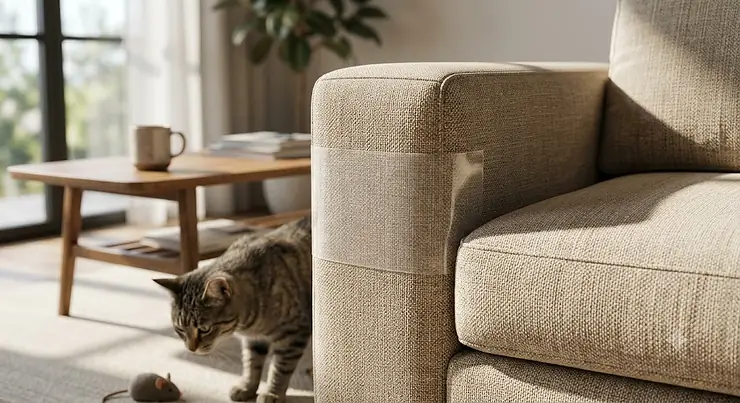
Here’s the scene: you walk into the living room, coffee in hand, and there it is — a fresh set of claw tracks raked down the arm of your favorite chair. Cat scratch tape is the thin, sticky (or textured) adhesive strip you press onto furniture, doors, and carpet edges to make those spots physically unpleasant for a cat’s claws, redirecting the scratching somewhere you’d actually prefer. It’s not punishment. It’s not magic. It’s just a surface your cat decides isn’t worth the effort anymore.
I’ve spent the last few years watching my own cat treat a leather ottoman like a personal shredding station, so I get the appeal of a product that promises peace without a fight. What follows is a research-backed breakdown of seven real products on the market right now, honest about what the spec sheets say and what aggregated buyer feedback suggests — not invented five-star fairy tales. According to Cornell’s Feline Health Center, cats that scratch favorite sofas or expensive drapes aren’t on a mission to destroy your home — they’re satisfying innate needs tied to marking and claw maintenance, which is exactly why a physical deterrent like tape tends to outperform yelling every single time.
Whether you’re dealing with a stubborn corner-scratcher or an entire household of clawed furniture, this guide walks through the best cat scratch tape products, how they stack up, and what actually matters when you’re choosing one. Stick around for the comparison tables, the case studies, and the mistakes that waste people’s money before they even get to try the stuff properly.
Quick Comparison Table
Before diving into the deep-dive reviews, here’s the fast version for anyone who just wants the highlights.
| Product | Format | Best For | Price Range |
|---|---|---|---|
| Sticky Paws Pioneer Pet Cat Training Aid | Pre-cut strips | Small target zones, chair legs | Under $15 |
| Panther Armor 12 Double-Sided Tape Sheets | Sheets, 3 sizes | Sofa/chair corners | Around $15-$20 |
| FixZilla Anti Cat Scratch Furniture Protector | 10-pack + pins | Textured or loose upholstery | $15-$20 range |
| TOOSOFt Clear Vinyl Roll | Large roll (196.9″x16.5″) | Whole-room, multi-cat homes | $20-$30 range |
| Sofisti-Cat Training Tape | Roll (2.5″x15′) | Budget starter, spot use | Under $10 |
| Karaseno Anti Cat Scratch Tape | Roll (3″x30 yards) | Best value per square foot | $15-$20 range |
| Polamg 12-Pack Clear Sofa Guards | Sheets, 2 sizes + pins | Renters wanting cut-to-fit pieces | $15-$20 range |
Looking at the table, the split comes down to format more than brand: rolls like the TOOSOFt and Karaseno options win when you’re covering large or irregular surfaces, while pre-cut sheets like Panther Armor and Polamg win when you just need to patch a couch arm or two corners. Budget shoppers gravitate toward Sofisti-Cat, but anyone dealing with a cat that claws through anything short of concrete should look at the thicker, pinned options first. None of these differences show up on a typical Amazon listing page — they only matter once you’re standing in your living room deciding what to actually stick where.
💬 Found the one that fits your furniture? Tap through now before your cat finds a new target! 😺
Top 7 Cat Scratch Tape Products: Expert Analysis
Below is the full lineup — budget, mid-range, and premium — with honest commentary grounded in real specs and aggregated buyer sentiment (never invented quotes).
1. Sticky Paws Pioneer Pet Cat Training Aid — the veteran brand cat behaviorists still recommend
The name shows up again and again in professional cat-behavior literature, and that’s not an accident. Sticky Paws ships as double-sided adhesive strips measuring 2 inches by 12 inches, designed to be cut down and applied to precise trouble spots rather than blanket-covering a whole cushion. That precision is the whole pitch: instead of wrapping your entire ottoman in plastic, you target the exact six inches your cat keeps hitting.
Based on the spec comparison, the narrower format means less coverage per package than a roll, but it also means less visible tape on furniture you actually want to look nice. Reviewers consistently note that the adhesive holds well on fabric without leaving the gummy residue that cheaper knockoffs sometimes do. This is the pick for anyone with a single problem corner rather than a cat waging war on the whole living room — a first-time buyer who just wants to test whether tape works at all before committing to a bigger roll.
Aggregated sentiment across pet retailers frames this as a “trusted starter” product; it’s frequently the brand animal shelters and behavior consultants mention by name, which counts as a form of credibility a newer brand hasn’t earned yet.
Pros:
- ✅ Long-trusted name in professional behavior circles
- ✅ Precise strips avoid over-covering furniture
- ✅ Minimal residue on removal per buyer reports
Cons:
- ❌ Smaller coverage area than roll formats
- ❌ Pricier per square inch than bulk options
Price sits under $15 at the time of research, and for a single-target household, it’s a fair value verdict — you’re paying a small premium for precision and brand trust.
2. Panther Armor 12 Double-Sided Tape Sheets — purpose-built for corner-scratchers
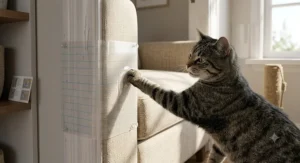
Panther Armor’s double-sided sheets come in a mixed pack: five extra-large, five large, and two medium pieces, all designed specifically as a “sticky tape cats dislike touching” rather than a rigid barrier shield (the brand also sells a separate solid-shield line, so don’t mix them up when ordering).
What most buyers overlook about this model is the mixed-size pack — it’s built assuming your cat has more than one favorite spot, which is realistic for most households. The sheets are pre-cut, so there’s no measuring or trimming required before application, a real time-saver compared to roll-based tape. Based on the spec comparison, the double-sided design means the sticky surface faces outward toward the claw rather than only anchoring the tape to furniture, which is the mechanism that actually deters scratching rather than just holding the tape in place.
Reviewers consistently report that the assorted sizing covers most standard sofa and chair corners without needing a second pack, and the clear finish keeps it fairly unobtrusive on light-colored upholstery.
Pros:
- ✅ Mixed sizes fit multiple furniture types out of the box
- ✅ True double-sided sticky surface deters clawing directly
- ✅ Pre-cut sheets need no trimming before use
Cons:
- ❌ Not intended for leather or suede surfaces
- ❌ Twelve sheets may run out fast in multi-cat homes
At around $15-$20, this sits solidly mid-pack — a reasonable value pick if your cat sticks to two or three specific corners.
3. FixZilla Anti Cat Scratch Furniture Protector — most secure hold on loose or textured fabric
FixZilla’s ten-pack comes bundled with fifty twist pins, which immediately separates it from purely adhesive competitors. Here’s what the spec sheet won’t tell you outright: adhesive alone struggles on loosely woven fabrics, slipcovers, or textured upholstery where there isn’t a smooth, clean surface for tape to grip. The twist pins solve that by mechanically anchoring the sheet through the fabric itself.
What most buyers overlook about this model is that the pin option isn’t just a backup — it’s often the better choice for fabric sofas, since adhesive-only tape can peel at the edges within days on porous material. Based on the spec comparison, this makes FixZilla the pragmatic pick for older or textured furniture where a smoother competitor’s tape might fail to bond at all. Reviewers consistently note the twist-pin mechanism holds even through vigorous scratching sessions, though a few mention the pins can leave small marks that close up once removed (something to weigh if the furniture is a valued antique).
Pros:
- ✅ Twist pins provide backup anchoring on tricky fabric
- ✅ Heavy-duty build holds up to persistent scratchers
- ✅ Ten-pack size covers several rooms at once
Cons:
- ❌ Pins leave tiny puncture marks on delicate fabric
- ❌ Not the most discreet-looking option in daylight
In the $15-$20 range, FixZilla earns its keep specifically on furniture types where sticky-only tape tends to lose its grip.
4. TOOSOFt Clear Vinyl Roll (196.9″ x 16.5″) — the thickest single-sided vinyl for whole-room jobs
TOOSOFt’s roll format is built for scale. At nearly 200 inches long and over 16 inches wide, it’s designed to cover a couch, a doorframe, and a stretch of wall trim from one purchase rather than needing three separate packs. The standout spec here is thickness: at roughly 0.1mm, it’s close to double the thickness of the standard 0.06mm vinyl many budget competitors use.
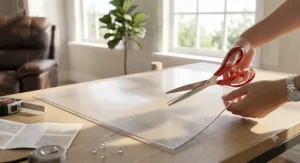
On paper this means real durability — thin vinyl tears or perforates under repeated claw contact within weeks, while a thicker sheet holds its shape through months of daily scratching attempts. Based on the spec comparison, this is the closest thing to a “install once, forget it” solution in this lineup, at the cost of being the largest and least discreet option to actually apply (measuring and cutting a roll this size takes real patience). Reviewers consistently mention the no-pin, peel-and-stick installation as faster than expected once you’ve got the first strip down, though a few note that a helper makes the job significantly easier on large surfaces.
Pros:
- ✅ Nearly double the thickness of standard vinyl tape
- ✅ Massive coverage handles multi-room jobs in one roll
- ✅ No pins required — pure peel-and-stick application
Cons:
- ❌ Cutting and measuring a large roll takes real effort
- ❌ Premium price relative to smaller sheet packs
At around $20-$30, it’s the priciest entry here, but the value verdict holds for multi-cat households tired of reordering smaller packs every month.
5. Sofisti-Cat Training Tape — the budget starter roll
Sofisti-Cat keeps things simple: a 2.5-inch by 15-foot roll of double-sided repellent tape, no bells or whistles. What most buyers overlook about a bare-bones product like this is that simplicity isn’t a downside when you’re just testing whether tape-based deterrents will even work on your particular cat before investing more.
Based on the spec comparison, the narrower width and shorter roll length mean this is meant for smaller, targeted areas rather than full-furniture coverage — think a single couch arm or a stretch of carpet edge, not an entire sectional. Reviewers consistently note it does the basic job of discouraging scratching on the treated area, with the caveat that a shorter roll means more frequent reordering if you’re covering multiple spots across the house.
Pros:
- ✅ Lowest price point in this lineup
- ✅ Simple format with no pins or extra hardware
- ✅ Good low-risk way to test tape-based deterrents
Cons:
- ❌ Shorter roll length limits total coverage
- ❌ Narrower width than most roll competitors
Under $10 at the time of research, this is the low-commitment entry point — ideal before you decide whether to invest in a bigger roll like TOOSOFt or Karaseno.
6. Karaseno Anti Cat Scratch Tape — best value per square foot
Karaseno splits the difference between Sofisti-Cat’s small roll and TOOSOFt’s massive one: 3 inches wide by 30 yards long, fully transparent, and double-sided. Based on the spec comparison, that length-to-price ratio is genuinely strong — you’re getting enough material to handle several furniture pieces or a stretch of carpet edge from a single roll, without paying the premium that comes with TOOSOFt’s extra-wide, extra-thick format.
What most buyers overlook here is the “pet and kid safe” labeling, which matters more than it sounds — some competing vinyl tapes use adhesives that aren’t explicitly tested for households with crawling toddlers or curious kittens who might chew on a loose edge. Reviewers consistently describe the transparency as genuinely unnoticeable once applied, a detail that matters if you care about your living room not looking like a hardware store.
Pros:
- ✅ Long 30-yard roll covers multiple surfaces
- ✅ Fully transparent finish stays discreet
- ✅ Pet- and kid-safe adhesive labeling
Cons:
- ❌ Double-sided design can pick up dust and lint
- ❌ Narrower width than TOOSOFt’s roll
Priced in the $15-$20 range, Karaseno is arguably the best all-around value in this whole roundup for anyone covering more than one piece of furniture.
7. Polamg 12-Pack Clear Sofa Guards — best for renters needing cut-to-fit sheets
Polamg rounds out the lineup with twelve clear sheets across two sizes, bundled with 52 twist pins for extra security on fabric surfaces. Based on the spec comparison, the two-size system (rather than Panther Armor’s three-size mix) keeps things simpler for buyers who mainly need to cover a couch arm and a chair corner without extra sizes going unused.
Here’s what the listing is upfront about, and it’s worth repeating: Polamg’s manufacturer explicitly advises against using this tape on velvet, faux leather, genuine leather, or microfiber, since the adhesive can interact poorly with those finishes. That’s a rare bit of honesty most competing brands leave out of their bullet points, and reviewers consistently flag it as useful guidance rather than a dealbreaker, since most living rooms have at least some plain woven fabric where this style of tape performs as intended.
Pros:
- ✅ Cuttable sheets fit smaller or irregular areas
- ✅ Manufacturer clearly lists incompatible surfaces
- ✅ Twist pins add hold on top of adhesive
Cons:
- ❌ Not suitable for leather, velvet, or microfiber
- ❌ Two-size system offers less variety than triple-size packs
At around $15-$20, Polamg is a solid mid-tier pick specifically for plain-fabric furniture in rental units where pins are removable without damage.
Top 7 Products: Full Comparison
| Product | Coverage | Pins Included | Best For | Rating (aggregated) |
|---|---|---|---|---|
| Sticky Paws Pioneer Pet Cat Training Aid | Small strips | No | Single trouble spots | Strong buyer trust |
| Panther Armor 12 Double-Sided Tape Sheets | Mixed sheets | No | Multiple sofa corners | Positive on ease of use |
| FixZilla Anti Cat Scratch Furniture Protector | 10-pack | Yes (50) | Textured/loose fabric | Positive on hold strength |
| TOOSOFt Clear Vinyl Roll | ~197″ roll | No | Whole-room jobs | Positive on durability |
| Sofisti-Cat Training Tape | 15′ roll | No | Budget testing | Mixed on coverage length |
| Karaseno Anti Cat Scratch Tape | 30-yard roll | No | Best value coverage | Positive on discreetness |
| Polamg 12-Pack Clear Sofa Guards | 2-size sheets | Yes (52) | Cut-to-fit rental use | Positive on transparency |
Reading across this table, the pin-included options — FixZilla and Polamg — clearly target fabric and textured surfaces where adhesive alone tends to underperform, while the roll-based products favor scale over precision. If your furniture is a mix of smooth leather-look vinyl and woven fabric, you may honestly need two different products from this list rather than expecting one to do it all.
Practical Usage Guide: Getting Cat Scratch Tape Right the First Time
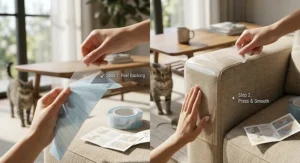
Buying the tape is the easy part. Most of the actual failures I’ve seen (and read about across product reviews) happen in the first thirty days, usually from rushing the setup. Start by cleaning the target surface thoroughly — dust, pet hair, and old furniture polish all reduce adhesion, and a tape that peels off after two days teaches your cat nothing except that persistence pays off.
Cut your pieces slightly larger than the scratched area itself; cats tend to work the edges of a damaged zone, not just the center, so a strip that only covers the worst of the visible damage often gets outflanked within a week. Press firmly along the entire surface, including edges, since curling corners are the number-one entry point for cats to get underneath the tape and defeat the whole point of installing it.
Set a mental maintenance schedule: sticky deterrent tape generally holds strong for a few weeks before adhesive quality starts to fade, especially in humid climates or high-traffic rooms. Rather than waiting for it to visibly peel, check it every couple of weeks and replace anything that’s lost its tack. Pair the tape with an appealing scratching post placed directly next to (or in front of) the taped-off area — tape alone removes the bad option, but it doesn’t provide the good one, and cats need somewhere to redirect that instinct.
Real-World Scenarios: Matching the Right Tape to Your Situation
The renter with a single problem chair: If you’re renting and one armchair corner has taken the brunt of the damage, a small precision product like Sticky Paws Pioneer Pet Cat Training Aid makes sense — minimal coverage, minimal visual footprint, and no long-term commitment if you move out in six months.
The multi-cat household with a sectional and a hallway carpet runner: If you’re managing more square footage across more rooms, a bulk roll like TOOSOFt Clear Vinyl Roll or Karaseno Anti Cat Scratch Tape stretches further per dollar, and the extra thickness on TOOSOFt specifically holds up better when more than one cat is testing the same spot.
The budget-conscious first-timer unsure if tape will even work: Before committing to a large purchase, something like Sofisti-Cat Training Tape lets you test the concept on a low budget. If your cat backs off within a week or two, you’ve validated the approach cheaply; if not, you’ve lost very little before trying a pinned option like FixZilla instead.
How to Choose Cat Scratch Tape
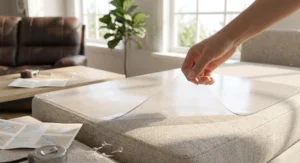
Picking the right product comes down to a handful of practical questions, answered in order of importance:
- Identify your furniture’s material first. Leather, velvet, and microfiber generally don’t pair well with standard adhesive tape — several manufacturers explicitly warn against it, so check before buying rather than after a failed application.
- Measure the actual damaged area, plus a margin. Cats scratch beyond the visibly worn spot, so oversized coverage beats a tight fit.
- Decide between adhesive-only and pin-reinforced. Smooth, sturdy surfaces do fine with adhesive alone; loose or textured fabric benefits from a pinned option like FixZilla or Polamg.
- Match the format to your scale of need. One problem corner calls for pre-cut strips or sheets; multiple rooms call for a bulk roll.
- Factor in visibility. Clear, thin tape blends into light furniture; thicker vinyl may show more on dark or textured upholstery.
- Budget for replacement, not just the first purchase. Adhesive tape is a consumable, not a one-time fix — plan to reorder every few months.
- Pair it with a scratching post from day one. Tape without an alternative outlet is only half a solution.
Common Mistakes When Buying Anti-Scratch Tape for Cats
The single most common mistake is buying based on price alone and ending up with a roll too short or too narrow for the actual job — a $9 roll that runs out after one couch arm isn’t cheaper than a $20 roll that covers the whole piece. A close second: skipping the surface-compatibility check and applying standard tape to leather or velvet, then being surprised when it either won’t stick or leaves a mark on removal.
Another frequent misstep is treating tape as a permanent, one-and-done fix rather than a consumable that needs periodic replacement — buyers who install it once and forget about it are often the ones reporting that “it stopped working” months later, when in reality the adhesive simply wore out. Finally, plenty of people skip the scratching-post pairing entirely, expecting tape by itself to eliminate the behavior instead of redirecting it — and end up frustrated when their cat just finds a new untaped target instead.
Furniture Scratch Tape vs Traditional Alternatives
| Method | How It Works | Downsides |
|---|---|---|
| Furniture scratch tape | Makes the surface texture unpleasant to claws | Needs periodic reapplication |
| Scratching posts alone | Redirects behavior to a preferred surface | Doesn’t stop scratching on existing favorite spots |
| Nail caps | Blunts claws so scratching causes no damage | Requires replacement every few weeks |
| Declawing | Surgical removal of claw and bone | Widely opposed by veterinary and welfare groups |
Furniture scratch tape wins on speed and reversibility — you can apply it today and remove it later with no lasting effect on the furniture or the cat. Nail caps work well for cats who tolerate having their paws handled but demand ongoing upkeep every four to six weeks. As for the last row, it’s worth being direct: the ASPCA specifically recommends putting plastic or double-sided sticky tape on furniture as a “legal” deterrent paired with nearby scratching posts, and major veterinary and humane organizations discourage declawing except as an absolute last resort due to the pain and behavioral risks involved.
Double-Sided Cat Tape for Renters and Multi-Cat Homes
Renters have a specific set of constraints: no permanent damage, easy removal, and ideally no visible pins in the security deposit’s eyes. Adhesive-only sheets like Karaseno or Sticky Paws Pioneer Pet Cat Training Aid fit that brief well, since they leave minimal residue and don’t require pushing pins through fabric that isn’t yours to alter permanently.
Multi-cat households face a different math problem entirely — more claws, more preferred spots, and often faster wear on any single roll of tape. In that situation, buying in bulk with something like TOOSOFt’s extra-large roll or picking up two packs of Panther Armor’s mixed-size sheets tends to work out cheaper per square foot than repeatedly restocking a smaller product. It’s also worth staggering scratching post placement across rooms in these homes, since a single post rarely satisfies more than one or two cats competing for the same real estate.
Long-Term Cost & Sticky Deterrent Maintenance
Treating cat scratch tape as a one-time purchase undersells the real cost of ownership. Most adhesive products hold effectively for roughly one to three months before tack starts to weaken, meaning an active multi-cat household might go through several rolls or packs per year rather than one. Doing the math on cost-per-month rather than cost-per-roll often flips the “cheapest” option into the most expensive one over a full year, since a short roll that needs reordering monthly can outspend a larger roll bought less frequently.
The better long-term play is buying slightly more coverage than you think you need upfront — a bulk roll like Karaseno or TOOSOFt — and treating replacement as routine maintenance rather than a surprise expense, the same way you’d budget for litter or food refills.
Features That Actually Matter (And Those That Don’t)
Thickness genuinely matters — thin vinyl perforates faster under repeated claw pressure, so anything advertised at double the standard gauge (like TOOSOFt) tends to outlast thinner competitors. Surface compatibility warnings matter too; a manufacturer that tells you upfront not to use their product on leather or velvet (like Polamg) is giving you useful information, not a marketing weakness. Pin inclusion matters specifically for textured or loose fabric, where adhesive alone often can’t get a solid grip.
What matters far less: color-coded packaging, roll length claims that don’t specify width, and vague “vet-approved” language without any specifics attached — that phrase shows up across several competing listings with no real standardization behind it, so treat it as a nice-to-have rather than a deciding factor.
Training Aid Safety and What to Expect
As a training aid, cat scratch tape is broadly considered safe and humane when compared with more invasive interventions. It works purely through texture aversion rather than pain, which is precisely why welfare organizations recommend it over punishment-based methods. That said, watch for a few practical safety notes: keep pin-based products (like FixZilla or Polamg) out of reach of very young kittens who might chew on a loose pin, and always double-check that the specific product you buy is labeled safe for the surface and household members involved, since some manufacturers explicitly flag pet-and-kid-safe adhesive as a distinguishing feature.
What to actually expect in terms of results: most cats show reduced interest in a taped area within one to two weeks of consistent exposure, though this varies by individual cat and how established the scratching habit already is. The Animal Humane Society notes that scratching is a normal behavior that shouldn’t be reprimanded — the goal is redirecting the cat back to an appropriate post, not eliminating scratching altogether, so don’t expect (or want) your cat to stop scratching entirely; you just want it happening somewhere better than your couch.
✨ Ready to Reclaim Your Furniture?
🔋 Compare current pricing on any of the seven picks above and start protecting your furniture today. A few dollars now beats replacing a whole sofa arm later — check availability while these listings are in stock!
FAQ
❓ Does cat scratch tape actually work on all cats?
❓ Will double-sided cat tape damage my furniture?
❓ How often should I replace furniture scratch tape?
❓ Is sticky deterrent tape safe for kittens?
❓ What's the difference between anti-scratch tape for cats and a scratching post?
Conclusion
Cat scratch tape isn’t a magic fix, but it’s one of the most humane, reversible tools available for redirecting a completely natural feline instinct away from your furniture. Whether you go with a precision strip like Sticky Paws Pioneer Pet Cat Training Aid for a single problem spot, a pinned heavy-duty option like FixZilla for textured fabric, or a bulk roll like TOOSOFt or Karaseno for whole-room coverage, the real key to success is pairing the tape with an appealing scratching alternative and treating replacement as routine maintenance rather than a one-time purchase.
Match the product to your furniture material, your cat’s persistence level, and your budget, and you’ll likely see real results within a couple of weeks — no yelling, no spray bottles, and no drama required.
✨ Don’t Let Another Scratch Mark Happen!
🔍 Browse the seven picks above, check current pricing, and grab the one that fits your furniture. Your couch (and your cat) will thank you.
Recommended for You
- Cute Cat Collar: 7 Adorable Picks That Won’t Sacrifice Safety (2026)
- Cat Collar With Bell: 7 Best Picks to Protect Birds in 2026
- Cat ID Tag 2026: 7 Best Picks to Keep Your Cat Safe
Disclaimer: This article contains affiliate links. As an Amazon Associate, I earn from qualifying purchases. If you purchase products through these links, we may earn a small commission at no additional cost to you.
Found this helpful? Share it with your friends! 💬🤗
