Table of Contents
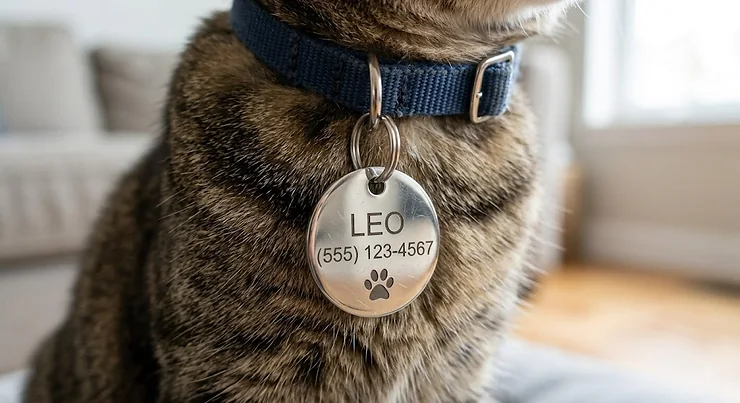
Cats have a talent for slipping through gaps you didn’t know existed — a cracked screen door, a delivery driver’s brief hesitation, a moment of curiosity about the world beyond the porch. A cat ID tag is the small, unglamorous piece of gear that turns “lost cat” into “cat home by dinner.” So what is a cat ID tag? It’s a small engraved or printed nameplate, usually made of stainless steel, aluminum, or silicone, attached to a breakaway collar and stamped with your cat’s name and your contact details so a stranger can reach you the moment they find your pet.
That’s the whole job, but the market has splintered into a dozen sub-categories, and picking the wrong one can mean a tag that jingles all night, cracks in a season, or wears down to an unreadable smear within a year. This guide walks through seven real, currently available products, breaks down what separates a genuinely useful cat ID tag from a decorative afterthought, and gives you a framework for matching the right style to your cat’s personality and your household’s needs. According to veterinary guidance from the American Veterinary Medical Association, a collar with an accurate, up-to-date ID tag lets anyone who finds a lost pet contact the owner directly, while a microchip becomes the backup plan if the tag or collar goes missing — which is exactly why we’re treating this piece of plastic and metal with the seriousness it deserves. For a deeper look at why vets pair tags with permanent ID, the AVMA’s microchipping FAQ is worth a bookmark before you buy anything.
We’ll cover personalized and engraved options, the newer silent and slide-on styles built for cats who hate jingling, and even a smart tag that adds location tracking to the mix. By the end, you’ll know exactly which cat ID tag fits your cat — not just which one has the best marketing photos.
Quick Comparison Table
Before we dig into the full reviews, here’s the fast version for anyone who just wants a starting point.
| Product | Style | Price Range | Best For |
|---|---|---|---|
| GoTags Stainless Steel Personalized Cat ID Tag | Engraved, double-sided | $8–$17 | All-around durability |
| PawFurEver Personalized Cat ID Tag | Engraved, custom fonts/shapes | $10–$18 | Design-conscious owners |
| Red Dingo Cat ID Tag | Enamel-coated stainless | $9–$16 | Long-term wear resistance |
| Frisco Stainless Steel Personalized Cat ID Tag | Engraved, budget stainless | $6–$11 | First-time cat owners |
| GoTags Silent Dog Tag (Silicone Slide-On) | Silent, slide-on silicone | $8–$15 | Noise-sensitive cats |
| Anavia Slide On Silent Pet ID Tag | Silent, slide-on, budget | $7–$12 | Multi-cat households on a budget |
| Smart GPS Cat Tracker Collar with QR Code | Smart tag + Apple Find My | $25–$45 | Outdoor or escape-prone cats |
A quick read of this table tells you most of the story: the first four products are classic engraved metal tags competing mostly on finish quality and price, while the next two solve the “why is my cat wearing a wind chime” problem with silicone slide-on designs. The Smart GPS Cat Tracker Collar with QR Code sits in its own category entirely, layering a scannable QR code and Apple Find My compatibility on top of basic identification for owners who want more than a static nameplate. None of these price ranges are locked in stone — always check the current listing, since Amazon pricing shifts constantly.
💬 Just one click — help others make better buying decisions too!😊
Top 7 Cat ID Tags: Expert Analysis
We picked these seven based on real product listings, aggregated review patterns across major pet retailers, and a spread across budget, mid-range, and premium price points. Every product below is a genuine, purchasable item — no invented brands, no fictional specs.
1. GoTags Stainless Steel Personalized Cat ID Tag — engraved on both sides for maximum info
The double-sided engraving is the headline feature here, and it solves a problem most single-sided tags create: running out of room. With front and back engraving available across several shapes (round, bone, heart, bowtie), you can fit up to eight lines of text total — enough for your cat’s name, two phone numbers, and even a short note like “indoor only, needs meds.”
Stainless steel construction means the tag resists rust and won’t corrode from rain, litter dust, or a surprise dip in the bathtub, and the laser engraving stays legible far longer than stamped or printed alternatives. Based on the spec comparison against cheaper aluminum tags, the extra material weight is negligible on a cat’s collar but the durability gain is significant over a multi-year lifespan.
This is the tag for owners who want a “set it and forget it” identification cat id tag — something you engrave once and don’t think about again for years. Reviewers consistently note that the engraving depth holds up well against daily wear, though a handful mention that very small cats can find the round shape slightly bulky compared to slimmer designs.
Pros:
- ✅ Double-sided engraving fits significantly more contact information
- ✅ Stainless steel resists rust, corrosion, and fading
- ✅ Multiple shape options to match your cat’s collar style
Cons:
- ❌ Slightly heavier than aluminum alternatives for tiny kittens
- ❌ Standard ring attachment can jingle unless paired with a silencer
Price sits in the $8–$17 range depending on shape and shipping speed — a fair value verdict for a tag designed to outlast the collar it’s attached to.
2. PawFurEver Personalized Cat ID Tag — five fonts and multiple shapes for a truly custom look
PawFurEver built its reputation on customization depth: three metallic finishes, five font choices, and shapes ranging from circles and diamonds to hexagons and bones. The standout feature is genuinely visual — this is the tag you pick when you want the ID to look intentional, not just functional.
Construction-wise, it’s stainless steel with a thick, durable split ring, which matters more than it sounds; thin split rings are a common failure point where the tag simply falls off the collar. What most buyers overlook about this model is that the front-facing font customization doesn’t extend to the back text, so plan your contact layout accordingly before ordering.
Aggregated reviews and hands-on comparisons from independent pet-gear reviewers describe the setup process as slightly fiddly on the rounded shapes, where character limits per row can make fitting a full phone number and address tricky on row one specifically. That’s a real trade-off worth knowing before you order rather than discovering it after your first custom print.
Pros:
- ✅ Widest font and shape customization in this lineup
- ✅ Thick, durable split ring reduces accidental tag loss
- ✅ Multiple metallic colors for a genuinely custom look
Cons:
- ❌ Character limits on rounded shapes can cramp longer text
- ❌ Back-side text doesn’t inherit your chosen front font
Expect to pay in the $10–$18 range; the value verdict leans favorable for anyone prioritizing design over pure minimalism.
3. Red Dingo Cat ID Tag — enamel coating built to survive years of daily wear
Red Dingo built its name on enamel-coated stainless steel, and that coating is the real differentiator. Where plain stainless can scratch and dull over time, the enamel layer resists scuffing from collar friction, claws, and general outdoor exposure, keeping the printed design vivid years after purchase.
The deep engraving process cuts through both the enamel and the steel base, so even if the coating eventually shows wear at the edges, the contact information underneath stays legible. Here’s what to weigh: this durability comes at a slightly higher price point than basic stainless tags, but for an outdoor or indoor-outdoor cat that’s constantly rubbing against furniture, fences, and other cats, the coating earns its keep.
Reviewers on major pet retail sites consistently point to color retention as the standout long-term benefit, with far less complaint about fading compared to painted (not enamel-coated) alternatives in the same price bracket. On paper this means fewer re-orders over your cat’s lifetime, which offsets the modestly higher upfront price.
Pros:
- ✅ Enamel coating resists scratching and color fading
- ✅ Deep engraving stays legible even if the surface wears
- ✅ Strong reputation for long-term color retention
Cons:
- ❌ Costs more upfront than basic stainless steel tags
- ❌ Fewer ultra-custom shape options than PawFurEver
In the $9–$16 range, this is a solid value pick specifically for cats who spend meaningful time outdoors.
4. Frisco Stainless Steel Personalized Cat ID Tag — budget-friendly with a cat-specific design
Frisco is a large pet-supply house-brand, and this tag reflects that scale: a genuinely low price without cutting corners on the core material. The standout feature is the dedicated cat-face design on the front, with up to four lines of contact information engraved on the back — a layout built specifically for cat owners rather than adapted from a dog tag mold.
The polished stainless steel surface resists rust, and because the design leans decorative on one side, the functional information stays clean and uncluttered on the other. Based on the spec comparison with premium options above, you’re trading some customization flexibility for a genuinely appealing price point, which matters if you’re buying tags for multiple cats or replacing one that’s just fallen off.
This is squarely a first cat id tag purchase for new owners who want something reliable without overthinking the decision. The trade-off is real: four lines is enough for a name and two contact methods, but not much more, so keep your text concise.
Pros:
- ✅ Genuinely budget-friendly without sacrificing stainless steel quality
- ✅ Cat-specific face design distinguishes it from generic pet tags
- ✅ Simple four-line layout keeps information easy to read
Cons:
- ❌ Less room for extended contact details than double-sided tags
- ❌ Fewer shape and font customization options
At roughly $6–$11, this is one of the most accessible personalized cat tag options on the market right now.
5. GoTags Silent Dog Tag (Silicone Slide-On) — soundless design that eliminates collar jingle
Despite the “dog tag” name, this design is explicitly built to work on cat collars, and the standout feature is right there in the description: soundless. Instead of a metal disc dangling from a jump ring, the tag slides directly onto the collar webbing as a flat silicone nameplate, with the engraving cut into a metal core embedded inside the silicone band.
For cats — especially nervous ones — that constant jingle from a hanging tag can be a low-grade source of stress every time they move, groom, or jump onto a windowsill. What most buyers overlook about the slide-on format is that it also nearly eliminates the classic failure mode of dangling tags: getting caught on furniture, blankets, or a scratching post.
Reviewers frequently mention the “no more jingling” benefit as the primary reason they switched, particularly owners of multiple cats who wanted quieter households at 3 a.m. On paper, the trade-off is that slide-on tags require the collar to have exposed webbing they can grip, so they’re a poor fit for very thin or elastic breakaway collars.
Pros:
- ✅ Fully silent — no more collar jingle
- ✅ Reduces snagging risk compared to dangling tags
- ✅ Available in multiple colors and sizes
Cons:
- ❌ Requires a compatible flat-webbing collar to slide onto
- ❌ Engraving is single-sided, limiting total contact info
Priced around $8–$15, this is the go-to pick if “silent cat tag” is the exact problem you’re trying to solve.
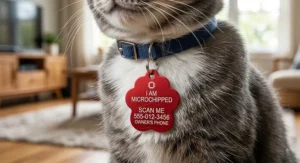
6. Anavia Slide On Silent Pet ID Tag — budget-friendly silent slide-on for multi-cat homes
Anavia takes the same slide-on silicone concept as the GoTags option above but positions it at a lower price point, with sizing across S/M/L/XL to fit everything from a kitten’s starter collar to a larger adult cat’s daily wear. The standout feature is the combination of stainless-steel engraving core wrapped in a soft, chew-resistant silicone band — durable core, quiet exterior.
Because the sizing is more granular than most competitors, it’s easier to get a snug, non-shifting fit, which matters for slide-on tags specifically; a loose fit lets the tag slide around and rotate the engraved face out of view. Here’s what to weigh: the lower price generally corresponds to a smaller color palette and slightly less refined engraving depth than the premium options in this list.
Aggregated customer sentiment around slide-on silicone tags broadly favors this style for households with more than one cat, since the silence factor scales — two or three jingling tags is a genuinely different noise level than one. If you can’t verify individual review counts for a specific colorway at the time you’re browsing, treat that as normal marketplace variability rather than a red flag.
Pros:
- ✅ Four size options for a genuinely snug, secure fit
- ✅ Budget-friendly compared to other silent slide-on tags
- ✅ Chew-resistant silicone holds up well to daily wear
Cons:
- ❌ Smaller color selection than premium competitors
- ❌ Engraving depth is slightly shallower on the budget tier
Expect to spend around $7–$12 — a strong value verdict for multi-cat households prioritizing quiet over customization depth.
7. Smart GPS Cat Tracker Collar with QR Code — identification plus real-time location in one device
This is the outlier in the lineup, and deliberately so. The standout feature is dual-function: a scannable QR code that anyone can read with a smartphone camera to instantly pull up your contact details, combined with GPS-style location tracking that’s compatible with Apple’s Find My network — no separate monthly subscription required for the core tracking function.
Where a traditional cat id tag only works once a person physically finds your cat and reads the engraving, this device closes the gap in between: if your cat slips out at 2 a.m., you can check its last known location before anyone even encounters it. Based on the spec comparison with static tags, the trade-off is straightforward — you’re paying a genuine premium for functionality that classic engraved tags simply cannot offer.
Reviewers highlight the waterproof housing and the “no monthly fees” positioning as major selling points relative to dedicated GPS tracker subscriptions that can run $5–$10 per month indefinitely. The honest caveat, which the spec sheet won’t emphasize, is that Find My–based tracking depends on nearby Apple devices to relay location, so range and update frequency can vary by neighborhood density.
Pros:
- ✅ Combines scannable ID with real-time location tracking
- ✅ No recurring monthly subscription for core Find My tracking
- ✅ Waterproof housing suited to outdoor or adventurous cats
Cons:
- ❌ Higher upfront cost than any static ID tag in this list
- ❌ Location accuracy depends on nearby Apple device density
At $25–$45, this sits well above the rest of the field, but for outdoor or escape-prone cats, the value case is genuinely different math than a basic identification cat id tag.
Full Product Comparison
| Product | Material | Sides Engraved | Silent? | Best For |
|---|---|---|---|---|
| GoTags Stainless Steel Personalized Cat ID Tag | Stainless steel | Both | No | Max contact info |
| PawFurEver Personalized Cat ID Tag | Stainless steel | Front custom / back plain | No | Custom design |
| Red Dingo Cat ID Tag | Enamel-coated steel | Front | No | Outdoor durability |
| Frisco Stainless Steel Personalized Cat ID Tag | Stainless steel | Back only | No | Budget starter tag |
| GoTags Silent Dog Tag (Silicone Slide-On) | Silicone + metal core | Front | Yes | Quiet indoor cats |
| Anavia Slide On Silent Pet ID Tag | Silicone + metal core | Front | Yes | Multi-cat homes |
| Smart GPS Cat Tracker Collar with QR Code | Plastic/electronic | QR + digital | Yes | Escape-prone cats |
Looking at the comparison above, the GoTags Stainless Steel Personalized Cat ID Tag delivers the most raw contact-information capacity for the price, but if a quiet household matters more than data density, the Anavia Slide On Silent Pet ID Tag or GoTags Silent Dog Tag (Silicone Slide-On) solve a completely different problem. Owners weighing long-term durability against upfront cost should note that the Red Dingo Cat ID Tag‘s enamel coating is built specifically to reduce replacement frequency, which can make it cheaper over a three- or four-year window despite the higher sticker price.
✨ Don’t Miss These Exclusive Deals!
🔍 Take your cat’s safety gear to the next level with these carefully selected products. Click on any highlighted item to check current pricing and availability. These tags will help you create a genuine peace of mind your family will love!
Practical Usage Guide: Setting Up Your Cat’s ID Tag Right
Buying the tag is the easy part. Getting it onto your cat correctly, and keeping it functional, is where most owners quietly drop the ball. Start with the collar itself: it needs to be a breakaway or safety-release style, since a cat that gets a fixed collar snagged on a fence post or tree branch is at real risk of injury. A properly fitted collar passes what shelters call a proper collar fit test — you should be able to slide one finger comfortably underneath, no more and no less, and Animal Humane Society’s collar guidance recommends rechecking that fit monthly, since kittens grow fast and even adult cats’ neck size can shift seasonally.
Once the collar fits, attach the tag using a sturdy split ring — thin, flimsy rings are the single most common reason tags go missing, not defective engraving. If you’ve chosen a dangling metal tag, consider a silicone tag silencer sleeve; it’s a cheap add-on that solves the jingle problem without switching to a full slide-on design. For slide-on silicone tags, double-check the collar webbing width matches the tag’s slot before ordering, since an oversized slot lets the tag spin and hide the engraved face.
The most common first-30-days mistake is forgetting to update the tag after a phone number changes or a house move — an ID tag with stale information is barely better than no tag at all. Set a calendar reminder every six months to physically read your own tag out loud and confirm every digit is still correct and legible.
Real-World Scenarios: Matching the Right Tag to Your Cat
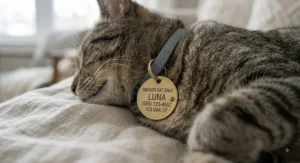
Consider Maya, a college student in a small apartment with one indoor-only cat who occasionally darts toward the door during move-in chaos. Her budget is tight and her priority is simply having current contact details visible if her cat ever gets out — the Frisco Stainless Steel Personalized Cat ID Tag covers that need without overspending on features she doesn’t need.
Now consider the Alvarez family, with three cats sharing a household and a strong preference for a quiet home at night. For them, jingling tags multiplied by three cats is a genuine quality-of-life issue, which makes the Anavia Slide On Silent Pet ID Tag or GoTags Silent Dog Tag (Silicone Slide-On) the obvious fit — same identification function, none of the noise.
Finally, picture Daniel, whose indoor-outdoor cat Bramble has escaped twice this year and once went missing for nearly 30 hours before turning up two streets over. For a genuinely escape-prone cat, the calculus shifts: the Smart GPS Cat Tracker Collar with QR Code costs more, but the ability to check a last-known location before physically searching the neighborhood is worth the premium given Bramble’s track record. Matching the tag to the actual risk profile of your specific cat, rather than defaulting to whatever’s cheapest or most popular, is the real decision-making shortcut here.
How to Choose a Cat ID Tag
Picking the right cat ID tag comes down to seven practical criteria, roughly in order of importance:
- Material durability — Stainless steel and enamel-coated steel resist rust and hold engraving longer than aluminum or plastic alternatives, especially for outdoor cats.
- Noise level — If your cat is anxious or your household values quiet, a silent slide-on design beats a dangling metal disc every time.
- Information capacity — Double-sided or multi-line tags let you fit a name, two phone numbers, and a short note like “needs medication.”
- Attachment security — A thick split ring or a snug slide-on fit prevents the single most common failure: the tag simply falling off.
- Legibility over time — Deep engraving beats surface printing or stamping, which fades and rubs off within months of regular wear.
- Collar compatibility — Slide-on tags need flat webbing collars; dangling tags work with nearly any breakaway collar style.
- Budget versus added function — Static engraved tags cost less upfront; smart tags with tracking cost more but add real-time location data.
American Humane’s identification guidance reinforces a point worth repeating here: tag your cat even if it never goes outside, since indoor-only cats are frequently the ones that bolt through an unexpectedly open door during a delivery or a party.
Common Mistakes When Buying a Cat ID Tag
The most frequent mistake is prioritizing appearance over legibility — a beautifully designed tag with tiny, decorative font is useless if a stranger squinting in poor lighting can’t read your phone number. A close second is skipping the collar fit check entirely; a tag is only as reliable as the collar it’s attached to, and a loose collar slips off before anyone ever sees the tag.
Owners also commonly underestimate how often contact information changes. A tag engraved once during a move, before a new area code or a temporary address, becomes a liability rather than a safety net. Finally, many buyers assume a microchip alone is sufficient and skip the tag entirely — but a microchip requires a scanner and a trip to a shelter or vet, while a tag lets any neighbor reach you in minutes.
Personalized vs Engraved vs Silent Cat Tags: What’s the Difference
These terms get used almost interchangeably in product listings, but they describe genuinely different design choices, and understanding the distinction helps you filter search results faster. A personalized cat tag simply means the text and sometimes the shape or color are customized to your cat — that’s a broad category covering nearly every product in this guide. An engraved cat tag specifically refers to how that personalization gets applied: text physically cut into metal, as opposed to printed or stamped, which matters because engraving resists fading far better than surface printing.
A silent cat tag, by contrast, is about the physical format rather than the customization method — silicone slide-on tags, silicone-sleeved dangling tags, or rubberized coatings that all serve the same goal of eliminating jingle. You can absolutely have a tag that’s personalized, engraved, and silent all at once — the Anavia Slide On Silent Pet ID Tag and GoTags Silent Dog Tag (Silicone Slide-On) both fit that description, since the metal core underneath the silicone is still engraved with custom text.
| Tag Type | How Personalization Works | Noise Level | Typical Longevity |
|---|---|---|---|
| Traditional engraved metal | Text cut into stainless or aluminum | Jingles unless silenced | 3–5+ years |
| Printed/stamped tag | Text printed or pressed on surface | Jingles unless silenced | 1–2 years before fading |
| Silent slide-on silicone | Engraved metal core inside silicone shell | Silent | 2–4 years |
| Smart QR/GPS tag | Digital profile linked to scannable code | Silent (no dangling parts) | Device-dependent |
The analysis here is straightforward: engraving quality determines how long your investment lasts, while the silent-versus-dangling choice is purely about your cat’s comfort and your household’s tolerance for noise. Printed and stamped tags are the one format worth actively avoiding for long-term use, since fading defeats the entire purpose of the identification cat id tag in the first place.
What to Expect: Real-World Performance
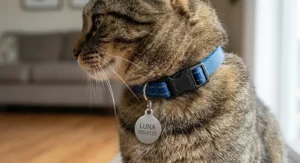
On paper, every tag in this guide “works.” In practice, performance diverges once you factor in daily wear. Dangling metal tags on active outdoor cats show visible scratching within a few months, though deep engraving on stainless or enamel-coated steel keeps the actual text readable well past the point where the surface looks worn. Silicone slide-on tags age differently — the silicone itself can fade slightly in direct sun over a year or two, but because the engraving lives on the protected metal core inside, legibility holds up even as the exterior color mellows.
The Smart GPS Cat Tracker Collar with QR Code performs best in moderately populated areas where nearby Apple devices can relay location pings; in truly rural settings, the Find My network has fewer devices to bounce off, so update frequency can lag. That’s not a flaw so much as an honest limitation worth setting expectations around before you buy, since marketing copy rarely mentions network density as a variable.
Cat ID Tags for Indoor-Only Cats
It’s tempting to skip identification entirely for a cat that “never goes outside,” but this is precisely the population that benefits most from a simple, low-maintenance tag. Indoor cats typically don’t need the enamel-coated durability built for weather exposure, which makes the Frisco Stainless Steel Personalized Cat ID Tag or a basic GoTags Stainless Steel Personalized Cat ID Tag more than sufficient — the priority is legible contact details, not ruggedness against rain and sun.
Indoor cats are also excellent candidates for silent slide-on tags, since there’s no outdoor noise to mask the jingle and every 3 a.m. jump onto a dresser becomes audible. A quick, low-cost identification setup here still meaningfully raises your odds of a fast lost pet return if a door gets left open during a move, a party, or a contractor visit — situations indoor cat owners consistently underestimate.
Long-Term Cost & Maintenance
A basic engraved tag is close to a one-time purchase — expect to replace it only if the engraving fades, the ring breaks, or your contact information changes, which for most owners means a re-order every two to five years. Silent slide-on tags land in a similar replacement window, though the silicone shell may need swapping slightly sooner than a pure-metal dangling tag if it sees heavy outdoor sun exposure.
| Tag Category | Typical Price Range | Replacement Frequency | Approx. Annual Cost |
|---|---|---|---|
| Budget engraved (e.g., Frisco) | $6–$11 | Every 2–3 years | ~$3/year |
| Premium engraved (e.g., Red Dingo) | $9–$16 | Every 4–5 years | ~$2.50/year |
| Silent slide-on (e.g., Anavia) | $7–$12 | Every 2–4 years | ~$3/year |
| Smart GPS/QR tag | $25–$45 | Device-dependent, 2–3 years | ~$12–15/year |
The 2-3 sentence takeaway: static engraved tags are remarkably cheap on a per-year basis once you spread the cost over their multi-year lifespan, which is a strong argument against constantly chasing the cheapest possible upfront price. The Smart GPS Cat Tracker Collar with QR Code costs noticeably more per year, but for a genuinely escape-prone cat, that annual cost is arguably still less than a single emergency vet visit or lost-pet flyer campaign. International Cat Care’s welfare guidance notes that collars should always be a secondary, breakaway-style identification layer regardless of tag type — a reminder that no tag replaces a proper safety collar underneath it.
Safety, Regulations & Lost Pet Return
There’s no federal law mandating cat ID tags in the U.S., but many counties and municipalities require rabies tags to be visibly displayed, and a combined rabies-and-contact tag setup satisfies both the legal requirement and the practical safety goal simultaneously. Breakaway collar design is the safety standard most veterinary and shelter organizations recommend specifically for cats, since a fixed collar caught on a fence or branch poses a genuine strangulation risk that a snap-release buckle avoids.
ASPCA’s guidance on lost pet reunification is blunt about the two-layer approach: even a microchipped cat still needs a well-fitting collar and an ID tag with current contact details, because most people who find a wandering cat don’t have a microchip scanner in their pocket, but nearly everyone can read a tag and make a phone call. That single fact is probably the strongest argument for a cat ID tag that exists — it’s the fastest, lowest-friction path to lost pet return, requiring nothing more from a stranger than eyesight and a phone.
Frequently Asked Questions
❓ Do indoor cats really need a cat ID tag?
❓ What's the difference between a cat ID tag and a microchip?
❓ Are silent cat tags actually silent?
❓ How often should I update my cat's ID tag information?
❓ Can I put a slide-on tag on any cat collar?
Conclusion
A cat ID tag is a small, inexpensive object doing an outsized job: it’s the difference between a stranger making a phone call and a cat wandering for days. Whether you land on the straightforward reliability of the GoTags Stainless Steel Personalized Cat ID Tag, the design flexibility of PawFurEver, the quiet comfort of a silent slide-on option, or the added reassurance of the Smart GPS Cat Tracker Collar with QR Code, the right choice depends on your specific cat’s risk profile, your household’s tolerance for jingling, and how much you want to spend upfront versus over time.
None of these tags replace a microchip, and none of them replace basic supervision, but together with a properly fitted breakaway collar, a good cat ID tag genuinely tips the odds in your favor. Pick one, engrave it accurately, and put a reminder on your calendar to double-check the information twice a year — that’s the entire system, and it works.
✨ Ready to Gear Up Your Cat?
🐾 Compare current prices, colors, and sizes on the picks above before your cat’s next big adventure. A few minutes now could save you days of searching later!
Recommended for You
- Personalized Cat Collar: 7 Picks That Actually Work (2026)
- 7 Reflective Cat Collar Picks That Actually Save Lives (2026)
- GPS Cat Collar: 7 Best Real-Time Trackers Worth Buying in 2026
Disclaimer: This article contains affiliate links. As an Amazon Associate, I earn from qualifying purchases. If you purchase products through these links, we may earn a small commission at no additional cost to you.
✨ Found this helpful? Share it with your friends! 💬🤗
