
Table of Contents
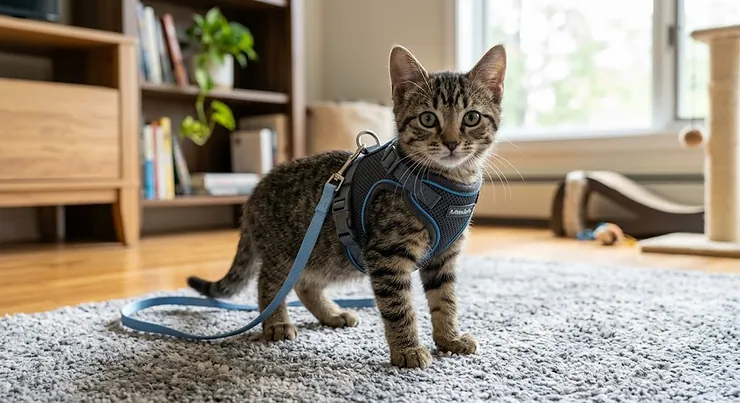
Somewhere between “my kitten just discovered the screen door” and “she’s already outgrown her first collar,” most cat parents start Googling harness for kittens at 11 p.m. out of sheer panic. Fair enough — kittens are basically tiny, fur-covered escape artists with zero respect for personal boundaries or backyard fences. A harness for kittens is a body-wrapping walking device, usually a vest or figure-eight style, built to distribute pressure across the chest and shoulders instead of the throat, so a small, wriggly cat can explore outdoors — or just wear an ID tag safely indoors — without the choking risk a collar carries.
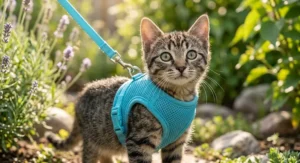
Here’s the thing nobody tells you upfront: kitten harnesses are not shrunken dog harnesses, and buying the wrong one is how you end up chasing a half-dressed cat through the living room. Kittens have narrow, cone-shaped necks, paper-thin skin, and a talent for wriggling backward out of anything that isn’t snug. That means fit, adjustability, and fabric weight matter more here than almost any other pet product category.
We dug through real product listings, aggregated review sentiment, and veterinary behavior guidance to put together this guide. Below, you’ll find seven genuinely good harnesses — spanning budget step-in designs to premium builds that’ll fit your cat from four months to four years old — plus the comparison tables, buying framework, and training tips to make the whole process painless. No fluff, no invented “we tested this on my cat” stories — just honest analysis grounded in real specs and real reviewer feedback, exactly like the Cornell Feline Health Center would want you to have before strapping anything to a kitten.
Quick Comparison Table
Short on time? Here’s the fast version before we go deep on all seven.
| Harness | Best For | Style | Price Range |
|---|---|---|---|
| rabbitgoo Step-In Ultra-Light | Lightweight kitten harness for tiny/young kittens | Step-in mesh | Under $15 |
| NCMAMA Escape-Proof Kitten Vest | Small cat harness on a tight budget | Vest, buckle | $10-$14 range |
| rabbitgoo Whisker Guard Classic | Adjustable kitten harness that grows with your cat | Overhead mesh vest | $16-$20 range |
| Kitty Holster | Gentle fit, sensitive skin | Cotton wrap | $20-$25 range |
| Hepper Tactical | Escape-prone, high-energy kittens | Tactical vest | Mid-$20s to $30 |
| Travel Cat True Adventurer | Warm-climate walks, breathability | Mesh vest | $30-$40 range |
| OutdoorBengal Houdini | Long-term training harness, kitten to adult | Neoprene wrap | $35-$45 range |
Looking at the spread above, the two rabbitgoo models dominate the budget-to-mid tier because of how many adjustment points they pack in for the price, while Hepper and OutdoorBengal Houdini justify their higher cost with reinforced buckles and sizing that stretches well into adulthood. If your kitten is still under four pounds, lean toward the lighter step-in styles at the top of the table — the heavier vest builds further down can feel like overkill on a cat that small.
💬 Found a favorite already? Tap through and check today’s price before it changes — kitten-size stock sells out fast!
Top 7 Harnesses for Kittens: Expert Analysis
1. rabbitgoo Step-In Ultra-Light Adjustable Kitten Harness — lightest step-in design for tiny kittens
The step-in design is the headline feature here, and it earns its billing: instead of wrestling a squirming kitten’s head through a neck loop, you set the harness flat, guide two paws through the leg holes, and clip twice. For a ten-week-old kitten who treats “getting dressed” like a home invasion, that’s a genuinely big deal.
Specs-wise, rabbitgoo lists this model at roughly 0.1 lbs (about 45 grams), built from breathable air mesh with four fully adjustable straps and a dual quick-release buckle closure. In practice, that featherweight construction means a kitten under five pounds won’t feel like she’s wearing a saddle — you’re not fighting her natural range of motion just to get a leash attached.
Based on the spec comparison against bulkier vest-style harnesses, this is the clearer pick for genuinely tiny kittens (under 12 weeks or under four pounds) who need something they can basically forget they’re wearing. Reviewers consistently report that it fits comfortably from the smallest adjustment point straight through several months of growth, which matters since kittens can double their weight in six to eight weeks. A common thread in aggregated feedback is that owners with previous “thin strap” harnesses saw far fewer Houdini-style escapes after switching to this design’s dual-strap chest configuration.
Pros:
- ✅ Under half an ounce, barely noticeable on tiny frames
- ✅ Step-in design skips the stressful over-the-head struggle
- ✅ Four adjustment points track fast kitten growth spurts
Cons:
- ❌ Minimal padding compared to premium vest styles
- ❌ Smallest size runs snug on kittens over 5 lbs
At under $15, this is priced like a stocking stuffer but performs like a genuine training tool — for owners prioritizing a lightweight kitten harness over one with heavy-duty escape armor, it’s tough to beat the value.
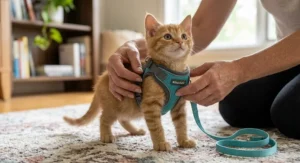
2. NCMAMA Escape-Proof Kitten Vest Harness — budget pick with reflective safety strips
What stands out immediately is the reflective piping running along the vest’s edges — a small detail that matters a lot more than it sounds like once you’re walking a black or dark tabby kitten at dusk.
The vest is built from breathable mesh with a sturdy clip buckle and an adjustable strap system sized specifically in the XS range for kittens rather than being a scaled-down adult harness. That distinction matters: a lot of “one size fits most” harnesses bottom out at a neck girth too wide for a genuine kitten, and this one doesn’t.
Here’s what most buyers overlook about entry-level harnesses like this one — the buckle hardware quality is usually where the corners get cut, not the fabric. NCMAMA’s sturdy clip buckle system holds up in aggregated review sentiment as one of the more secure closures in this price bracket, with owners noting it held firm even on wriggly kittens actively trying to back out of it. This makes it a solid small cat harness choice for owners who want a training harness without a big financial commitment before they know if their kitten even tolerates one.
Pros:
- ✅ Reflective strips add real visibility on evening walks
- ✅ True kitten-specific sizing, not a shrunken adult harness
- ✅ Sturdy clip buckle resists wriggle-out attempts
Cons:
- ❌ Fewer adjustment points than premium competitors
- ❌ Limited color and size range compared to bigger brands
Priced around $10-$14, this is the harness to buy first if you’re not yet sure your kitten will tolerate wearing one at all — low financial risk, real functional upside.
3. rabbitgoo Whisker Guard Classic Adjustable Cat Harness & Leash Set — best adjustable fit as your kitten grows
The four-point precision slider system is the standout here, and rabbitgoo built the whole “Whisker Guard” line around solving one specific problem: kittens outgrow gear embarrassingly fast.
Specs include POM (engineering-grade plastic) buckles rated for higher strength than standard ABS plastic, two neck straps and two chest straps that adjust independently, and a matching leash with a 360-degree swivel clip to prevent tangling. In real-world terms, the independent strap adjustment means you’re not stuck choosing between “loose at the neck” or “tight at the chest” — you can dial in both zones separately as your kitten’s proportions change month to month.
On paper this reads like overkill for a harness in this price tier, but reviewers consistently flag the sizing flexibility as the reason they didn’t need to rebuy when their kitten hit the awkward adolescent growth phase around five to seven months. One recurring theme in aggregated feedback: owners who sized up too early found the smallest setting was still adjustable enough to cinch down for a snug fit, rather than being permanently too big. That’s exactly what you want in an adjustable kitten harness — margin in both directions.
Pros:
- ✅ Independent neck and chest sliders fine-tune fit precisely
- ✅ POM buckles feel notably sturdier than typical plastic clips
- ✅ Swivel leash clip prevents twisting during play or walks
Cons:
- ❌ Over-the-head design isn’t ideal for head-shy kittens
- ❌ Sizing runs slightly inconsistent between color batches
In the $16-$20 range, this is arguably the best all-around value on this list — it’s the one we’d point a first-time kitten-harness buyer toward if they only wanted to read one product description.
4. Kitty Holster Cat Harness — gentlest fit with USA-made cotton
What sets this one apart instantly is the fabric: soft, breathable cotton instead of the synthetic mesh used by nearly everything else on this list, secured with a strong hook-and-loop closure rather than hard plastic buckles.
The wrap-style design distributes pressure across a wider surface area than strap-based harnesses, and it’s manufactured in the USA with reinforced stitching at stress points. For kittens with sensitive or thin skin — common in short-haired breeds — that broader, softer contact area can mean the difference between a kitten who tolerates the harness and one who flops over and refuses to move.
Based on the spec comparison, the tradeoff is adjustability: hook-and-loop closures don’t offer the same granular multi-point sizing as slider-and-buckle systems, so you’re relying more on choosing the correct size upfront. Reviewers consistently note the fabric feels noticeably gentler than mesh alternatives, with several long-term owners reporting their cat stopped trying to scratch it off within days rather than weeks. That gentle fit reputation is exactly why this brand shows up so often in veterinary clinic recommendations for skittish or first-time harness wearers.
Pros:
- ✅ Soft cotton construction is gentle on sensitive kitten skin
- ✅ Hook-and-loop closure is fast to put on and remove
- ✅ Reinforced USA-made stitching holds up over years of use
Cons:
- ❌ Less fine-tuned adjustability than slider-based competitors
- ❌ Cotton retains more heat than mesh in warm climates
At around $20-$25, it’s a mid-range investment that pays off specifically for anxious or sensitive kittens who need comfort prioritized over adjustability.
5. Hepper Cat Harness and Leash Set — most secure multi-point adjustment
The tactical-vest silhouette immediately signals what this harness is built for: containment. Multiple adjustment points across the neck, chest, and girth let you dial in a genuinely custom fit rather than picking from a handful of preset notches.
Constructed from durable nylon with reflective safety strips and offered down to an XXS size specifically for kitten-scale cats, Hepper’s build leans into redundancy — more straps means more places to fine-tune, which matters enormously for kittens with unusual proportions (long bodies, narrow chests, barrel-shaped ribcages). The included leash matches the vest’s build quality rather than being an afterthought accessory.
What most buyers overlook about multi-point harnesses is that more straps also mean a slightly longer learning curve for correct fitting the first time. Reviewers consistently note this pays off long-term: once dialed in, the fit holds securely even on determined escape artists, and the XXS sizing genuinely fits kittens rather than bottoming out at “small adult cat.” A common theme in aggregated sentiment is that owners with previously “un-harness-able” kittens had success specifically because of how snug and adjustable this build gets.
Pros:
- ✅ True XXS sizing built for kitten proportions, not adults
- ✅ Multiple adjustment points create a genuinely custom fit
- ✅ Reflective strips add low-light visibility on walks
Cons:
- ❌ More straps mean a longer first-time fitting process
- ❌ Premium pricing compared to basic vest harnesses
Priced in the mid-$20s to around $30, this earns its higher cost specifically for owners of squirmy, escape-motivated kittens who’ve already failed with a simpler design.
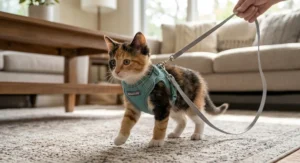
6. Travel Cat: The True Adventurer Cat Harness — best breathable mesh for warm climates
The breathable mesh fabric is the star of the show — soft against fur, sturdy enough for repeated wear, and noticeably cooler than cotton or padded vest alternatives during summer walks.
The harness uses a snug, adjustable-strap vest construction with a reflective strip for nighttime safety, and it’s offered in a range of prints and colors that go beyond the basic black-or-pink options most competitors stick to. Functionally, the mesh’s breathability isn’t just a comfort perk — overheating is a real risk for a small kitten on an active walk, and airflow through the fabric helps regulate body temperature during longer outdoor sessions.
Here’s what the spec sheet won’t tell you, but reviewer patterns suggest: the snug neck fit that makes this harness secure also means sizing precision matters more than with looser designs, so measuring your kitten’s actual neck and chest girth before ordering avoids a lot of return-and-reorder hassle. Reviewers consistently praise the supple strap material around the neck specifically, noting it avoids the pressure-point discomfort that stiffer nylon straps can cause on a cat’s throat area. For kittens who’ll be walked regularly in warmer months, that combination of breathability and comfort is hard to match at this price point.
Pros:
- ✅ Genuinely breathable mesh reduces overheating on walks
- ✅ Reflective strip improves visibility during dusk walks
- ✅ Wide range of colors and prints beyond basic options
Cons:
- ❌ Snug fit requires precise measuring before purchase
- ❌ Runs pricier than comparable mesh-only competitors
In the $30-$40 range, it’s a premium pick best suited to owners in warmer regions who plan to walk their kitten regularly rather than occasionally.
7. OutdoorBengal Houdini Escape-Resistant Cat Harness — best long-term investment from kitten to adult
The defining feature is right in the name: this harness is engineered specifically to resist the backward-wriggle escape technique that gives most kitten harnesses a bad reputation, while still adjusting from kitten to full adult size.
Built from lightweight neoprene with a snug, secure vest fit and a six-foot lead included, the design distributes pressure in a way that limits a kitten’s ability to slip a leg or shoulder free — a common failure point in strap-only designs. Because the sizing range spans kitten to adult cat, this is one of the few harnesses on this list genuinely marketed as a single purchase that lasts the growing size journey rather than something you’ll rebuy in six months.
Based on the spec comparison against step-in and vest-style competitors, the neoprene material trades a bit of breathability for structural integrity — a fair tradeoff for owners whose top priority is preventing escape over minimizing weight. Reviewers consistently describe it as comfortable enough that cats “forget they’re wearing it” after the adjustment period, while also reporting it stayed secure through determined attempts to back out of it. That combination of comfort and structural security is exactly why this model shows up repeatedly in recommendations for escape-prone or previously harness-averse cats.
Pros:
- ✅ Genuinely resists the backward-wriggle escape maneuver
- ✅ Sizing range covers kitten through full adult cat
- ✅ Neoprene fabric is lightweight yet structurally secure
Cons:
- ❌ Less breathable than mesh alternatives in hot weather
- ❌ Higher upfront cost than most kitten-specific options
At roughly $35-$45, this is the harness to buy if you’d rather pay once for something that fits your cat’s entire growing size trajectory than replace a cheaper harness three times over a year.
Practical Usage Guide: Turning a Kitten Harness Into a Training Harness
Buying the harness is genuinely the easy part. Here’s how to actually use it without your kitten staging a full protest.
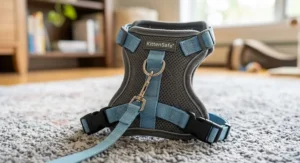
Start indoors, always. Leave the harness sitting near your kitten’s food bowl or favorite nap spot for a couple of days so it stops being a novel, scary object and starts being furniture. When you introduce it, drape it over your kitten while offering treats, then remove it before their interest fades — you want every association to end on a positive note, not a struggle.
Once your kitten tolerates the harness sitting on their body for a few minutes without trying to Houdini out of it, clip it on properly and let them wander the house wearing it — no leash yet. The goal in week one is simply normalizing the sensation of fabric across the chest and shoulders. A common mistake in the first 30 days is skipping straight to leash walks; most trainers recommend at least three to five days of harness-only wear before attaching anything that adds resistance.
For maintenance, check the fit weekly during rapid growth phases — a harness that was snug two weeks ago can suddenly be loose enough to slip over the head. Hand-wash mesh and nylon harnesses in mild detergent and air-dry away from direct sunlight to preserve elasticity in the straps; tumble drying on low is usually fine for tougher nylon builds but can degrade softer mesh over time.
Real-World Scenarios: Matching a Harness to Your Kitten’s Lifestyle
Not every kitten owner needs the same harness, so here are three realistic profiles.
The apartment-dwelling first-timer: if you’ve got a ten-week-old kitten and zero harness experience between you, start with the NCMAMA Escape-Proof Kitten Vest Harness or the rabbitgoo Step-In Ultra-Light. Low cost, minimal fuss, and if your kitten flatly refuses to tolerate a harness, you haven’t sunk much money into finding that out.
The backyard adventurer in a warm climate: a kitten who’ll be walked regularly through spring and summer benefits most from breathable mesh. The Travel Cat True Adventurer handles heat better than neoprene or cotton alternatives, and its reflective strip covers early evening walks when temperatures drop.
The determined escape artist: some kittens are simply built to test every seam. If you’ve already been through one or two harnesses that ended with your cat free and your leash empty, the Hepper Tactical or OutdoorBengal Houdini are worth the higher price tag — both are specifically engineered around preventing the backward-wriggle escape that dooms cheaper designs.
Common Problems With Kitten Harnesses — And How to Fix Them
Problem one: the kitten goes completely limp and refuses to move. This is a normal freeze response, not defiance — sit with your kitten at their level, offer treats, and let them set the pace rather than pulling the leash.
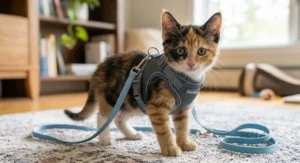
Problem two: the harness keeps riding up or twisting sideways. This usually means it’s too loose. You should be able to fit two fingers, not four, between the harness and your kitten’s body — if you can slide a whole hand under it, size down or tighten the adjustable straps.
Problem three: red or irritated skin under the straps. Switch to a softer material like the cotton build on the Kitty Holster, and make sure the harness isn’t being left on for hours at a stretch — it should come off between supervised sessions.
Problem four: your kitten backs out of the harness entirely. This points to a design or sizing mismatch rather than a training failure — escape-resistant builds like the OutdoorBengal Houdini or multi-point designs like the Hepper Tactical solve this at the hardware level rather than requiring more patience from you.
Problem five: the kitten outgrows the harness within weeks. This is where an adjustable kitten harness with generous slider range, like the rabbitgoo Whisker Guard Classic, earns its keep — check the fit biweekly rather than waiting for an obvious problem.
What Is a Harness for Kittens?
A harness for kittens is a body-worn walking and containment device — typically a vest, step-in wrap, or figure-eight strap design — that clips around a kitten’s chest and shoulders instead of the neck. Unlike a collar, it distributes pulling pressure across a wider area, reducing the choking and tracheal-injury risk that makes collars unsafe for leash walking.
The category exists because kittens have proportionally narrow necks and delicate cartilage that hasn’t fully developed, making neck-only restraint genuinely risky. A well-fitted harness solves that by shifting load to the sturdier chest and shoulder region, which is also why the San Francisco SPCA specifically recommends cat-designed harnesses over collars for any leash training.
How to Choose an Adjustable Kitten Harness
- Measure before you shop. Get your kitten’s neck and chest girth with a soft tape measure — most sizing disputes trace back to skipping this step and guessing based on age or weight alone.
- Prioritize weight for young kittens. Under four months old, a lightweight kitten harness under half an ounce prevents the harness itself from restricting natural movement.
- Check the adjustment range, not just the size label. A harness with independent neck and chest sliders, like rabbitgoo’s Whisker Guard line, tracks growth better than fixed notches.
- Decide step-in versus overhead based on temperament. Head-shy or nervous kittens generally tolerate step-in designs better than anything that goes over the ears.
- Match fabric to climate and skin sensitivity. Mesh breathes best in heat; cotton is gentler on sensitive skin; neoprene trades some breathability for structural security.
- Look for reflective elements if you’ll walk at dusk or dawn. It’s a small feature that meaningfully reduces risk on outdoor walks.
- Budget for growth, not just the current size. A cheaper harness you’ll replace in two months can cost more over a year than one adjustable model bought once.
Common Mistakes When Buying a Small Cat Harness
The single biggest mistake is buying based on age alone rather than actual measurements — kittens of the same age can vary by several pounds and inches depending on breed and litter size. A close second is assuming any “adjustable” label means the same thing across brands; some harnesses offer one adjustment point, others offer four, and that difference determines how long the harness stays useful.
Another common misstep: choosing a harness based purely on price without checking buckle quality. Cheap plastic clips are a frequent failure point in aggregated review complaints, regardless of how nice the fabric feels. Finally, skipping the indoor acclimation period and heading straight outside on day one is a near-guaranteed way to create a harness-averse cat for months to come.
Harness for Kittens vs. Cat Collar: Which Is Safer for a Growing Cat?
| Factor | Harness for Kittens | Cat Collar |
|---|---|---|
| Pressure distribution | Across chest and shoulders | Concentrated at neck |
| Escape risk | Low with proper sizing | High — cats can slip collars easily |
| Choking/tracheal risk | Minimal | Elevated, especially with leash use |
| Best for | Leash walking, outdoor training | ID tags only, indoor use |
The comparison above makes the safety gap fairly stark: collars are fine for holding an ID tag on a strictly indoor cat, but they were never engineered to handle leash tension, and a startled kitten can injure its neck trying to pull free. A properly fitted harness essentially removes that failure mode by design, which is why groups like the Anti-Cruelty Society explicitly warn against using collars for leash walking and recommend harness-only setups for any cat that goes outdoors on a lead.
What to Expect: Real-World Performance of a Lightweight Kitten Harness
Specs on a product page rarely translate directly into lived experience, so here’s the honest version. In the first few wears, expect your kitten to freeze, flop, or attempt an ungainly backward crawl — this is universal and not a sign the harness is wrong for them. By day three to five of short, positive indoor sessions, most kittens transition from frozen to merely annoyed, which is genuine progress.
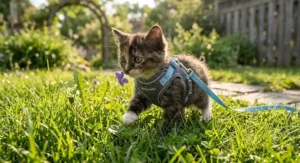
Once outdoors, a lightweight build barely registers to the kitten physically, but the psychological adjustment of new smells, sounds, and open space takes longer than the physical harness adjustment did. Expect slow, cautious exploration rather than confident strutting for the first several outings — kittens that seem “unbothered” by a harness immediately are the exception, not the rule.
✨ Ready to start training? Check today’s price on your top pick before the good colors sell out!
Kitten Harnesses for First-Time Cat Owners
If this is your first cat and your first harness, resist the urge to buy the cheapest or most heavily marketed option. Prioritize kitten-specific sizing (not “one size fits most” adult harnesses sized down), a low-stress step-in or hook-and-loop closure, and a brand with a documented sizing chart rather than vague measurements. The rabbitgoo Step-In Ultra-Light and NCMAMA Escape-Proof Kitten Vest are both built with exactly this beginner scenario in mind — low financial risk, genuinely kitten-scaled fit, and simple enough hardware that you won’t need a video tutorial to get it on correctly the first time.
Long-Term Cost & Maintenance: Is a Kitten Harness Worth It?
Running the numbers honestly: a budget harness at $10-$15 that needs replacing every two to three months during peak growth can cost $40-$60 over a kitten’s first year. A single adjustable harness in the $20-$45 range with generous slider room, like the rabbitgoo Whisker Guard Classic or OutdoorBengal Houdini, often covers that entire growth window in one purchase — meaning the “premium” option is frequently the cheaper one over a 12-month horizon.
Maintenance costs stay low regardless of which tier you choose: hand-washing takes minutes, and most harnesses last years past the kitten stage if fabric and buckles are inspected periodically for wear. The real cost driver isn’t the harness category — it’s how many times you have to rebuy due to sizing outgrowth, which is exactly why adjustment range deserves more weight in your decision than upfront price alone. For broader context on why leash access matters for indoor cats’ wellbeing, PetMD’s leash training guide is a solid starting point.
FAQ
❓ What size harness does a kitten need?
❓ Is it safe to leave a harness on a kitten all day?
❓ How do I know if a kitten harness fits correctly?
❓ Can a kitten wear a harness before vaccines are complete?
❓ What's the difference between a training harness and a walking harness?
Conclusion
A good harness for kittens comes down to three things: accurate sizing, genuine adjustability for the growing size ahead of you, and a fabric your specific kitten will actually tolerate. Budget options like the NCMAMA Escape-Proof Kitten Vest and rabbitgoo Step-In Ultra-Light are smart low-risk starting points if you’re not sure your kitten will accept a harness at all. If you already know your cat is a determined escape artist, the multi-point security of the Hepper Tactical or the kitten-to-adult range of the OutdoorBengal Houdini are worth the higher price tag.
Whichever you choose, the training process matters as much as the product — slow, positive, indoor-first acclimation turns almost any well-fitted harness into a tool your kitten genuinely tolerates rather than tolerates begrudgingly. Start small, watch the fit as your kitten grows, and adjust before problems show up rather than after.
Recommended for You
- Padded Cat Harness: 7 Comfortable Picks Cats Actually Tolerate (2026)
- Cat vest harness: 7 Comfy Picks That Won’t Turn Walkies Into a Wrestling Match (2026)
- Best Cat Harness in 2026: 7 Escape-Proof Picks Tested
Disclaimer: This article contains affiliate links. As an Amazon Associate, I earn from qualifying purchases. If you purchase products through these links, we may earn a small commission at no additional cost to you.
✨ Found this helpful? Share it with your friends! 💬🤗
