
Table of Contents
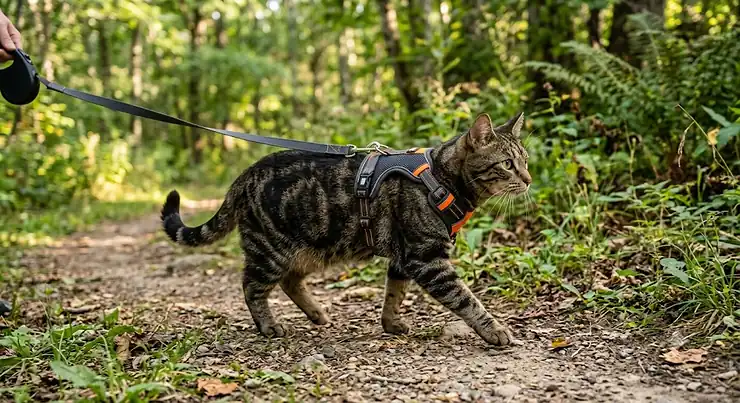
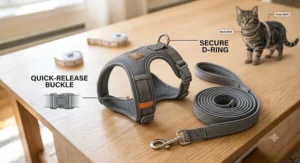
A padded cat harness is a cat-specific walking harness with foam, mesh, or fabric cushioning across the chest and shoulder straps, designed to spread leash pressure over a wider area instead of concentrating it on one thin strip of skin. That’s the textbook version, anyway. The lived version is a little messier: it’s you, on your knees in the hallway, trying to convince an indignant tabby that this weird vest thing is not, in fact, a personal attack.
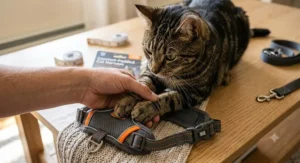
I get why people go straight for the cheapest option on the shelf. A harness is a harness, right? Except it isn’t, and your cat will absolutely let you know the difference within about four seconds of putting it on. Thin nylon straps dig in at the armpits. Stiff plastic buckles pinch loose skin. A harness that rides up under the neck can genuinely make a cat panic. Padding isn’t a luxury add-on here — it’s the thing that decides whether your cat tolerates fifteen minutes outside or bolts for the nearest piece of furniture and refuses to come out.
This guide skips the marketing fluff and gets into what actually matters: how padding, mesh weave, and strap geometry interact to create (or ruin) comfort, which of the current crop of real, purchasable harnesses hold up under honest scrutiny, and how to match a padded cat harness to your specific cat’s body type, temperament, and climate. We looked at spec sheets, aggregated review sentiment, and guidance from feline behavior researchers to build this out — not guesswork, and definitely not a copy-paste of an Amazon listing.
Quick Comparison: Padded Cat Harnesses at a Glance
| Harness | Padding Type | Best For | Price Range |
|---|---|---|---|
| rabbitgoo Cat Harness and Leash | Air-mesh vest, light cushioning | Hot climates, budget buyers | around $15-$20 |
| PUPTECK Soft Mesh Cat Vest Harness | Foam-backed mesh chest panel | Sensitive-skinned kittens | under $20 |
| Voyager Step-in Air Cat Harness | Air-mesh, step-in construction | Fast, low-stress dressing | $20-$30 range |
| PetSafe Come With Me Kitty | Nylon webbing + bungee leash give | Cats that lunge or pull | $20-$25 range |
| Kitty Holster Cat Harness | 100% cotton lining, wraparound vest | Cats who hate buckles | $25-$35 range |
| Hepper Escape Proof Set | Velvet-lined padded mesh | Escape artists needing security + comfort | $35-$45 range |
| OutdoorBengal Houdini | Self-tightening padded chest pad | Cats who back out of everything | $35-$45 range |
Looking at the spread above, there’s a clear pattern: cheaper harnesses lean on mesh alone for comfort, while the mid-to-premium tier adds a genuine padding layer — foam, cotton lining, or velvet — that changes how the harness feels under a squirming cat. If your cat has sensitive skin, a nervous temperament, or you plan on daily walks rather than the occasional vet trip, it’s worth paying up into that $25-plus range. Budget picks like rabbitgoo and PUPTECK are perfectly fine for short, occasional outings but tend to show their limits on longer wears.
💬 Found a harness that fits your cat’s vibe already? Skip ahead — full breakdowns are below!😊
Top 7 Padded Cat Harnesses: Expert Analysis
1. rabbitgoo Cat Harness and Leash — most breathable budget pick for hot climates
The standout here is the “cloud-light” air-mesh build, which is rabbitgoo’s own term for a loosely woven mesh that lets heat escape rather than trapping it against the cat’s coat. The vest wraps the chest and back with four adjustable points, a reinforced rear D-ring, and dual snap buckles, and it’s designed with a step-through body panel rather than a pure pull-over-the-head design, which matters for cats who hate anything near their face. The listed sizing runs from roughly 8.5–11 inches of neck girth up through the low-20-inch range for larger cats, so most household cats will find a fit.
Based on the spec comparison, this is a harness built for warm-weather walking rather than winter hiking — the mesh that keeps a cat cool in July offers very little wind resistance in January. Reviewers consistently note that the vest-style pressure redirection away from the throat works as advertised, though a recurring theme in aggregated feedback is that cats on the smaller end of a size range can occasionally back out if the fit isn’t snug — sizing down, not up, tends to solve this.
Pros:
- ✅ Genuinely breathable air-mesh keeps cats cool on warm walks
- ✅ Four-point adjustment accommodates a wide range of body shapes
- ✅ Reflective strip adds visibility for evening walks
Cons:
- ❌ Padding is minimal compared to foam or cotton-lined options
- ❌ Some reports of escape risk if sized loosely
At around $15-$20, the rabbitgoo Cat Harness and Leash is hard to beat as a low-commitment first harness, especially if you’re not sure your cat will tolerate one at all.
2. PUPTECK Soft Mesh Cat Vest Harness — plush padded chest strap for sensitive skin
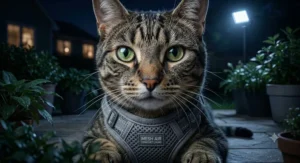
What most buyers overlook about this one is the actual construction of the chest strap: PUPTECK uses a foam-backed mesh panel specifically at the chest, which is the point of maximum contact when a cat pulls forward, rather than padding the whole harness evenly. That’s a deliberate trade-off — less bulk overall, more cushioning exactly where pressure concentrates. The harness includes a soft closure system at the neck and chest, plus a secondary plastic clasp as a backup if the primary closure comes loose, and ships with a 59-inch leash.
On paper this means kittens and cats with thin or sensitive coats — Sphynx, Devon Rex, or just older cats with less fat padding under the skin — get real relief compared to a harness that’s mesh straight through. Aggregated review sentiment frequently praises the softness against the skin specifically, which lines up with the padded-panel design rather than being a vague marketing claim. The sizing runs notably small, though; PUPTECK’s own chart tops out around 15 inches of chest girth even on the largest listed size, so this leans toward kittens and petite adult cats rather than large or fluffy breeds.
Pros:
- ✅ Foam-backed panel cushions the highest-pressure contact point
- ✅ Backup plastic clasp adds a layer of escape security
- ✅ Comfortable for kittens and thin-coated cats
Cons:
- ❌ Sizing tops out too small for large-breed cats
- ❌ Neck strap isn’t independently adjustable on some sizes
Priced under $20, the PUPTECK Soft Mesh Cat Vest Harness earns its keep as a comfort-first pick for smaller or more delicate cats.
3. Voyager Step-in Air Cat Harness — fastest on-and-off step-in design
The headline feature is right in the name: this is a step-in harness, meaning the cat steps through two leg openings rather than having anything slipped over the head. Best Pet Supplies built it with a specially shaped neckline meant to discourage backing out, three separate security points on the rear closure (hook-and-loop, buckle, and double D-rings), and the same all-weather air mesh the brand uses across its dog harness line, scaled down for feline proportions.
Here’s what the spec sheet won’t tell you, but reviewers note: the step-in mechanism genuinely does reduce the fight some cats put up during dressing, because there’s no moment of a hand or fabric near the face or ears — the trigger point for a lot of harness-related struggling. That said, step-in designs require the cat to hold reasonably still for a few seconds while both back legs go through the loops, which is its own challenge with a squirmy kitten. Sizing does not correspond to weight or breed, per the manufacturer, so measuring before ordering is non-negotiable here more than with most competitors.
Pros:
- ✅ Step-in design avoids over-the-head stress triggers
- ✅ Triple security closure (hook-and-loop, buckle, D-rings)
- ✅ Reflective bands aid visibility on evening walks
Cons:
- ❌ Requires the cat to stay still briefly during dressing
- ❌ Sizing chart is notably strict and unforgiving
In the $20-$30 range, the Voyager Step-in Air Cat Harness is a smart pick for owners whose cats specifically dislike anything near their head.
4. PetSafe Come With Me Kitty — gentlest bungee give for pullers
PetSafe built this one around a two-point adjustable harness paired with a stretchy bungee leash, and the bungee is the real differentiator. When a cat surges forward — chasing a leaf, spooked by a car — the bungee absorbs that sudden motion instead of transferring a hard jolt straight to the harness and the cat’s shoulders. The harness itself applies pressure to the shoulder area rather than the neck, uses durable nylon webbing, and includes a rubber stopper at the top specifically engineered to stop the harness from working loose during movement.
Based on the spec comparison against pure mesh vests, this is less about breathability and more about shock absorption — a genuinely different design goal. What most buyers overlook is that this makes it a strong option less for hot-weather comfort and more for cats who are still learning leash manners and tend to bolt or lunge; the bungee genuinely reduces the jarring stop-and-snap sensation that can make a cat associate the leash with something unpleasant. Reviewers with long-term use frequently mention it as a dependable, no-frills option, though a recurring critique is that the nylon webbing itself offers less cushioning than the foam or cotton alternatives further up this list.
Pros:
- ✅ Bungee leash absorbs sudden lunges and pulls
- ✅ Shoulder-focused pressure keeps strain off the throat
- ✅ Trusted, widely available brand with accessible support
Cons:
- ❌ Nylon webbing offers less direct padding than cotton or velvet options
- ❌ Only two adjustment points limits custom fit precision
At around $20-$25, the PetSafe Come With Me Kitty earns its spot for cats still building leash confidence.
5. Kitty Holster Cat Harness — softest all-cotton wraparound fit
This is the harness that trades buckles for hook-and-loop fasteners entirely, and it’s built from a cool-mesh polyester exterior lined with undyed 100% cotton muslin against the skin. That cotton lining is the whole pitch: no plastic hardware touching fur, no thin strap edges, just a soft fabric wrap that closes like a little jacket. It comes in four sizes from XS through XL, made in the USA, and includes a leash-training pamphlet for owners starting from scratch.
What the spec sheet won’t tell you, but user reports suggest, is that the wraparound fit genuinely changes the experience for cats who fight buckle-style harnesses — there’s no clicking sound, no cold metal, just fabric closing snugly. Reviewers consistently describe cats tolerating this one with noticeably less initial resistance than vest-and-buckle designs, and multiple long-term owners report using the same harness across several cats of different body types over years of wear, which speaks to durability. The trade-off: hook-and-loop closures, while gentle, are inherently less secure against a determined escape artist than metal D-rings and dual buckles — this is a comfort-first design, not a maximum-security one.
Pros:
- ✅ Cotton lining is genuinely soft against skin and fur
- ✅ No plastic buckles or metal hardware touching the cat
- ✅ Made in the USA with durable, long-lasting stitching
Cons:
- ❌ Hook-and-loop closure is less escape-resistant than buckles
- ❌ Limited color and pattern options compared to mesh competitors
In the $25-$35 range, the Kitty Holster Cat Harness is the pick for cats that visibly relax the moment plastic hardware disappears from the equation.
6. Hepper Escape Proof Set — best all-round escape resistance with velvet padding
Hepper leans into an H-style harness shape built from velvet fabric layered over breathable mesh, with soft edging specifically engineered to avoid the chafing that thinner straps cause at the legs and belly. Security comes from double aluminum D-rings rather than a single attachment point, reinforced stitching throughout, and a thick nylon climbing-rope leash with a rotating clamp — genuinely overbuilt relative to most cat gear in this price bracket.
Based on the spec comparison, the velvet-and-mesh combination is doing double duty: velvet adds a soft, almost plush contact layer, while the mesh underneath keeps the whole thing from turning into a sweat trap. Aggregated review sentiment frequently cites this as a top pick specifically for nervous or previously harness-resistant cats, with the H-style shape distributing pressure across a broader swath of the shoulders and chest than a thin strap design would. The one consistent critique across sources is limited color choice — currently closer to a single tactical black aesthetic rather than the rainbow of options budget brands offer.
Pros:
- ✅ Velvet-over-mesh construction is noticeably plush and soft
- ✅ Double aluminum D-rings add real escape resistance
- ✅ Includes a padded neoprene-handle leash for owner comfort
Cons:
- ❌ Limited color and pattern selection
- ❌ Runs on the pricier end for a harness-and-leash set
At around $35-$45, the Hepper Escape Proof Set is worth the jump for owners prioritizing both comfort and security equally.
7. OutdoorBengal Houdini — self-tightening pad for Houdini cats
The defining feature is right there in the name: a self-tightening chest pad that cinches slightly snugger when a cat pulls backward to escape, rather than loosening the way many buckle systems do under the same motion. It’s paired with a premium padded finish throughout the vest, a roughly 50-inch no-tangle carabiner leash, and an adjustable walking-vest body designed for travel and outdoor use rather than just backyard supervision.
Here’s what the spec sheet won’t tell you, but the design logic suggests: self-tightening mechanisms work with a cat’s escape instinct instead of against it, which is a genuinely different engineering approach than most competitors, who rely purely on a snug static fit. This matters most for cats with a documented history of backing out of other harnesses — the mechanism activates specifically during the motion that causes most escapes. The padded finish also means this isn’t just a security-first design that sacrifices comfort; it’s built to layer both. The trade-off is price and the learning curve of a slightly more involved fitting process compared to a simple step-in vest.
Pros:
- ✅ Self-tightening chest pad actively resists backing-out escapes
- ✅ Premium padding throughout, not just at pressure points
- ✅ Long, tangle-resistant leash suited for active walks
Cons:
- ❌ Fitting takes more care and attention than simpler designs
- ❌ Sits at the top of the price range for this category
In the $35-$45 range, the OutdoorBengal Houdini is the strongest pick specifically for cats with an escape track record.
Practical Usage Guide: Getting Your Cat Comfortable, Start to Finish
The mistake most people make with any padded cat harness is trying to walk before their cat can crawl — literally putting the harness on and heading straight out the door. Cornell University’s Feline Health Center points out that the right candidate for outdoor walks tends to be a bold, curious cat, and even those cats need an introduction to harness gear before the leash ever gets clipped on.
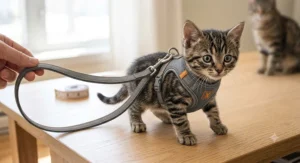
Start by leaving the harness near your cat’s food bowl or favorite napping spot for a few days so it stops registering as a novel threat. Once your cat ignores it, drape it over their back for a few seconds during a meal, building up to a full fastening over several short sessions. The two-finger test — being able to slide two fingers comfortably under any strap — is the standard fit check across every harness on this list; too loose invites escapes, too tight causes real discomfort and can chafe padded areas just as easily as bare straps.
For the first thirty days, expect some resistance walking (the “flop and refuse to move” routine is extremely common) and don’t force it. Common early mistakes include clipping the leash on before the cat is used to the harness alone, practicing in a loud or unfamiliar space first, and leaving the harness on unsupervised for hours, which can trap moisture against skin even with breathable mesh. A quick monthly check of stitching, buckle tension, and padding compression keeps the harness performing as designed well past the first few outings.
Real-World Scenarios: Matching the Harness to the Cat
The nervous rescue cat. A recently adopted cat with an unknown history and a startle-prone temperament benefits most from something like the Kitty Holster Cat Harness — no clicking buckles, no cold metal, just a soft wraparound fit that minimizes new sensory triggers during an already stressful adjustment period.
The apartment escape artist. A cat who’s slipped a harness before, indoors or out, needs security more than novelty. The OutdoorBengal Houdini or Hepper Escape Proof Set both build in redundant closures and pressure-responsive design specifically for this profile, and either is worth the extra cost given what’s at stake if a cat gets loose near traffic.
The occasional vet-trip cat. If outdoor walks aren’t the goal and this is purely about stress-free carrier transitions and vet visits a few times a year, a budget option like the rabbitgoo Cat Harness and Leash covers the need without over-investing in a harness that’ll spend 350 days a year in a drawer.
Problem → Solution: Fixing the Five Most Common Padded Cat Harness Complaints
Cats slip backward out of the harness during a startle response — the fix is nearly always a fit issue rather than a product defect; re-measure chest and neck girth and size down if you’re between sizes, and prioritize models with dual D-rings or self-tightening chest pads.
Padding retains heat on warm days — switch to a harness with an actual mesh weave rather than solid padded fabric, and avoid walking during peak afternoon heat regardless of harness choice.
Straps rub or chafe at the armpits — this usually means the neck strap is too loose and the harness is shifting during movement; tightening the neck point (not the chest) typically resolves it.
The cat refuses to walk once harnessed — this is almost always a training gap, not a harness problem; go back to short, reward-based indoor sessions before attempting outdoor walks again.
Buckles pinch loose neck skin on senior or overweight cats — a wraparound, buckle-free design like the Kitty Holster Cat Harness sidesteps this specific complaint entirely.
✨ Ready to try a padded cat harness with your cat? Compare the full lineup above and pick the fit that matches their personality!
How to Choose a Padded Cat Harness
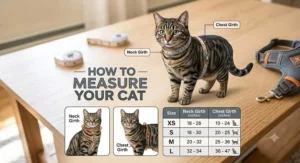
- Measure before you shop. Neck and chest girth, not weight, determine fit — a harness sized off breed averages is a guess, not a fit.
- Match padding to climate. Foam and velvet trap more heat than open mesh; hot-climate cats generally do better with a breathable weave over dense padding.
- Prioritize closure type for temperament. Nervous cats often do better with quiet hook-and-loop closures; determined escape artists need buckles and D-rings.
- Check pressure distribution design. Vest-style and H-style harnesses spread leash force across the shoulders and chest rather than concentrating it at one strap.
- Consider the leash separately from the vest. A bungee leash absorbs sudden pulls regardless of which harness it’s paired with, which matters for cats still learning leash manners.
- Budget for the actual use case. Daily walkers justify a premium, padded pick; occasional vet-trip use rarely needs to exceed the budget tier.
- Read aggregated reviews for escape reports specifically, not just overall star ratings — escape complaints tend to cluster around sizing more than product quality.
Comfortable Cat Harness vs. Standard Collar
A comfortable cat harness and a standard collar solve fundamentally different problems, and conflating them is where a lot of outdoor-cat safety issues start. A collar sits entirely around the neck, meaning any leash tension — even a small tug — concentrates force directly on the throat and trachea. A properly fitted comfortable cat harness spreads that same force across the chest, shoulders, and back, which is both more comfortable and considerably safer for a cat that pulls, lunges, or gets startled mid-walk.
| Feature | Standard Collar | Comfortable Cat Harness |
|---|---|---|
| Pressure point | Neck/throat | Chest and shoulders |
| Escape risk | High — cats can back out easily | Low to moderate, depends on model |
| Choking risk | Real concern under tension | Minimal by design |
| Best For | ID tags, indoor use | Leash walking, travel, vet visits |
The table makes the safety case clear, but comfort matters just as much day-to-day: a collar that’s snug enough to prevent slipping is often uncomfortably tight for extended wear, while a well-padded harness can be adjusted for both security and slack without compromising either. The San Francisco SPCA’s leash training guidance specifically recommends a harness with the leash attachment on the back rather than at the neck, which no standard collar can offer regardless of fit.
Breathable Cat Harness: What Airflow Actually Does
A breathable cat harness isn’t just a comfort feature for warm afternoons — it directly affects how long a cat will tolerate wearing one. Cats regulate heat differently than dogs; they don’t pant as readily, and trapped heat under a solid fabric vest builds faster than most owners expect, especially on darker-colored harnesses in direct sun.
Air-mesh weaves, like those used in the rabbitgoo Cat Harness and Leash and Voyager Step-in Air Cat Harness, work through an open weave structure that allows air to pass through the fabric rather than around it, which meaningfully lowers the microclimate temperature against the skin compared to solid nylon or dense padding. The trade-off is that pure mesh alone offers less cushioning than a padded or lined alternative, which is why the best hybrid designs — padding concentrated specifically at pressure points, mesh everywhere else — tend to outperform harnesses that are either all-mesh or all-padding on long walks.
Pressure Distribution: Why Design Matters More Than Padding Alone
Pressure distribution is the actual mechanical property that determines whether a harness feels comfortable, and padding alone doesn’t guarantee it. A thickly padded harness with a poor strap layout can still concentrate force at a single seam or buckle if the geometry is wrong; a thinner harness with a well-designed vest or H-shape can outperform it by spreading the same leash tension across a wider surface area.
This is why vest-style harnesses — full coverage across the torso, like the PUPTECK Soft Mesh Cat Vest Harness — tend to handle sudden pulls more comfortably than thin H-style straps, even when padding thickness is similar. The Hepper Escape Proof Set demonstrates this well: its H-shape isn’t the widest coverage on this list, but the double D-ring attachment splits leash force across two points instead of one, functionally distributing pressure even without maximal padding. When evaluating any harness, look past the padding claims on the label and consider where, structurally, the leash tension actually lands.
Soft Material Guide: What’s Actually Touching Your Cat’s Skin
The material lining a harness matters as much as the padding thickness. Undyed cotton, like the muslin lining in the Kitty Holster Cat Harness, is soft, breathable, and free of the dyes and coatings that can occasionally irritate sensitive skin. Velvet, as used in the Hepper Escape Proof Set, adds a plush texture but can retain slightly more heat than cotton in warm climates. Polyester air-mesh, used across most budget and mid-range options on this list, is the lightest and most breathable choice but offers the least inherent cushioning without an added foam layer underneath.
For cats with any history of skin sensitivity, allergic reactions, or thin coats, cotton-lined or foam-backed options generally outperform plain polyester mesh against bare skin, even though mesh wins on pure breathability. There’s no universally “best” material here — it’s a genuine trade-off between softness, breathability, and durability that should be weighed against your specific cat’s coat type and climate.
All-Day Comfort: Long Walks, Travel, and Extended Wear
All-day comfort is a different design goal than short-outing comfort, and it’s worth being honest about which harnesses on this list are actually built for it. A harness that feels fine for a ten-minute yard supervision session can become genuinely uncomfortable across a multi-hour travel day, a long hiking outing, or repeated on-and-off wear during a move or vet stay.
For extended wear, look specifically for adjustable padding placement, breathable panels at high-contact points, and hardware that won’t dig in during hours of sitting in a carrier or car seat — the OutdoorBengal Houdini‘s full padded finish and the Hepper Escape Proof Set‘s velvet-over-mesh construction both hold up notably better across a full travel day than a thin budget vest. That said, no harness should realistically stay on for more than a few consecutive hours without a supervised break; even the most padded options benefit from periodic removal to let skin and fur breathe and to check for any pressure marks or matting underneath.
Common Mistakes When Buying a Padded Cat Harness
The single biggest mistake is sizing by breed guess instead of an actual tape-measure reading — nearly every manufacturer explicitly states that sizing does not correspond to breed or weight, yet it’s the most common return reason across aggregated reviews. A close second is buying based on color or pattern rather than closure type, then being surprised the cat fights a buckle system it would have tolerated in a wraparound design. Owners also frequently skip the indoor training period entirely, assuming any padded cat harness is intuitive enough for a cat to accept immediately — it rarely is, regardless of price point. Finally, plenty of buyers assume “escape proof” claims are absolute; as multiple veterinary and behavior sources note, no harness is completely escape-proof, and a poorly fitted premium harness is less safe than a well-fitted budget one.
Safety, Regulations & Compliance Guide
There’s no federal mandate requiring cats to wear a harness in most U.S. jurisdictions, but many municipalities require cats to be leashed or otherwise controlled in public parks and shared outdoor spaces, and it’s worth checking local ordinances before regular outdoor walks. Beyond legal requirements, the safety case is behavioral: the Cornell-affiliated Catwatch newsletter notes that ensuring a cat is current on vaccinations before any outdoor exposure meaningfully reduces disease risk, since leashed walking still puts a cat in contact with surfaces and other animals it wouldn’t otherwise encounter indoors.
Microchipping is a strong companion safety measure to any harness purchase — a harness reduces escape risk but doesn’t eliminate it entirely, and a chip dramatically improves recovery odds if a cat does slip loose. Regularly inspect stitching, D-ring integrity, and buckle tension on any harness in regular rotation; padded models in particular can compress or shift over months of use in ways that quietly loosen an otherwise snug fit.

Frequently Asked Questions
❓ Is a padded cat harness safe for kittens?
❓ How tight should a comfortable cat harness be?
❓ Can indoor cats wear a breathable cat harness daily?
❓ Does pressure distribution really prevent choking?
❓ What soft material is best for cats with sensitive skin?
Conclusion
Choosing a padded cat harness really comes down to matching design to your specific cat rather than chasing the highest star rating. A nervous cat who’s never worn gear before does better starting with something soft and buckle-free, like the Kitty Holster Cat Harness. A known escape artist needs the redundant security of the Hepper Escape Proof Set or OutdoorBengal Houdini more than it needs a low price tag. A cat living somewhere genuinely hot benefits more from open air-mesh, like the rabbitgoo Cat Harness and Leash or Voyager Step-in Air Cat Harness, than from maximum padding.
None of the seven harnesses covered here are interchangeable, and that’s the point — real comfort comes from fit and pressure distribution working together, not from padding thickness alone. Measure your cat properly, start training indoors before any outdoor attempt, and treat “escape proof” marketing claims as a starting point for scrutiny rather than a guarantee.
✨ Don’t Miss These Exclusive Deals!
🔍 Take your cat’s outdoor adventures to the next level with these carefully selected padded harnesses. Click on any highlighted item above to check current pricing and availability, and give your cat a genuinely comfortable way to explore the world with you.
Recommended for You
- Cat vest harness: 7 Comfy Picks That Won’t Turn Walkies Into a Wrestling Match (2026)
- Best Cat Harness in 2026: 7 Escape-Proof Picks Tested
- Cat Travel Accessories 2026: 7 Picks That End Carrier Meltdowns
Disclaimer: This article contains affiliate links. As an Amazon Associate, I earn from qualifying purchases. If you purchase products through these links, we may earn a small commission at no additional cost to you.
✨ Found this helpful? Share it with your friends! 💬🤗
