Table of Contents
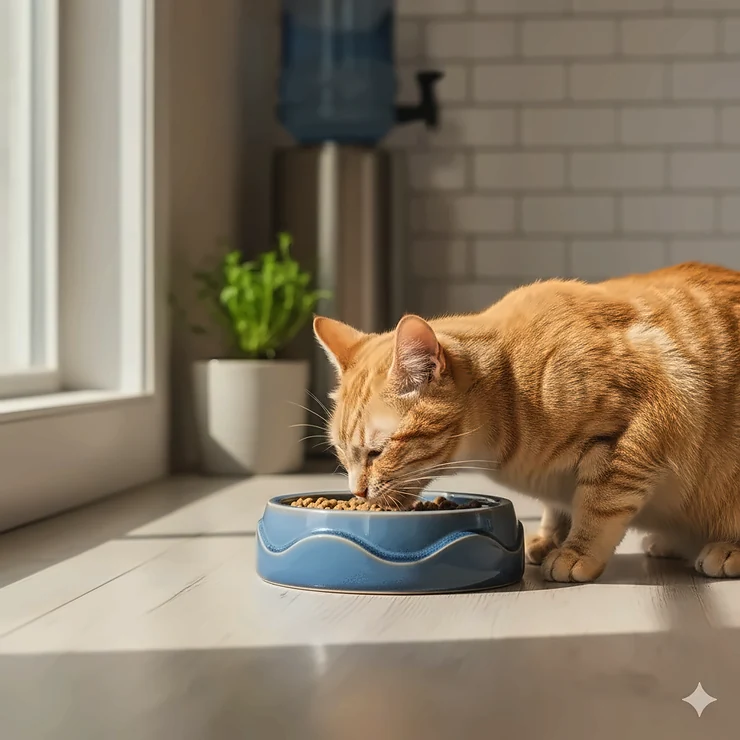
Does your cat inhale their food like there’s no tomorrow, only to regurgitate it minutes later? You’re not alone. According to research published in the Journal of Feline Medicine and Surgery, approximately 25% of cats experience periodic regurgitation, often caused by eating too quickly.
A slow feeder cat bowl isn’t just another pet accessory—it’s a game-changer for your feline’s digestive health. These specially designed bowls feature maze-like patterns, raised ridges, or puzzle elements that transform mealtime into a paced eating experience. Instead of gulping down food in 30 seconds, your cat takes 5-10 minutes, giving their digestive system time to process properly.
Understanding your cat’s natural carnivorous digestive system helps explain why eating pace matters so much. Cats evolved as solitary hunters, consuming small prey items throughout the day rather than large meals all at once.
The benefits extend beyond preventing those unpleasant carpet cleanups. Slow feeders help reduce the risk of gastric issues that commonly affect fast-eating cats, including bloating, regurgitation, and digestive discomfort. They also provide mental stimulation by engaging your cat’s natural hunting instincts, turning every meal into an enriching activity.
Whether you’re dealing with a speed-eating kitten, a food-aggressive multi-cat household, or a senior cat with digestive sensitivities, there’s a slow feeder cat bowl solution designed for your specific needs. Let’s dive into the top 7 options that veterinarians and cat owners trust in 2026.
Quick Comparison Table
| Product | Material | Capacity | Best For | Price Range |
|---|---|---|---|---|
| Catstages Kitty Slow Feeder | BPA-Free Plastic | 3/4 Cup | Budget-conscious buyers | $8-12 |
| Y YHY Ceramic Slow Feeder | Ceramic | 6 Inches | Anti-vomiting solution | $20-28 |
| GORILLA GRIP Slow Feeder | Food-Grade Plastic | 1-4 Cups | Multi-size options | $12-18 |
| TRUNDISAN Elevated Bowl | Ceramic + Metal Stand | 11 oz | Senior cats | $22-32 |
| Doc & Phoebe’s Hunting Feeder | BPA-Free Plastic + Fabric | 1/2 Cup (×3) | Natural hunting behavior | $18-25 |
| Outward Hound Fun Feeder | BPA-Free Plastic | 3/4 Cup | Interactive puzzles | $10-15 |
| Bifeaw Silicone Bowl | Food-Grade Silicone | 1.4 Cup | Easy cleaning | $9-14 |
✨ 💬 Just one click – help others make better buying decisions too!😊
Top 7 Slow Feeder Cat Bowl: Expert Analysis
1. Catstages Kitty Slow Feeder Bowl – Best Budget-Friendly Option
The Catstages Kitty Slow Feeder Bowl proves you don’t need to spend a fortune for effective results. This colorful plastic bowl features meal-lengthening ridges and mazes that keep cats engaged up to 10 times longer during feeding.
Key Specifications:
- Capacity: 3/4 cup
- Material: BPA, PVC, phthalate-free plastic
- Non-slip base for stability
Customer Feedback Summary: Cat owners rave about how this bowl drastically reduced vomiting incidents. Many report their cats now take 5-10 minutes to finish meals instead of 30 seconds, with significantly fewer regurgitation episodes.
✅ Pros:
- Extremely affordable ($8-12)
- Top-rack dishwasher safe
- Works with both wet and dry food
❌ Cons:
- Plastic material may not appeal to all cats
- Some cats learn to flip the bowl if determined
Perfect for: Budget-conscious cat owners seeking an effective entry-level slow feeder that doesn’t compromise on quality or safety features.
2. Y YHY Ceramic Slow Feeder Bowl – Premium Anti-Vomit Solution
The Y YHY Ceramic Slow Feeder Bowl combines elegant design with functional slow-feeding features. This elevated ceramic bowl features a tilted design and fish bone pattern that naturally slows eating pace while promoting better posture.
Key Specifications:
- 6-inch diameter with elevated stand
- Food-grade ceramic construction
- 15-degree tilt design
Customer Feedback Summary: Owners report cats haven’t vomited food since switching to this bowl, with the elevated design helping cats eat sitting up rather than bending over.
✅ Pros:
- Sturdy ceramic won’t tip over easily
- Microwave and dishwasher safe
- Reduces neck strain for senior cats
❌ Cons:
- Higher price point ($20-28)
- Heavier, less portable
Perfect for: Cats with frequent vomiting issues or arthritis who need an elevated feeding solution with built-in slow-feeding technology.
3. GORILLA GRIP Slow Feeder Bowl – Best Multi-Size Selection
GORILLA GRIP brings durability and versatility with their patent-pending slow feeder design. Available in 1, 2, and 4-cup capacities, this maze-style bowl accommodates cats of all sizes.
Key Specifications:
- Multiple capacity options (1-4 cups)
- Curved rubber bottom for grip
- 100% BPA-free construction
Customer Feedback Summary: Users appreciate the non-slip rubber base that actually stays in place during meals. The maze design effectively slows eating without frustrating cats.
✅ Pros:
- Size variety for different cat breeds
- Scratch-resistant rubber bottom
- Compatible with wet, dry, and raw food
❌ Cons:
- Some reviewers note it moves slightly with aggressive eaters
- May be too tall for flat-faced breeds
Perfect for: Multi-cat households needing different bowl sizes or owners wanting a durable, scratch-resistant option that protects floors.
4. TRUNDISAN Elevated Ceramic Slow Feeder – Best for Senior Cats
The TRUNDISAN Elevated Cat Slow Feeder Bowls address both eating speed and ergonomic comfort. The raised fish bone ridge design sits on a sturdy metal stand, creating the ideal feeding height for cats with mobility issues.
Key Specifications:
- Ceramic bowl with metal stand (4-inch height)
- 5.9-inch wide, whisker-friendly design
- Anti-slip silicone mat included
Customer Feedback Summary: Cat owners love the comprehensive package that includes a cleaning brush, elevation stand, silicone mat, and cute stickers, noting it makes cats slow down and chew food rather than swallowing whole.
✅ Pros:
- Reduces neck burden for arthritic cats
- Prevents choking and bloating
- Dishwasher safe and microwave compatible
❌ Cons:
- Bowl is fixed to stand (not removable)
- Premium pricing ($22-32)
Perfect for: Senior cats, cats with arthritis, or any feline requiring an elevated feeding station combined with paced eating benefits.
5. Doc & Phoebe’s Indoor Hunting Cat Feeder – Most Innovative Design
Doc & Phoebe’s Indoor Hunting Cat Feeder takes a completely different approach by mimicking natural hunting behavior. This veterinarian-designed system includes three mouse-shaped feeders that you hide around your home.
Key Specifications:
- Set of 3 feeder “mice”
- Each holds 1/6 daily ration (≈1.6 tbsp)
- Textured fabric skin for realistic feel
Customer Feedback Summary: The system helps improve scarf and barf issues, night waking, and litter box problems by allowing cats to hunt for small portions of food twice daily.
✅ Pros:
- Engages natural hunting instincts
- Portion-controlled feeding
- Reduces anxiety-related eating behaviors
❌ Cons:
- Requires daily hiding/refilling routine
- Challenging in multi-cat homes
- Only works with dry food
Perfect for: Single-cat households seeking enrichment activities that combine feeding with mental stimulation and weight management.
6. Outward Hound Fun Feeder – Best Interactive Puzzle Design
The Outward Hound Small Fun Feeder brings puzzle-solving to mealtime with its intricate maze patterns. Designed for cats and small dogs, this bowl keeps pets engaged while preventing gulping.
Key Specifications:
- 3/4 cup capacity
- Multiple maze pattern options
- Non-slip base design
Customer Feedback Summary: Pet owners report meals lasting up to 10 times longer, with noticeable improvements in digestion and reduced bloating within days of use.
✅ Pros:
- Affordable ($10-15)
- Top-rack dishwasher safe
- BPA, PVC, lead, and phthalate-free
❌ Cons:
- Can be difficult to clean thoroughly
- Some cats become frustrated initially
Perfect for: Cats who need moderate eating pace reduction and enjoy interactive feeding challenges that provide mental stimulation.
7. Bifeaw Silicone Slow Feeder Bowl – Easiest to Clean
The Bifeaw Slow Feeder Cat Bowl stands out for its food-grade silicone construction, offering flexibility that plastic and ceramic can’t match. The honeycomb pattern naturally slows eating while being gentle on sensitive noses.
Key Specifications:
- 1.4 cup capacity
- Microwave and dishwasher safe
- Temperature resistant (-40°F to 230°F)
Customer Feedback Summary: Users love how easy the silicone material is to clean and that it doesn’t scratch pet noses like harder materials can.
✅ Pros:
- Extremely easy to clean and maintain
- Won’t break if dropped
- Suction cup option available
❌ Cons:
- May retain food odors over time
- Some cats can flip lighter silicone bowls
Perfect for: Owners prioritizing easy cleaning and safety, especially for cats with sensitive noses or households with clumsy eaters.
✨ Don’t Miss These Exclusive Deals!
🔍 Take your cat’s health to the next level with these carefully selected products. Click on any highlighted item to check current pricing and availability. These bowls will help create healthier eating habits your feline will maintain for life!
Understanding Why Cats Eat Too Fast
Fast eating in cats isn’t just an annoyance—it’s often a behavioral response to deeper issues. Understanding the root cause helps you choose the most effective slow feeder cat bowl solution.
Competition and Resource Guarding
In multi-cat households, food competition drives many cats to eat rapidly. Cats may feel an innate competitive nature to eat quickly and consume as much as possible when fed near other cats, causing anxiety during meals. This primal instinct dates back to their wild ancestors who had to secure food quickly before competitors arrived.
The solution goes beyond just a slow feeder bowl—it involves feeding cats in separate locations to reduce stress. Combine this environmental change with an anti-vomit cat bowl, and you address both the psychological and physical aspects of fast eating.
Previous Food Scarcity
Cats rescued from shelters or those with histories of food insecurity often develop gorging behaviors. They’ve learned that food might not always be available, so they eat everything immediately. These cats benefit particularly from cat bowl for fast eaters that force portion control and paced consumption.
Medical Conditions
Sometimes, rapid eating signals underlying health issues. Hyperthyroidism can increase appetite and eating speed, while intestinal parasites may cause cats to feel constantly hungry. If your cat suddenly develops speed-eating habits after years of normal behavior, consult your veterinarian before assuming a slow eating cat bowl will solve the problem.
Bowl Design and Food Presentation
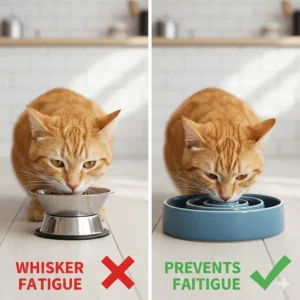
Believe it or not, traditional bowl design encourages fast eating. Deep, narrow bowls allow cats to bury their faces and gulp food without natural pauses. Wide, shallow slow feeder cat bowl options force cats to work around obstacles, creating natural breaks in consumption that aid bloat prevention.
The Science Behind Regurgitation Solution
Understanding how slow feeders work reveals why they’re so effective at preventing vomiting and improving digestive health.
How Fast Eating Causes Regurgitation
When cats eat too quickly, they swallow excessive air along with their food. This air expands in the stomach, creating pressure that triggers the regurgitation reflex. The swallowed air expands in cats’ stomachs, leading to discomfort and regurgitation shortly after eating. The expelled food appears undigested and tubular-shaped because it never fully entered the stomach.
The distinction between vomiting and regurgitation matters. Regurgitation is passive—food simply comes back up without active stomach contractions. Vomiting involves abdominal muscle contractions and produces partially digested food. A slow eating cat bowl prevents regurgitation by eliminating the air-swallowing that causes it.
The 10X Eating Time Principle
Research shows effective slow feeders extend mealtime by up to 10 times. Instead of consuming a meal in 30 seconds, cats take 5-10 minutes. This extended timeframe allows several crucial processes:
- Proper chewing: Cats actually break down kibble rather than swallowing whole pieces
- Saliva production: Increased salivation aids initial digestion
- Stomach preparation: The digestive system receives signals to prepare for incoming food
- Satiety recognition: The brain has time to register fullness, preventing overeating
Paced Eating and Digestive Enzyme Activation
The slow, steady food intake enabled by paced eating bowls allows digestive enzymes to activate properly. When food floods the stomach rapidly, enzymes can’t coat every piece effectively. This leads to incomplete digestion and the familiar sight of whole kibble pieces in vomited food.
According to Cornell University College of Veterinary Medicine experts, cats evolved as hunters consuming prey with high protein, moderate fat, and minimal carbohydrates—their digestive systems function best with paced, portion-controlled feeding.
Choosing the Right Slow Feeder Cat Bowl: 7 Essential Factors
1. Material Matters for Safety and Durability
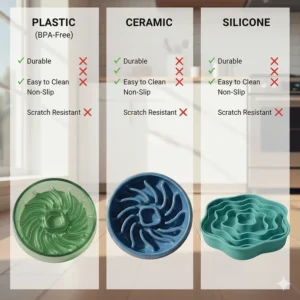
Ceramic bowls offer supreme stability and don’t harbor bacteria like plastic can. They’re dishwasher and microwave safe, but heavier and breakable. Perfect for cats who tend to tip bowls.
BPA-free plastic provides affordability and variety in designs. Look for food-grade plastic free from BPA, PVC, phthalates, and lead. These work well for budget-conscious owners but may develop scratches over time.
Food-grade silicone wins for flexibility and ease of cleaning. It won’t shatter if dropped and is gentle on sensitive cat noses. However, it’s lighter and may be pushed around by determined eaters.
Stainless steel (less common in slow feeders) resists bacteria and lasts forever but can be noisy and may not have intricate slow-feeding patterns.
2. Capacity Based on Your Cat’s Size and Appetite
Match bowl size to your cat’s needs:
- Small cats (under 8 lbs): 1/2 to 3/4 cup capacity
- Average cats (8-12 lbs): 3/4 to 1.5 cup capacity
- Large cats (over 12 lbs): 1.5 to 2 cup capacity
Remember, the goal is slow eating, not massive portions. You may need to feed multiple smaller meals rather than one large serving.
3. Maze Complexity and Your Cat’s Patience Level
Start simple and progress to complex patterns. Frustration defeats the purpose—if your cat refuses to eat from an overly difficult bowl, it’s counterproductive.
Beginner level: Gentle ridges and wide spacing
Intermediate: Tighter maze patterns with moderate obstacles
Advanced: Complex puzzles with narrow channels
Observe your cat’s response. Some take to puzzles immediately; others need gradual introduction.
4. Whisker-Friendly Design
Whisker fatigue is real. Cats with sensitive whiskers find deep, narrow bowls uncomfortable. Choose shallow, wide bowls (5-6 inches diameter) that allow eating without whisker contact with bowl sides.
5. Stability Features
Non-slip bases prevent sliding across floors during enthusiastic eating. Heavier materials like ceramic naturally resist movement. Look for:
- Rubber or silicone grip bottoms
- Weighted bases
- Suction cup options for determined bowl-pushers
6. Elevated vs. Floor-Level Feeding
Elevated bowls reduce neck strain, particularly beneficial for:
- Senior cats with arthritis
- Cats with megaesophagus
- Large breed cats
- Cats who frequently vomit
Standard floor bowls work fine for healthy, young cats without mobility issues.
7. Cleaning and Maintenance
Dishwasher-safe options save time and ensure thorough sanitization. Intricate maze patterns require extra attention—food can lodge in crevices. Consider:
- Can you reach all areas with a brush?
- Does the material stain or retain odors?
- How quickly does it air-dry?
Weekly deep cleaning prevents bacterial growth, especially important with wet food.
Slow Feeder Cat Bowl vs Traditional Bowls: What’s the Difference?
| Feature | Traditional Bowl | Slow Feeder Cat Bowl |
|---|---|---|
| Eating Speed | 30 seconds to 2 minutes | 5-10 minutes |
| Vomiting Incidents | Frequent in fast eaters | Reduced by 30-50% |
| Mental Stimulation | None | Moderate to high |
| Portion Control | Difficult to manage | Built-in through obstacles |
| Price | $3-8 | $8-32 |
The investment in a quality slow feeder cat bowl pays dividends through reduced vet visits for digestive issues, less carpet cleaning, and a happier, healthier cat.
Implementation Tips: Getting Your Cat to Accept a Slow Feeder
Week 1: Introduction Phase
Don’t just swap bowls overnight. Place the new slow feeder cat bowl next to their regular bowl. Put a few treats in the new bowl daily, allowing exploration without pressure.
Week 2: Gradual Transition
Start using the slow feeder for one meal daily, keeping the regular bowl for the other meal. Mix in their favorite treats to create positive associations.
Week 3: Full Transition
By week three, most cats accept the new feeding method. If resistance continues:
- Try a different maze pattern (simpler or more complex)
- Ensure the bowl isn’t too deep
- Check for whisker interference
- Consider different materials
Troubleshooting Common Issues
Cat flips the bowl: Choose heavier ceramic options or models with suction cups
Refuses to eat: Start with the easiest maze patterns
Becomes aggressive: Feed in separate, quiet location away from other pets
Gives up too easily: Mix wet food with dry to make it more appealing
Patience wins. Some cats adapt in days; others need weeks. The bloat prevention and regurgitation solution benefits make persistence worthwhile.
Multi-Cat Household Strategies
Managing multiple cats with slow feeders requires strategic planning:
Separate Feeding Stations
Place bowls in different rooms to eliminate competition. Each cat needs their own slow eating cat bowl to reduce food aggression.
Simultaneous Feeding Times
Feed all cats at once to prevent one from finishing early and attempting to steal from others’ bowls.
Size-Appropriate Bowls
Use smaller capacity bowls for smaller cats and larger ones for big cats. This prevents the little ones from being overwhelmed by too much food.
Individual Monitoring
Watch each cat’s eating behavior independently. One may need a simpler maze while another handles complex patterns easily.
Maintenance and Longevity of Your Slow Feeder Bowl
Daily Cleaning Protocol
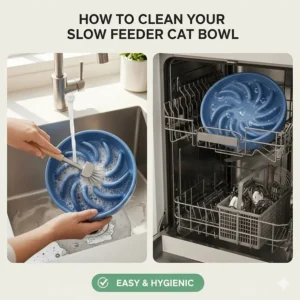
Rinse after each use, especially with wet food. Food particles lodged in maze patterns can spoil quickly, creating bacterial growth and unpleasant odors.
Weekly Deep Clean
- Plastic bowls: Hot soapy water with soft brush, then dishwasher
- Ceramic bowls: Dishwasher safe; can also hand wash with non-abrasive sponge
- Silicone bowls: Dishwasher or hand wash; occasionally soak in baking soda solution for odor removal
Monthly Inspection
Check for:
- Cracks or chips (especially ceramic)
- Wear on non-slip bases
- Scratches that harbor bacteria (plastic)
- Loosening of suction cups
Replace damaged bowls immediately to prevent injury or bacterial contamination.
Expected Lifespan
- Ceramic: 5+ years with proper care
- Quality plastic: 2-3 years before scratches accumulate
- Silicone: 3-5 years
- Stainless steel: Lifetime with minimal wear
Beyond Bowls: Complementary Strategies for Healthy Eating
Portion Control and Meal Frequency
Divide daily food ration into 3-4 small meals instead of 1-2 large ones. Adult cats benefit from feeding once or twice daily in most cases, but smaller, more frequent meals can help prevent vomiting in cats prone to regurgitation.
Food Texture Optimization
Dry kibble: Choose smaller pieces that can’t be swallowed whole
Wet food: Add small amount of water to increase volume without calories
Combination feeding: Mix textures to slow eating naturally
Environmental Enrichment
Combine your slow feeder cat bowl with:
- Puzzle toys throughout the day
- Interactive play sessions before meals
- Cat trees and perches for exercise
- Scheduled feeding times to create routine
Hydration Station Separation
Place water bowls away from food locations. Cats drink more water when it’s separated from food sources, which supports kidney health and overall wellbeing.
Special Considerations for Health Conditions
Cats with Dental Issues
Senior cats or those with periodontal disease struggle with hard kibble. If using a slow feeder cat bowl with dental problems:
- Soak dry food in warm water before serving
- Use slow feeders designed for wet food
- Choose bowls with shallower obstacles
Diabetic Cats
Consistent feeding times become critical for insulin management. Slow feeders work well for diabetic cats but coordinate timing with veterinarian-prescribed insulin schedules.
Cats with Megaesophagus
This condition requires elevated feeding and careful food consistency. Choose elevated slow feeder cat bowl options and consult your vet about appropriate food textures.
Overweight Cats
Slow feeders naturally support weight loss by:
- Extending eating time (increases satiety)
- Preventing overeating through portion control
- Adding mental stimulation (burns calories)
Combine with measured portions and regular weigh-ins for best results.
Cost Analysis: Investment vs. Savings
Initial Investment
Budget option: $8-12 (plastic slow feeders)
Mid-range: $15-22 (quality plastic or basic ceramic)
Premium: $25-35 (elevated ceramic or specialty designs)
Long-term Savings
Reduced vet visits: $200-500 annually for digestive issues
Less food waste: 10-15% reduction in regurgitated food
Carpet cleaning: $150-300 saved on professional cleaning
Extended lifespan: Healthier cats mean fewer medical interventions
A $20 slow feeder cat bowl that prevents monthly vet visits for vomiting issues pays for itself in one month.
Frequently Asked Questions (FAQ)
❓ How fast can a slow feeder cat bowl reduce vomiting incidents?
❓ Can I use a slow feeder cat bowl for wet food?
❓ What size slow eating cat bowl should I get for a 10-pound cat?
❓ Do slow feeders work for kittens learning to eat solid food?
❓ How do I prevent my cat from flipping over the slow feeder bowl?
Conclusion: Transform Mealtime into Healthy Time
The journey to healthier eating habits for your cat starts with one simple change—upgrading from a traditional bowl to a specialized slow feeder cat bowl. Whether you choose the budget-friendly Catstages model, the premium Y YHY ceramic option, or the innovative Doc & Phoebe’s hunting system, you’re investing in your cat’s long-term digestive health.
Remember, every cat is unique. What works perfectly for one may require adjustment for another. Pay attention to your cat’s individual preferences, eating patterns, and health needs. The best slow eating cat bowl is the one your cat actually uses consistently.
Start with proper expectations—allow 1-2 weeks for full adaptation. Monitor vomiting frequency, eating duration, and overall demeanor. Most owners report dramatic improvements in bloat prevention and reduced regurgitation within the first week.
Beyond the immediate benefits of fewer vomiting incidents and cleaner carpets, you’re providing mental enrichment, supporting healthy digestion, and potentially adding years to your cat’s life through better nutrition absorption and reduced stress.
The investment in an anti-vomit cat bowl—whether $10 or $30—is minimal compared to the value of a healthier, happier feline companion. Your cat can’t tell you they appreciate slower, more comfortable meals, but their improved health will speak volumes.
Ready to end the vomiting cycle? Choose your ideal cat bowl for fast eaters from our top 7 recommendations and watch your cat thrive with every meal. Your floors, your cat’s digestive system, and your peace of mind will thank you.
Recommended for You
- 7 Best Elevated Cat Bowl for Senior Cats: 2026 Expert Guide
- 7 Best Elevated Cat Bowls 2026: Reduce Vomiting & Neck Strain
- 7 Quietest Cat Water Fountains That Won’t Disturb Sleep (2026)
Disclaimer: This article contains affiliate links. If you purchase products through these links, we may earn a small commission at no additional cost to you.
✨ Found this helpful? Share it with your friends! 💬🤗
