
Table of Contents
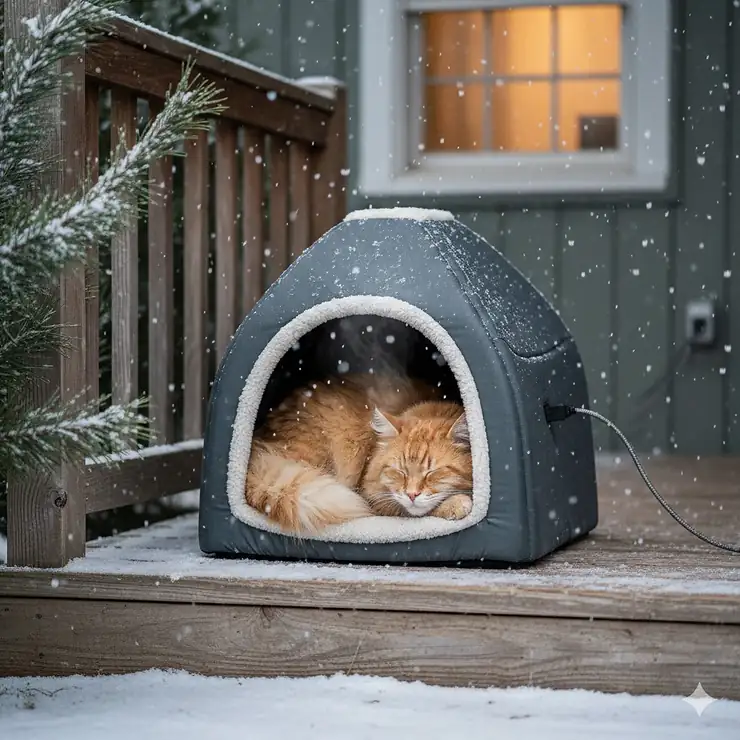
Picture this: It’s 2 AM on a freezing February night, and the temperature has plummeted to 15°F. While you’re bundled under blankets, there’s a colony of feral cats huddled together in your backyard, desperately seeking warmth. This scene plays out in neighborhoods across America every winter, but it doesn’t have to be this way.
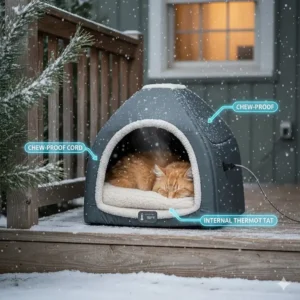
Outdoor cats—whether feral, stray, or simply free-roaming—face brutal conditions when winter arrives. According to the American Veterinary Medical Association, cats should not be left outside for extended periods in below-freezing weather. When temperatures drop below 45°F (7°C), cats begin experiencing cold stress, and prolonged exposure can lead to hypothermia or frostbite.
A heated cat bed for outdoor cats isn’t just a luxury—it’s a lifesaving necessity. These specialized beds provide consistent warmth, waterproof protection, and safe shelter that can mean the difference between survival and tragedy. Whether you’re caring for community cats, maintaining a feral cat colony, or simply want to help the neighborhood strays, investing in quality heated outdoor cat housing is one of the most impactful things you can do.
In this comprehensive guide, I’ll walk you through the 7 best heated cat bed for outdoor cats available on Amazon in 2026, covering everything from budget-friendly heating pads to premium insulated shelters. You’ll discover which features matter most, how to choose the right size, and what safety certifications to look for. Let’s ensure every outdoor cat in your care has a warm, safe place to weather the storm.
Quick Comparison Table
| Product | Type | Size | Wattage | Price Range | Best For |
|---|---|---|---|---|---|
| K&H Lectro-Soft Outdoor Heated Bed | Heating Pad | 18″ x 14″ | 20W | $35-45 | Budget-conscious cat lovers |
| K&H Heated Outdoor Cat House | Complete Shelter | 19″ x 22″ x 17″ | 20W | $85-95 | Single outdoor cats |
| Petace Outdoor Heated Cat Bed | Heating Pad | 19.7″ x 15.7″ | 40W | $40-50 | Feral cat shelters |
| Texsens Heated Cat House | Complete Shelter | 25″ x 13″ x 17″ | UL-tested | $55-70 | Multiple cats |
| Pecute Heated Outdoor Cat House | Complete Shelter | 23.6″ x 14.96″ | 6-layer insulation | $75-90 | Extreme cold climates |
| GUTINNEEN Heated Cat House | Wooden Shelter | 19.7″ x 16.5″ x 22″ | Adjustable temp | $90-110 | Premium weather protection |
| K&H Outdoor Multi-Kitty A-Frame | Large Shelter | 35″ x 20.5″ x 20″ | 40W | $110-130 | Multiple cats/colonies |
💬 Just one click – help others make better buying decisions too! 😊
Top 7 Heated Cat Bed for Outdoor Cats: Expert Analysis
1. K&H Pet Products Lectro-Soft Orthopedic Outdoor Heated Cat Bed
When it comes to reliable, budget-friendly heating solutions, the K&H Lectro-Soft has been the gold standard for over 25 years. This isn’t just a heating pad—it’s a soft, orthopedic bed that automatically adjusts to your cat’s body temperature.
Key Specifications:
- Dimensions: 18″ x 14″ (Small), 19″ x 24″ (Medium), 25″ x 36″ (Large)
- Power: 20 watts (Small)
- Steel-wrapped 5.5-foot cord for chew resistance
- MET Safety Listed, exceeding USA/CA electrical standards
What Makes It Special: The genius of this heated cat bed for outdoor cats lies in its thermostat technology. When your cat lies down, sensors warm the surface to approximately 102°F (a cat’s normal body temperature). When not in use, it maintains 10-15°F above ambient temperature—just enough to let cats sense the warmth and seek it out. The soft PVC exterior repels water, while the included fleece cover is machine washable.
✅ Pros:
- Energy-efficient at only 20 watts
- Soft and flexible—fits inside most outdoor cat houses
- Free washable cover included
- Backed by Colorado-based company with 25+ years experience
❌ Cons:
- Not recommended for destructive pets who chew
- Requires sheltered area (not waterproof in standing water)
Customer Feedback: Reviewers consistently praise this bed’s durability and effectiveness. One customer shared: “This heating pad worked wonders for our outdoor-only feral cat. She went from shivering under the porch to sleeping contentedly in her shelter.” However, some note that if you press it without weight, it won’t feel warm—this is normal operation.
Price: $35-45 | Best For: Cat lovers on a budget who already have an outdoor shelter
2. K&H Pet Products Heated Outdoor Cat House
Step up from a simple pad to a complete weatherproof heated outdoor cat house. The K&H Heated Outdoor Cat House combines insulated shelter with integrated heating for all-in-one cold weather cat care.
Key Specifications:
- Dimensions: 19″ x 22″ x 17″ (standard), Extra-Wide version available
- Includes 20-watt MET Safety Listed heated bed
- Two 6″ x 8″ exits with removable door flaps
- 600-denier nylon exterior (weatherproof)
What Makes It Special: This heated feral cat shelter features dual exits—a crucial safety feature that prevents cats from being trapped by predators. The insulated walls and floor provide protection even in sub-zero temperatures, while the included Lectro-Soft heated pad ensures cats stay warm. Cornell University College of Veterinary Medicine emphasizes that outdoor cat shelters should be raised off the ground to prevent heat loss—this model delivers exactly that.
✅ Pros:
- Complete turnkey solution (shelter + heat)
- Two escape routes for safety
- Olive and camo colors blend with outdoor environments
- Rated for multiple cats
❌ Cons:
- Assembly required
- Higher price point than pad-only options
Customer Feedback: Cat colony managers love this option for its durability and safety features. “I’ve used these for three winters caring for a feral colony. Even in Minnesota winters, cats are warm and safe,” one reviewer noted.
Price: $85-95 | Best For: Single outdoor cats or small colonies
3. Petace Outdoor Heated Cat Bed
The Petace Outdoor Heated Cat Bed strikes an excellent balance between affordability and performance, making it a popular choice for stray cat warmth solutions.
Key Specifications:
- Multiple sizes: 15.7″ x 11.8″ (30W), 19.7″ x 15.7″ (40W), 27.5″ x 15.7″ (50W)
- Water-resistant base with 5.6-ft steel-wrapped cord
- Air valve for adjustable thickness
- Removable, machine-washable cover
What Makes It Special: Unlike rigid heating pads, this outdoor cat survival tool features an innovative air valve system. Open the valve, and the pad inflates to about 1 inch thick, providing cushioned comfort along with warmth. The abrasion-resistant base stands up to outdoor use, while the automatic thermostat adjusts heat based on your cat’s presence.
✅ Pros:
- Available in three sizes to fit any shelter
- Adjustable thickness for custom comfort
- Lower price than complete shelters
- Ideal for DIY cat house projects
❌ Cons:
- Requires existing shelter structure
- Must avoid folding during use
Customer Feedback: Users appreciate the versatility: “I use the medium size inside a plastic tote shelter. It heats perfectly and my outdoor cats love it. The cover washes up beautifully.” Some customers note that it provides subtle warmth rather than intense heat—which is actually safer for cats.
Price: $40-50 (varies by size) | Best For: Adding heat to existing outdoor cat shelters
4. Texsens Heated Cat Shelter for Outside
Currently one of Amazon’s best-sellers, the Texsens Heated Cat House offers exceptional value with its spacious design and comprehensive weather protection.
Key Specifications:
- Dimensions: 25.19″ x 13″ x 16.92″
- IP68 waterproof rating
- Raised base (2.75″ elevation)
- UL-tested heating pad included
- Foil insulation for heat retention
What Makes It Special: This heated outdoor cat house excels at keeping cats dry. The IP68 waterproof rating means it can handle heavy rain and snow without leaking, while the awning over the door provides extra weather protection. Two exits ensure cats aren’t trapped, and the clear roof window lets you check on residents without disturbing them. With over 700 purchases in the past month alone, it’s clearly resonating with cat caregivers.
✅ Pros:
- Outstanding waterproofing
- Spacious enough for multiple cats
- Easy to clean (removable cover)
- Frequently on sale (recently spotted at $55, down from $120)
❌ Cons:
- Doors may be too large for extreme cold (some users add curtains)
- Limited color options
Customer Feedback: The weatherproof heated bed features draw consistent praise: “Bought this for a feral kitty on my porch. She seems to really love it. It’s made well and stays very warm for her.” Another user noted it kept their cat safe when it accidentally got locked out overnight during freezing weather.
Price: $55-70 (watch for sales) | Best For: Budget-conscious buyers wanting a complete shelter
5. Pecute Heated Outdoor Cat House with Heating Pad
For those facing truly brutal winters, the Pecute Heated Outdoor Cat House brings commercial-grade construction and exceptional insulation to weatherproof heated bed technology.
Key Specifications:
- Dimensions: 13.39″ x 23.62″ x 14.96″
- 6-layer insulation system
- Dual heating: heating pad + body heat retention
- Reinforced metal frame
- Expandable canopy (2-in-1 design)
What Makes It Special: Pecute engineered this cold weather cat care solution to reduce interior chill by 70% through its thermos-like insulation system. The dark roof absorbs sunlight during the day, while the raised design prevents ground dampness from penetrating. The metal frame construction outperforms plastic shelters in stability—it won’t bend, crush, or tip in strong winds. Ground stakes provide additional security.
The expandable canopy offers two modes: feeding mode (keeps food and water dry) and storm mode (maximum rain protection). Clear viewing windows satisfy curious cats while allowing welfare checks without disturbance.
✅ Pros:
- Exceptional insulation for extreme climates
- Metal frame more durable than plastic
- Two-way escape exit for safety
- Sets up in minutes without tools
❌ Cons:
- Higher price point
- Heavier than fabric-based shelters
Customer Feedback: Colony managers in harsh climates report excellent results: “We use three of these in Minnesota. Cats stay warm even when temps hit -10°F. The metal frame hasn’t rusted or weakened after two winters.”
Price: $75-90 | Best For: Extreme cold climates and multiple cat colonies
6. GUTINNEEN Heated Cat House for Outside
When aesthetics matter as much as function, the GUTINNEEN Heated Cat House delivers natural wood construction without compromising on heating performance.
Key Specifications:
- Dimensions: 19.7″ x 16.5″ x 22″
- Natural wood construction with 6-sided insulation
- UL-tested heating pad with adjustable temperature (86-146°F)
- Timer settings: 4-48 hours
- Openable roof for easy cleaning
What Makes It Special: This heated feral cat shelter takes a different approach with solid wood construction and comprehensive insulation on all six sides (walls, roof, and floor). The L-shaped offset entrance combined with a door curtain dramatically reduces cold wind intrusion. The dark, natural wood color helps the shelter blend into outdoor environments, giving feral cats a sense of security.
The heating system stands out with its adjustable temperature range and programmable timer—features typically found only in premium models. The anti-gnaw cable and waterproof heating pad enclosure add safety and durability.
✅ Pros:
- Natural wood aesthetic blends with landscaping
- Adjustable heat settings for changing conditions
- Openable roof makes cleaning effortless
- Suitable for 1-4 cats
❌ Cons:
- Wood requires more maintenance than synthetic materials
- Heaviest option reviewed
Customer Feedback: Users appreciate the premium feel: “This looks like actual furniture, not a pet accessory. My neighborhood cats use it constantly, and my HOA hasn’t complained because it looks intentional.” The adjustable temperature is frequently praised for versatility.
Price: $90-110 | Best For: Premium buyers wanting aesthetics with function
7. K&H Pet Products Outdoor Multi-Kitty A-Frame Heated House
Managing a larger feral colony? The K&H Outdoor Multi-Kitty A-Frame provides space for multiple cats with its generous dimensions and dual-entrance design.
Key Specifications:
- Dimensions: 35″ x 20.5″ x 20″
- Heated version includes 40-watt Lectro-Soft pad
- Two exit flaps (each 7″ wide)
- Accommodates multiple cats simultaneously
- Water-resistant roof with protective overhang
What Makes It Special: This outdoor cat survival shelter addresses a common problem: multiple cats needing warmth. The A-frame design provides natural stability, while the spacious interior allows 2-4 cats to cozy up together (shared body heat multiplies the heating pad’s effectiveness). The distinctive roof overhang sheds water effectively, and dual exits ensure no cat gets cornered.
K&H offers this in heated and unheated versions—the heated model includes their trusted 40-watt Lectro-Soft pad. The company’s MET Labs certification means it exceeds USA/CA electrical safety requirements, not just meets them.
✅ Pros:
- Largest capacity of any option reviewed
- A-frame design naturally stable and snow-resistant
- Proven brand with 25+ years experience
- Tool-free assembly
❌ Cons:
- Highest price point
- Footprint requires adequate space
Customer Feedback: Colony managers report excellent results: “I care for 6 outdoor cats. They all fit comfortably in this during snowstorms. The heating pad keeps them all warm, and I’ve never had any electrical issues.” Several reviewers mention it’s particularly effective in barn settings.
Price: $110-130 | Best For: Large feral cat colonies and multi-cat households
Understanding Heated Cat Bed for Outdoor Cats Technology
How Heated Cat Beds Work
Modern heated cat bed for outdoor cats technology has evolved significantly from simple heat lamps. Today’s systems use low-wattage heating elements (typically 20-60 watts) combined with thermostat controls that respond to your cat’s body weight and temperature.
When a cat lies on the bed, pressure sensors activate the heating element, which gradually warms to approximately 102°F—matching a cat’s natural body temperature. When the cat leaves, the system reduces output to maintain just 10-15°F above ambient temperature. This creates a “heat signature” that outdoor cats can sense and seek out, even in complete darkness.
The most advanced models, like the GUTINNEEN, add programmable timers and adjustable temperature ranges, allowing you to customize heat output based on forecasted conditions.
Safety Features You Need
MET or UL Safety Certification: This isn’t optional—it’s essential. American Humane Society emphasizes that electrical products for pets must meet rigorous safety standards. MET Labs certification means the entire product (not just components) has been tested for electrical safety, fire risk, and durability.
Chew-Resistant Cords: Outdoor cats—especially ferals—may gnaw on exposed wires. Steel-wrapped or cord-protected heating elements prevent electrocution risk. K&H and Petace both use steel-wrapped cords as standard.
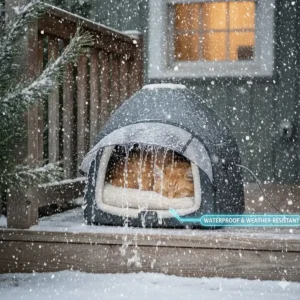
Waterproofing: Look for IP ratings (like Texsens’s IP68) or manufacturer specifications for water resistance. The heating element must be protected from moisture, while the cord connection point needs sealed construction.
Automatic Shutoff: While less common in outdoor models, some premium units include overheat protection that automatically cuts power if internal temperature exceeds safe limits.
Choosing the Right Weatherproof Heated Bed
Size Considerations
Single Cat: 18″ x 14″ to 20″ x 16″ provides adequate space for one cat to curl up comfortably. The K&H Lectro-Soft Small or Petace 19.7″ x 15.7″ work well.
Multiple Cats (2-3): Look for 24″ x 19″ minimum. Texsens (25″ x 13″) or Pecute with their expanded designs accommodate shared warmth.
Colonies (4+): The K&H Multi-Kitty A-Frame (35″ x 20.5″) or multiple smaller shelters distributed around your property work best.
Pro Tip: Cats instinctively curl into balls when cold, reducing their surface area. A slightly smaller bed (where they fit snugly when curled) retains heat better than oversized options where warmth dissipates.
Climate-Specific Features
Mild Winters (rarely below 32°F): A simple heating pad inside a basic shelter suffices. The Petace Outdoor Heated Cat Bed provides adequate warmth.
Moderate Winters (20-32°F regularly): Insulated shelters with heating become necessary. K&H Heated Outdoor Cat House or Texsens deliver reliable protection.
Severe Winters (below 20°F frequently): Multi-layer insulation with quality heating is non-negotiable. Pecute’s 6-layer system or GUTINNEEN’s comprehensive wood construction excel here.
Extreme Climates (below 0°F): Consider multiple heating solutions or cluster shelters together. K&H Multi-Kitty A-Frame allows cats to share body heat alongside electrical warming.
Placement Strategies
Optimal placement dramatically impacts effectiveness:
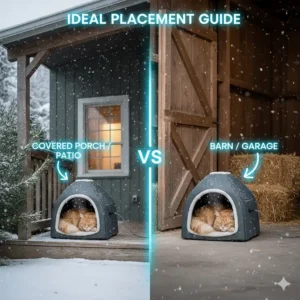
Elevation: Raise shelters 6-12″ off ground using bricks, pallets, or integrated legs. Ground contact steals heat through conduction.
Wind Blocks: Position entrances away from prevailing winds. Use buildings, fences, or natural barriers as windbreaks.
Water Drainage: Ensure rain flows away from the shelter. Slope matters—even slight inclines prevent pooling.
Predator Protection: Place in areas with escape routes. Cats need to see potential threats approaching.
Electrical Access: Outdoor-rated extension cords rated for the wattage are acceptable for reaching power sources. GFCI-protected outlets add safety.
DIY vs. Pre-Made: Making the Decision
When DIY Makes Sense
Budget constraints, customization needs, or the satisfaction of building can make DIY attractive. A plastic storage tote, Styrofoam insulation, and a heating pad create functional shelters for $30-40 in materials.
Advantages:
- Cost savings (potentially 40-60% less)
- Custom sizing for specific spaces
- Immediate availability of materials
- Personal satisfaction
Disadvantages:
- Time investment (2-4 hours typically)
- No safety certification for electrical components
- Waterproofing challenges
- Durability concerns with homemade construction
When Pre-Made Wins
Commercial heated cat bed for outdoor cats products offer tested designs, safety certifications, and warranties that DIY can’t match.
Advantages:
- MET/UL safety certification
- Engineered weatherproofing
- Manufacturer warranties (typically 1 year)
- Proven designs with user feedback
- Professional appearance
Disadvantages:
- Higher upfront cost
- Fixed sizes and configurations
- Shipping wait times
- Less customization
My Recommendation: If you’re caring for a single outdoor cat and have construction skills, DIY can work well. For colonies, multiple cats, or extreme climates, the safety and reliability of commercial products justify the expense. The peace of mind from MET-certified electrical components alone is worth the investment.
Installation and Maintenance Guide
Setting Up Your Heated Cat Bed
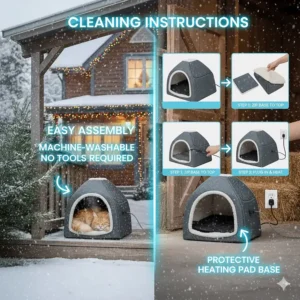
Step 1: Location Selection Scout potential sites before purchasing. Measure available space, check electrical outlet proximity (max 25′ for most extension cords), and observe where cats currently shelter.
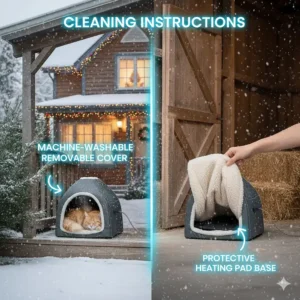
Step 2: Shelter Assembly Follow manufacturer instructions precisely. Most modern shelters feature tool-free assembly with pre-drilled holes. The K&H houses typically assemble in 15-20 minutes, while the GUTINNEEN’s wood construction might require 30-40 minutes.
Step 3: Heating Pad Installation If using a separate pad (like K&H Lectro-Soft), release the air valve and allow 24 hours for full expansion before activating. Place the pad on a flat, hard surface inside the shelter—not directly on insulation, which can reduce effectiveness.
Step 4: Bedding Layer Add straw (never hay or fabric) over the heating pad. Straw repels moisture and allows cats to burrow, creating insulating air pockets. A 3-4″ layer works well.
Step 5: Power Connection Use outdoor-rated extension cords if necessary. Ensure all connections stay dry using weatherproof junction boxes. GFCI outlets provide additional safety against electrical faults.
Step 6: Door Flap Adjustment Most shelters include clear vinyl door flaps. Adjust height so cats can enter but wind/snow can’t. In extremely cold conditions, double-layer flaps help.
Seasonal Maintenance Tasks
Weekly (During Winter):
- Check water sources (prevent freezing)
- Replenish food supplies
- Inspect for ice buildup around entrances
- Verify heating pad functionality (touch test after cat leaves)
Monthly:
- Replace soiled straw bedding
- Clean washable covers (machine wash cold, line dry)
- Inspect power cords for damage
- Check shelter stability (wind can shift structures)
Seasonally:
- Spring: Deep clean entire shelter, store heating elements
- Fall: Test electrical components before winter, replace worn bedding
- Year-round: Monitor cat usage patterns (multiple cats may need additional shelters)
Troubleshooting Common Issues
Problem: Heating pad doesn’t feel warm Solution: This is normal! Pads only reach full temperature under pressure. Test by placing a pillow on top for 20-30 minutes, then feeling underneath.
Problem: Cats won’t use the shelter Solution: Patience is key. Place food near entrance, gradually moving it inside. Add worn clothing with your scent. Some cats need 2-3 weeks to accept new shelters.
Problem: Interior feels damp Solution: Improve ventilation with small upper vents, ensure proper elevation, and use straw bedding that resists moisture. Never use fabric, which absorbs and freezes.
Problem: Multiple cats fighting over space Solution: Add a second shelter. Even if only one has heating, cats will rotate, sharing warmth.
Cost Analysis: Investment vs. Value
Budget Breakdown by Category
Entry Level ($35-50): Products like K&H Lectro-Soft Outdoor Heated Bed or Petace heating pads provide essential warmth but require existing shelter structures. Perfect for DIY enthusiasts or those with basic outdoor enclosures already in place.
Mid-Range ($55-90): Complete solutions like Texsens or Pecute deliver shelter plus heating in weatherproof packages. Best value for most cat caregivers—you get safety certification, proven designs, and manufacturer support.
Premium ($90-130): GUTINNEEN’s wood construction or K&H’s Multi-Kitty A-Frame offer enhanced durability, larger capacity, or aesthetic appeal. Justified for permanent colony management or when appearance matters.
Operating Costs
Let’s calculate actual electricity expenses:
K&H Lectro-Soft (20W) running 24/7 for 90 winter days: 20W × 24 hours × 90 days = 43.2 kWh At national average $0.14/kWh = $6.05 per season
Petace 40W pad: 40W × 24 hours × 90 days = 86.4 kWh At $0.14/kWh = $12.10 per season
Even the largest 60W units cost under $20 per winter. These efficient systems use less power than a standard light bulb running continuously.
Long-Term Value Calculation
Consider a 3-year comparison:
DIY Approach:
- Initial materials: $35
- Heating pad replacement (year 2): $25
- Rebuild shelter (year 3): $35
- Total: $95
Mid-Range Pre-Made (Texsens at $60):
- Initial purchase: $60
- Operating costs (3 winters): $36
- Total: $96
Premium (GUTINNEEN at $100):
- Initial purchase: $100
- Operating costs (3 winters): $36
- Potential resale value: $30
- Net cost: $106
The differences narrow considerably over time. Factor in the safety certification, warranty coverage, and proven weatherproofing, and commercial products often deliver superior value.
Safety and Health Considerations
Electrical Safety Protocols
Never compromise on electrical safety when dealing with stray cat warmth solutions. Follow these non-negotiable rules:
Always Use Certified Products: MET Labs or UL certification isn’t just a badge—it represents rigorous testing for electrical safety, fire hazards, and durability under outdoor conditions. Every product in our top 7 carries proper certification.
GFCI Protection: Ground Fault Circuit Interrupter outlets detect current leaks and shut off power instantly. Essential for outdoor electrical applications. Available at hardware stores for $15-20, they’re worth every penny.
Proper Extension Cords: Use outdoor-rated cords (marked for outdoor use) rated for the combined wattage of your heating elements. A 12-gauge outdoor extension cord handles up to 1,800 watts—more than sufficient for multiple heating pads.
Weather Protection: Even “outdoor” cords benefit from protection. Weatherproof junction boxes ($10-15 at hardware stores) keep connections dry and prevent moisture infiltration.
Regular Inspections: Monthly cord checks prevent disasters. Look for:
- Fraying or exposed wires
- Discoloration (sign of overheating)
- Melted insulation
- Loose connections
- Chew marks
Replace damaged cords immediately—don’t attempt repairs on outdoor electrical equipment.
Preventing Burns and Overheating
Quality heated cat bed for outdoor cats products automatically regulate temperature, but understanding the risks ensures safety:
How Burns Occur: Cat skin tolerates 102°F comfortably (their body temperature). Above 110°F, prolonged contact causes burns. Reputable heated beds max out around 102-108°F—well below danger levels.
Warning Signs:
- Redness on paw pads or belly (contact areas)
- Excessive licking of belly or paws
- Reluctance to use heated bed
- Visible blistering (rare, seek veterinary care immediately)
Prevention Measures:
- Always provide unheated resting areas
- Never use human heating pads (they get too hot)
- Don’t stack blankets on heating elements (traps heat)
- Monitor cats with health conditions more closely
Temperature Testing: Before introducing cats, test with your bare hand. Place it on the heating surface for 60 seconds. It should feel pleasantly warm, never hot. If you can’t comfortably keep your hand there, it’s too hot for cats.
Health Benefits Beyond Warmth
Quality cold weather cat care delivers benefits extending beyond simple temperature regulation:
Arthritis Relief: According to veterinarians, warmth helps cats with arthritis by improving joint flexibility and reducing pain. Senior cats particularly benefit from heated beds.
Immune System Support: Chronic cold stress suppresses immune function. Maintaining comfortable body temperature allows cats’ immune systems to function optimally.
Energy Conservation: Cats burn significant calories generating body heat in cold weather. Access to external warmth preserves energy for fighting illness, healing injuries, and maintaining healthy weight.
Reduced Stress: Constant cold creates chronic stress, elevating cortisol levels. Comfortable cats are calmer, healthier cats.
Injury Prevention: Hypothermic cats make poor decisions—seeking warmth in dangerous places like car engines. Proper shelters with heating keep cats safely contained.
Community Cat Care Best Practices
Working with TNR Programs
Trap-Neuter-Return programs reduce feral cat populations humanely. Your heated feral cat shelter becomes part of a comprehensive care strategy:
Colony Mapping: Document which cats use which shelters. This helps identify newcomers and track population changes.
Feeding Schedules: Coordinate feeding times with shelter checks. This ensures cats associate the shelter location with food and warmth.
Winter TNR Challenges: Very cold weather complicates TNR efforts. Some programs pause trapping during extreme cold. Your heated shelters become even more critical as temporary recovery areas for recently neutered cats.
Collaboration: Connect with local TNR organizations. They may provide:
- Discounted or free shelter materials
- Veterinary support for medical issues
- Additional caregivers to share responsibility
- Educational resources
Legal and Ethical Considerations
Outdoor cat feeding and sheltering involves legal and social dimensions:
Local Ordinances: Some municipalities regulate feeding wild animals. Research local laws before establishing feeding stations. Many areas have specific provisions for managed feral cat colonies.
Neighbor Relations: Open communication prevents complaints. Explaining your TNR involvement and showing well-maintained shelters often converts skeptics into supporters.
Property Owner Permission: If placing shelters on property you don’t own, get written permission. This protects you legally and ensures shelters won’t be removed.
Ethical Feeding: Never create dependency then abandon cats. If you start a feeding program, commit to consistency or arrange backup caregivers.
Special Considerations for Different Cat Populations
Feral vs. Stray vs. Outdoor Pets
Understanding the difference shapes your approach:
Feral Cats:
- Never socialized to humans
- Extremely wary, won’t approach even for food
- Need shelters placed in low-traffic areas
- Prefer multiple small shelters over large communal ones
- May take weeks to try new shelters
Stray Cats:
- Previously owned, lost or abandoned
- May approach humans or seek interaction
- Often accept shelters more quickly
- Higher likelihood of being redomesticated
- Microchip scanning recommended
Outdoor Pets:
- Owned cats allowed outside
- Generally well-socialized
- May visit your shelters opportunistically
- Usually have indoor access elsewhere
Tailor your outdoor cat survival strategy to the population you’re serving. Feral colonies benefit from multiple smaller shelters spread across territory, while strays might appreciate a single larger, more visible shelter.
Pregnant and Nursing Cats
Female cats require special consideration during pregnancy and nursing:
Extra Warmth Needs: Pregnant cats and newborn kittens struggle with temperature regulation. Increase heating or add additional insulation during kitten season (typically March-September, but year-round in warm climates).
Privacy Requirements: Nursing mothers need secluded, protected spaces. Consider adding visual barriers or placing shelters in quieter locations.
Bedding Considerations: Replace straw more frequently around nursing mothers—kittens can get lost in deep bedding. A 2-3″ layer works better than 4-5″ during this period.
Multiple Exits Critical: Escape routes become even more important when vulnerable kittens are present. Never block secondary exits.
Frequently Asked Questions
❓ What temperature is too cold for outdoor cats?
❓ How do I know if my heated cat bed is working properly?
❓ Can I use a heated cat bed inside an unheated garage or shed?
❓ How many heated shelters do I need for a feral cat colony?
❓ Will heated cat beds attract unwanted wildlife like raccoons or possums?
Conclusion: Making the Right Choice for Your Outdoor Cats
Choosing the best heated cat bed for outdoor cats ultimately depends on your specific situation—climate severity, number of cats, budget constraints, and available space all play crucial roles. But one truth remains universal: every outdoor cat deserves warmth and shelter during winter’s harshest months.
Throughout this guide, we’ve examined seven exceptional products spanning the complete range from budget-friendly heating pads to premium insulated shelters. The K&H Lectro-Soft delivers unbeatable value for those on tight budgets or with existing shelters. Mid-range options like Texsens and Petace provide complete solutions balancing cost and performance. Premium buyers seeking maximum protection gravitate toward Pecute’s 6-layer insulation or GUTINNEEN’s elegant wood construction.
For colony managers caring for multiple cats, the K&H Multi-Kitty A-Frame eliminates the need for multiple separate shelters while encouraging beneficial body heat sharing. Each product carries proper safety certification, real-world testing, and thousands of satisfied customer reviews.
Remember: a heated cat bed for outdoor cats isn’t frivolous—it’s lifesaving equipment. Hypothermia claims feline lives every winter, yet simple interventions prevent these tragedies. Whether you’re establishing your first feral feeding station or upgrading existing colony infrastructure, the investment pays dividends in healthier, happier cats.
Start with one quality shelter. Observe how cats respond. Expand as needed. Before long, you’ll witness the transformation: cats that once shivered in car engines now sleep safely in warm, dry shelters. That’s the power of responsible outdoor cat care.
Winter is coming. Will you be ready?
Recommended for You
- 7 Best Electric Cat Beds 2026
- 7 Best Microchip Cat Feeders 2026: Stop Food Stealing Today
- Best Gravity Cat Feeders 2026: 7 Top Self-Feeding Solutions
Disclaimer: This article contains affiliate links. If you purchase products through these links, we may earn a small commission at no additional cost to you.
✨ Found this helpful? Share it with your friends! 💬🤗
