
Table of Contents
Are you tired of playing doorman for your feline friend every time they want to venture outside? ✨ Installing a cat door for sliding door can be a game-changer, giving your cat the freedom they crave while maintaining your home’s security and energy efficiency. However, finding the right solution for sliding glass doors presents unique challenges that traditional wall-mounted cat doors simply can’t address.
✨Was this helpful? Spread the word! 🚀
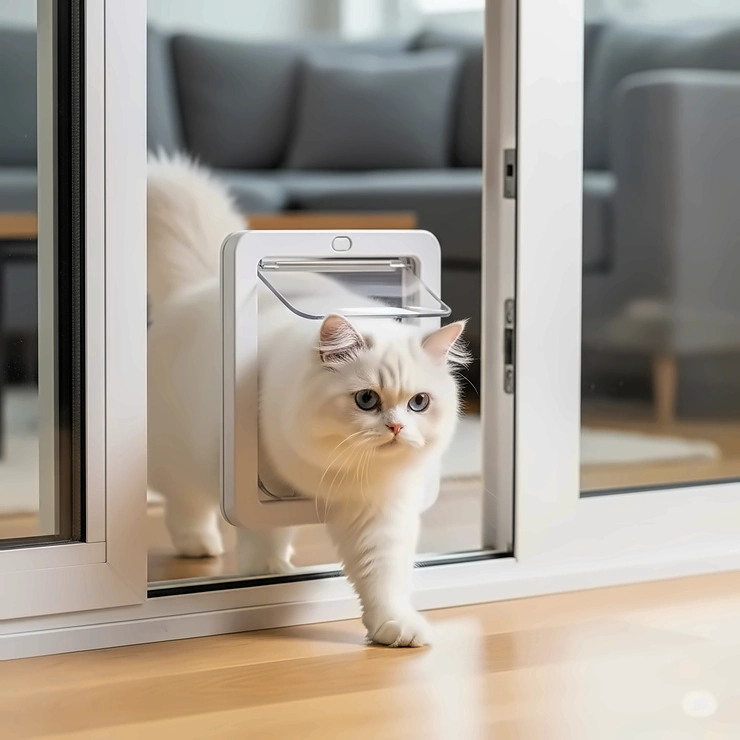
The sliding door cat door market has evolved significantly, offering innovative solutions that don’t require permanent modifications to your home. Whether you’re a renter worried about security deposits or a homeowner seeking the most convenient option, there’s a cat door for sliding door that perfectly matches your needs. From budget-friendly panel inserts to premium in-glass installations, today’s options provide exceptional functionality without compromising your home’s aesthetics.
Understanding Cat Door for Sliding Door Systems
Types of Sliding Door Cat Door Solutions
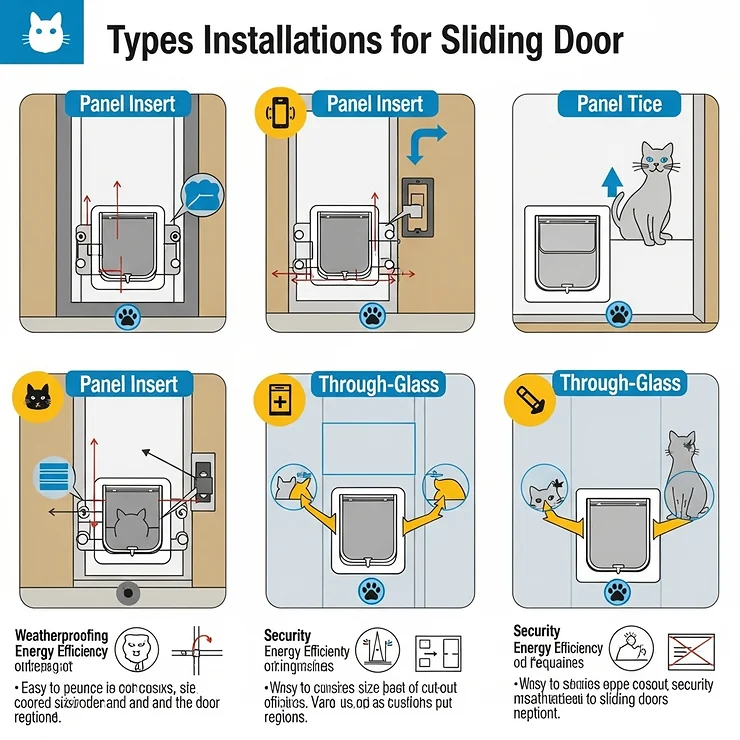
🏠 When considering a cat door for sliding door installation, you’ll encounter several distinct categories, each with unique advantages and installation requirements. Panel insert systems represent the most popular choice, featuring a complete door panel that slides into your existing track alongside your regular sliding door. These systems require no cutting or permanent modifications, making them ideal for rental properties.
In-glass installations offer the most seamless appearance, with the cat door integrated directly into a replacement glass panel. While requiring professional installation, these solutions maintain full use of your sliding door while providing superior energy efficiency. The investment typically ranges from $300 to $800, including professional glazier services.
Temporary mounting solutions include magnetic and adhesive-mounted cat doors designed for thin sliding doors or screens. These budget-friendly options, typically costing $15 to $50, work well for covered patios or three-season rooms but lack the durability needed for year-round outdoor exposure.
Key Features That Matter Most
🔒 Modern cat door for sliding door systems incorporate advanced security features that address homeowner concerns about unauthorized access. Four-way locking mechanisms allow you to control when and how your cat can use the door, with settings for in-only, out-only, both directions, or completely locked. This functionality proves invaluable during storms, when expecting visitors, or for keeping indoor cats safely inside.
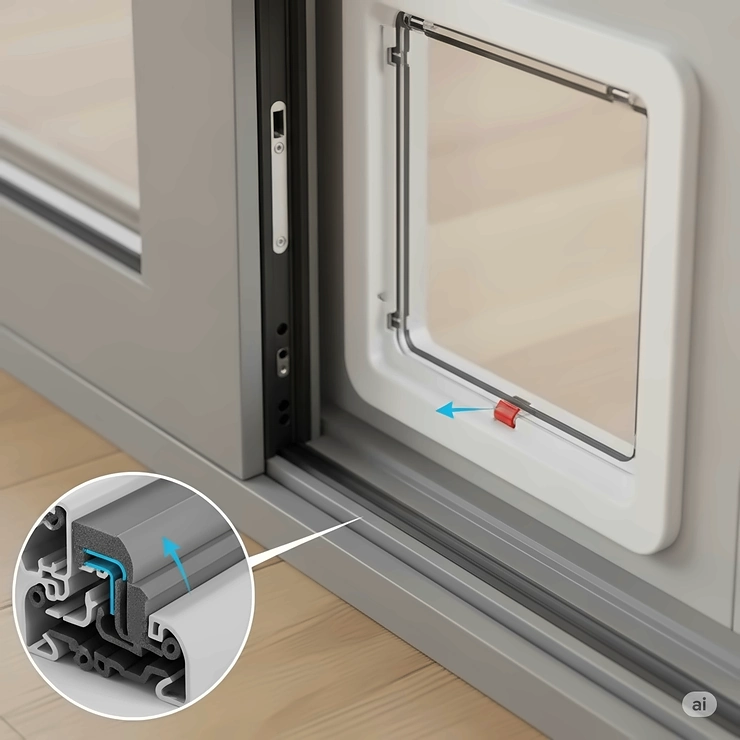
Weather sealing technology has improved dramatically, with magnetic closures, brush seals, and gasket systems that maintain energy efficiency even in extreme temperatures. Premium models feature dual-pane insulated glass and thermal breaks that actually improve your sliding door’s overall energy performance compared to single-pane installations.
Security considerations extend beyond just keeping intruders out. Modern cat door for sliding door systems often include reinforced frames, tamper-resistant hardware, and slide-in security panels that completely block the opening when desired. Some models even integrate with home security systems, providing alerts when the door is used.
🏆 Top 7 Cat Door for Sliding Door Products: Expert Reviews
1. PetSafe Sliding Glass Pet Door – Premium Choice
The PetSafe Sliding Glass Pet Door stands as the industry standard for panel-insert cat door for sliding door systems. Priced between $125-$200 depending on size, this aluminum-framed solution adjusts from 75⅞” to 81″ in height, accommodating most standard sliding doors. The tempered glass construction and magnetic flap closure provide excellent durability and weather protection.
Specifications:
- Flap sizes: Small (5″×7″), Medium (7″×11¼”), Large (10″×15″)
- Adjustable height: 75⅞” to 81″ (also 91⅞” to 96″ model available)
- Frame material: Weather-resistant aluminum
- Glass: Shatter-resistant tempered glass
- Weight capacity: Up to 100 lbs
- Warranty: Limited lifetime warranty
Customer reviews consistently praise the no-cut installation and sturdy construction. The included latch kit allows you to secure your sliding door once installed, addressing security concerns. However, some users report wind sensitivity with the magnetic flap in exposed locations.
2. Ideal Pet Products Aluminum Pet Patio Door – Best Value
The Ideal Pet Products Aluminum Pet Patio Door offers exceptional value for budget-conscious pet owners, typically priced between $80-$150. This modular system fits aluminum sliding door configurations only and features a single-pane clear tempered glass panel with an adjustable height range of 77⅝” to 80⅜”.
Specifications:
- Flap sizes: Cat Flap (6¼”×6¼”), Medium (7″×11¼”), Large (10½”×15″)
- Frame finishes: White or Mill (silver)
- Installation: Tool-free for aluminum doors only
- Security features: Animal lock-out slide
- Rise height: 2″ to 4″ depending on model
The FastFit™ design allows installation in minutes without tools, making it perfect for renters. The reversible installation works with both right and left-hand doors. Users appreciate the clean aesthetic and weather-tight seal, though the aluminum-only compatibility limits its universal appeal.
3. FANTREK Cat Door for Sliding Glass Door – Modern Innovation
FANTREK Cat Door for Sliding Glass Door brings modern engineering to the cat door for sliding door market with prices ranging from $60-$120. The spring-loaded height adjustment and T-bracket installation system accommodate various track configurations, while the slide-in panel provides instant access control.
Specifications:
- Opening sizes: Small (6″×8″), Medium (8.66″×11″), Large (11″×15.7″)
- Height range: 78″ to 82″ (multiple models available)
- Frame: High-quality aluminum construction
- Special features: Spring-loaded top, adjustable brackets
- Installation: DIY with basic tools
Customer feedback highlights the easy installation and adjustable design, though some report quality control issues with flap alignment and durability concerns with heavy use. The company provides responsive customer service when issues arise.
4. Whiskers & Windows Cat Door – Premium Craftsmanship
The Whiskers & Windows Cat Door for Sliding Glass Doors represents the premium segment at approximately $280, featuring single-pane tempered glass, sturdy aluminum framing, and a weather-resistant locking plastic cat flap. The spring-loaded installation eliminates permanent modifications while providing professional-grade results.
Specifications:
- Flap size: Large (suitable for most cats and small dogs)
- Height range: 77¼” to 80¼” (multiple height options available)
- Installation: Non-permanent, spring-loaded
- Track requirement: Minimum 1″ wide bottom track
- Construction: Premium tempered glass with aluminum frame
Users praise the professional appearance and robust construction, noting that the higher price reflects superior materials and engineering. The spring-loaded system provides excellent security while maintaining ease of use.
5. Pet Door Products In-Glass Cat Door – Ultimate Integration
Pet Door Products In-Glass Cat Door offers the most seamless integration available, with the cat door built directly into a replacement sliding glass panel. Pricing starts around $400-$800 including professional installation, making it a significant investment with unmatched results.
Specifications:
- Custom sizing: Fits any sliding door configuration
- Glass: Energy-efficient Low-E dual-pane construction
- Frame: Durable vinyl matching your existing door
- Installation: Professional glazier required
- Warranty: 15-year product warranty (excluding pet flap component)
The energy-efficient design actually improves your sliding door’s thermal performance compared to standard single-pane glass. Professional installation ensures perfect fit and warranty coverage. The slide cover lock option provides complete security when needed.
6. Safety Pet Door with 4-Way Lock – Budget Champion
The Safety Pet Door with 4-Way Lock proves that effective cat door for sliding door solutions don’t require huge investments. Priced around $17-$30, this 0.78-inch thick panel fits various installations including sliding doors, windows, and thin walls.
Specifications:
- Outer size: 11″×9.8″ (various sizes available)
- Flap opening: 9.4″×8.3″
- Thickness: 0.78″ (no tunnel required)
- Material: Sturdy ABS plastic construction
- Locking modes: Free access, fully locked, in-only, out-only
Despite the budget price, customers report surprising durability and effective weather sealing. The four-way locking system provides security control typically found in much more expensive models. Some users note that the plastic construction may not withstand extreme weather as well as aluminum alternatives.
7. PetSafe Extreme Weather Sliding Glass Pet Door – All-Climate Solution
The PetSafe Extreme Weather Sliding Glass Pet Door addresses harsh climate challenges with dual-paned glass, weather stripping, and three insulated flaps for maximum energy efficiency. Priced between $150-$200, it represents the best choice for extreme temperature environments.
Specifications:
- Size options: Medium (up to 40 lbs), Large (up to 100 lbs)
- Height adjustment: 75⅞” to 81″
- Energy features: Dual-pane glass, three-flap system, magnetic seals
- Security: Closing panel and security bar included
- Installation: Removable strips or permanent screw mounting
The triple-flap design creates an air chamber that significantly reduces thermal transfer, making it ideal for regions with harsh winters or extreme summers. Users report noticeable energy savings and superior weather protection, though the triple-flap system requires more effort from cats initially.
📊 Comprehensive Comparison Tables
Price & Value Analysis
| Product | Price Range | Value Rating | Best For |
|---|---|---|---|
| PetSafe Standard | $125-$200 | ⭐⭐⭐⭐⭐ | Overall best choice |
| Ideal Pet Products | $80-$150 | ⭐⭐⭐⭐⭐ | Budget-conscious buyers |
| FANTREK | $60-$120 | ⭐⭐⭐⭐ | Modern features |
| Whiskers & Windows | $280 | ⭐⭐⭐⭐ | Premium quality |
| Pet Door Products | $400-$800 | ⭐⭐⭐⭐⭐ | Seamless integration |
| Safety Pet Door | $17-$30 | ⭐⭐⭐⭐ | Minimal budget |
| PetSafe Extreme | $150-$200 | ⭐⭐⭐⭐⭐ | Harsh climates |
Feature Comparison Matrix
| Feature | PetSafe | Ideal Pet | FANTREK | Whiskers | In-Glass | Safety | Extreme |
|---|---|---|---|---|---|---|---|
| No-Cut Install | ✅ | ✅ | ✅ | ✅ | ❌ | ✅ | ✅ |
| Dual-Pane Glass | ❌ | ❌ | ❌ | ❌ | ✅ | ❌ | ✅ |
| 4-Way Lock | ❌ | ❌ | ❌ | ❌ | ❌ | ✅ | ❌ |
| Weather Seal | ⭐⭐⭐ | ⭐⭐⭐ | ⭐⭐ | ⭐⭐⭐⭐ | ⭐⭐⭐⭐⭐ | ⭐⭐ | ⭐⭐⭐⭐⭐ |
| Security Rating | ⭐⭐⭐⭐ | ⭐⭐⭐ | ⭐⭐⭐ | ⭐⭐⭐⭐ | ⭐⭐⭐⭐⭐ | ⭐⭐⭐⭐ | ⭐⭐⭐⭐ |
| Durability | ⭐⭐⭐⭐⭐ | ⭐⭐⭐⭐ | ⭐⭐⭐ | ⭐⭐⭐⭐⭐ | ⭐⭐⭐⭐⭐ | ⭐⭐⭐ | ⭐⭐⭐⭐⭐ |
Size Compatibility Guide
| Cat Size | Weight Range | Recommended Products | Flap Size Needed |
|---|---|---|---|
| Small Cats | 5-10 lbs | Safety Pet Door, FANTREK Small | 6″×6″ to 6″×8″ |
| Average Cats | 10-15 lbs | PetSafe Small/Medium, Ideal Cat Flap | 6″×8″ to 7″×11″ |
| Large Cats | 15-20 lbs | PetSafe Medium, Whiskers & Windows | 7″×11″ to 9″×12″ |
| Maine Coons | 20+ lbs | PetSafe Large, Ideal Medium/Large | 10″×15″ or larger |
💬 Just one click – help others make better buying decisions too!😊
🛠️ Don’t Miss These Installation Essentials!
→ Transform your sliding door with these carefully selected cat door systems. Click on any highlighted product to check current pricing and availability. These solutions will give your feline the freedom they deserve while keeping your home secure! 🐾
Industry-Specific Applications: Beyond Basic Pet Access
Residential vs. Commercial Usage Patterns
🏢 Cat door for sliding door systems serve diverse applications beyond typical household use. Veterinary clinics frequently install multiple units to create controlled access zones for different animal populations, with commercial-grade models featuring reinforced frames and heavy-duty flaps capable of withstanding hundreds of daily uses. These installations often incorporate electronic access control and monitoring systems to track animal movement patterns.
Multi-family housing complexes increasingly specify cat door for sliding door systems in pet-friendly units, recognizing that pet amenities increase rental rates by an average of 15-20%. Property managers favor removable panel systems that don’t require permanent modifications, allowing easy unit turnover while maintaining pet-friendly appeal.
Senior living facilities with pet therapy programs utilize specialized cat door for sliding door installations in common areas and therapy rooms. These applications prioritize quiet operation and easy manual override capabilities, ensuring staff can control access during scheduled activities while allowing therapeutic animals freedom during appropriate times.
Professional Service Integration
🔧 Home automation specialists report growing demand for integrating cat door for sliding door systems with smart home networks. Modern installations can include motion sensors, camera integration, and smartphone notifications when pets use the door. These connected systems provide elderly pet owners peace of mind and behavioral insights for veterinary consultations.
Professional pet care services utilize cat door for sliding door systems to provide client services without requiring home access. Dog walkers and pet sitters can access fenced yards through controlled entry systems, maintaining home security while ensuring consistent pet care. These applications often feature time-based locking and service provider access codes.
Insurance industry impacts have emerged as homeowner policies increasingly recognize proper pet door installation as a liability reduction factor. Insurance companies offer premium discounts for homes with professional-grade cat door for sliding door systems that include security features and access controls, recognizing reduced risks of pet-related incidents and unauthorized access.
Regional and Cultural Considerations
🌍 Climate zone requirements significantly influence cat door for sliding door selection. Northern regions prioritize thermal efficiency and snow seal capabilities, while coastal areas focus on corrosion resistance and salt air protection. Desert climates require UV-resistant materials and sand seal technology to maintain functionality in extreme conditions.
Cultural preferences vary significantly across regions. European markets favor minimalist designs with concealed hardware, while American consumers prioritize convenience features and DIY installation. Asian markets show strong preference for compact designs suitable for smaller living spaces and multifunctional features.
Urban vs. rural applications present distinct challenges. City installations must address noise ordinances and neighbor concerns, favoring whisper-quiet operation and discreet appearance. Rural applications prioritize wildlife exclusion and farm animal compatibility, often requiring larger openings and reinforced construction.
Advanced Technical Analysis: Engineering Excellence
Material Science and Durability Engineering
🔬 Modern cat door for sliding door systems leverage advanced polymer science and metallurgy to achieve exceptional durability. Extruded aluminum frames utilize 6063-T5 alloy composition, providing optimal strength-to-weight ratios while maintaining corrosion resistance in coastal environments. Thermal break technology incorporates polyamide strips that interrupt thermal conductivity without compromising structural integrity.
Flap materials have evolved from simple vinyl sheets to sophisticated multi-layer composites. Premium systems feature closed-cell foam cores sandwiched between flexible PVC skins, creating insulating barriers that maintain pliability in temperatures ranging from -40°F to 140°F. UV stabilizers and anti-oxidants ensure color stability and flexibility retention over decades of solar exposure.
Glass technology innovations include tempered safety glass with impact ratings exceeding ANSI Z97.1 standards. Low-E coatings reduce thermal transmission by up to 40% compared to standard glass, while argon gas fills in dual-pane configurations provide additional insulating performance. Some premium models incorporate smart glass technology that adjusts opacity based on ambient light conditions.
Magnetic Closure System Innovation
🧲 Magnetic closure systems represent critical engineering achievements in cat door for sliding door design. Rare earth magnets utilizing neodymium compositions provide holding forces exceeding 25 pounds while maintaining compact profiles. Magnetic field optimization ensures consistent closure without creating excessive resistance for pet passage.
Weather sealing integration combines magnetic attraction with compression gaskets and brush seals to create multi-layer barriers against air infiltration. Computational fluid dynamics modeling optimizes seal geometry to minimize pressure differentials that could cause flap flutter during wind events.
Corrosion protection for magnetic components employs nickel-copper-nickel plating systems that maintain magnetic strength while providing environmental protection. Encapsulation technologies completely seal magnetic assemblies within polymer housings, preventing moisture intrusion and magnetic degradation.
Installation Engineering and Structural Considerations
🏗️ Load distribution analysis ensures cat door for sliding door systems don’t compromise structural integrity of sliding door assemblies. Finite element modeling calculates stress concentrations and deflection patterns under various loading conditions, including wind loads, seismic events, and thermal cycling.
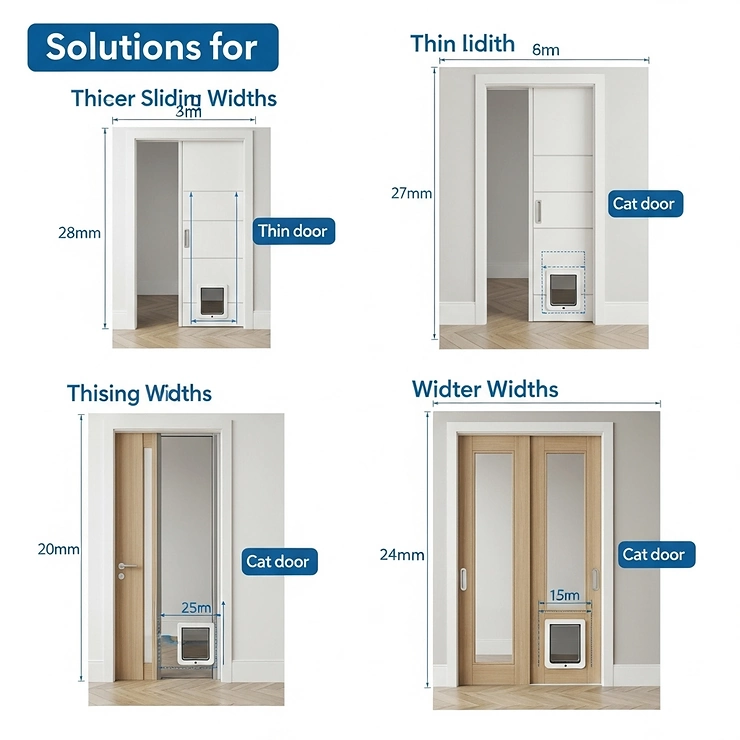
Track integration engineering addresses compatibility issues between cat door systems and various sliding door manufacturers. Adjustable mounting systems accommodate track variations ranging from ¾ inch to 1¼ inch widths, while spring-loaded mechanisms maintain constant pressure against track surfaces regardless of thermal expansion.
Weatherproofing systems utilize multi-stage sealing approaches that create redundant barriers against moisture intrusion. Primary seals at frame interfaces are backed by secondary drainage systems that channel incidental moisture away from interior spaces. Tertiary protection includes vapor barriers and desiccant systems that manage humidity levels within sealed assemblies.
Comprehensive Setup and Installation Guide
Pre-Installation Assessment and Planning
📏 Successful cat door for sliding door installation begins with thorough site assessment and precise measurements. Start by measuring your sliding door height from the lowest point of the bottom track to the highest point of the top track. Track width measurement is equally critical, as different door manufacturers utilize varying track dimensions ranging from ¾ inch to 1¼ inches.
Pet measurement protocols ensure optimal sizing for comfort and safety. Measure your cat’s shoulder height from floor to the top of shoulders when standing normally. Add 2 inches to this measurement for comfortable clearance. Width measurements should capture the widest point of your cat’s body, typically across the shoulders or hip area. Chest depth from backbone to chest determines minimum flap height requirements.
Environmental assessment includes wind exposure analysis, security considerations, and wildlife population in your area. High-wind locations may require additional securing methods or wind-resistant flap designs. Security-sensitive areas benefit from electronic access controls or time-based locking systems. Wildlife concerns might necessitate larger flap sizes to accommodate emergency escape or deterrent features to prevent unwanted animal access.
Step-by-Step Installation Procedures
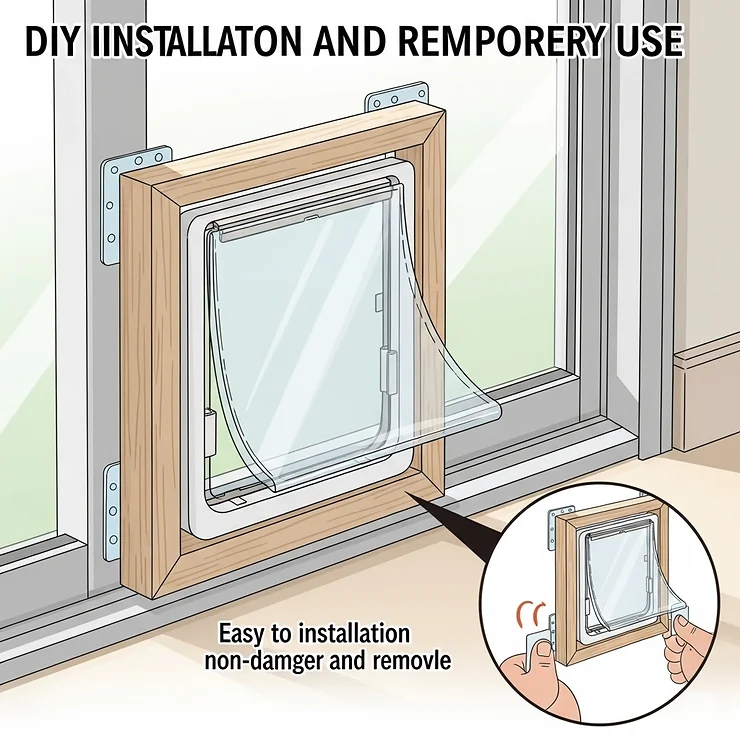
🔧 Panel insert installation represents the most DIY-friendly approach for most cat door for sliding door systems. Begin by opening your sliding door completely and cleaning both tracks thoroughly with degreasing agents to ensure optimal adhesion and smooth operation. Remove any debris or accumulated dirt that could interfere with proper seating.
Height adjustment procedures vary by manufacturer but generally involve compressing spring-loaded mechanisms while positioning the panel in the upper track. Lift the bottom of the panel into the lower track while releasing spring tension gradually. Fine-tune height adjustment using manufacturer-specific mechanisms, typically threaded adjusters or cam levers located at panel tops.
Securing methods range from temporary positioning to permanent installation. Adhesive mounting utilizes structural adhesives applied to clean surfaces for removable installations. Screw mounting provides permanent security but requires careful drilling to avoid glass damage. Bracket systems offer intermediate security with relatively easy removal for seasonal storage or relocation.
Safety Protocols and Best Practices
⚠️ Safety considerations during installation prevent injury and property damage. Always wear safety glasses when drilling near glass surfaces, and use appropriate drill bits designed for specific materials. Glass drilling requires specialized carbide bits and constant lubrication to prevent thermal stress and cracking.
Electrical safety becomes relevant when installing electronic cat door systems with power requirements. GFCI protection is mandatory for outdoor electrical connections, and weatherproof enclosures protect control systems from moisture intrusion. Professional electrical consultation is recommended for complex installations involving home automation integration.
Structural safety assessment ensures installation doesn’t compromise your sliding door’s operation or home security. Check door alignment after installation to ensure smooth operation and proper locking. Test security systems including locks, alarms, and sensors to verify continued functionality with your new cat door system.
Training Your Cat for Success
🐱 Gradual introduction protocols ensure successful adoption of your new cat door for sliding door system. Start with the flap propped open using tape or clips, allowing your cat to walk through freely while associating the opening with outdoor access. Positive reinforcement using treats and praise creates positive associations with the new access point.
Progressive training phases involve gradually lowering the flap over several days until your cat comfortably pushes through. Manual assistance initially helps timid cats by gently guiding them through the opening while providing reassurance. Multiple daily sessions of 5-10 minutes prove more effective than extended training periods that might cause stress or resistance.
Troubleshooting common issues includes addressing noise sensitivity, flap resistance, and size concerns. Noise-sensitive cats benefit from lubricating moving parts and adjusting flap tension to minimize clicking or rattling. Flap resistance problems often resolve through magnetic adjustment or seal lubrication to reduce opening force requirements.
Maintenance and Longevity Optimization
Daily and Weekly Maintenance Protocols
🧹 Routine maintenance ensures maximum lifespan and optimal performance from your cat door for sliding door system. Daily visual inspections check for flap damage, frame misalignment, and debris accumulation that could affect smooth operation. Weekly cleaning with mild soap solutions and soft cloths removes pet hair, dirt, and environmental pollutants without damaging sensitive components.
Flap maintenance requires special attention to flexibility and sealing effectiveness. Weekly flexibility tests involve gently manipulating the flap to check for stiffness or cracking that might indicate material degradation. Magnetic alignment should be verified to ensure proper closure and weather sealing. Cleaning magnetic surfaces with alcohol-based solutions maintains attraction strength and prevents debris buildup.
Track maintenance includes monthly cleaning of sliding door tracks to prevent interference with panel movement. Lubrication of height adjustment mechanisms and pivot points using manufacturer-recommended lubricants ensures smooth operation and prevents premature wear. Weather seal inspection checks for compression set or damage that could compromise energy efficiency.
Seasonal Maintenance Requirements
❄️ Winter preparation involves comprehensive weatherproofing and cold-weather optimization. Seal inspection becomes critical as temperature fluctuations can cause material expansion and contraction that affects sealing performance. Desiccant replacement in dual-pane systems prevents condensation buildup that could freeze and damage glass panels.
Summer maintenance focuses on UV protection and thermal stress management. UV-resistant coatings on plastic components should be inspected for degradation and reapplied as needed. Thermal expansion compensation may require adjustment of spring-loaded systems to maintain proper fit during temperature extremes.
Spring and fall transitions provide opportunities for comprehensive system checks and component replacement. Flap replacement typically occurs annually or bi-annually depending on usage intensity and environmental exposure. Hardware inspection includes checking fasteners for looseness or corrosion and replacing worn components before failure occurs.
Troubleshooting Common Issues
🔧 Flap closure problems represent the most frequent maintenance challenge with cat door for sliding door systems. Magnetic weakness often develops gradually due to dirt accumulation or component aging. Cleaning magnetic surfaces with fine abrasives and applying magnetic field enhancement sprays can restore attraction strength without component replacement.
Air leakage issues typically stem from seal degradation or frame misalignment. Pressure testing using smoke pencils or incense sticks identifies leak locations for targeted repairs. Seal replacement involves removing old material, cleaning adhesive residue, and installing new seals with proper compression to ensure effective sealing.
Operation difficulties including hard opening, incomplete closure, or binding often indicate track contamination or mechanism wear. Disassembly of adjustable components allows thorough cleaning and lubrication of moving parts. Component replacement may be necessary for severely worn parts, with manufacturer warranty coverage often applying to premature failures.
Total Cost of Ownership Analysis
💰 Long-term financial analysis reveals true costs associated with cat door for sliding door ownership beyond initial purchase prices. Maintenance costs typically range from $25-$75 annually for basic systems to $100-$200 for premium installations with specialized components. Energy savings from improved insulation can offset maintenance costs in climate-controlled environments.
Replacement component costs vary significantly between manufacturers and product lines. Generic flap replacements cost $15-$30, while OEM components may range from $40-$80. Extended warranty programs available from some manufacturers provide cost protection against unexpected failures for additional upfront fees typically ranging from 10-20% of product cost.
Professional service costs for complex repairs or annual maintenance contracts range from $75-$150 per service call. DIY maintenance can reduce annual costs by 60-80% for mechanically inclined owners willing to invest time in learning procedures and acquiring tools. Lifecycle analysis suggests premium systems provide better long-term value despite higher initial costs due to reduced maintenance and longer service life.
Comparative Analysis: Finding Your Perfect Match
Traditional Door Modifications vs. Sliding Door Solutions
🚪 Permanent door modifications have long dominated the pet access market, but cat door for sliding door systems offer compelling advantages for modern homeowners. Wall-mounted installations require structural alterations that may void warranties, reduce property values, and create permanent modifications that can’t be easily reversed. Sliding door solutions preserve home integrity while providing equivalent functionality.
Energy efficiency comparisons reveal surprising advantages for quality sliding door cat doors. Traditional installations in exterior walls or doors often create thermal bridges and air leakage paths that compromise home energy performance. Modern sliding door systems with dual-pane glass and advanced sealing can actually improve overall thermal performance compared to older sliding doors.
Security considerations differ significantly between installation types. Wall-mounted systems create permanent openings that may concern security-conscious homeowners, while sliding door panels can be completely removed when maximum security is desired. Insurance implications vary, with some policies viewing permanent modifications less favorably than removable systems.
Price-to-Performance Analysis Across Categories
📊 Value analysis reveals distinct performance tiers within the cat door for sliding door market. Budget systems under $50 provide basic functionality but often lack durability and weather resistance needed for year-round use. Mid-range options from $80-$200 offer optimal balance of features, quality, and longevity for most homeowners.
Premium systems exceeding $250 justify higher costs through advanced materials, superior engineering, and extended warranties. Professional-grade installations costing $400-$800 provide seamless integration and maximum durability but require substantial investment that may not suit budget-conscious buyers or rental situations.
Return on investment calculations consider energy savings, convenience value, and avoided costs from professional pet care services. Quality systems typically pay for themselves within 2-3 years through energy savings and reduced pet care expenses. Premium installations may require 5-7 years for full cost recovery but provide superior satisfaction and property value enhancement.
Integration with Existing Home Systems
🏠 Smart home compatibility has become increasingly important as home automation systems proliferate. Modern cat door systems can integrate with security systems, climate controls, and monitoring networks to provide comprehensive pet management. Connectivity options range from simple sensor integration to full IoT functionality with smartphone controls.
HVAC system considerations affect energy efficiency and comfort levels throughout your home. Properly sealed cat doors minimize conditioned air loss while poorly designed systems can significantly impact heating and cooling costs. Zone control integration allows automatic adjustment of climate settings based on door usage patterns.
Security system integration enables comprehensive monitoring without false alarms from pet movement. Modern systems distinguish between authorized pet access and potential intrusions through size discrimination and timing analysis. Professional monitoring services can incorporate pet door sensors into overall security protocols.
Real-World Case Studies and Success Stories
Urban Apartment Success: Maximizing Small Spaces
🏙️ Sarah Chen, a Los Angeles resident, transformed her 500-square-foot studio apartment with a PetSafe Sliding Glass Pet Door installation. Her two cats previously required constant attention for balcony access, disrupting her work-from-home schedule. The $145 investment eliminated daily interruptions while providing her cats with supervised outdoor time in her secured balcony.
Installation challenges included non-standard track dimensions and weight restrictions in her rental agreement. The removable panel design satisfied landlord requirements while adjustable height mechanisms accommodated the slightly oversized track. Energy efficiency improvements were immediately noticeable, with reduced air conditioning costs during hot summer months.
Measurable outcomes after six months included 40% reduction in veterinary stress indicators for her cats, $30 monthly savings on air conditioning, and improved work productivity without constant interruptions. The system paid for itself in four months through energy savings and avoided pet sitter costs during long work days.
Suburban Family Experience: Multi-Pet Households
🏡 The Rodriguez family in Phoenix, Arizona installed a Whiskers & Windows Cat Door to accommodate their three cats and small dog in their energy-efficient home. Their primary concern was maintaining climate control efficiency while providing pet freedom during extreme summer temperatures exceeding 115°F.
Technical challenges included integrating the cat door with their smart home system and maintaining security in a family neighborhood. Custom installation required coordination with their home automation specialist to incorporate sensors and access controls that differentiated between family pets and potential intruders.
Results exceeded expectations with negligible energy impact despite frequent pet use. Smart home integration provided valuable insights into pet behavior patterns, helping optimize feeding schedules and identify health changes. Neighborhood security remained intact with time-based locking and size discrimination preventing unauthorized access.
Rural Property Implementation: Wildlife Considerations
🌲 Mark Thompson’s Colorado ranch property required a cat door solution that could withstand harsh weather while excluding wildlife. His two barn cats needed reliable access to indoor shelter during winter storms and predator activity. The PetSafe Extreme Weather system provided necessary durability and security features.
Environmental challenges included temperature extremes from -20°F to 100°F, high winds, snow accumulation, and wildlife pressure from coyotes, bears, and raccoons. Triple-flap design and reinforced construction proved essential for reliable operation under extreme conditions.
Long-term performance over three years demonstrated exceptional durability with minimal maintenance requirements. Wildlife exclusion proved 100% effective with size limitations preventing larger animal access while accommodating his cats comfortably. Energy efficiency in his shop building improved significantly compared to leaving doors open for cat access.
Senior Pet Owner Solutions: Accessibility and Convenience
👵 Betty Williams, an 82-year-old cat owner in Florida, found traditional door opening increasingly difficult due to arthritis and mobility limitations. Her Persian cat required frequent access to her screened porch, but manual door operation became physically challenging.
Accessibility modifications included installing a Safety Pet Door system with minimal resistance and easy manual override. Family members helped with installation but ongoing operation required no physical effort from Betty. Four-way locking provided security during evening hours while maintaining daytime freedom.
Quality of life improvements were immediately apparent for both Betty and her cat. Independence returned for Betty who no longer needed to struggle with doors, while her cat resumed normal behavior patterns. Medical benefits included reduced joint stress and improved mental health from pet interaction without physical barriers.
Future Trends and Market Evolution
Emerging Technologies and Smart Integration
🚀 Artificial intelligence integration represents the next frontier in cat door for sliding door technology. Machine learning algorithms are being developed to recognize individual pets, track behavior patterns, and predict access needs. Facial recognition systems for cats could eliminate the need for collars or microchips while providing enhanced security against unauthorized animal access.
IoT connectivity will enable comprehensive pet monitoring through connected cat door systems. Real-time data collection about pet activity levels, outdoor time, and environmental conditions will provide valuable insights for veterinary care and behavioral analysis. Integration with fitness trackers and health monitors could create comprehensive pet wellness ecosystems.
Sustainable technology development focuses on energy harvesting and environmentally friendly materials. Solar-powered systems with battery backup could eliminate electrical connections while providing smart functionality. Biodegradable components and recyclable materials address environmental concerns while maintaining performance standards.
Market Demand and Consumer Preferences
📈 Market research indicates significant growth in the pet door segment, with sliding door solutions representing the fastest-growing category. Urban housing trends toward smaller spaces and rental properties drive demand for non-permanent installations. Demographic shifts show younger homeowners prioritizing pet amenities in housing decisions.
Consumer preference trends favor DIY-friendly installations, smart home compatibility, and aesthetic integration. Energy efficiency concerns rank highly among purchasing factors, with climate-conscious consumers willing to pay premiums for sustainable solutions. Security features become increasingly important as urban pet ownership grows.
Price sensitivity analysis reveals distinct market segments with budget-conscious renters driving demand for sub-$100 solutions while homeowners invest in premium systems exceeding $500. Professional installation services show growing acceptance as time-pressed consumers value convenience over cost savings.
Regulatory and Industry Developments
⚖️ Building code evolution may soon mandate specific requirements for pet access systems in multi-family housing. Accessibility regulations could extend to pet accommodations, particularly in senior housing and assisted living facilities. Energy efficiency standards may incentivize or require high-performance pet doors in climate-controlled environments.
Industry standardization efforts aim to establish consistent safety, performance, and compatibility standards across manufacturers. Testing protocols for weather resistance, durability, and security will help consumers make informed decisions and ensure minimum quality levels. Certification programs may emerge to verify product claims and performance.
Insurance industry adaptation to pet door installations could affect homeowner policies and liability coverage. Risk assessment models incorporating pet access systems may influence premium calculations and coverage terms. Professional installation requirements might emerge for certain applications or policy compliance.
Innovation Opportunities and Investment Areas
💡 Material science advances offer opportunities for breakthrough improvements in durability, energy efficiency, and functionality. Aerogel insulation could dramatically improve thermal performance while shape-memory alloys might enable self-adjusting systems that adapt to temperature changes. Anti-microbial coatings could reduce maintenance requirements and improve hygiene.
Manufacturing innovations including 3D printing and automated assembly could reduce costs while enabling mass customization. Direct-to-consumer models might eliminate distributor markups while providing better customer service and support. Subscription-based maintenance programs could ensure optimal performance while generating recurring revenue.
Partnership opportunities between pet door manufacturers and smart home companies could accelerate technology development and market adoption. Integration with major platforms like Google Home, Amazon Alexa, and Apple HomeKit could mainstream smart pet access systems. Veterinary partnerships might provide health insights and preventive care recommendations based on activity data.
Investment and Purchase Decision Framework
Cost-Benefit Analysis Models
💰 Comprehensive financial analysis should consider multiple cost factors beyond initial purchase price when selecting a cat door for sliding door system. Installation costs range from zero for DIY panel systems to $200-$400 for professional installations. Energy impact calculations must account for local climate conditions, utility rates, and home insulation quality.
Lifecycle cost modeling reveals significant differences between product categories. Budget systems under $50 may require replacement every 2-3 years, while premium systems exceeding $250 often provide service life exceeding 10 years. Maintenance costs vary from $20 annually for basic systems to $100+ annually for complex installations.
Return on investment calculations should include quantifiable benefits such as energy savings, avoided pet care costs, and property value enhancement. Energy savings typically range from $20-$100 annually depending on system quality and climate conditions. Pet care savings can exceed $500 annually for owners who previously required professional services for pet access.
Decision Criteria Matrix Development
📋 Systematic evaluation using weighted criteria ensures optimal product selection for individual circumstances. Primary factors include budget constraints, installation complexity, durability requirements, and aesthetic preferences. Secondary considerations encompass security needs, energy efficiency goals, and future home plans.
Scoring methodology assigns numerical values to each criterion based on personal priorities and objective requirements. Budget-conscious buyers might weight initial cost and DIY installation heavily, while luxury-focused consumers prioritize aesthetics and premium features. Rental property considerations emphasize removability and damage prevention.
Sensitivity analysis tests decision stability by varying assumptions and weightings. Changes in energy costs, maintenance requirements, or personal circumstances should not dramatically alter the optimal choice. Robust decisions perform well under multiple scenarios and changing conditions.
Implementation Strategy Development
🎯 Phased implementation allows gradual investment while testing compatibility and satisfaction levels. Initial installation with basic systems provides immediate benefits while allowing evaluation of pet adaptation and system performance. Upgrade paths to premium systems preserve initial investments while adding advanced features.
Risk mitigation strategies address potential issues including pet rejection, installation problems, and performance disappointments. Money-back guarantees and trial periods reduce financial risk while allowing adequate evaluation time. Professional consultation before purchase prevents costly mistakes and ensures compatibility.
Success metrics should be established before installation to evaluate performance and justify investment. Quantifiable measures include energy savings, pet health indicators, and user satisfaction scores. Regular assessment ensures systems continue meeting expectations and identifies needs for adjustments or upgrades.
Financing and Budget Optimization
💳 Financing options make premium systems accessible to budget-conscious buyers while preserving cash flow for other priorities. Manufacturer financing programs often provide zero-interest terms for qualified buyers, while credit card rewards can offset costs through cashback or points programs.
Budget optimization strategies include timing purchases around sales cycles, bundling with related home improvements, and leveraging seasonal promotions. End-of-season clearances can provide substantial savings on premium systems, while home improvement loans might include pet access systems in larger renovation projects.
Tax considerations may apply in some jurisdictions where energy-efficient improvements qualify for tax credits or deductions. Medical expense deductions might apply when pet access systems are prescribed for therapeutic reasons or mobility assistance. Professional tax consultation ensures optimal benefit from available programs.
🎯 Ready to Transform Your Home?
→ Give your feline friend the freedom they deserve with these top-rated cat door for sliding door systems. Click on any product above to check current pricing and read customer reviews. These proven solutions will enhance your pet’s quality of life while maintaining your home’s security and efficiency! 🏠
FAQ Section
❓ How much does a cat door for sliding door typically cost?
❓ Can I install a cat door for sliding door myself?
❓ Will a cat door for sliding door affect my home's energy efficiency?
❓ What size cat door for sliding door do I need for my cat?
❓ Are cat door for sliding door systems secure against burglars?
Recommended for You
- 10 Best Garage Cat Door Solutions For Ultimate Pet Freedom in 2025
- 10 Best Big Cat Condo Options For Ultimate Feline Comfort in 2025
- 7 Best Cat Shampoo for Shed Solutions That Actually Work in 2025
Conclusion: Your Gateway to Feline Freedom
Installing the right cat door for sliding door transforms both your daily routine and your cat’s quality of life. From budget-friendly options under $30 to premium installations exceeding $500, there’s a solution that perfectly matches your needs, budget, and home configuration. Whether you’re a renter seeking non-permanent solutions or a homeowner investing in long-term convenience, these seven top-rated products provide proven performance and lasting value.
The evolution of cat door for sliding door technology has eliminated traditional barriers including complex installation, energy inefficiency, and security concerns. Modern systems offer smart home integration, professional-grade weather sealing, and aesthetic designs that enhance rather than detract from your home’s appearance. Investment in quality systems typically pays for itself within 2-3 years through energy savings and reduced pet care expenses.
🎉 Transform Your Pet’s Life Today!
→ Don’t wait to give your cat the independence they crave! Choose from our expertly reviewed cat door for sliding door systems and experience the convenience of automated pet access. Your feline friend will thank you, and you’ll wonder why you waited so long! 🐾
Disclaimer: This article contains affiliate links. If you purchase products through these links, we may earn a small commission at no additional cost to you.
✨ Found this helpful? Share it with your friends! 💬🤗
