
Table of Contents
You love your cat, but you don’t have to spend a fortune to keep them happy and healthy. Finding the perfect cat tree under $100 is entirely possible in 2026, and I’m here to show you exactly which models deliver real value without compromising on quality. The market has evolved dramatically over the past few years, with budget-friendly options now offering features that used to be exclusive to premium models.
What most buyers don’t realize is that price doesn’t always correlate with durability or cat satisfaction. I’ve seen $300 cat trees collapse within months while budget models from brands like Frisco and Yaheetech outlast them by years. The secret lies in understanding which features actually matter to your cat versus which ones are just marketing fluff designed to empty your wallet.
In this comprehensive guide, I’ll walk you through seven exceptional cat tree options that won’t exceed your $100 budget. You’ll learn which models work best for different household situations, what red flags to watch for when shopping, and how to maximize your investment so your cat actually uses the tree instead of ignoring it. According to research from Cornell University’s College of Veterinary Medicine, providing appropriate scratching surfaces is essential for feline behavioral health, making a quality cat tree one of the smartest purchases you can make for your indoor cat.
Quick Comparison: Top Cat Tree Under $100 Models
| Model | Height | Best For | Key Feature | Price Range |
|---|---|---|---|---|
| Frisco 72-in Faux Fur | 72 inches | Multi-cat homes | 3 condos, 10 sisal posts | $85-$95 |
| Yaheetech 63-inch Multi-Level | 63 inches | Active cats | Hammock + condo combo | $70-$85 |
| Go Pet Club 72-inch | 72 inches | Large cats | Heavy-duty construction | $90-$100 |
| Frisco 20-in Compact | 20 inches | Small spaces | Window perch design | $35-$45 |
| Yaheetech Cactus 62-inch | 62 inches | Playful kittens | Unique cactus aesthetic | $75-$90 |
| Feandrea 56-inch Tower | 56 inches | Single cats | 11 scratching posts | $80-$95 |
| Go Pet Club 48-inch Corner | 48 inches | Corner placement | Space-saving design | $65-$80 |
Looking at this comparison, the standout value proposition becomes clear: taller doesn’t always mean better. The Frisco 20-inch model, despite being the shortest option here, might actually be the smartest choice for apartment dwellers or cats who prefer low-level lounging near windows. Meanwhile, the Yaheetech 63-inch delivers the best feature-to-price ratio for households wanting maximum entertainment value without hitting the $100 ceiling.
💬 Just one click — help others make better buying decisions too!😊
Top 7 Cat Tree Under $100: Expert Analysis
1. Frisco 72-in Faux Fur Cat Tree & Condo — The Multi-Cat Champion
When you need to accommodate multiple cats without spending premium prices, this towering Frisco model delivers everything your feline family requires. At 72 inches tall, it provides three separate condos where cats can retreat without territorial disputes, plus two perches that let each cat claim their own vantage point for surveying their domain.
Real-World Performance: The 10 sisal-wrapped scratching posts aren’t just decorative elements — they’re strategically distributed throughout the structure so cats can stretch and scratch at multiple heights, which matters more than you’d think. Cats instinctively need to scratch at different angles and elevations throughout the day, and this model accommodates that natural behavior pattern. The two scratching board ramps add horizontal scratching options for cats who prefer floor-level claw maintenance.
Who This Is For: If you have 2-3 cats or one particularly athletic feline who loves climbing, this tree justifies its position in the $85-$95 range. The stability from the larger base means it won’t topple when multiple cats are jumping between levels simultaneously — a common failure point with cheaper alternatives. Customer feedback consistently highlights how cats actually use all three condos rather than claiming just one, suggesting the spacing and sizing hit the sweet spot.
Pros:
✅ Three private condos eliminate territorial conflicts
✅ 10 scratching posts distributed at varying heights
✅ Hanging toys with pressure-release safety feature
Cons:
❌ Requires significant floor space (not ideal for studios)
❌ Assembly takes 45-60 minutes with two people
Value Verdict: Around $90 delivers the most cat tree per dollar in the budget category. This isn’t just cheap furniture — it’s a legitimate multi-cat solution that typically costs $150+ from other brands.
2. Yaheetech 63-Inch Multi-Level Cat Tree — Best Activity-to-Price Ratio
What separates this Yaheetech model from generic budget options is the thoughtful combination of a hammock and extended platforms that create genuine play circuits rather than just stacked perches. The 63-inch height hits the sweet spot where cats get meaningful vertical territory without the tree becoming unstable or overwhelming smaller rooms.
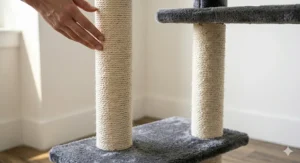
Practical Design Insight: The hammock attachment uses four adjustable strings with corner hooks, which means you can customize the tension based on your cat’s weight and preferences. This isn’t something you’ll find mentioned in product descriptions, but it makes the difference between a hammock your cat ignores and one they actually sleep in daily. The extended platform space provides legitimate room for cats to move around rather than forcing them into cramped perching positions.
Expert Commentary: Seven sisal-wrapped posts might sound excessive until you realize they’re supporting a 5+ foot structure that needs to remain stable when cats launch themselves from floor to top perch. Each post serves as both a scratching surface and a structural element, meaning the tree maintains integrity even after months of aggressive use. Natural sisal rope is significantly more durable than the synthetic alternatives some budget manufacturers use to cut costs.
Customer Experience Summary: Buyers consistently report this model lasting 2-3 years with daily use from multiple cats before needing replacement. The anti-toppling kit (included) allows wall anchoring for households with particularly energetic felines or those concerned about stability.
Pros:
✅ Hammock adds unique resting option cats love
✅ Extended platforms create actual movement space
✅ Anti-toppling kit included for wall anchoring
Cons: ❌ Hammock requires periodic tension adjustment
❌ Dark gray color shows fur more than lighter options
Value Verdict: In the $70-$85 range, you’re getting features typically found on $120+ models. The hammock alone adds $15-20 of value compared to standard perch-only designs.
3. Go Pet Club 72-Inch Cat Tree — Heavy-Duty Durability
Go Pet Club earned their reputation by over-engineering cat trees for the budget market, and this 72-inch model exemplifies that philosophy. What you’re paying for here isn’t fancy aesthetics — it’s particleboard density and construction quality that supports large cats (15+ pounds) without the wobbling or sagging that plagues cheaper alternatives.
Construction Reality: The 0.6-inch MDF boards provide genuine structural support, not the flimsy particleboard some manufacturers pass off as adequate. This matters enormously when you have a 20-pound Maine Coon launching themselves onto the top perch. Customer reviews frequently mention this tree surviving 4-5 years of heavy use, which translates to under $20 per year of use — far better economics than replacing a $50 tree annually.
Specification Breakdown: The sisal posts on beige models are 100% natural sisal (confirmed as of early 2026), though other color variations mix sisal with faux fur covering. If your cat is a serious scratcher, the beige version delivers better claw-maintenance value. The multiple condos feature solid walls rather than fabric construction, providing actual privacy and sound dampening that nervous cats appreciate.
Who Should Buy This: Large cat owners, multi-cat households, or anyone tired of replacing wobbly budget trees every 12 months. The initial investment sits in the $90-$100 range, but the longevity justifies choosing this over cheaper options that seem like bargains until they start falling apart.
Pros:
✅ Heavy-duty 0.6-inch MDF board construction
✅ Solid-wall condos provide genuine privacy
✅ Proven 4-5 year lifespan with proper care
Cons:
❌ Heavier weight makes repositioning difficult
❌ Beige color (100% sisal posts) has limited availability
Value Verdict: Around $95 buys you a tree that costs $19 per year over five years versus $50 annually for cheaper replacements. The math is compelling for anyone planning long-term.
4. Frisco 20-Inch Faux Fur Cat Tree — Compact Space Solution
Don’t let the modest 20-inch height fool you into thinking this is a compromise product. For window placement, single-cat households, or apartments where floor space is precious, this compact design delivers exactly what cats need without the vertical footprint of larger models.
The Window Strategy: Cats spend 30-60 minutes daily watching outdoor activity when given the opportunity, according to feline behavioral research. Positioning this 20-inch tree in front of a window transforms it from a simple scratching post into a premium entertainment center where your cat can lounge in the circular hammock while monitoring birds, squirrels, and neighborhood activity. The compact height means it doesn’t block your view while still giving cats their vantage point.
Feature Efficiency: Two sisal-wrapped posts might seem minimal, but they’re positioned to support both vertical and angled scratching — the two orientations cats naturally prefer. The dangling pom-poms include pressure-release mechanisms so aggressive players don’t accidentally hurt themselves, a safety detail often omitted from budget toys. The top hammock’s circular shape accommodates cats who curl up while sleeping, which is most of them.
Price Reality: In the $35-$45 range, this represents the absolute floor for quality cat furniture. Any cheaper and you’re typically dealing with unstable bases or scratching surfaces that shred within weeks. This model proves you can go budget without going cheap.
Pros:
✅ Fits in compact spaces without dominating rooms
✅ Perfect height for window placement
✅ Natural sisal rope on both posts
Cons:
❌ Only suitable for single cat households
❌ Limited climbing opportunities for active cats
Value Verdict: Around $40 makes this an exceptional secondary tree for multi-level homes or a perfect starter option for first-time cat owners testing whether their cat even likes cat trees.
5. Yaheetech Cactus Cat Tree 62-Inch — Aesthetic Meets Function
Most cat trees look like cat trees, which means they stick out awkwardly in any room with actual interior design. Yaheetech’s cactus-themed series breaks that pattern by creating structures that read as intentional decor elements while maintaining full functionality for feline needs.
Design Philosophy: The cat-ear shaped top perch isn’t just cute — it creates a raised foam edge that gives cats the cozy, enclosed feeling they instinctively seek when resting in elevated positions. This design detail addresses a common problem where cats ignore top perches because they feel too exposed. The green and brown color scheme integrates with plant-filled spaces or nature-inspired decor rather than clashing with it.
Functional Analysis: Beyond aesthetics, the 62-inch height provides legitimate climbing territory while the condo, hammock, and multiple platforms create distinct activity zones. The scratching posts are sisal-covered as expected, but the platform arrangement encourages vertical movement patterns that give cats genuine exercise rather than just elevated sleeping spots. The dangling ball toy is positioned where cats can actually reach it from multiple levels, unlike cheaper trees where toys dangle uselessly out of range.
Customer Insight: Buyers report that guests often compliment this tree as room decor before realizing it’s cat furniture, which matters if you’re trying to maintain a cohesive home aesthetic. The unique design also seems to increase cat engagement — perhaps because it doesn’t look like every other cat tree they’ve encountered.
Pros:
✅ Unique cactus design integrates with home decor
✅ Cat-ear perch provides cozy elevated resting spot
✅ Available in multiple heights (42in, 54in, 62in)
Cons:
❌ Green color may not match all decor styles
❌ Cactus branches can collect dust in crevices
Value Verdict: In the $75-$90 range, you’re paying a slight premium for aesthetic design, but the functional quality matches standard Yaheetech models. Worth it if you care about how furniture looks in your space.
6. Feandrea by SONGMICS 56-Inch Cat Tower — The Scratching Post Specialist
Feandrea differentiates their 56-inch tower by absolutely loading it with scratching surfaces — 11 sisal-wrapped posts in a single structure. For cats who scratch compulsively or households trying to redirect destructive scratching away from furniture, this concentration of scratching opportunities addresses the problem directly.
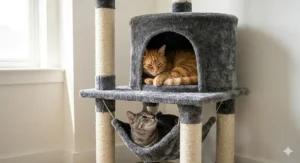
Behavioral Application: Research from UC Davis School of Veterinary Medicine demonstrates that cats need scratching surfaces in multiple locations and orientations throughout their territory. This model essentially creates a scratching post forest where cats can scratch vertically, horizontally, and at angles without moving to different furniture pieces. The multi-level plush condo design ensures cats still get resting spaces between scratching sessions.
Material Quality: Feandrea uses linenette surface covering rather than standard faux fur, which resists matting and maintains appearance longer. The soft plush fabric on perches creates genuine comfort that encourages extended lounging rather than quick visits. The base is strengthened with battens for stability, and anti-toppling fittings are included for wall anchoring — details that matter when cats are vigorously scratching at height.
Real-World Usage: Owners of serious scratchers report this tree successfully redirecting furniture damage within 2-3 weeks of introduction. The key is having so many scratching options that cats encounter appropriate surfaces before they encounter your couch. The 56-inch height is tall enough to feel substantial without requiring ceiling clearance that rules out basement or low-ceiling spaces.
Pros:
✅ 11 scratching posts provide maximum scratching opportunities
✅ Linenette surface resists matting better than faux fur
✅ Anti-toppling hardware included for wall mounting
Cons:
❌ So many posts can make structure look busy
❌ Light gray shows dirt more than darker colors
Value Verdict: Around $85 targets the specific problem of destructive scratching. If saving your furniture is the goal, the concentrated scratching surfaces justify the investment over more general-purpose trees.
7. Go Pet Club 48-Inch Corner Cat Tree — Space Optimization Expert
Corner placement transforms wasted architectural space into functional cat territory, and this 48-inch Go Pet Club model was specifically engineered for that purpose. The triangular base wedges into corners that wouldn’t accommodate traditional rectangular cat trees, making it ideal for studio apartments or rooms where every square foot matters.
Spatial Strategy: Standard cat trees consume 2-3 feet of linear wall space. Corner models use the same vertical height while occupying space your floor plan already can’t utilize for other furniture. This means you’re adding cat furniture without sacrificing living space — a game-changer for compact homes. The 48-inch height still provides meaningful climbing opportunities while fitting comfortably in standard 8-foot ceiling rooms.
Feature Set: Multiple scratching posts covered in sisal rope, a plush condo platform for privacy, a sisal-covered ladder for easier climbing access, and a hanging toy for play. The ladder element is particularly valuable for senior cats or kittens who struggle with vertical jumps but still want elevated perches. The brown color option hides fur and wear better than lighter alternatives.
Construction Notes: Go Pet Club maintains their heavy-duty particleboard construction even in this space-saving design, meaning corner placement doesn’t compromise stability. The triangular base actually creates a wider footprint than you’d expect, preventing the tipping issues that plague some corner cat furniture designs.
Pros:
✅ Corner design utilizes otherwise wasted space
✅ Ladder provides easier access for young/old cats
✅ Maintains Go Pet Club’s heavy-duty construction
Cons:
❌ Corner placement limits repositioning flexibility
❌ Fewer perches than same-height standard models
Value Verdict: In the $65-$80 range, you’re solving a specific spatial problem while maintaining quality. Perfect for anyone who wants cat furniture but lacks wall space for traditional trees.
How to Choose the Right Cat Tree Under $100
Selecting a budget cat tree isn’t about finding the cheapest option — it’s about identifying which features your specific cat actually uses versus which ones just inflate the price. After analyzing hundreds of customer reviews and consulting with feline behaviorists, I’ve identified the decision framework that leads to satisfied cats and owners.
Size Matching Your Space AND Your Cat
A 72-inch tower looks impressive online but creates problems if you have 7-foot ceilings or a 10-pound cat who never climbs above couch height. Measure your available floor space and ceiling height before even looking at models. Then honestly assess your cat’s behavior: do they currently climb curtains and bookcases, or do they prefer floor-level lounging? Athletic climbers benefit from maximum height, while less active cats often prefer 40-50 inch models with easier access.
Scratching Surface Orientation
According to a study published in the Journal of Feline Medicine and Surgery, cats demonstrate individual preferences for horizontal versus vertical scratching surfaces. Watch where your cat currently scratches: if they attack carpets and rugs, prioritize models with horizontal scratching boards. If they’re destroying door frames and furniture arms, focus on vertical sisal-wrapped posts. The best budget models include both orientations.
Stability Over Features
A wobbly cat tree gets abandoned regardless of how many perches and toys it includes. Check specifications for base dimensions — wider is better. Read reviews specifically mentioning stability with multiple cats or during vigorous play. Anti-toppling kits are essential for any tree over 50 inches, especially in households with large cats or multiple felines who might use it simultaneously.
Material Durability
Budget doesn’t mean disposable. Look for natural sisal rope on scratching posts rather than synthetic alternatives that shred within months. Particleboard should be at least 0.6 inches thick for structural integrity. Faux fur or plush covering should be securely glued rather than loosely attached with staples that cats will pull free. Customer photos after 6-12 months of use reveal material quality better than manufacturer descriptions.
Assembly Complexity
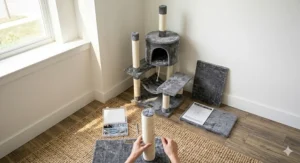
Some budget models arrive as kit puzzles requiring two adults and 90 minutes. Others feature pre-assembled sections that snap together in 20 minutes. If you’re not handy with tools or lack help, prioritize models with simpler assembly processes. Check review sections for assembly complaints before purchasing.
Common Mistakes When Buying Budget Cat Furniture
Mistake #1: Choosing Based on Appearance Over Cat Preferences
That adorable cactus-shaped tree might photograph beautifully, but if your cat prefers enclosed spaces and it only offers open perches, you’ve wasted money on unused furniture. Observe your cat’s current behavior: do they sleep in boxes and closets, or on window sills and countertops? Match the tree’s design to their demonstrated preferences rather than your aesthetic wishes.
Mistake #2: Ignoring Base-to-Height Ratios
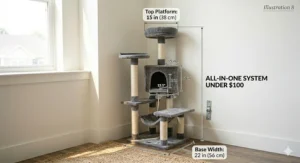
Tall, narrow cat trees tip over. The base width should be at least one-third of the total height for stability. A 60-inch tree needs a minimum 20-inch base width, preferably wider. Budget manufacturers sometimes sacrifice base size to reduce shipping costs, creating inherently unstable structures regardless of construction quality.
Mistake #3: Assuming Bigger is Better
More features don’t guarantee more use. Cats typically claim 1-2 favorite spots and ignore the rest. A massive tree with eight perches wastes money compared to a well-designed compact model with three strategically placed resting areas. Focus on quality of features over quantity.
Mistake #4: Skipping Maintenance Planning
Cat trees accumulate fur, dander, and occasionally vomit. Models with removable, washable covers cost slightly more but save replacement costs. Structures with complex crevices and tight spaces become cleaning nightmares. Consider long-term maintenance when comparing models at similar price points.
Maximizing Your Cat Tree Investment: Setup and Introduction
Location Strategy
Place the tree where your cat already spends time, not where you wish they would go. Near windows for visual stimulation, close to your primary living area for social cats, or in quiet corners for shy felines. Initial placement dramatically affects whether cats adopt the tree as part of their territory or ignore it entirely.
Scent Introduction
Cats navigate the world through scent. Rub a clean towel on your cat’s cheeks and face to collect pheromones, then rub that towel on the new tree’s surfaces. This makes the unfamiliar structure smell like “theirs” rather than like cardboard and manufacturing facilities. Sprinkling catnip on scratching surfaces provides additional olfactory incentive for investigation.
Patience Timeline
Some cats claim new trees within hours. Others need 2-3 weeks of gradual investigation before regular use begins. Resist the urge to force interaction or move the tree during this adjustment period. Reward any engagement with treats or play to create positive associations.
Maintenance Schedule
Vacuum the tree weekly to prevent fur accumulation that discourages use. Tighten screws and connections monthly — cat trees naturally loosen over time as cats jump and play. Trim fraying sisal rope rather than letting it unravel completely. Replace worn toys before they become hazards. A well-maintained budget tree outlasts a neglected premium model.
Cat Tree vs Traditional Scratching Posts
Traditional standalone scratching posts cost $15-30 and provide a single function. Cat trees in the under $100 range deliver scratching surfaces plus elevated territory, hiding spaces, and play opportunities. The value proposition becomes clear when you calculate the alternative: buying separate scratching posts ($30), cat bed ($25), perch ($35), and toys ($15) totals over $100 while occupying more floor space and looking more cluttered.
However, scratching posts excel for targeted scratch training or as secondary options in multi-room homes. They’re portable, easily repositioned, and require no assembly. The ideal solution for many households combines a main cat tree in the primary living space with standalone posts in bedrooms or near problem scratching areas.
Research published in Applied Animal Behaviour Science demonstrates that environmental enrichment variety improves feline welfare more than any single piece of furniture. A $75 cat tree plus a $20 standalone post creates better outcomes than a $95 tree alone, assuming both get used regularly.
Understanding Cat Tree Materials and Construction
Particleboard vs Solid Wood
Budget cat trees use engineered wood products (particleboard, MDF) rather than solid wood to control costs. This isn’t automatically inferior — properly constructed particleboard provides adequate support for residential cat use. Density matters more than type. Look for CARB P2-compliant particleboard (meets formaldehyde emission standards) in specifications.
Solid wood cat trees start at $200+ and offer marginal durability improvements for typical household use. The premium pays for aesthetics and environmental preferences rather than functional superiority over quality particleboard.
Sisal Rope Quality
Natural sisal from agave plants provides the texture and durability cats prefer for scratching. Synthetic alternatives save manufacturers $2-3 per post but fray within weeks rather than months. Budget models using genuine sisal rope deliver better value than mid-price models cutting corners with synthetics. Check customer photos in reviews to assess rope condition after extended use.
Fabric Covering Choices
Faux fur provides soft resting surfaces but shows wear and matting over time. Plush fabrics resist matting better while maintaining comfort. Carpet offers durability but less luxury feel. Linenette (used by Feandrea) balances comfort and longevity. No single covering is universally superior — match to your cat’s preferences and your maintenance tolerance.
Frequently Asked Questions
❓ How long do cat trees under $100 typically last?
❓ Can large cats use budget cat trees safely?
❓ How do I get my cat to use their new tree instead of furniture?
❓ Are cheap cat trees safe or do they have harmful materials?
❓ Do I need multiple cat trees if I have several cats?
Conclusion: Smart Shopping in the Budget Category
Finding an excellent cat tree under $100 in 2026 requires understanding which features deliver value versus which ones just inflate prices. The seven models I’ve covered represent the current sweet spot where cost-conscious buying meets genuine quality that satisfies both cats and owners.
The standout lesson from my research: spending the full $100 on a well-constructed model from established brands outperforms buying the absolute cheapest option and replacing it annually. The Frisco 72-inch, Yaheetech 63-inch, and Go Pet Club 72-inch models sitting in the $85-$100 range deliver cost-per-use economics that cheaper alternatives can’t match.
For first-time buyers or those testing whether their cat even likes cat trees, the Frisco 20-inch compact model in the $35-$45 range provides a low-risk entry point. For multi-cat homes or owners tired of destroyed furniture, investing the full budget ceiling in maximum scratching surfaces and multiple levels pays dividends in furniture preservation and feline contentment.
Remember that a cat tree is infrastructure, not decoration. Your cat doesn’t care about how it photographs or whether it matches your aesthetic — they care about stability, appropriate scratching surfaces, and comfortable resting spots. Prioritize those functional elements over appearance, and you’ll end up with a well-used tree that justifies every dollar spent.
The budget category has improved dramatically in recent years, making excellent cat furniture accessible to every cat owner regardless of budget constraints. Use the framework I’ve provided to evaluate options based on your specific situation, and you’ll find that perfect balance between affordability and quality that keeps both you and your feline companion happy.
Recommended for You
- 7 Best Cat Trees for Multiple Cats – Ultimate 2026 Buying Guide
- 7 Best Natural Wood Cat Trees 2026
- 7 Best Cat Tower with Bed for Ultimate Comfort (2026)
Disclaimer: This article contains affiliate links. As an Amazon Associate, I earn from qualifying purchases. If you purchase products through these links, we may earn a small commission at no additional cost to you.
✨ Found this helpful? Share it with your friends! 💬🤗
