
Table of Contents
You know that look. The one where your cat sits in the window, tail twitching like a metronome, watching a sparrow hop across the lawn with an intensity that would unnerve most detectives. Your cat isn’t just being dramatic — they’re genuinely craving the outdoors. The smells, the sounds, the sheer novelty of a world that doesn’t smell like carpet and dry kibble.
But opening the front door? That’s a gamble most responsible cat owners aren’t willing to take.
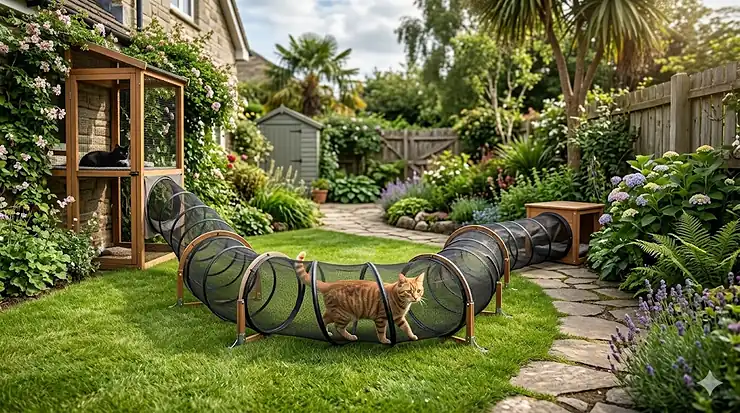
Enter the outdoor cat tunnel — arguably the most practical, enriching invention in modern feline care. A good outdoor cat tunnel is essentially a secure, breathable passageway or modular enclosure system that lets your indoor cat experience the backyard without the bone-chilling risk of cars, predators, or just… never coming home. Think of it as a catio tunnel: part adventure park, part peace of mind.
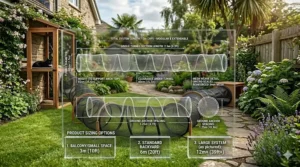
What exactly is an outdoor cat tunnel? It’s a portable, mesh-based enclosure — usually constructed from breathable nylon mesh and waterproof Oxford fabric — that connects to a tent or playpen, allowing cats to crawl, sprint, sniff, and lounge in fresh air while remaining completely contained. Sizes range from a single 5-foot stretch to modular 10-piece systems that look like a small feline theme park.
Research backs this up, too. A 2021 peer-reviewed study published in Frontiers in Veterinary Science found that introducing a controlled outdoor environment significantly improved measurable welfare indicators in domestic cats — including reduced stress behaviors and increased active exploration. The ASPCA has long noted that environmental enrichment is essential for cats of all ages, while the Humane Society calls catios and tunnel enclosures one of the smartest compromises between safe housing and natural behavior. Cornell University’s College of Veterinary Medicine goes further, recommending controlled outdoor environments like catios specifically to reduce disease transmission risks from feral cats and wildlife.
In this guide, I’ve researched and analyzed the 7 best outdoor cat tunnel options currently available on Amazon — from budget-friendly pop-up single tunnels to sprawling modular systems that’ll make your backyard look like a cat resort. Whether your cat is a cautious apartment dweller or a full-on escape artist in training, there’s a backyard cat tunnel setup here that fits.
Quick Comparison Table: Top 7 Outdoor Cat Tunnels at a Glance
| Product | Type | Key Dimensions | Material | Best For | Price Range |
|---|---|---|---|---|---|
| LUCKITTY 2-in-1 Portable Cat Enclosure | Tent + Tunnel | Tent: 47″×47″×18″, Tunnel: 124″ | Mesh + Oxford | Single cat, easy travel | $-$$ |
| Pawtenda 6-in-1 Outdoor Cat Enclosure | 3 Tents + 3 Tunnels | Multiple modular pieces | Mesh + Steel Frame | Multi-cat homes | $$-$$$ |
| Kitty City Three-Way Outdoor Tunnel | Expandable 3-way | Single tunnel unit | Sturdy mesh | Expand existing setups | $ |
| Kitty City 20-Foot Outdoor Tunnel | Long straight run | 20 ft length | Mesh | Window-to-yard runs | $$ |
| TOYSBOOM 5-in-1 Outdoor Cat Enclosure | Tent + Cube + Tunnels | Multiple pieces | Mesh + Oxford | Active, playful cats | $$-$$$ |
| VIVOHOME 6-in-1 Outdoor Cat Enclosure | 2 Tents + Cube + 3 Tunnels | Tent: 47.2″×47.2″×34.7″ | Recycled mesh + Oxford | Premium multi-zone play | $$-$$$ |
| Pawtenda 10-in-1 Outdoor Cat Enclosure | Modular mega system | Multiple large pieces | Mesh + Steel Frame | Serious catio builds | $$$ |
What the table tells you, beyond the specs: The budget picks (Kitty City’s individual tunnel units) make the most sense if you’re expanding an existing setup or just dipping your toes in. The mid-range 5- and 6-in-1 systems from TOYSBOOM and VIVOHOME hit the sweet spot for most single-cat and two-cat households. And if your cat is the kind of creature who demands a proper domain rather than a playpen? Pawtenda’s 10-in-1 is where you’re headed.
💬 Just one click — help others make better buying decisions too! 😊
✨ Don’t Miss These Exclusive Deals!
🔍 Take your cat’s outdoor enrichment to the next level with these carefully selected products. Click on any highlighted item to check current pricing and availability. These picks will help your indoor cat finally get the fresh air and safe exploration they deserve!
Top 7 Outdoor Cat Tunnels: Expert Analysis
1. LUCKITTY Portable Cat Enclosure — 2-in-1 Outdoor Catio with Tent & Tunnel
If you only have one cat, live in an apartment with a balcony, or want something you can toss in the trunk for camping weekends, the LUCKITTY 2-in-1 is the one to look at first. It’s the gateway drug of outdoor cat tunnels — approachable, affordable, and genuinely useful.
The specs in real-world terms: The tent measures 47×47×18 inches, which is roomy enough for an average-to-large cat to fully stretch, turn around, and bat at things without feeling cramped. The attached tunnel runs a generous 124 inches — over ten feet — which means your cat isn’t just sitting in a box; they’re actually moving through space, which triggers far more instinctual engagement than a static enclosure ever would. Everything is constructed from breathable high-density mesh and waterproof Oxford fabric, a combination that handles summer afternoon heat and light rain showers without becoming a soggy mess.
What most buyers overlook: the tent and tunnel detach. You can use them independently, which gives you flexibility — put the tent on the patio while the tunnel threads through a cat door or window opening. The dual zippered doors on the tent are a practical detail that gets glossed over in listings, but they matter enormously when you’re trying to retrieve a cat who’s decided the tunnel is home now.
This is ideal for: apartment dwellers with a balcony or patio, single-cat households, and anyone who travels with their cat and wants a portable outdoor enrichment solution that fits in a tote bag.
Customer feedback consistently praises the ease of setup — most users have it assembled in under five minutes — and the sturdiness of the Oxford base against a cat’s rear claws.
✅ Extremely portable with included storage bag
✅ Generous 124″ tunnel length for true movement
✅ Tent and tunnel work independently
❌ Low 18″ tent height — large breeds like Maine Coons may feel the ceiling
❌ Not ideal as a permanent fixture in harsh climates
Price range: Around $25–$40. Outstanding value for what you get, especially as a starter catio tunnel.
2. Pawtenda 6-in-1 Cat Tents for Outside — 3 Tents + 3 Tunnels
Pawtenda has quietly become one of the most trusted names in the portable outdoor cat enclosure space, and the 6-in-1 set is the one that built that reputation. The brand’s origin story — designed around a Maine Coon named Emperor who needed serious enrichment — shows in the product’s DNA. This is not an afterthought design.
What 6-in-1 actually means in practice: Three tent enclosures and three tunnels, all zipper-compatible with each other, which means you can arrange them in a straight line, an L-shape, a U-shape, or whatever your backyard geography demands. For a multi-cat household, this is transformative. Rather than two cats squabbling over a single pod, each animal can claim territory across multiple connected zones. The tunnels are straight, which some cats prefer over curved — there’s nothing quite like watching a cat sprint full-speed through a tunnel straight-shot and then absolutely lose their mind in the end tent.
The build quality here is noticeably stiffer than cheaper alternatives — Pawtenda uses a steel frame structure inside the tents, and it shows when the wind picks up. Budget mesh enclosures wobble and collapse in a light breeze; these hold their shape.
This set is best for: multi-cat households (two to three cats), people with a dedicated patio or garden space, and cat owners who want a setup that can grow with additional Pawtenda pieces over time.
Buyers frequently note that the zipper system is smooth and locks securely — an important detail since a loose zipper is essentially an escape hatch.
✅ Modular design configurable in multiple layouts
✅ Steel-reinforced tent frames resist wind
✅ Compatible with other Pawtenda enclosures for expansion
❌ Larger footprint — needs actual yard/patio space
❌ Some assembly learning curve on first setup
Price range: $55–$85. The math works out well on a per-piece basis for what you’re getting.
3. Kitty City Outdoor Three-Way Tunnel
The Kitty City Three-Way Tunnel is the building block, the LEGO brick, the “now let’s get serious” piece of any outdoor cat enrichment system. Sold as a single unit with a three-directional junction and two covered rest zones, it was designed from the ground up to be modular — meaning it zips cleanly onto other Kitty City pieces or even most similarly-sized mesh enclosures.
Why three-way matters: A straight tunnel is fun. A T-junction with three possible exits creates genuine decision-making for a cat, and decision-making is enrichment. Cats who have options — even small options like “which way do I go?” — show measurably higher engagement and lower stress markers than cats with linear-only play paths. The two integrated covers aren’t just structural either; they give cats a shaded, semi-enclosed spot to pause, crouch, and survey — which mimics exactly the kind of predatory “wait and watch” behavior their ancestors performed in the wild.
The mesh is described as “sturdy” by Kitty City, and that’s an honest descriptor rather than marketing fluff. It’s noticeably thicker than single-layer mesh options and resists sagging.
This is the right choice for: people who already own a catio or outdoor enclosure and want to add complexity, anyone building a Kitty City system piece-by-piece, and budget-conscious buyers who want to start small and expand.
✅ Three-way junction adds real behavioral enrichment
✅ Connects with Kitty City Mega Kit and other units
✅ Two rest covers for shade and hiding
❌ Not a complete solution on its own — best paired with other pieces
❌ Single-brand ecosystem limits future expansion options
Price range: Around $20–$35. The best “expansion piece” value on this list.
4. Kitty City Outdoor 20-Foot Tunnel
Twenty feet. That’s not a cat tunnel — that’s a cat highway. The Kitty City 20-Foot Outdoor Tunnel is the product that finally makes the “window-to-catio” dream functional for most homeowners. The concept is simple: run this from a cat door, basement window, or sliding door opening directly out to a larger enclosure or end pod in the yard, and your cat essentially gains free-range access to the outdoors on their own schedule.
What most buyers don’t realize about long tunnel runs: Cats are sprinters, not marathon runners. A 20-foot straight tunnel lets a cat hit full sprint speed from end to end — that’s a cardiovascular workout you simply cannot replicate in a one-room apartment. Indoor cats that lack sprint opportunities develop not just physical sluggishness but behavioral sluggishness: decreased play initiation, increased sleeping, and what vets sometimes describe as “low arousal” — basically, a bored, understimulated animal who’s forgotten what excitement feels like.
The Kitty City tunnel uses the same sturdy mesh as the Three-Way piece, and it zips to other Kitty City units at either end. If your yard has a fence along one side, this can run parallel to it and give the impression of a purposeful, semi-permanent installation rather than a camping tent.
Best for: homeowners with a cat door or window pass-through who want to connect interior living space to an outdoor enclosure, and anyone whose cat is specifically diagnosed by a vet as needing more physical exercise.
✅ Full 20-foot run enables true sprint-speed movement
✅ Connects to other Kitty City pieces at both ends
✅ Sturdy enough for semi-permanent outdoor placement
❌ Length makes storage bulky
❌ Straight run only — no branching
Price range: Around $28–$45. Per-foot of enrichment, this is genuinely unbeatable.
5. TOYSBOOM 5-in-1 Outdoor Cat Enclosure
TOYSBOOM entered the outdoor cat enclosure market relatively recently, but the 5-in-1 set punches above its weight class in terms of what it includes. One tent, one cube, and three connecting tunnels — and the whole thing assembles without tools via zipper connections that, unusually, actually stay locked under pressure.
The cube element is what makes this stand out. Most enclosure systems give you only tents — large, dome-like spaces that cats typically pace through without stopping. A cube creates a completely different psychological space: lower ceiling, angular walls, enclosed feeling. Many cats strongly prefer cube-shaped hideaways over open domes because they more closely mimic the tight, dark spaces cats use in the wild for security and rest. Including both a tent and a cube in the same set means one purchase covers both the “exploring” personality type and the “hiding” personality type — which is useful if you have two cats with different temperaments.
Dual zippered doors on the tent make loading and unloading your cat effortless (relatively speaking — this is still a cat), and TOYSBOOM explicitly designed the zipper connections to hold under lateral tension, which matters when a determined cat decides they’d rather be facing the other direction.
Ideal for: active cats who need varied stimulation, households with two cats of different personalities, and campers or travelers who want a portable setup that works at the campsite as well as the backyard.
Customer reviews highlight the ease of clean-up — both the tent and cube floors wipe down in seconds, and the whole assembly packs into its included bag in about three minutes.
✅ Cube enclosure adds a psychologically distinct hideaway space
✅ No-tool zipper assembly and take-down
✅ Works equally well for camping and backyard use
❌ Newer brand with less long-term durability data
❌ Three tunnels are straight — no junction pieces
Price range: Around $40–$65. Solid mid-range value.

6. VIVOHOME 6-in-1 Outdoor Cat Enclosure with Playhouse
VIVOHOME has been in the pet and home goods space since 2015, and the 6-in-1 Outdoor Cat Enclosure represents the most finely considered design in this category. The sheer variety of zones in one set is remarkable: a large 47.2×47.2×34.7-inch net tent, a 39.4×39.4×26.8-inch six-panel mesh tent, a 21.7×21.7×25.6-inch cube playpen, and three Φ18.1×47.2-inch connecting tunnels. Translation: your cat gets a sunning platform, a cozy mid-sized room, a tight hideaway, and three movement corridors between them.
The sustainability angle is worth flagging: VIVOHOME’s 6-in-1 carries certifications noting at least 50% recycled material content and safer-for-human-health chemicals — credentials that matter both environmentally and practically, since cats are notorious for chewing on their enclosures.
The Oxford ring at the top of the main tent, designed for hanging toys, is a small detail that reveals thoughtful design — it transforms a static enclosure into an interactive enrichment environment without buying additional accessories. The included M-size cat leash adds a secondary safety layer for cats who’ve historically been escape artists.
This is the premium pick for: multi-cat households who want distinct territory zones within a single connected system, cat owners who prioritize sustainability in their purchases, and anyone who wants the most visually impressive backyard catio setup without going custom-built.
Buyers frequently comment on the substantial feel of the materials — this doesn’t feel like a cheap pop-up tent. Several reviews note it held up through a full summer season with minimal wear.
✅ Six distinct play/rest zones in one system
✅ Certified recycled materials and safer chemical compliance
✅ Oxford hanging ring + catnip ball included for immediate enrichment
❌ Higher price point than comparable sets
❌ Large assembled footprint — needs meaningful yard space
Price range: Around $65–$100. The most thoughtfully engineered set on this list.
7. Pawtenda 10-in-1 Outdoor Cat Enclosure — Mega Modular System
If you’ve ever thought “I want to build my cat an actual outdoor kingdom,” the Pawtenda 10-in-1 is what that looks like in practice. Multiple tents, multiple tunnels, fully modular, and designed with customizable layouts so you can rearrange the configuration whenever novelty fades — and it will, because cats are creatures of exploratory habit who benefit enormously from environmental change.
Why 10 pieces matters for behavioral enrichment: Research on feline welfare consistently shows that cats need not just space but complexity — multiple routes, dead ends, elevated zones, and reconfiguration over time to prevent habituation. A cat who’s walked the same L-shaped tunnel three hundred times has stopped deriving enrichment from it. The 10-in-1 system lets you dismantle and rebuild in a different shape every few weeks, which essentially gives the cat a new outdoor environment without you spending another dollar.
The modular design is fully compatible with other Pawtenda pieces, meaning this set can grow indefinitely. Several committed Pawtenda fans have documented connecting two full 10-in-1 systems together to create elaborate backyard catio compounds that, frankly, look more architecturally interesting than some human garden features.
This is the right product for: serious multi-cat households (three or more cats), experienced cat owners who’ve already tried smaller setups and want more, and anyone who treats feline enrichment as an ongoing investment rather than a one-time purchase.
Customer reviews are overwhelmingly positive on durability and the quality of the zipper connections — Pawtenda’s zipper track system is noticeably smoother than most competitors.
✅ 10 modular pieces configurable in dozens of layouts
✅ Reconfiguration prevents behavioral habituation
✅ Compatible with additional Pawtenda pieces for unlimited expansion
❌ Premium price point
❌ Significant storage footprint when not in use
Price range: $90–$140. If you’re committed to outdoor enrichment long-term, this is the system to invest in.
How to Set Up Your Outdoor Cat Tunnel for Maximum Enrichment (And Minimum Escape Attempts)
Step 1: Choose the Right Location
Before you unpack anything, think about placement. Cats are sensory animals — they want to be where the interesting smells, sounds, and sights are. Near a bird feeder is a classic setup: your cat gets behavioral enrichment (watching birds) while being safely contained (not actually hunting them). Avoid direct full-sun placement in summer months; mesh enclosures don’t provide meaningful UV protection, and a cat that overheats in a tunnel they can’t exit is a welfare problem, not a perk.
Step 2: Introduce the Tunnel Before Going Outdoors
Never force a cat straight into a new enclosure and then leave them outside unsupervised. Instead, set up the tunnel indoors first — living room, hallway, wherever. Let the cat investigate on their own terms over two or three days. Sprinkle catnip inside. Place their favorite toy at one end. The goal is for the tunnel to smell familiar and safe before it suddenly appears in an unfamiliar outdoor environment.
Step 3: Supervised First Sessions
First outdoor use should be supervised, even if the enclosure is perfectly secure. Watch for signs of stress: flattened ears, low crouch, wide pupils, and tail tucking. A slightly nervous cat is normal. A clearly panicked cat needs to be brought back inside immediately and reintroduced more gradually. Most cats relax within 5–10 minutes once the novelty wears off.
Step 4: Anchor It
Wind is the enemy of mesh enclosures. Even light breezes can cause a pop-up tunnel to shift, which startles cats and makes them associate the enclosure with instability. Use ground stakes (often included), tent pegs from a camping kit, or strategic placement against a wall or fence. A wobble-free structure is a cat’s idea of trustworthy.
Step 5: Maintain It
Inspect zippers monthly for teeth misalignment — this is the single most common failure point in mesh enclosures. Wipe the Oxford base with a damp cloth weekly. If the mesh develops small tears, address them immediately: what’s a quarter-inch hole to you is an invitation to a determined cat.
Real-World Scenarios: Which Outdoor Cat Tunnel Matches Your Situation?
The Apartment Dweller with a Balcony
Profile: One cat, small outdoor space, needs portability for occasional trips.
Best match: LUCKITTY 2-in-1. The tent sits comfortably on most standard apartment balconies, the tunnel runs along a railing, and the whole thing packs into a bag that fits in your coat closet. Set it up in ten minutes on a Sunday morning and your cat is bird-watching by breakfast.
The Multi-Cat Household with a Yard
Profile: Two or three cats, actual grass to work with, willing to invest.
Best match: Pawtenda 6-in-1 or VIVOHOME 6-in-1. The territorial dynamic among multiple cats needs space division, not just space addition. Multiple tents connected by tunnels allow each cat to claim zones without forced proximity — a surprisingly significant factor in multi-cat household harmony.
The Cat Owner Who Wants “Window to Garden” Access
Profile: House cat with a cat door or accessible ground-floor window, wants semi-permanent setup.
Best match: Kitty City 20-Foot Tunnel combined with the Three-Way Tunnel as a terminus. Thread the long tunnel from the cat door to the yard, anchor it, and attach the Three-Way piece at the end so your cat arrives in a functional exploration hub rather than just… the end of a tube.
The Traveler / Camper
Profile: Brings the cat to a cabin, camping site, or family home for weekends.
Best match: TOYSBOOM 5-in-1. Packs down small, sets up fast, works on grass, gravel, or deck surfaces, and the cube provides a dark retreat space for cats who find the novelty of a new outdoor environment temporarily overwhelming.
How to Choose the Right Outdoor Cat Tunnel: A 6-Point Framework
Buying a cat enclosure tunnel without a framework is how you end up with a $70 pop-up tent that your cat ignores and you trip over for six months. Here’s how to actually decide.
1. How Many Cats?
One cat can thrive in a simple tent-plus-tunnel setup. Two cats need at least two distinct spaces to avoid territorial stress. Three or more cats require a true multi-zone system — Pawtenda 6-in-1, VIVOHOME 6-in-1, or the 10-in-1 system. Don’t undersize this; the whole point of these enclosures is to reduce tension, not create a new arena for it.
2. What’s Your Outdoor Space?
Balcony or small patio: stick to the LUCKITTY 2-in-1 or Kitty City Three-Way. Full backyard: any of the modular systems work. Long narrow side yard: the 20-Foot Tunnel was practically designed for this geography. No outdoor space at all: look at an indoor cat tunnel as an interim solution, but honestly — consider the LUCKITTY anyway, because even a fire escape qualifies as technically outside.
3. Will It Travel?
If the enclosure needs to go in a car regularly, prioritize products with included storage bags and quick pop-up assembly. The LUCKITTY and TOYSBOOM both score well here. The 10-in-1 systems are fantastic but cumbersome to pack and unpack repeatedly.
4. What’s Your Cat’s Personality?
Shy, easily-stressed cats need enclosed hideaway spaces — a cube or covered pod at the tunnel’s end, not an open dome. Bold, active cats need length and branching — the 20-Foot Tunnel or a multi-junction Kitty City system. Most cats fall somewhere in between and benefit from a setup that includes both a run and an enclosed rest zone.
5. How Weatherproof Does It Need to Be?
None of the pop-up mesh enclosures on this list are designed for permanent outdoor installation in rain, snow, or high winds. They’re fair-weather tools. If you live somewhere with serious weather patterns, look for models with Oxford fabric bases (which resist wet ground) and consider bringing the enclosure in during storms.
6. What’s Your Budget?
Be honest with yourself here. A $25 tunnel that you return because your cat won’t use it costs more than a $75 system that becomes a daily ritual. If outdoor enrichment is a priority, buy for longevity and versatility, not just the lowest price point.
Outdoor Cat Tunnel vs. Traditional Free-Roaming: An Honest Comparison
| Factor | Outdoor Cat Tunnel / Catio Tunnel | Traditional Free Roaming |
|---|---|---|
| Safety from traffic | ✅ Complete protection | ❌ Major risk |
| Safety from predators | ✅ Protected | ❌ Significant risk |
| Disease exposure risk | ✅ Minimal (no feral contact) | ❌ High (feral cats, wildlife) |
| Natural behavior expression | ✅ High — sniffing, stalking, sprinting | ✅ Very high |
| Wildlife impact (birds/small mammals) | ✅ Zero impact | ❌ Significant ecological impact |
| Owner peace of mind | ✅ Excellent | ❌ Constant worry |
| Exercise quality | ✅ Good to excellent (size-dependent) | ✅ Excellent |
| Cost | Moderate one-time investment | “Free” — until the vet bills |
The data makes a compelling case. According to a peer-reviewed assessment in the journal Animals (2020), uncontrolled outdoor access exposes cats to disease, injury from traffic, predation, and permanent separation — risks that a well-chosen outdoor cat tunnel eliminates entirely. What the tunnel doesn’t eliminate is the core benefit of going outside: the sensory enrichment, the physical activity, and the behavioral engagement of engaging with a world bigger than your living room.
In practical terms: a good backyard cat tunnel gives cats roughly 80% of what they get from free-roaming, with approximately 5% of the associated risk. That’s not a bad trade.
Common Mistakes When Buying an Outdoor Cat Tunnel
Mistake #1: Buying for Your Aesthetic, Not Your Cat’s Behavior
Rainbow tunnels are adorable. But if you have a nervous cat who needs darkness and enclosure to feel secure, a brightly-colored open mesh dome is the wrong choice no matter how good it looks on Instagram. Match the product to your cat’s behavioral profile, not your interior design preferences.
Mistake #2: Undersizing for Multi-Cat Households
“Two cats can share a tent” is technically true in the same way “two people can share a studio apartment” is technically true. Possible, occasionally comfortable, frequently the source of interpersonal conflict. For two cats, plan for at least two distinct enclosed zones. For three, budget for a proper modular system.
Mistake #3: Skipping the Introduction Phase
Cats do not automatically love new enclosures. Many will refuse to enter a tunnel that smells like factory plastic and stranger hands. Give the enclosure a week inside the house before outdoor deployment, rub it with your cat’s bedding, and use treats and catnip liberally. Rushing this step accounts for the majority of “my cat won’t use it” reviews.
Mistake #4: Assuming “Weatherproof” Means Permanent
Almost every portable mesh cat enclosure on Amazon is marketed with the word “weatherproof.” What this actually means: the Oxford base fabric resists moisture and the mesh dries quickly. It does not mean you should leave it outside through a three-day rainstorm. Bring these in when the weather turns; they’re designed for afternoon use, not year-round installation.
Mistake #5: Forgetting to Check Zippers Before Each Use
A zipper that catches, skips, or leaves a gap is an escape route. Before every outdoor session, run the zip fully around every closure point and confirm a complete seal. It takes ten seconds and could save you an hour of panicked cat-hunting in the neighborhood.
Long-Term Value: What Does an Outdoor Cat Tunnel Actually Cost You?
Let’s do the math that product listings won’t.
A good modular outdoor cat tunnel system — say, the VIVOHOME 6-in-1 in the $65–$100 range — used for a conservative 150 outdoor sessions per year (roughly three times per week) over three years of useful life comes to a per-session cost of somewhere between $0.15 and $0.22. A single unplanned vet visit resulting from an outdoor injury to a free-roaming cat costs a minimum of $150, often several hundred more for anything requiring diagnostics.
Enrichment also has measurable health value. A 2021 study in Frontiers in Veterinary Science linked controlled outdoor environments to improved cat welfare scores — meaning less stress, which correlates with lower incidence of stress-related conditions like urinary tract issues, over-grooming, and aggression. Indoor cats with inadequate enrichment are statistically more likely to develop obesity-related conditions, which accelerate the timeline to expensive veterinary care.
In short: an outdoor cat tunnel pays for itself the first time it prevents a problem. The fact that your cat enjoys it every day between now and then is almost beside the point.
FAQ: Your Outdoor Cat Tunnel Questions, Answered
❓ Are outdoor cat tunnels safe for cats to use unsupervised?
❓ Can an outdoor cat tunnel withstand rain and wind?
❓ What size outdoor cat tunnel do I need for a large cat breed?
❓ How do I connect an outdoor cat tunnel to my home's cat door?
❓ Is a catio tunnel better than a full catio for an indoor cat?
Conclusion: Give Your Cat the Outdoors Without the Heartbreak
Here’s the truth about the backyard cat tunnel category: the products have gotten genuinely good. A few years ago, you were mostly choosing between flimsy pop-up tents that collapsed in a breeze and expensive custom builds that required a contractor. In 2026, you have a full spectrum of well-engineered, thoughtfully-designed options at nearly every price point.
The best outdoor cat tunnel for you is the one that matches your cat’s personality, your outdoor space, and your budget — in that order. Start with the LUCKITTY 2-in-1 if you’re uncertain, or go straight to the VIVOHOME 6-in-1 or Pawtenda 6-in-1 if you already know your cat is an active, social explorer who deserves a proper outdoor playground.
What you’re actually buying isn’t mesh and zippers. You’re buying a version of your cat’s life where they get to do what cats are built to do — smell, stalk, sprint, crouch, and survey a world in motion — without the version of their life that ends under the wheels of a car three blocks from home.
That’s worth every penny.
✨ Don’t Miss These Exclusive Deals!
🔍 Ready to upgrade your cat’s outdoor life? Click any highlighted product above to check current pricing and availability on Amazon. Your cat has been watching that window long enough — give them the real thing.
Recommended for You
- 7 Best 3-Way Cat Tunnels in 2026
- 7 Best Collapsible Cat Tunnels in 2026
- Best Cat Tunnel in 2026: 7 Top Picks for Play & Exploration
Disclaimer: This article contains affiliate links. As an Amazon Associate, I earn from qualifying purchases. If you purchase products through these links, we may earn a small commission at no additional cost to you.
✨ Found this helpful? Share it with your fellow cat parents! 💬🤗
