
Table of Contents
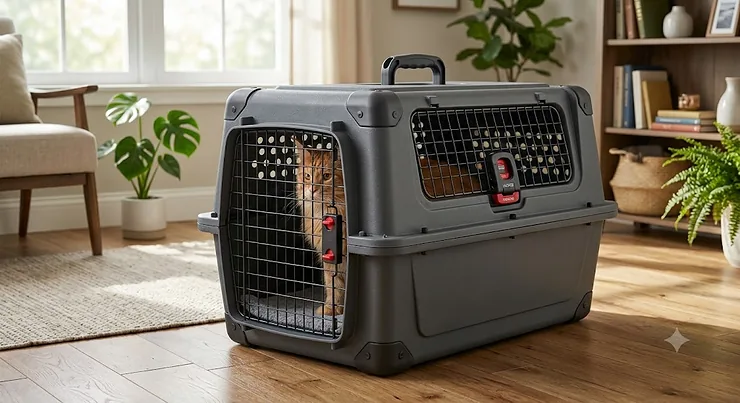
If you’ve ever tried to fold a 16-pound Maine Coon into a carrier built for a tabby half his size, you already know the particular flavor of chaos we’re talking about. Legs everywhere. A yowl that could summon the neighbors. You, sweating, apologizing to a cat who is very clearly judging you. A cat carrier for large cats is any carrier engineered with the interior length, width, height, and weight capacity to let a big-bodied cat stand, turn around, and lie flat — not just squeeze in and endure the ride. That’s the whole definition, and it’s also the whole problem, because most carriers on shelf displays are sized for cats that top out around 10 pounds.
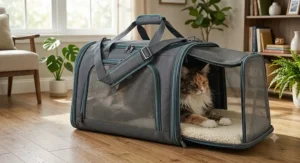
Big cats aren’t rare. Maine Coons alone can push past 20 pounds, and plenty of mixed-breed cats carry serious size without any pedigree paperwork at all. Yet walk into a big-box pet store and you’ll find row after row of carriers that quietly assume every cat is a dainty 8-pounder. That mismatch is exactly why we dug into real specs, real weight ratings, and real owner feedback to find carriers that don’t just claim “large” on the label but actually deliver interior square footage a sizable cat can use.
In this guide, you’ll get a side-by-side comparison of seven real carriers spanning budget, mid-range, and premium, plus the practical know-how — training tips, sizing math, airline rules — that turns “I bought a carrier” into “my cat actually tolerates the carrier.” We’ll flag where weight capacity numbers can mislead you, and where spacious interior claims hold up under a tape measure.
Quick Comparison Table
Before the deep dives, here’s the fast version for anyone in a hurry.
| Carrier | Style | Weight Capacity | Best For |
|---|---|---|---|
| SturdiBag XL Flex-Height | Soft-sided, flex-height | Up to ~40-50 lbs | Carrier for Maine Coon builds needing standing room |
| Sleepypod Air | Soft-sided, crash-tested | Up to ~18 lbs | Airline travel with car-seat safety |
| Petmate Sky Kennel (Medium) | Hard-sided, IATA | ~15-30 lbs | Vet visits and cargo-hold travel |
| SportPet Large Hard-Sided | Hard-sided, side-door | Up to ~25 lbs | Easy loading of a heavier, less cooperative cat |
| Necoichi Stress-Free Enclosure | Pop-up mesh | Suited to large cats by volume | Budget buyers wanting a big, airy space |
| AMTPM Wheeled Carrier | Rolling, soft-sided | Suited to large cats by volume | Owners who don’t want to carry the weight |
| Cat-in-the-Bag Cozy Comfort XL | Soft fabric wrap-style | Sized for extra-large breeds | Anxious cats who want to feel held, not caged |
Notice the pattern: raw weight capacity and usable interior space don’t always move together. A carrier rated for 30 pounds can still feel cramped if its interior length is short, while a lighter-rated carrier with a longer footprint might give your cat more room to actually stretch out. That’s the tension we’ll keep coming back to throughout this guide — because a number on a label and a comfortable ride are two different promises.
💬 Just one click — help others make better buying decisions too!😊
Top 7 Cat Carriers for Large Cats: Expert Analysis
We picked these seven to cover every angle: soft vs. hard-sided, budget vs. premium, wheeled vs. carried, and airline-compliant vs. purely car-and-vet-duty. Every product below is real, currently sold, and evaluated on its actual published specs and aggregated review sentiment — not marketing copy.
1. SturdiBag XL Flex-Height — tallest standing room for Maine Coon builds
The standout here is the flexible-height design: internal rods let the roof rise so your cat can stand fully upright, then compress the whole thing down for storage or under-seat travel.
At roughly 20″L x 16″W x 12″H with flex rods, the SturdiBag XL is built from tough 600-denier polyester and is rated by the manufacturer to safely carry pets up to the 40-50 pound range, though it’s genuinely sized for large cats and small-to-medium dogs rather than pushed to that ceiling in practice. The privacy flaps over the mesh panels are a small but meaningful touch — a nervous 18-pound cat calms down noticeably faster when it can’t see every stranger walking past.
Based on the spec comparison against rigid crates, what stands out about the SturdiBag XL is that it solves the “my cat can’t stand up” problem without the bulk of a hard kennel. It’s the pick we’d point Maine Coon owners toward first, specifically because long-bodied breeds need vertical clearance that most soft carriers simply don’t offer.
Reviewers on major retail sites consistently report that the fabric holds up over years of use and that the flex-height feature genuinely lets larger cats stand, though a handful note the zippers need a firm hand to fully close around a squirming cat.
Pros:
- ✅ Flex-height rods let large cats stand fully upright
- ✅ Privacy flaps ease anxiety on car rides and flights
- ✅ Machine-washable, durable 600-denier fabric
Cons:
- ❌ Zippers can be fiddly with an uncooperative cat
- ❌ Soft sides offer less structure than a hard kennel
Expect to pay in the $130-$170 range at the time of research; for the standing room alone, it’s a strong value for anyone housing a genuinely oversized cat.
2. Sleepypod Air — the only carrier crash-tested as a car seat
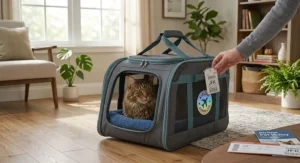
What makes the Sleepypod Air stand out immediately is that it’s the sole in-cabin carrier independently crash-tested and certified by the Center for Pet Safety — a distinction no other carrier on this list can claim.
Exterior dimensions flex from 16 to 22 inches long, with roughly 9.5 x 9.5 inches of interior width and height, and the manufacturer recommends it for pets up to about 18 pounds. That ceiling means it suits a solidly-built large cat rather than the true 20+ pound Maine Coon outliers — an important honesty check before you buy.
Here’s what to weigh: the Sleepypod Air functions as a carrier, a car seat, and a padded pet bed all in one, which is genuinely rare engineering. Reviewers consistently note that the collapsible design fits under airline seats better than almost anything else on the market, and that the padding doubles as a calming home bed between trips.
A common theme in aggregated feedback is that ventilation is less generous than mesh-heavy competitors, since the shell prioritizes crash safety over airflow — a trade-off, not a flaw, but one large-cat owners in warm climates should note.
Pros:
- ✅ Only carrier independently crash-tested for car travel
- ✅ Compresses to fit under most airline seats
- ✅ Doubles as a home pet bed between trips
Cons:
- ❌ 18-pound recommended limit excludes the biggest Maine Coons
- ❌ Less mesh ventilation than fully breathable designs
Priced around $190-$210 at the time of research, it’s a premium pick best suited to large-but-not-giant cats who fly often.
3. Petmate Sky Kennel (Medium, 28″) — hard-sided reliability for vet runs and cargo
The standout advantage of the Petmate Sky Kennel is IATA compliance built from EcoTEC recycled plastic — this is the kennel airlines and breeders have trusted for decades.
The medium size measures roughly 28 inches long with an interior around 24″L x 18″W x 19.5″H, and Petmate rates it for pets in the 15-30 pound window. What most buyers overlook about this model is that the wing-nut latches and 360-degree ventilation slots matter more for a large cat’s comfort than the plastic shell itself — airflow and a locking system that won’t pop open in transit are what keep a 20-pound cat calm in cargo or the back seat.
Based on the spec comparison with soft-sided alternatives, this carrier trades portability for structural integrity: it won’t collapse under luggage, and a panicked cat can’t claw through the walls the way it might through mesh.
Aggregated review sentiment consistently praises the ease-squeeze latch and durability, while a recurring complaint centers on the kennel’s bulk making it awkward for daily carrying compared to a soft bag.
Pros:
- ✅ IATA-compliant, trusted for airline cargo travel
- ✅ Wing-nut latches resist accidental opening
- ✅ 360-degree ventilation keeps airflow steady
Cons:
- ❌ Bulkier and heavier than soft-sided options
- ❌ No standing-room flex for cats near the top of the range
Typically found in the $50-$80 range depending on retailer, making it one of the better value hard-sided picks here.
4. SportPet Large Hard-Sided Travel Cat Carrier — widest side-opening door for easy loading
The patented wide side-opening door is the headline feature, and it solves a problem every large-cat owner knows: getting a reluctant 20-pound cat through a narrow front hatch.
Rated for pets up to about 25 pounds, this hard-sided carrier includes a removable bed and folds flat for storage, which is a genuine space-saver between trips. Reviewers consistently note that the wide door makes loading dramatically easier than top-load or narrow front-load designs, since you can guide rather than shove a resistant cat inside.
Here’s the honest trade-off: the plastic shell isn’t quite as heavy-duty as the Petmate Sky Kennel’s, so it’s better matched to routine vet visits and car trips than rough cargo handling. On paper, this means it’s the mid-range hard-sided option for owners who value ease-of-use over industrial durability.
A recurring theme in customer feedback is appreciation for the fold-flat storage, alongside occasional notes that the door latch benefits from being checked before each trip.
Pros:
- ✅ Wide side door makes loading large cats easier
- ✅ Folds flat for compact storage
- ✅ Includes a removable, washable bed
Cons:
- ❌ Shell is lighter-duty than airline cargo kennels
- ❌ Door latch needs a routine safety check before use
Generally priced in the $60-$90 range, this is a smart middle ground between hard-sided durability and everyday convenience.
5. Necoichi Stress-Free Enclosure — most interior volume for the money
The pop-up design is the hook: this carrier expands to roughly 31.8″L x 20″W x 20″H — genuinely tent-like dimensions most “large cat” carriers don’t approach.
Because it’s collapsible fabric-over-frame rather than a rigid shell, the Necoichi Stress-Free Enclosure trades some structural rigidity for enormous usable floor space, which matters enormously for a cat that wants to turn around, sprawl, or hide in a corner rather than sit rigid against the walls. Based on the spec comparison with rigid kennels of similar footprint, this carrier is lighter and folds down to a compact disc for storage — a real advantage for apartment dwellers with limited closet space.
What most buyers overlook is that a bigger footprint isn’t automatically better for car travel, since a soft-sided enclosure this size needs to be secured rather than allowed to slide during a drive. Reviewers consistently describe it as a hit for multi-cat households and for cats who dislike close confinement, with a common caveat that it’s better suited to car trips and home use than airline travel.
Pros:
- ✅ Roomiest interior footprint on this list
- ✅ Folds flat into a compact storage disc
- ✅ Large mesh panels maximize ventilation and visibility
Cons:
- ❌ Less structural support than a hard-sided kennel
- ❌ Not designed for airline cargo or in-cabin compliance
At around $50-$70, it’s an excellent budget pick for owners prioritizing space over portability.
6. AMTPM Wheeled Pet Carrier for Large Cats — rolls instead of straining your shoulder
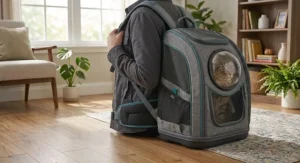
The telescopic handle and built-in wheels are the whole pitch: you pull instead of carry, which matters a great deal once your cat’s actual weight sinks in halfway across a parking lot.
Marketed specifically toward large cats and small-to-medium dogs, the AMTPM Wheeled Pet Carrier collapses for storage and uses a soft-sided shell with mesh panels for visibility. Here’s what to weigh: rolling carriers sacrifice a bit of interior width to make room for the wheel housing, so measure your cat’s actual girth against the listed interior dimensions rather than assuming “wheeled” automatically means “roomy.”
Based on the spec comparison against shoulder-strap soft carriers, the practical upside is obvious for anyone managing a heavy cat plus luggage, a stroller, or simply a bad back — you’re not lifting 20-plus pounds through an airport terminal.
Aggregated feedback consistently flags the wheels as smooth on flat indoor surfaces like vet office floors, with some reviewers noting the wheels struggle more on gravel or uneven outdoor terrain.
Pros:
- ✅ Telescopic handle removes the need to carry the weight
- ✅ Mesh panels keep visibility and airflow high
- ✅ Collapsible for easier storage between trips
Cons:
- ❌ Wheel housing slightly reduces interior width
- ❌ Wheels perform best on smooth, flat surfaces
Budget-friendly at roughly $45-$70, this is the practical pick for anyone who dreads carrying a big cat any real distance.
7. Cat-in-the-Bag Cozy Comfort XL — plush, huggable comfort for anxious big cats
The standout feature is the soft fabric wrap-style construction, purpose-built in Large and Extra-Large sizes specifically for breeds like Maine Coons, Norwegian Forest Cats, and Ragdolls.
Unlike a rigid crate, the Cat-in-the-Bag Cozy Comfort XL lets you hold your cat close against your body while still containing them securely — a meaningful difference for cats who panic more from feeling separated from their owner than from confinement itself. What most buyers overlook about this style is that it’s purpose-built for stressful medical situations: dental cleanings, grooming appointments, and vet visits where a jittery cat benefits from contact comfort rather than distance.
Based on the spec comparison against crate-style carriers, this design sacrifices some structural rigidity in exchange for a fundamentally different experience — closer to being carried in a sling than transported in a box. It’s a specialty pick, not a universal one.
Aggregated sentiment from cat owners of large breeds consistently highlights the calming effect of the close-contact design, while some reviewers note it isn’t built for solo hands-free carrying over long distances the way a shoulder-strap bag is.
Pros:
- ✅ Sized specifically for Maine Coons and large breeds
- ✅ Close-contact design comforts separation-anxious cats
- ✅ Purpose-built for vet, grooming, and dental visits
Cons:
- ❌ Less structure than a hard or flex-height carrier
- ❌ Not ideal for hands-free, long-distance carrying
Expect a premium price, typically in the $150-$200 range, reflecting its specialty design and smaller production runs.
How to Introduce an Extra Large Cat Carrier Without a Fight
Buying the right carrier solves half the problem; the other half is getting your cat to walk into it voluntarily. Start weeks before you actually need it, not the morning of the vet appointment. Leave the carrier out in a room your cat already likes, door open, with a blanket that smells like home draped inside. Toss treats just inside the entrance for the first few days, then gradually deeper, so the cat’s own curiosity does the work instead of your arms.
For an extra large cat carrier specifically, size becomes an ally here: a roomier interior feels less like a trap and more like a den, which large cats — often more food-motivated and less agile at squeezing through tight openings — tend to accept faster than small ones do. A common first-30-days mistake is only bringing the carrier out for stressful trips, which teaches your cat that its appearance always predicts something bad. Feed a meal or two near it instead. Zip your cat inside for thirty seconds at home, reward heavily, then let them out — building tolerance in calm, low-stakes reps rather than a single high-stress ordeal.
Maintenance matters too: wash removable liners monthly, check zippers and latches for wear every few months, and air out mesh panels after any trip involving stress-sweating or accidents.
Real-World Scenarios: Which Big Cat Carrier Fits Your Life?
Picture Maya, who flies twice a year with her 19-pound Maine Coon to visit family. She needs an airline-compliant carrier with proven safety credentials — the crash-tested Sleepypod Air or the IATA-friendly Petmate Sky Kennel both fit her use case better than a bulky pop-up enclosure that airlines won’t accept in-cabin.
Now picture Devon, a college student with a 17-pound rescue cat and a fifth-floor walk-up apartment. Storage space is precious and budget is tight, so the collapsible Necoichi Stress-Free Enclosure — foldable to a disc, roomy enough for a big cat to stretch — beats a rigid kennel that would eat closet space year-round.
And picture Renata, whose 22-pound Maine Coon needs quarterly dental cleanings and genuinely hates confinement. For her, the close-contact Cat-in-the-Bag Cozy Comfort XL solves an emotional problem, not just a logistical one — her cat calms faster held against her body than boxed inside plastic walls. Meanwhile, anyone managing a heavy cat with a bad back or long parking-lot walks should look hard at the wheeled AMTPM option before committing to a shoulder strap.
The Weight Capacity Decision Framework
If your cat weighs under 15 pounds but has a long body (many Maine Coon mixes), prioritize interior length over raw weight capacity — choose a flex-height or pop-up design. If your cat weighs 15-25 pounds and travels by air, choose an IATA-compliant hard-sided kennel, because airlines check compliance labels, not just size. If your cat weighs over 20 pounds and hates confinement emotionally more than physically, choose a close-contact soft wrap over a crate. If lifting the carrier yourself is the bottleneck, choose wheels over a shoulder strap, full stop — a rolling design removes the weight problem entirely rather than just tolerating it.
As a simple checklist: measure your cat nose-to-tail-base for length, measure shoulder height for the standing-room minimum, weigh your cat on a bathroom scale while holding them, then subtract your own weight — and only then start comparing carrier specs.
✨ Don’t Miss These Exclusive Deals!
🔍 Take your cat carrier for large cats search to the next level with these carefully selected picks. Click on any highlighted product to check current pricing and availability, and give your big-bodied companion the comfortable ride they deserve!
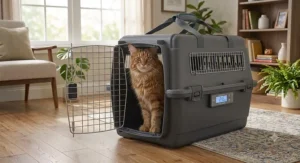
How to Choose a Cat Carrier for Large Cats
- Measure before you shop. Get your cat’s length, height, and girth first — guessing leads to returns.
- Prioritize interior dimensions over the weight rating printed on the box. A 25-pound rating means little if the interior is only 18 inches long.
- Match the material to the use case. Hard-sided for cargo and rough handling; soft-sided for comfort and car rides; wrap-style for anxious cats at the vet.
- Check for a spacious interior your cat can actually turn around in — not just lie flat, but rotate without wedging against a wall.
- Verify airline compliance separately from weight capacity if you fly, since under-seat dimensions and cargo rules differ by carrier.
- Look for multiple entry points — top-load or removable-top designs reduce stress during vet exams.
- Factor in your own physical limits — a wheeled or shoulder-strap design matters as much as anything printed on the cat’s side of the spec sheet.
Common Mistakes When Buying a Big Cat Carrier
The single most common mistake is trusting the weight capacity number alone. A carrier engineered for a stocky 25-pound dog might still feel like a coffin to a long-bodied 18-pound Maine Coon, because length and height matter as much as the number on the label. Reviewers across multiple sites consistently flag this exact disconnect — “rated for my cat’s weight but she can’t turn around” is a recurring complaint pattern.
A second frequent misstep is buying based on airline marketing language alone. “Airline approved” claims vary wildly by manufacturer and don’t guarantee compliance with your specific carrier’s current under-seat dimensions — always verify directly with the airline before flying, since policies change.
A third mistake: skipping carrier acclimation entirely and expecting a large, unfamiliar box to feel safe on day one. Large cats in particular, often more territorial about personal space, need longer acclimation windows than smaller, more adaptable cats — the ASPCA’s carrier-training resource walks through exactly this kind of gradual desensitization.
Soft-Sided vs Hard-Sided: Which Wins for Large Cats?
| Factor | Soft-Sided | Hard-Sided |
|---|---|---|
| Weight for carrying | Lighter, easier on your arm | Heavier, more structural mass |
| Standing room for large cats | Excellent with flex-height designs | Fixed, but consistently rigid |
| Airline cargo compliance | Rare | Common, IATA-friendly |
| Durability under stress-scratching | Can tear under sustained clawing | Resists claws and chewing |
| Storage | Folds flat or compresses | Bulkier, harder to store |
Looking at the comparison above, soft-sided carriers like the SturdiBag XL win on comfort and portability for car trips and vet visits, but hard-sided kennels like the Petmate Sky Kennel win decisively when airline cargo transport or a genuinely destructive, panicked cat is part of the equation. Budget-conscious buyers who mainly need car and home use should lean soft-sided; anyone flying or managing a cat prone to clawing through mesh should lean hard-sided.
What to Expect: Real-World Performance and Spacious Interior
On paper, “spacious interior” sounds like marketing fluff. In practice, it changes behavior. A cat with room to turn around and lie flat pants less, vocalizes less, and settles into a curled position faster than a cat wedged rigidly against carrier walls — because a cramped posture itself triggers a physiological stress response, not just a psychological one. What the spec sheet won’t tell you, but reviewers note repeatedly, is that a genuinely roomy carrier also lets you tuck in a small blanket or a worn t-shirt with your scent on it, which meaningfully speeds up settling time on longer trips.
Expect a large cat in a properly sized carrier to still vocalize during the first ten minutes of any car ride — that’s normal, not a sign of the wrong purchase. What separates a well-fitted carrier from an undersized one is how quickly that vocalizing tapers off once the initial adjustment period passes.
Features That Actually Matter (And Those That Don’t)
Ventilation on at least three sides matters; a single mesh window doesn’t cut it for a big-bodied cat generating more body heat in an enclosed space. A secure, tamper-resistant latch matters — cats are shockingly good at working loose zippers with a determined paw. A removable, washable liner matters, because accidents happen and you don’t want to be scrubbing a fixed carrier floor at 6 a.m. before a flight.
What doesn’t matter nearly as much as marketing suggests: decorative colors and patterns, since your cat experiences none of that; and “designer” branding that doesn’t translate into extra interior square footage. Reviewers consistently note that the flashiest-looking carriers on Amazon search pages aren’t correlated with better fit or durability — plain, function-first designs from specialty pet-travel brands tend to outperform trendier options.
Long-Term Cost & Maintenance of an Extra Large Cat Carrier
A $50 budget carrier that needs replacing every year after zipper failure or torn mesh can cost more over five years than a $150 premium carrier built to last a decade. Run the simple math: five years of $50 replacements totals $250, while one $150 purchase with occasional liner replacements might total $180-$200 across the same period — a real, if modest, long-term savings favoring the sturdier option.
Maintenance costs stay low across the board: replacement liners typically run $15-$25, and most carriers are otherwise machine-washable with no ongoing expense. The real cost driver is durability under the specific stress your cat puts on a carrier — a nervous scratcher shortens the lifespan of any soft-sided bag regardless of price point, which is worth factoring in before choosing style over structure.
Safety, Airline & Regulations Guide for Traveling With Large Cats
If you’re flying with a large cat, don’t rely on a carrier’s marketing claim of “airline approved” — regulations and under-seat dimensions vary by airline and by aircraft, and policies get updated regularly. According to the American Veterinary Medical Association, reducing a cat’s exposure to novel stimuli during transport meaningfully lowers measurable stress markers, which is part of why privacy panels and enclosed sides matter more for big cats than open wire crates.
For car travel, secure the carrier with a seatbelt strap rather than letting it slide on the seat — sudden stops turn an unsecured 20-pound carrier into a genuine projectile risk. The FDA’s guidance on traveling with pets specifically warns against ever leaving a cat unattended in a parked vehicle, since interior temperatures climb far faster than most owners expect even on mild days.
FAQ
❓ What is the best cat carrier for large cats?
❓ How much weight can a large cat carrier hold?
❓ What size carrier does a Maine Coon need?
❓ Are soft-sided or hard-sided carriers better for big cats?
❓ How do I get a large, reluctant cat into a carrier?
Conclusion
Finding a genuinely comfortable cat carrier for large cats comes down to one habit: measuring your cat before you measure the marketing copy. Weight capacity numbers only tell part of the story, and a spacious interior that lets your cat stand, turn, and settle flat matters more for a calm ride than any brand name on the tag. Whether you land on the standing-room flexibility of the SturdiBag XL, the crash-tested safety of the Sleepypod Air, the airline-grade structure of the Petmate Sky Kennel, or the close-contact comfort of the Cat-in-the-Bag Cozy Comfort XL, the right choice is the one sized to your specific cat’s real dimensions and your specific travel habits — not the loudest listing on the page.
Big cats deserve carriers built for their actual bodies, not scaled-up versions of carriers designed for smaller ones. Take the measurements, match them against the comparison table above, and your next vet visit or flight can be a lot less dramatic for both of you.
✨ Ready to upgrade your cat’s ride? Check current pricing on the pick that fits your cat’s size and your travel needs — your back, and your cat, will both thank you! 🐾
Recommended for You
- 7 Best Hard-Sided Cat Carriers of 2026: Sturdy, Secure Picks
- 7 Best Soft-Sided Cat Carriers in 2026
- Cat Backpack Carrier: 7 Best Picks for Hands-Free Adventures (2026)
Disclaimer: This article contains affiliate links. As an Amazon Associate, I earn from qualifying purchases. If you purchase products through these links, we may earn a small commission at no additional cost to you.
✨ Found this helpful? Share it with your friends! 💬🤗
