Table of Contents
Picture this: your diabetic cat needs special food, but your other feline keeps swooping in like a furry food thief. You’ve tried separate rooms, scheduled feeding times, and even become a mealtime referee. Sound familiar? Welcome to the world of microchip cat feeder technology—where mealtimes finally become stress-free.
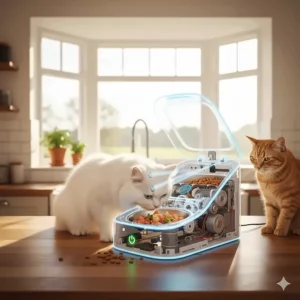
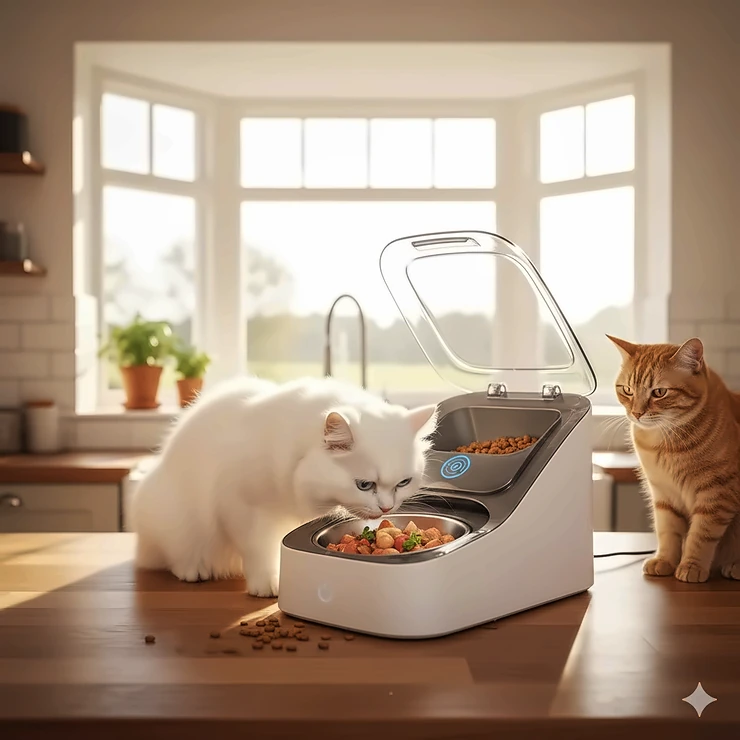
I’ve spent months researching and analyzing the latest microchip cat feeder models available in 2026, and the results are fascinating. These smart devices have evolved from simple bowl covers to sophisticated feeding systems that recognize your cat’s unique microchip or RFID tag, opening only for the designated pet. According to Cornell University College of Veterinary Medicine, obesity affects nearly 50% of cats seen at veterinary clinics, making portion control and individual cat feeding more critical than ever.
Whether you’re managing a multi-cat household, dealing with prescription diet feeding, or simply want to prevent your greedy cat from becoming overweight, a selective cat feeder might be exactly what your home needs. In this comprehensive guide, I’ll walk you through the top 7 products available on Amazon, compare their features, and help you choose the perfect RFID cat feeder for your situation.
Quick Comparison Table
| Product | Type | Price Range | Capacity | Best For |
|---|---|---|---|---|
| SureFeed Microchip Pet Feeder | Microchip/RFID | $130-$150 | 13.5 fl oz | Prescription diets, wet/dry food |
| SureFeed Connect | Microchip/RFID + App | $180-$220 | 13.5 fl oz | Health tracking, portion control |
| PETLIBRO One RFID | RFID Tag Only | $140-$160 | 3L (dry food) | Scheduled feeding, multi-cat homes |
| Closer Pets MiBowl | Microchip/RFID | $130-$200 | 12 oz | Compact spaces, fully enclosed |
| PortionPro Rx | RFID Tag Only | $170-$220 | 32 cups | Large households, portion control |
| PawsPik Microchip | Microchip/RFID | $140-$170 | 16 cups | Budget-friendly, app control |
| PETLIBRO RFID 2-Pack | RFID Tag Only | $260-$300 | 3L each | Two-cat households, synchronized feeding |
💬 Just one click – help others make better buying decisions too!😊
Top 7 Microchip Cat Feeders: Expert Analysis
1. SureFeed Microchip Pet Feeder (MPF001) – The Industry Standard
The SureFeed Microchip Pet Feeder remains the gold standard in selective cat feeder technology, and for good reason. This UK-designed feeder recognizes your cat’s existing ISO 11784/11785 FDX-B 15-digit microchip or the included RFID collar tag, making it incredibly versatile.
Key Specifications:
- Capacity: 13.5 fl oz (holds up to 4 wet food pouches)
- Power: 4 C batteries (6-month lifespan)
- Compatibility: Works with most veterinary microchips
- Bowl: Split bowl option for wet/dry food combination
What sets the SureFeed apart is its sealed bowl design with a neoprene lip that forms an airtight seal when closed. This keeps food fresh longer and prevents flies from accessing your cat’s meal—a game-changer during summer months. Customer feedback consistently praises its reliability, with one Amazon reviewer noting her cat with chronic urinary problems finally maintained a healthy weight after three years of use.
✅ Pros:
- Reads actual implanted microchips (no collar needed)
- Sealed bowl keeps food fresh and pest-free
- Stores up to 32 pet identities
- Works with both wet and dry food
- Proven track record since 2014
❌ Cons:
- Bowl can be accessed from behind by persistent pets
- No app connectivity or feeding tracking
- Higher initial cost
- Requires battery replacements
Price Range: $130-$150 | Best For: Prescription diet feeding, cats who refuse to wear collars, multi-pet homes with medical dietary needs
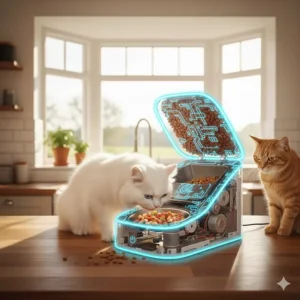
2. SureFeed Microchip Pet Feeder Connect – Smart Tracking Technology
Building on the original’s success, the SureFeed Microchip Pet Feeder Connect adds Wi-Fi connectivity and health monitoring capabilities. This premium model requires the Sure Petcare Hub (sold separately at $70-$90), but the investment pays off in detailed feeding insights.
Key Specifications:
- Integrated scales accurate to 1 gram
- LED portion guidance system
- Real-time feeding notifications
- Cloud-based feeding history tracking
The Connect version transforms food stealing prevention into comprehensive health monitoring. Through the Sure Petcare app, you’ll receive alerts about changes in eating patterns that might indicate illness weeks before other symptoms appear—a feature Cornell veterinary nutritionists emphasize as crucial for early disease detection.
Customer reviews highlight the portion control accuracy, with LED lights guiding you to fill the bowl to your vet-prescribed amount. One user reported catching her cat’s kidney disease early thanks to the app’s eating pattern alerts.
✅ Pros:
- Gram-accurate portion control with visual guidance
- Push notifications for feeding events
- Long-term health trend tracking
- Works with existing microchips
- Professional-grade data for veterinary consultations
❌ Cons:
- Requires separate hub purchase ($70-$90)
- Higher total cost ($250+ with hub)
- Depends on Wi-Fi connectivity
- More complex setup process
Price Range: $180-$220 (hub additional) | Best For: Health-conscious owners, cats with chronic conditions, data-driven pet care
3. PETLIBRO One RFID Smart Feeder – Modern App-Controlled Convenience
The PETLIBRO One RFID Smart Feeder brings granary-style automatic feeding to the RFID cat feeder market. Unlike bowl-style feeders, this 3-liter hopper dispenses dry food on schedule while restricting access to one specific cat via their collar tag.
Key Specifications:
- Capacity: 3L dry food hopper
- Connectivity: Dual-band Wi-Fi (2.4GHz & 5GHz)
- Meals: 1-10 scheduled meals per day
- Power: Corded electric with D battery backup
What makes PETLIBRO stand out is the comprehensive Pawsense app that tracks not just when your cat eats, but how much and how frequently. The five-layer freshness system includes silicone seals, a desiccant bag, and a sealed rotor that keeps kibble crunchy for weeks. Customer feedback on Amazon averages 3.8 stars, with users appreciating the generous capacity and reliable scheduling.
The lightweight RFID tag weighs just 4.2 grams—comfortable even for smaller cats. However, remember this feeder works ONLY with the included collar tag, not implanted microchips, which might be a dealbreaker for some households.
✅ Pros:
- Large 3L capacity lasts 2 weeks for average cats
- Dual-band Wi-Fi for stable connectivity
- Removable stainless steel bowl
- Flexible meal scheduling (1-10 times daily)
- Real-time eating behavior monitoring
❌ Cons:
- Dry food only
- RFID tag required (doesn’t read microchips)
- Some cats dislike wearing collar tags
- Slightly more expensive than basic models
Price Range: $140-$160 | Best For: Dry food feeders, tech-savvy owners, cats comfortable with collars, scheduled meal management
4. Closer Pets MiBowl (CP500) – Compact European Engineering
The Closer Pets MiBowl brings award-winning British design to the American market with its fully enclosed feeding station. This compact powerhouse reads both ISO and AVID 15-digit microchips, plus it includes an electronic ID disc for non-chipped pets.
Key Specifications:
- Capacity: 12 oz (340g) – holds 4 wet food pouches
- Footprint: Ultra-compact design
- Recognition: ISO/AVID microchips + Pet Mate ID disc
- Programming: Stores up to 10 pet identities
The MiBowl’s fully enclosed design is its standout feature. Unlike feeders that can be accessed from behind, this unit’s sides and rear are completely sealed, making it impossible for food thieves to sneak in. The natural feeding position keeps your cat’s paws on the ground rather than elevated, which veterinary experts note reduces whisker fatigue and digestive discomfort.
Chewy reviewers give it 4.2 stars, with many noting it works better than SureFeed for persistent food stealers. One customer shared how it allowed her diabetic cat to graze throughout the day without her other cat getting into the special food.
✅ Pros:
- Completely enclosed prevents rear/side access
- Works with 15-digit microchips
- Removable portion-protecting clips for kittens
- Dishwasher-safe bowl
- Quiet operation
❌ Cons:
- Doesn’t work with older 10-digit microchips
- Bowl depth may cause whisker fatigue for some cats
- No app connectivity
- More expensive than basic models
Price Range: $130-$200 | Best For: Homes with dogs stealing cat food, determined food thieves, wet food feeding, compact living spaces
5. PortionPro Rx RFID Automatic Feeder – Veterinary-Grade Portion Control
The PortionPro Rx takes a different approach with its granary-style design and active RFID technology. Developed with veterinary input, this feeder excels at precise portion control for weight management and prescription diet feeding.
Key Specifications:
- Capacity: 32 cups dry kibble
- Recognition Range: 2 feet (faster than passive RFID)
- Meals: 2-6 daily for cats, 2-3 for dogs
- Portions: ½ cup to 6 cups daily in precise increments
- Bowl: Ceramic-coated steel for durability
What makes PortionPro Rx unique is its active RFID technology that detects tags from 2 feet away—giving the feeder more time to identify and respond to different pets. The automatic meal division system splits daily portions into multiple feedings, promoting better digestion and preventing gulping.
Dr. Robin Downing, a board-certified veterinary pain management specialist, endorses this feeder for obesity management. Chewy reviews average 3.1 stars, with some mechanical issues reported, but customers using it successfully praise the RFID accuracy and portion control capabilities.
✅ Pros:
- Massive 32-cup capacity
- Precise portion control in ⅛ cup increments
- Active RFID with 2-foot range
- Veterinarian-recommended
- Closed and open mode options
❌ Cons:
- Dry food only
- Reported mechanical issues with lid closing
- Louder operation than competitors
- Customer service responsiveness concerns
- RFID tag only (no microchip reading)
Price Range: $170-$220 | Best For: Obesity management, large multi-pet households, precise prescription diet feeding, budget-conscious feeding over time
6. PawsPik Microchip RFID Automatic Feeder – Budget-Friendly Smart Option
The PawsPik Microchip RFID Feeder offers app control and microchip compatibility at a more accessible price point. This 16-cup capacity feeder bridges the gap between premium smart feeders and basic RFID models.
Key Specifications:
- Capacity: 16 cups dry food
- Compatibility: ISO microchips + PawsPik RFID tags
- Power: Corded with battery backup
- App: iOS/Android compatible for scheduling
PawsPik’s three sensing modes (RFID only, infrared only, or both) provide flexibility during training and daily use. The color-coded LED status lights clearly indicate standby, feeding, or pause modes—helpful for troubleshooting without checking the app.
Note that while it reads standard 15-digit microchips, it doesn’t work with older 9-digit or Avid chip formats. Customer feedback suggests allowing extra training time for cats new to automatic feeders, but once acclimated, the system works reliably.
✅ Pros:
- Reads implanted ISO microchips
- Mid-range 16-cup capacity
- App scheduling and monitoring
- Three sensing mode options
- More affordable than premium models
❌ Cons:
- Doesn’t read 9-digit or Avid microchips
- Dry food only
- Less established brand reputation
- Limited long-term reliability data
Price Range: $140-$170 | Best For: Budget-conscious buyers, standard microchip owners, moderate-sized households, first-time smart feeder users
7. PETLIBRO RFID Automatic Cat Feeder (2-Pack) – Dual-Cat Solution
For two-cat households, the PETLIBRO RFID 2-Pack offers the best value and synchronized feeding experience. Each 3-liter feeder includes its own RFID tag and connects to the same app for unified management.
Key Specifications:
- Capacity: 3L per feeder (6L total)
- Connectivity: Dual-band Wi-Fi
- Scheduling: Independent meal plans per cat
- Features: Diet tracking, eating behavior logs, freshness protection
This bundle shines for households where each cat needs completely different feeding schedules or portion sizes. One customer shared how she programmed morning meals for her young active cat while her senior cat receives smaller, more frequent portions throughout the day.
The five-layer freshness system and dual-band Wi-Fi make these feeders reliable for daily use. Amazon reviewers appreciate the synchronized app control that eliminates managing two separate systems.
✅ Pros:
- Complete two-cat solution out of the box
- Individual meal customization per cat
- Unified app control for both feeders
- Value pricing compared to buying separately
- Comprehensive eating behavior tracking
❌ Cons:
- RFID tags only (no microchip reading)
- Requires both cats to tolerate collar tags
- Dry food only
- Takes up more floor space
Price Range: $260-$300 for 2-pack | Best For: Two-cat households, different feeding schedules, synchronized feeding management, long-term value
Understanding Microchip Cat Feeder Technology
What is a Microchip Cat Feeder?
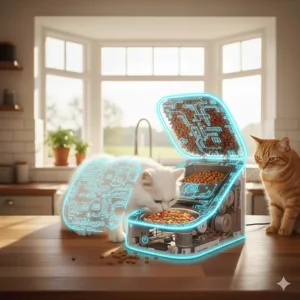
A microchip cat feeder is a selective automatic feeding device that uses radio frequency identification (RFID) technology to recognize individual pets. These smart feeders open only when they detect a specific pet’s unique identifier—either their veterinary implanted microchip or a specialized RFID collar tag.
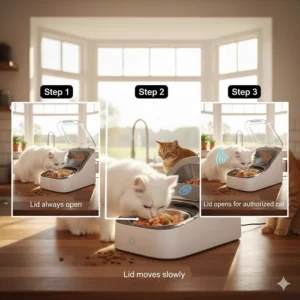
Think of it like a biometric lock for your cat’s food bowl. When your designated cat approaches, the feeder scans for their identification number. If there’s a match, the lid opens smoothly. If another pet tries to access the food, the lid stays firmly closed or quickly shuts to block access.
According to Cornell’s Feline Health Center, cats are obligate carnivores requiring precise nutritional balance, and individual cat feeding becomes crucial when pets have different dietary needs or health conditions.
How Microchip Recognition Works
Modern RFID cat feeder systems use two primary identification methods:
Passive Microchip Reading: Feeders like SureFeed and MiBowl detect the same ISO 11784/11785 FDX-B microchips veterinarians implant during routine procedures. These chips contain a unique 15-digit code that never changes. When your cat’s head enters the feeding zone, the reader activates the chip and verifies the number against its stored database.
Active RFID Tags: Systems like PETLIBRO and PortionPro Rx use specialized collar tags with tiny batteries that actively broadcast identification signals. These tags offer longer detection ranges (up to 2 feet) and faster recognition but require your cat to wear a collar.
The technology mirrors how contactless payment cards work—secure, reliable, and surprisingly quick once your cat learns the routine.
Food Stealing Prevention Mechanisms
The primary purpose of these feeders is individual cat feeding without constant supervision. They prevent food stealing through several smart mechanisms:
Lid Control: When an unauthorized pet approaches, the feeder either keeps the lid closed or triggers it to close quickly. Premium models like the surefeed microchip feeder include safety sensors that prevent the lid from closing on your cat’s head.
Timing Intelligence: Many feeders track how long the registered cat has been near the bowl. If the signal disappears (your cat walked away), the lid closes within 5-30 seconds to prevent food theft.
Physical Barriers: Models like the Closer Pets MiBowl feature fully enclosed designs that eliminate rear or side access entirely, stopping even the most determined food thieves.
Key Benefits of Selective Cat Feeders
Prescription Diet Feeding Made Simple
Managing prescription diet feeding becomes dramatically easier with microchip cat feeder technology. If your cat needs therapeutic food for kidney disease, diabetes, or food allergies, you know the struggle of keeping other pets away from that expensive specialized nutrition.
Veterinary nutritionists at Cornell emphasize that diet compliance is critical for managing chronic conditions. A missed medication hidden in food or contamination with regular food can set back treatment by weeks.
With a selective cat feeder, your cat on prescription food accesses their bowl 24/7 while others are automatically blocked. This allows natural grazing behavior—particularly important for cats with diabetes who need steady blood sugar levels throughout the day.
Weight Management and Obesity Prevention
Feline obesity is reaching epidemic proportions. Cornell research shows that overweight cats are 4.5 times more likely to develop diabetes mellitus compared to cats at optimal weight. The problem? Free-feeding dry food and food stealing between cats.
Microchip feeders solve both issues. You can:
- Measure exact portions for the overweight cat while allowing your healthy-weight cat to graze freely
- Schedule multiple small meals throughout the day to boost metabolism
- Track actual consumption through app-connected models
- Prevent the “vacuum cleaner cat” from gobbling everyone else’s food
One Amazon reviewer shared how her 26-pound cat finally lost weight after two years of failed diets, simply because the RFID cat feeder stopped him from stealing his sister’s meals.
Stress-Free Mealtime for Anxious Cats
Food aggression and mealtime anxiety are common in multi-cat households. According to feline behaviorists, cats are solitary hunters who naturally prefer eating alone without competition.
A timid cat constantly bullied away from the food bowl will either become underweight or develop stress-related behaviors like inappropriate urination or excessive grooming. Microchip feeders create personal, protected feeding spaces where anxious cats can eat at their own pace without looking over their shoulder.
The enclosed design of models like MiBowl provides additional psychological comfort—like eating in a private booth rather than an open cafeteria.
Multi-Pet Household Harmony
Whether you have two cats or five, different dietary needs are inevitable. One might be a kitten needing high-calorie growth food, another a senior on kidney support diet, and perhaps a middle-aged cat maintaining weight.
Traditional solutions—feeding in separate rooms, scheduled mealtimes under supervision, or giving up and feeding everyone the expensive therapeutic food—are exhausting and unsustainable.
With individual cat feeding systems, each cat gets their own feeder programmed to their identity. Some households use the PETLIBRO 2-pack for two cats with completely different schedules, while others invest in three SureFeed units to manage complex dietary requirements.
How to Choose the Right Microchip Cat Feeder
Microchip vs. RFID Tag Compatibility
Your Cat Already Has a Microchip? Choose feeders that read ISO 11784/11785 FDX-B microchips:
- SureFeed Microchip Pet Feeder (standard and Connect)
- Closer Pets MiBowl (reads ISO and AVID 15-digit)
- PawsPik Microchip (ISO compatible)
Check your microchip paperwork or ask your vet which format your cat has. Most North American pets have 15-digit ISO chips, but some older rescues might have 9-digit or 10-digit chips that aren’t universally compatible.
Your Cat Isn’t Microchipped or Refuses Collars? Get them microchipped first! It’s a simple, one-time procedure during any vet visit ($45-$75) that provides permanent identification for life. The same chip that helps lost cats get home also unlocks smart feeder technology.
Prefer Collar Tag Systems? Models using only RFID tags include:
- PETLIBRO One RFID
- PortionPro Rx
- Most budget-friendly options
RFID tags work well if your cat tolerates collars, but consider breakaway collar safety features and regular tag battery replacement (usually yearly).
Wet Food vs. Dry Food Considerations
Bowl-Style Feeders (wet or dry food):
- SureFeed models hold 13.5 fl oz—perfect for wet food pouches
- MiBowl accommodates 12 oz wet or dry
- Sealed lids keep wet food fresh for 6-8 hours
These work beautifully for prescription diet feeding with canned food or pets who need moisture in their diet.
Granary-Style Feeders (dry food only):
- PETLIBRO One RFID (3L capacity)
- PortionPro Rx (32 cups)
- PawsPik Microchip (16 cups)
Choose these for scheduled dry food feeding over multiple days. The large hoppers mean less frequent refilling—ideal if you work long hours or travel occasionally.
Cornell nutritionists note that wet food’s higher protein and moisture content often supports better weight management, while dry food’s convenience fits busy lifestyles.
Capacity Planning for Your Household
Single Cat: Any model works, but consider:
- Bowl-style for variety (wet + dry options)
- Smaller capacity if you prefer fresh food daily
- Premium features like health tracking if budget allows
Two Cats: Options include:
- One feeder per cat (recommended for very different needs)
- PETLIBRO 2-pack for synchronized management
- Larger capacity feeders if feeding the same food
Three or More Cats: Calculate total daily food needs and plan accordingly:
- Multiple units may be more reliable than one large feeder
- Stagger feeder locations to reduce mealtime congestion
- Consider investing in the SureFeed system that stores 32 pet identities
App Connectivity and Smart Features
Basic Models (no app needed):
- SureFeed Microchip Pet Feeder MPF001
- MiBowl CP500
- Simple, reliable, no Wi-Fi dependency
App-Connected Models:
- SureFeed Connect (health tracking, portion guidance)
- PETLIBRO One RFID (meal scheduling, eating logs)
- PawsPik (basic app controls)
Smart features add value if you want:
- Feeding notifications while traveling
- Long-term health data for vet visits
- Remote meal scheduling adjustments
- Multiple cats tracked in one interface
However, app-dependent feeders can fail during Wi-Fi outages. Most offer backup battery operation, but scheduling might reset.
Budget Considerations and Long-Term Value
Budget-Friendly ($130-$150):
- SureFeed MPF001 – Proven reliability
- MiBowl CP500 (on sale)
- Basic functionality, no ongoing costs
Mid-Range ($150-$180):
- PETLIBRO One RFID
- PawsPik Microchip
- Balance of features and cost
Premium ($200+):
- SureFeed Connect + Hub
- PortionPro Rx
- PETLIBRO 2-pack
- Advanced features, health tracking
Remember to factor in ongoing costs:
- Batteries (4-6 months for bowl feeders)
- RFID collar tags (if needed)
- Replacement bowls or parts
- Potential hub purchases
The most expensive feeder isn’t always best for your situation. A $140 SureFeed that lasts 10 years delivers better value than a $220 model that breaks after 18 months.
Comparison: Microchip Feeders vs. Traditional Feeding Methods
| Feature | Microchip Feeders | Separate Room Feeding | Scheduled Supervision | Free Feeding |
|---|---|---|---|---|
| Prevents Food Stealing | ✅ Automatic | ⚠️ Requires closed doors | ⚠️ Requires presence | ❌ No control |
| Allows Natural Grazing | ✅ Yes | ✅ Yes | ❌ No | ✅ Yes |
| Time Investment | Low (setup only) | Medium (door management) | High (every meal) | Low |
| Works While Away | ✅ Yes | ⚠️ Risky (door failures) | ❌ No | ⚠️ Overeating risk |
| Prescription Diet Safety | ✅ Excellent | ✅ Good | ✅ Good | ❌ Impossible |
| Multi-Cat Flexibility | ✅ Excellent | ⚠️ Limited space | ⚠️ High effort | ❌ No control |
| Initial Cost | High ($130-$220) | Low ($0) | Low ($0) | Low ($0) |
| Stress Reduction | ✅ High | ⚠️ Isolation stress | ✅ Moderate | ❌ High competition |
Setting Up Your Microchip Cat Feeder: Step-by-Step Guide
Initial Programming and Cat Introduction
Step 1: Choose the Right Location Place your feeder in a quiet, low-traffic area where your cat naturally feels comfortable eating. Avoid noisy appliances or high-traffic walkways. If you have multiple feeders, space them at least 6 feet apart to reduce competition stress.
Step 2: Power Up and Programming Install batteries or plug in the power adapter. Most feeders enter programming mode automatically on first use. Follow the manufacturer’s instructions to register your cat’s microchip or RFID tag—usually involving holding the tag near the reader or having your cat approach with the lid manually open.
Step 3: Training Mode Introduction Enable training mode if available. This keeps the lid open longer (30-60 seconds) and may eliminate the lid-closing sound temporarily. Place your cat’s favorite treats or a small amount of wet food inside to create positive associations.
Step 4: Gradual Transition (Week 1)
- Days 1-2: Leave feeder open and unpowered with regular food inside
- Days 3-4: Power on in training mode, feed all meals through the feeder
- Days 5-7: Reduce training mode time, let the lid close naturally
Most cats adapt within 3-7 days. Anxious or senior cats might need 2 weeks of gradual introduction.
Troubleshooting Common Issues
Problem: Cat Won’t Approach the Feeder Solution: Move regular food bowl closer to feeder daily until they’re touching. Place ultra-high-value treats (tuna flakes, chicken) inside the feeder. Consider Feliway diffusers nearby to reduce anxiety.
Problem: Feeder Doesn’t Recognize Microchip Solution: Verify microchip compatibility (15-digit ISO for most). Check microchip location—some migrate slightly over time. Position food bowl so cat’s head enters detection zone fully. For collar tags, ensure correct orientation and battery connection.
Problem: Lid Closes Too Quickly Solution: Most feeders have adjustable closing speeds. Increase delay time in settings. For models without adjustment, place feeder slightly elevated (on a mat or stand) to slow mechanical action.
Problem: Other Pets Access Food from Behind Solution: Add a SureFeed Rear Cover ($40-$50) or place feeder against a wall. Consider upgrading to fully enclosed models like MiBowl for determined thieves.
Maintenance and Cleaning Best Practices
Daily: Check battery indicators, refill food, wipe exterior with damp cloth.
Weekly: Remove and wash bowls in dishwasher or with mild soap. Check lid seal integrity. Vacuum around feeder base to prevent kibble buildup.
Monthly: Replace desiccant bags (for dry food feeders). Clean infrared or RFID sensors with microfiber cloth. Inspect batteries—replace at 20% capacity rather than waiting for complete failure.
Quarterly: Full disassembly cleaning. Replace worn seals or o-rings. Test all functions systematically. Update app firmware if available.
Proper maintenance extends feeder lifespan dramatically. Amazon reviews show well-maintained SureFeed units lasting 8-10 years versus 2-3 years for neglected feeders.
✨ Don’t Miss These Exclusive Deals!
🔍 Take your cat feeding routine to the next level with these carefully selected microchip cat feeder products. Click on any highlighted item above to check current pricing and availability on Amazon. These innovative solutions will help you create stress-free mealtimes your cats will love!
Health Monitoring Through Feeding Behavior
Modern microchip cat feeder systems with app connectivity transform mealtime from a basic necessity into a health monitoring tool. Changes in feeding patterns often represent the earliest detectable signs of illness in cats.
Early Disease Detection Indicators
Decreased Appetite: A cat eating 25% less than their baseline for 2-3 consecutive days might be developing:
- Dental disease (painful to chew)
- Kidney disease (nausea from toxin buildup)
- Hyperthyroidism (despite increased hunger initially)
- Gastrointestinal issues
Increased Consumption: Sudden increases of 30%+ may indicate:
- Diabetes mellitus (cells can’t use glucose for energy)
- Hyperthyroidism (metabolism overdrive)
- Intestinal parasites (nutrient absorption issues)
- Certain medications (like steroids)
Changed Eating Frequency: Cats normally eat 10-20 small meals daily. Switching to 2-3 large meals or constant grazing can signal digestive discomfort or metabolic changes.
According to Cornell’s veterinary experts, monitoring food intake helps identify health issues weeks before more obvious symptoms appear, dramatically improving treatment outcomes.
Using Data for Veterinary Consultations
Smart feeders like the SureFeed Connect and PETLIBRO One RFID generate detailed feeding reports you can share directly with your veterinarian. Instead of vague estimates, you’ll provide:
- Exact daily consumption in grams or ounces
- Meal frequency patterns
- Week-over-week comparison charts
- Specific dates when changes occurred
This data proves invaluable during wellness exams or when investigating subtle health concerns. One user reported her vet diagnosed early-stage kidney disease based on a 15% decrease in food consumption over three weeks—before any bloodwork abnormalities appeared.
Managing Chronic Conditions
For cats with diabetes, kidney disease, or inflammatory bowel disease, consistent feeding schedules and precise portions are critical. Microchip feeders excel at:
Diabetes Management:
- Timed meals synchronized with insulin injections
- Portion control to prevent blood sugar spikes
- Preventing other cats from eating the diabetic’s prescription food
Kidney Disease:
- Small, frequent meals reduce nausea
- Protected access to phosphorus-restricted food
- Monitoring actual consumption vs. prescribed amounts
Food Allergies:
- Absolute prevention of non-hypoallergenic food access
- Clear data on elimination diet compliance
- Peace of mind during dietary trials
Special Considerations for Different Cat Types
Kittens and Growing Cats
Kittens require 2-3 times the calories per pound as adult cats during their rapid growth phase (2-12 months). In multi-age households, preventing kittens from gobbling adult food—or adults from stealing calorie-dense kitten food—becomes challenging.
Best Options for Kittens:
- Closer Pets MiBowl with portion-protecting clips designed specifically for small mouths
- SureFeed with split bowl for wet/dry combination feeding
- Microchip-compatible models so growing kittens don’t need constant tag replacements
Program kittens’ microchips early (safe at 8 weeks, often done during first vaccines). As they grow, the feeder continues recognizing them without adjustments.
Senior Cats with Special Needs
Older cats face unique challenges: arthritis makes bending painful, dental disease affects chewing, chronic kidney disease is common, and competition at mealtimes becomes more stressful.
Senior-Friendly Features:
- Elevated bowl positions (reduce neck strain)
- Wider bowl openings (easier head access)
- Softer food compatibility (wet food feeders)
- Longer lid-open times (slower eating speed)
The MiBowl’s natural feeding position keeps paws on the ground rather than elevated, reducing joint strain. For arthritic cats, consider placing any feeder on a slight platform (2-4 inches) to minimize bending.
Cats on Medication
Hiding medication in food works brilliantly—until another cat eats the medicated meal. Microchip feeders solve this dangerous scenario.
Medication Feeding Strategies:
- Mix medication with small amount of highly palatable food (tuna, chicken baby food)
- Place medicated portion in feeder at scheduled time
- Monitor through app to confirm consumption
- Keep non-medicated dry food available separately
One Amazon reviewer shared how her hyperthyroid cat reliably takes medication twice daily via the SureFeed, while her other three cats have zero access to the medicated food.
Cats with Food Aggression Issues
Food aggression stems from resource scarcity anxiety, even in well-fed cats. The dominant cat may eat beyond fullness just to prevent others from accessing food, while timid cats become undernourished despite food availability.
Reducing Food Aggression:
- Each cat gets their own feeder (removes competition)
- Place feeders in different rooms (reduces proximity stress)
- Feed simultaneously (prevents jealousy)
- Never punish food guarding (increases anxiety)
Behaviorists emphasize that microchip feeders address the root cause—resource scarcity anxiety—rather than just managing symptoms.
Cost Analysis: Long-Term Investment Value
Initial Purchase vs. Long-Term Savings
Upfront Investment:
- Budget Model: $130-$150
- Mid-Range: $150-$180
- Premium with App: $200-$220
- Hub (if needed): $70-$90
Ongoing Costs (Annual):
- Batteries: $15-$25
- Replacement Bowls: $10-$20 (if needed)
- RFID Collar Tags: $15-$25 (replacement/spare)
Compare to Alternative Costs:
- Separate room feeding: $0 equipment, high labor cost
- Prescription diet waste (other pets eating it): $200-$400 annually
- Obesity-related vet bills: $500-$2,000+ for diabetes, arthritis treatment
- Stress-related behavior issues: $100-$500 (medication, behaviorist visits)
One user calculated that preventing her healthy cat from eating her diabetic cat’s $80/month prescription food paid for the SureFeed feeder in just 5 months. By month 6, she was already saving money.
Prescription Diet Protection Value
Veterinary therapeutic diets cost 3-5 times more than regular cat food:
- Hill’s Prescription Diet: $2.50-$4.00 per can
- Royal Canin Veterinary: $2.00-$3.50 per can
- Regular quality food: $0.60-$1.20 per can
If another cat steals just one therapeutic meal daily, you waste $75-$120 monthly. A $150 feeder pays for itself in 6-8 weeks through food waste elimination alone.
Health Cost Prevention
According to veterinary economic studies, preventing feline obesity saves an average of $1,200-$3,500 over a cat’s lifetime in:
- Diabetes management ($800-$2,000 annually)
- Arthritis treatment ($300-$800 annually)
- Urinary blockage surgery ($1,500-$4,000 emergency)
- Extended lifespan quality-of-life costs
Microchip feeders directly support weight management by enabling precise portion control and preventing food stealing—key factors in obesity prevention.
Environmental and Sustainability Considerations
Energy Consumption
Battery-Powered Models: Most bowl-style feeders use 4 C batteries lasting 4-6 months. Annual consumption: 8-12 batteries. Environmental impact can be minimized by using rechargeable NiMH batteries (initial investment $15-$25 for charger and batteries).
Plug-in Models: Granary feeders with app connectivity draw 5-15 watts when active, negligible when idle. Annual electricity cost: $2-$5 based on average US rates. Backup battery options ensure feeding continues during power outages.
Eco-Friendly Choices:
- Use rechargeable batteries in compatible feeders
- Choose plug-in models if nearby outlet available
- Look for Energy Star equivalent efficiency in app-connected models
Product Lifespan and Replacement Parts
Well-designed microchip feeders should last 5-10 years with proper maintenance. The SureFeed brand has proven reliability since 2014, with many original units still functioning in 2026.
Replaceable Components:
- Bowls (stainless steel lasts longer than plastic)
- Lid seals and O-rings
- Battery doors
- Collar tags (replaceable batteries extend life)
Companies like SurePetcare and Closer Pets offer comprehensive spare parts, reducing need for complete unit replacement. This modular approach significantly reduces long-term environmental impact.
Packaging and Waste Reduction
Premium brands increasingly use recyclable packaging materials. When purchasing:
- Choose minimal packaging options
- Verify recyclability of product components
- Consider certified refurbished units (Amazon Renewed) at 20-30% savings
- Donate or responsibly recycle old feeders when upgrading
By preventing prescription diet waste and reducing packaging from separate feeding solutions, microchip feeders ultimately reduce environmental footprint despite higher manufacturing complexity.
FAQ: Everything You Need to Know
❓ Do microchip cat feeders work with all veterinary microchips?
❓ How long do batteries last in microchip cat feeders?
❓ Can I use a microchip cat feeder for wet food?
❓ What happens if my cat loses their collar tag?
❓ Do microchip cat feeders prevent food aggression?
Conclusion: Transform Your Multi-Cat Feeding Routine
After analyzing the top 7 microchip cat feeder options available in 2026, it’s clear that this technology has matured into an essential tool for multi-cat households, prescription diet feeding, and individual cat feeding management.
The SureFeed Microchip Pet Feeder remains my top overall recommendation for its proven reliability, broad microchip compatibility, and versatile wet/dry food capability. For tech-savvy owners seeking health data, the SureFeed Connect justifies its premium price through comprehensive monitoring features. Budget-conscious buyers will find excellent value in the PETLIBRO One RFID, especially for dry food feeding schedules.
For households with persistent food stealers, the Closer Pets MiBowl’s fully enclosed design prevents rear access that defeats other models. And if you’re managing two cats with completely different needs, the PETLIBRO 2-pack offers unbeatable synchronized control.
Whatever your situation—prescription diet feeding, obesity prevention, food stealing prevention, or simply creating stress-free mealtimes—there’s a selective cat feeder solution that fits. The initial investment pays for itself through reduced food waste, prevented health issues, and the priceless gift of mealtime peace.
Remember that successful implementation requires patience during the 1-2 week training period. Most cats adapt quickly, but anxious or senior cats may need extra time. The payoff—a harmonious multi-cat household where every cat gets exactly the nutrition they need—makes the effort worthwhile.
Ready to stop being a mealtime referee? Choose the model that best fits your cats’ needs and your lifestyle. Your future self (and your cats) will thank you for making feeding time automatic, stress-free, and perfectly tailored to each feline family member.
Recommended for You
- Best Gravity Cat Feeders 2026: 7 Top Self-Feeding Solutions
- 7 Best Cat Bowl for Whisker Fatigue Solutions (2026)
- 7 Best Stainless Steel Cat Bowls 2026 – Vet-Approved Guide
Disclaimer: This article contains affiliate links. If you purchase products through these links, we may earn a small commission at no additional cost to you.
✨ Found this helpful? Share it with your friends! 💬🤗
