
Table of Contents
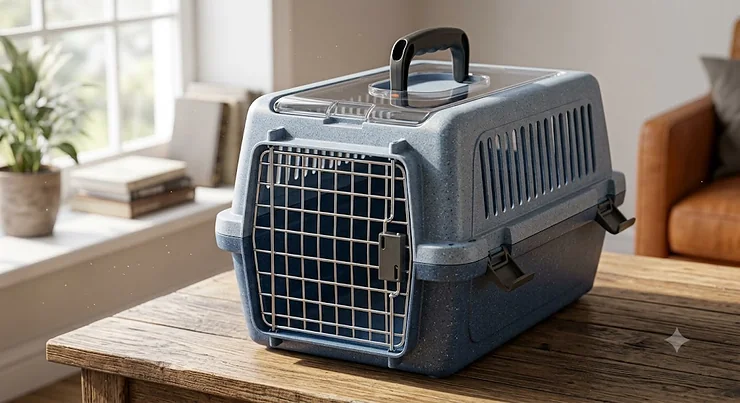
A hard-sided cat carrier is a rigid-shell pet transport case, usually molded plastic with a wire or steel door, built to keep a cat contained and protected during car rides, vet visits, or air travel. Here’s the thing nobody tells you before your cat’s first emergency vet run: the carrier you own matters almost as much as the vet you’re driving to. A flimsy shell that pops open on a pothole, or a zipper that a panicked 12-pound tabby can shred through in under a minute, turns a stressful day into a genuinely dangerous one.
I’ve spent the last few weeks buried in spec sheets, manufacturer data, and aggregated customer feedback across Amazon, Chewy, and Petco to figure out which hard-sided cat carrier options actually earn their keep in 2026. Not the ones with the prettiest product photos — the ones with door latches that survive a determined paw, plastic that doesn’t crack after two winters in a trunk, and dimensions that airlines and veterinarians actually accept without a fight.
This guide breaks down seven real, currently available carriers spanning budget molded-plastic basics to premium IATA-compliant kennels, plus the comparisons, mistakes, and use-case scenarios that Amazon’s own product pages never bother to mention. Whether you’re hunting for a plastic cat carrier for a single annual checkup or a sturdier setup for a cat who travels every month, you’ll walk away knowing exactly which shell fits your situation — and why.
Quick Comparison Table
| Carrier | Weight Capacity | Best For | Price Range |
|---|---|---|---|
| Petmate Two-Door Top Load Kennel | Up to 20 lbs | Budget vet trips | Under $55 |
| Amazon Basics 2-Door Top-Load Carrier | Up to 22 lbs | First-time owners | $30–$45 |
| IRIS USA 23-Inch Hard-Sided Carrier | Up to 18 lbs | Easy-clean households | $35–$55 |
| DUMOS 23-Inch Hard-Sided Carrier | Up to 22 lbs | Escape-prone cats | $50–$70 |
| Ferplast Atlas 20 | Small/toy-size pets | Ventilation-focused owners | $40–$60 |
| Petmate Sky Kennel | 15–30 lbs (size-dependent) | Frequent flyers | $60–$110 |
| Petmate Ultra Vari Kennel | 25–90+ lbs (size-dependent) | Large or multi-cat homes | $50–$130 |
Look at the spread here and a pattern jumps out immediately: nobody in this category is expensive by furniture standards, but the gap between a $35 basic shell and a $100+ Sky Kennel isn’t padding — it’s latch engineering, ventilation design, and airline paperwork compliance. If you’re only ever hauling your cat three miles to the vet once a year, the budget tier does the job. If you’re flying twice a year or managing a cat who treats every carrier like a jailbreak scenario, that price gap buys real peace of mind.
✨ Ready to see which shell actually fits your cat’s size and your travel habits? Keep scrolling — the full breakdown is just below.
Top 7 Hard-Sided Cat Carriers: Expert Analysis
1. Petmate Two-Door Top Load Kennel — best budget pick for quick vet trips
The Petmate Two-Door Top Load Kennel earns its spot at the top of the budget tier because it does the unglamorous job well and doesn’t pretend to be anything fancier. This is a front-and-top-loading hard shell built from heavy-duty plastic with a steel wire door, rated for pets up to roughly 20 pounds depending on the size variant you choose.
What most buyers overlook about the top-load door is that it isn’t just a gimmick — it’s genuinely the fastest way to extract a cat who’s wedged herself into the back corner refusing to walk out the front. The wing-nut-and-bolt assembly means no tools are required, and the steel front door is independently push/pull tested to withstand extreme handling, which matters more than it sounds like when a cat is throwing her full body weight against it. Based on the spec comparison with other budget shells, this one’s ventilation cutouts run along more of the surface than most competitors in the same price tier, which keeps airflow decent even on a warm car ride.
Aggregated review data from Chewy shows this kennel holding a 4.7-star average across roughly 2,000 ratings, with recurring themes around sturdiness, secure closures, and value for the price; Petco reviewers have separately noted it as a durable long-term replacement for aging soft-sided carriers, though a few mention wishing a cushioned pad were included standard. That’s a legitimately strong signal for a carrier priced this low — reviewers aren’t just tolerating it, they’re actively recommending it as an upgrade.
Pros:
- ✅ Steel door 3rd-party tested against extreme push/pull force
- ✅ Top-load access makes reluctant cats easier to remove
- ✅ Strong aggregated rating (4.7/5) at a low price point
Cons:
- ❌ No cushioned pad included in the base package
- ❌ Wing-nut assembly requires occasional retightening over time
At under $55 for most sizes, this is the carrier I’d point a budget-conscious first-time cat owner toward without hesitation — it’s not the plushest option here, but it’s honest, tested, and priced like it knows exactly what job it’s doing.
2. Amazon Basics 2-Door Top-Load Hard-Sided Carrier — no-frills value for first-time owners
The Amazon Basics 2-Door Top-Load Hard-Sided Carrier measures roughly 22.8″L x 15″W x 13″H and covers similar functional ground to the Petmate above: front and top entry, a rigid plastic shell, and a carry handle. What sets it apart is simplicity — this is the plastic cat carrier equivalent of a white-label product that skips branding flourishes in favor of just shipping a working carrier at a lower price point.
Here’s what the spec sheet won’t tell you: because this is a house-brand product, replacement parts and accessory add-ons (travel bowls, padding kits) are less standardized than the Petmate ecosystem, so if a latch piece cracks two years in, you’re likely buying a whole new unit rather than a $6 replacement part. That’s a real tradeoff for the lower upfront cost, and it’s worth weighing if you expect to use this carrier for more than the occasional vet visit.
Reviewers consistently describe it as adequate for short trips and easy to assemble out of the box, though verified review volume and star ratings vary by size and color variant on Amazon, so treat any single listing’s number as a snapshot rather than gospel. What’s clear across the aggregate is that nobody’s calling this a premium product — and nobody expects it to be at this price.
Pros:
- ✅ Straightforward front-and-top-load design, easy setup
- ✅ Competitive pricing among hard-sided budget options
- ✅ Handle position keeps balance manageable for one hand
Cons:
- ❌ Fewer branded replacement parts than Petmate equivalents
- ❌ Ventilation coverage runs slightly lower than category leaders
If your cat’s carrier life consists of an annual checkup and the occasional groomer run, this is a perfectly reasonable place to stop shopping — you don’t need to spend more.
3. IRIS USA 23-Inch Hard-Sided Cat Carrier — easiest to wipe down after messes
The IRIS USA 23-Inch Hard-Sided Cat Carrier brings exterior dimensions of 22.5″L x 15″W x 12.75″H with a roomy 19.37″ x 11.25″ x 11.75″ interior, rated up to 18 pounds. IRIS USA built its reputation on clear plastic storage containers decades ago, and that manufacturing DNA shows here — the shell is a genuinely easy-clean cat carrier, with smooth interior walls that don’t trap fur or grime in seams the way some molded competitors do.
What most buyers overlook is the reversible top door: it swings open to either the left or right, which sounds minor until you’re trying to load a squirming cat one-handed in a cramped car trunk and suddenly the door direction matters enormously. The spring-loaded latch closes with an audible click, which is a small design choice that pays off in a big way — you’ll actually know when the door is secure instead of guessing.
Honest analysis here: this carrier is genuinely well suited to anyone who’s dealt with a carrier that develops a lingering odor after a stressful car-sick incident. The nonporous plastic surface wipes clean with basic soap and water in a way that soft-sided fabric carriers simply cannot match, no matter how many times you machine wash them.
Pros:
- ✅ Reversible top door opens either direction for easy loading
- ✅ Smooth, nonporous plastic wipes clean without lingering odor
- ✅ Audible spring-loaded latch confirms a secure close
Cons:
- ❌ 18-lb weight cap excludes larger or overweight cats
- ❌ Folding handle feels less rigid than fixed-handle competitors
Around $35–$55 depending on retailer and color, this is the carrier I’d recommend specifically to anyone whose priority keyword search really is “easy to clean” — it delivers on that specific promise better than most of the field.
4. DUMOS 23-Inch Hard-Sided Pet Carrier — toughest latches for escape artists
The DUMOS 23-Inch Hard-Sided Pet Carrier is built around one central selling point: enhanced security latches designed to resist a cat’s determined attempts to pop a door open mid-transit. It offers front and top wire-door loading, a detachable food bowl for longer trips, and airline-adaptable sizing for pets up to roughly 22 pounds.
The security latch design matters more than it might seem on paper. Standard clip-style latches on cheaper hard-sided cat carriers can work loose under repeated pressure — a cat leaning her full weight into a door for twenty minutes on a car ride will eventually find the weak point. DUMOS reinforces the latch mechanism specifically to counter that failure mode, which is a genuinely useful bit of engineering for anyone whose cat has ever half-escaped a lesser carrier.
Based on the spec comparison against the IRIS and Amazon Basics models above, the DUMOS trades a bit of the IRIS’s smooth-clean advantage for a meaningfully sturdier lock system — a fair trade if your cat is more escape artist than couch potato. Aggregated feedback on carriers in this security-focused niche tends to emphasize latch reliability specifically, though as with any newer product line, verified review volume is still building relative to legacy brands like Petmate, so it’s worth reading current reviews before you buy rather than relying solely on this summary.
Pros:
- ✅ Reinforced latch system resists repeated pressure from inside
- ✅ Detachable food bowl adds convenience for longer trips
- ✅ Dual front-and-top wire doors ease loading either way
Cons:
- ❌ Smaller review history than long-established competitor brands
- ❌ Slightly heavier shell than comparably sized alternatives
At a $50–$70 range, the DUMOS earns its keep as the secure-enclosure specialist on this list — the carrier to reach for if past experience has taught you that your cat treats “closed” as a suggestion.
5. Ferplast Atlas 20 — best ventilation-to-size ratio
The Ferplast Atlas 20 is a compact hard-sided option measuring roughly 14.6″ x 22.8″ x 12.6″ with a spacious 9.3″ x 10.2″ door opening, built from sturdy, easy-to-clean plastic with side grills designed specifically for airflow. It’s sized for small cats and toy-breed dogs rather than larger felines, which narrows its audience but sharpens its focus.
Here’s what stands out on the spec sheet: the side grill ventilation pattern is noticeably more generous than what you’ll find on similarly sized competitors, which translates directly into a cooler, less stuffy ride for your cat on warm days — something that matters a lot more in July than it does in January, and something Amazon’s bare-bones listing copy never explains in practical terms. Built-in carry handles keep transport straightforward, and the plastic construction holds up to routine wipe-downs without staining or retaining odor.
Reviewers evaluating Ferplast’s carrier line generally point to the brand’s European manufacturing standards as a differentiator, with sturdy construction and hygiene-friendly materials showing up as recurring themes; exact review counts vary by retailer, so check current listings for the specific size and color you’re considering.
Pros:
- ✅ Generous side-grill ventilation improves airflow on warm trips
- ✅ Durable, easy-clean plastic resists staining and odor
- ✅ Compact footprint suits small cats and car storage alike
Cons:
- ❌ Sizing runs small — not suited to larger or overweight cats
- ❌ No top-load door option on this specific model
In the $40–$60 range, the Atlas 20 is the pick for owners with a genuinely small cat who prioritize airflow and easy cleanup over maximum interior square footage.
6. Petmate Sky Kennel — closest thing to an airline gold standard
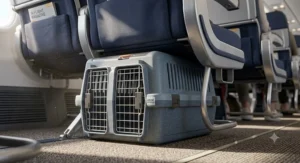
The Petmate Sky Kennel is frequently described in the pet-transport industry as the gold standard for air and car travel, and the spec sheet backs that reputation up. Built with a heavy-duty plastic shell, an interlocking wire door with a squeeze-latch system, 360-degree ventilation windows, and molded tie-down strap holes for zip-tie reinforcement during airline handling, it’s engineered specifically to meet IATA and USDA live-animal transport requirements — with sizes running from 21 inches up through 40 inches to fit pets from roughly 15 up to 30-plus pounds.
What most buyers overlook is that IATA doesn’t certify or endorse any specific carrier brand or model — no manufacturer can legally claim official “IATA approval.” What the Sky Kennel actually offers is a design that meets the dimensional and structural requirements airlines check against IATA’s Live Animals Regulations, which is a meaningfully different (and more honest) claim than marketing copy sometimes implies. Always confirm your specific airline’s current pet policy directly before booking a flight, since individual carriers can add restrictions beyond the baseline standard.
The interior moat design is a small but genuinely clever engineering touch — it channels fluids away from the resting surface, which matters enormously on a long-haul flight where you can’t exactly pull over and towel things off. Reviewers and shelter/rescue organizations that rely on Petmate kennels for animal transport consistently cite the interlocking latch system and reinforced wire door as standing up to rough handling far better than lighter-weight competitors.
Pros:
- ✅ Engineered to meet IATA/USDA structural travel requirements
- ✅ Interior moat design keeps pets dry during long trips
- ✅ Interlocking squeeze-latch door resists rough handling
Cons:
- ❌ No official “IATA approved” certification exists for any brand
- ❌ Larger sizes require freight shipping and lack carry handles
Priced from roughly $60 up past $110 depending on size, the Sky Kennel is the carrier to buy if air travel with your cat is a real, recurring part of your life rather than a one-time event.
7. Petmate Ultra Vari Kennel — sturdiest build for large or multi-cat households
The Petmate Ultra Vari Kennel rounds out this list as the heavy-duty option, built with covered door posts, a chrome door and squeeze latch, rear wire ventilation meeting IATA and USDA requirements, and an interior perimeter moat to capture fluids and keep pets dry. Sizes range dramatically — from a 21-inch model for pets up to 15 pounds all the way to a 48-inch kennel rated for 90 to 125 pounds — which makes it one of the most flexible durable cat carrier options for households juggling multiple pets of very different sizes.
Here’s the durability case in plain terms: the Ultra Vari Kennel’s tie-down strap holes on all four corners, combined with traditional wing-nut fasteners, mean this shell was engineered to survive being strapped down in cargo holds and truck beds repeatedly, not just carried gently from a car to a vet’s front desk. That’s meaningfully more sturdy protection than most carriers on this list are asked to provide, and it shows in the reinforced hardware throughout.
Long-term owners and shelter operators — who rely on these kennels heavily for training and transport — consistently point to the interlocking stacking lugs and moat drainage as standout practical features that hold up over years of repeated use, not just a single unboxing. The tradeoff is assembly and bulk: larger sizes ship via freight due to size, and only the 21-inch and 28-inch models include a carry handle at all.
Pros:
- ✅ Widest size range of any carrier on this list (15 to 125+ lbs)
- ✅ Reinforced hardware built for repeated heavy-duty use
- ✅ Moat drainage and tie-down holes suit long-haul transport
Cons:
- ❌ Larger sizes lack handles and ship via freight
- ❌ Assembly with wing-nuts takes longer than snap-together rivals
Running from roughly $50 for the smallest size to $130-plus for the largest, this is the pick for multi-cat households or anyone who needs one carrier system that scales from a kitten to a full-grown Maine Coon.
Top 7 Products: Full Comparison
| Carrier | Material Build | Ventilation | Door Style | Best For |
|---|---|---|---|---|
| Petmate Two-Door Top Load Kennel | Heavy-duty plastic + steel wire | Moderate | Front + top | Budget vet trips |
| Amazon Basics 2-Door Carrier | Molded plastic | Moderate | Front + top | First-time owners |
| IRIS USA 23-Inch Carrier | Smooth nonporous plastic | Moderate | Front + reversible top | Easy cleanup |
| DUMOS 23-Inch Carrier | Reinforced hard shell | Moderate-high | Front + top wire | Escape-prone cats |
| Ferplast Atlas 20 | Durable easy-clean plastic | High (side grills) | Front only | Small cats, airflow |
| Petmate Sky Kennel | Heavy-duty plastic + wire | High (360°) | Front squeeze-latch | Frequent flyers |
| Petmate Ultra Vari Kennel | Heavy-duty plastic + chrome door | High (360°) | Front squeeze-latch | Large/multi-cat homes |
Reading across this table, the pattern that matters most is ventilation-to-purpose matching: carriers built for airline compliance (the Petmate Sky Kennel and Petmate Ultra Vari Kennel) consistently pack in more airflow because federal transport standards demand it, while budget models like the Amazon Basics 2-Door Carrier meet basic comfort needs without over-engineering for scenarios most owners never face. If your trips rarely exceed a 20-minute car ride, don’t overpay for airline-grade ventilation you won’t use — but if your cat spends real hours inside the shell, that airflow difference is not a minor spec, it’s a comfort and safety difference.
💬 Found the comparison useful? A quick share helps other cat owners find safer, sturdier options too!
What Hard-Sided Carriers Get You That Soft-Sided Ones Don’t
Soft-sided carriers win on portability and looks, but they lose almost every structural argument. A hard-sided cat carrier holds its shape under a struggling cat’s full body weight, while a soft-sided carrier’s fabric walls can bow, sag, or in worst cases, tear under sustained pressure or a determined bite. That structural rigidity is precisely why veterinary clinics and airlines lean so heavily toward rigid-shell requirements for anything beyond a calm lap cat.
| Factor | Hard-Sided Carrier | Soft-Sided Carrier |
|---|---|---|
| Structural rigidity | High — holds shape under pressure | Variable — can bow or sag |
| Cleanability | Wipes clean, no fabric to stain | Requires washing, slower to dry |
| Weight when empty | Heavier | Lighter |
| Escape resistance | Latch-dependent, generally high | Zipper-dependent, variable |
| Airline/vet compliance | Frequently required or preferred | Sometimes restricted |
The tradeoff nobody advertises loudly: hard-sided carriers are heavier to lug around and bulkier to store, and that extra rigidity comes from more plastic, which means more storage space taken up in your closet between vet visits. For most owners weighing durability against convenience, though, a durable cat carrier with a rigid shell wins the safety argument decisively — soft-sided bags are fine for a calm cat on a short walk to the car, but they’re a genuine liability for anxious cats, long trips, or anyone who’s ever had a carrier zipper fail mid-transport.
Practical Usage Guide: Your First 30 Days
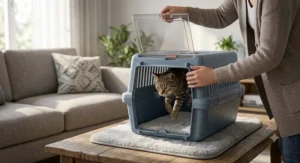
Getting a new hard-sided cat carrier home is the easy part — getting your cat to tolerate it without a fight is where most owners stumble. Start by leaving the carrier out, door open, in a room your cat already frequents, for at least a week before you ever need to use it for a trip. Toss a few treats or a favorite blanket inside so the shell becomes a neutral (or even positive) object rather than something that only appears right before a stressful vet visit.
A common first-30-days mistake is over-cleaning a brand-new plastic shell with strong-smelling chemical cleaners; the lingering scent can actually make cats more hesitant to enter, so a simple soap-and-water wipe-down is plenty for a new easy-clean cat carrier. For maintenance going forward, check latch tension monthly if your model uses wing-nut fasteners — the Petmate Two-Door Top Load Kennel and Petmate Ultra Vari Kennel both benefit from a quick manual retightening every few months of regular use, since vibration during transport can gradually loosen hardware.
Optimization tip: store the carrier assembled but with the top and bottom shells separated for airflow between uses, rather than sealed shut in a closet, which helps prevent the faint musty smell that can develop in humid climates. And critically — never introduce the carrier for the very first time on the morning of a stressful trip. That single habit is responsible for more carrier-related stress than any hardware flaw on this list.
Real-World Scenarios: Which Carrier Fits Your Life
If you’re a college student living in a small apartment with one indoor cat and an annual vet visit as your only real travel need, the Amazon Basics 2-Door Top-Load Hard-Sided Carrier or Petmate Two-Door Top Load Kennel covers you completely — you don’t need airline-grade ventilation or a 48-inch shell taking up closet space you don’t have.
If you’re a frequent business traveler who occasionally checks a cat as cargo or brings one along on regional flights, the Petmate Sky Kennel is the obvious answer — its structural compliance with IATA-aligned dimensional standards and reinforced latch system exist specifically for exactly your situation, and skimping here risks a rejected carrier at the check-in counter.
If you’re managing a household with three cats of wildly different sizes — say, a 6-pound senior and a 16-pound long-haired tom — the Petmate Ultra Vari Kennel‘s dramatic size range (21 to 48 inches) means you can standardize on one brand’s hardware and replacement parts across every cat in the house, which genuinely simplifies long-term ownership versus juggling three unrelated carrier brands.
How to Choose a Hard-Sided Cat Carrier
- Measure your cat first, not the carrier. Your cat should be able to stand, turn around, and lie down comfortably — a hard-sided cat carrier that’s too snug creates more stress than the shell’s rigidity solves.
- Check the door mechanism under load. A latch that holds fine when the carrier is empty may fail when a 12-pound cat leans into it repeatedly; look for interlocking or squeeze-latch systems over basic clips.
- Confirm airline or vet requirements before buying, not after. If you have any travel plans, verify current airline pet policy and IATA-aligned dimensions before purchase, since requirements shift.
- Prioritize ventilation for your climate. Owners in hot regions should weight side-grill or 360-degree ventilation designs more heavily than owners who mostly use the carrier in climate-controlled cars.
- Weigh cleanability against your cat’s health history. A cat prone to car sickness or accidents benefits enormously from a smooth, nonporous, easy-clean cat carrier interior over textured plastic.
- Factor in your own storage space. Larger, sturdier kennels like the Ultra Vari Kennel deliver more durable protection but take up real closet real estate between uses.
- Read current reviews for your specific size and color. Review aggregates can vary meaningfully between carrier sizes and colors even within the same product line.
Common Mistakes When Buying a Hard-Sided Cat Carrier
The single most common mistake is buying based on your cat’s current weight without accounting for growth or aging weight gain — a carrier that’s perfect for a 10-pound cat today can feel cramped in two years. A close second is assuming “airline approved” language on a listing means official certification; as covered above, IATA doesn’t endorse specific brands, so that phrase should be read as “designed to meet common requirements,” not a guarantee.
Another frequent misstep is ignoring the door-opening direction and location relative to your car’s trunk or backseat layout — a front-load-only carrier can be genuinely awkward to use in certain vehicle configurations where a top-load door would have made loading dramatically easier. Finally, plenty of buyers skip checking whether replacement parts (bowls, pads, latch hardware) are available for their specific model, only to discover a cracked piece means replacing the entire carrier rather than a $6 part.
Crash Safety and Hard-Sided Carriers: What the Research Actually Shows
This is worth being direct about: most hard-sided cat carriers on this list, including every one featured above, have not been independently crash-tested to automotive safety standards. A rigid plastic shell resists crushing and structural failure far better than a soft-sided bag does, which genuinely matters in a fender-bender or sudden stop — but “sturdy” and “crash-tested” are not the same claim, and conflating them does cat owners a disservice.
The organization actually running independent crash testing on pet travel products is the Center for Pet Safety, a nonprofit that evaluates carriers and restraints against protocols modeled on U.S. child safety seat standards. Their testing has found that very few carrier products on the market — hard or soft-sided — earn top-tier crash ratings, and the certified options tend to be semi-structured carrier-and-harness systems rather than traditional rigid-shell kennels like the ones in this guide. If crash protection in the event of a car accident is your absolute top priority rather than day-to-day durability and vet-visit convenience, it’s worth researching CPS-certified products specifically, since none of the seven carriers above currently carry that independent crash certification.
What the hard-sided shells on this list do offer is meaningful protection against a different category of risk: containment failure. A rigid shell with a reinforced latch, like the DUMOS 23-Inch Hard-Sided Pet Carrier or Petmate Sky Kennel, dramatically reduces the odds of your cat escaping mid-transit compared to a soft-sided bag with a zipper a determined cat can work loose — and that’s a real, secure-enclosure benefit worth taking seriously even without automotive crash certification.
Long-Term Cost & Maintenance
| Carrier | Typical Lifespan | Replacement Parts Availability | Value Verdict |
|---|---|---|---|
| Petmate Two-Door Top Load Kennel | 5+ years with care | Widely available | Strong value at low cost |
| IRIS USA 23-Inch Carrier | 4–6 years | Moderate | Good for cleanliness priority |
| Petmate Sky Kennel | 8+ years | Widely available | Best long-term for frequent flyers |
| Petmate Ultra Vari Kennel | 8–10+ years | Widely available | Best cost-per-use for multi-cat homes |
Looking at the numbers above, the Petmate lineup’s broad market presence pays off in an underrated way: replacement hardware, doors, and even full shell halves stay available for years after purchase, meaning a cracked latch doesn’t force you into buying an entirely new carrier the way it might with a smaller-batch brand. When you calculate cost-per-use over an 8-to-10-year ownership window, the Petmate Sky Kennel and Petmate Ultra Vari Kennel — despite higher upfront prices — often work out cheaper per year of use than replacing a $35 budget carrier every 3 to 4 years as latches wear or plastic degrades.
Features That Actually Matter (And Those That Don’t)
Ventilation coverage, latch reinforcement, and interior moat drainage are the three features worth paying extra for — they directly affect your cat’s comfort and your carrier’s failure resistance under real stress. Removable, washable bedding pads matter more than most buyers expect too, since they turn a routine mess into a five-minute fix instead of a full carrier scrub.
What doesn’t matter nearly as much as marketing copy implies: decorative color options, “designer” shell shapes, and vague “premium materials” language without specific plastic-grade or wall-thickness detail. A cat carrier’s shell thickness and latch engineering matter enormously; the color it comes in does not, no matter how the listing photos are styled.
Frequently Asked Questions
❓ Is a hard-sided cat carrier better than soft-sided for air travel?
❓ What size hard-sided cat carrier do I need for my cat?
❓ How often should I clean a plastic cat carrier?
❓ Are hard-sided cat carriers crash-tested for car safety?
❓ Can two cats share one hard-sided carrier?
Conclusion
Choosing a hard-sided cat carrier really comes down to matching the shell’s engineering to the actual stress your cat and your travel habits put on it — not chasing the highest star rating or the lowest price tag in isolation. For most owners handling occasional vet visits, the Petmate Two-Door Top Load Kennel or Amazon Basics 2-Door Top-Load Hard-Sided Carrier genuinely covers the job without overspending. For cats who test every latch they meet, the DUMOS 23-Inch Hard-Sided Pet Carrier‘s reinforced security closes that specific gap. For anyone flying regularly, the Petmate Sky Kennel remains the closest thing to an industry standard, and for multi-cat or large-breed households, the Petmate Ultra Vari Kennel‘s size range and reinforced hardware earn the higher price tag over years of use.
None of these carriers claim automotive crash certification, and it’s worth being honest with yourself about whether that matters more to you than day-to-day durability and containment security — for further reading on how pet safety products are actually tested, the Cornell Feline Health Center’s resources offer solid grounding on reducing travel stress alongside physical carrier safety. Whichever option you land on, introduce it early, keep it clean, and check the latch hardware regularly — the carrier itself is only half the safety equation.
✨ Don’t Miss These Exclusive Deals!
🔍 Take your cat’s travel setup to the next level with one of these carefully compared carriers. Click on any highlighted product above to check current pricing and availability, and give your cat the sturdy, secure ride they deserve.
Frequently Asked Questions Sources & Further Reading
For federal pet travel regulation basics referenced throughout this guide, see the USDA APHIS Pet Travel resource hub, and for additional independent carrier reviews and testing context, Cats.com’s carrier guide is a useful cross-reference alongside the manufacturer specs cited above.
Recommended for You
- 7 Best Soft-Sided Cat Carriers in 2026
- Cat Backpack Carrier: 7 Best Picks for Hands-Free Adventures (2026)
- 7 Best Airline Approved Cat Carrier Picks for Flying in 2026
Disclaimer: This article contains affiliate links. As an Amazon Associate, I earn from qualifying purchases. If you purchase products through these links, we may earn a small commission at no additional cost to you.
✨ Found this helpful? Share it with your friends! 💬🤗
