
Table of Contents
When your beloved feline becomes a mother, you suddenly face a pressing question: what should she eat? I remember when my cat, Luna, had her first litter—I panicked. The vet mentioned something about kitten food for nursing cats, and I realized I’d been feeding her all wrong. Let me save you that worry right now.
Nursing mother cats have extraordinary nutritional demands. They’re essentially eating for an entire family, producing milk around the clock while recovering from birth. That’s why kitten food for nursing cats isn’t just a suggestion—it’s essential. These specialized formulas pack more calories, protein, and vital nutrients than standard adult cat food, giving mama everything she needs to stay healthy while nourishing her babies.
✨Was this helpful? Spread the word! 🚀
Throughout this guide, I’ll walk you through everything you need to know about feeding nursing mothers. We’ll explore why kitten formula works perfectly for lactating cats, review the top seven products available today, and answer the questions that keep new cat parents awake at night. Whether you’re dealing with your first litter or you’re a seasoned cat breeder, you’ll find practical advice that actually works.
Quick Comparison: Top Kitten Food for Nursing Cats
| Product | Type | Protein | Key Features | Best For |
|---|---|---|---|---|
| Royal Canin Mother & Babycat | Wet/Dry | 32%+ | Ultra-soft mousse, DHA enriched | Transition period |
| Blue Buffalo Wilderness Kitten | Dry | 40% | Grain-free, high protein | Active nursing mothers |
| Purina ONE Healthy Kitten Formula | Dry | 40% | Budget-friendly, DHA included | Cost-conscious owners |
| Wellness CORE Grain-Free Kitten | Dry/Wet | 45%+ | Premium ingredients, no carrageenan | Health-focused owners |
| Hill’s Science Diet Kitten | Dry/Wet | 36% | Vet-recommended, balanced nutrition | Sensitive stomachs |
| IAMS Proactive Health Healthy Kitten | Dry | 38% | Affordable, complete nutrition | Everyday feeding |
| Blue Buffalo Wilderness Wet Kitten Variety | Wet | 10.5% | Hydration support, grain-free | Hydration needs |
💬 Just one click – help others make better buying decisions too! 😊
🎯 Why This Comparison Matters
The right food makes all the difference. I’ve seen cats thrive on proper nutrition and struggle without it. This table gives you the essential facts at a glance, but stick with me—there’s much more to understand about feeding nursing mothers properly.
Understanding Nutritional Needs: Why Kitten Food for Nursing Cats Works
Here’s something most cat owners don’t realize: a nursing mother cat’s caloric needs can quadruple during peak lactation. Yes, you read that correctly—quadruple! According to research from the Tufts University Cummings School of Veterinary Medicine, lactating cats need significantly more energy than any other life stage.
📊 Nutritional Comparison: Adult vs. Kitten Food
| Nutrient | Adult Cat Food | Kitten Formula | Nursing Cat Needs |
|---|---|---|---|
| Protein (min) | 26% | 30-45% | 35-45% |
| Fat (min) | 9% | 18-23% | 18-25% |
| Calories/cup | 350-400 | 450-500 | 450-550 |
| Calcium | 0.6% | 1.0-1.5% | 1.0-1.5% |
| DHA | Often absent | Present | Essential |
| Taurine | 0.1% | 0.15-0.2% | 0.15-0.2% |
✅ Higher protein content supports milk production and muscle maintenance
✅ Increased fat levels provide concentrated energy
✅ Enhanced calcium prevents depletion from milk production
✅ DHA inclusion benefits both mother and nursing kittens
✅ Elevated calorie density meets extreme energy demands
The beauty of using food for kittens for nursing cats lies in its design. Kitten formulas aren’t just about quantity—they’re engineered for growth and development, which perfectly aligns with what a nursing mother needs. Her body is working overtime, and standard adult maintenance formulas simply can’t keep up.
Top 7 Best Kitten Food for Nursing Cats: Expert Analysis
Let me share the products that have proven themselves time and again, backed by both professional experience and real customer feedback.
1. Royal Canin Feline Health Nutrition Mother & Babycat
This is my top recommendation, and here’s why. Royal Canin Feline Health Nutrition Mother & Babycat is specifically formulated for both nursing queens and weaning kittens, making it incredibly versatile during that crucial first few months.
Key Specifications:
- Protein: 32% (dry), 10.5% (wet)
- Fat: 23% (dry), 4.5% (wet)
- Format: Ultra-soft mousse in sauce
- Package sizes: 3 oz, 5.1 oz cans; 7 lb dry bags
The ultra-soft mousse texture is genius—mama cat can eat it easily while recovering, and tiny kitten mouths can handle it as they transition to solids. I’ve watched countless litters thrive on this formula. The combination of clinically proven antioxidants, prebiotics, and DHA creates a nutritional powerhouse that supports immune development and digestive health.
Real Customer Insights: Based on Amazon reviews, customers consistently praise this product’s ease of digestion and how quickly kittens adapt to it. One breeder mentioned using it for over five years across multiple litters with excellent results.
✅ Pros:
✔️ Specifically designed for nursing mothers
✔️ Ultra-soft texture perfect for weaning
✔️ Contains DHA for brain development
✔️ High digestibility
✔️ Prebiotics support gut health
❌ Cons:
✖️ Premium pricing
✖️ Can consistency varies between batches
✖️ Wet formula needs refrigeration after opening
2. Blue Buffalo Wilderness High Protein Kitten Formula
For active nursing mothers who need serious protein support, Blue Buffalo Wilderness High Protein Kitten Formula delivers exceptional nutrition. This grain-free option provides 40% protein—one of the highest you’ll find in mainstream kitten foods.
Key Specifications:
- Protein: 40% (dry)
- Fat: 20%
- Format: Dry kibble
- Package sizes: 2 lb, 5 lb, 12 lb bags
Real chicken as the first ingredient means high-quality animal protein, which is exactly what nursing cats need for milk production. The formula includes DHA and ARA—fatty acids found naturally in mother’s milk—supporting both the nursing mother’s health and her kittens’ development. Blue Buffalo Wilderness grain free recipes also feature their exclusive LifeSource Bits, a blend of antioxidants, vitamins, and minerals.
Customer Feedback Analysis: Reviews highlight how well cats tolerate this food, with many owners noting improved coat quality and sustained energy levels in nursing mothers.
✅ Pros:
✔️ Exceptionally high protein content
✔️ Grain-free formula
✔️ No chicken by-products
✔️ DHA and ARA for development
✔️ Antioxidant-rich LifeSource Bits
❌ Cons:
✖️ Some cats find kibble size challenging
✖️ May cause loose stools during transition
✖️ Higher price point
3. Purina ONE Healthy Kitten Formula
If you’re looking for excellent nutrition without breaking the bank, Purina ONE Healthy Kitten Formula is your answer. This is the food for nursing mom cat that proves quality doesn’t always mean expensive.
Key Specifications:
- Protein: 40%
- Fat: 18%
- Format: Dry kibble
- Package sizes: 3.5 lb, 7 lb, 16 lb bags
Real chicken is the #1 ingredient, and the SmartBlend of high-quality ingredients includes DHA for brain and vision development. Four antioxidant sources support immune health, while the formula provides 100% complete and balanced nutrition for both nursing mothers and growing kittens. Purina ONE for kittens represents exceptional value.
What Users Say: Pet parents consistently mention this as their go-to formula for nursing foster cats, praising its palatability and how well mothers maintain their weight during lactation.
✅ Pros:
✔️ Outstanding value for quality
✔️ Highly palatable
✔️ Widely available
✔️ DHA from salmon oil
✔️ Veterinarian-recommended brand
❌ Cons:
✖️ Contains chicken by-products (though nutritious)
✖️ Not grain-free
✖️ Lower fat content than some competitors
4. Wellness CORE Grain-Free Kitten Formula
For owners who prioritize premium, natural ingredients, Wellness CORE Grain-Free Kitten Formula stands out. This protein-focused diet delivers 45% protein in the dry formula—perfect for demanding lactation periods.
Key Specifications:
- Protein: 45% (dry), 10.5% (wet)
- Fat: 20% (dry), 7-8% (wet)
- Format: Dry kibble and pâté wet food
- Package sizes: 2 lb, 5 lb dry bags; 3 oz, 5.5 oz cans
Deboned turkey, turkey meal, and deboned chicken form the protein base, while salmon oil provides omega-3 fatty acids and DHA. What I particularly appreciate about Wellness CORE is their commitment to avoiding carrageenan—a controversial additive some experts recommend avoiding. The wet food nursing cats formula offers excellent hydration support.
Customer Experience: Reviews frequently mention cats being particularly enthusiastic about Wellness CORE flavors, though some note the premium price requires budget consideration.
✅ Pros:
✔️ Premium protein sources
✔️ No carrageenan in formulas
✔️ High DHA content
✔️ Grain-free option
✔️ Probiotics for digestive health
❌ Cons:
✖️ Premium pricing
✖️ Some cats dislike the taste
✖️ Strong odor reported by some users
5. Hill’s Science Diet Kitten Formula
Veterinarians consistently recommend Hill’s Science Diet Kitten Formula, and there’s solid science behind that recommendation. Hill’s has invested decades in nutritional research, creating formulas backed by clinical studies.
Key Specifications:
- Protein: 36.2%
- Fat: 21.7%
- Format: Dry kibble and wet food options
- Package sizes: 3.5 lb, 7 lb, 15.5 lb bags; various can sizes
The formula supports brain and eye development with DHA from fish oil while providing balanced nutrition approved by AAFCO for growth, gestation, and lactation. Hill’s Science Diet kitten food is formulated specifically for kittens from weaning until one year old—and pregnant or nursing cats throughout lactation.
Professional Insights: Many breeders and veterinary professionals consider this their default recommendation for reliable, consistent nutrition.
✅ Pros:
✔️ Veterinarian-recommended
✔️ Extensive research backing
✔️ Excellent digestibility
✔️ Consistent quality control
✔️ Suitable for sensitive stomachs
❌ Cons:
✖️ Contains grains (corn, wheat)
✖️ Some cats find it less palatable
✖️ Mid-range pricing
6. IAMS Proactive Health Healthy Kitten
IAMS Proactive Health Healthy Kitten offers dependable nutrition at an accessible price point. This formula includes nutrients like those found in mother’s milk, making it ideal for supporting nursing queens.
Key Specifications:
- Protein: 38%
- Fat: 19.5%
- Format: Dry kibble
- Package sizes: 3.5 lb, 7 lb, 16 lb bags
Chicken as the #1 ingredient provides quality protein, while DHA supports brain development. The formula includes prebiotics and beet pulp for digestive health, plus vitamin E to support immune system function. IAMS explicitly recommends this formula for kittens, pregnant cats, and nursing mothers.
User Experiences: Many customers appreciate the affordability combined with results they can see—healthy, energetic kittens and mothers who maintain good body condition throughout nursing.
✅ Pros:
✔️ Budget-friendly pricing
✔️ Widely available
✔️ Good digestibility
✔️ Suitable for nursing mothers
✔️ Bite-sized pieces for small mouths
❌ Cons:
✖️ Lower protein than premium options
✖️ Contains chicken by-product meal
✖️ Not grain-free
7. Blue Buffalo Wilderness Kitten Wet Food Variety Pack
Hydration is crucial for nursing mothers, and Blue Buffalo Wilderness Kitten Wet Food Variety Pack excels in this department. The pâté texture and high moisture content support both hydration and palatability.
Key Specifications:
- Protein: 10.5% (min)
- Fat: 7-8% (min)
- Format: Wet pâté
- Package sizes: 3 oz cans in variety packs
The variety pack includes chicken and salmon recipes, providing flavor variety that can be important for picky eaters during the demanding nursing period. Each recipe is grain-free and packed with real meat protein. For nursing mom cats, wet food offers an easy way to increase caloric intake without large food volumes.
Customer Feedback: Cat owners consistently mention how well their nursing mothers accept this food, with many noting it helped maintain hydration during intense lactation periods.
✅ Pros:
✔️ Excellent hydration support
✔️ Highly palatable
✔️ Grain-free formula
✔️ Flavor variety
✔️ Smooth pâté texture
❌ Cons:
✖️ More expensive per calorie than dry food
✖️ Requires refrigeration after opening
✖️ Consistency varies between cans
🛒 Ready to Nourish Your Nursing Cat? ✨
Your mama cat deserves the best nutrition during this demanding time. The products above represent proven options that support both mother and kittens effectively. Click on any highlighted product to check current availability and pricing on Amazon—your cat’s health is worth the investment! 🐱💕
Feeding Guidelines: How Much Kitten Food for Nursing Cats
Let’s tackle the question I get asked most frequently: how much should you actually feed a nursing mother?
📈 Feeding Amount by Lactation Stage
| Stage | Kittens’ Age | Food Amount | Frequency |
|---|---|---|---|
| Early lactation | 0-2 weeks | 2-3x normal | Free feeding |
| Peak lactation | 3-4 weeks | 3-4x normal | Free feeding |
| Late lactation | 5-7 weeks | 2-3x normal | Free feeding |
| Weaning begins | 4-8 weeks | Gradually reduce | Monitor intake |
The golden rule? Keep food available at all times during nursing. I can’t stress this enough. Unlike feeding schedules for adult cats, nursing mothers need constant access to nutrition. They’ll self-regulate based on their kittens’ demands.
Here’s what that looks like in practice:
✅ Week 1-2: Your cat might eat 50-100% more than usual
✅ Week 3-5: Expect consumption to double or even quadruple
✅ Week 6-8: As kittens start weaning, gradually reduce portions
✅ Post-weaning: Slowly transition back to adult maintenance food
Pro Tip: Use a high-quality kitten food with at least 400 calories per cup. A 10-pound nursing cat at peak lactation might need 800-1000 calories daily—that’s roughly 2-2.5 cups of dry food or equivalent wet food calories.
💧 Don’t Forget Hydration!
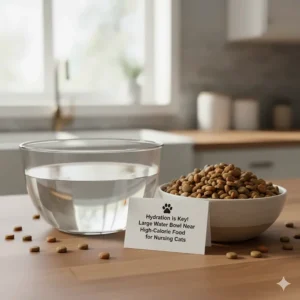
Milk production requires enormous amounts of water. Place multiple water bowls around your home, and consider a cat fountain to encourage drinking. Wet kitten food for nursing cats naturally boosts hydration while providing calories.
Health Benefits: Why Proper Nutrition Matters
The right kitten food for nursing cats does more than just fill bellies—it supports critical health functions during this vulnerable period.
🏥 Comprehensive Health Support Breakdown
| Benefit | Impact on Mother | Impact on Kittens |
|---|---|---|
| High protein | Maintains muscle mass | Supports rapid growth |
| Elevated fat | Provides concentrated energy | Brain development |
| Calcium & phosphorus | Prevents bone depletion | Strong skeletal development |
| DHA/omega-3s | Supports recovery | Neural development |
| Antioxidants | Immune system support | Immune system development |
| Taurine | Heart and eye health | Vision development |
| Prebiotics | Digestive health | Gut microbiome establishment |
According to Cornell University’s Feline Health Center, proper nutrition during lactation can significantly impact kitten survival rates and long-term health outcomes.
What I’ve Observed:
- Better coat quality: Properly nourished mothers maintain glossy, healthy coats
- Faster recovery: High-quality nutrition speeds postpartum healing
- Stronger kittens: Well-fed mothers produce more nutritious milk
- Reduced stress: Meeting nutritional needs keeps mother cats calmer
- Maintained weight: Appropriate food prevents dangerous weight loss
🎯 Long-Term Implications
Nutrition during nursing affects more than just the immediate postpartum period. Research suggests that maternal nutrition can influence:
✔️ Kitten immune system development
✔️ Long-term metabolic health
✔️ Behavioral development
✔️ Future reproductive health
✔️ Adult disease resistance
This isn’t about being paranoid—it’s about understanding that the foundation you lay during these crucial weeks ripples throughout your cats’ lives.
Common Mistakes to Avoid
Let me save you from the errors I’ve seen countless well-meaning cat owners make.
❌ Top Feeding Mistakes & Solutions
| Mistake | Why It’s Problematic | The Fix |
|---|---|---|
| Feeding adult cat food | Insufficient calories/nutrients | Switch to kitten formula immediately |
| Restricting portions | Leads to malnourishment | Free-feed during nursing |
| Abrupt food changes | Causes digestive upset | Transition gradually over 7-10 days |
| Forgetting supplements | Kitten food has everything | Don’t add supplements unless vet-directed |
| Inadequate water access | Reduces milk production | Multiple water sources, consider fountain |
| Single feeding location | Creates competition stress | Provide several feeding stations |
The Story Nobody Tells You:
A breeder friend once lost an entire litter because she kept the nursing mother on adult food, thinking “good quality” was enough. The mother’s milk production dropped, kittens failed to thrive, and by the time she realized the problem, it was too late. Don’t let quality adult food fool you—nursing cats need kitten formula, period.
⚠️ Warning Signs You’re Not Feeding Enough
Watch for these red flags:
- Mother appears thin or ribs become visible
- Reduced milk production (kittens crying excessively)
- Mother seems lethargic or weak
- Kittens aren’t gaining weight appropriately
- Mother’s coat becomes dull or dry
If you notice any of these signs, increase food availability immediately and consult your veterinarian.
Transitioning: From Kitten Food to Adult Food
Eventually, your nursing mother will wean her kittens and need to transition back to adult maintenance food. Timing and method matter here.
📅 Transition Timeline
| Week Post-Birth | Nursing Status | Food Strategy |
|---|---|---|
| 0-4 weeks | Full nursing | 100% kitten food, free-fed |
| 4-6 weeks | Kittens starting solids | Continue kitten food, full access |
| 6-8 weeks | Active weaning | Continue kitten food, monitor intake |
| 8-10 weeks | Nursing minimal/stopped | Begin gradual transition |
| 10-12 weeks | Fully weaned | Complete transition to adult food |
The Gradual Transition Method:
Once nursing stops completely (usually around 8-10 weeks post-birth), follow this proven transition plan:
Days 1-2: 75% kitten food + 25% adult food
Days 3-4: 50% kitten food + 50% adult food
Days 5-6: 25% kitten food + 75% adult food
Day 7+: 100% adult food
This prevents digestive upset while allowing your cat’s system to adjust. Some cats need longer transitions—watch for loose stools or vomiting and slow down if needed.
🔄 Special Considerations
For cats who’ll breed again, some breeders keep them on kitten food between pregnancies if they’re breeding frequently. However, this should only be done under veterinary supervision to prevent obesity in non-nursing periods.
Budget-Friendly Options Without Compromising Quality
I know premium cat foods can strain budgets, especially when you’re feeding free-choice during nursing. Let’s talk practical strategies.
💰 Cost-Effective Feeding Strategies
| Strategy | Estimated Savings | Quality Impact |
|---|---|---|
| Buy larger bags | 15-30% per pound | None—same formula |
| Subscribe & Save programs | 5-15% off | None—regular delivery |
| Mix wet and dry strategically | 20-40% savings | Maintains nutrition |
| Use store brands (carefully) | 30-50% savings | Varies—check ingredients |
| Buy during sales/promotions | Up to 30% off | None—stock up wisely |
My Proven Budget Approach:
I use Purina ONE Healthy Kitten Formula as my primary dry food—it offers excellent nutrition at about half the cost of premium brands. I supplement with occasional wet food for variety and hydration. This combination keeps costs manageable while providing complete nutrition.
Sample Monthly Costs (10 lb nursing cat at peak lactation):
- Premium route: $80-120/month
- Mid-range route: $50-75/month
- Budget-conscious route: $35-50/month
All three approaches can support a healthy nursing cat—the key is choosing appropriate products within your budget rather than cutting corners on quantity.
💡 Smart Shopping Tips
✔️ Amazon Subscribe & Save: Often offers 5-15% off recurring deliveries
✔️ Buy in bulk: Larger bags cost less per pound
✔️ Compare per-pound pricing: Don’t just look at bag prices
✔️ Check warehouse clubs: Costco and Sam’s Club often have deals
✔️ Use manufacturer coupons: Many brands offer sign-up promotions
✔️ Consider trial sizes: Test before committing to large bags
Special Dietary Needs and Sensitivities
Not every nursing cat tolerates every food. Let’s address common issues and solutions.
🩺 Managing Dietary Sensitivities
| Issue | Symptoms | Solution Options |
|---|---|---|
| Grain sensitivity | Vomiting, diarrhea, itching | Switch to grain-free formula |
| Protein allergy | Skin issues, digestive upset | Try novel protein sources |
| Sensitive stomach | Frequent vomiting, loose stools | Hill’s Science Diet, small meals |
| Food intolerance | Gas, bloating, discomfort | Limited ingredient formulas |
| Lactose issues | Diarrhea after dairy | Avoid milk-based supplements |
If your nursing cat develops digestive issues after starting kitten food, don’t panic. This usually indicates either too-rapid transition or a sensitivity to specific ingredients.
Step-by-Step Troubleshooting:
- Rule out transition speed: If you switched foods abruptly, slow down
- Check for grain issues: Try a grain-free kitten food for nursing cats
- Consider protein source: Switch from chicken to fish or turkey
- Evaluate additives: Some cats react to artificial colors or preservatives
- Consult your vet: Persistent issues may need professional intervention
Real-World Example:
One of my foster cats developed persistent soft stools on Blue Buffalo Wilderness. Switching to Wellness CORE (which avoids carrageenan) resolved the issue completely. Sometimes it’s about finding the right formula for your individual cat.
🏥 When to Seek Veterinary Advice
Contact your vet if you notice:
- Persistent diarrhea lasting more than 48 hours
- Vomiting more than twice in 24 hours
- Refusal to eat for 12+ hours
- Significant weight loss despite adequate food
- Signs of dehydration (sunken eyes, lethargy)
- Blood in stool or vomit
Don’t wait and hope these resolve—nursing mothers need immediate intervention for health issues.
Understanding Food Labels: What to Look For
Not all kitten foods are created equal. Here’s how to read labels like a pro and spot quality formulas.
📋 Essential Label Elements
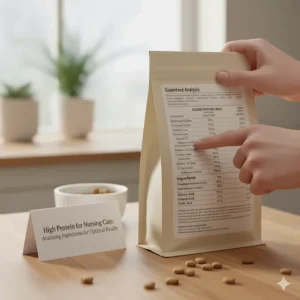
The AAFCO Statement: Look for language like “formulated to meet AAFCO Cat Food Nutrient Profiles for growth and reproduction.” This certification from the Association of American Feed Control Officials confirms the food meets minimum standards for nursing cats and kittens.
Ingredient List Priorities:
- First ingredient should be named meat: “Chicken,” “turkey,” “salmon” (not “meat meal” or generic “poultry”)
- Multiple protein sources in top 5 ingredients: Shows protein focus
- Specific fat sources: “Chicken fat” is better than “animal fat”
- Named supplements: Look for DHA, taurine, vitamins E and A
- Minimal fillers: Corn, wheat, and soy should be low on the list or absent
🔍 Red Flags to Avoid
| Red Flag | Why It Matters | Better Alternative |
|---|---|---|
| “Meat by-products” | Lower quality protein | Named meat sources |
| Artificial colors | Unnecessary additives | Natural ingredients |
| “Animal fat” | Unknown source | Named fat (chicken fat) |
| Sugar/corn syrup | No nutritional value | Natural flavors |
| BHA/BHT preservatives | Controversial chemicals | Natural preservatives |
| Generic “meal” | Unknown protein source | Named meal (chicken meal) |
Guaranteed Analysis Minimums for Nursing Cats:
- Protein: 30% minimum (35%+ preferred)
- Fat: 9% minimum (18%+ preferred)
- Moisture: Maximum 78% (wet), 12% (dry)
- Fiber: 1-4% range optimal
Remember, percentages in wet food appear lower due to moisture content. To compare wet and dry accurately, look at “dry matter basis” calculations.
Expert Tips for Successful Nursing Cat Nutrition
Let me share insights that come from years of experience with nursing mothers and their litters.
🌟 Professional Feeding Strategies
Create a Dedicated Feeding Area: Set up a quiet, private space where your nursing mother can eat without interruption. Stress affects appetite, and mother cats need peace during this demanding time. I place food bowls in the same room as the nursing box—she doesn’t have to leave her babies to eat.
Implement Strategic Feeding Stations: Use multiple feeding locations, especially in multi-cat households. This prevents competition and ensures your nursing mother gets adequate nutrition. I typically set up 2-3 stations around the house.
Temperature Matters: Cats prefer food at body temperature. If serving refrigerated wet food, let it sit at room temperature for 15-20 minutes or microwave briefly (test temperature first—it should feel barely warm, never hot).
Mix Textures Strategically: Combine dry kibble with wet food to leverage benefits of both. Dry food offers convenience and dental benefits; wet food provides hydration and often higher palatability. A 70% dry/30% wet ratio works well for many nursing mothers.
Monitor Body Condition Weekly: Weigh your nursing mother weekly. She should maintain her body weight or lose no more than 10% during peak lactation. Significant weight loss indicates insufficient nutrition.
📊 Body Condition Scoring Guide
| Score | Description | Action Needed |
|---|---|---|
| 1-2 (Underweight) | Ribs, spine easily visible | Increase food immediately, consult vet |
| 3 (Slightly underweight) | Ribs easily felt, slight waist | Increase portions slightly |
| 4-5 (Ideal) | Ribs felt with gentle pressure, waist visible | Maintain current feeding |
| 6-7 (Overweight) | Ribs difficult to feel, no waist | Rare in nursing cats—reduce after weaning |
Most nursing mothers will trend toward scores 3-4 during peak lactation—this is normal. The key is preventing score 1-2 malnutrition.
Frequently Asked Questions
❓ Can I feed my nursing cat regular adult cat food?
❓ How long should I keep my cat on kitten food after the kittens are weaned?
❓ Is wet or dry kitten food better for nursing cats?
❓ Can I give my nursing cat supplements along with kitten food?
❓ What if my nursing cat refuses to eat kitten food?
Comparing Feeding Approaches: What Works Best?
Different nursing situations require different strategies. Let’s break down the most effective approaches.
🔄 Feeding Method Comparison
| Method | Pros | Cons | Best For |
|---|---|---|---|
| Free-feeding dry only | Convenient, always available | Less hydration, may spoil | Single-cat households, consistent eaters |
| Scheduled wet feeding | High hydration, fresh food | Labor-intensive, requires refrigeration | Picky eaters, hydration concerns |
| Mixed feeding (combination) | Balanced benefits, variety | Slightly more complex | Most nursing mothers, ideal overall |
| Dry + water fountain | Encourages drinking, convenience | Some cats won’t drink enough | Cats who prefer dry food |
My Recommended Approach:
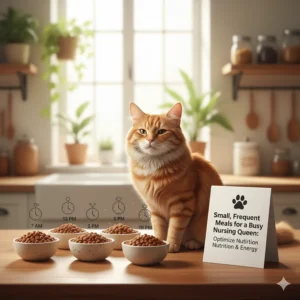
I use mixed feeding for virtually all nursing mothers—dry food available 24/7 with wet food offered 2-3 times daily. This combination ensures constant nutrition access while providing hydration through wet meals. The variety also prevents food boredom during the long nursing period.
Sample Daily Feeding Schedule:
- Morning (7 AM): Fresh dry food, wet food meal
- Midday (12 PM): Check/refresh dry food
- Evening (5 PM): Wet food meal
- Night (10 PM): Check/refresh dry food, fresh water
- Throughout: Free access to dry food and water
🎯 Customizing for Your Situation
For first-time mothers: Extra supervision ensures she’s eating enough
For large litters (5+ kittens): Increase wet food frequency to support higher demands
For small living spaces: Focus on wet food to minimize odor
For multi-cat homes: Separate feeding stations prevent competition
For picky eaters: Rotate flavors and brands to maintain interest
Signs Your Nursing Cat is Thriving
How do you know if your feeding strategy is working? Watch for these positive indicators.
✅ Health Markers of Proper Nutrition
Physical Signs: ✔️ Maintains healthy body weight (slight loss acceptable)
✔️ Bright, clear eyes without discharge
✔️ Shiny, smooth coat without excessive shedding
✔️ Pink, healthy gums and nose leather
✔️ Normal energy levels (not lethargic)
✔️ Regular, firm stools
Behavioral Indicators: ✔️ Strong appetite throughout nursing period
✔️ Attentive, responsive to kittens
✔️ Normal grooming behavior
✔️ Producing adequate milk (kittens content, gaining weight)
✔️ Comfortable, relaxed demeanor
Kitten Development Markers: ✔️ Steady weight gain (0.5-1 oz daily first 2 weeks)
✔️ Content between feedings (not crying excessively)
✔️ Round, full bellies after nursing
✔️ Active, alert when awake
✔️ Meeting developmental milestones on schedule
📊 Kitten Growth Chart: Expected Weight Gains
| Age | Average Weight | Weekly Gain | Red Flag |
|---|---|---|---|
| Birth | 3-4 oz | N/A | Under 2.5 oz |
| 1 week | 5-7 oz | 2-3 oz | No weight gain |
| 2 weeks | 7-10 oz | 2-3 oz | Weight loss |
| 3 weeks | 10-14 oz | 3-4 oz | Less than 8 oz |
| 4 weeks | 14-18 oz | 4 oz | Less than 12 oz |
| 8 weeks | 1.5-2 lbs | Varies | Less than 1.5 lbs |
If kittens aren’t meeting these benchmarks, the mother may need more food or there could be underlying health issues requiring veterinary attention.
Advanced Nutrition Strategies
For breeders and those managing multiple litters, these advanced strategies can optimize outcomes.
🔬 Optimizing Nutritional Support
Rotation Feeding Strategy: Some experienced breeders rotate between 2-3 high-quality kitten formulas throughout the nursing period. This approach:
- Provides nutritional variety
- Prevents ingredient-specific deficiencies
- Reduces risk of developing food sensitivities
- Maintains eating interest
Example rotation:
- Weeks 0-3: Royal Canin Mother & Babycat
- Weeks 3-6: Blue Buffalo Wilderness Kitten
- Weeks 6-8: Wellness CORE Kitten
- Post-weaning: Purina ONE (cost-effective maintenance)
Caloric Density Focus: During peak lactation (weeks 3-5), consider foods with 450+ calories per cup. This allows the mother to meet energy needs without physically overwhelming her stomach capacity.
Supplemental Feeding Technique: For mothers struggling to maintain weight, offer additional high-calorie wet food between regular meals. Small, frequent meals can increase total daily intake more effectively than larger portions.
🏆 Pro Breeder Tips
✨ Warm Water Enhancement: Add warm water to dry kibble, creating a “soup” that’s easier to eat and more hydrating
✨ Flavor Boosting: Drizzle a small amount of low-sodium chicken broth over food to increase appeal
✨ Elevation Strategy: Raise food bowls 2-3 inches off the ground for easier eating
✨ Quiet Hours Feeding: Some mothers eat better during calm, quiet times
✨ Post-Nursing Meals: Offer food immediately after nursing sessions when appetite peaks
Environmental Factors Affecting Nutrition
The environment where your nursing cat eats matters more than you might think.
🏠 Creating the Optimal Feeding Environment
| Factor | Impact | Optimal Setup |
|---|---|---|
| Location | Stress affects appetite | Quiet, low-traffic area |
| Temperature | Food palatability | Room temperature (68-72°F) |
| Bowl height | Eating comfort | Slightly elevated (2-3 inches) |
| Bowl material | Cleanliness, whisker comfort | Wide, shallow ceramic or stainless steel |
| Noise level | Stress, eating disruption | Peaceful, calm environment |
| Lighting | Comfort, visibility | Natural, not harsh overhead |
The Whisker Fatigue Factor: Cats have sensitive whiskers. Deep, narrow bowls cause “whisker fatigue”—discomfort when whiskers repeatedly touch bowl sides while eating. This can reduce food intake in nursing mothers who already face stress. Use wide, shallow dishes to prevent this issue.
Multi-Cat Household Considerations: If other cats live in your home, separate the nursing mother’s feeding area. Competition stress can significantly reduce food intake. I recommend:
- Feeding the nursing mother in a separate room
- Using baby gates to create a cat-only zone
- Establishing strict “no approach” rules during meals
- Monitoring to ensure she gets uninterrupted eating time
The Economics of Quality Nutrition
Let’s address the elephant in the room: is premium kitten food for nursing cats worth the cost?
💵 Cost-Benefit Analysis
Investment Breakdown: A typical nursing period spans 8-10 weeks. Here’s what you might spend:
Budget Approach ($35-50/month):
- Primary food: Purina ONE or IAMS
- Total investment: $70-125 for entire nursing period
- Per kitten cost (4-kitten litter): $17.50-31.25
Premium Approach ($80-120/month):
- Primary food: Royal Canin, Wellness CORE
- Total investment: $160-240 for entire nursing period
- Per kitten cost (4-kitten litter): $40-60
Return on Investment: Quality nutrition during nursing prevents:
- Veterinary costs from malnourishment ($200-1000+)
- Kitten loss or failure to thrive (priceless)
- Stunted development requiring long-term care ($500-2000+)
- Mother cat health complications ($300-1500+)
The Math is Clear: Spending an extra $50-100 on superior nutrition during nursing is insurance against thousands in potential health costs. Every breeder and rescue I know considers premium kitten food their cheapest expense compared to vet bills from nutritional deficiencies.
🎯 Where to Allocate Your Budget
If funds are limited, prioritize like this:
- High-quality dry kitten food (foundation nutrition)
- Fresh, clean water sources (critical for milk production)
- Some wet food (hydration and variety)
- Veterinary check-ups (prevention and early intervention)
- Premium supplements (only if vet-recommended)
Remember: adequate amounts of mid-range food beats insufficient amounts of premium food. Feed generously, whatever brand you choose.
Seasonal and Regional Considerations
Your location and season can affect nutritional needs and food management.
🌡️ Climate Impact on Nutrition
Hot Weather Adjustments: ✔️ Increase wet food to support hydration
✔️ Keep food fresh—bacteria grows faster in heat
✔️ Provide multiple water sources
✔️ Feed during cooler parts of day
✔️ Store food in climate-controlled areas
Cold Weather Modifications: ✔️ Slightly increase portions (higher energy needs)
✔️ Warm wet food to body temperature
✔️ Ensure water doesn’t freeze
✔️ Provide calorie-dense options
✔️ Monitor for increased appetite
Humidity Considerations: High humidity accelerates food spoilage. In humid climates:
- Replace dry food more frequently (2-3 times daily)
- Use smaller portions to prevent waste
- Store food in airtight containers with silica packets
- Watch for mold or off odors
🌍 Regional Product Availability
Different regions have varying access to brands. Here’s a practical approach:
If your preferred brand isn’t available:
- Check the comparison table earlier—choose based on protein and fat content
- Read ingredient lists—first ingredient should be named meat
- Verify AAFCO approval for growth and reproduction
- Start with small bags to test tolerance
- Buy online if local options are limited
Amazon and Chewy ship to most US locations, expanding your options beyond local pet stores.
Long-Term Health Implications
The nutrition you provide during nursing creates ripples that extend far beyond weaning.
📈 Lifelong Impact of Nursing Nutrition
For the Mother Cat: According to research from the University of Pennsylvania School of Veterinary Medicine, proper nutrition during lactation affects:
✔️ Future reproductive health: Better nutrition during nursing correlates with healthier subsequent pregnancies
✔️ Bone density: Adequate calcium prevents long-term skeletal issues
✔️ Dental health: Quality protein maintains tooth and gum integrity
✔️ Immune function: Proper nourishment supports ongoing immune resilience
✔️ Metabolic health: Prevents obesity and diabetes risk post-weaning
For the Kittens: Maternal nutrition during nursing influences:
✔️ Adult size and musculature: Foundation for growth
✔️ Immune system strength: Early nutrition programs immune responses
✔️ Cognitive development: DHA and proper calories support brain growth
✔️ Behavior patterns: Well-nourished kittens show better social development
✔️ Disease resistance: Strong start correlates with lifelong health
🔬 Scientific Evidence
Studies consistently show that kittens from well-nourished mothers:
- Reach healthy adult weights more reliably
- Show fewer behavioral problems
- Have stronger immune responses to vaccinations
- Experience fewer digestive issues throughout life
- Display better problem-solving abilities
This isn’t speculation—it’s documented science supporting the importance of proper nutrition during nursing.
Troubleshooting Common Feeding Challenges
Even with the best food and intentions, problems can arise. Let’s solve them.
🔧 Problem-Solution Matrix
| Challenge | Likely Cause | Solution |
|---|---|---|
| Mother won’t eat | Stress, illness, food dislike | Try different flavors, warm food, consult vet if persistent |
| Excessive weight loss | Insufficient calories | Increase portions, offer wet food more frequently |
| Vomiting after eating | Eating too fast, sensitivity | Smaller, more frequent meals; try different protein |
| Diarrhea | Food intolerance, too-rapid transition | Switch to sensitive stomach formula gradually |
| Competition from other cats | Resource guarding | Separate feeding areas, supervised mealtimes |
| Food going stale | Hot/humid environment | Smaller portions, more frequent replacement |
When the Unexpected Happens:
Case Study: One of my foster cats refused all kitten food initially. She’d been eating cheap adult food for years. The solution? I mixed 90% her old food with 10% kitten food, gradually increasing kitten food percentage over three weeks. By week four, she was eating 100% kitten food enthusiastically.
Patience Pays: Some transitions require creativity. Don’t give up if your first attempt fails—try different flavors, textures, and transition speeds until you find what works.
Making the Final Decision: Which Food is Right for You?
With seven excellent options reviewed, how do you choose? Let me guide you through the decision-making process.
🎯 Decision Framework
Answer these questions:
- What’s your budget?
- Limited: Purina ONE, IAMS
- Moderate: Blue Buffalo, Hill’s Science Diet
- Premium: Royal Canin, Wellness CORE
- Does your cat have sensitivities?
- Grain-sensitive: Blue Buffalo Wilderness, Wellness CORE
- Sensitive stomach: Hill’s Science Diet, Royal Canin
- No issues: Any option works
- How many cats are nursing?
- Single mother: Any brand, consider variety
- Multiple mothers: Budget-friendly bulk options
- Large breeding operation: Combination approach
- What’s your experience level?
- First-time: Royal Canin (foolproof), Hill’s Science Diet
- Experienced: Wellness CORE, rotation feeding
- Professional breeder: Customized combination
- What matters most to you?
- Science-backed: Hill’s Science Diet
- Natural ingredients: Wellness CORE
- Value: Purina ONE
- Versatility: Royal Canin Mother & Babycat
🏆 My Personal Recommendations by Scenario
For Most Nursing Mothers:
Royal Canin Mother & Babycat (dry) + Blue Buffalo Wilderness (wet)
This combination provides complete nutrition, excellent palatability, and supports both mother and weaning kittens seamlessly.
For Budget-Conscious Owners:
Purina ONE Healthy Kitten Formula
Don’t let the lower price fool you—this offers legitimate, complete nutrition that rivals premium brands in practical outcomes.
For Health-Focused Owners:
Wellness CORE Grain-Free Kitten
Premium ingredients, no controversial additives, and exceptional nutritional profile justify the investment.
For First-Time Cat Parents:
Hill’s Science Diet Kitten
Veterinarian-recommended, extensively tested, and consistently reliable—reduces anxiety about making the “right” choice.
Beyond Nutrition: Complete Nursing Cat Care
While food is crucial, holistic care extends beyond the bowl.
🌟 Comprehensive Care Checklist
Veterinary Care: ✔️ Pre-breeding health check
✔️ Prenatal vitamins (vet-prescribed)
✔️ Post-birth examination (within 48 hours)
✔️ Regular kitten wellness checks
✔️ Deworming protocols for mother and kittens
Environmental Needs: ✔️ Warm, draft-free nursing area
✔️ Clean bedding changed daily
✔️ Quiet, low-stress environment
✔️ Easy access to litter box
✔️ Temperature control (75-80°F for kittens)
Hygiene Protocol: ✔️ Clean food and water bowls daily
✔️ Fresh water available 24/7
✔️ Sanitary nursing box
✔️ Regular mother cat grooming
✔️ Hand washing before handling kittens
Mental Stimulation: ✔️ Gentle daily interaction
✔️ Calm, positive environment
✔️ Respect for mother’s space
✔️ Gradual socialization of kittens (after 3 weeks)
✔️ Limited visitor stress
🚑 Emergency Preparedness
Keep these items on hand:
- Veterinarian’s emergency contact number
- Kitten milk replacer (backup for nursing issues)
- Feeding syringes and bottles
- Heating pad or heat lamp
- Digital scale for monitoring weights
- Pet first-aid kit
Know Your Red Flags: Contact your vet immediately if:
- Mother refuses all food for 12+ hours
- Kitten weight loss or failure to gain
- Green or foul-smelling discharge from mother
- Excessive vocalization from kittens
- Mother appears distressed or neglectful
- Any signs of illness in mother or kittens
Conclusion: Nourishing Life’s Beginning
Feeding a nursing cat with proper kitten food isn’t just about calories and nutrients—it’s about giving both mother and babies the best possible start. The eight-week nursing period represents a fraction of a cat’s lifespan, yet the nutrition provided during this time influences health for years to come.
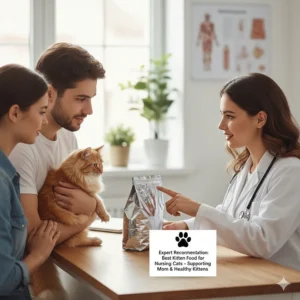
You now have the knowledge to make informed decisions. Whether you choose Royal Canin Mother & Babycat for its specialized formula, Purina ONE Healthy Kitten Formula for budget-friendly reliability, or Wellness CORE Grain-Free Kitten for premium nutrition, what matters most is providing adequate quantities of quality food.
Remember these key principles: ✨ Free-feed during nursing—never restrict portions
✨ Provide fresh water constantly for milk production
✨ Monitor mother’s body condition and kitten growth weekly
✨ Transition foods gradually to prevent digestive upset
✨ Trust your veterinarian for individualized guidance
The mother cat depending on you deserves exceptional care during this demanding time. Her kittens—tiny, vulnerable, and growing impossibly fast—need the nutrition only well-fed mothers can provide through their milk.
You’ve invested time learning about proper nutrition. Now invest in quality food and generous portions. Your cats’ health, happiness, and longevity depend on the foundation you’re building right now.
🛍️ Take Action Today! 💝
Don’t wait—your nursing cat needs proper nutrition immediately. Click on any of the highlighted products in our reviews to check current prices and availability on Amazon. These carefully selected options represent the best kitten food for nursing cats available in 2025, and your purchase helps ensure both mother and kittens thrive during this critical period. Give them the nutrition they deserve! 🐱✨
Recommended for You
- 7 Best Cat and Kitten Food Choices for Optimal Feline Health in 2025
- Low Protein Cat Food: 7 Best Kidney-Friendly Options That Save Lives in 2025
- 7 Best Salmon Cat Food Options for Ultimate Feline Health in 2025
Disclaimer: This article contains affiliate links. If you purchase products through these links, we may earn a small commission at no additional cost to you.
✨ Found this helpful? Share it with your friends! 💬🤗
