
Table of Contents
There’s a quiet moment in every cat owner’s life when the shine goes dull. The hind end looks scruffy. There’s dandruff along the spine. The cat who once groomed like an Olympian now manages a lick or two and wanders off. Choosing a no-rinse foam shampoo for senior cats isn’t about vanity. It’s about comfort, hygiene, and letting a stiff, proud old animal stay dignified.
Grooming slows for a reason. Veterinary sources describe reduced grooming as one of the most common pain-linked changes in aging cats, and spinal arthritis makes twisting and turning uncomfortable. Twisting is exactly what a cat needs to reach the lower back, pelvis, and rear legs. Professional cat groomers report that seniors often arrive with more oily residue, dead undercoat, and dandruff than younger adults, because those hard-to-reach zones go untended.
Now picture the traditional bath: a slick tub, a twisting body, a cold towel. For a cat with sore hips, that’s an obstacle course. A waterless foam bath for older cats skips most of it. This guide covers seven real foam products, what their labels mean in practice, how foam vs. spray formats compare, and a calm routine for reducing bath stress. Everything here rests on spec sheets, ingredient lists, and published reviewer feedback rather than hands-on testing. Prices are given as ranges because they change constantly.
What Is No-Rinse Foam Shampoo for Senior Cats?
No-rinse foam shampoo for senior cats is a pump-dispensed, water-free cleanser that you massage into the coat and then towel or brush out. It lifts dander, odor, and surface grime without a tub or faucet. It suits older felines whose stiff joints and shrinking patience make traditional baths harder.
Quick Comparison: 7 Foam Picks at a Glance
Before the deep dive, here’s the lineup on one screen. Treat it as a map, not a verdict. The right choice depends on your cat’s skin, nose, grooming habits, and how much handling the joints can tolerate.
| Product | Standout Trait | Price Range | Best For |
|---|---|---|---|
| Vet’s Best Waterless Cat Bath | Aloe, oatmeal, and neem oil blend | Under $10 | Budget trials and dry, itchy skin |
| Hepper Waterless No Rinse Pet Shampoo | Four-ingredient formula | Roughly $10-$15 | Owners who want a short ingredient list |
| Earthbath Hypo-Allergenic Grooming Foam for Cats | Fragrance-free, labeled safe to lick | Roughly $7-$14 | Scent-sensitive seniors |
| Mooncat Waterless Cat Shampoo | Marketed for kittens and seniors, lick-safe claim | Roughly $18-$27 | Owners who prioritize licking safety |
| TropiClean Dander Reducing Waterless Cat Shampoo | Coconut cleanser, oat and cucumber extracts | Low-to-mid teens | Dander and flaky skin |
| FURminator deShedding Rinse-Free Foaming Cat Shampoo | Plant proteins and omega fatty acids | Check current price | Heavy shedders and hairball-prone cats |
| Ark Naturals Don’t Worry Don’t Rinse Me | 18 oz bottle | Roughly $12-$20 | High-volume use, after a vet check |
The pattern is clear. Earthbath and Mooncat cater to the cautious owner, with fragrance-free and lick-safe positioning. Vet’s Best is the low-risk budget entry. Hepper wins on ingredient minimalism. Ark Naturals offers the most foam per bottle, but its botanical-oil ingredient list deserves a closer look, covered below. If you remember one thing from this table, make it this: the cheapest bottle isn’t automatically the safest, and the priciest isn’t automatically the gentlest.
💬 Just one click — help others make better buying decisions too!😊
Top 7 No-Rinse Foam Shampoo for Senior Cats: Expert Analysis
Every pick below is a foam, is labeled for cats, and has a verifiable minimum age. Together they span budget, mid-range, and premium shelves. Review sentiment is aggregated from real listings and published roundups. Where a direct review pool couldn’t be verified, the entry says so.
1. Vet’s Best Waterless Cat Bath — soothing oatmeal-and-aloe on a budget
The standout is a skin-care-shelf ingredient list: aloe vera, colloidal oatmeal, neem oil, vitamin E, panthenol, and allantoin. That’s a lineup built for dry, flaky skin, which is what an older cat with a neglected back end tends to develop. The 4 fl oz bottle is cleared for cats 12 weeks and older, and the maker says it won’t interfere with topical flea treatments.
What does that mean in practice? A short-haired senior needs only a modest amount of foam per session, so the small bottle is less limiting than it looks. Based on the label, this is a sensible first foam for a budget-minded owner whose cat has dry skin and no known fragrance sensitivity. The caveat is scent. The brand calls it light and fresh, yet at least one pet-care roundup flags it as strong, and an old cat’s nose is hardly decorative.
Reviewers on a major marketplace listing consistently report easy application, a pleasant smell, and visible help with matting. A common remark is that the foam collapses into liquid fairly quickly, so work fast. At the time of research, the average rating sat in the low-to-mid 4s out of 5 across thousands of ratings.
Pros:
- ✅ Oatmeal and aloe soothe dry skin
- ✅ Very low cost per bottle
- ✅ Cleared for cats 12 weeks and up
Cons:
- ❌ Small bottle empties fast on longhairs
- ❌ Scent too strong for some noses
Expect to pay under $10, which makes this a low-risk way to trial the foam format.
2. Hepper Waterless No Rinse Pet Shampoo — shortest ingredient list in the lineup
The headline here is restraint. The listed ingredients are water, polysorbate 20, glycerin, and fragrance. The brand adds that the formula is pH balanced and free of soap, gluten, DEA, synthetic dyes, sulfates, and phthalates. You apply it to your hands or the coat, massage it in, and brush it out. The maker also suggests foaming it between paw pads and wiping clean.
Why does a four-ingredient list matter? Fewer components means fewer variables if your senior has reactive skin, and the paw-pad trick is handy for a cat who can no longer wash her feet properly. Two caveats apply. This is a dog-and-cat formula rather than a cat-specific one, and “fragrance” is still on the list, so sensitive noses should proceed cautiously.
A large pool of direct customer reviews couldn’t be verified at the time of research. The best available signal is editorial: Catster’s roundup ranks it best overall among waterless cat shampoos, and several other pet-care roundups feature it prominently. That’s useful context, but it isn’t the same as thousands of owner reports.
Pros:
- ✅ Minimal ingredient list, pH balanced
- ✅ Paw-pad cleaning tip is genuinely useful
- ✅ Strong editorial reputation
Cons:
- ❌ Not formulated specifically for cats
- ❌ Fragrance still listed on the label
Budget roughly $10-$15. It’s solid value for owners who read labels like contracts.
3. Earthbath Hypo-Allergenic Grooming Foam for Cats — fragrance-free, rub-on, towel-off simplicity
This one’s defining feature is the absence of perfume. The 4 fl oz foam is hypoallergenic and fragrance-free, built around plant-derived cleansers, colloidal oatmeal, shea butter, and aloe. Retailer listings differ slightly in their ingredient lists, so read the bottle you actually receive. The label says it’s safe for cats to lick, suitable for cats over six weeks, and usable up to three times per week.
That weekly ceiling is a quiet gift. It prevents the “more is better” trap, since over-cleaning dry senior skin can backfire. The “rub on, towel off” design also suits a cat who tolerates a few minutes of petting-style contact but not a long session. If your senior sniffs a fragranced product and walks off in protest, this is the logical first stop.
Reviewers on a major pet retailer’s page describe it as easy for fluffy cats and helpful for loosening mats. One shopper pumps the foam onto a baby wipe, cleans the dirty spot, then follows with a few more wipes. Others note the scent isn’t overpowering, and several use it weekly.
Pros:
- ✅ Fragrance-free for sensitive noses
- ✅ Label states it’s safe to lick
- ✅ Clear three-times-weekly limit
Cons:
- ❌ Small 4 fl oz bottle
- ❌ Ingredient lists vary between retailers
Plan on roughly $7-$14. It’s the safest-feeling default for scent-sensitive seniors.
4. Mooncat Waterless Cat Shampoo — the one built with seniors in mind
Mooncat’s standout is its positioning. One popular listing is titled as a no-rinse foam for kittens and seniors, with licking safety and dander reduction as headline claims. The 5 oz bottle is marketed as paraben-free and pH balanced. The brand also sells a longhair detangling version and a brush-kit bundle.
Treat “licking safe” as a manufacturer claim, not a laboratory certificate. Still, it points at a real issue. Even seniors who groom less will lick their front legs and shoulders, so ingestible-minded formulation is a reasonable priority. If your cat is a diligent self-groomer, this is where the premium price starts to make sense. If your cat has stopped grooming altogether, you’re paying for reassurance you may rarely need.
The review pool is small. One retailer listing showed a high-4s average across fewer than thirty ratings, which is encouraging but statistically thin. One shopper called the cleaning power merely average while still valuing the lick-safe formulation. Read that as an honest tradeoff: gentle first, powerful second.
Pros:
- ✅ Lick-safe positioning for self-groomers
- ✅ Longhair and brush-kit variants available
- ✅ Paraben-free, pH-balanced formula
Cons:
- ❌ Highest price per ounce in this lineup
- ❌ Small review pool limits confidence
Budget roughly $18-$27 depending on bundle. It’s worth it only if lick-safety is your top concern.
5. TropiClean Dander Reducing Waterless Cat Shampoo — coconut cleanser aimed at flaky skin
This foam’s standout is its dander-reduction focus. The 7.4 fl oz bottle uses a mild coconut-based cleanser with oat and cucumber extracts and aloe, and it’s labeled tearless, pH balanced, and paraben- and dye-free. It’s rated for cats 12 weeks and older. Directions say to massage the foam in, avoid the eyes and ears, and brush through afterward.
Here’s the practical angle. Cats who groom less tend to hold onto more loose skin flakes and oil, so a dander-focused foam fits the senior profile. Brushing afterward is what physically removes the debris, and the foam simply loosens it. The tropical coconut-cucumber scent is where opinions split. The brand sells it as fresh, while some buyers find it off-putting.
On a major pet retailer’s page, sentiment is mixed. Some owners say it works well and noticeably cuts dander. Others report that their cat hated it or that the smell was unpleasant. That split is typical for scented products, so patch-test on a small area first.
Pros:
- ✅ Dander-focused, oat-and-aloe formula
- ✅ Generous 7.4 fl oz size
- ✅ Tearless and pH balanced
Cons:
- ❌ Scent divides reviewers sharply
- ❌ Needs brushing for best results
Expect low-to-mid teens. It’s a good fit for flaky skin if your cat tolerates scent.
6. FURminator deShedding Rinse-Free Foaming Cat Shampoo — shedding and hairball support
The standout is the shedding angle. This 8.5 fl oz foam is enriched with hydrolyzed plant proteins and omega fatty acids and carries no parabens or chemical dyes. It’s labeled for cats over six weeks. Frequency guidance varies between retailer listings, so follow the bottle in your hands.
Why would a senior owner care about shedding? Loose hair that isn’t removed gets swallowed during grooming, and for an older cat that can mean more hairballs. Removing hair on your terms, with a foam and a comb, is gentler than waiting for it to end up in the stomach. The tradeoff is scent. A pet-care roundup warns that, like many dry shampoos, it can smell strong enough to put some cats off.
Retailer reviews are mixed. Some owners praise the soft, fluffy result when combined with a comb, while another reported a thick, sticky-feeling coat. A practical tip from a reviewer is to dispense the foam onto a cat wipe first. That gives you more control and catches loose fur.
Pros:
- ✅ Targets shedding and hairball concerns
- ✅ Larger 8.5 fl oz bottle
- ✅ Free of parabens and chemical dyes
Cons:
- ❌ Strong scent for some cats
- ❌ One reviewer reported sticky residue
A current price range couldn’t be verified, so check the live listing before buying.
7. Ark Naturals Don’t Worry Don’t Rinse Me — biggest bottle, closest label-reading required
This is the volume play. The 18 oz pump bottle is a dog-and-cat formula for pets 12 weeks and older. The maker says it leaves no sticky, oily, or greasy residue, and brushing or towel drying is optional. A pet-care roundup notes it’s massaged in without needing a follow-up brush or towel.
Now the honest part. The ingredient list includes balsam, cedarwood, rosemary, and orange oils. Veterinary toxicology guidance warns that many essential oils, including citrus and pine, are poisonous to cats through both skin contact and ingestion. A diluted shampoo isn’t the same as a concentrated oil, and the product is labeled for cats. But cats lick what’s on their coat, and caution is warranted. Ask your vet before using it, especially if your senior has other health issues.
A direct review pool wasn’t verified at the time of research. Its inclusion in editorial roundups suggests it performs as a cleanser, but that says nothing about suitability for your particular cat.
Pros:
- ✅ 18 oz goes a long way
- ✅ Pump foam is easy to dispense
- ✅ Optional brushing keeps routine short
Cons:
- ❌ Essential-oil ingredients warrant a vet check
- ❌ Dog-and-cat formula, not senior-specific
Plan on roughly $12-$20. It’s good value only once your vet is comfortable with the ingredients.
Spec Snapshot: What the Labels Actually Say
| Product | Minimum Age | Key Ingredients | Best For |
|---|---|---|---|
| Vet’s Best | 12 weeks | Aloe, oatmeal, neem oil, vitamin E | Dry skin on a budget |
| Hepper | See label | Water, polysorbate 20, glycerin, fragrance | Minimal-ingredient fans |
| Earthbath | Over 6 weeks | Oatmeal, shea butter, aloe, plant cleansers | Fragrance-sensitive seniors |
| Mooncat | Kittens OK; ask your vet | Not fully verified | Lick-conscious owners |
| TropiClean | 12 weeks | Coconut cleanser, oat and cucumber extracts | Dander control |
| FURminator | Over 6 weeks | Plant proteins, omega fatty acids | Shedding and hairballs |
| Ark Naturals | 12 weeks | Botanical oils, plant-derived surfactants | Big households after vet approval |
The table makes one thing obvious: minimum ages are irrelevant for seniors, so let ingredients and fragrance drive the decision. Earthbath is the only entry that combines fragrance-free with an explicit lick-safe label. Vet’s Best and TropiClean lean on oatmeal and botanical soothers, which suit flaky skin. Ark Naturals is the outlier, and its essential-oil content makes the vet conversation non-negotiable.
Reducing Bath Stress: A Calm-Cat Foam Routine
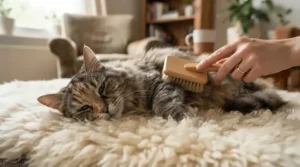
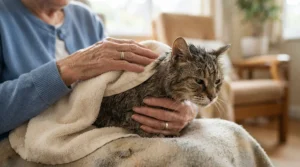
Foam is only half the battle. The other half is how you deliver it. Cat-friendly handling guidelines from veterinary organizations stress giving cats a sense of control and choice and using minimal handling. They also note that letting a cat feel hidden, for example under a towel, can make handling easier. Those principles translate neatly to home grooming and sit at the heart of reducing bath stress.
- Brush first. Removing loose hair and tangles before any shampoo makes the foam work better and the session shorter.
- Set a low, warm, quiet stage. A non-slip towel on a low surface or your lap spares the joints a jump. Close the door and silence the TV.
- Foam into your palm, not onto the cat. The hiss of a pump aimed at fur startles many cats. A pool of foam in your hand feels like petting.
- Work in short strokes. Move head to tail, avoiding eyes and ears, and let the cat stay in a comfortable position. Don’t stretch limbs or force a twist.
- Towel off and reward. Pat dry, brush gently, and finish with a treat so the session ends on a good note.
Cut it short at the first sign of distress. A veteran cat-groomer’s advice is blunt: if a senior is already panting or soiling from stress, don’t groom. For the first thirty days, the usual mistakes are using too much foam, skipping a patch test, and trying to do everything in one sitting. Aim for five calm minutes, then stop.
Real-World Scenarios: Matching Shampoo to Your Senior Cat
Three typical profiles show how the lineup maps to real households.
The stiff-hipped short-hair (14 years, indoor, apartment). Budget is tight and grooming has tapered off. The back end is scruffy, but skin is otherwise fine. A bottle of Vet’s Best used once a week handles dry skin affordably. If scent bothers her, switching to Earthbath costs a few dollars more and removes the perfume.
The fluffy longhair (13 years, prone to mats). Longer coats collect more grime and tangles. Earthbath foam applied onto a wipe handles soiled spots, while Mooncat offers a longhair variant for matted areas. A groomer’s lion cut, which veterinary sources mention for cats who can’t maintain their coat, may be the kinder long-term fix for severe mats.
The multi-cat household (senior plus two younger cats). Cats groom each other, so lick safety matters more. Mooncat or Earthbath fit best here. For a heavy shedder in the mix, FURminator can handle the hair-removal side, but test it on one cat before rolling it out.
✨ Ready to Make Bath Time Gentler?
🔍 Take your senior cat’s grooming routine to the next level with these carefully selected foams. Click on any highlighted product name to check current pricing and availability. A cleaner, comfier coat is closer than you think! 🐾
How to Choose No-Rinse Foam Shampoo for Senior Cats
The shelves are crowded, and marketing language is cheap. Use this checklist to cut through it.
- Start with your vet. Reduced grooming is often a pain signal, so rule out arthritis or dental problems before blaming the coat.
- Choose a cat-labeled foam. Dog-and-cat formulas exist, but a cat-specific label signals that someone thought about feline physiology.
- Read the ingredients for essential oils. Citrus, pine, tea tree, and peppermint oils are well-documented concerns for cats. When in doubt, skip.
- Match scent to your cat’s tolerance. If she avoids perfumed products, go fragrance-free.
- Think about licking. A lick-safe label offers reassurance if your senior still self-grooms.
- Size the bottle to the coat. A short-hair rarely needs 18 oz. A longhair may burn through 4 fl oz fast.
- Check frequency limits. Labels vary, so follow what’s printed on your bottle.
The goal is a product you can use calmly and consistently. A perfect formula that your cat fights is worse than a decent one she tolerates.
Waterless Foam Bath for Older Cats: What Actually Changes With Age
An older cat’s coat tells a story. Reduced grooming means more oil, more dander, and more shed hair sitting on the surface. A waterless foam bath for older cats tackles that top layer well. It loosens grime and refreshes the skin without the shock of getting wet.
What it can’t do is fix deep problems. Heavy mats, skin infections, and open sores need a groomer or vet, not a foam. Veterinary sources suggest that cats who can’t keep up their coat even with pain well managed may benefit from a short clip, because short hair is easier to keep clean. A sudden drop in coat quality deserves a vet visit, not just a new shampoo.
There’s also a fair counterpoint. A senior-cat groomer observes that many older cats actually enjoy a warm bath and blow-dry, and that a regular schedule can be kinder than a stressful clip. Foam isn’t morally superior to water. It’s simply the lower-effort option for cats who dislike getting wet or can’t manage the physical demands.
Mess-Free Cat Bath Alternative: Foam vs. Wipes vs. the Tub
Searching for a mess-free cat bath alternative usually means one of four options. Here’s how they compare in general terms. These ratings are analytical judgments, not lab results.
| Format | Mess | Handling Demand | Stress Risk | Best For |
|---|---|---|---|---|
| No-rinse foam | Low | Gentle massage | Lower | Seniors who tolerate petting |
| Spray (e.g., Burt’s Bees Natural Cat Care Waterless Dry Shampoo) | Low | Low, but hiss and mist | Moderate for noise-sensitive cats | Quick refreshes |
| Grooming wipes | Lowest | Low | Low | Paws, face, spot cleaning |
| Traditional tub bath | High | High | Highest for stiff cats | Heavily soiled coats, with professional help |
Foam strikes the best balance for most seniors. It cleans more broadly than wipes without the volume of a bath, and it keeps the cat at a comfortable height rather than in a tub. Wipes shine for spot work, so keep a pack beside the foam. A tub bath still has a role for heavily soiled coats, but it’s no longer the default.
Foam vs. Spray Formats: Which Is Kinder to Stiff Joints?
The foam vs. spray formats debate comes down to contact and noise. Foam is applied by hand, which makes it feel like petting and lets you steer clear of the face. It also stays where you put it. Spray, by contrast, disperses a mist and often hisses on release.
Even foam isn’t noise-free. Pet-care roundups note that some cats dislike the sound of the pump. One marketplace reviewer said foam was easier to apply and better tolerated than a spray mist, which fits the general logic. The practical workaround for both formats is to dispense into your hand or onto a cloth rather than aiming at the cat.
Spray isn’t useless. A product like Burt’s Bees Natural Cat Care Waterless Dry Shampoo, sold as a 10 oz spray with shea butter and honey, suits quick refreshes on short coats. For a stiff senior who needs hands-on cleaning of the back end and belly, foam gives you more control. That’s the edge that matters when joints are sore.
No-Rinse Cat Shampoo for Arthritic Cats: A Handling-First Approach
Choosing a no-rinse cat shampoo for arthritic cats is only half the job. The rest is how you move your hands. Veterinary welfare guidance lists difficulty getting up, trouble climbing or jumping, reduced grooming, and difficulty using the litter tray among the signs of arthritis. It also recommends helping your cat with grooming and trimming overgrown claws regularly. If you suspect arthritis, get a proper diagnosis, since other conditions mimic it.
Once pain is managed, handle accordingly:
- Support the hips, rather than lifting from under the front legs.
- Let the cat choose her position. A loaf, a side-lie, or standing all work.
- Never stretch or twist a limb for access.
- Use a foam-dampened wipe on tender zones like the lower back instead of rubbing.
- Keep it short. Several two-minute sessions beat one long one.
If the hind end is too sore to touch, stop and talk to your vet. No shampoo is worth causing pain.
Senior Cat Mobility: Features That Actually Matter (And Those That Don’t)
Senior cat mobility shapes the whole grooming routine, including how much you can ask of the body and which features of a shampoo earn their keep.
What matters:
- No water, no rinse. Fewer steps mean fewer postural demands.
- One-handed pump dispensing, so your other hand can steady the cat.
- Fragrance-free or mild scent, since an anxious cat tenses up.
- A lick-safe label, if she still self-grooms.
- A manageable bottle size, so you’re not wrestling a giant pump.
What doesn’t:
- “Show-quality shine” claims. Comfort beats gloss.
- Minimum-age labels such as 6 or 12 weeks, which are irrelevant to a 15-year-old.
- Exotic botanical lists. More plants don’t mean more benefit, and some oils are risky.
The home environment counts too. Veterinary sources note that a litter box on a different level of the home becomes a barrier for cats in pain, so a grooming station at floor or low-table height follows the same logic.
Safety Guide: Ingredients, Essential Oils, and When to Call the Vet
Foam is gentle, but “natural” isn’t a safety guarantee. Veterinary guidance warns that many essential oils and similar products are poisonous to cats, and that both ingestion and skin exposure can be toxic. The list includes cinnamon, citrus, pine, peppermint, tea tree, wintergreen, and ylang ylang. Because cats lick whatever lands on their coat, anything on the skin tends to end up in the mouth. If you suspect exposure, call your vet or the Pet Poison Helpline at 1-800-213-6680 immediately.
A few ground rules:
- Patch-test on a small area and watch for redness, scratching, or drooling.
- Avoid eyes and ear canals, as most labels instruct.
- Stop at any sign of irritation, and contact your vet.
- Skip foam for severe mats, open sores, or sudden coat deterioration.
- Call the vet if your senior abruptly stops grooming, pants, or hides.
Shampoo is a hygiene tool, not a treatment. If something looks off, treat the cause, not the coat.
FAQ
❓ How often should I use no-rinse foam shampoo on a senior cat?
❓ Can I use waterless foam on a cat with matted fur?
❓ Does foam shampoo really cut cat dander?
❓ What if my senior cat hates the sound of the pump?
❓ Why did my older cat stop grooming herself?
Conclusion
Grooming an elderly cat is an act of translation. She can no longer say “my back hurts” or “I can’t reach that,” but her coat does the talking. A thoughtful no-rinse foam shampoo for senior cats answers that message without the drama of a tub. It cleans the surface, soothes dry skin, and keeps the whole experience short and gentle.
Among the seven picks, the choices boil down to priorities. Vet’s Best is the low-cost trial, Earthbath is the fragrance-free default, and Mooncat appeals to lick-conscious owners. Hepper wins on minimalism, TropiClean on dander focus, and FURminator on shedding. Ark Naturals brings bulk value but only after your vet signs off on its ingredients.
Whichever you choose, the method matters as much as the bottle. Support those hips, keep sessions short, let your cat set the pace, and stop the moment she’s done. If grooming suddenly collapses, see the vet before reaching for another product. Foam is a comfort tool, and it works best when paired with good pain management and a patient pair of hands.
Recommended for You
- Cat Conditioner For Long-Haired Cats Prone To Matting: 7 Best (2026)
- Flea Shampoo For Outdoor Cats: 7 Best Safe Picks In 2026
- Gentle Kitten Shampoo For First Bath: 7 Best Picks (2026)
Disclaimer: This article contains affiliate links. As an Amazon Associate, I earn from qualifying purchases. If you purchase products through these links, we may earn a small commission at no additional cost to you.
✨ Found this helpful? Share it with your friends! 💬🤗
