
Table of Contents
Your cat strolls in at dusk, smelling like cut grass and mischief. Then comes the scratching. Behind the ear, base of the tail, the back of the neck. If that sounds familiar, you’re probably shopping for flea shampoo for outdoor cats, and you’ve landed in a category where one wrong label can do real harm.

What Is Flea Shampoo for Outdoor Cats?
Flea shampoo for outdoor cats is a cat-specific bathing product that kills adult fleas on contact and is formulated to be safe for feline skin. It works only while it’s on the coat, so it clears an active infestation but doesn’t protect against the next one. Outdoor cats meet new fleas daily.
Here’s the part many product pages skip. According to Cornell’s Feline Health Center, a cat can carry thousands of fleas while showing little more than persistent scratching, and flea allergy dermatitis can produce crusty, reddish bumps. Kittens face extra danger. So a bath is a rescue tool, not a shield.
I’ll be blunt about what this guide does. It compares seven real, cat-labeled shampoos, explains what the specs mean in practice, and tells you where a shampoo stops and vet-approved flea control begins. We also dig into flea killing shampoo for cats, natural flea shampoo for cats, cat shampoo for fleas and itching, the flea life cycle, and permethrin toxicity in cats, because understanding those five topics is what separates a safe bath from a trip to the emergency vet.
Prices below are ranges, never exact figures, and they shift often. Check current pricing before you buy.
Quick Comparison: Which Flea Shampoo for Outdoor Cats Fits Which Situation?
| Product | Standout trait | Kitten label* | Best For |
|---|---|---|---|
| Adams Plus Flea & Tick Shampoo with Precor | Moisturizing, widely reviewed | Check label | Heavy, active infestations |
| Veterinary Formula Clinical Care Flea & Tick Shampoo | pH balanced, bulk sizes | Over 12 weeks | Multi-cat households on a budget |
| Vet’s Best Plant-Based Flea & Tick Cat Shampoo | Plant-based, cat-specific | Check label | Owners wanting a gentler profile |
| Sentry PurrScriptions Plus Flea & Tick Shampoo for Cats | Very low price, easy rinse | Check label | Cost-conscious baths |
| Natural Chemistry De Flea Shampoo | Natural-leaning formula | Check label | Sensitive-skin cats |
| NaturVet Herbal Flea Shampoo | Herbal, gentle positioning | Often cited for kittens | Younger or fragile cats |
| Vet’s Best Flea Itch Relief Shampoo | Itch-focused formula | Over 12 weeks (per reviewers) | Cats already scratched raw |
*Always confirm age limits on the actual bottle. Labels change.
Read the table as a decision shortcut, not a verdict. Adams Plus Flea & Tick Shampoo with Precor earns its reputation when fleas are already everywhere, while Veterinary Formula Clinical Care Flea & Tick Shampoo wins on cost per bath when several cats share a yard. If scratching has already broken the skin, Vet’s Best Flea Itch Relief Shampoo targets the symptom rather than just the bug.
💬 Just one click — help others make better buying decisions too!😊
Top 7 Flea Shampoos for Outdoor Cats: Expert Analysis
A note on method. The commentary below combines label information, aggregated reviewer sentiment from published roundups, and straightforward reasoning about what each spec means. I haven’t bathed anyone’s cat in a lab, and I won’t pretend otherwise. Where review data was thin, I say so.
1. Adams Plus Flea & Tick Shampoo with Precor — strongest reputation for stubborn infestations
Several veterinary-adjacent roundups crown this the best overall pick, and the reasoning is easy to follow. It pairs a fast-acting adulticide with an ingredient aimed at the life cycle (Precor), plus moisturizers such as aloe and lanolin, which matters because repeated bathing can dry feline skin.
Here’s the catch reviewers flag. The formula contains pyrethrin, a compound cat owners should always treat with caution. It’s considered safe when used exactly as directed, but dilution, rinse time, and age limits aren’t suggestions. On paper, that makes this a product for owners willing to follow the label to the letter. Reviewers consistently describe quick results and a pleasant scent, while a common complaint is that the coat can feel less fluffy afterward.
Pros:
- ✅ Targets adult fleas and addresses the life cycle
- ✅ Moisturizing ingredients protect dry skin
- ✅ Frequently ranked best overall in roundups
Cons:
- ❌ Contains pyrethrin, so label discipline is essential
- ❌ Not a replacement for ongoing prevention
Price range: typically the mid-teens, with larger bottles costing more. Verdict: strong value for severe cases if you’re careful.
2. Veterinary Formula Clinical Care Flea & Tick Shampoo — best bulk value for multi-cat homes
The headline here is practicality. It’s pH balanced and positioned for sensitive skin, and it’s sold in 16-ounce bottles and a gallon jug, which is a gift if you’re managing a colony of backyard regulars.
What does pH balance actually mean for your cat? Feline skin is thinner and more reactive than many owners assume, so a gentler pH reduces post-bath flaking. Reviewers tend to praise the value and ease of rinsing. One recurring trade-off is scent, which some describe as medicinal.
The label reportedly covers cats and kittens over 12 weeks. If your kitten is younger, skip every shampoo here and call your vet instead.
Pros:
- ✅ Gallon size slashes cost per bath
- ✅ pH balanced for sensitive skin
- ✅ Easy to rinse, per reviewers
Cons:
- ❌ Medicinal smell bothers some households
- ❌ Not suited to kittens under 12 weeks
Price range: low-to-mid teens for the small bottle. Verdict: the budget pick that doesn’t feel cheap.
3. Vet’s Best Plant-Based Flea & Tick Cat Shampoo — gentlest-feeling plant-based option
This one appeals to owners who read ingredient panels like menus. It’s plant-based and formulated specifically for cats, a meaningful point because cat-specific formulation sidesteps the dog-label trap we cover later.
Be realistic about “natural.” Plant-derived doesn’t automatically mean harmless for cats, whose livers handle many compounds poorly. What it does mean here is a brand that built the formula around feline use. Reviewers mention a strong scent, which can stress a cat with a sensitive nose, and the price runs higher than conventional rivals.
For an outdoor cat with mild flea pressure and sensitive skin, this is a reasonable first bath. For a heavy infestation, expect to repeat it or step up.
Pros:
- ✅ Cat-specific, plant-based formulation
- ✅ Gentler positioning for sensitive cats
- ✅ Recognized brand with broad availability
Cons:
- ❌ Strong fragrance can upset cats
- ❌ Pricier than conventional shampoos
Price range: in the low teens and up. Verdict: pay for the formulation, not the marketing.
4. Sentry PurrScriptions Plus Flea & Tick Shampoo for Cats — lowest price, easy rinse
Budget shoppers keep landing here. Reviewers describe it as one of the cheapest cat-specific flea shampoos around, and it’s marketed to kill adult fleas, eggs, and ticks, with a spring freesia scent.
The low price changes the math for outdoor cats who need repeated baths. If you’re treating a cat that roams a flea-heavy yard, cost per use matters, and this is where it’s hard to beat. The spec sheet won’t say this, but low cost doesn’t make life-cycle follow-up optional. Fleas in your carpet don’t care what shampoo you bought.
Reviewers generally report easy rinsing and a decent deodorizing effect. Verified, independent efficacy data is harder to find, so treat the claims as manufacturer claims.
Pros:
- ✅ Among the lowest prices for a cat-labeled option
- ✅ Rinses out easily
- ✅ Pleasant, light scent
Cons:
- ❌ Fewer independent performance details available
- ❌ Fragrance may bother very sensitive cats
Price range: usually under $10. Verdict: great for frequent baths, but pair it with prevention.
5. Natural Chemistry De Flea Shampoo — natural-leaning pick for sensitive skin
The pitch is a gentler, natural-leaning approach that still kills fleas on contact, with reviewers noting it’s suitable for kittens. I’d verify the age limit directly on the bottle, since “kitten-safe” wording varies across versions.
What stands out in practice is the positioning for cats prone to irritation. If your outdoor cat’s skin flares after harsher products, a milder shampoo may be easier to tolerate, though less aggressive formulas sometimes need a second round on heavily infested coats.
Reviewer sentiment leans positive on gentleness. A frequent critique is that results can feel slower on stubborn infestations, which is a fair trade for some owners and a dealbreaker for others.
Pros:
- ✅ Gentle formula suits sensitive skin
- ✅ Kills fleas on contact, per product claims
- ✅ Widely available
Cons:
- ❌ May need repeat baths on heavy infestations
- ❌ Less aggressive than conventional formulas
Price range: roughly $12-$18. Verdict: solid for mild-to-moderate cases.

6. NaturVet Herbal Flea Shampoo — herbal and gentle for younger cats
One veterinary-reader roundup names this its pick for kittens, and the herbal positioning explains why. Younger cats have less skin tolerance, so a softer formula is sensible.
But “gentle” and “effective” are separate promises. Herbal shampoos can disrupt a modest flea load, though they’re generally less forceful against a serious outbreak. The honest takeaway: great for light infestations in sensitive cats, risky as your only strategy for a yard full of fleas.
Review data on long-term results is limited, so I’d rather say that than invent a verdict. Always check the minimum age on the label, and ask your vet about any kitten under 12 weeks.
Pros:
- ✅ Herbal formula feels gentle
- ✅ Commonly recommended for kittens
- ✅ Affordable for a plant-forward product
Cons:
- ❌ Lighter-duty against severe infestations
- ❌ Limited long-term review detail
Price range: generally low-to-mid teens. Verdict: best for sensitive, lightly infested cats.
7. Vet’s Best Flea Itch Relief Shampoo — best when itching is the main problem
Fleas cause two problems: the bug, and the allergic aftermath. This shampoo leans into the second one, advertising fast itch relief from flea bites, which is especially relevant for cats with flea allergy dermatitis.
Why that matters: even after fleas die, irritated skin keeps itching, and cats with sharp claws can escalate a hot spot quickly. A formula built around soothing helps break that scratch cycle. Reviewers describe it as gentle on skin and suitable for cats and kittens over 12 weeks.
It isn’t a standalone flea program. Use it to calm skin after you’ve started a real flea-control plan, and call your vet if skin is open or infected.
Pros:
- ✅ Soothing, itch-focused design
- ✅ Gentle on sensitive or irritated skin
- ✅ Suitable for cats over 12 weeks
Cons:
- ❌ Not a complete flea-control solution
- ❌ Pricier than budget shampoos
Price range: low-to-mid teens. Verdict: a smart second step after the infestation is handled.
Top 7 Comparison at a Glance
| Product | Strength | Watch-out | Price range | Best For |
|---|---|---|---|---|
| Adams Plus Flea & Tick Shampoo with Precor | Fast, life-cycle aware | Contains pyrethrin | Mid-teens | Heavy infestations |
| Veterinary Formula Clinical Care Flea & Tick Shampoo | Bulk value | Medicinal scent | Low-to-mid teens | Multi-cat homes |
| Vet’s Best Plant-Based Flea & Tick Cat Shampoo | Cat-specific plant-based | Strong scent | Low teens and up | Sensitive cats |
| Sentry PurrScriptions Plus Flea & Tick Shampoo for Cats | Lowest cost | Fewer independent details | Under $10 | Frequent baths |
| Natural Chemistry De Flea Shampoo | Gentle | Slower on severe cases | $12-$18 | Mild infestations |
| NaturVet Herbal Flea Shampoo | Herbal, kitten-friendly | Lighter duty | Low-to-mid teens | Younger cats |
| Vet’s Best Flea Itch Relief Shampoo | Itch relief | Not a full program | Low-to-mid teens | Post-flea skin recovery |
Looking at the table, Adams Plus Flea & Tick Shampoo with Precor delivers the most firepower, but Sentry PurrScriptions Plus Flea & Tick Shampoo for Cats wins if you need many baths on a tight budget. Buyers should note that NaturVet Herbal Flea Shampoo and Natural Chemistry De Flea Shampoo trade strength for gentleness, so a roaming outdoor cat in peak flea season may outrun them.
How to Choose Flea Shampoo for Outdoor Cats
Here’s a short, practical checklist. Work through it in order.
- Confirm it’s labeled for cats. Cats metabolize chemicals differently than dogs, so a cat-specific label is your first filter.
- Check the minimum age. Many cat shampoos specify over 12 weeks. For younger kittens, ask your vet before bathing.
- Read the active ingredients. Know whether the formula includes pyrethrins, and read the dilution and contact-time instructions twice.
- Match strength to infestation level. Heavy infestation calls for a conventional adulticide; light pressure can tolerate gentler formulas.
- Consider your cat’s skin. Cats with allergies or open scratches benefit from soothing formulas, ideally after a vet check.
- Think about cost per bath. Outdoor cats may need repeated treatments, so bulk sizes help.
- Plan the follow-up. A shampoo kills what’s on the cat today. Prevention covers tomorrow.
Flea Life Cycle: Why One Bath Never Finishes the Job
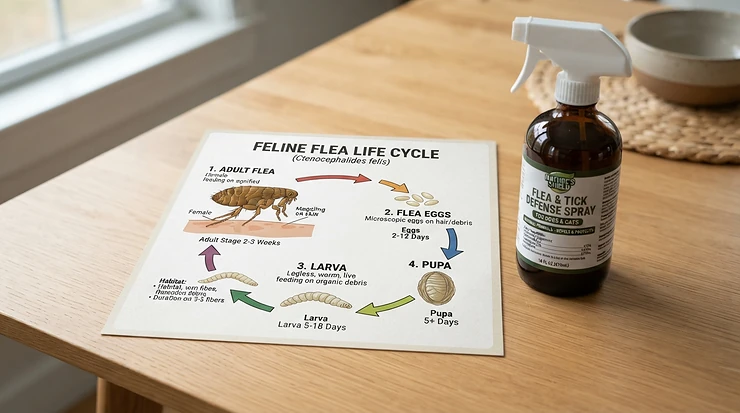
If you remember one idea from this guide, make it this one. The flea life cycle has four stages: egg, larva, pupa, and adult. According to the CDC’s overview of flea lifecycles, eggs can hatch in one to ten days, larvae spin a cocoon within roughly 5-20 days, and the pupa can sit protected for days or weeks. Adults won’t emerge until body heat or movement signals a host nearby.
Now translate that for your cat. Shampoo kills the adults on the coat, but the eggs, larvae, and cocoons live where your cat sleeps: porches, garage floors, bedding, carpet. Pupae are shielded from insecticides, so new adults keep arriving even after you bathe. University extension guides describe a full cycle of about a month, sometimes longer in cool or dry conditions, and a female can lay around 20 eggs a day.
That’s why a fresh flea can hop onto a freshly bathed cat within hours, and why “the shampoo didn’t work” is often really “the life cycle kept going.” Wash bedding, vacuum frequently, and repeat treatments on a schedule your vet recommends. Think of the shampoo as bailing water, while prevention fixes the leak.
Permethrin Toxicity in Cats: The Danger Every Outdoor Cat Owner Must Understand
This is the section that could save a life. Permethrin is common in dog flea products, and cats are unusually sensitive to it. The American Association of Feline Practitioners has endorsed a campaign to educate owners, and its permethrin poisoning statement explains why: feline livers have insufficient glucuronide conjugation, so permethrin builds up. Dog products often contain 45-60% permethrin, while safe cat products contain under 0.1%.
Veterinary toxicology reports describe tremors and seizures when dog-strength spot-ons end up on cats. Cats can also be affected by close contact with a recently treated dog, such as grooming or sleeping beside it. Signs commonly appear within a couple of hours and there’s no specific antidote, so treatment is supportive and urgent.
Practical rules for outdoor-cat households:
- Never use a dog flea shampoo, dip, or spot-on on a cat.
- Keep cats away from freshly treated dogs until the product dries and your vet says it’s safe.
- Read every label, including those for household sprays.
- If exposure is suspected, contact your vet, the ASPCA Animal Poison Control Center at 1-888-426-4435, or Pet Poison Helpline at 1-855-764-7661 immediately.
Note that the seven shampoos above are cat-labeled. Even so, permethrin toxicity in cats is the reason I’d never improvise with a “similar” product.
Flea Killing Shampoo for Cats vs. Other Flea Treatments
Is a bath really the best tool? Sometimes. Often it’s a supporting player.
| Option | Speed | Lasting protection | Best For |
|---|---|---|---|
| Flea killing shampoo for cats | Fast, on contact | None after rinse | Active infestations, rescues |
| Veterinary spot-on or oral preventive | Moderate | Weeks to months | Ongoing outdoor protection |
| Flea collars | Slow | Months, label dependent | Supplemental coverage |
| Flea comb | Immediate, manual | None | Monitoring and gentle removal |
A shampoo gives instant satisfaction. You see fleas wash down the drain. A prescribed preventive offers what shampoo can’t: protection across the life cycle. Extension guides also note that oral and spot-on systemic treatments have shown promise controlling infestations, especially combined with environmental steps.
The analysis is simple. Use flea killing shampoo for cats to knock down an outbreak or rescue a stray, then switch to vet-approved flea control so the problem doesn’t return. For feral or semi-feral cats you can’t handle often, that preventive step is even more important, because baths are stressful and impractical.
Natural Flea Shampoo for Cats: What Works and What’s Marketing
Natural flea shampoo for cats is one of the fastest-growing sub-categories, and the label deserves some skepticism. “Natural” has no regulated meaning on pet bottles. A plant-based formula can be gentle, but many essential oils that smell lovely to us are risky for cats, so a cat-specific label matters more than the word “natural.”
Where do natural options genuinely help? Cats with sensitive skin, owners who want to avoid pyrethrins, and light infestations. Products such as Vet’s Best Plant-Based Flea & Tick Cat Shampoo, Natural Chemistry De Flea Shampoo, and NaturVet Herbal Flea Shampoo fit that niche. Reviewers commonly praise gentleness, while the most common complaints involve strength, scent, and price.
Where do they fall short? Heavy infestations and outdoor cats with constant reinfestation. A softer formula may need repeating, and repeated bathing stresses cats. Weigh gentleness against effectiveness honestly. If you’re unsure, ask your vet before assuming natural equals safer.
Cat Shampoo for Fleas and Itching: Soothing the Damage After the Bugs Are Gone
Killing fleas doesn’t instantly stop the scratching. Flea saliva triggers allergic reactions in some cats, producing flea allergy dermatitis: crusty bumps, hair loss, and inflamed skin that can appear even in areas the cat hasn’t scratched. Cornell’s Feline Health Center notes that bites often concentrate around the back of the neck and the base of the tail.
A good cat shampoo for fleas and itching does two jobs. It handles the parasites, and it calms irritated skin. Look for moisturizing or soothing ingredients and avoid heavy fragrance. Vet’s Best Flea Itch Relief Shampoo is built around that second job, while Adams Plus Flea & Tick Shampoo with Precor includes skin-conditioning ingredients like aloe and lanolin.
If you see open sores, scabs, or hair loss, skip the DIY approach. Infected skin needs a vet, and persistent itching may signal flea allergy dermatitis, which sometimes needs prescription help. Think of itch relief as aftercare, not treatment.
Vet-Approved Flea Control: Build a Plan Beyond the Bath
“Vet-approved flea control” isn’t one product. It’s a plan. The Companion Animal Parasite Council argues for year-round, lifelong prevention, noting that flea seasons are shifting and sporadic treatment makes it hard to prevent initial infestations. Research reviews also point out that feral cats, untreated rural cats, and indoor-outdoor cats often carry higher infestation levels than indoor cats.
For an outdoor cat, a sensible structure looks like this:
- Start with a vet visit. Ask which preventive suits your cat’s age, weight, and region.
- Use shampoo tactically. Bathe when fleas are active or a new cat joins the household.
- Treat the environment. Wash bedding, vacuum, and address shelter spots.
- Stay consistent. Missed doses are the most common reason flea treatment fails.
- Re-check regularly. Combing weekly catches problems early.
The harsh truth is that no shampoo can replace vet-approved flea control for a cat who roams. Used together, though, they cover each other’s weaknesses.
Step-by-Step: How to Bathe an Outdoor Cat With Flea Shampoo
This is transformation content Amazon listings rarely provide, so take your time.
Before the bath
- Read the label fully, including age limit and contact time.
- Gather towels, a cup, a flea comb, and a non-slip mat.
- Trim nails if you can, and keep the room warm.
During the bath
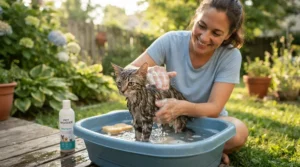
- Wet the coat with lukewarm water, avoiding the face.
- Apply shampoo from the neck down, building a collar first so fleas don’t flee toward the head.
- Lather the tail, belly, and legs, then wait the label’s contact time.
- Rinse thoroughly. Residue irritates skin and cats will lick it off.
After the bath
- Towel dry and keep your cat warm and indoors until fully dry.
- Comb out dead fleas.
- Wash all bedding in hot water the same day.
Common first-30-day mistakes: over-bathing, skipping the environmental cleanup, forgetting the follow-up preventive, and letting a damp cat back outside. If your cat panics, stop. A stressed cat isn’t worth a perfect lather, and a groomer or vet can step in.
Real-World Scenarios: Three Outdoor Cats, Three Plans
Here’s how the pieces fit in practice. These are illustrative profiles, not testimonials.
Scenario 1: The barn cat on a budget. If you manage several outdoor cats on a limited income, Veterinary Formula Clinical Care Flea & Tick Shampoo in a gallon size lowers cost per bath, and Sentry PurrScriptions Plus Flea & Tick Shampoo for Cats works as a cheap supplement. Add a vet-recommended preventive when the budget allows.
Scenario 2: The sensitive senior. An older cat with thin, reactive skin is a candidate for Natural Chemistry De Flea Shampoo or Vet’s Best Plant-Based Flea & Tick Cat Shampoo. Expect a gentler action, and talk to your vet first about underlying conditions.
Scenario 3: The scratched-up neighborhood explorer. A young cat that roams widely and is already scratching raw benefits from a two-step approach: Adams Plus Flea & Tick Shampoo with Precor for the outbreak, followed by Vet’s Best Flea Itch Relief Shampoo for recovery, plus year-round prevention.
Match budget, skin sensitivity, and exposure level, and the right product usually becomes obvious.
Problem → Solution Guide: When Flea Shampoo Doesn’t Seem to Work
Problem: Fleas are back within days. Solution: The life cycle is still running in your environment. Treat bedding and resting spots, and start a vet-approved preventive.
Problem: My cat hates baths. Solution: Use a calm, warm space, short sessions, and a helper. Ask your vet about alternatives if bathing is traumatic.
Problem: Skin looks worse after bathing. Solution: Stop, rinse again, and call your vet. Irritation can come from residue, an unsuitable formula, or underlying allergies.
Problem: I only have a dog shampoo at home. Solution: Don’t use it. Permethrin toxicity in cats is a real risk, and the cost of a cat-labeled bottle is trivial compared with an emergency visit.
Problem: Kitten under 12 weeks. Solution: Skip shampoos and call your vet for age-appropriate options.
Long-Term Cost & Maintenance: What Flea Control Really Costs
Cheap per bottle doesn’t always mean cheap per year. Consider total cost of ownership, including repeat baths, environmental cleanup, and the vet bills a neglected infestation can create.
| Approach | Typical outlay | Value profile | Best For |
|---|---|---|---|
| Single budget shampoo bath | Under $10 | Fast fix, no lasting protection | One-time rescue |
| Premium or natural shampoo | Low-to-mid teens and up | Gentler, pricier per bath | Sensitive skin |
| Bulk gallon shampoo | Higher upfront, lower per bath | Efficient for many cats | Multi-cat homes |
| Vet-approved preventive plan | Varies by product and vet | Highest long-term protection | Roaming outdoor cats |
The numbers favor planning. A shampoo-only strategy means repeating baths forever as reinfestation continues, while a preventive plan reduces the need to bathe at all. For most outdoor cats, the best value is a modest shampoo supply for emergencies plus a vet-recommended prevention routine.
Common Mistakes When Buying Flea Shampoo for Outdoor Cats
- Buying by smell and packaging. Fragrance sells bottles, not safety.
- Assuming “natural” means harmless. Cats react to many botanical ingredients.
- Grabbing a dog-and-cat combo without reading the label. Verify the cat-specific instructions.
- Skipping the follow-up. Bathing without prevention starts the clock on the next infestation.
- Over-bathing. Frequent baths can dry skin. Follow label intervals.
- Ignoring the environment. The majority of the flea population is not on your cat.
Avoid these six and you’ll dodge most of the heartache.
FAQ
❓ What is the safest flea shampoo for outdoor cats?
❓ How often can I bathe my outdoor cat with flea killing shampoo for cats?
❓ Is natural flea shampoo for cats effective on outdoor cats?
❓ Can I use a cat shampoo for fleas and itching on kittens?
❓ Do I still need vet-approved flea control after using shampoo?
Conclusion
Let’s land the plane. The best flea shampoo for outdoor cats is a cat-labeled product that matches your cat’s age, skin, and flea pressure. Adams Plus Flea & Tick Shampoo with Precor is the heavy hitter for serious outbreaks, Veterinary Formula Clinical Care Flea & Tick Shampoo is the practical multi-cat value pick, and Sentry PurrScriptions Plus Flea & Tick Shampoo for Cats keeps repeat baths cheap. For gentler needs, Vet’s Best Plant-Based Flea & Tick Cat Shampoo, Natural Chemistry De Flea Shampoo, and NaturVet Herbal Flea Shampoo earn a look, and Vet’s Best Flea Itch Relief Shampoo helps when skin needs rescuing.
But remember the bigger picture. The flea life cycle keeps rolling after the bath, permethrin toxicity in cats makes label-reading non-negotiable, and vet-approved flea control is what turns a one-off rescue into lasting protection. Treat shampoo as one tool, not the whole toolbox.
Recommended for You
- Gentle Kitten Shampoo For First Bath: 7 Best Picks (2026)
- Hypoallergenic Cat Shampoo For Sensitive Skin: 7 Best Picks 2026
- Cat Shampoo And Conditioner Sets: 7 Best Budget Buys 2026
Disclaimer: This article contains affiliate links. As an Amazon Associate, I earn from qualifying purchases. If you purchase products through these links, we may earn a small commission at no additional cost to you.
✨ Found this helpful? Share it with your friends! 💬🤗
