
Table of Contents
Somewhere in your house right now, there’s a cat who has clocked the sound of a zipper from three rooms away and is already flattening herself under the bed. That’s the reaction most carriers earn — and honestly, most of them deserve it. A best cat carrier isn’t just a box with a handle; it’s a portable safe room, and the difference between the right one and the wrong one is the difference between a cat who tolerates the vet and a cat who turns your hallway into a hostage negotiation.
So what is a best cat carrier, exactly? It’s a travel container built to hold a cat securely and comfortably during car rides, flights, or short trips, combining sturdy construction, adequate ventilation, and safety features like locking closures and (ideally) crash-test certification. Not every carrier on a shelf meets that bar, even when the packaging insists it does.
We spent hours digging through real product specs, manufacturer data, and aggregated owner feedback across Amazon, Chewy, and independent pet-safety researchers to build this list. Every pick here is a genuine product you can find today, not a fictional composite dreamed up to fill a listicle. Whether you’re hauling a twenty-pound Maine Coon to the vet twice a year or flying cross-country with an anxious tabby, there’s a carrier below built for that exact job — and a few reasons, backed by ndependent crash-test research, why some options are safer than others.
Quick Comparison Table
| Carrier | Type | Best For | Price Range |
|---|---|---|---|
| Sleepypod Air | Soft-sided, crash-tested | Safety-first flyers | $170–$210 range |
| Sherpa Original Deluxe | Soft-sided, collapsible | Everyday travel & vet trips | $45–$80 range |
| Petmate Two Door Top Load | Hard-sided | Budget vet visits | $30–$50 range |
| PETSFIT Soft-Sided Carrier | Soft-sided, tethered | Anxious escape artists | $30–$45 range |
| U-pet Bubble Backpack | Backpack, hands-free | Hiking & city adventures | $70–$95 range |
| Amazon Basics 2-Door Hard-Sided | Hard-sided | No-frills budget buyers | $30–$45 range |
| WITHFAB Expandable with Litter Box | Soft-sided, expandable | Road trips & multi-hour travel | $50–$75 range |
Looking at the spread above, there’s no single best cat carrier for every cat — there’s a best cat carrier for every situation. Budget shoppers gravitate toward the Amazon Basics 2-Door Hard-Sided or the Petmate Two Door Top Load because hard plastic is nearly indestructible and needs zero babying. Frequent flyers and cats with a nervous streak tend to do better in the Sleepypod Air, since crash-test certification and cabin-space flexibility solve two headaches at once. If your cat’s biggest complaint is boredom on a long drive, the WITHFAB model’s built-in litter compartment turns a four-hour trip from a stress test into a non-event.
💬 Already have a favorite carrier that’s earned its stripes? Drop a comment below — it helps other cat parents choose faster!
Just one click — help others make better buying decisions too!😊
Top 7 Best Cat Carriers: Expert Analysis
Choosing among the best cat carrier options on the market means weighing durability, ventilation, and how your specific cat behaves under stress. Below, each pick gets an honest breakdown of what the spec sheet says and what that actually means once your cat is inside it.
1. Sleepypod Air — the only carrier crash-tested for cats
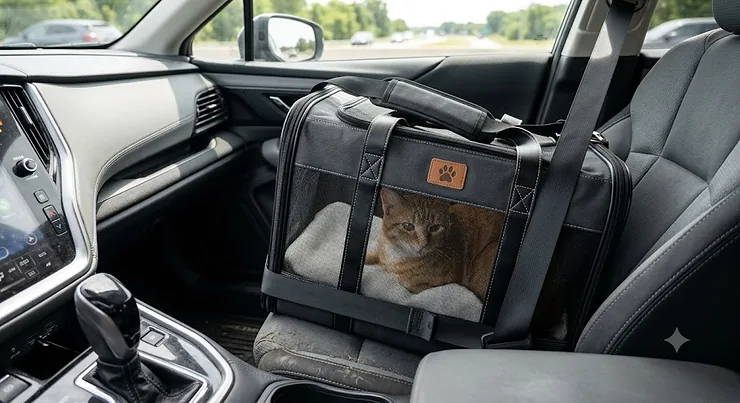
The standout here isn’t comfort, though there’s plenty of that — it’s the crash certification. The Sleepypod Air is one of the few pet carriers independently tested by the Center for Pet Safety using the same dynamic-crash methodology applied to child safety seats, and it earned a top rating for pets up to 18 pounds. That’s not a marketing footnote; it’s the difference between a carrier that merely holds your cat and one engineered to keep her contained if you’re ever in a wreck.
Specs-wise, it compresses from 22 inches down to as little as 16 inches to squeeze under different airline seats, and the interior swaps between a travel carrier, a car seat (via built-in seatbelt straps), and a stand-alone pet bed once you’re home. What most buyers overlook is that this flexibility means you’re really buying three products in one, which softens the sticker shock considerably. Cats who get carsick or anxious tend to settle faster here because the plush, machine-washable lining smells and feels like their own bed rather than a sterile travel box.
This carrier is best for owners who fly with their cat more than once a year, or anyone who has already had a close call in the car and doesn’t want to gamble twice. Reviewers on Cats.com and other independent testers consistently praise the build quality and rate it their top overall pick, though the recurring complaint is the high price relative to less-tested competitors, along with wishing for slightly larger viewing windows.
Pros:
- ✅ Only carrier on this list independently crash-tested by CPS
- ✅ Converts between carrier, car seat, and pet bed
- ✅ Compresses to fit varying airline under-seat dimensions
Cons:
- ❌ Noticeably pricier than comparable soft-sided carriers
- ❌ Smaller viewing windows than some competitors
At around $170–$210, the Sleepypod Air costs more than nearly everything else on this list, but for anyone who treats “crash-tested” as a non-negotiable rather than a nice-to-have, it’s the clear value leader in that specific category.
2. Sherpa Original Deluxe — the gold-standard soft-sided all-rounder
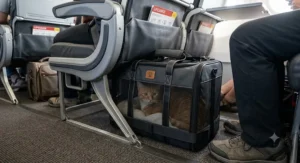
Here’s a fact that quietly explains this carrier’s decades of popularity: it uses a patented spring-wire frame that lets the rear compress several inches to fit under airline seats, then pops back to full shape everywhere else. That single hinge point is why so many airlines list it by name in their approved-carrier guidance.
Inside, a faux-lambskin liner sits over a waterproof base, and locking zippers on both the top and side openings mean your cat can’t nose her way out mid-transport — a detail that matters more than it sounds once you’ve had a cat treat a half-zipped mesh panel as an escape hatch. The shoulder strap has genuine padding rather than a thin webbing strip, which is the kind of detail you don’t appreciate until you’re the one carrying 15 pounds of unhappy cat through an airport terminal.
This carrier suits almost anyone: first-time cat owners heading to routine vet visits, frequent flyers who don’t need crash certification, and anyone who wants a name-brand carrier without paying Sleepypod prices. Owner sentiment aggregated across Chewy and Amazon skews heavily positive, with reviewers repeatedly citing the lightweight collapsible design as a major upgrade over older hard-sided carriers; the most common complaint involves the stitching or spring-wire cover wearing thin after several years of frequent, heavy use.
Pros:
- ✅ Airline-approved and part of a Guaranteed On Board program
- ✅ Locking zippers prevent mid-transport escapes
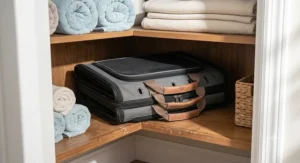
- ✅ Collapses flat for easy closet or car-trunk storage
Cons:
- ❌ Long-term stitching durability varies by unit
- ❌ Not crash-tested, unlike premium alternatives
Priced in the $45–$80 range depending on size, the Sherpa Original Deluxe is the carrier most people should own if they need one solid, versatile bag that handles both a weekend flight and a Tuesday vet appointment.
3. Petmate Two Door Top Load — the vet-visit specialist
Some cats treat a top-loading door like a trap door in reverse — it lets you lower them in rather than coax them forward into a dark tunnel, which for a lot of skittish cats is the entire battle. The Petmate Two Door Top Load leans into that with steel wire doors on both the front and top, so you can load from whichever direction your particular cat tolerates best.
The hard plastic shell means zero collapsing, zero fraying zippers, and a wipe-clean surface that shrugs off the inevitable carsickness incident. Ventilation holes run along all four sides plus the top, giving 360-degree airflow and visibility that soft carriers often can’t match unless they sacrifice structural rigidity to get there.
This is the carrier for owners whose cat visits the vet regularly rather than flies occasionally — it’s not marketed or built for airline cabins, so don’t expect flexibility there. According to a PetsRadar review of the product, roughly 84% of its Amazon reviews land at five stars, with buyers most often praising the ease of getting a reluctant cat inside and the noticeably better ventilation than comparable hard carriers; the main gripe comes from owners of larger breeds like Maine Coons, who find the 20-pound weight ceiling limiting.
Pros:
- ✅ Top and front doors accommodate different loading styles
- ✅ Rigid plastic shell needs no folding or babying
- ✅ Excellent 360-degree ventilation and visibility
Cons:
- ❌ Not approved for airline cabin travel
- ❌ Maxes out around 20 pounds for larger cats
At a budget-friendly $30–$50 range, the Petmate Two Door Top Load delivers outsized value for anyone whose main use case is car rides to the clinic rather than the airport.
4. PETSFIT Soft-Sided Carrier with Safety Tether — built for escape artists
If your cat has ever treated an unzipped carrier flap like a starting gun, this is the model engineered specifically for that problem. PETSFIT’s version uses patented safety buckles alongside lockable zippers and a built-in safety tether that clips to a harness, adding a second layer of containment beyond the zipper itself.
That tether detail is the quiet standout here — it means even if a determined cat manages to work a zipper loose, she’s still attached inside the bag rather than bolting into a parking lot. Combined with escape-resistant seam construction, this carrier earns its “escape-resistant” branding rather than just claiming it. It’s rated for pets up to 12 pounds, which covers the average adult cat but rules it out for anything Maine Coon-sized.
This carrier is built for owners of notoriously anxious or wriggly cats — the ones who treat every carrier as a personal challenge to defeat. Based on the spec comparison against similarly priced soft-sided competitors, the redundant containment system (buckle plus zipper plus tether) is a meaningfully higher safety margin for the money than most budget bags offer, though buyers with cats over 12 pounds will need to size up elsewhere.
Pros:
- ✅ Built-in safety tether adds a second containment layer
- ✅ Patented buckles reduce zipper-related escape risk
- ✅ Marketed and sized specifically for car rides and vet visits
Cons:
- ❌ Weight capacity tops out at 12 pounds
- ❌ Aggregated review data on this specific model remains limited
Selling in the $30–$45 range, the PETSFIT Soft-Sided Carrier earns its keep as the budget pick for anyone whose cat has a track record of Houdini-ing out of lesser carriers.
5. U-pet Bubble Backpack — best for hands-free adventures
Nothing on this list looks quite like the U-pet. Its signature semi-sphere window bulges out from the side, letting a curious cat watch the world go by instead of staring at mesh — and for cats who get anxious specifically from not being able to see what’s happening, that visual access can measurably reduce stress. The bubble window swaps out for a mesh panel if your cat prefers privacy over a view, which is a nice bit of flexibility most backpack carriers skip.
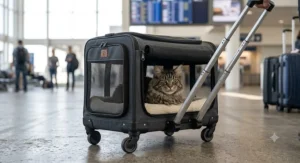
Worn like a standard backpack, it frees up both hands, which matters enormously if you’re also managing a leash, a toddler, or a suitcase through an airport. Built-in security leash attachments and multiple mesh ventilation panels round out the safety basics, and the whole unit doubles as a car seat with seatbelt-style securing points.
This is the carrier for hikers, city dwellers who want their cat along on errands, and anyone who’s tired of a shoulder strap digging in after twenty minutes. Because the bubble-window design is still a newer category than traditional soft-sided bags, verified aggregated review volume specific to this model is thinner than for older staples like Sherpa — what’s consistently noted across owner discussions is that cats need a short acclimation period before they’re relaxed inside the dome, which is honestly true of nearly every carrier style.
Pros:
- ✅ Interchangeable bubble window and mesh panel
- ✅ Hands-free backpack design for hiking or errands
- ✅ Doubles as a secured car seat with seatbelt straps
Cons:
- ❌ Smaller interior than standard duffel-style carriers
- ❌ Cats generally need an acclimation period before riding calmly
Running $70–$95, the U-pet Bubble Backpack sits at a premium price point that’s justified almost entirely by its unique hands-free format rather than raw interior volume.
6. Amazon Basics 2-Door Hard-Sided Carrier — the no-frills budget champion
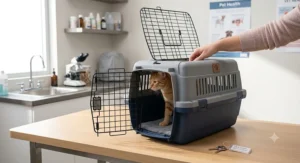
There’s a certain charm to a product that doesn’t try to reinvent anything. The Amazon Basics option takes the familiar hard-sided, two-door formula and executes it competently at a price that undercuts nearly every name-brand alternative on this list. Front and top entry points, secure ventilation, and a molded carry handle cover the fundamentals without any bells that might justify a higher price tag.
At 22.8 inches long, it’s roomier than several competitors, giving cats on the larger end of average more room to turn around and settle rather than being wedged in nose-to-tail. The plastic shell handles wipe-downs easily, which matters more than people expect until their cat has an anxious accident thirty minutes before a vet appointment.
This carrier suits budget-conscious owners who want a reliable hard-sided option without brand-name pricing, and it’s a smart secondary carrier for multi-cat households where buying two Petmates or two Sherpas starts adding up fast. Because it’s a newer private-label entry compared to established brands like Petmate, independently verified long-term durability data is still thinner — what’s consistent in available feedback is that buyers find it functionally comparable to pricier hard-sided competitors for basic transport needs.
Pros:
- ✅ Roomier interior dimensions than several pricier competitors
- ✅ Front and top-loading doors for flexible access
- ✅ Notably lower price than comparable name-brand hard carriers
Cons:
- ❌ Fewer years of aggregated long-term durability feedback
- ❌ No airline-cabin approval claims from the manufacturer
At $30–$45, the Amazon Basics 2-Door Hard-Sided Carrier is the pick for anyone who wants dependable hard-sided basics without paying a name-brand premium.
7. WITHFAB Expandable Cat Carrier with Litter Box — best for long road trips
Long car rides create a very specific cat problem: eventually, nature calls, and a standard carrier gives your cat nowhere to go but where she’s sitting. The WITHFAB model solves this directly with an integrated, zippered litter-box pocket built into the design — a feature almost no competitor on this list offers.
Beyond the litter compartment, the carrier expands outward on multiple sides to roughly double the resting space, a leak-proof top layer contains spills, and a stainless-steel-and-fiber frame keeps the whole structure rigid despite the soft-sided material. Breathable mesh panels wrap the exterior for airflow, and a foldable trash-can accessory handles cleanup without requiring a stop at a rest area.
This is the carrier for multi-hour drives, moving day, or any trip where your cat will realistically need bathroom access before you reach a destination. Aggregated review data reported by industry roundups puts this model at roughly 4.7 out of 5 stars across 91 verified reviews, with a one-year manufacturer warranty backing it — reviewers cite the self-contained litter system as the standout feature, while occasional feedback flags the zippered litter pocket as fiddly to clean compared to a standalone box.
Pros:
- ✅ Built-in litter box eliminates mid-trip bathroom stress
- ✅ Expandable design roughly doubles resting space
- ✅ Leak-proof top and reinforced steel-and-fiber frame
Cons:
- ❌ Litter compartment can be fiddly to clean between uses
- ❌ Bulkier overall footprint than standard non-expandable carriers
In the $50–$75 range, the WITHFAB Expandable Cat Carrier earns its spot for anyone whose “travel cat carrier” needs to function more like a mobile studio apartment than a quick transport box.
Practical Usage Guide: Getting Your Cat Comfortable With a New Carrier
Buying the right carrier solves half the problem; the other half is convincing your cat it isn’t a betrayal. Start the acclimation process at least two weeks before you actually need to use it, not the morning of. Leave the carrier out in a room your cat already frequents, door propped open, with a familiar blanket or an unwashed T-shirt of yours inside — scent familiarity does more heavy lifting here than almost any other trick.
For the first week, treat the carrier like furniture rather than equipment. Toss treats near the entrance, then gradually toward the back, letting your cat associate walking in with something rewarding rather than something that precedes a car ride. Feeding meals just outside, then eventually just inside, the open carrier accelerates this considerably. By week two, start closing the door for short stretches — thirty seconds, then a few minutes — while your cat is calm inside, always pairing it with a treat immediately after release.
Maintenance matters just as much as training. Wash soft liners on a cold, gentle cycle every few weeks if the carrier sees regular use, and check zippers and buckles monthly for wear, since a failed zipper mid-transport is exactly the scenario a locking mechanism is supposed to prevent. The single most common first-30-days mistake is only bringing the carrier out for actual trips, which trains a cat to treat its appearance as a warning siren rather than a neutral object.
✨ Ready to start carrier training today? Grab one of the picks above and give your cat a two-week head start before your next appointment!
Real-World Scenarios: Matching a Cat Carrier to Your Situation
Picture three different cat owners, each with a completely different travel reality. Maria has a nervous rescue tabby and flies twice a year to visit family; her non-negotiables are crash certification and cabin compression, which points her straight to the Sleepypod Air despite the higher price tag, because for her the safety data outweighs the cost.
Then there’s Dev, a grad student with a chunky orange tabby named Biscuit who needs nothing more exotic than reliable transport to a vet three miles away every few months. Dev doesn’t need airline approval or crash certification — he needs something indestructible, affordable, and easy to hose down after an anxious accident, which makes the Petmate Two Door Top Load or the Amazon Basics 2-Door Hard-Sided Carrier the obviously correct call.
Finally, consider Priya, who takes her cat on weekend hikes and wants her hands free for trekking poles. She’s not worried about vet visits at all; she wants visibility, ventilation, and a backpack format, which makes the U-pet Bubble Backpack the clear fit even though it costs more per use than a basic vet-trip carrier would.
Common Problems Cat Owners Face — and How to Solve Them
Problem: My cat won’t go in the carrier at all. Stop trying to force it during an actual emergency. Back up to the acclimation process above, and in the meantime, try a top-loading design like the Petmate Two Door Top Load, which lets you lower a resistant cat in from above rather than push her through a front opening she’s already decided to fight.
Problem: My cat cries or pants the entire car ride. Covering part of the carrier with a light towel reduces visual stimulation for cats who find motion and passing scenery overwhelming rather than soothing — this is the opposite of what works for cats who prefer the U-pet’s viewing bubble, which is a good reminder that carrier choice really is cat-specific.
Problem: The carrier smells increasingly unpleasant. Soft liners should be machine-washed regularly; hard-sided shells should be wiped with a pet-safe enzymatic cleaner rather than standard household disinfectant, since residual chemical scent can make a cat avoid the carrier entirely afterward.
Problem: My cat has an accident mid-trip. For anything longer than an hour, consider a carrier with built-in bathroom access, like the WITHFAB Expandable Cat Carrier with Litter Box, rather than hoping a standard bag stays clean for a four-hour drive.
Problem: The zipper or latch failed once already. Retire that carrier immediately rather than trusting a repaired closure. A tethered design like the PETSFIT Soft-Sided Carrier adds redundancy specifically so a single point of failure doesn’t mean a loose cat in a moving vehicle.
How to Choose the Best Cat Carrier for Your Cat
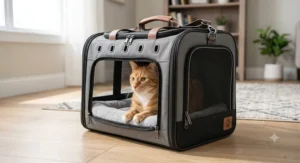
- Measure your cat first, not the carrier. She should be able to stand, turn around, and lie down without her head or tail pressing the sides — oversized isn’t automatically better, since too much room can make a nervous cat feel less secure during motion.
- Decide whether you actually need airline approval. If you’re never flying, skip paying extra for cabin-compression features and put that money toward better ventilation or a more durable shell instead.
- Prioritize ventilation on all sides, not just the front. Airflow restricted to a single mesh panel gets stuffy fast, especially in a warm car.
- Check the closure redundancy. Locking zippers are good; a secondary tether or buckle system is better for cats with any escape history.
- Weigh soft-sided versus hard-sided honestly. Soft carriers pack flatter and feel cozier; hard-sided shells clean easier and survive rough handling better, particularly with luggage handlers or excitable kids.
- Confirm the weight rating with margin to spare, since a carrier rated right at your cat’s exact weight leaves no room if she gains a pound or two.
- Factor in how you’ll actually carry it — a shoulder strap works for a quick vet run, but a backpack format like the U-pet matters enormously if you’re also managing luggage or hiking gear.
Common Mistakes When Buying a Cat Carrier
The single biggest mistake is buying based on looks rather than fit — a stylish carrier that’s a size too small will stress out even the calmest cat. A close second is skipping the ventilation check; some inexpensive imports advertise “breathable mesh” that’s really one small panel on an otherwise solid shell, which turns into a sauna on a warm afternoon.
Buyers also frequently underestimate how much closure quality matters, grabbing the cheapest zippered bag without checking whether the zipper pulls are lockable. And plenty of owners buy a carrier exactly once, for exactly one trip, then wonder years later why their cat still panics at the sight of it — because it was never introduced as anything other than an emergency device. Finally, don’t assume “vet visits” and “travel cat carrier” needs are interchangeable; a rugged hard-sided box perfect for a car ride to the clinic may be entirely wrong for airline cabin dimensions, and vice versa.
Pet Carrier for Cats vs. DIY and Makeshift Options
Every cat owner has, at some point, eyed a sturdy cardboard box or a zip-top duffel and wondered if they really need a purpose-built pet carrier for cats at all. The honest answer is almost always yes. A proper carrier is engineered with ventilation specifically placed to prevent overheating, latches or zippers rated to withstand a panicking animal’s full-body effort, and, in premium cases, actual crash-test data behind the claims.
| Factor | Purpose-Built Carrier | Cardboard Box / Duffel |
|---|---|---|
| Ventilation | Multi-side mesh panels | Often none or poorly placed |
| Escape resistance | Locking zippers/latches | Minimal to none |
| Durability | Reusable for years | Single-use at best |
| Vet/airline acceptance | Widely accepted | Frequently refused |
| Comfort | Padded, washable liners | Bare cardboard or fabric |
A cardboard box might survive one short trip, but it offers essentially no escape resistance and zero real containment if your cat panics mid-drive. Purpose-built options — from the budget-friendly Amazon Basics 2-Door Hard-Sided Carrier up through the crash-tested Sleepypod Air — exist precisely because “it held together this one time” isn’t the same standard as “it’s designed to hold together.” For anything beyond a single emergency, a real carrier pays for itself the first time it prevents an escaped cat in a parking lot.
What to Expect: Real-World Performance at Vet Visits and On the Road
Specs on a page rarely capture what actually happens once your cat is inside a carrier and the door swings shut. During vet visits, a top-loading design tends to reduce handling stress considerably, since feline-friendly veterinary guidelines increasingly recommend letting a cat stay partially inside her own carrier during examination rather than being fully extracted onto a cold table. That’s a strong argument for a carrier like the Petmate Two Door Top Load, which was built with exactly that kind of access in mind.
On the road, expect the first ten to fifteen minutes to be the loudest, regardless of carrier quality — most cats vocalize heavily at the start of a drive, then settle as the motion becomes monotonous rather than novel. Carriers with washable, plush liners tend to produce calmer cats over longer trips, since a familiar scent and softer surface reduce the sensory stress of an unfamiliar moving vehicle. Airline cabin travel is its own animal entirely: expect security screening delays, since TSA requires pets to be removed from their carrier and walked or carried through a metal detector while the empty carrier is X-rayed — a detail worth rehearsing at home so it isn’t the first time your cat experiences it.
Safe Transport: Crash Testing, Car Safety, and Airline Rules
“Crash-tested” gets thrown around loosely in pet product marketing, and it’s worth understanding what that phrase should actually mean before you pay a premium for it. Independent testing from the Center for Pet Safety uses the same dynamic crash-simulation standards applied to child safety seats, evaluating whether a carrier remains anchored and fully contains the animal during a sudden-stop scenario at roughly 30 miles per hour. Very few carriers on the market have actually undergone and passed that specific protocol — the Sleepypod Air is one of the handful that has, which is a meaningful safety differentiator if car travel is frequent or long-distance.
For everyday car safety even without full crash certification, the baseline rules still apply: secure the carrier so it can’t slide or tip during braking, place it on the floor behind a seat rather than balanced on a seat cushion, and never let a cat travel loose in a moving vehicle. According to veterinary travel guidance, pets should always be confined to a secured carrier or cage during car travel, both for their safety and to avoid distracting the driver. For airline travel specifically, size and cabin-compression compliance vary by carrier, so always verify against your specific airline’s published dimensions before booking rather than assuming any “airline approved” label covers every carrier.
Comfortable Travel: Features That Actually Matter (And Those That Don’t)
Marketing copy loves to pile on features, but not all of them earn their keep once a cat is actually inside. Ventilation placement matters enormously — mesh on multiple sides beats a single oversized front panel every time, since airflow needs to move through the carrier rather than just past the opening. A washable liner matters too, both for hygiene and because a familiar, soft surface genuinely reduces travel anxiety in most cats.
What matters less than the packaging suggests: elaborate exterior styling, decorative stitching, and “designer” fabric patterns that add cost without adding function. Extra external pockets are nice-to-haves for storing a leash or vet paperwork, but they shouldn’t be a deciding factor over ventilation or closure security. Similarly, a carrier boasting a dozen colors doesn’t matter if it only has one small mesh window — comfortable travel comes from airflow, secure containment, and a familiar-feeling interior, not from cosmetic variety.
👉 Want a carrier that nails the fundamentals without the marketing fluff? Check the picks above for our top ventilation-and-comfort winners.
Frequently Asked Questions
❓ What is the best cat carrier for air travel?
❓ How do I get my cat used to a carrier fast?
❓ Are hard-sided or soft-sided cat carriers safer?
❓ Can I bring my cat carrier through airport security?
❓ What size carrier does my cat need?
Conclusion
There’s no universal best cat carrier, only the right carrier for how your specific cat actually travels. If safety data is your top priority and you fly regularly, the crash-tested Sleepypod Air is worth the premium. If you need one dependable bag for both weekend trips and routine vet visits, the Sherpa Original Deluxe hits that balance better than almost anything else on the market. Budget-conscious owners heading to the clinic a few times a year will get excellent value from the Petmate Two Door Top Load or the Amazon Basics 2-Door Hard-Sided Carrier, while hikers and hands-free commuters should look hard at the U-pet Bubble Backpack.
Whatever you choose, remember that the carrier itself is only half the equation — the acclimation work you do in the weeks before a trip determines whether your cat sees that carrier as a threat or a familiar, tolerable part of getting from one place to another. Start early, stay patient, and the right carrier will earn its keep for years.
✨ Don’t Miss These Exclusive Deals!
🔍 Take your cat’s travel setup to the next level with the carriers featured above. Click on any highlighted pick to check current pricing and availability — the right carrier turns stressful trips into smooth, comfortable travel your cat will actually tolerate!
Recommended for You
- 7 Best Cat Litter Scoop Picks for 2026: Ultimate Buying Guide
- 7 Best Cat Litter Deodorizer Picks That Actually Work in 2026
- Cat Litter Mat: 7 Best Picks to Stop Litter Tracking in 2026
Disclaimer: This article contains affiliate links. As an Amazon Associate, I earn from qualifying purchases. If you purchase products through these links, we may earn a small commission at no additional cost to you.
✨ Found this helpful? Share it with your friends! 💬🤗
