Table of Contents
Let’s be honest: nobody grows up dreaming about the perfect cat litter scoop. And yet here you are, staring down a flimsy plastic paddle that cracked after three weeks, wondering if this is really the best humanity has to offer a person who just wants clean litter without losing a knuckle to a jagged edge. It isn’t. A genuinely good cat litter scoop is one of those unglamorous purchases that quietly upgrades your entire day, twice a day, every single day your cat is alive.
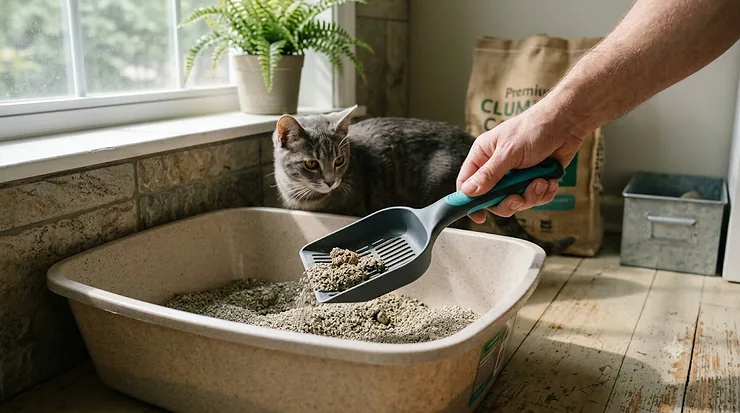
A cat litter scoop is a handheld tool — usually metal, plastic, or a hybrid of both — designed with slotted or mesh openings that sift clumped waste away from clean litter, letting you deposit only the soiled material into a trash bag or waste bin. The best ones balance three things: sifting speed, durability under repeated stress, and a grip that doesn’t turn a ten-second chore into a wrist workout.
Beyond convenience, scooping regularly is a genuine health matter, not just a tidiness one — the CDC recommends daily waste removal specifically because parasites in cat feces take a day or more to become infectious, so a scoop you’ll actually use often matters more than most buyers realize.
This guide skips the fluff you’d get from an Amazon listing and gets into what actually matters: which materials hold up over years of daily digging, which handle shapes genuinely reduce hand fatigue, and which “innovations” (looking at you, gimmicky attachments) are worth your money. We researched real products, real specs, and real aggregated buyer feedback so you can pick a cat litter scoop that matches your cats, your litter type, and your patience level — because nobody has infinite patience for a chore this repetitive.
Quick Comparison Table
| Scoop | Material | Best For | Price Range |
|---|---|---|---|
| iPrimio Cat Litter Scoop with Deep Shovel | Teflon-coated aluminum | Overall durability & no-stick cleanup | $15-$20 range |
| Duranimals DuraScoop Original | Cast aluminum | Multi-cat, heavy clumping | $15-$18 range |
| Petmate Metal Litter Scoop | Die-cast aluminum | Budget ergonomic pick | $8-$12 range |
| WePet Aluminum Alloy Litter Scoop | Aluminum alloy | Lightweight daily use | $8-$10 range |
| Neater Scooper Standard | Plastic + bag system | Hands-off waste removal | $20-$25 range |
| XBX Cat Litter Scoop with Holder | Stainless steel + beech wood | Comfortable grip | $10-$15 range |
| SunGrow Non-Stick Metal Scoop | Coated steel | Humid climates, rust resistance | $8-$12 range |
Looking across this table, the split between metal litter scoop options and hybrid designs tells you most of what you need to know upfront. If you’re scooping multiple boxes daily, the Duranimals DuraScoop Original and iPrimio Cat Litter Scoop with Deep Shovel justify their slightly higher price with build quality that shrugs off constant flexing. Budget shoppers shouldn’t feel shortchanged by the Petmate Metal Litter Scoop or WePet Aluminum Alloy Litter Scoop either — both deliver adequate durable scooping for single-cat homes without breaking the bank, they just won’t survive a decade of aggressive daily digging the way the pricier options will.
🐾 Ready to stop dreading litter box duty? Scroll down to find your perfect match below!
💬 Just one click — help others make better buying decisions too!😊
Top 7 Cat Litter Scoops: Expert Analysis
1. iPrimio Cat Litter Scoop with Deep Shovel — best overall for durability and no-stick cleanup
The iPrimio Cat Litter Scoop with Deep Shovel leads this list because it solves the single most annoying problem in scooping: waste that welds itself to the metal. Its Teflon-plated aluminum surface is engineered specifically to prevent sticking, which sounds minor until you’ve spent thirty seconds banging a scoop against the trash can trying to dislodge a stuck clump.
Specs-wise, it’s built from solid aluminum with a patented sifter design and narrower slot spacing than most competitors, which matters in practice because wider gaps let small litter fragments slip through with the waste — wasting clean litter every single scoop. The deep shovel geometry also lets it reach into corners without you tilting the whole litter box.
Based on the spec comparison, this is the pick for anyone with more than one cat or a heavy-clumping litter, since the reinforced handle resists the bending that thinner scoops develop after months of leaning into compacted clumps. Reviewers consistently report that the non-stick coating holds up well over time, and independent testers have ranked it first for durability and ease of use among comparable metal scoops, with some noting the accompanying wall-mount holder as a nice bonus for storage.
Pros:
- ✅ Teflon coating genuinely resists waste sticking
- ✅ Narrower sifter spacing catches more litter fragments
- ✅ Solid-core handle resists bending under repeated use
Cons:
- ❌ Premium price compared to basic plastic scoops
- ❌ Deep shovel shape can feel bulky in tiny litter boxes
At around $15-$20, the iPrimio Cat Litter Scoop with Deep Shovel earns its price if you scoop daily and want something that won’t warp by month six.
2. Duranimals DuraScoop Original — sturdiest metal scoop for multi-cat homes
The Duranimals DuraScoop Original is a hand-polished cast aluminum scoop built with one goal: never bend, never break, no matter how much force you put behind it. That single-mindedness shows in the rigidity of the scoop head, which stays flat and true even when you’re leaning into a rock-hard clump stuck to the pan bottom.
The cast construction means there are no seams or welds to fail over time, and the tapered, folded-edge handle design is meant to spread pressure across your palm rather than concentrating it on one pressure point. For multi-cat households doing several scoops a day, that structural integrity translates into years of reliable durable scooping rather than a slow, frustrating bend toward uselessness.
What most buyers overlook about this model is that its sturdiness comes with a weight tradeoff — cast metal is heavier than stamped aluminum, and reviewers have noted the scoop can feel like a workout on wrists during marathon multi-box cleaning sessions. Others in aggregated feedback mention that the slot openings run a bit wide, which occasionally lets smaller litter granules pass through along with the clumps, so it favors medium-to-large clumping litters over fine-grain varieties.
Pros:
- ✅ Solid cast construction resists bending permanently
- ✅ Handles heavy clumps without flexing
- ✅ Ideal for households with three or more cats
Cons:
- ❌ Noticeably heavier than aluminum-alloy alternatives
- ❌ Wider slats let some smaller litter pieces through
Priced in the $15-$18 range, this is the scoop to reach for if longevity matters more to you than a featherweight feel.
3. Petmate Metal Litter Scoop — budget-friendly ergonomic pick
The Petmate Metal Litter Scoop proves you don’t need a premium price tag to get a genuinely ergonomic litter scoop. It pairs a die-cast aluminum scoop bowl with a thermoplastic rubber handle designed specifically to reduce the hand strain that comes from gripping bare metal for repeated scoops.
The curved bowl shape is built for maximum surface coverage per pass, meaning fewer total scoops to clear a box — a small detail that adds up over a year of daily use. A hanging hole at the end of the handle also lets you store it upright on a hook rather than leaving it propped against the wall collecting dust and bacteria.
Here’s what to weigh: this is a genuinely solid ergonomic litter scoop for the price, and it performs comparably to scoops costing twice as much for basic clumping litter. However, aggregated reviewer feedback flags a recurring weak point — the rubber handle grip can loosen from the metal shaft after several months of regular use, which is a legitimate durability concern worth knowing about before you buy, especially for households scooping multiple times daily.
Pros:
- ✅ Genuinely comfortable rubberized ergonomic grip
- ✅ Curved bowl covers more surface area per scoop
- ✅ Very competitive price for a metal scoop
Cons:
- ❌ Handle grip may loosen after months of use
- ❌ Plastic handle component less durable than all-metal designs
At roughly $8-$12, the Petmate Metal Litter Scoop is the rational starting point for anyone who wants metal-scoop performance without the metal-scoop price.
4. WePet Aluminum Alloy Litter Scoop — lightest option for everyday scooping
The WePet Aluminum Alloy Litter Scoop targets a specific kind of buyer: someone who scoops once or twice daily in a single-cat household and just wants something light, simple, and reliably functional without any bells or whistles. Its aluminum alloy build keeps the whole tool noticeably lighter in hand than cast-metal competitors.
The deep shovel design with a diagonal sifting hole pattern is meant to speed up the separation of clumps from clean litter, and the long handle keeps your hand a comfortable distance from the litter box — a small mercy if you have a sensitive nose or a box tucked in a tight bathroom corner. On paper, this means less bending over and less direct proximity to odor during the least fun part of cat ownership.
What most buyers overlook here is that “lightweight” and “flimsy” aren’t the same thing — the alloy construction still resists the warping that cheap stamped-steel scoops develop, though it won’t match the rigidity of cast designs like the DuraScoop under serious pressure. It’s a genuinely dependable everyday tool, just not the one you’d choose for a house with five cats and a heavy-clumping litter that fights back.
Pros:
- ✅ Noticeably lighter than cast-aluminum alternatives
- ✅ Long handle keeps hands away from the box
- ✅ Diagonal sifting holes speed up clump separation
Cons:
- ❌ Less rigid than cast-metal scoops under heavy pressure
- ❌ Better suited to single-cat than multi-cat households
Around $8-$10, the WePet Aluminum Alloy Litter Scoop is a smart, no-drama pick for lighter-duty daily cat litter scoop needs.
5. Neater Scooper Standard — closest thing to a self-cleaning litter scoop
There’s no such thing as a truly self-cleaning litter scoop — someone still has to do the scooping — but the Neater Scooper Standard gets closer than anything else on the market by pairing a scoop mechanism with a bag-lined bin that seals waste away the instant you drop it in. You scoop, you deposit into the built-in bag system, and you never touch a soiled clump with your hand or breathe it in up close.
The system ships with a supply of refill bags, and the bin itself doubles as a holder, so there’s no separate storage step. Functionally, this transforms waste removal from a two-step process (scoop, then walk to the trash) into a single motion, which matters most for anyone managing litter for one cat in a smaller apartment where the litter box lives close to living space.
Based on the spec comparison, this design solves for odor containment and hand contact far better than any open scoop, metal or plastic. The tradeoff, honestly discussed in aggregated owner feedback, is that it’s designed around single-cat households — trying to keep pace with two or three cats’ worth of daily waste removal can mean more frequent bag changes than owners expect, and the plastic components aren’t built for the same brute-force durability as the metal scoops on this list.
Pros:
- ✅ Contains waste immediately, minimizing odor exposure
- ✅ No direct hand contact with soiled litter
- ✅ Doubles as its own scoop holder and disposal bin
Cons:
- ❌ Refill bags add an ongoing recurring cost
- ❌ Not designed for multi-cat waste volume
At around $20-$25, the Neater Scooper Standard costs more upfront, but for single-cat homes prioritizing hygiene over raw durability, it’s a genuinely different category of tool.
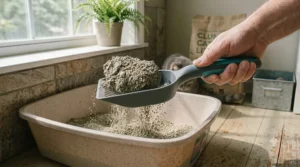
6. XBX Cat Litter Scoop with Holder — most comfortable grip on the market
If your priority is a comfortable grip above all else, the XBX Cat Litter Scoop with Holder is built around exactly that. It pairs a stainless steel mesh scoop head with a beech wood handle — a material choice that stands out in a category dominated by plastic and bare metal grips.
Wood naturally resists the cold, slick feel that metal handles develop, and it doesn’t transmit vibration through your hand the way a rigid aluminum shaft does when you’re working through compacted litter. The mesh sifting design uses fine perforations rather than wide slats, which is a meaningful upgrade if you use finer clumping litters that would otherwise slip through wider-gapped scoops.
What the spec sheet won’t tell you, but reviewers note, is that the included washable stand genuinely reduces the “gross scoop propped against the wall” problem that plagues most designs — it’s a small quality-of-life detail that adds up daily. On the downside, the beech wood handle, while comfortable, is more susceptible to moisture damage over years of exposure to litter box humidity than a fully metal or plastic grip, so it needs occasional wiping down to prevent warping.
Pros:
- ✅ Beech wood handle stays warm and comfortable to hold
- ✅ Fine mesh holes work well with finer litter types
- ✅ Includes a washable storage stand
Cons:
- ❌ Wood handle needs occasional drying to avoid warping
- ❌ Fine mesh can clog faster with dusty litters
Priced around $10-$15, the XBX Cat Litter Scoop with Holder is the pick for anyone who scoops often enough that hand comfort genuinely matters.
7. SunGrow Non-Stick Metal Scoop — best corrosion resistance for humid climates
The SunGrow Non-Stick Metal Scoop earns its spot through a coated-steel design specifically engineered to resist corrosion and staining from acidic cat urine, a real and underrated failure point for cheaper metal scoops that quietly discolor and pit within a year. Its wide mouth and deep scoop shape are built to dig out clumped litter and scrape corners and the box floor in a single motion.
The narrow slot spacing works particularly well with clay-based clumping litters, letting clean granules fall through while trapping waste efficiently, and the ergonomic handle shape is designed to reduce the hand fatigue that accumulates over repeated daily scooping sessions. In practice, this means less time spent re-scooping missed fragments and less strain during longer multi-box cleaning routines.
Reviewers consistently note that the corrosion-resistant coating holds up notably well compared to uncoated metal competitors, with one recurring caveat: colors ship randomly rather than by selection, and a design that holds litter until you tip it slightly to sift can take a scoop or two to get used to. Some aggregated feedback from multi-cat households also mentions the scoop breaking down faster under heavier daily use than its coating would suggest, so it’s better matched to single or dual-cat setups.
Pros:
- ✅ Corrosion-resistant coating resists urine staining
- ✅ Narrow slots ideal for clay-based clumping litter
- ✅ Ergonomic handle reduces scooping hand fatigue
Cons:
- ❌ Color ships randomly, no customer selection
- ❌ May wear faster under heavy multi-cat use
At around $8-$12, the SunGrow Non-Stick Metal Scoop is a smart pick specifically for households in humid climates where rust is a real concern.
Practical Usage Guide: Setting Up and Maintaining Your Scoop
Getting the most out of any cat litter scoop starts before you even use it the first time. Rinse a brand-new metal litter scoop under warm water to remove manufacturing residue, then dry it completely — moisture left in the slots of a scoop like the iPrimio Cat Litter Scoop with Deep Shovel or SunGrow Non-Stick Metal Scoop can encourage the very corrosion those coatings are designed to prevent. Mount any included wall holder near the litter box but not directly above it, since condensation and odor can settle onto anything hovering too close.
A simple maintenance schedule prevents most common failures: wipe the scoop head after every use with a paper towel, wash it weekly with mild soap and hot water, and inspect the handle-to-head connection monthly on scoops like the Petmate Metal Litter Scoop, where loosening is a known long-term issue. Never leave a wet scoop lying directly in litter overnight — it accelerates both rust on uncoated metal and mold growth in wood-handled designs like the XBX Cat Litter Scoop with Holder.
The most common first-30-days mistake is buying a scoop with slot spacing mismatched to your litter type — wide slats waste clean litter with fine-grain clumping brands, while very fine mesh clogs quickly with dusty clay litter. Match your slot spacing to your litter before committing to a full bag, and you’ll avoid the frustration of returning a perfectly good cat litter scoop simply because it fought your specific litter brand.
Real-World Scenarios: Matching the Right Scoop to Your Household
If you’re a single professional living in a studio apartment with one indoor cat, waste removal speed and odor containment matter more than raw industrial durability — the Neater Scooper Standard fits this life well, since its bag system means you’re never carrying a scoop across your living space to the trash can.
If you’re managing three or four cats in a multi-box household, structural integrity becomes the deciding factor, and this is where the Duranimals DuraScoop Original or iPrimio Cat Litter Scoop with Deep Shovel earn their higher price — both are built to survive daily, repeated, forceful scooping across multiple boxes without the handle-to-head failure that plagues cheaper scoops under that kind of workload.
If you’re a college student or renter on a tight budget with one low-maintenance cat, the WePet Aluminum Alloy Litter Scoop or Petmate Metal Litter Scoop deliver adequate durable scooping without the premium price — a reasonable tradeoff when your litter box duty is light and your budget is even lighter. And if you simply hate the feeling of cold metal in your hand every morning, the XBX Cat Litter Scoop with Holder‘s comfortable grip is worth the modest premium regardless of household size.
How to Choose a Cat Litter Scoop
- Match slot spacing to your litter type. Fine clumping litters need narrower mesh; larger clumping pellets tolerate wider slats without waste.
- Weigh material against household size. Cast aluminum and coated steel survive multi-cat, multi-scoop days; lighter alloys suit single-cat homes fine.
- Prioritize handle comfort if you scoop often. A comfortable grip matters far more once you’re past the honeymoon phase of cat ownership and into year three.
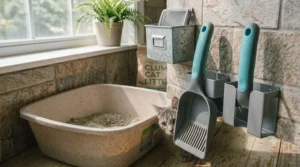
- Check for a storage solution. A scoop with a holder or hook keeps it off the bathroom floor and out of casual contact.
- Consider corrosion resistance for humid homes. Coated or higher-grade steel resists the staining and pitting that acidic urine causes over time.
- Factor in ongoing costs. Bag-based systems like the Neater Scooper Standard add recurring expenses that pure metal scoops don’t.
- Read aggregated reviews for your specific litter brand. A scoop that performs brilliantly with clay litter can underperform with crystal or pine varieties.
Common Mistakes When Buying a Cat Litter Scoop
One frequent misstep is buying based purely on price without considering slot spacing — a $6 scoop with slats too wide for your fine-grain litter ends up wasting more litter than it saves, which erases any savings within a couple of bags. Another common error is ignoring handle material entirely; buyers focus on the scoop head and end up with an uncomfortable grip they resent using twice a day for years.
A third mistake is assuming “metal” automatically means “durable” — as this guide’s product research shows, even solid metal litter scoop options can develop a loosened handle or a bent bowl if the underlying construction (cast versus stamped, coated versus bare) isn’t accounted for. Finally, many buyers skip reading aggregated review sentiment for their exact litter type, discovering only after purchase that a scoop beloved for clay litter clogs constantly with sandy crystal alternatives.
Metal Litter Scoop vs Plastic Litter Scoop
The debate between a metal litter scoop and a plastic alternative isn’t as one-sided as metal-scoop marketing suggests. Plastic scoops are lighter, quieter against a plastic litter box edge, and immune to the rust that plagues uncoated steel — a real advantage in humid bathrooms. Some of the best-reviewed plastic sifters on the market hold up surprisingly well over years of daily use, digging easily beneath stuck-on clumps despite their lighter build.
That said, metal generally wins on raw structural integrity under repeated force. A metal litter scoop like the Duranimals DuraScoop Original simply won’t develop the stress-fracture cracking that plastic can eventually show after thousands of scooping motions against a hard-packed clump. Reviewers who’ve tested both categories side by side tend to note that plastic edges dull and can develop small cracks near the handle joint faster than a solid cast-metal equivalent, though a good plastic scoop remains genuinely competitive for single-cat, lighter-duty homes. The honest takeaway: multi-cat, heavy-use households lean metal; light-duty, budget-conscious single-cat homes can do very well with a quality plastic design.
Features That Actually Matter (And Those That Don’t)
Metal grade actually matters more than most listings let on — industry metallurgy references note that corrosion resistance comes largely from chromium content forming a protective oxide layer, which is why coated or higher-chromium scoops resist urine staining longer than bargain-bin bare steel. Slot spacing matched to your litter type actually matters — it’s the single biggest factor in whether a scoop wastes clean litter or works efficiently. Handle length actually matters too, since a longer handle keeps your hand further from odor and mess, a genuinely practical benefit rather than marketing fluff. A comfortable grip, whether rubber, wood, or textured plastic, actually matters if you’re scooping daily for years, not just for the first week.
What doesn’t matter nearly as much as marketing suggests: novelty colors, which ship randomly on several models anyway and have zero functional impact. Overly aggressive branding around “5X faster sifting” claims also deserves skepticism — sifting speed is largely a function of slot design and scoop depth, not a proprietary technology worth a major price premium. Similarly, bundled accessories like keychains or magnets are nice-to-haves, not reasons to choose one cat litter scoop over another that better fits your actual litter and household size.
Long-Term Cost & Maintenance: Waste Removal Economics
A basic plastic scoop costing a few dollars might need replacing every six to twelve months under regular use, while a well-built metal litter scoop in the $15-$20 range can realistically last several years without structural failure — meaning the “premium” option often costs less annually once you account for replacement frequency. That’s the practical math behind durable scooping: paying more upfront to avoid repeat purchases down the line.
Bag-based waste removal systems like the Neater Scooper Standard introduce a different cost structure entirely — a higher upfront price plus an ongoing bag expense, which adds up over a year but buys back convenience and hygiene that a standard open scoop simply can’t match. When budgeting, factor in both the purchase price and any recurring consumables, since the cheapest scoop on the shelf isn’t always the cheapest option across a full year of daily waste removal.
Litter Box Hygiene & Safety Guide
Scooping frequency matters more for health than most people realize. Cat waste can carry a parasite called Toxoplasma gondii that spreads to people mainly through unwashed hands touching the mouth after contact with contaminated litter items. The parasite isn’t dangerous to most healthy adults, but pregnant women and immunocompromised individuals should take extra precaution.
The good news, per veterinary guidance, is timing-dependent: the American Veterinary Medical Association points out that clearing waste from the box daily, before the parasite has time to become infectious, meaningfully cuts transmission risk. This is where a genuinely efficient cat litter scoop earns its keep — a scoop that sifts quickly and thoroughly on the first pass means less lingering waste and fewer skipped days out of sheer annoyance with a bad tool.
Beyond parasite risk, daily scooping also curbs ammonia buildup from urine, which can irritate both human and feline respiratory tracts in poorly ventilated bathrooms. Wash your hands thoroughly after every scooping session regardless of which scoop you use, and consider disposable gloves if anyone in your household falls into a higher-risk category.
Frequently Asked Questions
❓ How often should I use my cat litter scoop?
❓ What's the difference between a metal litter scoop and a plastic one?
❓ Can I use the same scoop for crystal and clay litter?
❓ How do I clean a cat litter scoop properly?
❓ Is a self-cleaning litter scoop worth the extra cost?
Conclusion
Choosing the right cat litter scoop comes down to matching three things honestly: your litter type, your household size, and how much you value comfort during a chore you’ll repeat thousands of times a year. The iPrimio Cat Litter Scoop with Deep Shovel and Duranimals DuraScoop Original reward multi-cat households willing to pay slightly more for structural longevity, while the Petmate Metal Litter Scoop and WePet Aluminum Alloy Litter Scoop prove that budget-friendly options can still deliver dependable performance for lighter-duty homes.
If comfortable grip is your top priority, the XBX Cat Litter Scoop with Holder stands out, and if you want the closest thing on the market to a self-cleaning litter scoop, the Neater Scooper Standard‘s bag system is worth the higher price tag for single-cat apartments. Whichever you choose, remember that scooping daily — with a tool that actually makes the process easy rather than adversarial — is doing real work for both your cat’s environment and your own health.
✨ Found the perfect match on this list? Grab your favorite cat litter scoop today and make litter box duty the easiest five minutes of your day! 🐱
Recommended for You
- 7 Best Cat Litter Deodorizer Picks That Actually Work in 2026
- Cat Litter Mat: 7 Best Picks to Stop Litter Tracking in 2026
- Corner Litter Box: 7 Best Space-Saving Picks for 2026
Disclaimer: This article contains affiliate links. As an Amazon Associate, I earn from qualifying purchases. If you purchase products through these links, we may earn a small commission at no additional cost to you.
✨ Found this helpful? Share it with your friends! 💬🤗
