
Table of Contents
Your cat’s been claiming every cardboard box that enters your home, and you’ve probably wondered why they’re so obsessed with enclosed spaces. Here’s what most cat owners don’t realize: that instinct to seek out a cat tree with condo isn’t just quirky behavior—it’s hardwired into their DNA from thousands of years of survival tactics. Wild cats needed secure, elevated hideaways to stay safe from predators while maintaining visibility over their territory.
In today’s indoor environment, providing a cat tower with hideaway does more than just satisfy this primal need. Research published in the Journal of Feline Medicine and Surgery confirms that scratching and climbing structures serve multiple biological purposes: claw maintenance, muscle stretching, and territorial communication through scent glands in their paws. When your cat doesn’t have appropriate vertical territory with a private retreat, they’re not just bored—they’re actually experiencing environmental stress that can manifest as destructive behavior or even health issues.
What makes a cat tree with enclosed space particularly valuable is how it combines multiple needs into one piece of furniture. The elevated hiding spot gives your cat that crucial sense of security, while the scratching posts satisfy their need to maintain their claws and mark territory. Think of it as a studio apartment designed specifically for feline psychology—everything they need within paw’s reach. The difference between a simple cat perch and a proper cat tree with condo setup can be the difference between a stressed cat that scratches your furniture and a content cat that spends hours happily perched in their own space, watching birds through the window.
Quick Comparison: Top Cat Trees with Condos at a Glance
| Product | Height | Condo Size | Best For | Price Range |
|---|---|---|---|---|
| PETSITE 59.5″ PE Rattan | 59.5″ | Spacious | Modern aesthetics | $120-$160 |
| Feandrea 33.1″ UPCT61W | 33.1″ | Dual caves | Small spaces | $50-$80 |
| Feandrea 59.1″ UPCT85W | 59.1″ | Large single | Multi-cat homes | $80-$120 |
| PAWZ Road 51″ Wooden | 51″ | Dual 13.4″x13.4″ | Large breeds | $90-$130 |
| PAWZ Road 30″ Compact | 30″ | Dual condos | Budget buyers | $35-$60 |
| Yaheetech 59″ Tower | 59″ | Roomy 15.7″x14″ | Active climbers | $70-$110 |
| Globlazer 72″ Heavy Duty | 72″ | Extra spacious | Maine Coons | $130-$180 |
Looking at this comparison, the sweet spot for most cat owners falls in the 50-60 inch range with at least one generously sized condo. What’s interesting here is how the PAWZ Road 30-inch model punches above its weight class—despite being the shortest option, it includes dual condos that many taller trees skip. Budget-conscious buyers should note that the Feandrea 33.1″ offers two caves for under $80, though you’re sacrificing the impressive height that more active cats crave. If you’re dealing with a Maine Coon or Ragdoll, don’t even look at anything under 15 inches in condo diameter—the Globlazer’s extra spacious design becomes essential rather than a luxury feature.
💬 Just one click — help others make better buying decisions too! 😊
Top 7 Cat Trees with Condos: Expert Analysis
1. PETSITE 59.5-Inch PE Rattan Cat Tree — The Modern Minimalist’s Choice
The PETSITE 59.5-inch breaks away from the traditional plush-covered aesthetic with its PE rattan construction over metal supports, and that’s precisely what makes it stand out in a market saturated with similar-looking fabric towers. This cat tree with condo measures 23 x 16 x 59.5 inches and weighs 36.5 pounds, providing serious stability without the bulky footprint that dominates smaller rooms.
What most buyers overlook about this model is the dual-texture scratching system: natural sisal posts combined with plush-covered posts give your cat options based on mood and preference, something behavioral research from PMC shows significantly reduces unwanted furniture scratching. The enclosed resting area comes with removable, washable cushions—a practical detail that matters six months down the road when you’re dealing with cat hair accumulation. The built-in ball track and hanging plush ball aren’t just decorative additions; they provide mental stimulation that keeps cats engaged during solo play sessions.
This cat tower with hideaway suits households prioritizing clean, contemporary design alongside functionality. If your décor leans modern or Scandinavian, the rattan aesthetic integrates seamlessly rather than screaming “cat furniture.” The elevated condo position gives cats that crucial vantage point they instinctively seek, while the step-by-step platforms make it accessible even for senior cats or kittens still building climbing confidence.
✅ Pros:
- Unique PE rattan aesthetic matches modern home décor
- Dual-texture scratching surfaces (sisal + plush)
- Removable, machine-washable cushions simplify maintenance
❌ Cons:
- Higher price point than traditional plush models
- Rattan may be less forgiving for aggressive scratchers
Customer feedback consistently highlights the sturdy construction and easy assembly, with buyers noting the rattan material holds up better against scratching than expected. In the $120-$160 range, this represents solid value for design-conscious cat owners willing to invest in furniture that doesn’t compromise their aesthetic standards.
2. Feandrea Cat Tree 33.1-Inch UPCT61W — Compact Powerhouse for Small Spaces
The Feandrea 33.1-inch UPCT61W solves a problem many apartment dwellers face: how to provide vertical territory in limited square footage. At 23.6″L x 15.7″W x 33.1″H, this cat tree with enclosed space delivers dual caves, a large top perch (22″ x 15.7″), and 3.4-inch thick scratching posts in less than two square feet of floor space.
Here’s what separates this from other compact options: the upper cave features a two-door design providing wide viewing angles and escape routes—something anxious cats particularly appreciate. The lower single-door cave sits at ground level, making it perfect for elderly cats with mobility challenges or kittens still developing coordination. Most competing compact towers force you to choose between hiding spots or climbing platforms; this design integrates both without feeling cramped.
The large top perch deserves special mention because it accommodates either one large cat (up to 16 pounds) or two smaller cats snuggling together, with raised padded edges that increase their sense of security while lounging. The particleboard construction uses sturdy materials rated for durability, and the included anti-tip kit provides peace of mind when cats are launching between levels. What the spec sheet won’t tell you: the 3.4-inch post diameter gives cats significantly better scratching leverage than the 2-3 inch posts found on budget alternatives, resulting in fewer frustrating wobbles mid-scratch.
This cat tree with condo works brilliantly for single-cat households, elderly cats requiring low-impact exercise, or as a secondary tower in multi-cat homes. If you’re working with studio apartment constraints or need something that doesn’t dominate your living room, this hits the sweet spot between functionality and footprint.
✅ Pros:
- Exceptional space efficiency with dual caves
- Ground-level cave perfect for senior or mobility-limited cats
- Extra-thick 3.4″ scratching posts provide superior stability
❌ Cons:
- Height limitation may not satisfy highly active climbers
- Single cats might not utilize both caves effectively
Buyers consistently praise the straightforward assembly (typically 15-20 minutes) and the soft plush covering that cats immediately gravitate toward. In the $50-$80 range, this delivers remarkable value for anyone needing maximum features in minimal space.
3. Feandrea Cat Tree 59.1-Inch UPCT85W — The Multi-Cat Household Champion
When you’ve got multiple cats vying for territory, the Feandrea 59.1-inch UPCT85W becomes essential infrastructure rather than optional furniture. This cat tower with hideaway spans 59 inches vertically with multiple levels including two plush perches, a hammock, a spacious cave, and five sisal-covered scratching posts (3.4″ diameter). The multi-level design naturally separates climbing zones, reducing territorial conflicts that emerge when cats feel forced to share limited vertical space.
What makes this model particularly effective for multi-cat households is the strategic placement of rest areas at varying heights and orientations. The top perch with raised edges lets the dominant cat claim the highest territory—satisfying their need for hierarchy—while the hammock and lower cave provide alternative lounging zones where subordinate cats can relax without challenging that social structure. The spacious cave measures large enough for a single cat to fully stretch out or for two friendly cats to nap together, which becomes crucial during colder months when cats naturally seek out shared warmth.
The reinforced construction addresses a common pain point with tall cat trees: stability under dynamic load. When multiple cats are simultaneously jumping between platforms, cheaper towers develop concerning wobbles. This design uses battens along the base and thick particleboard construction to minimize movement, and customer reviews consistently mention how solid it feels even with three or four cats actively playing. The hanging pompoms and interactive toys aren’t just entertainment—they’re strategic tools for redirecting play aggression away from other cats when energy levels run high.
This cat tree with condo suits active multi-cat households, families with young cats who need intensive play opportunities, or single-cat homes where the cat displays high energy levels. If your cats engage in frequent climbing competitions or you’ve noticed destructive scratching on furniture, the extensive scratching post coverage here becomes a legitimate furniture-saving investment.
✅ Pros:
- Multi-level design prevents territorial disputes in multi-cat homes
- Five strategically placed scratching posts protect furniture comprehensively
- Hammock provides unique lounging option cats naturally gravitate toward
❌ Cons:
- 59-inch height requires ceiling clearance in some apartments
- Assembly complexity increases with larger structures (30-40 minutes typical)
Customer feedback highlights how quickly cats adapt to this tree, with many noting their cats abandoned previous scratching posts within days. Around the $80-$120 range, this represents excellent per-cat value when dividing the cost across multiple felines using the structure daily.
4. PAWZ Road Large Cat Tree 51 Inches — The Wooden Upgrade Your Cats Deserve
The PAWZ Road 51-inch wooden cat tree represents a fundamental shift from traditional plush towers, and that construction choice impacts everything from maintenance to longevity. Built with thick, high-density wood rather than particleboard and fabric, this cat tree with enclosed space delivers a structure that won’t sag, pill, or accumulate embedded cat hair the way plush alternatives inevitably do.
Those dual super-large condos measuring 13.4″ x 13.4″ aren’t just marketing dimensions—they translate to genuine comfort for breeds like Maine Coons, Ragdolls, or simply chubby cats who’ve been squeezed into undersized hideaways their entire lives. The 17″ x 12″ top perch with raised rims provides similar generous proportions, allowing cats to fully sprawl rather than balancing precariously on narrow platforms. What behavioral science tells us about cat furniture preferences: cats demonstrate measurably lower stress responses when they can occupy spaces comfortably without feeling confined or exposed.
The 6-level structure incorporates scratching posts fully wrapped in sisal at multiple heights, addressing how different cats prefer different scratching positions—some stretch high, others crouch low. The natural wood aesthetic integrates into modern or rustic décor without announcing “pet furniture” to every house guest. But here’s the practical advantage nobody mentions in product descriptions: wood construction means you can actually clean this properly. Unlike plush that permanently absorbs odors and stains, wood surfaces wipe down with appropriate cleaners, extending useful life significantly beyond fabric alternatives.
This cat tree with condo works exceptionally well for large breed cats, households prioritizing low-maintenance furniture, or anyone who’s replaced three fabric towers in five years and wants something genuinely durable. If you’re dealing with cats over 12 pounds or simply value aesthetics that don’t scream “cat owner,” the wooden construction justifies its position in the mid-tier price range.
✅ Pros:
- Thick wooden construction outlasts plush alternatives by years
- Extra-large 13.4″ condos accommodate large breed cats comfortably
- Significantly easier to clean and maintain than fabric-covered options
❌ Cons:
- Wood surface may be less immediately cozy than plush (though cats adapt quickly)
- Heavier weight (makes repositioning more challenging but improves stability)
Customer reviews frequently mention cats immediately claiming this tree over older fabric options, with particular praise for how well it handles large, active cats without wobbling. In the $90-$130 range, the wooden construction shifts this from consumable furniture to long-term investment.
5. PAWZ Road 30-Inch Compact Cat Tree — Maximum Features, Minimum Budget
The PAWZ Road 30-inch cat tower with hideaway punches dramatically above its weight class by cramming dual condos, a padded perch, scratching posts, an angled ramp, and dangling toys into just 30 inches of height. This design philosophy—maximizing features in minimal vertical space—makes it particularly valuable for budget-conscious buyers or those furnishing secondary spaces like bedrooms or offices.
What most cat owners miss about compact designs: height isn’t everything when it comes to cat satisfaction. The dual-condo configuration addresses the reality that cats value multiple hiding spots more than extreme elevation, especially in multi-cat households where having separate retreat options prevents territorial stress. The floor-level condo requires zero jumping, making this ideal for kittens under 4 months, senior cats experiencing arthritis, or cats recovering from surgery who need restricted activity during recovery periods.
The sisal-wrapped scratching posts and inclined ramp serve dual purposes: cats can scratch vertically on the posts or horizontally on the ramp, accommodating individual preference. Research from veterinary behaviorists indicates cats demonstrate distinct scratching position preferences—some exclusively vertical, others horizontal, many both—so offering variety significantly increases usage rates. The padded top perch with raised rim provides that crucial elevated observation point cats instinctively seek, even when the elevation is modest.
This cat tree with condo suits budget-restricted households, elderly or mobility-limited cats, kitten-proofing during early development stages, or as secondary towers in multi-cat homes where you need additional territory without dominating space. If you’re furnishing a rental where you can’t install wall-mounted options or need something highly portable, the 30-inch height and compact footprint deliver surprising versatility.
✅ Pros:
- Exceptional value with dual condos under $60
- Ground-level condo perfect for kittens, seniors, or post-surgery recovery
- Angled ramp provides alternative scratching surface + assists climbing
❌ Cons:
- Limited height may not satisfy highly active young cats
- Smaller footprint means less stable if cats aggressively launch between levels
Buyers consistently mention exceeding expectations at this price point, with particular appreciation for the easy assembly and how quickly cats adopt it. Available in gray, green, brown, and black color options, it integrates into various décor styles. Around the $35-$60 range (with sales bringing it lower), this delivers the best per-feature value in our comparison.
6. Yaheetech 59-Inch Cat Tree — The Value-Performance Sweet Spot
The Yaheetech 59-inch cat tree with condo hits that difficult balance point where features, price, and quality align without significant compromise in any category. Standing 59 inches with a 24 x 19-inch footprint, this tower packs two cushioned top perches (both with foam edges), a roomy 15.7″ x 14″ x 11.6″ condo, and a plush hammock into a design that accommodates 2-3 cats comfortably.
Here’s what distinguishes this from competitors at similar price points: the dual foam-edged perches give cats options based on sunlight patterns, viewing angles, or simply personal preference day-to-day. Cats are creatures of complex routines—they’ll have a morning perch for watching bird activity and an afternoon spot for napping in warmer sunlight. The condo entrance measures 7.7″ x 8″, providing ample access for larger cats without feeling like a tunnel smaller cats might avoid. The hammock adds a third lounging option, and while some cats initially hesitate with suspended surfaces, most adapt within days once they realize it’s stable.
The scratching posts distribute across different heights using natural sisal rope, and the CARB-certified particleboard construction ensures you’re not introducing toxic materials into your home environment. What buyers appreciate about Yaheetech’s assembly approach: they number and label all components clearly, reducing the typical frustration factor of decoding which identical-looking board goes where. The included wall anchor strap addresses stability concerns, though the broad baseboard provides reasonable stability even freestanding for single-cat households.
This cat tree with enclosed space works well for moderate-sized cat households (2-3 cats), first-time buyers wanting comprehensive features without premium pricing, or anyone needing reliable mid-range furniture that won’t require replacement in a year. If your cats demonstrate typical activity levels without extreme climbing obsessions, this hits the functionality-to-cost sweet spot effectively.
✅ Pros:
- Dual foam-edged perches provide multiple premium lounging zones
- Spacious 15.7″ x 14″ condo accommodates larger breed cats
- CARB-certified materials ensure non-toxic construction
❌ Cons:
- Plush fabric requires more maintenance than wooden alternatives
- Maximum 83-pound weight capacity may concern multi-large-cat households
Customer reviews consistently rate assembly ease and initial cat acceptance highly, with buyers noting cats often claim specific perches within hours of setup. In the $70-$110 range, this delivers comprehensive features without cutting corners on essentials like condo size or scratching post quality.
7. Globlazer 72-Inch Heavy Duty Cat Tree — Built for the Big Boys
When standard cat trees leave your Maine Coon or Ragdoll awkwardly perched like a Saint Bernard in a dog bed designed for a Chihuahua, the Globlazer 72-inch heavy-duty cat tower with hideaway becomes necessity rather than luxury. This structure towers at 72 inches with an extra-wide base and reinforced construction specifically engineered for cats approaching or exceeding 20 pounds.
What separates heavy-duty designation from marketing hype: the platform dimensions and weight ratings. Standard cat trees typically max out around 44-50 pounds total capacity with individual platform limits around 10-12 pounds. Globlazer rates this at 220 pounds total capacity with individual platforms sized appropriately for genuinely large cats. The spacious condo measures significantly larger than standard options, allowing a 20-pound cat to turn around comfortably rather than executing awkward backing-out maneuvers. The super-large perch and hammock maintain similar generous proportions.
The multiple broad platforms at staggered heights create graduated climbing opportunities important for larger cats—big cats can’t always execute the dramatic leaps smaller cats perform, so closely spaced platforms reduce joint stress from jumping. The 13 fully-wrapped scratching posts distributed throughout address how heavy cats put significantly more force into scratching compared to smaller breeds, requiring more substantial posts to avoid frustrating wobbles. What customer reviews consistently mention: even with multiple large cats simultaneously using different levels, the structure remains impressively stable without the concerning sways typical of inadequately reinforced towers.
This cat tree with condo suits large breed owners (Maine Coons, Ragdolls, Norwegian Forest Cats), multi-cat households where total weight exceeds 40-50 pounds, or anyone whose previous towers failed structurally under their cats’ size. If you’ve experienced platform collapses, post detachment, or concerning wobbles with standard furniture, the heavy-duty construction addresses those failure points directly.
✅ Pros:
- 220-pound total capacity handles multiple large cats simultaneously
- Extra-spacious platforms and condos scaled for 20+ pound cats
- 13 scratching posts provide extensive furniture-protection coverage
❌ Cons:
- 72-inch height requires adequate ceiling clearance (measure first)
- Higher price point reflects heavy-duty construction materials
Buyers with large breed cats frequently mention this being the first tower their cats can actually use comfortably, with particular appreciation for how stable it remains during active play. In the $130-$180 range, this represents genuine value when compared to repeatedly replacing inadequate standard towers that can’t handle large cat weight and activity levels.
✨ Don’t Miss These Exclusive Deals!
🔍 Take your cat’s quality of life to the next level with these carefully selected cat trees. Click on any highlighted item to check current pricing and availability on Amazon. These towers will help you create an enriched environment your feline family will love exploring daily!
Setting Up Your Cat Tree for Maximum Adoption Success
Most cat owners make a critical mistake: they assemble the cat tree with condo, place it in an available corner, and wonder why their cat ignores it for weeks. Here’s what feline behaviorists know that product manuals never mention—strategic placement determines whether your investment becomes prime real estate or ignored furniture.
Start with window positioning. Cats are visual hunters who spend significant time monitoring outdoor activity, and environmental enrichment research shows cats demonstrate measurably higher engagement with elevated structures positioned near windows offering bird or squirrel viewing opportunities. If you can place your cat tower with hideaway where the top perch aligns with window height, you’ve essentially installed premium cable television for your cat. Morning sun exposure on perches also encourages usage—cats actively seek warm spots for napping.
Introduction technique matters more than most owners realize. Don’t expect your cat to immediately scale a new 6-foot tower. Start by making the enclosed resting area irresistible: place their favorite blanket inside the condo, add some treats, maybe spray a small amount of catnip if your cat responds to it. Let them discover the base level comfort before encouraging vertical exploration. For particularly hesitant cats, consider this phased approach: week one focuses on ground level and first platform, week two introduces mid-level exploration, week three encourages full-height adventures. You’re not rushing them; you’re building positive associations at their comfort pace.
The scratching post orientation deserves attention most buyers overlook. Cats have individual preferences for vertical versus horizontal scratching, and they also prefer scratching certain posts based on sun warmth, texture, or simply mysterious cat logic. Observe which posts your cat gravitates toward, then optimize placement—if they love the sunny-side post, ensure that side faces your window. If they ignore certain posts entirely, consider adding stick-on scratching pads to platforms they do use, effectively customizing the structure to match their preferences.
Here’s a pro tip from multi-cat households: introduce dominant cats first. Let them explore, claim preferred perches, and establish territorial ownership before introducing subordinate cats. This reduces initial territorial aggression and helps each cat find their comfortable zone within the structure’s hierarchy. Within a week, most cats naturally establish preferred lounging spots that minimize conflict—the morning-sun perch cat, the afternoon-window cat, the enclosed-condo cat, etc. Your job is simply providing enough variety that every cat finds their preferred niche.
Real-World Application: Matching Cat Personalities to Tower Features
Not every cat needs every feature, and understanding your specific cat’s personality profile can save money while maximizing satisfaction. Let’s break down how different feline personalities interact with cat tree with enclosed space features so you can make targeted rather than generic purchases.
The Nervous Cat Profile: These cats spend significant time under beds, in closets, or behind furniture. For them, the enclosed resting area isn’t optional—it’s essential infrastructure for feeling secure enough to engage with their environment. Prioritize models with multiple entry/exit points on condos (like the Feandrea UPCT61W’s dual-door upper cave), which give anxious cats crucial escape route options reducing trapped-feeling stress. Ground-level condos work particularly well because nervous cats can access them without exposing themselves through climbing. The PAWZ Road 30-inch with its floor-accessible condo plus elevated option gives anxious cats graduated confidence-building opportunities.
The Athletic Climber Profile: These cats scale curtains, leap to refrigerator tops, and treat your home like an obstacle course. They don’t need extensive condo space—they need height and challenging climbing routes. The Globlazer 72-inch or Yaheetech 59-inch models with multiple platforms spaced for dynamic jumping suit athletic climbers perfectly. Look for designs with platforms at varying distances requiring actual climbing skill rather than simple stepping up. These cats will spend minimal time in enclosed spaces, instead claiming the highest perch as their throne and using the tower primarily for spectacular leaping displays.
The Social Butterfly Profile: Some cats want to be involved in all household activity, positioning themselves centrally rather than hiding. For these personalities, the hiding spot becomes less critical than elevated viewing platforms positioned where they can observe family activity. Place their cat tower with hideaway in main living spaces rather than quiet corners, and prioritize models with large, cushioned perches over extensive condo space. The PETSITE rattan model works beautifully here—its open design and prominent perch placement suits cats who want to see and be seen.
The Senior Cat Profile: Older cats dealing with arthritis, reduced jumping ability, or general mobility decline need fundamentally different features than young athletes. Low platforms with minimal gaps between levels become essential—every inch of vertical distance between perches adds joint stress. The Feandrea 33.1-inch with its ground-level condo and graduated climbing approach, or the PAWZ Road 30-inch with its ramped access, accommodate aging cats who still need vertical territory without requiring athletic jumping. Add stick-on carpeted steps between widely-spaced platforms if necessary.
The Multi-Cat Household Dynamic: With multiple cats, you’re not purchasing furniture—you’re purchasing territorial distribution infrastructure. Each cat needs their own preferred zone to avoid constant territorial negotiations. That means multiple condos at different elevations (hierarchical distribution), multiple perches offering different views or sun exposure (preference distribution), and enough scratching posts that cats aren’t forced to wait turns. The Feandrea 59.1-inch multi-level design specifically addresses this need with strategically separated rest areas preventing the bottleneck effect where one cat blocks access to all desirable spots.
How to Choose the Right Cat Tree with Condo for Your Home
Walking into pet stores or scrolling through Amazon’s cat tree section presents overwhelming options, and most buyers default to either “cheapest” or “tallest” without strategic evaluation. Here’s a methodical framework for matching features to your actual needs rather than impressive-sounding specifications.
Start with Space Constraints: Measure your available floor space and ceiling height before shopping. A 72-inch tower doesn’t magically compress to fit under an 8-foot ceiling, and discovering this post-purchase while standing amid assembly debris is frustrating. Consider not just footprint but also clearance needed for cats to jump on/off without hitting walls or furniture. That 24-inch-wide base needs at least 30 inches of actual floor space accounting for cat approach angles. Ceiling fans, light fixtures, and wall-mounted décor become relevant when towers approach 6 feet tall.
Assess Cat Weight and Size: Standard cat trees rate for 44-50 pound total capacity assuming multiple smaller cats. If your single cat weighs 18 pounds, you’ve already consumed 40% of that capacity with one feline. Heavy-duty models like the Globlazer specifically design for large breeds with reinforced platforms and higher weight ratings. Don’t rely on height alone as a size indicator—examine platform dimensions and condo entrance measurements. A 72-inch tower with 10-inch platforms doesn’t serve a Maine Coon better than a 50-inch tower with 16-inch platforms.
Evaluate Condo Quantity vs. Size: Two 10×10-inch condos sound better than one 14×14-inch condo until you realize your 15-pound cat can’t comfortably occupy either small space. Multiple tiny hiding spots suit multiple small cats; single large enclosed spaces suit large breeds. The PAWZ Road 51-inch with dual 13.4×13.4-inch condos hits the sweet spot for households with 2-3 medium-to-large cats, while compact models with smaller condos work fine for kittens or petite breeds.
Consider Material Longevity: Plush fabric looks inviting but embeds cat hair, absorbs odors, and shows wear within months when exposed to daily scratching. Wooden construction like the PAWZ Road models requires higher initial investment but outlasts three or four fabric replacements. If you’re budgeting annually, fabric works fine. If you want 5-10 year furniture, prioritize wood or heavily reinforced particleboard with high-density construction. The rattan PE construction on the PETSITE model splits the difference—more durable than plush, distinct aesthetic appeal, moderate price point.
Match Activity Level to Features: Lazy cats who spend 18 hours daily napping don’t need elaborate climbing structures—they need comfortable perches and accessible condos. Athletic young cats need challenging vertical territory with dynamic jumping opportunities. Most buyers over-purchase features for laid-back cats or under-purchase structural complexity for active climbers. Observe your cat’s actual behavior for two weeks: do they currently climb furniture, scale doorframes, and seek high vantage points? Or do they primarily lounge low with occasional stretching? Match purchases to observed behavior rather than idealized assumptions.
Factor in Maintenance Reality: Some designs disassemble for cleaning; others don’t. Removable cushions (like those in the PETSITE model) make washing practical; permanently attached fabric requires spot cleaning forever. Cats vomit, track litter, and shed continuously. If you’re realistically going to vacuum weekly and deep-clean monthly, fabric works. If you’re more “clean when it’s visibly dirty,” wood or easily-wiped surfaces save frustration. Location matters too—near litter boxes means more frequent cleaning needs than by living room windows.
Calculate Cost-Per-Use Value: A $40 tower used daily for two years costs $0.05 per day. A $150 tower ignored by your cat costs infinity per use. Price alone doesn’t determine value—adoption rate and longevity do. Budget options like the PAWZ Road 30-inch deliver exceptional value if your cat uses them consistently. Premium options like the Globlazer justify higher costs through years of heavy use by large cats. The worst value is expensive towers your cat rejects because they don’t match its personality profile or your placement options. Spend the research time before purchasing, not while trying to return a tower your cats ignore.
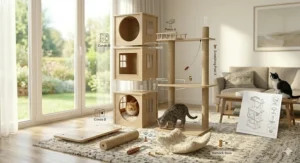
Cat Tree Assembly Tips That Actually Make a Difference
Assembly instructions typically show perfect conditions with all parts organized, ample space, and zero confusion. Reality involves mystery hardware, ambiguous diagrams, and cats investigating tools mid-process. Here’s what makes assembly genuinely easier based on hundreds of customer experiences.
Pre-Sort Everything First: Resist the urge to start immediately. Dump all parts out, group hardware by type (screws, bolts, washers), match boards to diagram letters/numbers, and confirm you actually received everything. Missing a single screw discovered 40 minutes into assembly ruins momentum. Most manufacturers include extras; set those aside labeled “extra” so you don’t waste time seeking matching pieces later.
Strategic Tool Selection: The included Allen wrench works but causes hand fatigue after 20 screws. Invest $15 in a proper Allen key set with handles, or use power tools on low torque settings for faster assembly. Don’t over-tighten—particleboard strips easily under excessive pressure, and slight looseness actually reduces squeaking as cats use the structure. Tighten to “snug plus quarter turn” rather than “as tight as physically possible.”
Assembly Location Matters: Don’t assemble where the tower will permanently sit unless you have massive clearance. Build it in an open area (garage, empty room, outdoor patio if weather allows) where you can walk around the entire structure, spread parts out, and reposition without hitting furniture. Move it to final location once complete. Many tall towers require wall anchoring anyway, so final positioning needs separate attention from assembly.
Bottom-Up Construction Logic: Assemble from base upward, fully securing each level before adding the next. Trying to install upper platforms while the base wobbles compounds difficulty exponentially. Larger bases should feel rock-solid before proceeding. If the base feels unstable, identify and resolve that issue immediately—upper levels only magnify instability.
The Cat Participation Problem: Cats find assembly irresistible. They’ll climb partially completed towers, investigate hardware piles, and generally “help” by creating chaos. Assemble when cats are elsewhere (outdoor time, closed in another room, visiting family) or accept that assembly time doubles with feline assistance. Some owners report success letting cats explore completed sections while working on others, treating assembly as multi-session process over days rather than marathon single-day event.
Post-Assembly Stability Check: Before declaring victory, stress-test the structure. Push platforms gently side-to-side checking for excessive movement. Have a person (or heavy object approximating cat weight) test perch stability. Check all visible screws for looseness. If anything wobbles concerningly, locate and address that specific connection rather than hoping cats won’t notice. They will. And they’ll avoid unstable structures instinctively.
Common Mistakes When Buying Cat Trees (And How to Avoid Them)
Even experienced cat owners make predictable purchasing mistakes because cat tree marketing emphasizes wrong priorities. Here’s what actually matters versus what looks impressive in listings.
Mistake 1: Prioritizing Height Over Platform Quality Sellers advertise “72 INCHES TALL!” knowing height sounds impressive. But a 72-inch tower with 8-inch platforms doesn’t serve cats as well as a 48-inch tower with 16-inch platforms. Cats need lounging space, not just altitude. Examine individual platform dimensions—anything under 12 inches requires cats to balance rather than relax. Large breed cats need 15+ inch platforms minimum for comfortable positioning. The Globlazer’s width-focused design outperforms many taller but narrower alternatives specifically because platform size matches cat size.
Mistake 2: Assuming More Scratching Posts Equals Better Ten thin 2-inch diameter posts frustrate cats more than four thick 3.5-inch posts. Post diameter determines scratching satisfaction because cats need leverage for effective claw maintenance and stretching. Thin posts wobble under scratching force, training cats to avoid them. The Feandrea models consistently use 3.4-inch diameter posts rather than maxing out post count with inadequate thickness. Count matters less than diameter and stability.
Mistake 3: Ignoring Condo Entrance Size Specifications list condo dimensions but entrance size determines usability. A 15×15-inch condo with a 6×6-inch entrance forces larger cats into uncomfortable contortions during entry/exit. Minimum 7-8 inch entrance width accommodates most breeds comfortably. Maine Coons and other large breeds need 9+ inch entrances. The Yaheetech 59-inch provides 7.7-inch entrance width—adequate for most cats but potentially tight for extra-large breeds. Always check this specification explicitly rather than assuming condo size implies proportional entrance.
Mistake 4: Buying Without Measuring Ceiling Height Returns spike around holiday seasons when gifted towers don’t fit recipients’ homes. An average room has 96-inch (8-foot) ceilings. Standard ceiling fans hang 7-8 feet high. Light fixtures vary. Before buying any tower over 60 inches, measure floor-to-ceiling height and subtract existing fixtures. Allow 4-6 inches clearance above the top platform for cats to comfortably occupy it. The 72-inch Globlazer needs 78+ inch ceilings accounting for platform thickness and clearance.
Mistake 5: Choosing Aesthetics Over Stability Narrow, tall, beautiful towers look elegant in photos but wobble dangerously when cats launch between platforms. Physics matters: wide bases relative to height improve stability dramatically. Compare base dimensions to total height—anything over 2:1 height-to-base-width ratio should include wall anchoring as mandatory rather than optional. The PAWZ Road 51-inch uses a proportionally wide base specifically because wooden construction allows heavier, more stable foundations than lightweight particleboard alternatives.
Mistake 6: Expecting Instant Adoption Cats need time adjusting to new structures, particularly nervous cats or those set in established routines. Abandoning a perfectly good tower after three days because your cat seems uninterested wastes money. Most cats require 1-3 weeks exploring, scent-marking, and claiming new furniture before regular usage patterns emerge. Accelerate adoption through strategic treat placement, catnip introduction, or temporarily blocking access to previous favorite perches, gently encouraging tower exploration.
Mistake 7: Buying Too Small for Multi-Cat Households One cat using a 40-inch tower works fine. Three cats sharing it creates territorial stress, blocked access, and inevitable conflicts. Cats need simultaneous access to multiple levels without forcing social interaction. Minimum tower sizing: one major rest area (perch or condo) per cat plus one. Three cats need four distinct lounging options distributed vertically. The Feandrea 59.1-inch multi-level design specifically provides this distribution; compact models do not.
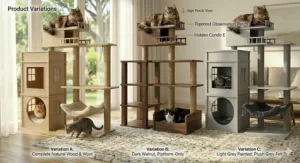
Understanding Cat Tree Materials: What Actually Matters
Material specifications sound technical but directly impact longevity, maintenance, and cat comfort. Here’s what those materials actually mean in real-world usage.
Particleboard Construction: Most cat trees use engineered particleboard because it’s cost-effective and accepts screw anchoring reasonably well. Quality variation is enormous—CARB P2-certified particleboard (used in Yaheetech and premium Feandrea models) ensures formaldehyde emissions meet strict safety standards. Non-certified particleboard may off-gas unpleasant odors for weeks or even contain unsafe chemical levels. CARB certification specifically matters for enclosed condos where air circulation is limited and cats spend extended time. It’s not marketing fluff—it’s legitimate health consideration.
Solid Wood vs. Particleboard: The PAWZ Road wooden models use actual thick wood construction rather than particle products. Solid wood costs more but outlasts particleboard significantly because it doesn’t degrade from moisture, doesn’t crumble around screw holes after repeated stress, and supports substantially more weight long-term. Particleboard cat trees typically show wear in 2-4 years; quality wooden construction lasts 10+ years. If you’re furnishing for a kitten who’ll use this into old age, wood makes financial sense despite higher upfront cost.
Sisal Rope Quality: Natural sisal derives from agave plant fibers and provides ideal scratching texture cats instinctively prefer. Synthetic alternatives (sometimes used on budget models) don’t provide the same satisfying resistance and wear poorly. Quality sisal wrapping shows tight, even coils without gaps between layers. Cheap wrapping uses thinner rope with visible gaps, deteriorating quickly under scratching. Post replacement becomes necessary within months rather than years when using inferior sisal. The Feandrea and PAWZ Road models consistently use quality natural sisal; ultra-budget options often compromise here.
Plush Fabric vs. Carpet: Most towers use short-pile plush fabric because it’s soft, relatively easy to clean, and cats find it immediately comfortable. Carpet alternatives (found on some models) resist scratching better but feel rougher and retain odors more stubbornly. Some cats with sensitive paws reject carpet-covered perches, preferring plush softness. Neither is definitively superior—it’s preference matching. If your cat currently lounges on carpeted stairs, they’ll probably accept carpeted tower surfaces; if they prefer soft blankets and furniture, plush aligns better.
PE Rattan Construction: The PETSITE model’s PE (polyethylene) rattan represents a distinct material category. It’s synthetic rattan woven over metal frames, providing weather-resistant durability with natural aesthetic appeal. It’s more scratch-resistant than fabric, easier to clean than plush, and maintains appearance longer than budget alternatives. It also costs more because manufacturing involves additional complexity. PE rattan suits households prioritizing longevity and distinctive appearance over immediate soft comfort.
Metal Frame Reinforcement: Quality towers incorporate metal connecting hardware beyond basic screws. Reinforcement brackets, metal support tubes within posts, and structural bracing differentiate durable designs from those that will wobble within months. Unfortunately, this isn’t always visible in product photos. Customer reviews mentioning “solid” or “doesn’t wobble even with multiple cats” typically indicate proper reinforcement; reviews complaining about wobbling or collapsed platforms indicate inadequate structural support regardless of materials used elsewhere.
Frequently Asked Questions
❓ How tall should a cat tree with condo be for large cats?
❓ Do cats prefer enclosed or open cat tree designs?
❓ How often should you replace scratching posts on cat trees?
❓ Can a cat tree with condo help reduce furniture scratching?
❓ What's the best location for a cat tree with enclosed space?
Conclusion: Investing in Your Cat’s Vertical Real Estate
Choosing the right cat tree with condo fundamentally changes how your cat experiences their indoor environment, transforming them from ground-dwelling observers into confident vertical territory owners. Whether you’re selecting the compact efficiency of the PAWZ Road 30-inch for budget-conscious households, the multi-level versatility of the Feandrea 59.1-inch for multi-cat families, or the heavy-duty construction of the Globlazer 72-inch for large breed cats, you’re not just purchasing furniture—you’re investing in environmental enrichment that impacts your cat’s mental and physical wellbeing daily.
The science behind vertical territory needs is clear: cats evolved as ambush predators who simultaneously hunted from above and hid from larger predators in elevated enclosed spaces. Modern indoor cats retain these instincts without natural outlets, and a properly selected cat tower with hideaway satisfies these deep-wired behavioral requirements. When cats have appropriate vertical space with secure enclosed resting areas, research shows measurably reduced stress behaviors, decreased furniture scratching, and improved overall contentment.
Remember that the “best” cat tree varies based on your specific situation—apartment size constraints, cat personality profiles, budget considerations, and aesthetic preferences all legitimately influence the optimal choice. The PETSITE rattan model serves design-conscious owners differently than the PAWZ Road wooden construction serves large-breed households, and both serve their target users excellently. Your job is matching features to needs rather than chasing maximum specifications.
Take the time to measure your space, honestly assess your cat’s personality and activity levels, and prioritize features that address your specific challenges—whether that’s furniture scratching, multi-cat territorial conflicts, or simply providing your senior cat comfortable low-impact climbing options. The cats who benefit most from cat trees with condos aren’t necessarily the most athletic climbers; they’re the cats whose owners selected structures matching their individual needs, placed them strategically, and introduced them patiently. Make that investment thoughtfully, and you’ll transform ignored floor space into your cat’s favorite territory practically overnight.
Recommended for You
- 7 Best Cat Trees for Kittens That Support Growing Needs (2026)
- 7 Best Cat Trees for Senior Cats That Actually Work (2026)
- 7 Best Cat Walkways That Transform Boring Walls 2026
Disclaimer: This article contains affiliate links. As an Amazon Associate, I earn from qualifying purchases. If you purchase products through these links, we may earn a small commission at no additional cost to you.
✨ Found this helpful? Share it with your friends! 💬🤗
