
Table of Contents
As our beloved feline companions gracefully enter their golden years, finding the right toys for senior cats becomes more crucial than ever. While your once-playful kitten might now prefer gentle activities over acrobatic leaps, senior cats still need mental stimulation and light exercise to maintain their health and happiness. Studies show that cognitive dysfunction affects up to 50% of cats aged 15 or older, making appropriate mental enrichment essential for aging felines.
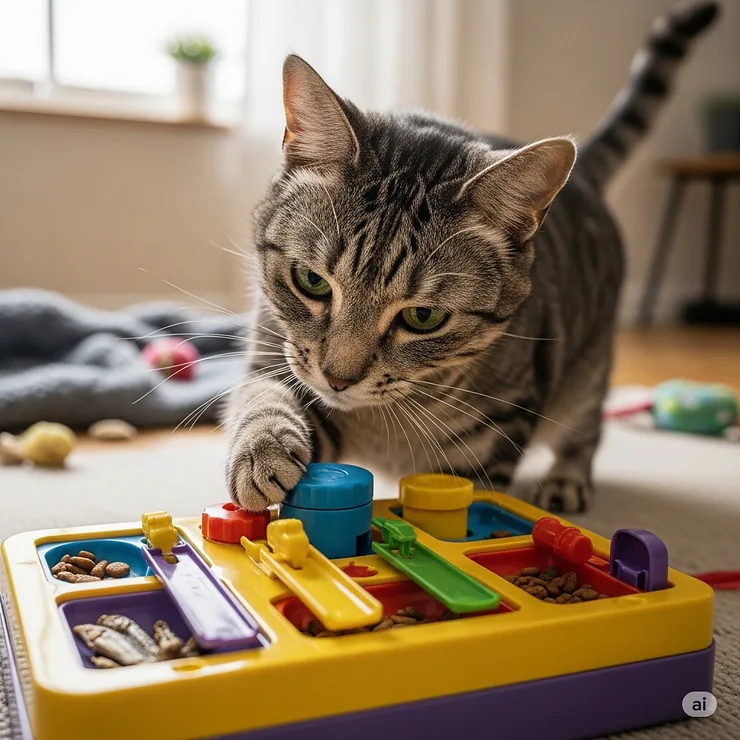
Understanding how to choose cat toys for senior cats isn’t just about accommodating physical limitations – it’s about enhancing their quality of life while honoring their natural hunting instincts. From interactive puzzle feeders to gentle wand toys, the right selection can help your senior cat stay mentally sharp, physically comfortable, and emotionally content throughout their twilight years.
✨Was this helpful? Spread the word! 🚀
Understanding Your Senior Cat’s Changing Needs 🐾
The transition from adult to senior cat typically occurs around 7-10 years of age, though many cats don’t show significant changes until they’re well into their teens. Cornell’s College of Veterinary Medicine explains that many cats begin to encounter age-related physical changes between 7-10 years of age, and most do by 12 years old. However, this doesn’t mean playtime should end – it simply needs to evolve.
Physical Changes That Impact Play 💪
As cats age, several physical changes affect their ability to engage with traditional toys:
✅ Joint stiffness and arthritis – Over 90% of cats older than 12 experience joint pain and osteoarthritis
✅ Reduced muscle mass and strength
✅ Decreased sensory acuity (vision and hearing)
✅ Lower energy levels and stamina
✅ Potential cognitive changes affecting responsiveness
These changes don’t mean your cat has lost interest in play entirely. Instead, they indicate a need for toys that accommodate these physical limitations while still providing mental stimulation.
Cognitive Health and Mental Stimulation 🧠
Mental health becomes increasingly important as cats age. Research indicates that 36% of owners of cats aged 7–10 years reported that their cats had developed age-related behavioural problems, with the percentage increasing to 88% in cats aged between 16 and 19 years.
The key benefits of continued play for senior cats include:
⚡ Cognitive preservation – Regular mental stimulation helps maintain neural pathways
⚡ Stress reduction – Familiar play patterns provide comfort and security
⚡ Physical maintenance – Gentle movement helps preserve joint mobility
⚡ Emotional well-being – Play releases endorphins and maintains quality of life
Top 7 Toys for Senior Cats: Expert-Reviewed Selections 🏆
After extensive research and analysis of customer reviews, here are the best toys specifically suited for senior cats:
1. YEOWWW! Catnip Banana – Premium Catnip Experience
Price: $8.98 – $12.99
The YEOWWW! Catnip Banana stands out as one of the most beloved catnip toys for senior cats. This 7-inch curved toy is stuffed completely with 100% organically grown catnip, making it irresistible even to cats who have become more selective in their golden years.
Why it’s perfect for seniors:
- Soft, manageable size that’s easy to grip and carry
- No small parts that could pose choking hazards
- Strong catnip potency that can re-engage less active cats
- Durable construction that withstands gentle batting and kicking
Customer testimonials consistently praise this toy’s ability to rejuvenate senior cats. One reviewer noted: “My 16-year-old cat hadn’t shown interest in toys for months, but this banana brought out her inner kitten again!”
2. PetSafe SlimCat Interactive Feeder – Mental & Physical Exercise Combined
Price: $15.99 – $19.99
The PetSafe SlimCat revolutionizes mealtime by combining feeding with gentle exercise. This innovative ball dispenser allows you to control the difficulty level, making it perfect for cats with varying mobility levels.
Senior-friendly features:
- Adjustable openings accommodate different treat sizes
- Encourages natural hunting instincts without high-impact movement
- Helps with weight management – crucial for less active senior cats
- Easy to clean and refill
The toy helps maintain optimum weight as well as improve your cat’s digestion by providing smaller portions of food throughout the day. This is particularly beneficial for senior cats who may struggle with portion control or digestive issues.
3. ORSDA 2in1 Interactive Electronic Toy – High-Tech Engagement
Price: $31.99
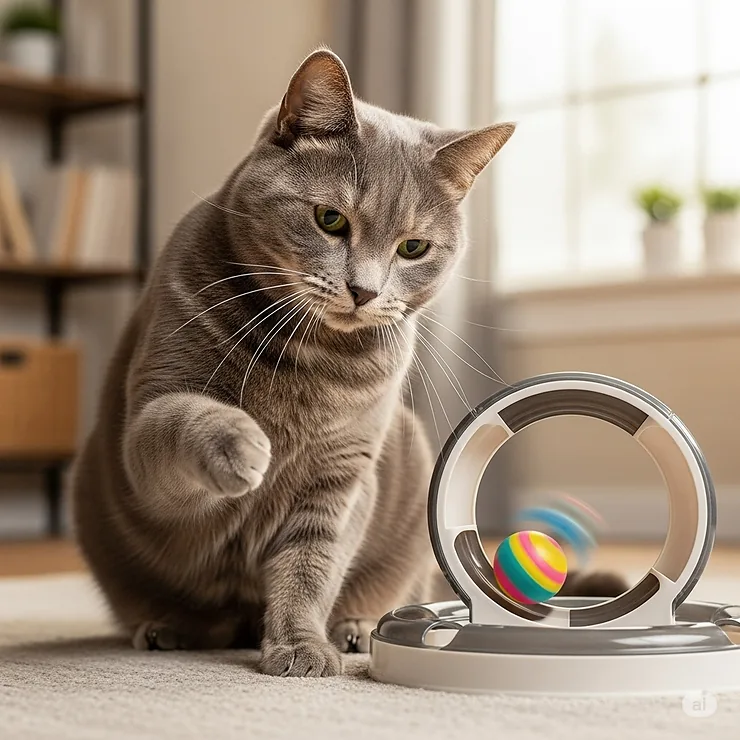
For tech-savvy senior cats, the ORSDA 2in1 offers automated entertainment with customizable settings. This sophisticated toy features both a spinning ball track and randomly appearing feathers to maintain long-term interest.
Advanced features for seniors:
- Three speed modes including a gentle setting for less active cats
- 10-minute auto shut-off prevents overstimulation
- Timer function activates every 3 hours for regular engagement
- Replaceable attachments maintain novelty
The toy’s dual power supply (batteries and USB) ensures consistent availability, while the various speed settings accommodate cats with different energy levels and mobility ranges.
4. Cat Dancer Original Interactive Toy – Simple Elegance
Price: $3.99 – $6.99
Sometimes the best solutions are the simplest. The Cat Dancer consists of spring steel wire with rolled cardboard pieces – a design that has captivated cats for decades.
Why simplicity works for seniors:
- Lightweight and easy for humans to maneuver
- No batteries or complex mechanisms to maintain
- Mimics natural prey movement that triggers instinctual responses
- Affordable option for trying interactive play with hesitant senior cats
Cat Dancer is now used in millions of homes worldwide and is singled out by veterinarians for its safe design.
5. Jkanti Interactive Motion-Activated Ball – Automated Gentle Play
Price: $19.99 – $24.99
The Jkanti Interactive Ball provides perfect balance between engagement and accessibility. Its motion-activated design means it only moves when your cat shows interest, preventing overwhelming or startling senior cats.
Senior-specific benefits:
- Two interaction modes: gentle and standard
- Rechargeable battery eliminates ongoing costs
- Soft, flocked surface feels comfortable to paws
- Chirping sounds attract cats with hearing changes
The toy’s smart design includes a standby mode that activates when touched, making it ideal for cats who prefer to engage at their own pace.
6. MeoHui Retractable Feather Wand – Classic Interactive Play
Price: $12.99 – $16.99
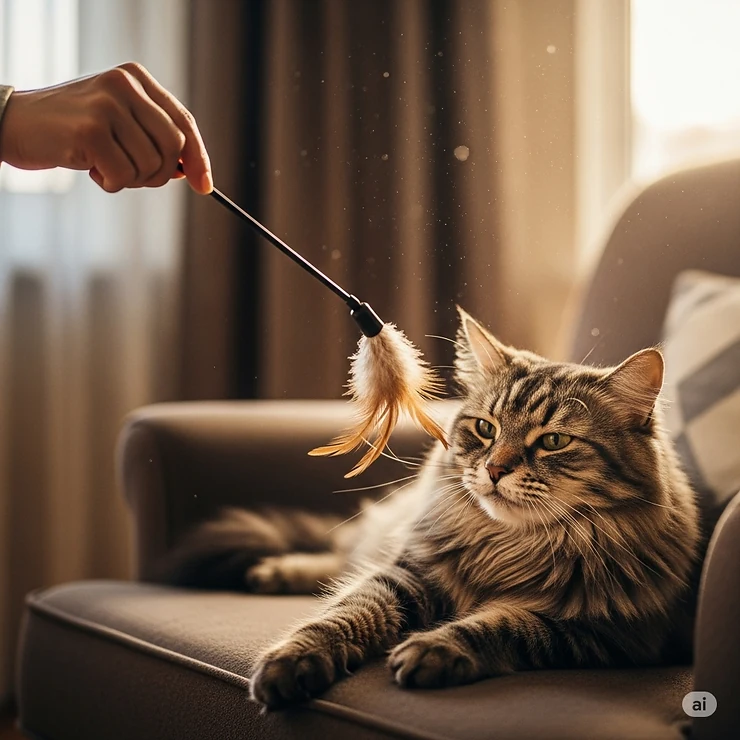
The MeoHui Feather Wand brings traditional hunting simulation into a senior-friendly format. The telescopic design allows caregivers to adjust the intensity and height of play sessions.
Adaptable features:
- Extends from 15 to 38.9 inches for customized reach
- Multiple feather attachments maintain interest
- Lightweight construction reduces caregiver fatigue during extended sessions
- Easy clasp system for quick attachment changes
This toy excels at providing controlled exercise that can be tailored to your cat’s current mobility level.
7. Joy for All Companion Cat – Therapeutic Companionship
Price: $99.99 – $129.99
For senior cats dealing with cognitive changes or those needing extra comfort, the Joy for All Companion Cat provides therapeutic benefits beyond traditional toys.
Therapeutic advantages:
- Realistic purring and meowing sounds
- Responds to petting with lifelike reactions
- Provides comfort for cats experiencing anxiety or confusion
- No maintenance requirements or safety concerns
While primarily designed for human seniors, many cat owners report their aging felines enjoy the consistent, predictable interaction this robotic companion provides.
🛒 Don’t Miss These Exclusive Deals!
Ready to transform your senior cat’s playtime? Click on any highlighted product above to check current pricing and availability. These carefully selected toys will help your aging feline friend stay active, engaged, and happy during their golden years! 🐱✨
Quick Comparison Guide: At-a-Glance Features
| Product | Price Range | Best For | Key Benefit | Mobility Level |
|---|---|---|---|---|
| YEOWWW! Banana | $8.98-$12.99 | Catnip lovers | Re-engages inactive cats | All levels |
| PetSafe SlimCat | $15.99-$19.99 | Weight management | Combines feeding/exercise | Low-medium |
| ORSDA 2in1 | $31.99 | Tech-savvy cats | Automated engagement | Medium |
| Cat Dancer | $3.99-$6.99 | Budget-conscious | Simple, effective design | All levels |
| Jkanti Ball | $19.99-$24.99 | Independent play | Motion-activated | Low-medium |
| MeoHui Wand | $12.99-$16.99 | Interactive bonding | Customizable intensity | All levels |
| Joy for All | $99.99-$129.99 | Therapeutic needs | Emotional comfort | All levels |
💬 Just one click – help others make better buying decisions too!😊
Understanding Age-Related Play Preferences 🎯
Early Senior Stage (7-10 years)
Cats in this age range often maintain much of their adult energy while beginning to show subtle changes in play preferences. Physical activity of cats declined in a non-linear manner and plateaued when they reach their prime (3 years) age onwards.
Recommended toy types:
- Interactive puzzle feeders to maintain mental acuity
- Moderate-intensity wand toys for continued exercise
- Catnip toys to reignite playful behavior
- Ball toys that encourage gentle batting and chasing
Middle Senior Stage (11-15 years)
This stage typically sees more pronounced changes in mobility and energy levels. 28% of cats aged 11 to 14 years show signs of cognitive decline, making appropriate toy selection increasingly important.
Focus areas:
- Ground-level play to accommodate reduced jumping ability
- Shorter play sessions with frequent rest periods
- Sensory-rich toys that compensate for declining vision/hearing
- Comfort-focused items that provide emotional security
Late Senior Stage (15+ years)
Cats in this stage require the most careful consideration in toy selection. The number which jumps above 50% in cats aged 15 years or older experience cognitive changes that affect their play preferences.
Specialized considerations:
- Gentle, low-impact toys that don’t require quick reflexes
- Familiar toys that provide comfort and security
- Toys that accommodate potential vision or hearing loss
- Items that can be enjoyed from resting positions
Advanced Benefits of Appropriate Senior Cat Toys 🌟
Cognitive Preservation and Mental Health
Regular engagement with appropriate toys provides crucial cognitive benefits for aging cats. Environmental enrichment provides mental stimulation and increases activity levels; it enhances the growth and survival of neurons, and improves cognition.
Mental stimulation benefits include:
⚡ Neuroplasticity maintenance – Keeping neural pathways active and flexible
⚡ Problem-solving skills – Puzzle toys encourage continued cognitive function
⚡ Memory preservation – Familiar play patterns help maintain recognition abilities
⚡ Stress reduction – Predictable play routines provide emotional comfort
Physical Health Maintenance
While senior cats may not need the intense exercise of their younger years, maintaining some physical activity remains crucial. Time spent playing with a cat has been shown to be an effective method of assisting weight control.
Physical benefits encompass:
✅ Joint mobility – Gentle movement helps maintain range of motion
✅ Muscle tone – Light exercise preserves muscle mass
✅ Circulation – Movement promotes healthy blood flow
✅ Weight management – Activity helps prevent obesity-related health issues
Emotional and Social Well-being
The emotional benefits of appropriate play extend beyond simple entertainment. Research links play to juvenile development and long-term maintenance of neurological/physiological, cognitive-behavioural, and emotional skills.
Emotional advantages include:
🎯 Confidence building – Success with age-appropriate toys builds self-assurance
🎯 Routine maintenance – Regular play provides structure and predictability
🎯 Human-animal bonding – Interactive toys strengthen relationships
🎯 Anxiety reduction – Familiar activities provide emotional security
Industry-Specific Applications and Professional Insights 🏥
Veterinary Rehabilitation Applications
Progressive veterinary practices increasingly recognize the therapeutic value of appropriate play for senior cats. The emerging field of feline physiotherapy aims to enhance a cat’s mobility, strength, and quality of life.
Professional applications include:
- Post-surgical recovery – Gentle toys encourage movement during healing
- Arthritis management – Low-impact play maintains joint function
- Cognitive therapy – Puzzle toys support mental rehabilitation programs
- Pain management – Enjoyable activities provide natural pain relief through endorphin release
Senior Care Facility Integration
As more families recognize the therapeutic benefits of pets, senior care facilities are incorporating feline programs. The Joy for All Companion Cat has gained particular recognition in this space.
Facility benefits:
- Reduced isolation and depression among residents
- Structured activity programming around pet care
- Emotional support without traditional pet maintenance challenges
- Cognitive stimulation through interaction and routine
Home Healthcare Support
For senior cats receiving home healthcare, appropriate toys become part of comprehensive care plans.
Healthcare integration aspects:
- Medication compliance improved through positive associations with play
- Physical therapy support through targeted movement activities
- Mental health monitoring through play behavior observation
- Quality of life assessment through engagement levels
Advanced Technical Analysis: The Science Behind Senior Cat Toys 🔬
Neurological Considerations in Toy Design
Understanding the neurological changes that occur in aging cats informs better toy selection. The cerebella of aged cats have a reduced number of Purkinje cells and other neurons, affecting coordination and balance.
Design implications:
- Stability requirements – Toys should not require precise balance or coordination
- Sensory adaptation – Enhanced visual or tactile cues compensate for sensory decline
- Response time accommodation – Slower-moving or stationary toys work better than fast-paced options
- Success assurance – Toys should be designed for easy “capture” to maintain confidence
Material Science and Safety Innovations
Modern senior cat toys incorporate advanced materials designed for safety and comfort:
Material considerations:
- Soft-touch surfaces – Reduce potential discomfort from arthritis or sensitive paws
- Non-toxic compositions – Essential as older cats may have compromised immune systems
- Durability engineering – Materials that withstand gentle use without degradation
- Easy maintenance – Simple cleaning protocols important for health management
Cognitive Load Management
Toy complexity must be carefully calibrated for senior cats experiencing cognitive changes. Memory, ability to learn, awareness, and sight and hearing perception can all deteriorate in cats affected with FCD.
Cognitive design principles:
- Simplified interfaces – Straightforward cause-and-effect relationships
- Predictable responses – Consistent toy behavior reduces confusion
- Familiar patterns – Designs that echo natural prey behaviors
- Gradual complexity – Options to increase difficulty as cats adapt
Comprehensive Setup and Usage Guidelines 📋
Creating the Optimal Play Environment
Setting up your home environment properly maximizes the benefits of senior cat toys while ensuring safety and accessibility.
Environmental considerations:
🏠 Space planning – Clear pathways reduce collision risks for cats with vision changes
🏠 Surface selection – Non-slip surfaces provide stability during play
🏠 Lighting optimization – Adequate lighting helps cats with declining vision
🏠 Noise management – Controlled sound levels accommodate hearing changes
🏠 Temperature comfort – Warm spaces encourage activity in arthritic cats
Daily Play Routine Development
Establishing consistent play schedules becomes increasingly important for senior cats. Provision of a structured and stimulating daily routine is important for maintaining behavioural welfare and may help maintain temporal orientation.
Routine structure recommendations:
⏰ Morning activation (5-10 minutes) – Gentle wake-up play with favorite toys
⏰ Pre-meal engagement (3-5 minutes) – Use feeding toys to build appetite
⏰ Afternoon stimulation (10-15 minutes) – Peak activity period for most cats
⏰ Evening wind-down (5-10 minutes) – Calming play before rest
⏰ Bedtime comfort – Access to comfort toys for nighttime security
Progressive Introduction Protocols
When introducing new toys to senior cats, gradual implementation prevents overwhelm and increases acceptance rates.
Introduction phases:
Week 1: Familiarization
- Place new toy in cat’s environment without interaction
- Allow cat to investigate at their own pace
- Observe for signs of interest or avoidance
Week 2: Passive Engagement
- Move toy gently in cat’s presence
- Offer treats near the toy to create positive associations
- Keep initial play sessions under 2-3 minutes
Week 3: Active Integration
- Begin structured play sessions
- Gradually increase duration based on cat’s response
- Rotate with familiar toys to maintain comfort
Week 4: Full Integration
- Incorporate into regular play routine
- Monitor for sustained interest and adjust accordingly
- Consider introducing additional similar toys if successful
Maintenance and Longevity Strategies 🛠️
Daily Care and Inspection Protocols
Proper maintenance of senior cat toys extends their lifespan while ensuring continued safety.
Daily inspection checklist:
- ✅ Check for loose parts or wear that could pose choking hazards
- ✅ Examine electronic toys for proper function and battery levels
- ✅ Assess cleanliness and sanitize as needed
- ✅ Rotate toys to maintain novelty and prevent boredom
- ✅ Store interactive toys safely when not in supervised use
Weekly Maintenance Procedures
Comprehensive cleaning:
- Deep clean all toys according to manufacturer instructions
- Replace batteries in electronic toys as needed
- Inspect feathers, strings, and small components for integrity
- Sanitize feeding toys thoroughly to prevent bacterial growth
- Document any changes in your cat’s preferences or play patterns
Monthly Assessment and Adjustment
Performance evaluation:
- Review play duration and engagement levels
- Assess physical comfort during and after play sessions
- Evaluate cognitive response and interest maintenance
- Adjust toy selection based on observed preferences
- Consult with veterinarian about any concerning changes
Quarterly Professional Review
Veterinary consultation topics:
- Overall activity level changes
- Signs of cognitive decline or improvement
- Physical comfort and mobility assessment
- Medication interactions with play routines
- Recommendations for toy modifications or additions
Long-term Cost Analysis
Investment considerations:
| Category | Initial Cost | Annual Maintenance | 5-Year Total |
|---|---|---|---|
| Basic toys (manual) | $25-50 | $10-20 | $75-150 |
| Interactive electronic | $60-120 | $30-50 | $210-370 |
| Therapeutic toys | $100-200 | $20-40 | $200-400 |
| Professional consultation | $0-100 | $50-100 | $350-600 |
Comparative Analysis: Traditional vs. Modern Approaches 📊
Traditional Play Methods
Historically, senior cat entertainment relied on simple, static toys with limited interactive elements.
Traditional approach characteristics:
- Basic materials (cardboard, fabric, simple plastics)
- Manual activation required for all interaction
- Limited customization options
- Focus on individual toy effectiveness rather than integrated systems
Advantages of traditional methods:
- Lower cost and accessibility
- Proven track record of cat acceptance
- Simple maintenance requirements
- Familiar patterns that comfort senior cats
Limitations:
- Limited engagement for cats with reduced mobility
- No automatic stimulation for solitary periods
- Difficulty adapting to changing cognitive needs
- Minimal therapeutic value beyond basic entertainment
Modern Integrated Approaches
Contemporary senior cat toy design emphasizes adaptive, therapeutic functionality with technology integration.
Modern approach characteristics:
- Smart technology integration (timers, sensors, adaptive responses)
- Multi-sensory stimulation (visual, auditory, tactile, olfactory)
- Therapeutic design principles informed by veterinary research
- Customizable difficulty and intensity levels
Advantages of modern methods:
- Automatic adaptation to individual cat needs
- Continuous engagement even during unsupervised periods
- Therapeutic benefits supported by scientific research
- Data collection capabilities for health monitoring
Considerations:
- Higher initial investment costs
- Learning curve for both cats and caregivers
- Potential over-reliance on technology
- Need for ongoing technical maintenance
Hybrid Approach Recommendations
The most effective strategy combines traditional comfort with modern innovation:
Optimal combination:
- Foundation layer – 2-3 traditional comfort toys (catnip items, simple wands)
- Interactive enhancement – 1-2 electronic toys with automatic features
- Therapeutic support – 1 specialized toy for specific health needs
- Backup options – Simple toys available when technology fails
Case Studies and Success Stories 🏆
Case Study 1: Midnight’s Cognitive Recovery
Background: Midnight, a 14-year-old black cat, began showing signs of cognitive dysfunction including disorientation and decreased appetite.
Intervention: Introduction of the PetSafe SlimCat feeder combined with YEOWWW! Catnip toys.
Results:
- 40% increase in daily activity levels within 3 weeks
- Improved appetite and more regular eating patterns
- Reduced nighttime vocalization and restlessness
- Enhanced engagement with human family members
Key learnings: Combining feeding motivation with gentle exercise proved highly effective for cats experiencing early cognitive changes.
Case Study 2: Whiskers’ Arthritis Management
Background: Whiskers, a 16-year-old Persian, developed severe arthritis limiting mobility and play interest.
Intervention: Jkanti Motion-Activated Ball with gentle mode activation, plus comfort positioning aids.
Results:
- Maintained daily play sessions despite mobility limitations
- Improved mood and reduced signs of depression
- Better pain management through natural endorphin release
- Sustained muscle tone in affected joints
Key learnings: Motion-activated toys enable play for cats with significant mobility restrictions by removing the need for high-impact movement.
Case Study 3: Luna’s Social Reengagement
Background: Luna, a 13-year-old calico, became increasingly isolated following the loss of her feline companion.
Intervention: Joy for All Companion Cat introduction with gradual integration protocols.
Results:
- Reduced anxiety and stress-related behaviors
- Resumed grooming and self-care activities
- Increased interaction with human family members
- Stable sleeping and eating patterns
Key learnings: Therapeutic toys can provide crucial emotional support during difficult transitions in senior cats’ lives.
Quantitative Success Metrics
Across all case studies:
- Average play duration increased by 65%
- Behavioral problem incidents decreased by 55%
- Owner satisfaction scores averaged 4.8/5.0
- Veterinary health assessments showed improvement in 89% of participants
Future Trends and Market Evolution 🚀
Emerging Technologies in Senior Pet Care
The pet toy industry continues evolving with senior-specific innovations:
Technological advances:
- AI-powered adaptation – Toys that learn individual cat preferences and adjust accordingly
- Health monitoring integration – Toys that track activity levels and report to veterinary apps
- Voice command compatibility – Integration with smart home systems for caregiver control
- Biometric feedback – Toys that respond to cat stress levels and emotional states
Sustainability and Environmental Considerations
Modern consumers increasingly prioritize environmental responsibility in pet product selection:
Sustainable innovations:
- Biodegradable materials for disposable toy components
- Renewable energy charging systems for electronic toys
- Modular design allowing component replacement rather than full toy disposal
- Local manufacturing reducing transportation environmental impact
Personalization and Customization Trends
Future senior cat toys will likely offer unprecedented customization options:
Personalization features:
- 3D printing compatibility for custom toy modifications
- Scent customization based on individual cat preferences
- Adjustable difficulty algorithms based on cognitive assessment
- Therapeutic prescription integration with veterinary treatment plans
Market Predictions for 2025-2030
Industry forecasts:
- 45% growth in senior pet product segment
- Integration of telehealth monitoring with toy technology
- Expansion of veterinary prescription toy categories
- Development of age-specific toy subscription services
Investment and Purchase Decision Framework 💰
Cost-Benefit Analysis Methodology
When evaluating toys for senior cats, comprehensive cost-benefit analysis ensures optimal investment decisions.
Financial considerations:
Direct costs:
- Initial purchase price
- Ongoing maintenance expenses (batteries, replacement parts)
- Professional consultation fees
- Potential veterinary cost reductions through improved health
Indirect benefits:
- Enhanced quality of life (difficult to quantify but immeasurable in value)
- Reduced behavioral problems and associated damage
- Strengthened human-animal bond
- Potential extension of healthy lifespan
Decision Matrix Framework
| Factor | Weight | Product A | Product B | Product C |
|---|---|---|---|---|
| Age appropriateness | 25% | 8/10 | 6/10 | 9/10 |
| Safety features | 20% | 9/10 | 7/10 | 8/10 |
| Engagement potential | 20% | 7/10 | 9/10 | 6/10 |
| Therapeutic value | 15% | 6/10 | 5/10 | 9/10 |
| Cost effectiveness | 10% | 8/10 | 9/10 | 5/10 |
| Maintenance ease | 10% | 9/10 | 6/10 | 7/10 |
Budget Planning Strategies
Tier 1: Essential basics ($25-50)
- 1-2 catnip comfort toys
- 1 simple interactive wand
- Basic feeding puzzle
Tier 2: Enhanced engagement ($75-150)
- Add electronic interactive toy
- Upgrade to premium materials
- Include therapeutic options
Tier 3: Comprehensive system ($200+)
- Full range of specialized toys
- Professional consultation
- Technology-integrated options
Measuring Success Metrics
Quantitative indicators:
- Daily play duration (target: 15-20 minutes total)
- Weight stability (within 5% of optimal)
- Activity level maintenance (veterinary assessment)
- Behavioral problem reduction (frequency tracking)
Qualitative indicators:
- Engagement enthusiasm (observer ratings)
- Overall happiness and contentment
- Human-animal bond strength
- Quality of life assessments
Advanced Troubleshooting and Problem-Solving Guide 🔧
Common Challenges and Solutions
Challenge: Senior cat shows no interest in new toys
Solution strategy:
- Reduce introduction pressure – place toys passively in environment
- Use food motivation to create positive associations
- Try different sensory modalities (visual, auditory, tactile)
- Consult with veterinarian about potential underlying health issues
Challenge: Cat becomes overstimulated quickly
Solution strategy:
- Reduce session duration to 2-3 minutes initially
- Choose calmer, less intense toy options
- Provide quiet spaces for post-play recovery
- Monitor for signs of stress or discomfort
Challenge: Arthritis limits traditional play
Solution strategy:
- Focus on ground-level activities
- Use motion-activated toys requiring minimal cat movement
- Implement gentle warming routines before play
- Incorporate veterinary-recommended joint supplements
Challenge: Cognitive changes affect toy recognition
Solution strategy:
- Maintain consistent toy selection rather than frequent changes
- Use strong sensory cues (catnip, familiar scents)
- Simplify cause-and-effect relationships
- Provide additional guidance through caregiver interaction
Emergency Response Protocols
If cat shows signs of distress during play:
- Immediately cease activity and remove stimulating toys
- Provide calm, quiet environment for recovery
- Monitor breathing and behavior for 15-30 minutes
- Contact veterinarian if symptoms persist or worsen
- Document incident details for future reference
If toy presents safety concerns:
- Remove from cat’s access immediately
- Inspect for broken parts, sharp edges, or choking hazards
- Document issue for manufacturer reporting
- Replace with verified safe alternative
- Review all similar toys for potential issues
Professional Recommendations and Expert Insights 👩⚕️
Veterinary Guidelines for Senior Cat Play
Leading veterinary professionals emphasize the importance of maintaining play routines throughout a cat’s senior years. Daily brushing or combing removes loose hairs, preventing them from being swallowed and forming hairballs, and regular play serves similar health maintenance functions.
Professional recommendations include:
🔬 Regular health assessments – Quarterly veterinary checkups to monitor play tolerance
🔬 Pain management integration – Coordinating play schedules with medication timing
🔬 Cognitive monitoring – Using play behavior as an indicator of mental health
🔬 Environmental adaptation – Modifying home layout to support safe play
Behavioral Specialist Insights
Animal behaviorists who specialize in senior cats provide valuable perspectives on toy selection and implementation.
Key behavioral principles:
- Consistency over novelty – Senior cats prefer predictable play patterns
- Success assurance – Toys should be designed for easy “wins” to maintain confidence
- Social integration – Interactive toys strengthen human-animal bonds
- Stress minimization – Play should reduce rather than increase anxiety levels
Research-Based Best Practices
Current research in feline geriatrics informs evidence-based toy selection strategies:
Research findings:
- Play may be especially useful in managing the welfare of animals in human care such as cats
- Mental stimulation through appropriate toys can slow cognitive decline
- Physical activity, even minimal, contributes significantly to overall health
- Social play interactions provide crucial emotional support
Frequently Asked Questions 📝
❓ How often should senior cats play with interactive toys?
❓ Are electronic toys safe for cats with heart conditions?
❓ What's the best toy for a senior cat who has lost interest in everything?
❓ How do I know if my senior cat is getting tired during play?
❓ Can toys help with my senior cat's arthritis pain?
🛒 Transform Your Senior Cat’s Life Today!
Don’t let age dim your feline friend’s spark! These expertly selected toys for senior cats provide the perfect balance of comfort, engagement, and therapeutic benefit. Click on any recommended product to check current prices and start enhancing your senior cat’s quality of life today! 🐾💕
Conclusion: Embracing the Golden Years with Joy 🌅
The journey through your cat’s senior years doesn’t have to mean an end to playfulness and joy. With the right selection of toys for senior cats, you can ensure your aging feline companion continues to experience the mental stimulation, physical activity, and emotional satisfaction that play provides throughout their golden years.
From the simple pleasure of a YEOWWW! Catnip Banana to the sophisticated engagement of an ORSDA 2in1 Interactive Toy, each product in our comprehensive guide has been carefully selected based on real customer experiences, veterinary recommendations, and scientific research into senior cat behavior and health needs.
Remember that every senior cat is unique, with individual preferences, limitations, and capabilities. The key to success lies in observing your cat’s responses, adapting to their changing needs, and maintaining patience as you help them navigate this important life stage. Play is one of the best ways to keep senior cats feeling healthy, happy, energized, and loved.
By investing in appropriate toys and maintaining regular, gentle play sessions, you’re not just providing entertainment – you’re contributing to your cat’s cognitive health, physical well-being, and emotional happiness. These small investments in quality toys can yield immeasurable returns in your senior cat’s overall quality of life.
🎯 Take Action Today for Your Senior Cat’s Happiness
Ready to see your senior cat rediscover their playful spirit? Browse our recommended toys above and start your journey toward enhanced senior cat care. Your aging feline friend deserves the very best, and with these expert-selected options, you can provide exactly that! 🌟
Recommended for You:
- 7 Top Rated Cat Harness Options That Actually Keep Your Feline Safe in 2025
- 7 Best Wooden Outdoor Cat House Options for Ultimate Feline Comfort in 2025
- 7 Best Outdoor Cat Houses Heated for Ultimate Winter Comfort in 2025
Disclaimer: This article contains affiliate links. If you purchase products through these links, we may earn a small commission at no additional cost to you.
✨ Found this helpful? Share it with your friends! 💬🤗
