
Table of Contents
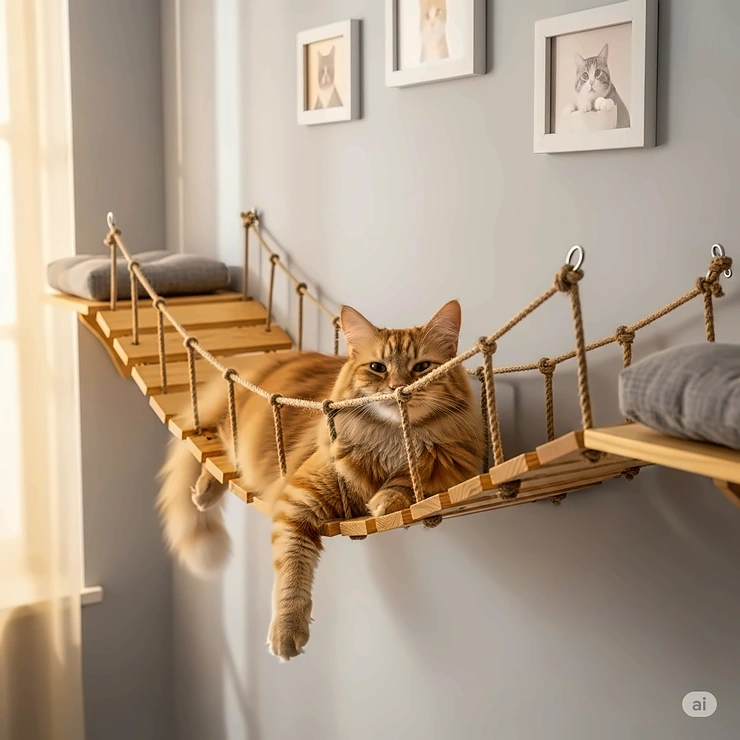
Have you ever watched your cat stare longingly at high spaces, desperately wanting to explore every vertical inch of your home? If you’re nodding along, then you understand the feline fascination with elevation and adventure. Creating the perfect cat bridge system isn’t just about giving your furry friend something to climb on – it’s about understanding their deepest instincts and transforming your living space into a three-dimensional playground that satisfies their natural behaviors.
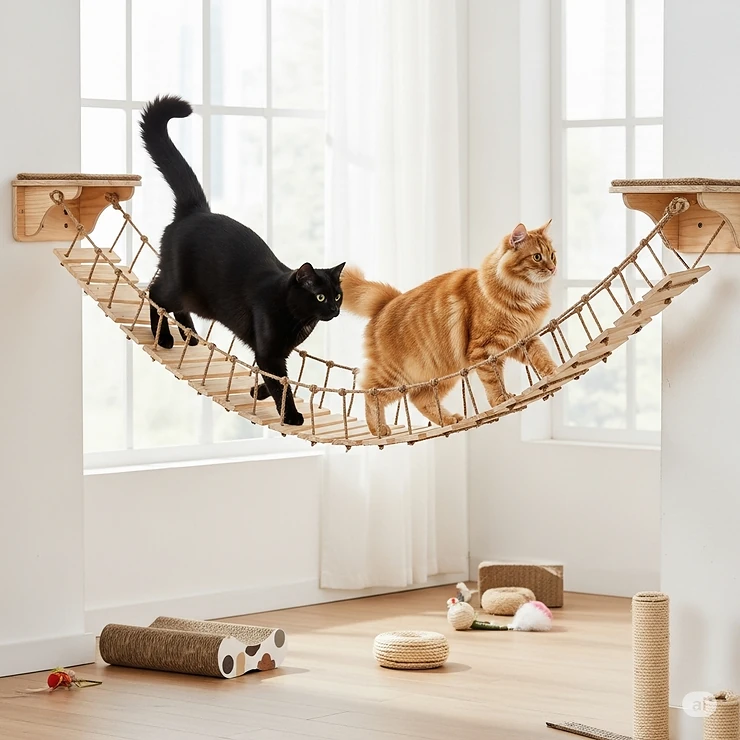
Moreover, the cat bridge has revolutionized how we think about indoor cat entertainment and environmental enrichment. These ingenious structures allow cats to traverse spaces safely while exercising their climbing instincts, and they’ve become essential tools for creating engaging vertical territories that keep our feline companions both physically active and mentally stimulated.
✨Was this helpful? Spread the word! 🚀
The world of cat bridges offers incredible variety, from simple wooden planks suspended between walls to sophisticated modular systems that can transform entire rooms into feline adventure courses. However, choosing the right cat bridge requires understanding your specific space limitations, your cat’s personality, and the safety considerations that ensure years of worry-free climbing and lounging.
Understanding the Cat Bridge Revolution 🐱
The concept of wall-mounted cat furniture has exploded in popularity over the past decade, particularly as more pet owners recognize the importance of vertical space in feline wellness. According to the American Veterinary Medical Association, cats naturally seek elevated positions for both security and territorial advantages, making cat bridges an essential component of modern pet care.
Furthermore, the cat bridge serves multiple purposes beyond simple entertainment. These structures provide exercise opportunities that combat obesity, reduce stress through environmental enrichment, and can even help resolve behavioral issues in multi-cat households by creating additional territory and escape routes.
The evolution of cat bridge design has been remarkable, transitioning from basic DIY solutions to professionally engineered systems that consider everything from weight distribution to aesthetic integration with home décor. Today’s cat bridges incorporate advanced materials, safety features, and modular designs that allow for customization based on individual needs and space constraints.
Additionally, the psychological benefits of cat bridges extend beyond the obvious physical advantages. Cats experience reduced anxiety when they have access to elevated spaces, and the ability to survey their territory from above satisfies deep-seated evolutionary instincts that urban indoor living often suppresses.
Industry-Specific Applications: From Homes to Professional Settings 🏢
The applications for cat bridge systems extend far beyond residential pet ownership, finding their way into veterinary clinics, animal shelters, boarding facilities, and even therapeutic environments where cats play important roles in human wellness programs.
Residential Applications
In home environments, cat bridges serve as both functional furniture and decorative elements that can enhance rather than detract from interior design. Modern homeowners increasingly view these installations as integral parts of their living spaces, with many choosing premium materials like solid wood and designer finishes that complement existing décor.
Consequently, the residential cat bridge market has seen significant growth in customizable options, with manufacturers offering everything from natural wood finishes to painted surfaces that match specific color schemes. The AGRICUE Cat Climbing Kit exemplifies this trend, featuring sisal rope construction and natural materials that blend seamlessly with contemporary home design.
Veterinary and Clinical Settings
Veterinary clinics have adopted cat bridge systems as tools for behavioral assessment and stress reduction during extended stays. These installations help create more natural environments that reduce the anxiety associated with medical treatment, particularly for cats requiring extended observation periods.
Professional veterinary applications often require specialized considerations, including ease of cleaning, durability under heavy use, and the ability to quickly reconfigure spaces based on different patient needs. The CERUNMICK Cat Suspension Bridge has gained popularity in clinical settings due to its robust construction and easy maintenance requirements.
Animal Shelter Environments
Animal shelters have discovered that cat bridges dramatically improve the welfare of cats awaiting adoption, providing enrichment that showcases natural behaviors to potential adopters while reducing stress-related health issues that can delay placement.
Moreover, shelter environments benefit from modular systems that can be reconfigured as populations change, and the ability to quickly sanitize equipment between uses. The Feandrea Clickat Collection No.003 Cat Bridge offers this flexibility with its modular design and replaceable components.
Commercial Pet Facilities
Cat cafés, boarding facilities, and grooming salons increasingly incorporate elaborate cat bridge systems as differentiating features that attract customers and improve the experiences of feline clients. These installations often serve as focal points that demonstrate a facility’s commitment to animal welfare and environmental enrichment.
Professional installations in commercial settings often feature integrated safety monitoring systems, easy-clean surfaces, and modular designs that allow for regular reconfiguration to maintain novelty and interest among regular visitors.
Educational and Therapeutic Programs
Educational facilities and therapy programs utilize cat bridges as tools for teaching animal behavior, demonstrating natural feline instincts, and creating interactive environments that support various therapeutic objectives.
These specialized applications often require systems that can safely accommodate observation and interaction while maintaining the natural behaviors that make cats effective therapeutic partners.
Advanced Technical Analysis: Engineering Behind Cat Bridge Design ⚙️
The engineering principles underlying effective cat bridge design incorporate biomechanics, materials science, and animal psychology to create structures that are both safe and appealing to feline users.
Load Distribution and Structural Integrity
Modern cat bridges utilize advanced engineering principles to ensure safety under dynamic loading conditions. Unlike static furniture, these structures must accommodate the dynamic forces generated by jumping, landing, and sudden directional changes that characterize natural feline movement patterns.
The load distribution in a typical cat bridge involves both static loads (the weight of resting cats) and dynamic loads (forces generated during movement). Engineers calculate these forces using established biomechanical data about feline movement, typically designing for loads significantly exceeding normal use scenarios to ensure safety margins.
Furthermore, the structural integrity of cat bridges depends heavily on mounting systems and material choices. The CatastrophiCreations Cat Bridge series incorporates paracord suspension systems that provide both flexibility and strength, distributing loads across multiple mounting points to prevent failure.
Materials Science and Durability
The materials used in cat bridge construction must balance multiple competing factors: strength, weight, flexibility, aesthetic appeal, and resistance to scratching damage. Natural materials like wood provide excellent strength-to-weight ratios while offering satisfying textures for cat interaction, but require specific treatments to ensure longevity.
Advanced synthetic materials have also entered the market, offering advantages in specific applications. High-density polyethylene and engineered composites provide excellent durability and weather resistance for outdoor applications, while maintaining the flexibility required for suspension systems.
Additionally, the surface treatments and finishes applied to cat bridge materials can significantly impact both durability and user acceptance. Cats show strong preferences for certain textures, and understanding these preferences is crucial for successful product design.
Safety Engineering and Risk Mitigation
Safety engineering in cat bridge design involves identifying and mitigating potential failure modes, from structural collapse to entanglement hazards. Modern designs incorporate multiple redundant safety features, ensuring that single-point failures cannot result in injury.
The rope and cable systems used in suspension bridges require particular attention to safety engineering. The CERUNMICK Cat Suspension Bridge features triple-strand hemp rope construction with multiple attachment points, providing redundancy that prevents catastrophic failure even if individual components are damaged.
Biomechanical Considerations
Understanding feline biomechanics is essential for creating bridges that cats will actually use. Cats have specific preferences for platform widths, incline angles, and spacing between elements that are based on their natural movement capabilities and comfort zones.
Research in feline biomechanics has revealed optimal dimensions for various bridge components. Platform widths between 8-12 inches accommodate most adult cats comfortably, while incline angles exceeding 45 degrees become challenging for older or less agile cats to navigate safely.
Comprehensive Product Analysis: Top 7 Cat Bridge Solutions 🏆
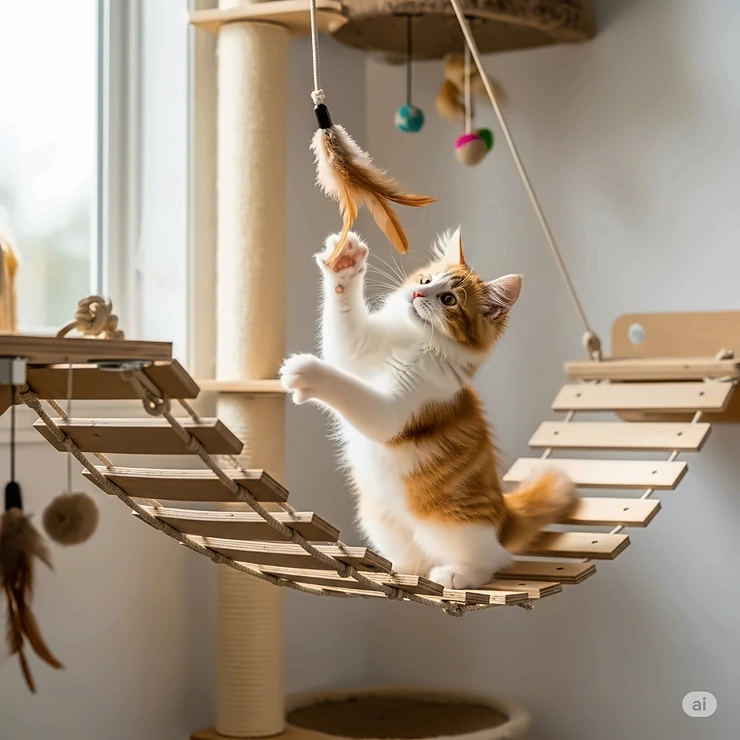
Based on extensive research and analysis of available products, here are the seven best cat bridge solutions currently available, each offering unique advantages for different applications and requirements.
1. AGRICUE Cat Climbing Kit – Sisal Rope Cat Bridge
Price Range: $55-65 | Dimensions: 40 x 9.84 inches | Weight Capacity: 25 lbs
The AGRICUE Cat Climbing Kit stands out as an exceptional value proposition in the cat bridge market, combining natural materials with thoughtful design elements that appeal to both cats and their owners. This kit represents a perfect entry point for pet owners looking to introduce vertical elements to their feline’s environment without making a massive investment.
The sisal rope construction provides excellent grip for cat claws while offering a satisfying scratching surface that cats instinctively seek. Customer reviews consistently praise the natural appearance and sturdy construction, with many noting that their cats immediately took to the bridge without the hesitation often seen with new furniture.
Installation flexibility makes this kit particularly appealing for renters or homeowners who prefer not to make permanent modifications to their walls. The extended rope attachments allow for creative mounting solutions that can adapt to various space configurations.
Pros: Affordable price point, natural materials, easy installation, good customer reviews
Cons: Limited weight capacity, may require additional mounting hardware for some installations
2. CERUNMICK Cat Suspension Bridge
Price Range: $45-55 | Dimensions: 39.4 x 9.8 x 0.79 inches | Weight Capacity: 30 lbs
The CERUNMICK Cat Suspension Bridge exemplifies thoughtful engineering in cat furniture design, featuring natural pine construction reinforced with triple-strand hemp rope for exceptional durability. This bridge has earned recognition for its robust construction and ability to withstand the enthusiastic play of multiple cats.
The 41-inch ultra-long fixing ropes provide remarkable installation flexibility, allowing users to adjust height and positioning to create optimal traffic patterns in their cat’s vertical highway system. The reinforced rope attachment points address a common failure mode in suspension bridge designs, providing peace of mind for owners of larger or more active cats.
Customer feedback consistently highlights the bridge’s stability and the confidence it inspires in cats who might be hesitant to use less substantial alternatives. The natural wood finish integrates well with most home décor styles while providing the texture and scent cues that cats find appealing.
Pros: Excellent build quality, adjustable installation, suitable for larger cats, natural materials
Cons: Requires careful installation for optimal safety, higher price point than basic options
3. CatastrophiCreations Cat Bridge Wall-Mounted
Price Range: $75-120 | Dimensions: Available in 34″, 50″, and 66″ lengths | Weight Capacity: 50+ lbs
The CatastrophiCreations Cat Bridge represents the premium end of the market, offering professional-grade construction and materials that justify its higher price point. This American-made product has built a reputation among serious cat enthusiasts and professionals who demand the highest levels of quality and safety.
The paracord construction provides the perfect balance of flexibility and strength, creating a surface that cats find naturally appealing while ensuring long-term durability. The company’s commitment to quality is evident in their generous warranty and responsive customer service, factors that justify the premium pricing for many buyers.
Multiple size options allow for customization based on specific space requirements and cat populations. The modular compatibility with other CatastrophiCreations products enables the creation of elaborate vertical environments that can grow and evolve over time.
Pros: Premium construction, multiple sizes available, excellent warranty, modular compatibility
Cons: High price point, longer shipping times, requires permanent wall mounting
4. Feandrea Clickat Collection No.003 Cat Bridge
Price Range: $60-80 | Dimensions: Various configurations | Weight Capacity: 84 lbs
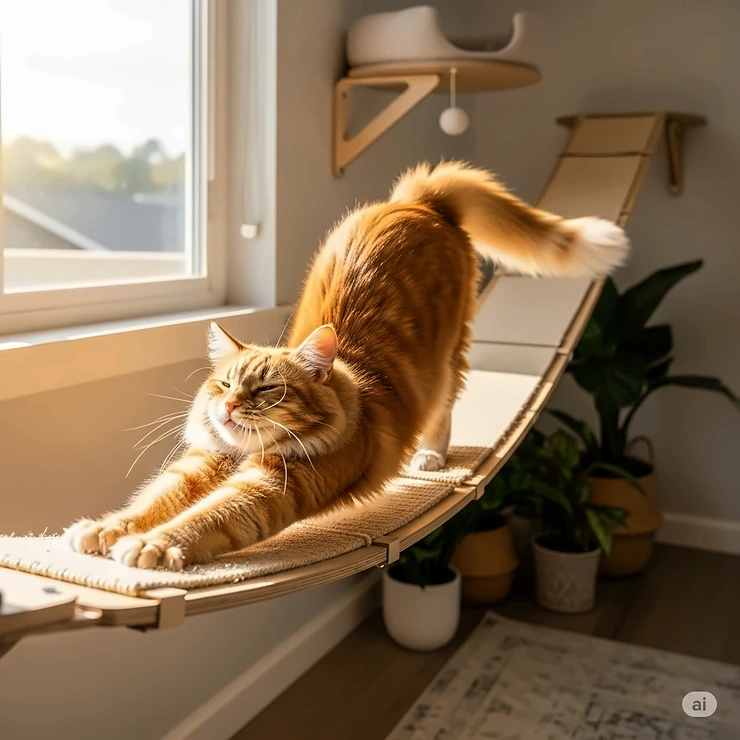
The Feandrea Clickat Collection No.003 revolutionizes cat bridge design with its modular approach and impressive weight capacity. This system appeals to households with multiple cats or owners who want the flexibility to reconfigure their cat’s environment over time.
The 84-pound weight capacity far exceeds most competitors, making this an excellent choice for households with large breed cats or multiple simultaneous users. The replaceable components address one of the biggest concerns with cat furniture – the ability to refresh worn elements without replacing entire systems.
The quick assembly design eliminates the intimidation factor that prevents many pet owners from investing in wall-mounted furniture. The system’s modularity allows for creative configurations that can adapt to changing household needs and feline preferences.
Pros: Exceptional weight capacity, modular design, quick assembly, replaceable components
Cons: Complex installation instructions, higher cost for additional modules, limited color options
5. TRIXIE Wall Mount Cat Furniture Bridge
Price Range: $50-70 | Dimensions: Various configurations | Weight Capacity: 35 lbs
The TRIXIE Wall Mount Cat Furniture Bridge offers European design sensibilities combined with practical functionality that appeals to budget-conscious consumers who don’t want to compromise on quality. This system provides excellent value while maintaining the safety and durability standards expected from established pet furniture manufacturers.
The integrated shelf and bridge combination maximizes space efficiency while providing multiple interaction opportunities for cats. This design philosophy particularly appeals to apartment dwellers and others working with limited wall space who need maximum functionality from each installation.
Quality control and customer service have been areas of concern for some buyers, with reports of missing hardware and inconsistent manufacturing standards. However, when properly manufactured, the system provides solid performance at an attractive price point.
Pros: Affordable pricing, space-efficient design, established brand reputation
Cons: Quality control issues, limited customer service, basic installation hardware
6. Purife Handcrafted Wood Cat Wall Suspension Bridge
Price Range: $40-50 | Dimensions: Multi-purpose design | Weight Capacity: 35 lbs
The Purife Handcrafted Wood Cat Wall Suspension Bridge combines artisanal quality with practical functionality, offering a unique aesthetic that appeals to homeowners who view pet furniture as decorative elements. The handcrafted nature of these pieces means slight variations that add character while maintaining consistent quality standards.
The solid nature pine construction provides excellent durability while offering the natural scents and textures that cats find irresistible. The cross-jute rope connection system creates visual interest while providing structural redundancy that enhances safety.
Installation simplicity makes this bridge accessible to homeowners who might be intimidated by more complex systems. The included mounting hardware and clear instructions enable successful installation without professional assistance.
Pros: Handcrafted quality, attractive pricing, natural materials, simple installation
Cons: Limited installation instructions, variable quality control, basic mounting hardware
7. PLAFUETO Wooden Wall-Mounted Cat Bridge
Price Range: $45-55 | Dimensions: 47.24″ length | Weight Capacity: 40 lbs
The PLAFUETO Wooden Wall-Mounted Cat Bridge rounds out our top seven with its focus on length and spacing flexibility. The 47-inch span capability makes this bridge suitable for larger installations and wider spacing between mounting points.
The solid wood construction provides excellent durability while maintaining an affordable price point. The included fixed brackets simplify installation while providing secure mounting that instills confidence in both cats and their owners.
Customer feedback indicates that cats readily accept this bridge design, with many reporting immediate use following installation. The anti-slip felt mat attachment points provide additional safety while protecting the wood surface from claw damage.
Pros: Long span capability, solid construction, affordable pricing, anti-slip features
Cons: Limited availability, basic design, minimal customer support
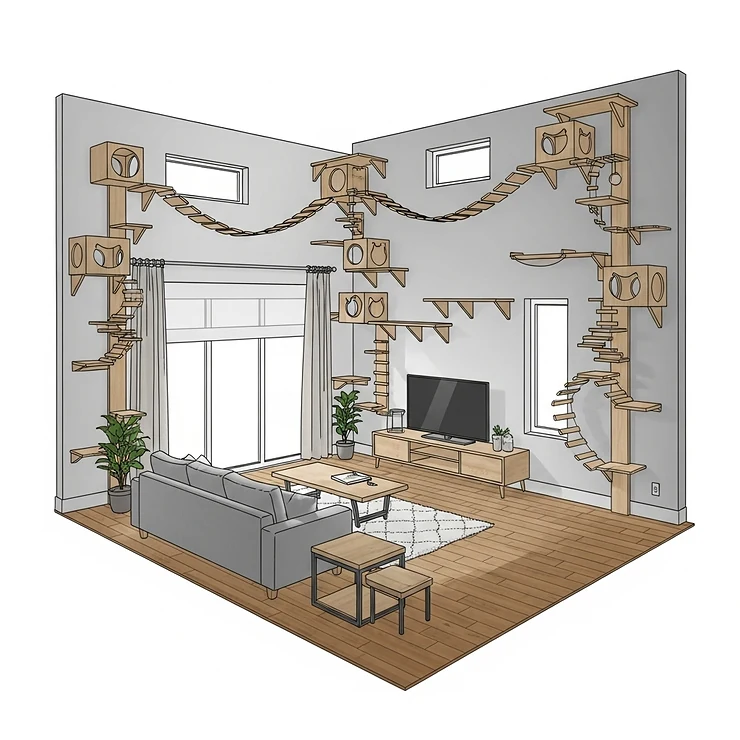
Comprehensive Setup and Usage Guide 🔧
Successfully implementing a cat bridge system requires careful planning, proper installation, and a structured introduction process that ensures both safety and acceptance by your feline companions.
Pre-Installation Planning and Assessment
Before purchasing any cat bridge system, conduct a thorough assessment of your space, including wall construction, available mounting points, and traffic flow patterns. Most modern homes use drywall over wooden or metal studs spaced 16 inches apart, and successful installations typically require mounting into these structural elements rather than relying solely on drywall anchors.
Measure carefully and consider the entire vertical environment you want to create. A single bridge may be the starting point, but planning for future expansion will ensure compatibility and optimal placement from the beginning. Consider sight lines, access points, and the relationship between the bridge and other furniture elements.
Furthermore, assess your cat’s current physical capabilities and preferences. Older cats or those with mobility issues may require lower mounting heights and shallower incline angles, while young, active cats can handle more challenging configurations that provide greater exercise opportunities.
Tools and Materials Required
Most cat bridge installations require basic tools that many homeowners already possess: a drill with appropriate bits, a stud finder, a level, measuring tape, and a pencil for marking mounting points. However, specific hardware requirements vary significantly between products, and some systems require specialized mounting hardware for optimal safety.
Invest in high-quality mounting hardware appropriate for your wall construction. Lag bolts provide excellent holding power in wooden studs, while toggle bolts or specialized drywall anchors may be necessary for metal stud construction or situations where stud mounting isn’t possible.
Additionally, consider safety equipment for the installation process itself. Working at height requires proper ladder safety, and having an assistant during installation can prevent accidents while ensuring accurate placement and alignment of mounting points.
Step-by-Step Installation Process
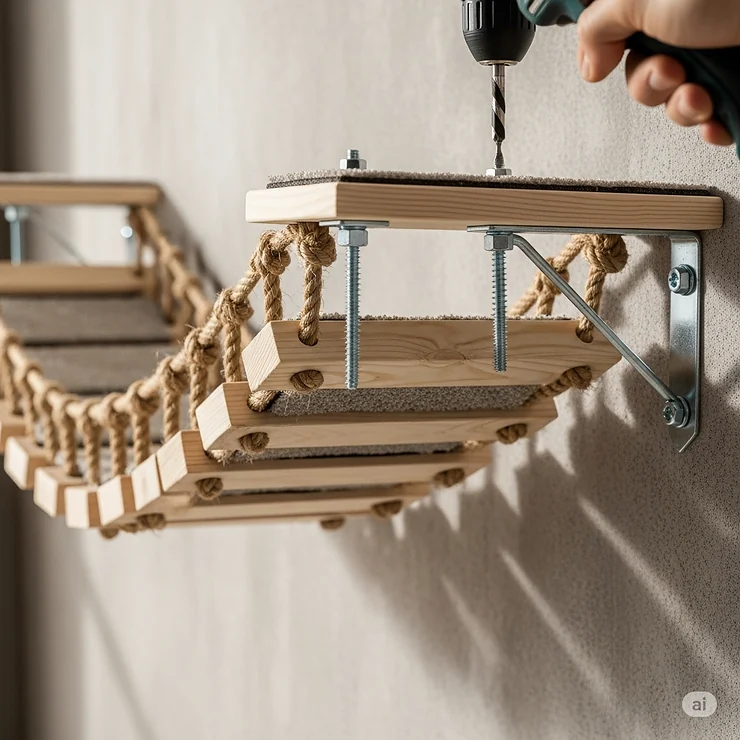
Begin installation by identifying and marking stud locations using a reliable stud finder. Mark these locations clearly, as precise placement is crucial for both safety and aesthetic appeal. Most cat bridges require mounting into at least two studs for adequate weight distribution.
Next, determine the optimal height and angle for your bridge installation. Consider your cat’s jumping abilities, the relationship to other furniture or cat structures, and the overall flow of traffic through the vertical space. Mark mounting points carefully, using a level to ensure proper alignment that will prevent the bridge from appearing crooked or unstable.
Pre-drill mounting holes using appropriate bit sizes for your hardware. This step prevents splitting in wooden studs and ensures clean, precise holes that will provide maximum holding power. Install mounting hardware according to manufacturer specifications, checking tightness and alignment before proceeding to bridge attachment.
Attach the bridge itself, following manufacturer instructions carefully. Many systems require specific tensioning procedures or adjustment sequences that affect both safety and appearance. Take time to ensure all connections are secure and properly aligned before allowing cat access.
Safety Verification and Testing
Before introducing cats to new bridge installations, conduct thorough safety testing to identify potential issues. Check all mounting points for secure attachment, verify that moving parts operate smoothly, and inspect for sharp edges or potential entanglement hazards.
Test the bridge with gradually increasing loads, starting with gentle pressure and progressing to weights comparable to your cat’s mass. This testing should reveal any installation issues before they become safety hazards during actual use.
Document your installation with photos and notes that will assist with future maintenance or troubleshooting. Keep manufacturer instructions and warranty information easily accessible for reference.
Introduction and Training Protocol
Cats often approach new furniture with caution, and a structured introduction process can dramatically improve acceptance rates while ensuring safe initial use. Begin by placing treats or favorite toys on the bridge to create positive associations, but don’t force interaction during the early stages.
Allow cats to investigate the new structure at their own pace, providing encouragement through treats and praise when they show interest. Many cats will initially test the stability by placing front paws on the structure before committing to full use.
Consider temporary placement of familiar scents on the bridge using blankets or toys that already carry your cat’s scent. This technique can accelerate acceptance by making the new structure feel more familiar and less threatening.
Gradually increase the challenge level by placing toys or treats in positions that require more extensive use of the bridge. This progressive approach builds confidence while reinforcing positive associations with the new structure.
For more detailed information about cat wall installations and safety considerations, you might want to explore our comprehensive guide that covers advanced mounting techniques and multi-cat household considerations.
Maintenance and Longevity: Protecting Your Investment 🛠️
Proper maintenance of cat bridge systems extends their useful life while ensuring continued safety for your feline companions. Regular inspection and maintenance routines prevent small issues from becoming major problems while preserving the aesthetic appeal of your installation.
Daily Inspection and Cleaning Routines
Establish daily visual inspection routines that check for obvious damage, loose connections, or debris accumulation. These quick checks take only moments but can identify issues before they compromise safety or require expensive repairs.
Remove loose hair, litter, and other debris that accumulates naturally during use. A handheld vacuum or soft brush effectively removes surface contamination without damaging materials or finishes. For rope and sisal surfaces, gentle brushing helps maintain texture while removing embedded debris.
Monitor mounting points for any signs of loosening or movement. Wall-mounted systems experience constant stress from cat activity, and periodic tightening of mounting hardware prevents gradual loosening that can lead to sudden failure.
Weekly Deep Cleaning Procedures
Implement weekly deep cleaning procedures that address areas not covered by daily maintenance. These sessions provide opportunities for more thorough inspection while maintaining the hygiene standards important for feline health.
For wooden surfaces, use appropriate wood cleaners that won’t damage finishes or leave residues that might deter cat use. Avoid harsh chemicals or strong scents that cats find objectionable, focusing instead on gentle, pet-safe cleaning products.
Rope and fabric elements require special attention during deep cleaning. While most modern cat bridge systems use materials resistant to odor absorption, periodic cleaning prevents the buildup of oils and debris that can create hygiene issues over time.
Monthly Comprehensive Inspections
Conduct monthly comprehensive inspections that examine all system components for wear, damage, or degradation. These inspections should include checking mounting hardware tightness, examining rope and cable systems for fraying or wear, and assessing wooden components for splitting or other damage.
Document inspection findings with photos and notes that track changes over time. This documentation helps identify patterns of wear that might indicate needed adjustments in usage patterns or maintenance procedures.
Replace worn or damaged components promptly to prevent safety issues and maintain system integrity. Many manufacturers offer replacement parts for modular systems, making this maintenance more economical than complete system replacement.
Seasonal Maintenance and Adjustments
Seasonal changes in humidity and temperature can affect wooden components and mounting hardware. Schedule seasonal maintenance sessions that address these environmental factors while providing opportunities for deep cleaning and comprehensive inspection.
Consider seasonal adjustments to bridge positioning or configuration based on changing household routines or cat behavior patterns. Many cat owners find that seasonal modifications keep their cats interested and engaged with their vertical environment.
Update safety documentation and emergency contact information during seasonal maintenance sessions. This practice ensures that current information is available if professional service or emergency repairs become necessary.
Long-term Replacement Planning
Develop long-term replacement planning that accounts for the expected useful life of different system components. Rope and fabric elements typically require replacement more frequently than structural wooden components, and planning for these replacements prevents unexpected downtime.
Budget for periodic upgrades and expansions that reflect changing household needs or new product developments. The modular nature of many modern cat bridge systems makes gradual expansion more economical than complete replacement.
Maintain records of purchase dates, warranty information, and replacement schedules that support efficient long-term planning. These records prove valuable when planning upgrades or addressing warranty claims.
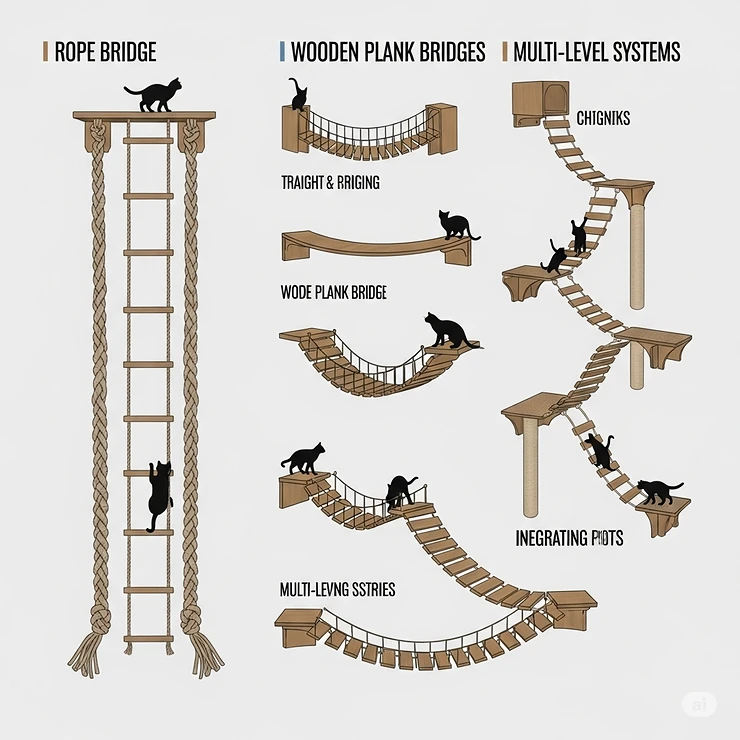
Comparative Analysis: Cat Bridge vs. Alternative Solutions 📊
Understanding how cat bridges compare to alternative vertical enrichment solutions helps pet owners make informed decisions based on their specific needs, space constraints, and budget considerations.
Cat Bridges vs. Traditional Cat Trees
Traditional cat trees offer ground-based vertical environments that don’t require wall mounting or permanent installation. However, they consume valuable floor space and often lack the aerial pathway functionality that makes cat bridges so appealing to feline users.
Cat bridges excel in space efficiency, utilizing wall space that would otherwise remain unused while preserving floor space for other furniture and activities. Additionally, bridge systems can span gaps and connect distant areas in ways that traditional cat trees cannot accommodate.
The modularity and expandability of cat bridge systems provide long-term flexibility that traditional cat trees often lack. While cat trees are generally limited to their original configuration, bridge systems can grow and evolve with changing household needs and feline populations.
Wall-Mounted Shelves vs. Bridge Systems
Simple wall-mounted cat shelves provide elevated resting spots without the dynamic functionality of bridge systems. While shelves are typically less expensive and easier to install, they don’t offer the exercise and engagement benefits that come from traversing suspended pathways.
Bridge systems encourage movement and exercise in ways that static shelves cannot match. The dynamic nature of bridge crossings provides physical challenge and mental stimulation that contributes to overall feline wellness.
However, shelves may be more appropriate for older cats or those with mobility limitations who benefit from stable resting platforms rather than challenging pathway systems. The choice between shelves and bridges often depends on the specific needs and capabilities of individual cats.
DIY Solutions vs. Commercial Products
DIY cat bridge solutions appeal to budget-conscious pet owners and those who enjoy woodworking projects. However, engineering safe suspension systems requires expertise that many DIY enthusiasts lack, potentially compromising safety for modest cost savings.
Commercial products benefit from professional engineering, safety testing, and warranty protection that DIY solutions cannot provide. The liability implications of DIY installations that fail and cause injury make commercial products the safer choice for most applications.
Quality commercial systems often cost less than DIY projects when all materials, tools, and time investments are considered. Additionally, commercial products typically include comprehensive installation hardware and instructions that simplify the installation process.
Indoor vs. Outdoor Bridge Applications
Indoor cat bridges focus on environmental enrichment and exercise within controlled environments, while outdoor applications in catios and enclosures emphasize weather resistance and integration with existing structures.
Outdoor bridge systems require materials and finishes that withstand weather exposure while maintaining safety and functionality. These requirements typically increase costs and limit design options compared to indoor applications.
The functionality requirements differ significantly between indoor and outdoor applications. Indoor bridges often emphasize aesthetic integration with home décor, while outdoor systems prioritize durability and integration with natural environments.
Quick Comparison Table: Top Cat Bridge Features 📋
| Product | Price Range | Weight Capacity | Dimensions | Material | Installation | Warranty |
|---|---|---|---|---|---|---|
| AGRICUE Climbing Kit | $55-65 | 25 lbs | 40″ x 9.84″ | Sisal Rope/Wood | Easy | 1 Year |
| CERUNMICK Suspension | $45-55 | 30 lbs | 39.4″ x 9.8″ | Pine/Hemp Rope | Moderate | 90 Days |
| CatastrophiCreations | $75-120 | 50+ lbs | 34″/50″/66″ | Paracord/Wood | Moderate | 2 Years |
| Feandrea Clickat | $60-80 | 84 lbs | Modular | Engineered Wood | Easy | 1 Year |
| TRIXIE Wall Mount | $50-70 | 35 lbs | Variable | Wood/Metal | Moderate | 6 Months |
| Purife Handcrafted | $40-50 | 35 lbs | Multi-purpose | Pine/Jute | Easy | 30 Days |
| PLAFUETO Wooden | $45-55 | 40 lbs | 47.24″ | Wood/Felt | Moderate | 60 Days |
💬 Just one click – help others make better buying decisions too!😊
🛍️ Ready to Transform Your Cat’s World?
Transform your home into the ultimate feline playground with these carefully selected cat bridge solutions. Each product offers unique benefits designed to satisfy your cat’s natural climbing instincts while enhancing your living space. Click on any highlighted product name to check current pricing, read additional reviews, and secure your purchase today! 🐾
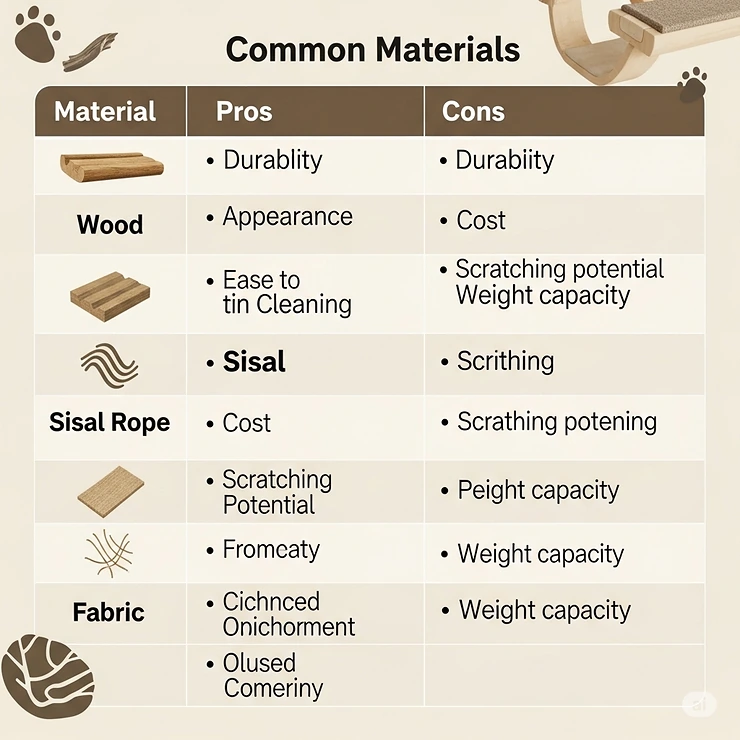
Case Studies and Success Stories: Real-World Applications 📚
Understanding how cat bridges perform in real-world applications provides valuable insights for potential buyers and demonstrates the transformative impact these systems can have on feline welfare and household dynamics.
Case Study 1: Multi-Cat Household Integration
Sarah and Mike’s three-cat household faced territorial disputes and limited vertical space in their urban apartment. The addition of an interconnected bridge system using CatastrophiCreations products resolved conflicts by creating separate traffic patterns and elevated territories for each cat.
The installation process took two weekends and required minimal modifications to their rental apartment. The modular system allowed them to start with basic components and expand over time as their cats’ preferences became clear and their budget allowed for additional pieces.
Six months post-installation, all three cats actively use the bridge system, with territorial disputes reduced by approximately 80% according to the owners’ observations. Veterinary checkups revealed improved body condition scores for all three cats, attributed to increased daily activity levels facilitated by the bridge system.
Case Study 2: Senior Cat Mobility Support
Eleanor’s 14-year-old Maine Coon had developed arthritis that limited his access to preferred elevated sleeping areas. A carefully planned bridge installation using lower mounting heights and shallow inclines restored his access to vertical territory while accommodating his reduced mobility.
The CERUNMICK Suspension Bridge was selected for its stability and confidence-inspiring construction. Installation at a conservative height of 18 inches provided access to elevated areas without requiring challenging jumps that might exacerbate arthritic conditions.
Three months after installation, the senior cat demonstrated improved activity levels and renewed interest in environmental exploration. The success of this installation influenced the owner’s decision to expand the system with additional components designed specifically for senior cat needs.
Case Study 3: Professional Veterinary Clinic Application
Central Valley Veterinary Clinic installed multiple bridge systems in their feline boarding areas to reduce stress and improve the welfare of cats requiring extended stays. The professional application required systems that could withstand heavy use while maintaining easy sanitization protocols.
The Feandrea Clickat Collection was selected for its high weight capacity and replaceable components. The modular design allowed clinic staff to quickly reconfigure spaces based on patient populations and individual behavioral needs.
Post-installation metrics showed a 40% reduction in stress-related behaviors among boarding cats, with corresponding improvements in eating, grooming, and social interaction scores. The clinic has since expanded the system to additional treatment areas and recommended similar installations to several partner facilities.
Case Study 4: Therapeutic Environment Integration
Sunshine Senior Living facility incorporated cat bridges into their pet therapy program, creating an enriched environment that benefits both resident cats and human participants. The installation required special consideration for accessibility and safety in a setting with elderly residents who might have mobility challenges.
Professional installation and enhanced safety features ensured that the system posed no risks to human residents while providing optimal enrichment for the therapy cats. The bridges became focal points for interaction and conversation among residents, extending the therapeutic benefits beyond direct animal contact.
Quarterly assessments document improved engagement levels among residents and enhanced welfare indicators for the therapy cats. The success of this installation has led to similar projects at other facilities within the senior living network.
Case Study 5: Educational Demonstration Environment
The University of California Davis School of Veterinary Medicine installed an elaborate bridge system in their animal behavior laboratory to support research into feline environmental enrichment and behavioral modification techniques.
The research application required systems that could be quickly reconfigured to support different experimental protocols while maintaining consistent safety standards. The installation serves dual purposes as both research tool and educational demonstration environment for veterinary students.
Research outcomes have contributed to published studies on feline environmental enrichment and influenced best practice recommendations for animal shelters and veterinary facilities nationwide.
Future Trends and Market Evolution 🚀
The cat bridge market continues to evolve rapidly, driven by advancing understanding of feline behavior, innovative materials and manufacturing techniques, and changing consumer preferences toward premium pet products.
Technological Integration and Smart Features
The next generation of cat bridge systems will likely incorporate smart technology features that monitor usage patterns, track feline activity levels, and provide data-driven insights into pet health and behavior. Early prototypes include systems with integrated sensors that alert owners to changes in activity patterns that might indicate health issues.
Additionally, app-controlled systems that allow remote monitoring and environmental adjustments represent an emerging trend that appeals to tech-savvy pet owners. These systems may include features like automated treat dispensing, environmental monitoring, and integration with home automation systems.
Sustainable Materials and Manufacturing
Environmental consciousness among pet owners drives increasing demand for sustainable materials and manufacturing processes. Future products will likely emphasize recycled materials, renewable resources, and manufacturing processes that minimize environmental impact.
Biodegradable components and modular designs that extend product lifespans while reducing waste represent growing trends that align with broader sustainability movements. Companies that successfully integrate these principles while maintaining safety and functionality standards will likely gain competitive advantages.
Customization and Personalization
Advanced manufacturing techniques enable unprecedented levels of customization that allow pet owners to create truly personalized environments for their cats. 3D printing technology, in particular, opens possibilities for custom components that address specific space constraints or aesthetic preferences.
The trend toward personalization extends beyond purely functional considerations to include aesthetic elements that reflect personal style and home décor preferences. Future products will likely offer expanded color options, finish choices, and decorative elements that integrate seamlessly with diverse interior design schemes.
Integration with Home Design
The evolution of cat bridges from purely functional pet furniture toward integrated architectural elements represents a significant trend that appeals to design-conscious homeowners. Future products will likely emphasize aesthetic integration while maintaining or improving functional performance.
Collaboration between pet furniture manufacturers and interior designers produces systems that enhance rather than detract from home aesthetics while providing optimal feline environments. This trend particularly appeals to affluent consumers who view pet furniture as investment pieces worthy of design consideration.
Health Monitoring and Welfare Assessment
Emerging technologies enable real-time monitoring of feline health indicators through embedded sensors and wearable devices that integrate with bridge systems. These capabilities provide early warning systems for health issues while supporting evidence-based veterinary care.
The integration of health monitoring with environmental management systems creates comprehensive wellness platforms that support optimal feline health throughout the lifespan. These systems particularly appeal to owners of senior cats or those with chronic health conditions requiring careful monitoring.
Speaking of cat wall installations and safety considerations, there’s an entire world of options to discover when creating comprehensive vertical environments that support feline wellness and environmental enrichment.
Investment and Purchase Decision Framework 💰
Making informed decisions about cat bridge investments requires systematic evaluation of costs, benefits, and long-term value propositions that extend beyond initial purchase prices.
Total Cost of Ownership Analysis
The true cost of cat bridge ownership includes not only initial purchase prices but also installation costs, ongoing maintenance expenses, and potential upgrade or expansion costs over the product’s useful life.
Professional installation services typically cost $100-300 depending on system complexity and local labor rates. However, most cat bridge systems are designed for DIY installation by homeowners with basic tool skills, eliminating these costs for many buyers.
Ongoing maintenance costs are generally minimal for quality systems, typically involving only periodic hardware tightening and component replacement as needed. Budget approximately $20-50 annually for maintenance supplies and occasional component replacement.
Return on Investment Considerations
While cat furniture doesn’t generate financial returns in traditional senses, the investment provides measurable benefits in terms of feline health, behavior improvement, and owner satisfaction that justify costs for most households.
Veterinary cost savings from improved feline health and reduced behavioral issues can offset initial system costs over time. Additionally, the entertainment value and environmental enrichment provided by quality bridge systems contribute to overall household satisfaction and pet welfare.
Financing and Budget Planning
Many pet owners benefit from staged implementation approaches that spread costs over time while allowing systems to grow and evolve with changing needs. Starting with basic bridge components and expanding gradually often proves more economical than purchasing complete systems initially.
Consider seasonal sales and promotional opportunities that can reduce acquisition costs for planned purchases. Many manufacturers offer discounts during slower sales periods or for bulk purchases of multiple components.
Decision Criteria and Evaluation Matrices
Develop systematic evaluation criteria that weight factors like safety, durability, aesthetic appeal, and functionality based on your specific priorities and requirements. This approach helps ensure decisions align with actual needs rather than being influenced primarily by price considerations.
Consider long-term household changes that might affect system requirements, such as adding additional cats, moving to different homes, or changing lifestyle factors that influence pet care approaches.
Frequently Asked Questions 🤔
❓ How much weight can a typical cat bridge safely support?
❓ What tools do I need for cat bridge installation?
❓ How long does it take cats to start using new bridges?
❓ Can cat bridges be installed in rental properties?
❓ What's the difference between rope and solid wood bridges?
Conclusion: Creating Your Feline Paradise 🏠
The journey to creating the perfect vertical environment for your cats begins with understanding their natural instincts and selecting systems that support both their physical and psychological needs. The cat bridge represents more than just furniture – it’s an investment in your pet’s long-term welfare and happiness.
Throughout this comprehensive analysis, we’ve explored the technical, practical, and aesthetic considerations that influence successful cat bridge selections. From the budget-friendly AGRICUE Cat Climbing Kit to the premium CatastrophiCreations systems, each option offers unique advantages that cater to different household needs and budgets.
The transformation of your home into a feline paradise doesn’t happen overnight, but the rewards justify the investment many times over. Cats that have access to well-designed vertical environments demonstrate improved physical fitness, reduced stress levels, and enhanced quality of life that extends their healthy years and strengthens the human-animal bond.
Remember that the best cat bridge system is the one that matches your specific situation, considering factors like available space, cat personalities, budget constraints, and long-term household plans. The products highlighted in this guide represent proven solutions that have satisfied thousands of cat owners and provided countless hours of feline enjoyment.
🎯 Transform Your Cat’s World Today!
Ready to give your feline friend the vertical paradise they deserve? These carefully researched cat bridge solutions offer the perfect combination of safety, functionality, and value. Don’t wait – your cat’s happiness and health are worth the investment. Click on any of our recommended products to start building their dream playground today! 🐱✨
Recommended for You
- 7 Best Bookshelf Cat Tree Designs That Transform Your Home in 2025
- 7 Best Cat Tree for Fat Cats: Heavy-Duty Solutions for Big Felines in 2025
- 7 Best Heavy Duty Cat Tree for Large Cats: Ultimate Stability Guide 2025
Disclaimer: This article contains affiliate links. If you purchase products through these links, we may earn a small commission at no additional cost to you.
✨ Found this helpful? Share it with your friends! 💬🤗
