
Table of Contents
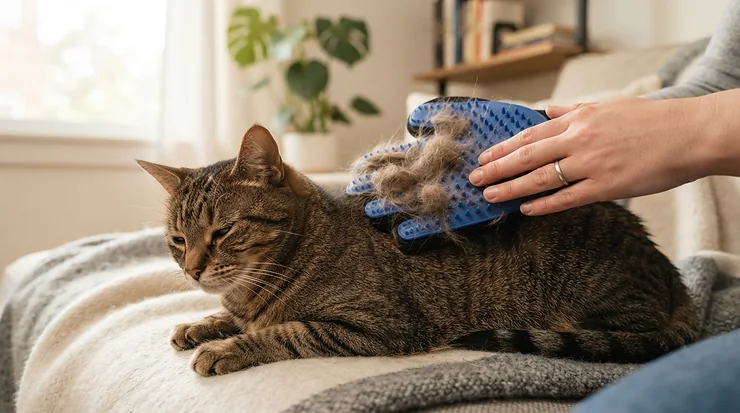
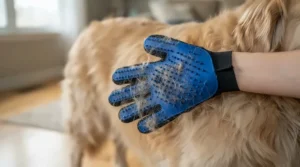
A grooming glove for cats who hate brushes is a flexible, slip-on glove or mitt covered in soft silicone or rubber nubs that lifts loose fur while you pet. Because your cat feels a hand-shaped, stroking motion instead of a rigid tool with bristles, many brush-averse cats tolerate it far more easily.
You know the choreography. The brush comes out of the drawer, and your cat evaporates: a gray blur, a slammed cabinet door, a tail vanishing around the corner. Meanwhile the sofa quietly grows a second coat of fur. It isn’t stubbornness. Cats are particular about touch, and welfare researchers at Battersea built simple guidelines for petting cats around three ideas: give the cat choice, watch its reactions, and stick to the places it likes, such as the cheeks, chin and head. A glove slots neatly into that playbook. A silicone petting glove for cats turns a chore into something that feels like affection, which is the whole trick behind petting-style grooming.
Brushing isn’t just vanity, either. Veterinary guidance links regular brushing to fewer swallowed hairs, which can mean fewer hairballs. It also gives you a routine moment to check skin and coat.
So who is a glove for? Owners of heavy shedders, yes. Mostly, though, it’s for anyone living with a cat who flinches, hisses or flees at the first sight of bristles. This guide compares seven real gloves sold online, explains what silicone nubs actually do, and shows you how to read stress signals in cats so a gentle session never tips into a standoff. One note on method: everything below rests on spec analysis and aggregated reviewer sentiment, not a claim of hands-on testing. I’ll flag where the evidence is thin.
Quick Comparison: 7 Gloves at a Glance
Here’s the cheat sheet before we dig in. Price ranges are approximate, so check current price on the listing, since they shift constantly.
| Glove | Contact Surface | Approx. Price Range | Best For |
|---|---|---|---|
| DELOMO Pet Grooming Glove | About 255 silicone nubs, five fingers | $8-$16 | Everyday petting-style grooming on a budget |
| HandsOn Pet Grooming Gloves | Soft rubber nubs, sized pair | $17-$25 | Secure fit and long-term durability |
| True Touch Five Finger Pet Deshedding Glove | 260 silicone tips, fabric back | $15-$20 | Heavy shedders, right-handed groomers |
| Pecute Pet Grooming Gloves | High-density silicone bristles, long cuff | $10-$15 | Wash day and wet grooming |
| GJEASE Cat Grooming Glove Brush | About 259 silicone tips | Under $15 | Machine-washable budget upkeep |
| Mr. Peanut’s Grooming Glove Brush and Deshedding Aid | Silicone, rubber and mesh mitten | Under $10 | Short coats, simple broad strokes |
| Pet Republique Silicone Grooming Gloves | Soft silicone bristles | $10-$15 | Bath time and young kittens |
Looking at the comparison above, the DELOMO Pet Grooming Glove offers the lowest-risk entry point for a silicone petting glove for cats. The HandsOn Pet Grooming Gloves justify their higher price mainly through sizing options and a sturdier build. Pecute Pet Grooming Gloves and Pet Republique Silicone Grooming Gloves are really wash-day tools that happen to groom. Budget buyers should note that Mr. Peanut’s Grooming Glove Brush and Deshedding Aid trades finger reach for mitten simplicity.
💬 Just one click — help others make better buying decisions too!😊
Top 7 Grooming Gloves for Cats Who Hate Brushes: Expert Analysis
The seven below run roughly from most universal to most specialized. Each one gets the same treatment: what the specs mean in practice, what reviewers keep saying, and who should skip it.
1. DELOMO Pet Grooming Glove — most-reviewed silicone petting glove
No other glove in this roundup has been rated by anywhere near as many people. That scale is the main reason it opens the list: about 4.2 stars across more than 80,000 ratings is a sample you can actually trust.
The five-finger design carries roughly 255 silicone nubs on the palm side. In practice, five separate fingers let you work the cheeks, ear bases and chin, the zones most cats welcome, without switching tools. The short, flexible nubs press like fingertips instead of raking like a comb. Based on the spec comparison, this is the lowest-friction first purchase for a cat who bolts at bristles, because it feels closest to an ordinary hand. It’s weaker on deep undercoat and mats, where a comb still wins.
Reviewers consistently report that it collects a surprising amount of loose hair and that brush-averse cats often accept it. Common complaints include durability after months of use and fit: some find it runs large, others too snug. Silicone also tends to hold onto hair, so cleanup takes a minute.
Pros:
- ✅ Roughly 255 silicone nubs mimic fingertip contact
- ✅ Five fingers reach face, ears and chin
- ✅ Huge review base makes sentiment trustworthy
Cons:
- ❌ Fit complaints go both ways
- ❌ Hair clings to the silicone
Typically in the $8-$16 range (check current price), it’s the strongest value for a first trial.
2. HandsOn Pet Grooming Gloves — sized pairs built to last
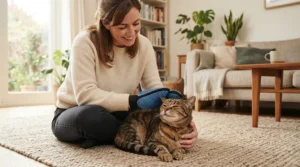
Where most gloves are one-size-fits-all, HandsOn comes in multiple sizes, and that matters more than it sounds. A loose glove slides around, and a cat notices a wobbling hand instantly.
The design pairs a firmer palm with soft, flexible rubber nubs, and it works wet or dry across fur types. On paper, that means better control and longevity than thin silicone mitts. The trade-off is texture. Catster notes that some owners found their cats disliked the feel, and that aggressive passes can pull out healthy hair. That’s a reminder that pressure is your job, not the glove’s. Retail ratings run high (around 4.8 stars on one major listing), though from a smaller pool of a few hundred ratings than the leaders.
What most buyers overlook is the pair. A glove on each hand lets you stroke and steady at once, which helps with a cat who objects to being held in place. If you’re shopping for a cat grooming glove for sensitive cats, I’d introduce this one gradually and keep strokes feather-light until you see how your cat reacts to the texture.
Pros:
- ✅ Multiple sizes for a secure fit
- ✅ Sold as a pair for two-handed petting
- ✅ Sturdy build handles frequent use
Cons:
- ❌ Firmer palm may feel textured to picky cats
- ❌ Heavy pressure can pull hair
Usually in the $17-$25 range, it costs more than basic silicone, but it’s defensible if you’re tired of replacing flimsy gloves.
3. True Touch Five Finger Pet Deshedding Glove — 260 tips for heavy shedders
The retail listing credits this glove with 260 grooming tips and a design meant to imitate human touch. A soft fabric back catches loose hair as you work.
That combination of silicone nubs on the palm and fabric on the back means hair gathers instead of drifting through the air, which is handy in a small apartment. Reviewers say a single session lifts a lot of fur, and the ratings sit around 4.1 stars on one retailer’s page, from a modest pool of a couple hundred reviews. The catch is ergonomic: it’s sold as a single right-handed glove, so lefties and two-handed groomers have to adapt. Sources disagree on how well it handles long coats. Treat it as a short-to-medium coat tool, and plan on a comb for longer fur.
Here’s what to weigh. If your cat tolerates one stroking hand, the single-glove format is fine. If you like keeping a free hand on your cat’s shoulder for reassurance, you may actually prefer it.
Pros:
- ✅ 260 silicone tips on the palm side
- ✅ Fabric back collects loose hair
- ✅ Good value for heavy shedders
Cons:
- ❌ Single right-handed glove only
- ❌ Mixed reports on long coats
Roughly in the $15-$20 range (check current price), it’s worth it if shedding is your main complaint.
4. Pecute Pet Grooming Gloves — long-cuff silicone for wash day
Pecute sits in a different lane. It’s built around high-density silicone bristles, extended cuffs and non-slip bumps. The listing cites heat resistance up to 450°F, so you can sanitize it in boiling water, and everything is aimed at bathing.
Why does a bath glove belong on a list for cats who hate brushes? Wet fur needs the same gentle touch, and the long cuff keeps your forearm dry when a nervous cat gets splashy. Ratings land around 4.5 stars across roughly 5,800 reviews, a solid pool. Reviewers praise how the soft tips avoid tangling or pulling. Many of those reviews describe dogs, though, so cat-specific evidence is thinner. Expect it to massage and clean more than deshed.
For a glove brush for anxious cats, the honest take is that Pecute works best as the second glove you add. Wet grooming layers its own stress on top, so earn trust with a dry glove first.
Pros:
- ✅ Long cuff keeps your arm dry
- ✅ Heat-resistant silicone sanitizes easily
- ✅ Strong ratings on a sizable review base
Cons:
- ❌ Bath-first design, weaker at deshedding
- ❌ Many reviews come from dog owners
Typically around the $10-$15 range (check current price), it’s good value if wash day is on your calendar.
5. GJEASE Cat Grooming Glove Brush — machine-washable budget workhorse
The pitch is simple: about 259 silicone tips, machine-washable construction, and a name that says “cat” right on the tin.
Machine washability is the quiet hero here. A glove that touches your cat’s coat daily collects oils and dander, and tossing it in with a load of laundry beats picking at it with your fingernails. Catster flags the main drawbacks: one size and limited options, so if your hands run large or small, fit is a gamble. The tip count is mostly a marketing number. What you really get is soft silicone nubs in the same family as the DELOMO glove’s, in a format that’s easier to keep clean.
I couldn’t verify a large, independent review pool for this one, so treat it as a promising budget alternative rather than a proven favorite. If you’re curious about silicone nubs but nervous about spending, it’s a low-stakes experiment.
Pros:
- ✅ About 259 silicone tips for gentle contact
- ✅ Machine washable
- ✅ Budget-friendly
Cons:
- ❌ One size doesn’t fit every hand
- ❌ Smaller verifiable review pool
Under about $15 (check current price), it’s best bought as an add-on or a backup.
6. Mr. Peanut’s Grooming Glove Brush and Deshedding Aid — simple mitten for short coats
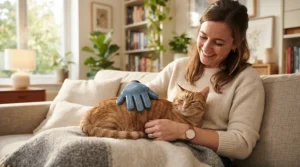
This one is a mitten, not a five-finger glove. It’s a solid hand made from silicone, rubber and mesh, which gives it a very different personality.
Reviewers say it fits most hands, is sturdy enough to last years, and works well on short-haired pets. They also say it struggles with long hair and tangles, and that some people dislike the mitten shape. What that means in practice: you lose finger reach for cheeks and under the chin, but you gain a broad, calm stroke that suits long passes down the back and flanks. Those are areas where cat tolerance varies, so keep the strokes short and watch for any tail flicking.
The mitten also has a practical upside for owners who find five-finger gloves fiddly to put on. Slide it on, stroke, slide it off. If your cat has a smooth, short coat and you mostly want to lift shedding fur between weekly sessions, this might be all the glove you need.
Pros:
- ✅ Fits most hands without fuss
- ✅ Durable construction reported by owners
- ✅ Works well on short coats
Cons:
- ❌ Struggles with long hair and tangles
- ❌ Mitten shape limits finger reach
Under $10 according to Catster, it’s the cheapest way into petting-style grooming here (check current price).
7. Pet Republique Silicone Grooming Gloves — soft bristles for bath time and kittens
The retail listing describes ultra-soft, long silicone bristles that hold water and build lather from shampoo, and also lift loose fur during dry grooming.
Catster names it the best pick for kittens, and the logic holds up. Veterinary guidance generally favors starting grooming young, and a kitten with no opinions yet is the ideal audience for a soft, affordable glove. The downsides are specific to cats. The material is thin, so a panicking adult cat can scratch through it, and the wrist guards seem designed with dogs in mind. Reviewers like the price and versatility.
Think of this as a bathing-first glove that moonlights as a gentle grooming mitt. It won’t replace a dedicated deshedder for a heavy-shedding adult, but it makes a low-pressure way to introduce touch to a young cat. It also suits a household that wants one tool for both grooming and the occasional bath.
Pros:
- ✅ Soft bristles lather and lift fur
- ✅ Gentle enough to introduce kittens early
- ✅ Affordable
Cons:
- ❌ Thin material won’t stop a panicking cat’s claws
- ❌ Bathing-first design, one size
Roughly in the $10-$15 range (check current price), it’s solid value as a kitten starter.
✨ Ready to Swap the Brush for a Glove?
🔍 Take your grooming routine to the next level with these carefully selected gloves. Click any highlighted product name to check current pricing and availability. These tools can help you create calmer, more affectionate grooming sessions your cat actually tolerates! 🐾
Your First 14 Days: A Petting-Style Grooming Routine That Sticks
Buying the glove is the easy part. Getting a suspicious cat to accept it is a project, and it works best as a charm offensive, not an invasion.
Days 1-3: let the glove exist. Leave it near your cat’s bed or feeding spot and don’t touch anything. Cats are scent-driven, so a glove that smells like home becomes furniture.
Days 4-7: wear it, pet normally. Offer a closed hand, let your cat come to you, then stroke the cheeks or chin a couple of times. Stop, wait, and watch. International Cat Care’s greeting guidance says cats generally prefer short, frequent contact, and a cat that wants more will rub back against you.
Days 8-14: add the grooming. Extend one or two slow strokes along the back, then quit while your cat is still comfortable. Aim for two or three minutes. Pair the end of each session with a treat or a lick mat of wet food, as pet care editors commonly suggest.
Maintenance: peel off the collected hair, rinse the glove with warm water, and air dry it. Check the manufacturer’s instructions first, especially for machine washing.
Common first-month mistakes:
- Sessions that run too long
- Touching the belly or paws, which many cats object to
- Pressing hard, which can feel like pulling
- Ignoring stress signals in cats (covered below)
- Cutting out mats with scissors. Cornell University veterinarians warn this can lacerate skin, and they advise finding the tool each cat actually likes.
Real-World Scenarios: Matching the Right Glove to Your Cat
Specs only matter in context. These three illustrative profiles show how the reasoning plays out.
Scenario 1: The short-haired shedder who flinches. You have a 10-pound indoor cat, a modest budget, and a flinch response at the sight of bristles. The DELOMO Pet Grooming Glove is the logical start: low cost, large review pool, five fingers for face-first introductions. Plan on daily three-minute sessions through shedding season. Add Mr. Peanut’s Grooming Glove Brush and Deshedding Aid later if you want a broad-stroke mitt.
Scenario 2: The fluffy senior with a tangle problem. A long-haired older cat is more likely to get mats and less likely to enjoy marathon grooming. Here, the HandsOn Pet Grooming Gloves make sense for daily surface care because they come in sizes and work across coat types. Pair them with a wide-tooth comb for tangles, since retailers and veterinary sources agree a glove handles light upkeep but doesn’t replace dematting tools.
Scenario 3: The multi-cat home with a messy mishap. One cat gets into something sticky, and a wipe-down turns into a full rinse. Pecute Pet Grooming Gloves keep your arm dry and handle the lather, while a basic dry glove covers everyday shedding for the rest of the household.
How to Choose a Grooming Glove for Cats Who Hate Brushes
Picking the right grooming glove for cats who hate brushes comes down to six checks. Work through them in order, and you’ll avoid most of the regret purchases.
- Decide between five fingers and a mitten. Five-finger gloves reach cheeks, ears and awkward spots like under the elbows. Mittens give calmer, broader strokes but less access.
- Judge the nubs, not the count. Soft, short, flexible silicone nubs feel like fingertips. Rigid or crowded tips feel like a rake.
- Check size and handedness. A loose glove wobbles, and some gloves are sold as a single right-handed piece.
- Pick a material you’ll keep clean. Silicone rinses easily and some models are machine washable. Fabric backs trap hair but take longer to clean.
- Match wet or dry use. If you plan any bathing, choose a long-cuff, water-friendly design.
- Match your cat’s coat. Short coats suit most gloves. Long coats need a glove plus a comb.
Silicone Nubs Explained: Features That Actually Matter (And Those That Don’t)
Marketing loves a big number. One glove advertises 255 silicone nubs, another 259, another 260. Those differences are noise. No cat can feel the difference between 255 and 260, and no buyer can verify it. What matters is how the nubs behave under your hand.
Softness and flex. Nubs that bend under light pressure feel like fingertips. Stiff ones feel like a comb, which defeats the whole point of petting-style grooming.
Nub length and spacing. Short, well-spaced nubs lift loose hair without dragging. Crowded or tall ones tend to snag.
Palm area. A larger contact surface means fewer strokes, which means a shorter session. That’s a real advantage with a fidgety cat.
Cuff length and heat resistance. These are irrelevant for dry grooming but valuable if you plan to bathe your cat or sanitize the glove.
Ignore the extras. Colors, glossy packaging and “as seen on TV” labels don’t affect how a cat reacts. Judge the silicone nubs by feel and flexibility, and ignore the headline number.
Grooming Glove vs Brush: An Honest Comparison
Neither tool is universally better. Gloves win on acceptance, and brushes win on raw hair-removal power.
| Factor | Grooming Glove | Traditional Brush |
|---|---|---|
| Feel to the cat | Like petting | Like a tool |
| Deep undercoat and mats | Light work only | Stronger, especially slickers and combs |
| Cleanup | Peel and rinse | Often self-cleaning button |
| Best For | Anxious or sensitive cats, daily upkeep | Heavy undercoat, long-haired cats |
For a cat who flees at the sight of a brush, acceptance outweighs raw power, because a tool you can actually use daily beats a better one that lives in the drawer. The practical answer for many households is both: a glove for everyday bonding and light shedding, and a comb or slicker for weekly detangling on long coats. Retail guidance echoes this, noting that gloves suit light grooming on long-haired cats but shouldn’t replace dematting tools. Think of the glove as the diplomat and the comb as the specialist you bring in occasionally.
Silicone Petting Glove for Cats: Why Petting-Style Grooming Works
Why would a silicone petting glove for cats succeed where a brush fails? It lines up with how cats prefer to be touched.
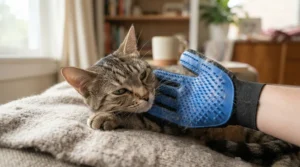
Cats generally favor contact around the cheeks, chin, forehead and base of the ears, areas rich in scent glands. Veterinary sources describe them as the spots where cats rub against each other in friendly encounters. A glove lets you spend most of the session there. The Battersea guidelines behind published research on how people pet cats also stress choice and control. Offer your hand, let the cat approach, and stop if it moves away.
That’s the heart of petting-style grooming: short strokes, frequent pauses, and a cat that can leave at any time. The glove adds the deshedding function on top of an interaction your cat already finds acceptable.
It isn’t magic, though. Expect gradual progress, and don’t expect a glove to solve mats or heavy undercoat on its own.
Cat Grooming Glove for Sensitive Cats: What to Look For
A cat grooming glove for sensitive cats has to clear a higher bar. Sensitive can mean skin that reddens easily, a cat that twitches at light touch, or an older cat with sore spots.
Prioritize soft, short nubs. Choose flexible silicone over a firmer palm. The HandsOn Pet Grooming Gloves work well for many cats, but Catster notes some cats object to the texture, so test gradually.
Use less pressure than you think. Aggressive passes can pull hair and irritate skin. Let the glove glide.
Watch the skin. If you see redness, reduce frequency or switch to light petting only until the skin settles. Persistent irritation or bald patches are a reason to call your vet.
Choose cleanable materials. A glove holding old oil and dander can bother sensitive skin. Rinsing after every session is a simple safeguard, and machine-washable models like the GJEASE Cat Grooming Glove Brush make that easier.
If your cat’s sensitivity is sudden, a vet check should come first. Pain can look like touch aversion.
Glove Brush for Anxious Cats: Building Trust Before You Groom
A glove brush for anxious cats is half tool, half trust exercise. The goal in the first week isn’t grooming at all.
Start with presence. Place the glove near food or sleeping spots. Let your cat sniff it on its own schedule.
Choose open fingers over enclosed mitts when possible. Five-finger gloves let you feel your cat’s coat and react quickly, so you notice tension before it becomes flight. That’s why anxious-cat advice tends to favor five-finger designs over mittens.
Keep sessions tiny. Thirty to sixty seconds is plenty at first. End on a good note, and reward.
Avoid wet grooming early. Save Pecute Pet Grooming Gloves and the Pet Republique Silicone Grooming Gloves for later, once the dry glove is accepted.
Pay attention to body language. Learning to read stress signals in cats is what separates a calm session from a bite. That brings us to the next section.
Stress Signals in Cats: When to Stop the Grooming Session
Cats don’t bark when they’re uneasy; they communicate through posture, ears, tails and behavior. Research reported by veterinary outlets found that even trained people struggle to spot subtle discomfort, so building your eye matters.
Veterinary sources, including PetMD’s guide to feline stress, list changes in behavior, appetite, hiding and grooming habits as stress signals in cats. During a glove session, watch for these in the moment:
- 🚩 Flattened or backward ears
- 🚩 A hunched, tense body and dilated pupils
- 🚩 Tail swishing rapidly, or tucked tight
- 🚩 Lip licking, yawning, or shaking off as if wet
- 🚩 Flinching, dodging or blocking your hand
- 🚩 Snatchy or refused treats
- 🚩 Hissing or growling
One wrinkle: purring isn’t always a happiness signal. It can be self-soothing. Read it together with posture, not alone.
When you see any of these, stop, let your cat leave, and shorten the next session. Pushing through teaches your cat that early warnings get ignored, which is how bites happen. Persistent stress signs, like hiding or over-grooming to the point of hair loss, deserve a vet visit.
Long-Term Cost & Maintenance: Which Glove Pays Off?
A cheap glove that lasts three months can cost more than a pricier one that lasts three years. Here’s the value picture, with approximate ranges (check current price):
| Glove | Approx. Price Range | Value Take | Best For |
|---|---|---|---|
| DELOMO Pet Grooming Glove | $8-$16 | Excellent starter value | First-time glove buyers |
| HandsOn Pet Grooming Gloves | $17-$25 | Pays off through durability | Long-term daily use |
| True Touch Five Finger Pet Deshedding Glove | $15-$20 | Good for heavy shedding | Shedding season |
| Pecute Pet Grooming Gloves | $10-$15 | Fair if you bathe | Wash-day households |
| GJEASE Cat Grooming Glove Brush | Under $15 | Low upkeep thanks to washability | Easy cleanup |
| Mr. Peanut’s Grooming Glove Brush and Deshedding Aid | Under $10 | Cheap and reportedly long-lived | Short coats |
| Pet Republique Silicone Grooming Gloves | $10-$15 | Good kitten starter | Young cats |
Looking at the table, cost per use favors durability. HandsOn costs the most up front, but a sturdy build and sized fit reduce replacement risk. For pure budget, DELOMO and Mr. Peanut’s Grooming Glove Brush and Deshedding Aid are hard to beat.
Maintenance is almost free: rinse after use, air dry, and replace when nubs harden, tear or collect residue you can’t clean. Few tools in the cat aisle are this cheap to keep running.
FAQ: Grooming Gloves for Cats
❓ Do grooming gloves work on cats who hate being brushed?
❓ Are silicone grooming gloves safe for cat skin?
❓ How often should I use a grooming glove on my cat?
❓ Can a grooming glove remove mats?
❓ Are cheap grooming gloves as good as premium ones?
Conclusion: The Gentlest Way Back to a Fur-Free Sofa
A cat who hates brushes isn’t a lost cause. In most cases, a grooming glove for cats who hate brushes simply swaps a threatening tool for something that feels like your hand, and that small change can be enough.
If you want a safe starting point, the DELOMO Pet Grooming Glove has the largest review base and the lowest entry cost. The HandsOn Pet Grooming Gloves earn their premium through sizing and sturdiness. The True Touch Five Finger Pet Deshedding Glove fits heavy shedders, and the Pecute Pet Grooming Gloves handle wash day. For budget upkeep, the GJEASE Cat Grooming Glove Brush and Mr. Peanut’s Grooming Glove Brush and Deshedding Aid are worth a look, and the Pet Republique Silicone Grooming Gloves suit kittens.
Whatever you pick, the glove is only half the job. Go slowly, keep sessions short, learn to read stress signals in cats, and let your cat decide when it’s done. Do that, and petting-style grooming becomes the thing your cat comes back for.
Recommended for You
- Quiet Cat Hair Clippers For Matted Fur: 7 Stress-Free Picks 2026
- Slicker Brush For Long-Haired Cats With Mats: 7 Proven Picks (2026)
- Deshedding Tool For Short-Haired Cats: 7 Best Picks (2026)
Disclaimer: This article contains affiliate links. As an Amazon Associate, I earn from qualifying purchases. If you purchase products through these links, we may earn a small commission at no additional cost to you.
✨ Found this helpful? Share it with your friends! 💬🤗
