
Table of Contents
Your 12-year-old tabby might spend most afternoons napping in sunbeams, but here’s something that’ll surprise you: older cats actually need playtime just as much as kittens do. I learned this the hard way when my own senior cat, Whiskers, started sleeping 20 hours a day and gaining weight. One veterinary visit later, I discovered that appropriate play keeps senior joints lubricated, minds sharp, and spirits high.
According to Cornell University College of Veterinary Medicine, regular play and exercise remain vital for senior cats to maintain both physical and mental health. The trick isn’t getting rid of toys as your cat ages—it’s choosing the right toys for older cats that match their changing capabilities and energy levels.
Senior cats face unique challenges: arthritis that makes jumping difficult, diminished vision that affects tracking fast movements, and decreased stamina that means shorter play sessions. But with thoughtful toy selection, you can keep your aging feline engaged, active, and healthy well into their golden years. The toys for older cats we’re covering today have been specifically chosen to accommodate these age-related changes while still providing the mental stimulation and physical activity your cat craves.
Quick Comparison Table
| Product | Type | Best For | Price Range | Key Feature |
|---|---|---|---|---|
| Catstages Tower of Tracks | Ball Track | Low-mobility cats | $10-$15 | Self-play, no jumping |
| Cat Dancer 101 | Wand Toy | Interactive play | $3-$5 | Lightweight, easy movement |
| KONG Kickeroo | Kick Toy | Bunny kicks | $6-$12 | Soft, ground-level |
| Ripple Rug | Activity Mat | Hunting instinct | $40-$50 | Adjustable difficulty |
| Potaroma 3-in-1 Interactive | Automatic | Independent play | $20-$30 | Motion-activated |
| Hepper Catnip Sticks | Catnip Toy | Gentle play | $8-$15 | Organic, no fillers |
| Catstages Purr Pillow | Comfort Toy | Anxiety relief | $12-$18 | Purring sound |
💬 Just one click – help others make better buying decisions too! 😊
Top 7 Toys for Older Cats: Expert Analysis
1. Catstages Tower of Tracks – Best Overall for Senior Cats
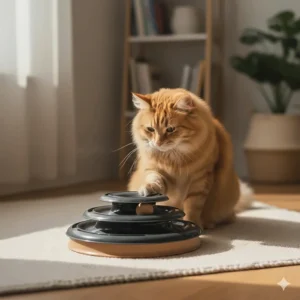
The Catstages Tower of Tracks stands as the gold standard for toys for older cats, and for good reason. This three-level ball track system features six brightly colored balls that spin within enclosed tracks, creating an irresistible challenge that doesn’t require jumping or excessive energy. The non-slip rubber base keeps it stable during play, which matters tremendously when your senior cat has less precise paw movements.
What makes this exceptional for older felines is its accessibility. Cats can engage from a sitting or lying position, batting the balls with minimal physical exertion. The visual stimulation of watching balls spin around three levels provides mental enrichment without demanding the athletic prowess of younger years. The Tower of Tracks is designed specifically for cats of all ages, including seniors, with its sturdy construction and non-slip base ensuring stability during energetic play.
Price: $10-$15
Key Features: 3-tier design, 6 spinning balls, non-slip base, no batteries required
Customer Feedback: Owners of senior cats consistently report that even cats who’ve lost interest in other toys remain engaged with the Tower of Tracks. One reviewer mentioned their 13-year-old Maine Coon, who barely played anymore, rediscovered his playful side with this simple yet effective toy.
✅ Pros:
- No jumping required
- Self-directed play
- Durable construction
❌ Cons:
- Balls can’t be removed (by design)
- May slide on thick carpet
2. Cat Dancer 101 – Best Interactive Wand for Mobility
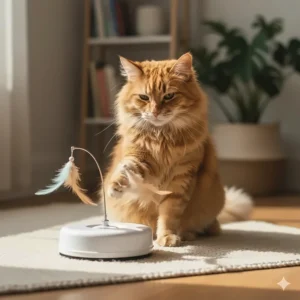
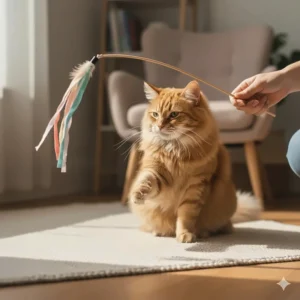
Don’t let its humble appearance fool you—the Cat Dancer 101 is remarkably effective at engaging senior cats. This simple wire wand with rolled cardboard pieces creates unpredictable, insect-like movements that trigger even the sleepiest senior’s hunting instincts. The 35-inch spring steel wire flexes and bounces in ways that mimic live prey, making it ideal for cats whose vision has dimmed with age.
Senior cat owners report that even cats with mobility issues will run and chase the Cat Dancer as best they can, with one noting their senior cat acts like a kitten again despite having mobility challenges. The lightweight design means you don’t need vigorous movements to create engaging motion—gentle wrist flicks generate plenty of action for older cats who tire quickly.
Price: $3-$5
Key Features: 35″ spring steel wire, rolled cardboard ends, made in USA, no batteries
Customer Feedback: Multiple senior cat owners describe this as “the toy that finally worked” after trying expensive electronic alternatives. The simple design resonates with cats’ instincts regardless of age.
✅ Pros:
- Extremely affordable
- Minimal effort to create movement
- Engages hunting instincts
❌ Cons:
- Requires human interaction
- Wire can bend with rough play
3. KONG Kickeroo – Perfect for Gentle Bunny Kicks
The KONG Kickeroo brilliantly addresses a specific need in toys for older cats: the instinctive desire to grab and kick without the high-energy wrestling of youth. This plush, elongated toy filled with premium North American catnip encourages hind-paw kicking while your cat lies comfortably on their side. The fluffy tail adds visual interest and the soft fabric won’t hurt aging gums or sensitive teeth.
At 10-12 inches long, it’s sized perfectly for cats to hug with front paws while bunny-kicking with back legs—a natural feline hunting behavior that provides excellent low-impact exercise. Cat owners find that their pets play with the Kickeroo for hours, with the toy being perfectly sized for adult cats to hug and kick, and light enough to carry around. The durable construction withstands months of use, making it excellent value for senior cats who play more gently.
Price: $6-$12
Key Features: Premium catnip, soft plush fabric, fluffy tail, 10-12″ length
Customer Feedback: Senior cat owners appreciate that their cats can play enthusiastically without the acrobatics. One 15-year-old cat owner mentioned it became their cat’s preferred “sleep pal” when not actively playing.
✅ Pros:
- Soft on sensitive teeth
- Ground-level play
- Lightweight for carrying
❌ Cons:
- May need replacement after 6-8 months
- Catnip potency decreases over time
4. SnugglyCat Ripple Rug – Ultimate Enrichment Mat
The SnugglyCat Ripple Rug takes a completely different approach to toys for older cats by creating an entire play environment. This ingenious two-layer mat system features holes and adjustable “ripples” that simulate a hunting ground. You can hide treats, toys, or catnip mice in the folds, encouraging your senior cat to use their still-sharp sense of smell and problem-solving abilities.
What sets this apart is its adaptability. On low-energy days, keep the ripples minimal. When your cat seems more active, create more challenging hiding spots and tunnels. The thermal insulated base provides comfortable warmth that aging cats gravitate toward, and the durable carpet texture satisfies scratching urges without furniture damage. The Ripple Rug functions as a play mat, scratching spot, social activity, and cozy bed all in one, with holes providing interactive enrichment that supports natural cat behaviors.
Price: $40-$50
Key Features: Two-layer design, 14 adjustable holes, thermal base, made from recycled materials
Customer Feedback: Owners report cats who ignored traditional toys became fascinated by the Ripple Rug. The ability to reconfigure keeps interest high over years of use.
✅ Pros:
- Multi-functional (play, scratch, sleep)
- Adjustable difficulty
- Environmentally friendly
❌ Cons:
- Higher initial cost
- Requires floor space
- Needs reconfiguring to maintain interest
5. Potaroma 3-in-1 Interactive Toy – Best Automatic Option
The Potaroma 3-in-1 Interactive toy solves a crucial problem for owners of toys for older cats: providing engagement when you’re not home. This battery-operated marvel features a fluttering butterfly, moving feather that pops from random holes, and two track balls with catnip. The intelligent motion sensor activates when your cat touches it, then powers down after 5 minutes to conserve battery and prevent overstimulation.
Senior cats benefit tremendously from the unpredictable movements that keep them alert and interested without exhausting them. The butterfly moves in irregular circles—sometimes clockwise, sometimes counter—making it impossible for even smart cats to predict. The toy features a smart standby mode that runs for 5 minutes then stops if left alone, going into standby for 2 hours during which cats can re-activate it with the slightest touch.
Price: $20-$30
Key Features: 3 play modes, motion sensor, USB/battery powered, catnip balls
Customer Feedback: Owners of senior cats praise the battery-saving mode and note that their cats check on the toy throughout the day, giving short bursts of play rather than one exhausting session.
✅ Pros:
- No human interaction needed
- Multiple play types
- Smart power management
❌ Cons:
- Requires batteries or charging
- Moving parts can eventually wear
6. Hepper Catnip Sticks – Gentle Organic Play
Hepper Catnip Sticks represent the gentlest option in toys for older cats. These handmade organic catnip sticks are simply filled with pure catnip—no fillers, no chemicals, just the good stuff. Senior cats can bat them gently, chew safely, or simply lie next to them enjoying the scent. The flexible tube shape is perfect for cats to scratch, knead, or do light bunny kicks without strain.
What makes these exceptional is their simplicity and safety. As cats age, they may be on medications or have sensitivities, making organic, chemical-free toys increasingly important. These handmade catnip stick toys are made with 100% organic catnip and are free of unsafe fillers that can be harmful to cats, offering a less strenuous way for older cats to entertain themselves. The double-lined construction prevents easy tearing even with enthusiastic chewing.
Price: $8-$15 (set of 3)
Key Features: 100% organic catnip, handmade, double-lined, indoor/outdoor use
Customer Feedback: Senior cat owners love these for cats who’ve become picky or have dietary restrictions. The organic ingredients give peace of mind.
✅ Pros:
- All-natural ingredients
- Versatile play styles
- Long-lasting
❌ Cons:
- Some cats don’t react to catnip
- Need replacing eventually
7. Catstages Purr Pillow – Anxiety Relief Comfort Toy
The Catstages Purr Pillow isn’t a traditional toy but rather a therapeutic comfort object that doubles as one of the most innovative toys for older cats. This soft, plush pillow emits a realistic purring sound when touched, lasting two minutes before stopping. For senior cats dealing with anxiety, loneliness, or cognitive decline, this simulates the comforting presence of another cat.
Many older cats develop anxiety as their senses diminish or if they lose a companion. The Catstages Purr Pillow is specifically designed for anxious cats including elderly ones, emitting a gentle touch-activated purring sound that mimics another cat’s presence to help them feel relaxed and secure. The purring mechanism is removable for washing, and the plush fabric makes it ideal for naptime comfort.
Price: $12-$18
Key Features: Touch-activated purring, 2-minute sound, washable, soft plush
Customer Feedback: Owners report noticeable reduction in nighttime vocalizations and general anxiety in senior cats, with many cats cuddling the pillow during sleep.
✅ Pros:
- Reduces anxiety
- Dual purpose (comfort/play)
- Machine washable
❌ Cons:
- Batteries need replacement
- Not for active play
✨ Don’t Miss These Exclusive Deals!
🔍 Take your senior cat’s playtime to the next level with these carefully selected products. Click on any highlighted item to check current pricing and availability. These tools will help you create authentic engagement your aging feline will love!
Understanding Your Senior Cat’s Changing Play Needs
As cats enter their senior years—typically around age 11—their bodies and minds undergo significant changes that affect how they interact with toys. Cornell veterinarians note that older cats tend to be less active and playful, may sleep more, and can have trouble reaching favorite places, though these changes should not be simply dismissed as old age. Understanding these shifts helps you choose the best toys for older cats.
Physical Changes That Impact Play
Arthritis affects up to 90% of cats over age 12, though they hide pain remarkably well. You might notice your cat hesitating before jumping or landing more heavily. Vision typically decreases with age, making it harder to track fast-moving toys. Dental disease becomes more common, affecting which toys they can comfortably chew. These aren’t reasons to stop playing—they’re reasons to adapt your toy selection.
Cognitive Considerations
Cognitive dysfunction in cats shows behavioral signs similar to human Alzheimer’s disease, typically becoming noticeable in cats 10 years and older, affecting their interaction patterns and play preferences. Simple, predictable toys often work better than complex ones. Toys with strong scents (like catnip) can engage cats whose vision has dimmed. Sound-producing toys help cats with hearing loss locate playthings.
The Importance of Continued Play
Don’t assume your senior cat has outgrown play. Senior cats still need physical and mental stimulation to keep their minds busy, help burn calories, keep joints lubricated, and strengthen muscles—all crucial as cats develop more mobility issues. Even 5-10 minutes of gentle play daily can dramatically improve your senior cat’s quality of life, prevent obesity, and provide crucial mental enrichment.
How to Choose the Best Toys for Older Cats
1. Prioritize Accessibility
Choose toys your cat can engage with from ground level. Avoid anything requiring jumping, climbing, or sustained high energy. Ball tracks, floor-level wand toys, and ground-accessible puzzles work beautifully. Your senior cat shouldn’t need to perform gymnastics to have fun.
2. Look for Multi-Sensory Appeal
With declining vision, toys that incorporate sound, scent, or texture become increasingly important. Catnip-infused toys, crinkly materials, or toys with bells help cats locate and stay engaged with playthings. Variety in textures also provides sensory enrichment.
3. Consider Independent vs. Interactive Play
Senior cats need both. Interactive toys like wand teasers strengthen your bond and allow you to moderate intensity. Independent toys like ball tracks or automatic toys provide stimulation when you’re busy. A mix ensures your cat gets mental enrichment throughout the day.
4. Safety First
Avoid small parts that could be swallowed, sharp edges that could injure sensitive gums, or toys requiring batteries that could be accidentally ingested. As cats age, they may develop quirky behaviors like excessive chewing, so durability and safety become paramount.
5. Match Energy Levels
Your cat might have playful days and quiet days. Keep several toy types available so you can offer appropriate options based on daily energy. Low-energy days might mean a catnip pillow, while better days could include gentle wand play.
Setting Up the Ideal Play Environment for Senior Cats
Create Easy-Access Play Stations
Position toys throughout your home at ground level where your senior cat naturally travels. Place a ball track near their favorite sunny spot, keep wand toys accessible for spontaneous play, and establish one or two dedicated play areas with non-slip mats that provide secure footing.
Establish Gentle Play Routines
Veterinarians recommend activities like waving wand toys, indoor walks, and playing chase with individual kibbles to provide appropriate exercise for older cats. Aim for two or three brief play sessions daily—5 to 10 minutes each. Morning and early evening often work best when senior cats tend to be most alert.
Temperature Matters
Senior cats seek warmth more than younger ones. Position play areas in sunny spots or near (but not too near) heating vents. The warmth can actually increase play interest and ease arthritic joints before activity begins.
Lighting Considerations
Adequate lighting helps cats with diminished vision track toys better. Natural light works wonderfully, but if playing in evening hours, ensure the room is well-lit without being harsh. This helps your senior cat engage confidently with moving toys.
Common Mistakes to Avoid with Senior Cat Toys
Mistake #1: Assuming They Don’t Want to Play
The most common error is giving up on play entirely because your cat seems disinterested. Often, they’re just not interested in the wrong toys. Senior cats absolutely can and should play—it might just look different than kitten play.
Mistake #2: Overstimulation
While wanting to spark interest, avoid overwhelming your senior cat with too many toys at once or play sessions that last too long. Short, focused sessions prevent exhaustion and keep play positive. Watch for signs of fatigue like heavy panting or lying down mid-play.
Mistake #3: Ignoring Physical Limitations
Don’t encourage jumping, climbing, or rapid direction changes. These can cause injury or pain that creates negative associations with playtime. If your cat stops playing suddenly or shows signs of discomfort, consult your veterinarian.
Mistake #4: Neglecting Toy Rotation
Cats lose interest in constantly available toys. Rotate toys for older cats weekly, keeping only 3-4 accessible while storing others. When you bring back a “forgotten” toy after a few weeks, it often generates renewed excitement.
Mistake #5: Buying Only High-Tech Toys
Expensive electronic toys aren’t always better. Sometimes the simplest toys—a crinkled paper ball, a cardboard box, or a classic wand toy—engage senior cats better than elaborate gadgets. Mix simple and sophisticated options.
Bonding Through Play with Your Senior Cat
The Emotional Benefits
Play isn’t just physical—it’s profoundly emotional. Regular play sessions with toys for older cats strengthen your bond, provide reassurance, and offer your aging cat a sense of purpose and engagement. For cats experiencing cognitive decline, familiar play routines can be comforting anchors in their day.
Reading Your Cat’s Signals
Senior cats communicate differently than in their youth. A slow blink might mean “I’m interested but tired.” Ears forward with minimal movement suggests engagement without overexertion. Respect these subtler signals and adjust accordingly. If your cat walks away, let them—forced play creates stress rather than joy.
Celebrating Small Victories
Your senior cat batting a ball twice might not seem like much compared to their kitten days, but it’s significant. Celebrate these moments of engagement. Offer praise, gentle pets (if they’re receptive), and perhaps a small treat. Positive reinforcement encourages continued play.
Adapting Play for Special Senior Conditions
For Cats with Arthritis
Focus on toys that require minimal joint movement. Ball tracks, catnip pillows they can interact with while lying down, and slow-moving automatic toys work beautifully. Osteoarthritis is one of the most common forms of degenerative joint disease in senior cats, causing pain and behavioral changes that affect mobility and play patterns. Consider placing toys on heated beds to combine warmth therapy with play.
For Vision-Impaired Cats
Rely heavily on sound and scent. Toys with bells, crinkle materials, or strong catnip attract vision-impaired cats. Keep toys in consistent locations so your cat learns where to find them. Avoid moving toys rapidly—slower, predictable movements work better.
For Cats with Cognitive Dysfunction
Simple, familiar toys provide comfort. Avoid complex puzzles that might cause frustration. Interactive toys with you present work better than independent play, as you provide guidance and reassurance. Establish consistent play routines at the same times daily.
When to Consult Your Veterinarian
Signs Your Cat Needs a Check-Up
If your senior cat suddenly stops playing entirely, shows signs of pain during play (vocalizing, limping, aggression), or displays confusion about familiar toys, schedule a veterinary visit. These can indicate underlying medical issues like worsening arthritis, dental problems, or cognitive decline that might be manageable with proper treatment.
Discussing Play in Senior Wellness Exams
Senior cats should ideally have wellness exams every six months, during which veterinarians assess their home life, diet, and behavior to watch for rapidly developing conditions. Bring up your cat’s play habits during these visits. Your vet can provide specific recommendations for toys for older cats based on your pet’s individual health status.
Pain Management and Play
Many senior cats play more enthusiastically once their arthritis pain is properly managed with medication or supplements. If you suspect your cat avoids play due to discomfort rather than disinterest, discuss pain management options with your veterinarian. The difference can be remarkable.
Frequently Asked Questions (FAQ)
❓ How much should a 15-year-old cat play daily?
❓ Can toys for older cats help with weight management?
❓ Do senior cats still respond to catnip toys?
❓ What toys for older cats are safest for cats with dental disease?
❓ How often should I rotate toys for my senior cat?
Conclusion: Enriching Your Senior Cat’s Golden Years
Choosing the right toys for older cats isn’t about replacing the athletic play of youth—it’s about honoring your cat’s natural instincts and needs while respecting their changing capabilities. The seven toys we’ve explored offer diverse approaches to keeping senior cats engaged, from the interactive simplicity of the Cat Dancer 101 to the therapeutic comfort of the Catstages Purr Pillow.
Your senior cat still has that hunter’s heart beating inside, even if the body has slowed. By selecting appropriate toys and creating accessible play opportunities, you’re not just adding minutes of activity to their day—you’re adding quality to their years. Regular, gentle play keeps joints mobile, minds alert, and spirits high, all while strengthening the irreplaceable bond between you and your aging companion.
Start with one or two toys from our list that match your cat’s current mobility and interests. Watch how they respond, then build from there. Some cats will surprise you with renewed playfulness once they have the right tools. Others might need patience and encouragement. Every cat ages differently, but every cat deserves the dignity and joy of play throughout their entire life.
The investment in quality toys for older cats pays dividends in your pet’s happiness, health, and longevity. Your senior cat has given you years of companionship—now it’s time to ensure their golden years shine just as brightly as their kitten days did. After all, they’re not old—they’re classics, and classics never go out of style.
Recommended for You
- 7 Best Da Bird Toy for Cats 2025: Expert Review & Guide
- 7 Best Cat Fishing Rod Toys That Drive Felines Wild (2025)
- 7 Best Cat Furniture Wall Mounted Options That Transform Small Spaces (2025)
Disclaimer: This article contains affiliate links. If you purchase products through these links, we may earn a small commission at no additional cost to you.
✨ Found this helpful? Share it with your friends! 💬🤗
